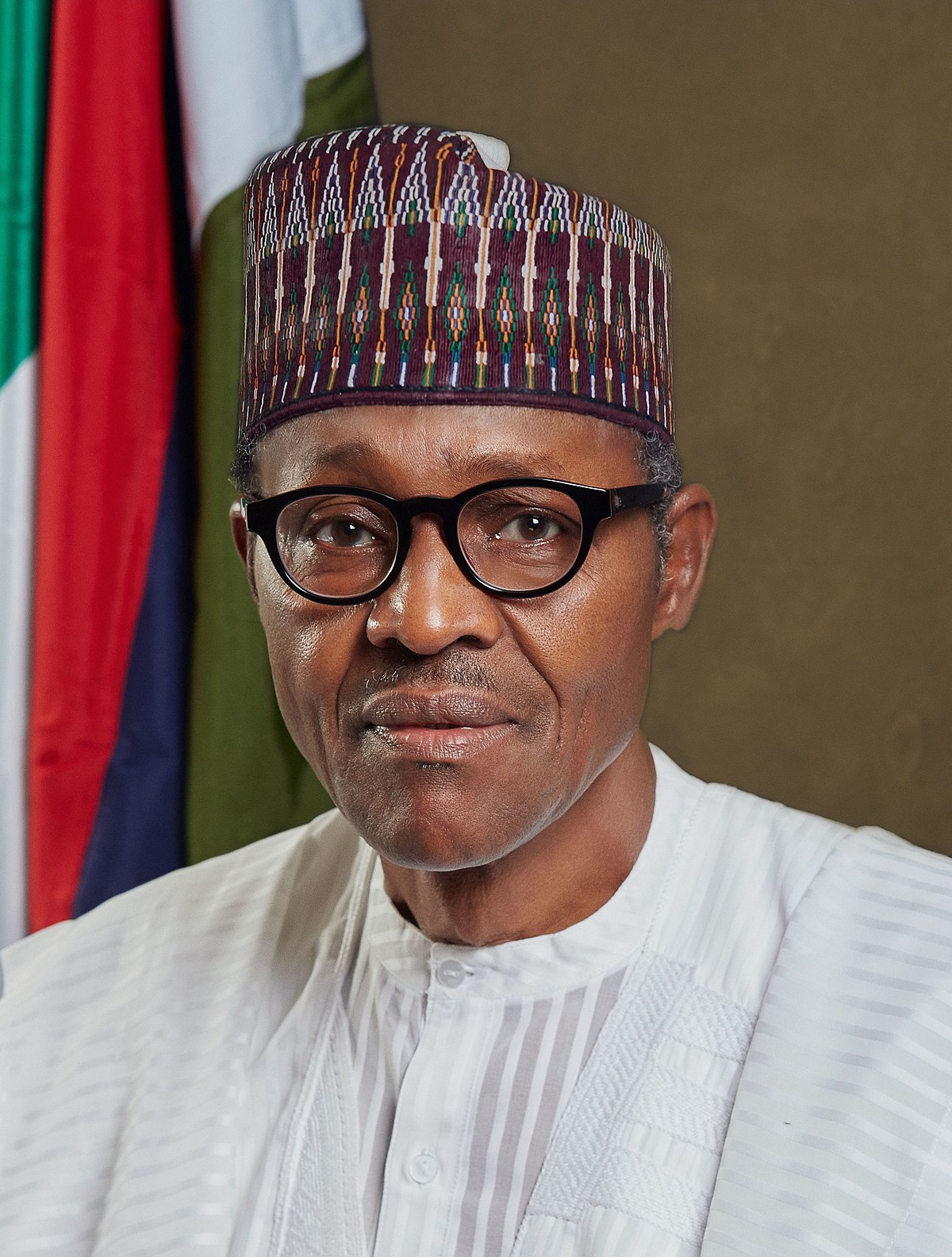
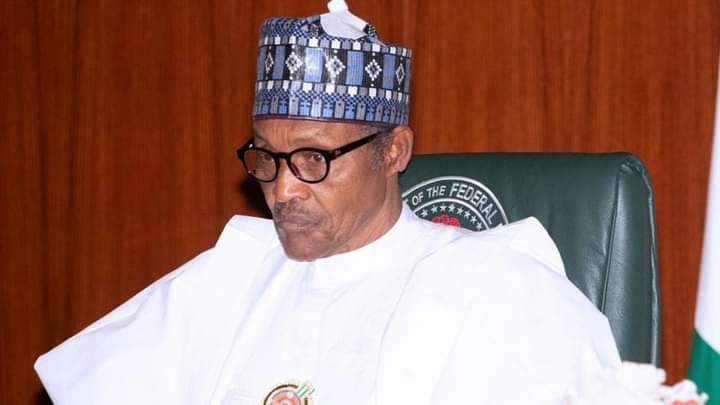
President Muhammadu Buhari

Shehu Sani supports Buhari on state police

By Ahmad Deedat Zakari


The foremost human rights activist and former senator, Shehu Sani, aligns with President Muhammadu Buhari’s position on having a police force under the control of state governments. The president has adamantly refused to consider state police a viable option despite Nigeria’s several security challenges and calls from different quarters. 


In an exclusive interview with Channels TV on Wednesday, January 5, 2022, the president reiterated his previous position regarding the issue.


Meanwhile, Shehu Sani, who has been critical of the Buhari administration, especially on poor management of the country’s security challenges, surprised many by agreeing with the president. He cited abuse of the police institution by state governors as part of his reasons on his official Facebook account following the president’s interview.

Buhari appoints Salami as Chief Economic Adviser

By Ahmad Deedat Zakari

President Muhammadu Buhari has appointed Dr Doyin Salami as Chief Economic Adviser (CEAP).

An official statement released by Special Adviser to the President on Media and Publicity, Mr Femi Adesina on Facebook on Tuesday, January 4, confirms this development.

Mr Femi Adesina wrote that Dr Doyin Salami was educated in London, where he bagged his doctorate degree in Economics, Queen Mary College, University of London in 1989. He added that Dr Doyin Salami is a member of the Adjuct Faculty of the Lagos Business School (LBS), Pan Atlantic University, where he recently attained the rank of Associate Professor.

Femi Adesina noted that the Chief Economic Adviser to the President is to address all issues on domestic economy and present them to the President.

Expect more job opportunities in 2022, Buhari tells Nigerians

By Uzair Adam Imam


President Muhammadu Buhari has confirmed that new jobs are on the way for Nigerians in the new year, 2022.


The president made this public in his new year message to Nigerians, adding that his administration would deploy ICT (Information and Communications Technology) platforms.


According to Buhari, the purpose of job creation is to ensure the diversification of the economy to support other emerging sectors.


Senate President Ahmad Lawan also asked Nigerians to continue having faith in the country and its democratic institutions.


The National Leader of the All Progressives Congress (APC), Asiwaju Bola Tinubu, said that given the way Nigerians fought to contain the COVID-19 pandemic, there is no doubt that they can equally “stand up to problems that seek to shackle us.”


Speaking about security challenges in the country, Buhari promised that government would not relent in tackling the problem citing the “number of insurgents and bandits who have willingly surrendered to our security forces and continue to do so through various channels and the Safe Corridor created for that purpose.”


“The persistent insecurity in certain parts of the country may have threatened to unravel the incremental gains achieved in the real sectors of the economy and in the administration’s overall objective to position the nation on the irreversible trajectory of sustainable growth and progress, but I assure you that we will remain resolute in our commitments and shall continue to press ahead with our programmes and plans,” he added.

Mitigating the menace of climate change in Nigeria

By Mukhtar Ya’u Madobi

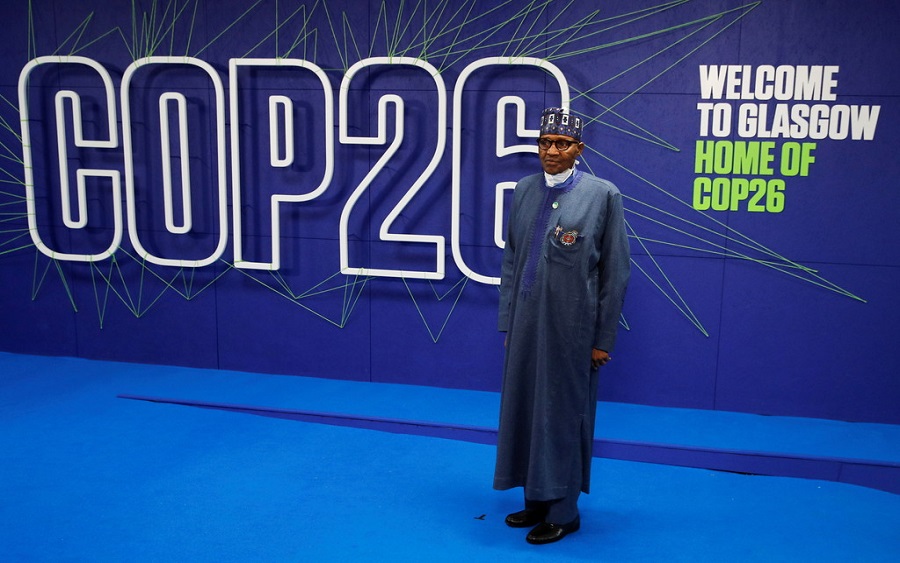
Unless proactive measures are put in place and fully implemented, otherwise the commitment made by Nigeria at the just concluded 26th annual edition of the Conference of Parties (COP26) Summit on climate change in Glasgow, United Kingdom, to end deforestation by 2030 and equally attain zero-net emission in another 30 years later, will continue to remain a mirage! This is evident if one looks at the country’s unprecedented hikes in cooking gas prices, not to even talk of diesel and kerosene.


Many people will resort to cutting down trees for fuel, leading to increased emission, deforestation and fewer flora communities to absorb methane gases being released to the atmosphere occasioned by human activities. What a setback?


Due to the volumes of greenhouse gases being continuously added to the atmosphere triggered by humans, it was observed that the earth is now 1.1 degrees Celsius warmer compared to the pre-industrial level. The impacts of climate change are now evident worldwide, ranging from wildfires in Greece and Algeria to flooding in Germany and Turkey to drought in Australia and Northern Nigeria.


There is also the crisis of extinction of land and ocean species, rising sea levels, and increased drought. Like Nigeria, these issues lead to increased food shortage, animal migration, health risks, poverty, and displacements for developing countries. In 2020, the 10-highest climate change-induced disasters occurred in some of the poorest parts of the world. It cost over $130 billion, killing thousands and displacing millions. These costs are escalating every year.


According to the latest version of National Security Strategy 2019, a document released by the Office of the National Security Adviser (ONSA), climate change has contributed to excessive flooding across the country, causing enormous human and economic losses. Additionally, it has led to seasons of drought, which affected agricultural activities and caused shelter losses. In 2019, the National Emergency Management Agency revealed that floods had displaced approximately 1.9 million Nigerians.


Research by scientists from Europe, US and China predict that by 2070, a third of the global surface would be unsuitable for human life as the global temperature rises. The prediction included West and Central Africa, which will force the majority of the people to migrate to a suitable region. It is estimated that about 81% of Nigeria’s population would suffer from these extreme temperatures. Despite our preference not to relocate, the extreme temperature may drive many people to do so.


Nigeria has outlined measures and plans toward combating the effect of climate change over the years. These include establishing a national youth climate innovation hub to harness climate innovation ideas from young Nigerians and include them in decision-making processes. The country has also approved the national action plan on gender and climate change to ensure that women, men, youth, and other vulnerable groups optimally benefit from climate change initiatives, programmes, policies, and funds. Nigeria has also developed a National Adaptation Plan (NAP) — which aims to build a framework for climate change adaptation, planning and governance, and an adaptation communication that would highlight adaptation activities and efforts in the country.


It is heartwarming to learn that President Muhammad Buhari signed into law on Thursday, November 18, 2021, the climate change bill passed by the national assembly. In signing the law, the president has made Nigeria join an elite group of countries that have enacted emissions-target legislation aiming to eliminate carbon emissions. This is a big deal for an oil-dependent nation also ranked as one of the world’s most vulnerable countries to climate change.


The main objective of the climate law is to provide an overarching legal framework for achieving Nigeria’s long-term climate goals, including a net-zero carbon emission target, national climate resilience, an adequate volume of climate finance, and the mainstreaming of climate change actions into national development priorities. In addition, the bill places climate change action in the broader context of efforts to achieve inclusive green and sustainable economic development for the most populous black country in the world.


Nigeria has long maintained that it wishes to use its climate policies as part of wider measures to achieve low-carbon, resilient, and equitable economic growth. Therefore, the act seeks to facilitate the intensive and complex cross-ministerial coordination of climate change action and the involvement of businesses and the civil society needed to achieve long-term climate objectives while also promoting climate-resilient social-economic development in the country.


The act also sets out to establish a systematic approach for the country to identify the significant climate risks and vulnerabilities facing the country and how to strengthen existing capacities to adapt to the impacts of climate change.


With this current development of enacting the climate change act, it is apt to say that Nigeria is on the right course towards averting the dangers of climate change.

Nonetheless, individuals should also, on their own, help in projecting this campaign by abstaining from activities that cause environmental exploitation, especially illegal cutting down of trees, which ultimately trigger climate change.


With the pledges made by the affluent nations and private institutions during the Glasgow COP26 to collectively provide a minimum of $100 billion annually by 2023 in order to achieve the mandates of reducing climate change, getting financial guarantees for Nigeria will not be difficult. However, it must adopt climate action as fast as possible because scientists keep telling us that the planet is burning. Therefore, our lives literally depend on this global joint effort that COP 26 in Glasgow has represented.

Mukhtar Madobi wrote from Kano. He can be reached via ymukhtar944@gmail.com.
Have we not reverted to the ugly old days?

By Abba Muhammad Tawfik

The prime priority of every government is always to ensure the safety of its people by providing adequate food and security and other necessities of life to make a pleasant bustling of it (life). However, the inability to reach that satisfactorily had made Nigerians call it an anathema on President Goodluck Jonathan’s stewardship and pinned him with the harsh tags of incompetence and murderer in northern Nigeria. For that, we prayed consistently and did everything practically possible within the sphere of our human influence until we had him ejected from power.


General Muhammadu Buhari is very well acquainted with his antique military stature of rational thoughts. And, of course, zero tolerance to nonsense and his political confederates in APC wooed us by the “change” cliche. They strategized their political expedition by accentuating majorly on Jonathan’s incompetence to ensure the security of life and property in the Northeastern states of the nation.


As hapless and helpless as we were with our lives at the grabs and pangs of insurgents, we put our complete trust in Buhari and APC, with the expectation and hope of fulfilling their promises of strengthening security setbacks and restoring peace in the nation. As a result, APC attained the peak of our love and succeeded with the power of our lives and thumbs.


Early in their (APC) administration, as they vowed before God and the good people of Nigeria of addressing the security challenges, we can honestly say that the waterloo of Nigerian enemies was celebrated. Normalcy was restored in most Northeastern states like Adamawa, Gombe, Bauchi, Yobe, and Borno, which were then wrecked by detonations and eruptions of improvised explosive devices.


Expectations often fail, and most often, most of their promises fail. The accomplishment of the war being waged furiously against insurgents turned out to be a mirage. It was short-lived, and insurgence spread its tentacles ubiquitously across the nation.


Up to now, a two hour thirty minutes drive from Damaturu to the once known “Home of peace” is like penetrating through the boundaries of the “Bermuda triangle” despite having an airforce base that is well equipped with military fighter jets in Maiduguri. The road will be barricaded for hours, and people would be wantonly slaughtered like animals in abattoir by insensate humanlike beasts without any intervention.

Sadly, the enormity of the matter is that even those who have taken the solemn oath and are saddled with the heavy responsibility of protecting the lives of innocent Nigerians are not spared.


Moreover, the country’s Northwest and the Northcentral segments have also responded to the topsy-turvydom of insecurity and have become a furnace hell on earth. The Kaduna–Abuja road remains a highway of death where people are daily being mercilessly forced to breathe in death and exhale life and stripped of their chattels by kidnappers. 


One of the worst tribulations that betide one in today’s Nigeria is being a resident of Zamfara, Sokoto, or Katsina. The daily news reaching us from the region is that of kidnappings. Bandit terrorists bathe in the bloodstream of innocent souls, turning wives into widows and children into orphans.

Despite the economic hardship in the country,  one has to struggle to fulfil Darwin’s law of survival. But, unfortunately, only our vital forces dearly pay the cost of so doing. May Allah, in His infinite mercy, restore peace to our dear nation. Amen. 


Abba Muhammad Tawfiq is a 500L Medical Rehabilitation student at the University of Maiduguri. He can be reached via abbamuhammadtawfiq@gmail.com.

Garba Shehu, Lai Mohammed, other top gov’t officials reportedly test positive for COVID-19

By Muhammad Sabiu

An exclusive report by Premium Times has indicated that top Nigerian government officials and many aides of President Muhammadu Buhari have contracted the deadly coronavirus disease.

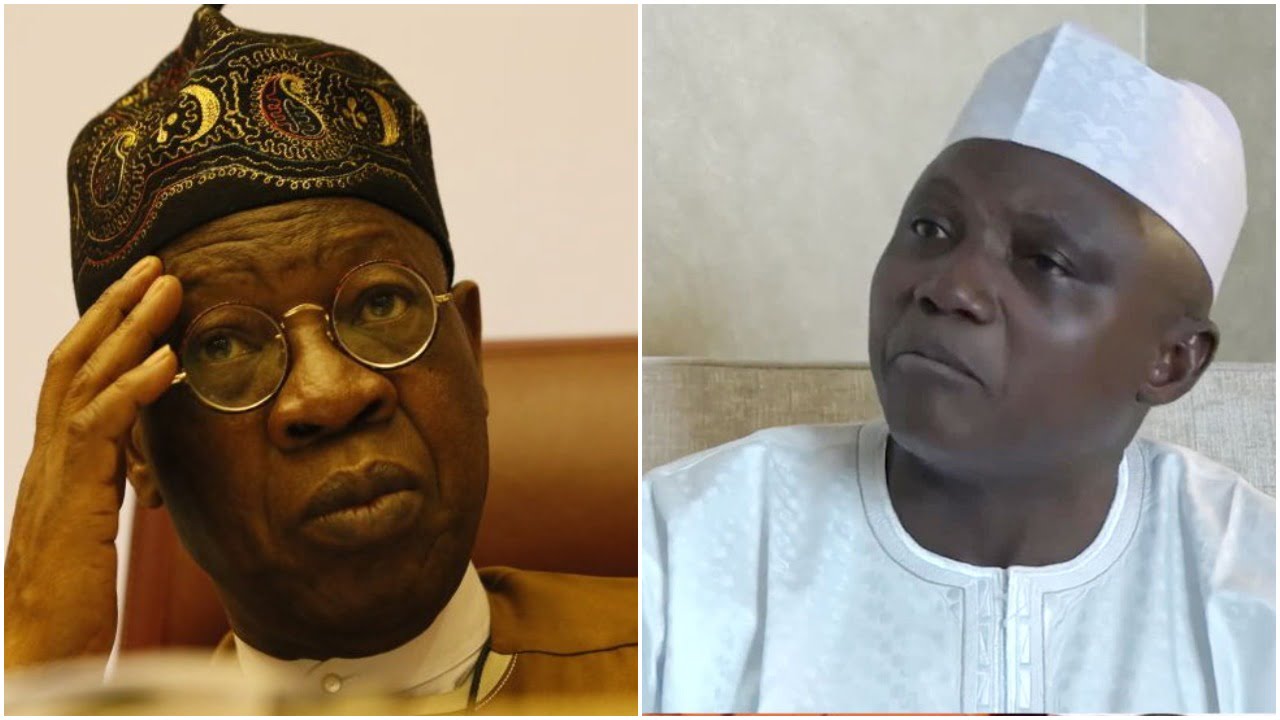
The officials who are said to have contracted the virus include Malam Garba Shehu, Buhari’s spokesperson; Alhaji Lai Mohammed, the Minister of Information and Culture; Yusuf Dodo, the President’s Aide-de-camp (ADC); Aliyu Musa, his Chief Security Officer (CSO).

Mr Shehu responded to the enquiry sent to him seeking more information on the reported news of them contracting the disease, adding that he did not know the status of the other persons mentioned.

“I have no confirmation of the cases you mentioned, but yes I have been afflicted by the mild variant of the COVID-19. I felt okay from the beginning, maybe because one had received all three jabs, and right now, I feel 100 per cent. I just finished my hour-long running exercise.

“But the strange thing about this ailment is that it is the scientists, not you, that will say you are okay. Right now, I’m taking my prescriptions and isolating, and would go back for a test to ascertain if the virus is still here or it has left me. Thanks for your goodwill,” the presidential spokesperson, Garba Shehu told Premium Times in a text message.

The infected officials, according to the newspaper publication, are currently receiving medical care.

When the results of their polymerase chain reaction (PCR) testing came back positive, the afflicted officials were said to have been removed from the cabinet meeting on Wednesday.

Amidst this ravage of the virus at the State House, there is still no official statement about the matter as the President’s status of the virus is also unknown.

Boko Haram attacks Maiduguri as Buhari visits

By Uzair Adam Imam

Reports from Maiduguri, the capital of Borno State, have disclosed how Boko Haram fighters hit Maiduguri ahead of the visit of President Muhammadu Buhari.

Three communities at Ngomari airport general area in Maiduguri were reported to have been attacked.

The militant group was believed to have targetted the airport a few minutes before the president’s arrival.

According to a source, the communities were attacked with rocket launchers.

He added that the attack has killed a few people and destroyed residential areas and properties.

One of the residents confirmed the happening, saying: “One of the rockets landed close to an office, and two landed in the Ngomari Ayashe community, killing four children, one in Moranti.”

“I can confirm that a 16-year-old child, Walida, was affected in the attack. She died instantly; she was cooking when her head got destroyed by the rocket,” he added.

Although the authorities have not commented, at least 25 people reportedly sustained injuries from the attack.

President Buhari, are you really a former military leader?

By Mallam Musbahu Magayaki

The insurmountable insecurity dilemma claiming the lives and worldly belongings of innocent Nigerians almost every day for decades is frighteningly very distressing. To the extent that Nigerians have begun to lose complete trust in you before being voted into power, you have assuredly stated that you might put a stop to the long and horrendous event.

Alas! The situation has remained unchanged, rather than erupting suddenly like a wildfire. While Nigerians believed that by the time you were sworn in as the President of Nigeria, all the tough catastrophes would be gone because of the promises you unquestionably made during your campaign. But annoyingly, it has now been revealed that you are not well prepared for the mantle of leadership or that you have lost your administrative blueprint and decades of experience as a former military general.

Sir, no single individual would, in his right senses, expect and even foresee the emergence of the current annoying unfolding scenario in your regime. Why so? If I can vividly remember, on Thursday, February 26, 2015, you pledged to defeat Boko Haram insurgents and other criminal sect activities. You charged the former President Goodluck Ebele Jonathan that “If the government of President Goodluck Jonathan had deployed the same resources to fighting Boko Haram as it had for political ends, the army would have rescued the more than 270 schoolgirls abducted by the extremist movement in Chibok local government area of Borno State” at Chatham House in London on that very Thursday.

Sir, I am sure you are fully aware of the killing and kidnapping of Nigerians almost daily. These ruthless fellows (bandits) have now turned patriotic Nigerians into sleeping with one eye open for fear of being gruesomely killed and attacked by these unpatriotic and salacious humans. No rational father would senselessly have peace of mind while his children were atrociously killed without due course.

Notwithstanding, it’s now clear that these bloodthirsty bandits don’t understand any other language than that of fire-for-fire. However, considering their day-to-day unlawful operations, they don’t want to give up until they are awfully and massively defeated. Therefore, in collaboration with other sub-security units from various states within the federation, the government should take decisive action against those who are traumatizing the peaceful condition of the people as their primary priority.

In conclusion, there is no pathetic excuse Nigerians can subsequently offer you for failing to protect their lives and property. As you swore to protect Nigerians in all possible terms, so too (both the people and their possessions) are the country’s product. If peoples’ lives and personal possessions are not well secured, no existing government would claim to cater to its people.

Mallam Musbahu Magayaki wrote from Sabon Fegi, Azare, Bauchi. He can be reached via musbahumuhammad258@gmail.com.

Bandits terrorisms is a 5-dimensional issue

By Zayyad I. Muhammad

Firstly, the military has been stretched doing other ‘peoples’ jobs’  the military is tackling the terrorist bandits at the ‘surface’- see and kill, while the root causes still remain. The military is not a policing institution. The Nigerian Army is under intense pressure to fill security gaps. Security experts say, globally military involvement in crime-fighting is problematic practically because they are not trained to do so.

Secondly, the police which are trained to uproot the causes of this kind of criminality, deal with it at the surface & seal the seals, are handicapped beyond tolerance level- the police are underfunded, ill-motivated, under-equipped, and neglected. If the Nigerian police can get half of what it needs, they will tackle the bandit terrorists from end to finish. The police are superb in gathering intelligence from primary sources because the police are everywhere and trained to do so.

Thirdly, it seems, President Muhammadu Buhari is so much relying on a bulk information-first line of information ( service chiefs) he should also get information from the second and third levels- field commanders and local communities dwellers. If he is doing it, he should seek more. Though, the presidency on December 12th, 2021 said “Alongside military force, the government is seeking to address the violence at its economic source. Massive infrastructure projects like the coastal rail and new train from the southern coast through the north-east to our neighbour Niger, aim to expand employment and opportunity across the country, bringing hope to our more remote and poorer regions where bandits and terrorists thrive”

Fourthly, Governors, security votes and benefits- some officials of government who in one way or another benefit from the opaque security vote system will always work hard to make sure bandits’ Terrorisms continue- it’s a business. some state governors are doing their best, but some of their officials may be sabotaging their efforts.

Fifthly,  communities social disorder- abject poverty, the death of community-living, everybody for his own has also contributed in oiling recruitments into the banditry business- this problem was as a result of one thing- the hijack of the local government system by the governors and state legislators. LGAs are the best sources to cater to the need of local people- when this source is no more, local people start searching for new sources to survive. Though, sheer criminality and materialism among some Fulbe including the international proliferation of small arms are also factors

According to a report by American Security Report (ASP)-  ‘Banditry in northwest Nigeria has become an appealing method of income in the region where weak governance, youth unemployment, poverty, and inequality have left people with depleted options for livelihood. Security services are often understaffed and lack the proper resources to effectively combat banditry. Vast areas of unregulated forests allow for easy concealment, and police and military forces have difficulty penetrating the rough terrain. In addition, under-policed borders have aided the proliferation of small arms and light weapons’ amongst bandit groups’

Bandits Terrorisms have reached the red level- the problem now requires a holistic approach – new and already established effective methods must be implemented to tackle the problem from the root causes. For example, academics and security experts have done some excellent research on the cause of banditry in the northwest and other regions, the intelligence community can use it for early warning and intelligence gathering.  Furthermore, the firing angle must be backed by more funding of the police by the federal government. Intelligence, accountability, selflessness, and national interest must also be a priority as well.

 We are in a war against ourselves.
Zayyad I. Muhammad writes from Abuja, zaymohd@yahoo.com.

Buhari’s popularity plummets to new low – survey finds

By Sumayyah Auwal Usman

President Muhammadu Buhari’s popularity has plummeted to the lowest level since he took over as the country’s leader in 2015, according to the latest Vanguard for Good Governance Initiative (VGGI) survey.

Results of the survey compiled by VGGI, show President Buhari’s popularity has declined sharply during the past two months with his approval rating dropping from 58 percent to 21 percent.

On specific issues, the survey found Nigerians, especially northerners, were unhappy over matters of heightened insecurity. Moreover, concerns about the economy, especially the cost of living and rising inflation are now seeing the president’s popularity hitting an all-time low among Nigerians.

The survey also reveals that the IPOB activities in the South-East is crippling the economy of the region.

VGGI says its survey consisted of phone calls, emails, interviews and text messages over the past three months to slightly more than 150,000 people.