President Muhammadu Buhari

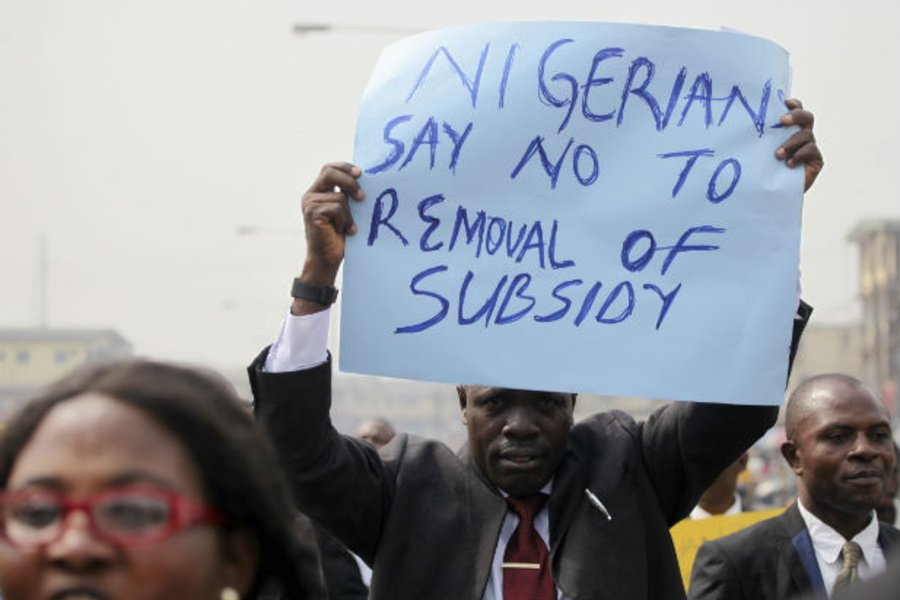
Suspension of subsidy removal: Nigeria narrowly escaped collapse 

By Lawan Bukar Maigana 

The Nigerian government was lucky enough to salvage itself from the intractable calamity it wanted to put itself in—the implications of removing subsidies on petroleum products from July this year. Whoever advised FG to suspend their noxious plans to remove subsidies on the products mentioned above is a true lover of the vast majority of Nigerians and Nigeria as a country.

Even though virtually every country in the world today battles an economic downturn, it is still unjustifiable for the FG to remove subsidies on petroleum products at this critical point. The country is fighting ethnoreligious conflict, refuse-to-end Boko Haram, kidnapping, banditry, mass employment, non-quality education, poor health services for the masses, illiteracy, and unpatriotic leaders, which other countries or most don’t. 

I said it even before the government took a second look at its ugly plan to make subsidies on petroleum products history at the detriment of patients citizens. Had the plan come true, the country would have scattered, and perhaps the avoided fear would have been unavoidable because no one can bear the impact of removing subsidies on petroleum products, not even the haves can. 

Nigeria would have had an unprecedentedly historic hike in foodstuff prices, transportation fare, building materials, medication, among others. And there would be a collapse of many companies in the country because they too cannot bear it, and the cost of living would be unbelievably unexplainable. 

The inflation rate has never been so alarming as today in the country, and it keeps rising every day. Yet, the FG wanted to turn a blind eye to it and remove subsidies on petroleum products from July this year until a group of genuine professionals reviewed the plan and finally rejected it because of the nation’s current state. 

Kudos to the considerate committee for being truthful to themselves. Every reasonable person knows that doing anything that will result in a hike in prices of commodities and services in Nigeria is untimely because most people are still ‘youth.’ Anyone who is economically unestablished is a youth regardless of their age. 

In 2021, the National Bureau of Statistics (NBS) extrapolated that “ Nigeria’s annual inflation rate rose to 15.63% in December of 2021, after eight straight months of decline, amid a slight acceleration in prices of major component food (17.4% vs 17.2% in November), linked to the increase in demand during the festive season. Upward pressure also came from non-food products, including transport (15%, the same as in November); clothing & footwear (15.1% vs 14.8%); miscellaneous goods & services (14.1% vs 14%); housing & utilities (11.1% vs 10.6%), among others. 

The annual core inflation rate, which excludes the prices of agricultural produce, rose further to 13.87% in December, the highest since April of 2017, from 13.85% in the prior month. Monthly, consumer prices inched up by 1.82%, the most since May of 2017, after a 1.08% increase in the prior month.

The Consumer Price Index (CPI) measures the change over time in the prices of 740 goods and services consumed by people for day-to-day living. The index weights are based on expenditures of both urban and rural households in the 36 states. The most important categories in the CPI are Food and Non-Alcoholic Beverages (51.8 per cent of total weight); Housing, Water, Electricity, Gas and Other Fuel (16.7 per cent) and Clothing and Footwear (7.7 per cent). 

Transports account for 6.5 per cent of the total index and Furnishings and Household Equipment Maintenance for 5 per cent. Education represents 3.9 per cent of total weight. Health is 3 per cent, Miscellaneous Goods and Services 1.7 per cent, and Restaurants and Hotels 1.2 per cent. Alcoholic Beverages, Tobacco and Kola account for 1.1 per cent of the total index, Communications for 0.7 per cent and Recreation and Culture for the remaining 0.7 per cent.” 

So, tell me how we can endure the impact of removing subsidies on petroleum products in Nigeria? I am happy that the Nigerian government has indefinitely suspended the planned removal of subsidies on petroleum products. 

Lawan Bukar Maigana writes from Maiduguri, Borno State, and can be reached at lawanbukarmaigana@gmail.com
Let there be Rice!

By Tahir Ibrahim Tahir Talban Bauchi. 

As intelligent, hardworking and technologically advanced as we brag about being, it is ironic that at the end of the day, we fail to show up for patriotism and country — and choose to dwell on the divides that do not crystallise into the positive building blocks of our national development. Instead, we tow the lines that harp on our differences and rhetorics based on political party apathy.

We often embrace the gulfs of ethno-religious segmentations of our society and deliberately fail to show up for our country. We are absent when it comes to celebrating the country’s achievements and progress. We instead converge to mock her, even when she has birthed something fruitful and prosperous. However, anytime we find ourselves stuck or in need of a dear country, our voices are gravelly with echoes of her name and her might.

When D’Tigers made waves whacking USA’s Dream Team, it was called Igbo or IPOB teams. When it wobbled, it was Nigerian again. When the Super Eagles didn’t score, the striker is labelled gateman because he is of a particular demographic. Still, when he does, the Super Eagles are flying again and are the only team in AFCON 2021 to make the group stages on a stainless slate. 

The CBN and RIFAN (Rice Farmers Association of Nigeria) unveiled the pyramids in Abuja as seeds of the long and aggressive Anchor Borrowers Programme. Many rose to blindly and sheepishly discredit the programme. An old image from a certain state, which showed the assembling of rafters, as if constructing a roof, with rice bags placed as tiles, to simulate a huge pyramid, was shared to disillusion gullible ones, that the CBN/ RIFAN event was dubious and unreal. Some said the bags were filled with sand, while some dissected the event as a waste of resources and energy. Some didn’t want to credit the administration due to party affiliations, and others didn’t want to have any of it because of their own biases. Most couldn’t put Nigeria first and all other differences aside and be happy that the motherland has achieved this milestone, despite the overwhelming and depressing global environment for business and governance. 

In our importation bills, it is more than evident that the importation for food, especially rice, has stepped down many notches. This is because government intervention in rice importation has also dropped astronomically. One million bags which is just a percentage of what RIFAN has produced, were unveiled at the event, being an aggregation of the 2020 dry season and the 2021 wet season. They are the commitment from farmers in the repayment of their loans from the Anchor-borrowers programme.

No fewer than 230 small, medium and large scale rice mills have emerged all over the country from 2015 to 2021. A Kano-based lady has a 160 ton per day capacity rice mill, while another, one of the biggest, has a 32 metric tonnes per hour capacity built-in Lagos. From averaging less than 3 million metric tonnes per year, in 2015, an outstanding 7 to 9 million metric tonnes per annum was achieved in 2021. The rice revolution is unbelievable but far away from being a hoax. 

Ado Hassan, the Secretary of the Kano chapter of RIFAN, had said that their move was towards engendering the twin benefits of food security and economic diversification. Agriculture contributed over 21% of our GDP. This is incontrovertible evidence that a lot has actually been achieved in this sector. Nigeria has become the largest rice grower in Africa, and neighbouring countries are coming in to educate themselves on how Nigeria is dominating Africa, as the giant of any continent should rightly do. 

Nigeria is gradually achieving food security, which we should be proud of and glad to attain. Unfortunately, the vociferousness of global inflation is biting the most developed countries too, and not just developing nations like dear country. A Briton was lamenting that the cost of parking, which was just £.10 a few months ago, had risen to £.50! Perhaps if Nigeria were not hindered by insecurity and a pandemic for the last three years, we could have been celebrating a lot of such pyramids across the country.

The Nigerian military does a show of force, so does the NAF with jets in formations over our skies. Lecturers have conferences, and the NBA has annual conferences as well. Every sector of our economy has players coming together under one roof to showcase their achievements and discuss prospects. So why can’t our dear farmers, under the auspices of RIFAN, do their own show of rice? Isn’t it an important part of accountability?

We pray that their efforts will directly affect the market price of rice in the coming weeks, as the mills get busy husking the rice that was showcased. We also pray that unscrupulous marketers will not deny the everyday person the fruit of this labour. Those ones are a whole chapter of those unpatriotic ones we so have to live with. 

Tahir is Talban Bauchi.

Just In: Nigeria kick-starts use of 5G network

By Hussaina Sufyan Ahmed

President Muhammadu Buhari, GCFR, has today, Tuesday, January 25, 2022, kick-started the National Policy on Fifth Generation technology, which is widely known as 5G technology, for the development of Nigeria’s Digital Economy.

He said this at the presentation of the national policy on 5G, approved at the Federal Executive Council meeting.

He also directed all security institutions to make use of the new technology to ensure an enhancement towards curbing the insecurity in the country.

He said that the Federal Government would ensure the nation’s well-being by taking full advantage of opportunities provided by the 5G.

The Daily Reality has gathered that the arrival and usage of the new technology will enhance Nigeria’s networking activities and equally make Nigeria compete in the technological race in the world.

Tinubu and the dilemma of the 2023 presidency

By Ismail Hashim Abubakar

Although the articulation of the presidential ambition of Bola Ahmed Tinubu (if actually this his real name) is seizing the attention of the public these days, Tinubu’s psyche might have likely become fraught with political confusion since 2020 when Mamman Daura gave the popular BBC interview on competence as the chief criterion for Buhari’s succession, rather than regional or ethnic consideration. 

This time around, the greed of  Bola Ahmed Tinubu seems even to surpass that of Atiku Abubakar. The man is using every channel to realise his (of course, legitimate) ambition while at the same time subjecting himself to more public shame. The man has become too wild in his bid to realise his dream of emerging as President, and there is a strong indication that he can go to any length to achieve his goal.

However, Tinubu is in a very disadvantageous position occasioned by the mixture of his ethno-religious and geographical inclination. The man is a Muslim, no one doubts, but of course, a very nominal Muslim who favours ethnic proclivities more than religious brotherhood and solidarity.

Based on clear historical evidence, to Tinubu, a Yoruba Christian is far better than a Muslim of any linguistic extraction. However, his hatred for the Hausa is beyond any human quantification. The series of brutal massacres of northern Muslims by government-backed OPC in the Southwest, especially Lagos when Tinubu was governor, still evokes gory memories in the minds of many Muslims, and this will play well as Nigeria approaches the general election in 2023.

Nevertheless, the shaky religious credentials of Tinubu, besides the status of his wife as Christian and his Christian handlers, do not at all make him a Christian or outside the fold of Islam. If that is the case, if, for example, he is nominated to contest for President, CAN and Nigerian Christians will never accept him as their representative, lest it means his running mate can be a Muslim.

Moreover, for most Muslims, especially in the North, Tinubu does not have enough moral credentials to be nominated as a Muslim candidate with any (northern) Christian candidate. Many northerners, in fact, will prefer a Christian from the South and a strong Muslim from the North to be paired to contest for the big office rather than Tinubu.

Tinubu’s visit to Kano a few days ago and his meeting with important and influential clerics in the city would not likely be sufficient to make his ambition sellable. Likewise, the many (courteous) praises showered on him by some Muslim scholars during the visit will not help him either.

So far, this is the dilemma that Tinubu has found himself in. My biggest fear, which I pray situations will not lead to that, is if all the above peculiarities tend to remain the huge stumbling block in the way of Tinubu to the Villa, and he may be left with no option but one: to publicly proclaim to accept Christianity. This decision will then mark his burial in the cemetery of Nigerian politics.

Ismail Hashim Abubakar wrote from Rabat and can be reached via ismailiiit18@gmail.com.

Between 2014 and 2022 and the race for Nigeria’spresidency

By Ahmad Mubarak Tanimu

It’s 2022. The twilight of Buhari’s administration is here, and the political permutations that will produce his successor are about to come bare. “Change” was the mantra in 2014. The Giwa barrack attack in March by Boko Haram, the Kibaku school girls abduction in April, the capture of Gwoza in August, the occupation of Bama in September and the ransacking of Baga in December by the terrorist group together with the over ten thousand lives lost during the year made 2014 an unforgettable year.

Goodluck Jonathan carried so many political accruals that outweighed his political assets, giving him an unfavourable political balance sheet that led to his well-anticipated defeat at the polls in 2015, becoming the first-ever one-term president in Nigeria. It’s an unusual political crash that the former presidential spokesman, Segun Adeniyi, calls ‘Against The Run of Play’.

Jonathan’s political misfortune didn’t start in 2014. He promised Nigerians a breath of fresh air after winning the 2011 elections. His major decision after the victory was fuel subsidy removal. He sent the then CBN Governor, Sanusi Lamido Sanusi and the then Finance and Coordinating Minister of the Economy, Ngozi Okonjo-Iweala, to beg and convince Nigerians to accept subsidy removal.

The first nail on the political coffin of Jonathan was hit on January 1, 2012, with the announcement of fuel subsidy removal, which birthed a national outrage and mass protest known today in our history books as Occupy Nigeria. After that, Boko haram insurgency, the slump of oil prices in the global market, and the PDP crisis he poorly managed sent him to an early political abyss.

Whilst all these were happening, one man positioned himself suitably and leveraged on every misstep of the President, often described as clueless. The man is Muhammadu Buhari. When the commoner was not happy, as late political siege J.S Tarka would say, Buhari offered himself as the hope, the happiness and the long-awaited missing piece of the jigsaw. Buhari moulded all Nigeria’s problems into just one thing that he kept saying repeatedly; ‘corruption, corruption, corruption’. He then placed himself as the one and only man with an incorruptible toga in the political arena that could solve Nigerian security challenges and economic turmoil.

He became president in 2015, Nigeria’s economic crisis soared, and like the sunshine, insecurity moved from east to west in the North. But unlike 2014, in 2022, no one is leveraging Buhari’s ineptitude. Though to be fair to Buhari, with Nigeria’s over-reliance on oil for export revenue and foreign consumer goods, an economic crisis will always be inevitable in the situation of a fall in the global prices of oil.

The polity in Nigeria still looks primordial. No one is ready for issue-based conversation. Even the pundits often put in more sentiment than logic in their analysis. The reaction of Buhari’s detractors shortly after Tinubu’s declaration to run for the presidency in 2023 says it all. They want him to surrender a platform he built with his sweat over some decades of enduring and surviving political persecution under Abacha, Obasanjo and Jonathan.

One doesn’t need to be a seer or bookmaker to predict that Nigerians will face Tinubu and Atiku’s choices in 2023. This could be a run that will not dig and damage the image of Buhari. Atiku may keep things ethical as he did in 2019, whilst Tinubu will primarily defend the Buhari administration throughout the campaign and make promises of improvements.

In 2014, there was an exodus from the ruling party to the opposition. Governors Kwankwaso of Kano, Wammako of Sokoto, Amaechi of Rivers, Ahmed of Kwara and Nyako of Adamawa all defected to the APC and other party chieftains like Atiku, Saraki and Baraje. The defection made the ruling party’s defeat imminent even before the elections.

On the contrary, the ruling party is taking governors to its fold this time. Governors Umuahi of Ebonyi, Matawalle of Zamfara and Ayade of Crossriver defected to the ruling APC last year. While the long-awaited APC national convention can make or mar the party’s fortune in the next general elections, the current atmosphere spells gloom for the opposition again come 2023.

Going by the non-negotiability of Nigeria’s unity as enshrined in the constitution and the unwritten political arrangement of political parties in Nigeria, the next president should be ethnically and culturally Igbo. Still, the ethnic group can only claim that stake in the PDP, a party they supported wholeheartedly since 1999. They rejected the APC, and I don’t think the party will pamper the same region with a presidential ticket in 2023. I am harbouring a feeling that an Igbo presidency is all Nigeria needs to turn its fortune around as a country. It will bring integration and a sense of belonging for all, which may translate into socioeconomic success. But that’s a conversation for another day.

Ahmad Mubarak Tanimu wrote via ahmadmubarak.tanimu243@gmail.com.

AFCON: Super Eagles’ defeat and false assumptions about Buhari’s call

By Usama Abdullahi

If there’s anything I have learnt from Super Eagles’ sad loss in this year’s AFCON is the absurdity associated with it. Of course, it’s unfortunate Nigeria lost to Tunisia in the round of 16 yesterday. But, as a patriotic citizen, what do you do? Of course, you express your grief about that and hope for the better next time. Period!

Contrary to this, several unpatriotic citizens who are also lacking in maturity attribute the team’s misfortune to Nigeria’s President Muhammadu Buhari. I thought they were joking, but it turned out that they meant what they said. Before the commencement of the match, Buhari had a virtual call with the team in which he encouraged them. 

But as the match ended in favour of Tunisia, the media was full of aggressive and disparaging remarks about the call and the President. Some foolishly described the President’s call as a disastrous one, which, however, ‘led’ to the painful yet unexpected exit of the Nigerian Super Eagles from the AFCON.

However, this didn’t surprise me because, before the match kickoff, some simpletons had already predicted and discounted the team’s failure out of obviously immutable dislike for the President’s encouraging call. We are a society easily driven by silliness. 

If you buy into the nutty notion that the President’s call was the reason for the team’s woeful undoing, then you’re no different from the person living with psychosis. This mental illness makes you behave abnormally and believe things that aren’t true. 

Let’s stop this nonsense, accept the defeat smilingly, congratulate our lads for their previous victories, and encourage them to do better ahead of the Qatar World Cup playoff match.

Usama Abdullahi wrote from Abuja, Nigeria. He can be reached at usamagayyi@gmail.com.

Hanifa’s Death: Presidency commiserates with family

By Uzair Adam Imam

President Muhammadu Buhari has commiserated the death of a five-year-old girl, Hanifa Abubakar, whose teacher allegedly killed, in Kano on Thursday.

The Daily Reality had reported how Hanifa’s corpse was discovered dismembered and buried in a shallow grave at the premises of a certain private school in Tudun Murtala Nassarawa Local Government Area of the state.

Hanifa was a pupil of Abdulmalik Muhammed Tanko, who allegedly abducted her on her way to a school located in Kwanar Yan Gana in Tudun Murtala.

The commiseration was in a release signed Friday by the Senior Special Assistant to the President, Malam Garba Shehu.

Buhari has commended the commitment of the police and the secret service in unravelling the mystery behind the disappearance of Hanifa.

The President also prayed for the repose of the soul of the little school girl and urged her parents to bear the sad loss with courage and fortitude in God.

Tinubu and Osinbajo: Two sides of the same coin

By Ishaq Habeeb 

So I made a rather lengthy comment on Prof. Farooq Kperogi’s Facebook post regarding Bola Ahmad Tinubu’s presidential candidacy. He thought it was an excellent observation and thus an independent write up. Here is part of what the comment entails: “Tinubu is too old, too inebriated, too corrupt, too unhealthy, too controversial and too unfit to lead a nation that had just survived a tsunami”. That was my first reaction to the news making the rounds on social media since Tinubu officially made his intention public to run for the office of the President of the Federal Republic of Nigeria come 2023.

A week before Tinubu’s announcement, our Vice President, Prof. Yemi Osinbajo, declared his intention to run for the same office come 2023 and officially informed his principal to seek blessings as he intends to succeed him. My confusion here is: Mr Osinbajo’s declaration didn’t generate half the noise, Tinubu’s declaration is causing – although mainly in the negative. It makes me wonder, why are we all too focused solely on Tinubu? Everybody talking about what a terrible choice he’d be for the job, all attentions shifted away from Osibanjo.

Osinbanjo, Buhari’s VP since 2015, has never had any rift or imbroglio with his principal regarding the state of the nation. So now I put this to sleepy-eyed Nigerians: if Buhari is Pharaoh, doesn’t that make Osinbajo, the Vizier? Pharaoh’s Second-in-Command. That said, Osinbajo’s nonchalance to Buhari’s bad governance can only mean one of three (3) things:

1. That Osinbanjo is 100% with and actively part and parcel of the Buhari govt hence part to blame for the crass mismanagement of this country since they took over in 2015.

2. That he’s indifferent to the misruling and mismanagement of the country by his principal, so long as he remains the country’s VP and his family is safe and far away from the horrible effects of the bad governance, the Buhari regime – in which he’s the VP – has unleashed on Nigerians.

3. That he is not happy with the status quo but lacks the integrity and moral decency to do the pastoral thing and speak out against the ills or even step down, rather than feign indifference, watching the daily destruction of Nigeria and Nigerians by his principal, with himself, as second in charge.

Concluding thoughts…

Osinbajo is just as terrible as Tinubu for the job they’re eyeing, and Nigerians shouldn’t reject Taye but accept Kehinde. They’re two sides of the same coin. However, imperfect as they both are, if they’re the only two options, between the two, I’d rather go for the least, healthy, mentally and physically fit Osinbajo, over a sick, decrepitly-old, shady, and stinkingly-corrupt Tinubu. But thank God for multiple choices.

Ishaq Habeeb writes from Kano and can be reached via his Twitter handle @realishaqhabeeb.

Buhari aide builds Qur’anic school for hometown in Kano

By Ahmad Deedat Zakari


Bashir Ahmad, Personal Assistant to President Muhammadu Buhari on Digital and New Media, has completed a block of flats to serve as a centre for the learning of the Qur’an and Islamic literature in his hometown.


Mr Ahmad named the school after his late grandfather and announced it on Facebook.


He wrote, “Months after the foundation laying of a newly Islamiyya, established by my Foundation the Bashir Ahmad Foundation (BAF) in my hometown, Gaya LG, Kano State. I am glad to announce that works have been completed, and the school which is named after my late grandfather, Late Ishaq Ibrahim Model Tahfiz Qur’an, will be commissioned for [the] public in the coming weeks.”

Buhari congratulates Super Eagles on three AFCON wins

By Ahmad Deedat Zakari

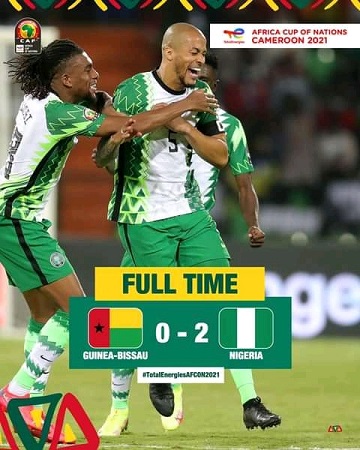
President Muhammadu Buhari congratulates Super Eagles on their brilliant wins against Egypt, Sudan and Guinea Bissau at the ongoing African Cup of Nations in Cameroon.

The President took to his verified Facebook account to commend the victories of the Super Eagles and urged them to maintain the zeal in making Nigeria proud.

The President posted, “Congratulations to our Super Eagles on winning all their three games and advancing to the second round of the AFCON in grand style. “

The President also advised the players to be good ambassadors of their country on and off the pitch.

He also noted that Nigerians are looking forward to Super Eagles bringing the cup home and assured them of his unflinching support.

He wrote, “They are assured of my unflinching support as they soar like the Eagles that they are to write yet another brilliant chapter of the unfolding story of Nigerian football”