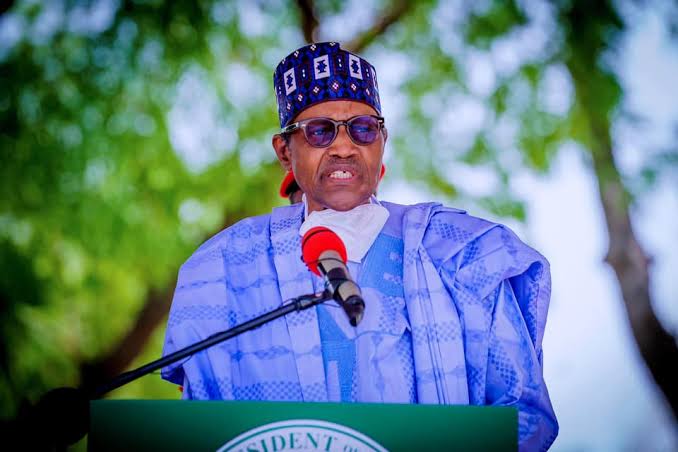
President Muhammadu Buhari

2023: Beyond unrealistic optimism

By Hassan Ahmad Usman

To begin, I would like my readers to understand that, unlike games, there is no “cheat code” for good governance. Governance is practical, with little room for derailing if the desired outcome must be achieved. If there is anything that President Buhari-led’s administration taught us, it is to shun unrealistic optimism.  There is nothing wrong with setting standards for our leaders or being optimistic about the prospects of their leadership.  

At the inauguration of Buhari in 2015, one would believe by now that he is rounding off his eight years stay, our four refineries would be functional, the epileptic power supply would be a thing of the past, security tackled, and so many things accomplished. 

Notwithstanding, people overlook many landmark achievements by his administration. Why? Unrealistic optimism. They are not the standards we set for him from the on set. In a year, we’ll have a new president, new administration and new policy makers. In between, we’ll have an election that will bring a new government.

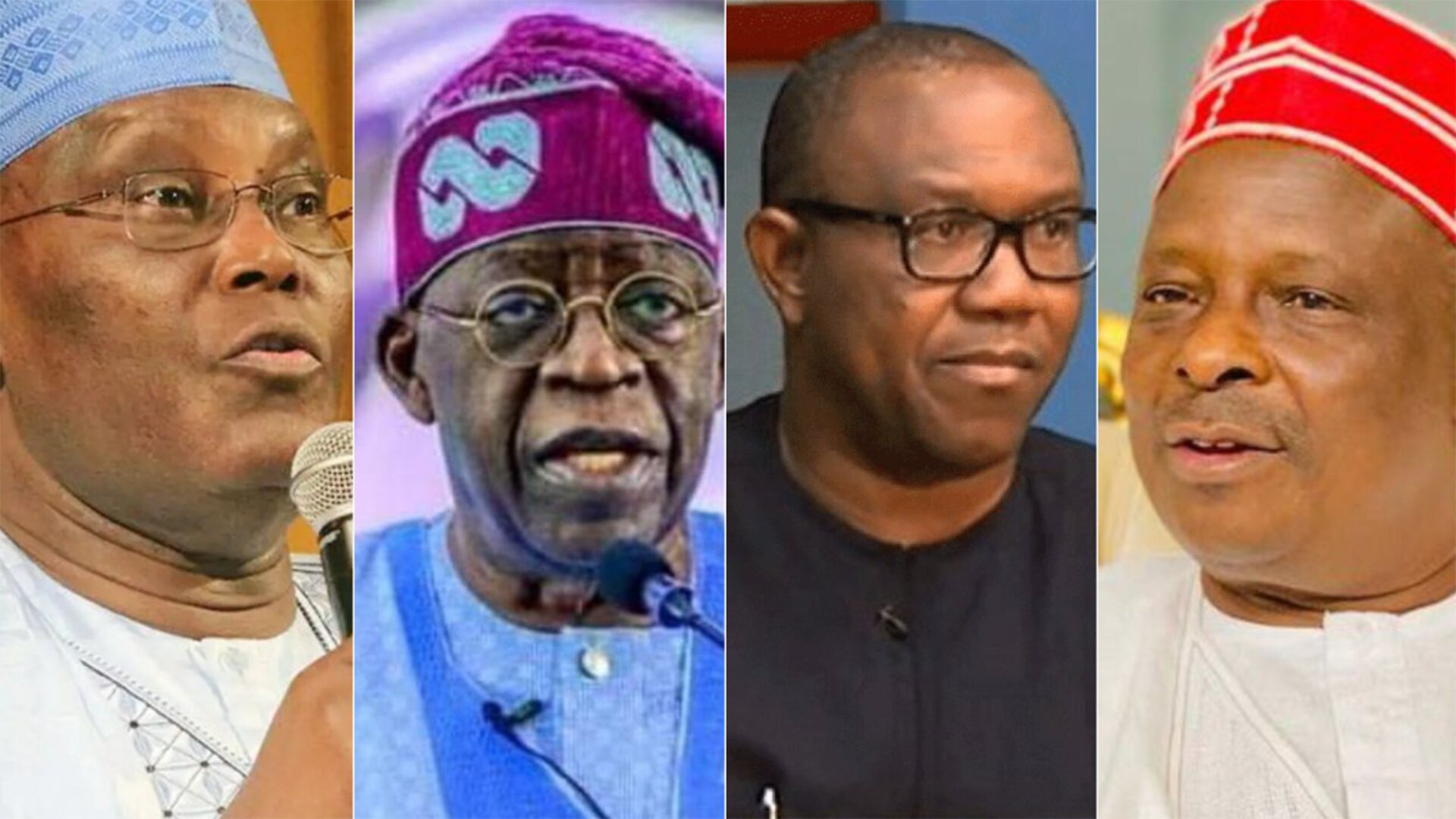
The leading candidates so far are former vice president Atiku Abukar of the People’s Democratic Party (PDP),  former Lagos state governor Bola Tinubu of All progressives Congress (APC) and former Anambra state governor Peter Obi of the Labour party (LP). These candidates are enjoying a large support base. 

My candid advice to the “Batists”, “Atikulateds”, and the “OBIdients” is to learn from the travails the Buharists went through in his defence. They marketed Buhari to the extent that we thought only miracles would better his performance in office, and failure was an impossibility in our imaginations.  We again gave him another chance despite his dissatisfaction with his first term because the Saraki/Dogara-led National Assembly was a block to his reform agendas. They also told us that the 2016 economic recession was a catastrophe due to the then-ever-falling oil prices. With these excuses, whether acceptable or not, we should understand that there won’t be a smooth ride for any president in a developing economy like ours.

So, I remind those supporters to moderate their optimism and understand and study what development is all about in modern civilization. It is not as easy as we thought. It would be best if you weren’t in defence of your candidate throughout his stay in office.  

Nigeria had her chance to turn things around when the oil price was at its highest. Unfortunately, indecisions and a lack of foresight from the leaders made it impossible. We are now living to bear the brunts of the indecisions of our past leaders. 

To Nigerians, we should understand that good governance that translates into sustainable growth and development cannot be achieved through “quick-fix” solutions. It’ll take longer than expected time for it to manifest. We’ve read and heard of the turnaround of countries like China and the United Arab Emirates but never paid attention to the processes they passed through before making it to the big stage. If development is what we all crave, we must all make sacrifices that come with it and know that we may not be the immediate beneficiaries of our own strides. 

Hassan Ahmad Usman writes from Lafia, Nasarawa State, Nigeria.  He can be reached via basree177@gmail.com.

Tinubu’s Emergence: A demonstration of political mentorship and lesson to Northern leaders

By Adamu Abubakar Kumo

Mentorship has been the way through which a more experienced, more skilled and usually more elderly person passes his experience, expertise, knowledge etc. to the younger ones. From education to politics, business to occupation, mentorship is instrumental to the continuance of the flow of wisdom from one generation to another.

The history of Nigeria’s founding fathers is undoubtedly that of heroes and legends who wrote their names in gold in the books of history. But, looking at today’s Nigeria, one would be right to say that the wisdom of those great men has not been successfully passed down to today’s generation.

Among the six geo-political regions of the country, South-West has distinguished itself. The region seems to uphold the principles of mentorship. From Sir Herbert Macaulay, Chief Obafemi Awolowo, Chief Samuel Akintola, Aare M.K.O. Abiola and now Asiwaju Bola Tinubu, Yoruba leaders have been producing leaders who subsequently would take over from them. They deliberately ‘build’ people; they sow the seeds and look after them until they grow into large formidable and strong iroko trees that can hardly be trampled or tempered with by just lilliputians if I were to borrow Shattima’s word.

The successful emergence of Asiwaju Ahmed Bola Tinubu is a testimony of the presence of mentors and the continuance of political mentorship in Yoruba land.

Asiwaju, for the past two decades, has been working, influencing the appointment of some of his mentees in strategic government positions, politically supporting his allies and subordinates to attain power and building political bridges and structures across the country. The man waited patiently until when it is time, the time for the Jagaban to reap the fruits of his labour, the time when Amaechi has support from within; the time when Lawan seems to have the blessings of some party juggernauts, the time when some northerners feel that only a Northerner can defeat the opposition’s candidate. At this precious time, Bola Ahmed ‘summoned’ his mentees across the length and breadth of the country and alas, they answered! They come in their thousands with all the vigour and support the Jagaban needs.

Despite the eloquence of Prof. Yemi Osinbajo, the grammar of Ayade, the bluntness of Yahaya Bello, the doggedness of Rotimi Amaechi and the ‘appeal for sympathy’ of the aspirants from the South East, Bola emerged victorious, defeating them hands down.

This ‘political war’ fought and won by the  Southwesterner may compel one to ask, where are the Asiwajus of other regions? Can somebody from North-East, North-West or North-Central brag about having the capacity to do something similar to what this septuagenarian did?

The likes of Sirs Sardauna and Balewa don’t exist anymore in the North. Moreover, nobody is following the footsteps of Hassan Usman Katsina, Sir Kasim Ibrahim, Malam Aminu Kano and many other patriots – the mentorship thread is broken. Though North has been boasting of having great and influential leaders, the problem remains that none is willing to ‘nurture’ his successor.

While Alhaji Atiku Abubakar was busy contesting to become the president right from 2007, Kwankwaso was busy fighting Ganduje and so on. On his part, Bola Tinubu was busy, making sure his candidates become governors in Ogun, Oyo, Lagos, etc. He was influencing ministerial nominations, making sure he appointed Vice President. He was equally working to bring Dimeji Bankole, Ahmed Lawan, Femi Gbajabiamila etc. In other words, Tinubu was busy ‘building’ people. Because he believes even if some choose to betray him, many others will not.

The lesson Asiwaju taught most of our leaders, especially from the North, is that, if you have a plan of twenty years, start mentoring people who will help you achieve it right from today. More importantly, look beyond your family and kinsmen when choosing your proteges.

Another point of note is that you will mentor a person who may rise to a position that you have never attained. This is normal. Don’t get upset when the person tried to rub shoulders with you. Instead, be focused, determined and strategic in your dealings.

Dear Northern leaders, make sure you mentor another person who may likely take over from you. Succession is natural, if you did not breed anybody, someone may grow on his own and come to fight and overtake you one day. Mentor your proteges today to have loyal mentees that will always be proud of you tomorrow.

Adamu Abubakar Kumo wrote via akumo89@gmail.com.

On the need to establish the Federal Medical Center Rigasa

By Abdullahi Yusuf

In our dear country Nigeria, the responsibility of providing health care to local communities is shouldered upon Local Governments through primary health care. State Governments are responsible for taking care of any facility under secondary health care, while Federal Government on the other hand is responsible for handling Tertiary Health Care Institutions which include (federal or state) university teaching hospitals or Federal Medical Centers (FMCs).

Contemporarily, there are 22 FMCs in Nigeria located in different states of the federation. In operationalizing the policy of providing health care services to Nigerian citizens, the Federal Government decided to establish one tertiary health institution in each state in which FMCs were established in states that do not have a University teaching hospital. However, there was an exception in the case of Lagos State which has both a University Teaching Hospital and FMC at the same time. This might be due to its population density and the commercial activities in the state.

Kaduna is the third most populous state in Nigeria with more than 5 million people as per 2006 census data. The number could be double today. Rigasa, a ward under the Igabi Local Government Area, is considered the fastest developing area in terms of population, with approximately 3 million people according to Wikipedia.

People living in Rigasa commonly faced limited access to good health care, having just two primary health care centres and one general hospital which are not enough to cater for the health need of the populace. There are quite a numbers of private hospitals which supports the provision of health care to the people of the community but could only be patronized by well-to-do members of the society.

With regards to the limited accessibility of quality health services by the people of Rigasa, the senator representing Kaduna central Mallam Uba Sani sponsored a bill for an Act to establish the Federal Medical Center Rigasa. According to him, this will bring much-needed relief to inhabitants of the hugely populated area, who for long have to travel long distances to get medical attention. This is a commendable effort by Senator Uba Sani and history will never forget his kind gesture towards the people of Igabi Local government and Kaduna State at large.

In 2019, if we can remember, Senator Uba Sani raised a motion with regards to a measles outbreak in Wusar village, which is under the Gwaraji ward of Igabi LGA. The Senate directed the Center for Disease Control (NCDC) and National Primary Health Care Development Agency to take measures that would address the outbreak. It also directed the NCDC to set up an office in the local government as a matter of urgency.

The bill for an Act to establish Federal Medical Center Rigasa passed its first reading on the 19th of November, 2019. And subsequently, passed its second reading on the 17th of December, 2019. The bill passed its third reading on the 3rd of December, 2020. It is currently awaiting assent by President Muhammadu Buhari, which will pave the way to the commencement of the work.

The boon of establishing FMC Rigasa can not be overemphasized as it will bridge the gap of accessibility of quality health care services by the people of the community and the state at large. It will also provide easy access to more sophisticated healthcare services by making available technologically advanced machines and equipment for the diagnosis and treatment of diseases of all kinds. It will also provide intensive manpower in taking care of patients and operationalizing the sophisticated health care services.

Socioeconomically, the establishment of FMC Rigasa will undoubtedly boost the macro and micro economy of the state by reducing the rate of unemployment among the graduates, promoting business activities of SMEs and increasing revenue generation for the state government. The huge economic impact of the Rigasa Train Station on the inhabitants of Rigasa and Kaduna State at large is obvious to all. Moreover, this impact will surely duplicate itself beyond expectation when the FMC is established.

It has been a well-known fact that Rigasa inhabitants are die-hard supporters of President Muhammadu Buhari, and they have never compromised their support regardless of the situation of the country. This is a great chance for  Mr President to reciprocate the gesture and prove his appreciation for his long-standing support by okaying the bill for commencement of work.

In conclusion, I will like to appeal to all concerned individuals who in one way or the other can support the actualization of this dream to help in pushing this agenda till it becomes a reality. Kaduna state government under the leadership of Mallam Nasir ElRufai have done a lot for Rigasa. Still, we will not relent in soliciting this one more favour concerning actualizing FMC Rigasa. Zazzau Emirate under the leadership of Amb Ahmad Nuhu Bamalli as well can help in facilitating this agenda, and finally Federal Ministry of Health under the leadership of the Honourable Minister of Health, Dr Osagie Ehanire should kindly help in facilitating the actualization of FMC Rigasa.

Abdullahi Yusuf is a student in Human Kinetics and Health Education Department, Bayero University Kano. He wrote from Rigasa, Kaduna, via abdoolphd@gmail.com.

Buhari appoints new ministers

By Ahmad Deedat Zakari

President Muhammadu Buhari has submitted names of seven ministers-designate to be screened and confirmed by the National Assembly.

The Senate President, Ahmad Lawan disclosed this during the plenary on Tuesday, June 21, 2022.

The names and states of the ministers – designate, read out at the floor of the Red Chamber include: Henry Ikechukwu – Abia State, Umana Umana -Akwa Ibom State, Ekuma Joseph – Ebonyi State and Goodluck Obia – Imo State.

Others are Umar Yakub – Kano state, Ademola Adegorioye – Ondo State and Odo Udi – Rivers State.

The nominees are to replace the ministers that left the administration to contest for different elective positions.

As at the time of fielding this report, the National Assembly is yet to schedule the date for the screening of the nominated ministers.

Students bemoan lingering FG/ASUU disagreements

By Uzair Adam Imam

The unending disagreement between the members of the Academic Staff Union of Universities (ASUU), and the Federal Government is increasingly generating reactions from students and eminent stakeholders across the country on the fate of Nigeria’s university education. In this special report, The Daily Reality gathered different and shocking responses of the students, concerning the lingering issue.

The incessant strike by the Academic Staff Union of Universities (ASUU) has been denounced as a farce that has negatively weakened the students’ morale to further their education in Nigeria.

The menace was also described as one of the most lingering issues that has been paralysing Nigerian universities, leading to the delay in students’ graduation and the deterioration of the education system in the country.

Some students that took to their social media to decry about the menace and how it slowly spirited their confidence away argued that the strike has destroyed the future of many promising youths in the country.

The Daily Reality recalls that ASUU has been on strike since February 14th, 2022, over the demands that include funding and the revitalization of public universities, Earned Academic Allowances, University Transparency Accountability Solution (UTAS) and promotion arrears.

In 2020, the union reportedly suspended its nine-month-long strike after reaching an agreement with the Federal Government.

However, the union bitterly complained that still after a year the federal government is yet to fulfil its promises.

Students are disappointed!

The ASUU strike has disappointed many students and led to the delay in their graduation, the development the students complained had spirited away the remaining confidence they had for studies.

A final year student, Abdurrashid Adamu, decried that, “I have less than six months to graduate from the university. Had I knew of this hitch to my studies, I would have embraced my diploma certificate and that would have been enough for me.”

Another student, Usman Idris Zakariyya, disclosed how ASUU strike has affected him and his friends saying, “many of my friends confided in me that they would not resume if not because they were in 400 level.”

Zulyadaini Auwal, a student who said he had already lost hope, stated that his business will experience a hitch if ASUU calls off their strike.

Khadijatu Abdullahi stated that she has no interest in studies anymore, adding that “had it been I was in 100 or 200 level I would have switched to college of education.”

People are mocking us – students

Some students also lamented the way some people derived very much pleasure in mocking them as the strike seems to have no end in a near future.

A student, Taufiq Musa, bemoaned at the way some people mock them because the ASUU’s strike lingers to about five months.

He stated, “nowadays, people used to mock anyone who determines and concentrates more on studies rather than something else.”

Yusuf Hassan, who seemed to be frustrated, said, “had it been I knew of this hitch in my studies, I would have not enrolled to school, let alone acquiring a diploma certificate.”

Saleh Ibrahim opined that he would have not resume to school if he was in 100 or 200 level, adding that, “and I’m sure many students will not resume.”

Parents raise alarm!

As the strike looks perpetual, some parents lamented that the advancing crisis between the government and ASUU jeopardizes their children’s future.

A parent, Malam Adamu Kolo, who looked disturbed by the unending strike, said that his son would have graduated if not for ASUU incessant strike.

Malam Adamu Kolo said, “My son would have graduated this year if not because of ASUU incessant strike. You can see that I am poor. I am hopeless. Our hope is on this boy.”

Another parent, Malam Musa Mukhtar, said, “our children live with almost no or gloom future. They neither go to school nor do they have anything to do for a living.”

ASUU members amidst hunger, heavy debt

As the strike persists to about four months, ASUU members decried leaving amidst hunger and heavy debt.

The lingering strike led to the imposition of No-Work-No-Pay by the Federal Government. The Minister of Labour and Employment, Dr Chris Ngige, stated that the directive was in compliance with Section 43 of the Labour Law.

A Senior Lecturer with the Department of Nigerian Languages, Dr. Muhammad Sulaiman Abdullahi, lamented how some of the members live without water and light due to heavy bills accrued.

He stated, “I remember how during the whole month of Ramadan, with the scorching sun and harsh temperature, lecturers languished with dry pockets and no salaries. Many lecturers didn’t have a chance to sew new Sallah (Eid) dresses for their kids, not even for themselves. Yet, another Sallah is approaching without any remorse or sense from this lousy government and its handlers.”

“The Maikantis (petty traders) selling raw rice, beans and other groceries no longer want to see us by their doors. Some of us have already forgotten toothpaste and have opted for chewing sticks now to remain clean.

“Our children have been sent out of schools due to non-payment of school fees. Landlords have knocked and banged on the doors of many; we pacified them, and some of them reason with us,” Sulaiman adeed in a piece he wrote.

No date for resumption

In a recent interview with journalists, the ASUU President, Prof. Emmanuel Osodeke, said there was no date for resumption, adding that hunger will not force the union to suspend their strike.

He added that the ASUU members are not beggars and the stoppage of their salaries by the government will not force them to call off their strike.

He further commended the members for keeping faith with the union expressing optimism that the union was on the threshold of victory.

However, some news of positive progress concerning ASUU and FG have started to fill social media and there is hope now that the strike may end soon. An ASUU member confirmed to TDR that talks between the FG and ASUU seem positive and now ASUU has already concluded its own part of the agreement, they are now patiently waiting for FG’s response.

Presidency confirms ex-Head of State Abdulsalami Abubakar’s ailing condition 

By Muhammad Sabiu

Garba Shehu, President Muhammadu Buhari’s Senior Special Assistant on Media and Publicity, has issued a statement on General Abdulsalami Abubakar’s health.

Remember that Abdulsalami was reportedly transported out of Nigeria for medical treatment, according to some media sources.

The retired Army General was reported to have suffered a minor stroke before being airlifted to a hospital in the United Kingdom (UK).

Shehu verified Abubakar’s release from the hospital in a tweet on Monday, stating that there was no need to be concerned.

“Alhamdu Lillahi for Allah’s mercy.

“I just ended a visit to His Excellency Abdulsalami Abubakar, former Head of State.

“He is out of hospital in a London apartment and apparently in no serious condition.

“He was his jovial self, maintaining a keen interest in developments back at home in Nigeria. Please, no cause for alarm.”

Abdulsalami was the Head of State in 1999, during which he conducted an election that brought the democratically civilian government of Chief Olusegun Obasanjo to power.

APC beats PDP, SDP, others to win Ekiti governorship election

B Muhammad Sabiu

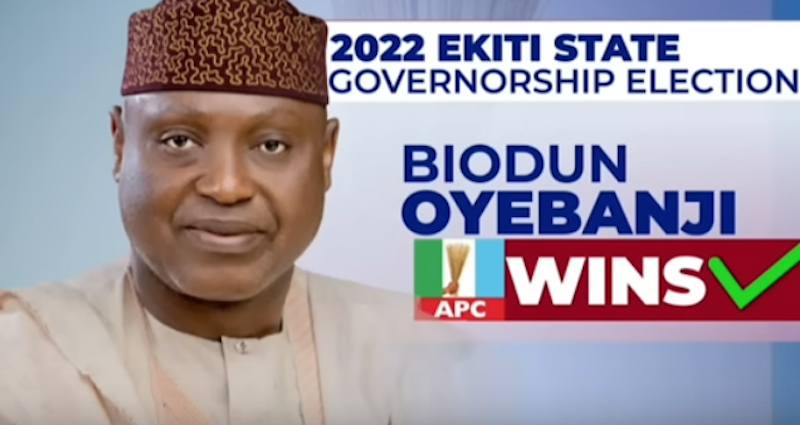
In the early hours of today (Sunday), the All Progressives Congress in Ekiti State emerged triumphant after the results of Saturday’s governorship election indicated that the party’s candidate, Mr Biodun Oyebanji, defeated the 15 other contestants that took part in the race.

Oyebanji, the state’s immediate past Secretary to the Government, won in 15 of the state’s 16 Local Government Areas after receiving 187,057 votes in the election.

His nearest rival, Mr Segun Oni of the Social Democratic Party, polled 82,211 votes, while Bisi Kolawole of the Peoples Democratic Party received 67,457 votes.

Kolawole won his LGA, Efon, with a total of 6,303 votes, beating the APC’s 4,012 votes and the SDP’s 339 votes.

However, Chief Segun Oni, the Social Democratic Party’s candidate, who voted in his home town of Ifaki-Ward Ekiti’s 2, Unit 6, accused the other parties of vote-buying in Ado Ekiti and Oye Ekiti.

He was reported to have said, “I have been told that selling and buying of votes are going on in Ado and Oye. This is not allowed by the law. I want security agents to move in and stop those doing that.”

Vote buying isn’t an unusual practice in the Nigerian political space since the rebirth of democracy in 1999 when former President Olusegun Obasanjo took over power.

More clarifications ahead of 2023

By Amir Abdulazeez

When President Obasanjo carelessly picked Goodluck Jonathan to serve as Umaru ‘Yaradua’s potential Vice President in 2007, little did we know that the politics of choosing running mates would later become complex and problematic. The death of Umaru, the ascension of Jonathan, the surprising emergence of Namadi Sambo and Patrick Yakowa becoming the first Christian Civilian Governor of Kaduna State would all combine to later add more relevance to the politics of running mate selection. In 2014, APC had more headaches picking a presidential running mate than the presidential candidate himself. It took them so much time and effort that one thought they would organize a new convention for that purpose.

Today, the Muslim-Muslim ticket debacle is the bane of Nigerian political discourse. While clamouring for fairness and balance, which are needed for a fragile system like Nigeria’s, we should also remember that from 1999 to date, no religion can claim any net gain from this Nigerian version of democracy. Ordinary followers of all faiths have been victims of bad governance, even pagans. We have suffered so much that if a pagan/pagan ticket will eradicate insecurity, fix the economy and bring development while being fair to all interests and affiliations, we should allow it. Therefore, the choice is between searching for solutions and satisfying sentiments; we seem to favour the latter.

A section of public commentators and spectators are already suggesting a walkover for Atiku Abubakar in the 2023 polls. That is the biggest complacency I have ever seen in contemporary Nigerian politics. How can you be facing a ruling party with almost 65% of political stakeholdership in the country and be expecting to have a walkover? Atiku is an institution, but his successes in the last two PDP primaries are more financial supremacy than political dominance. That aside, barring a Buhari-like scenario, Atiku will make a good president. He is perhaps the only fully independent candidate with a clear and accessible blueprint since 2007. In 2011, he had a better manifesto and approach than President Goodluck Jonathan; he only lost the PDP primaries to the power of incumbency. By the way, what happened to the Jonathan 2023 candidacy?

From 1992, this is Atiku’s 7th attempt at the Presidency, with 2019 being his closest to success. Many believe 2023 is his year, and so many apparent factors call for optimism in his camp. However, two fundamental things may haunt Waziri; (in)consistency and (un)popularity. Buhari and Tinubu are successfully reaping the harvests of consistency and perseverance; they stuck to opposition politics all their lives. Atiku should’ve remained in opposition when he decamped to Action Congress in 2007 or should’ve stayed in the ruling PDP when he decamped back in 2011. Ambition had kept him running from one place to another, making him neither establishment nor anti-establishment. The second question is whether there is a single state in Nigeria in which Atiku can secure one million votes or more in 2023? I hope we all remember Dr Rabi’u Kwankwaso’s 3-K States theory?

Tinubu’s boast in Ogun State over his role in the emergence of Buhari as President needs some revisiting and clarification. To avoid doubt, Muhammadu Buhari did not lose the 2003 presidential elections; it was brutally rigged to return Obasanjo for a second term. 2003 will easily enter the list of the worst elections in modern world history. In 2007, the results of the presidential election were simply written, so we can’t even call that election not to talk of who won or lost. I have never relied on 2003 and 2007 election figures for research or serious analysis because they are primarily fabricated. The 2011 elections were relatively fair, but at least 40% of the vote was rigged, written, or inflated, especially in the South-South and South-East.

In the circumstances like these, we cannot comfortably declare Buhari a loser of all the previous elections he contested and only became a winner when he met Tinubu. Although 2015 was indeed the weakest version of political Buhari, it was confirmed that he had lost hope and that the APC merger spearheaded by Tinubu was what brought him back to life. But it is also true that so many other factors other than Tinubu contributed crucially to Buhari’s victory. One major one was the abysmal performance of Goodluck Jonathan. One, however, is that, without Tinubu’s support, it would’ve been near impossible for Buhari to emerge APC flagbearer against the financial powerhouses in Kwankwaso and Atiku.

This brings us to the argument that access to public funds is why some candidates (not aspirants) are stronger than others. Supporters of a particular presidential candidate even claimed that if their man had equal access to public funds, he would be better than certain candidates. This is laughable; a debate like this will take us nowhere. Just campaign for your candidate and persuade people to vote for him. If we are talking about the abuse of people’s trust and the utilization of our commonwealth for personal political development, none of the prominent politicians in Nigeria will come out clean. So, let us not deceive ourselves and others.

Where are our smaller political parties who had spent most of their last four years fighting INEC over deregistration? This is a reasonable amount of time they would’ve spent coming together to form a strong bloc. In case we don’t know, 74 of them were deregistered for failing to meet the requirements to continue to exist as political parties. About 10 to 15 of the currently existing will be due for deregistration by this time next year. Instead of them to consider merging to form a decent alternative, they’ll rather hang on only to be fighting a legal survival battle with INEC next year. As the strongest and largest intellectual organization in West Africa, I don’t even know why ASUU is yet to form a political party or adopt any of the smaller parties to set up a path towards satisfying their own demands all by themselves instead of waiting and hoping for a hopeless Federal Government.

Why is nobody talking about the enormous task ahead of the next president, whom credible international reports suggest will have to use 100% of his revenue in servicing (not repaying) debts by 2024? To execute projects or even pay salaries, the next government may have to borrow further. Nigeria is in trouble. We are drowning in the ocean of foreign debts. Meanwhile, we are concerned over a presidential candidate’s religion more than his ability to bring us out of this mess. Buhari has failed because Jonathan had built a solid foundation for that failure. Now he has built a worse foundation for his successor. The possibility and danger of the next president, irrespective of his affiliation and preparedness to economically be worse than Buhari, is imminent. May God help us.

All of the political dynamics of today are closely related to 1999, some a bit earlier. Suppose you have not directly experienced Nigerian political development from 1999 with a mix of some pre-1999 historical knowledge. In that case, you will find it difficult, if not impossible, to connect specific dots that you see today. Extensive and intensive reading may help, but politely interacting with veterans will do better. Unfortunately, social media, where most of the political debates occur, is dominated by youths who knew little or nothing pre-2011 and don’t invest significant time in reading but trying to engage or even confront the same veterans that would’ve been their best opportunity at understanding the genesis of the current situation.

There are some visible changes in Nigeria’s socio-political spaces, although not new but have taken a different twist from the previous. The renewed order is the attempt to criminalize certain political choices against others. Between 2014 to 2018, discourses were dominated by hate, campaigns of calumny, fabrications and outright abuse. Today, political promoters are trying hard to make it appear that only their candidates are good enough, and any other choice is treason. This is extremism. Let’s be careful, everything is a matter of opinion, and everyone is entitled to his.

Twitter: @AmirAbdulazeez

Votes Count! Take note, Nigerian youths

Tordue Simon Targema

One of the most disturbing illusions in the Nigerian political space is the age-long notion that “votes don’t count”. This notion is mainly responsible for wide-scale political apathy among the citizens, especially the youths who constitute the majority of the voting population. A striking irony with the notion, however, is that those who peddle and promote it are active voters who always make sure they vote at each poll- from the ward to national elections! This irony, therefore, exposes the folly of those who accept the notion and, thus, disenfranchise themselves.

Of course, it is no longer news that the Nigerian electoral process is enmeshed in malpractices – from vote-buying to actual duplication of ballot figures. Yes, the enormity of malpractices in the Nigerian electoral system is weighty and serves to sustain this ugly notion that has become a great source of worry today.

Notwithstanding these malpractices, a fact that cannot be contested remains that votes are still essential and determine who wins the election. Yes, this is a reality, and even a casual observation of the Nigerian electoral process justifies it. For example, have you ever wondered why electoral evils such as vote-buying, underage voting, ballot snatching and massive thumbprinting of ballot papers by thugs all thrive during elections? The answer is simple: it is because politicians understand that the final vote-tally matters most and would stop at nothing to ensure that more individuals vote for them!

As a Presiding Officer in one of Nigeria’s most keenly contested national elections- the 2015 general elections, and as a voter at several elections, both local and national, I have sufficient grounds to attest to the fact that votes do not just count, but that politicians also realise this fact and stop at nothing to get their supporters to vote for them. The desperation they usually demonstrate during election seasons to woo voters justifies this. You can, therefore, refuse to vote at your sole expense!

I served as a Presiding Officer in one of the most strategic elections in Nigeria’s Fourth Republic. A popular candidate with a wide fan margin- Muhammadu Buhari, contested against the then-incumbent President Goodluck Jonathan. Buhari and his kingmakers had convinced the masses that they had all the solutions to Nigeria’s numerous problems- which were, at that time, overwhelming like always. This narrative was supported by the fact that realities proved Jonathan to be a clueless weakling who lacked the strategy and tact to successfully navigate the country out of its numerous woes- endemic insecurity, pervasive corruption and deteriorating living standards.

Despite his limitations, Jonathan had a pool of supporters who still believed in his leadership philosophy, sympathised with him based on his developmental strides, tribe, region and religion, and also had the potent privilege of incumbency! Never underestimate the power of incumbency in Nigerian elections. This made the election one of the most highly contested, as the margin between the two top contenders eventually indicated.

But most striking is the fact that technology was introduced for the first time in the conduct of elections – the almighty card reader! This made almost all the difference and took the political class aback during the polls. The political class, sensing that it would no longer be business as usual, embarked on massive mobilisation and canvassing for votes. Money flew in the air- as it has become the custom with elections in the country, gifts and inducements of all kinds – clothes, foodstuffs, livestock etc., exchanged between the political class and the masses to woo them to vote.

I had an experience as a Presiding Officer that made me believe that politicians believe in voting as the surest way to win elections! Stakeholders in my polling unit tried their best to get me to manipulate the outcome of the presidential election but to no avail. I would tactically tell them that I had a template, and any manipulation of the outcome would go against my template. Although I had no problem with that, the results would be rejected at the collation centre! This would quickly disarm them, and I had my way through without any rancour. That way, I finished the presidential election without a hitch from any angle.

By the second election- gubernatorial and state assembly, I had to contend with yet another challenge! The elite had studied the workings of the card reader and decided on how to manipulate the election, but that could only still be possible if they got people to vote- even if they were illegal voters. A particular stakeholder insisted he would convey me on his bike from the collation centre to the polling unit- some several kilometres away from the ward collation centre, which was equally an interior rural area, far removed from the local government headquarters. I obliged.

On our way, he intimated to me of his ambition: he had hundreds of unclaimed voters cards belonging to his polling unit, which he wanted to use. He observed during the presidential election that voters whose cards were successfully authenticated by the card reader and those that the machine could not authenticate their cards due to one reason or the other were eligible to vote.

The card reader operates at two levels: accreditation, which confirms whether a given card belongs to a polling unit or not, and authentication, which verifies that a voter’s biometric records match those of the card they are carrying. Authentication is usually successful once the card confirms a voter’s thumbprint. Where it fails to confirm, authentication is deemed unsuccessful, but the voter can still vote – provided that the card is successfully accredited. The Presiding Officer then fills an incident report form for such a voter. At the end of the voting process, the total number of successfully authenticated cards and the unsuccessful ones is expected to tally with- or at least, be more than the total votes cast, not the other way round.

The stakeholder pleaded with me to allow him to use the cards he was carrying since both those whose biometric records are successfully authenticated and those whose records fail are eligible voters. When I consulted with my team at the polling unit, I discovered that they had already mobilised and were ready to disrupt the election should we reject the bid. As a confirmation, we had early reports from the neighbouring polling unit that the electoral officers were booted out of the village! The Supervisory Officer had to call all of us and seek our tactical cooperation in the interest of peace.

Stakeholders at our unit then embarked on aggressive canvassing for voters- because I categorically told them that I would not allow one person to vote twice, whatever happened! So they had to pay willing young men with no cards to the turn of N500 per voting to use the unclaimed cards and vote for their political parties. Funny enough, all political parties cooperated and brought their supporters to use the unclaimed cards and vote. We had a peaceful voting process afterwards.  

During the 2019 general elections, I had an amusing but similar experience, this time around as a voter and not an electoral staff. The stakeholders of my polling unit had hundreds of unclaimed voters cards belonging to the unit. They undertook to pay each available voter N500 to vote for their parties. My friend was into the game and had to vote as many as four times! In the fourth round, the Presiding Officer warned him to respect himself and not return.

Now tell me: if votes don’t count as purported – or say they don’t matter, why would politicians go that far to get people to vote for their parties? Have you ever observed how desperate political stakeholders are during voter registration? For example, in the first and only voter registration exercise I participated in as ad-hoc staff, I was posted to the village of a one-time Member, the House of Representatives, a very interior village that is hardly accessible.

The ex-Member solely undertook to take care of our welfare; provided our accommodation, a generator for our comfort at night, ensured that we had the best meals and all of that. Why would a man do that if he had known that votes are needless and all he needs to do is manipulate election results during elections?

By my analysis, winning an election in Nigeria today is the responsibility of two sets of individuals within a political party: the individual voters and the elite class. As a voter, your duty to your party and the preferred candidate is to vote – and get as many of your friends as possible to vote for him as well. Once you do that, you have fulfilled your responsibility as a party loyalist and patriotic citizen. Leave the rest to the elite; it does not concern you. Even if your party did not win in the end, the conviction that you played your part- as a patriotic citizen would- is enough consolation.

The greatest disservice many young men do to their favourite political parties and the country at large is to make all the noise on social media while they do not know what a voters card looks like, have never voted and have no intention to vote, after all, wallowing in the illusion that “votes don’t count in Nigeria after all”. This crop of individuals is the major problem we have in Nigeria.

A clarion call to all Nigerian youths as the 2023 election approaches is to disabuse your mindset of this counterproductive notion, register, get your voters card and vote. Votes actually count! Don’t be deceived.

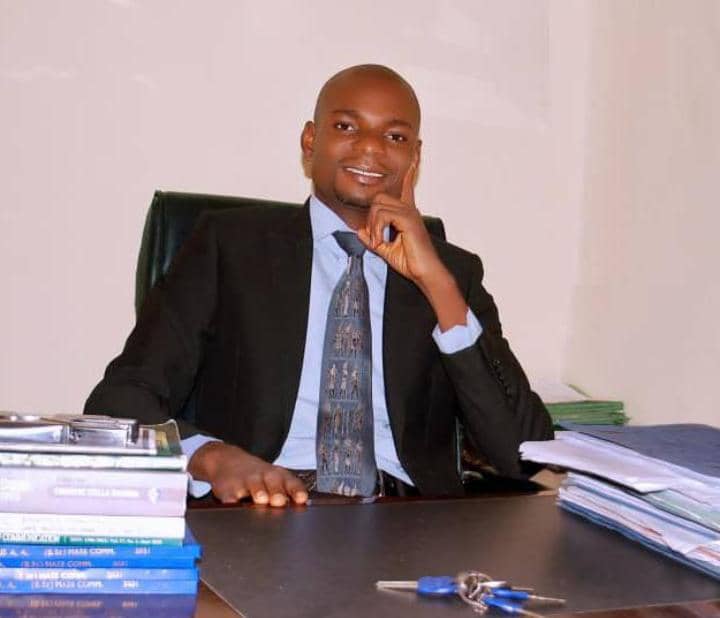
Tordue Simon Targema is a doctoral student at the Department of Communication Arts, University of Uyo, and teaches in the department of Mass Communication, Taraba State University Jalingo. Email: torduesimon@gmail.com.

2023: The imperative of a Muslim-Muslim ticket for APC

By Prof. Abdussamad Umar Jibia

The All Progressive Congress (APC) is undoubtedly a party that brings together some of the most outstanding politicians in Nigeria. However, what makes the APC most attractive is the fact that it is in power. It seized this power from the People’s Democratic Party (PDP), a party that ruled Nigeria for 16 years and was also adjudged a failure by the majority of Nigerians. That is why many people do not see PDP as the solution despite all the shortcomings of the APC-led government and the economic and security challenges confronting Nigerians.

One manifestation of the interest Nigerians have in the APC is the occupation of social media discussions, radio and television programmes and interpersonal group discussions by the APC Presidential ticket. Last week, Asiwaju Bola Ahmad Tinubu, a devout Muslim from Lagos, won the APC Presidential primary election with a landslide to qualify as the party flag bearer in the 2023 presidential election. As is the tradition, Alhaji Tinubu, a southerner, is expected to pick a Northerner as his running mate.

But there is also another tradition. Christian flagbearers usually pick Muslim running mates, and Muslim flagbearers choose Christian running mates. The examples are many. In fact, since Nigeria’s return to party politics, that has been the case. First it was Obasanjo/Atiku, then Yaradua/Jonathan followed by Jonathan/Sambo and now Buhari/Osinbajo. But in all these examples, the Muslims are Northerners, and the Christians are southerners. There is no problem since it can be said with a reasonable degree of accuracy that Christians are the majority in the South and a negligible minority in the North.

Now, should Asiwaju pick a Northern Nigerian Christian as his running mate? I listened to many arguments. The Governor of Kaduna State, Mallam Nasiru El-Rufai, for example, said religion does not matter in the choice of a running mate. What matters, according to him, is competence. This argument is faulty because democracy is about the choice of the majority, a choice characteristically influenced by many factors, including ethnicity, religion, gratifications, etc., in our country. If it is just about merit, candidates would be selected based on their performance in a standard examination on governance organized by my colleagues in Political Sciences Department.

The position of the Christian Association of Nigeria (CAN) is the most uncouth and uncivilized. CAN thinks they have a monopoly for violence and always use threats instead of valid logic. Suppose their position was backed by sound logic. In that case, all they have to do is present their arguments to Nigerians including Christians and non-Christians like every other individual and group does. The rest shall be for Nigerians to judge. Again, in politics, threat is the language of someone who has no one to influence, and it is obvious that peace-loving Nigerian Christians have lost faith in CAN and are no longer controlled by its rantings.

The fact is, any step taken by a political party preparing for an election is carefully handled to attract majority votes from the electorates. This includes the choice of its flagbearer and their running mate, its manifesto, which, unfortunately, most Nigerian voters do not read, its campaign strategy, etc.

Now, who are the majority voters in Northern Nigeria and what is their relationship with the minority? What would happen to the chances of APC if this majority realizes that the party is succumbing to threats like that of CAN to select its running mate? Is it by force to vote for the ruling party after all? Can’t they look and vote for an alternative?

Religion was not captured in the 2006 census. Still, we can have a good idea of the Muslim: Christian ratio in the North by considering the ratio of elected politicians in the North. Of the 19 elected governors in the North, 16 are Muslims representing 84.2 %, while three are Christians representing 15.8 % in the North and 8 % nationwide. Of the 58 senators from the North, nine are Christians representing 15.5 % in the North and 9 % in the entire country. In the North Central geopolitical zones, there are more Muslims than Christians. Four of the North Central elected governors are Muslims, with the other two being Christians.

These figures mean Northern Christians are a tiny minority compared to their Northern Muslim compatriots. Their number is even smaller when the country is considered as a whole and much smaller if we remember that most Christians in the North would not vote for APC regardless of its flagbearer or his running mate. You may wish to look at the voting pattern of Benue, Taraba and Southern Kaduna.

Over the years, activities of groups like CAN have set the Northern Christian minority against the Muslim majority. It is so bad that in any Northern Nigerian community where Christians are the majority, the story is about hate and violence against Muslims. The examples are many.

For example, as I am writing this piece, there is no single Muslim left in Tafawa Balewa, the hometown of the first Nigerian prime minister. The few Muslims who have not been killed have migrated to Bauchi and other places. Incidentally, that is the constituency of Yakubu Dogara, one of the Northern Christians being mentioned in the selection of a running mate for the APC flagbearer. In the event Dogara becomes the running mate of Asiwaju, the question every Northern Nigerian Muslim would ask is, is it compulsory for me to vote for my killer?

Other examples of Christian communities known for their violence against Muslims are Plateau State and Southern Kaduna. Over the last several decades, whole Muslim communities have been attacked and nearly wiped out in these places. Yet, when commissions of enquiry are set up, the grievances of the Northern Christians have always been that emirs dominate them, their great grandparents were enslaved, they are not given opportunities, etc.

Muslims have made many overtures in states where they have the majority in order to take Christians along and make them feel at home. An example of this is Kaduna state. It has always been ensured that the Deputy Governor of Kaduna is a Christian even though a Muslim-Muslim ticket can win with a landslide, as demonstrated in 2019. In their efforts to give Christians maximum opportunity, Muslim politicians were once suppressed to allow a Christian to become the governor. Where in the whole of the Christian world has this ever happened?

Moreover, chiefdoms were created for them by the Ahmed Makarfi administration to address Christians’ complaints of being traditionally ruled by emirs. After all these overtures, the same people killed over 1000 Muslims on one day in Zonkwa. Those who are saying that appointing a Christian as the running mate of Asiwaju would bring Christians and Muslims closer are probably not aware of this.

Compare the case of Kaduna with that of Plateau. Plateau has a population of Muslims equivalent to the population of Christians in Kaduna State. Yet, a Muslim has never been a Deputy Governor, much less a Governor. Attacks on Muslim communities in Plateau and Southern Kaduna only ceased because of the Fulani herders who, unlike the Hausa, would always take revenge when attacked. When the intolerant Christians realized it was a war they could not win, they had to declare peace.

That does not mean Muslim travellers are not intercepted in Plateau and massacred. We are very much aware of the murder of General Idris Alkali by Lafendeg non-Muslims. Yet, somehow, all the suspects arrested have been released due to the influence of the Governor, Simon Bako Lalong. We saw how he was running up and down between the state house and the Defence Headquarters to ensure that the culprits were not punished. Today, not even a fly of Plateau state has been convicted due to the murder of General Idris, a high-profile Muslim Army General.

Those pushing for Lalong to become Asiwaju’s running mate are probably ignorant of this. Suppose Lalong, who is only a Governor can successfully follow up to ensure that murderers of Muslims are not punished. What would happen if, tomorrow, he sits as the Acting President with full control of the country’s security apparatus and a similar thing happens?

Now take Babachir Lawal and the more charismatic Boss Mustapha. Both are from Adamawa State and were appointed by President Muhammadu Buhari only because he is Buhari, the darling of Northerners. The only question I have here is whether they have the political strength to defeat Atiku in their state. Certainly no. Outside Adamawa, other rules apply.

This write-up is not meant to malign any politician. On the contrary, all the Christian politicians I have mentioned above have APC dear to their hearts and wouldn’t like to see it lose at the polls. That is also the intention here.

Northern Nigerian Christians have not adequately prepared themselves for elections at the National level due to unnecessary inferiority complex and hate towards their Muslim neighbours. Of course, there are outstanding ones among them as no rule exists without exception. However, the collective behaviour of a community is used to assess people anywhere.

For now, Northern Christians may wish to set their house in order and plan for the future. Elections are not won by threats but by careful planning and building bridges.

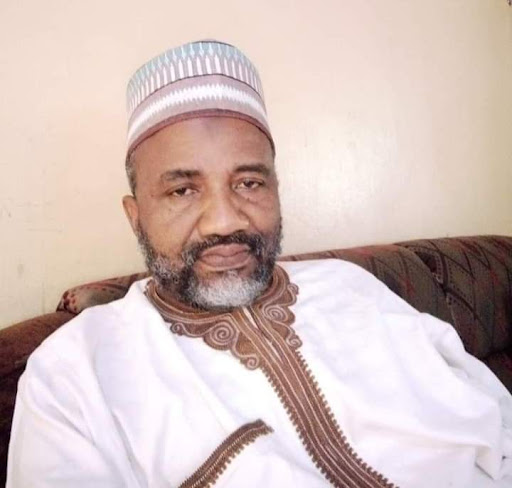
Professor Abdussamad Jibia can be contacted via aujibia@gmail.com.