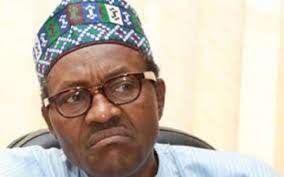
President Muhammadu Buhari

How did this Keyamo arrive at N1.2 trillion for ASUU?

By Prof. Abdussamad Umar Jibia

It is well known that members of the Academic Union of Universities (ASUU), the umbrella body of academic staff in Nigerian public universities, have been on strike for six months. Specifically, the strike began on February 14, 2022. Typical of the union of academics, it ensured that all means of avoiding the strike were exhausted before declaring the industrial action. Other university unions followed suit to avoid being left out in case ASUU emerged triumphant.

The issues are many, and not all of them have to do with money. And in fact, not all the funds mentioned in the dispute between ASUU and Federal Government will go to the pockets of ASUU members. No money goes to the union except the monthly dues it collects from members. It is not the duty of a trade union like ASUU to collect and disburse funds. That is the duty of university administrations.

Let me explain in plain language. But before I do, specific facts are vital.

Although the Federal Government has given licenses for the establishment of many private universities in Nigeria, only about six per cent of Nigerian university students are currently in private universities. More than 90 per cent of university students are in public universities owned by state and federal governments.

Another important note is that there are currently more supporting staff in public universities than operational (academic) staff. Consequently, there are three other unions in public universities apart from ASUU. People usually do not differentiate between ASUU and others, primarily due to Government propaganda. All of these unions are now on strike.

Nigerians may also wish to note that undergraduate students in federal universities do not pay a Kobo as tuition fees as long as they are Nigerians. The very little they pay as registration fees are for services like ID cards, games, hostel, etc.

The issues for which ASUU members are on strike are the same for which the immediate past government of President Jonathan Goodluck commended the union for being patriotic and selfless. One of them is the proliferation of public universities. Does it make sense that the same government that persistently complains of not having enough funds to run its existing universities is continuously establishing new universities in every nook and cranny of the country?

Revitalization of public universities for which an agreement was reached with Jonathan’s government to release N1.3trn in six instalments is what the FG has been using to misinform the public that ASUU is looking for too much money. Thus, any time the FG releases some paltry sum of N30bn, for example, it tells the world that it has given additional funds to ASUU. I think that is why some patriotic Nigerians once agreed to “donate the sum of N18b to ASUU” to call off its strike. This money does not go to ASUU. It is used to carry out projects by contractors appointed by FG or its appointee governing councils.

The only other thing that involves cash is the renegotiation of the 2009 agreement. In case you do not understand this, it is about the condition of service (SALARY AND ALLOWANCES) of academic staff, which the government promised to review every four years. But unfortunately, the promise has not been fulfilled for 13 years.

In 2020 after an ASUU strike, the Federal Government set up a committee to renegotiate with ASUU and other unions. The committee finished its work and submitted its report in May 2021. Regrettably, the report was dumped and, despite ASUU’s constant reminders and follow-ups, was only dusted when ASUU began its strike in March this year. That is when this government realized that it could not pay what was recommended by the committee. The same government set up another committee on the report it is unwilling to disclose.

As a student or parent, you are aware of all of the above if you have been following the engagement of ASUU with the Federal Government. I am only reminding you if you have forgotten.

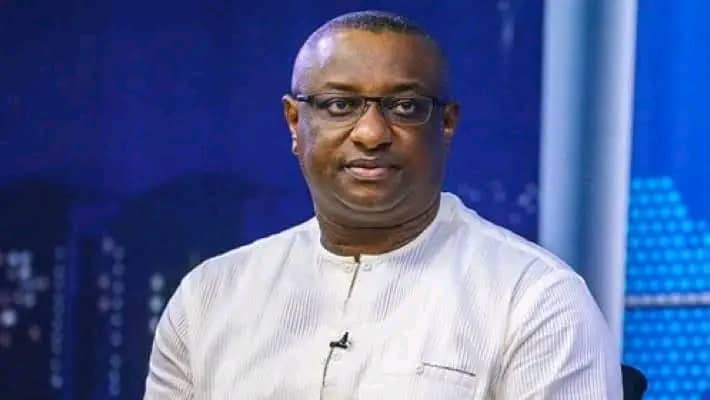
I am particularly shocked to hear the Minister of State Labour, Festus Keyamo, calling on parents to appeal to ASUU to end the strike. The reason is that they cannot afford N1.2tr ASUU is asking for. When did ASUU ask for this amount? Is it the revitalization fund Keyamo is talking about which ASUU never requested the FG to pay in bulk? If that is the case, why does it have to take FG six months of ASUU strike to state it? Or is it the result of renegotiation for which the FG never called ASUU and said what it could pay? It just doesn’t make any sense.

What about other issues like the UTAS for which the FG has been meeting with ASUU and claiming to have conducted tests with xy results? Is Keyamo also appealing to parents to beg ASUU on it?

And who are these parents? Please let all the government officials involved in this ASUU/FG negotiation mention the number of children they have in public universities and the programmes they are following. Of course, I know the children of Mr President study in the UK. I wrote to advise him against it when his family celebrated the graduation of one of his daughters in December 2019. Whether or not the advice of nonentities like me matters is a different issue. It is the ordinary us that cast the votes to elect him anyway.

Finally, let me remind Mr President that he has only less than a year to leave office. Unfortunately, nearly all his diehard supporters I know have been disappointed. This is mainly due to the people he entrusts with fundamental issues like Security and Education.

On the particular issue of ASUU and sister unions, Mr President seems to be overconfident in the Labour Minister, a southeast politician who was expecting you to anoint him to take over from you next year. When you refused to do it, one of them, who is also in your cabinet, stood before you in the last convention and accused you and your party of injustice. With that, can you rule out sabotage?

Mr President, please use the little time left to correct your mistakes and avoid making another regrettable blunder. Nigerians did not elect Ngige, Keyamo, Zainab or any of those. If not for you, these names would have long disappeared into obscurity. Please remember that most APC politicians who won the 2015 and 2019 elections, especially in the North, won because of you. So, the expectation is high, and the performance is dismal.

I hope Mr President reads this.

Professor Abdussamad Umar Jibia wrote from Bayero University, Kano. He can be reached via aujibia@gmail.com.
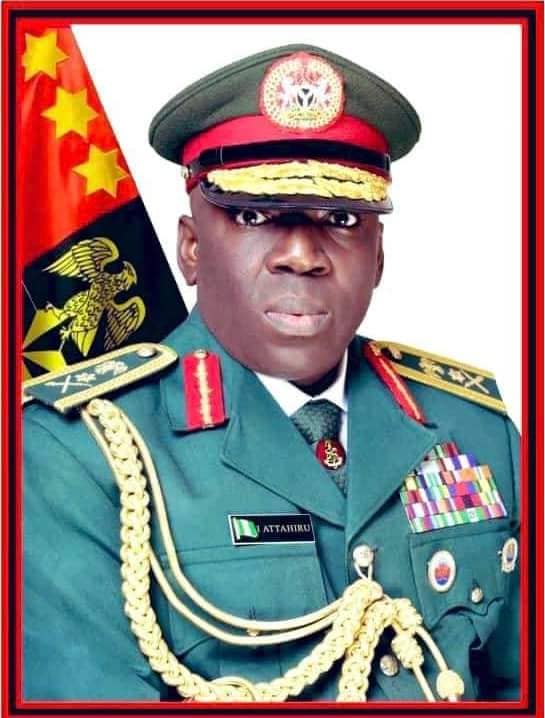
Celebrating General Ibrahim Attahiru in death

By Samuel Aruwan

“One who is loved, never dies.” – C.S. Lewis

Certain people we meet in the course of our lives become so important to our reality, that permanent separation from them is something the mind can never fully comprehend. The duration of meeting may not be long; it is the intensity and impact that linger in the memory.

Death is an inevitable end, but some people are simply larger than life, or should I say, death. Many times, it is easier to forget that they are no longer with us. We visualize their expressions, remember their presence, and hear their voices clearly in our heads as we recall conversations. For those who were known to the wider society, their work remains as a landmark to their lives, however short . The happiness of a memory quickly mixes with the sad recollection of absence.

It is with such mixed feelings, but mostly with a sense of great honour, that I remember, on what would have been Lt. General Ibrahim Attahiru’s 56th birthday, a man of immense character, discipline, selfless service and dedication above and beyond the call of duty. With a sense of supreme privilege and humility, I pay a post-humous birthday tribute to Attahiru, who was in all ramifications, a consummate officer and a gentleman, and truly a soldier’s soldier.

As we commemorate him today, it would not be out of place to remember him as a nation builder and a true patriot in his own right, who served his country impeccably in a stellar military career through which he rose admirably to become the 25th Chief of Army Staff.

It is in his final role that many – including myself – will most potently remember General Attahiru. Upon his sudden and tragic demise in May last year, I recalled his reassuring ebullient presence, underneath which he carried the determination, discipline, and professionalism of a born soldier. I reflected on his attentiveness and enthusiasm in our fight against banditry, terrorism, and general insecurity in our state, and in the region at large. I remembered then, as I do now, his crystal-clear vision and passion for the Nigerian Army.

That is the General Ibrahim Attahiru with whom I was blessed to interact. I also know that he is fondly remembered within military circles as a leader who reached out to the men under his command, and even to all who came under his care, and he looked out for them.

In contemplating the lives of great Generals, we wonder if the uniform makes the man, or if it is the man who fills up the uniform he wears. Beyond all that General Attahiru was in his professional sphere and in the limelight, we must not fail to remember him simply as a human being, as a father, as a man who lived by a creed of openness and accessibility. At the launch of the General Ibrahim Attahiru Foundation earlier this year, we heard about the man behind the uniform, Ibrahim Attahiru, the family man, the loving husband who never failed to put a smile on the face of his wife Fati. We learned of the doting and devoted father to Aisha Farrah, Zainab Maliha and Fatima Iman, who made it a priority to spend quality time with his three lovely daughters, encouraging them in their faith, in their academics, guiding them in their social lives and always letting them know that he was proud of them.

His job and its attendant demands notwithstanding, he made time to be a father and a friend to his daughters, and through his charm and courage, mentored them. These are the actions that will forever remain priceless in the lives of his wife and children, and they reflect the dedication with which General Attahiru conducted himself even outside the spotlight.

I will always be grateful for the privilege I had to interact with him, albeit briefly. During our engagements, he demonstrated to me quite clearly the power of hope, through his optimism, energy, and cooperative disposition. For me, and for others involved in security management, our highest tribute to General Attahiru, would be to walk in his footsteps, and to throw ourselves with unalloyed commitment at the fight which remains before us.

The General Ibrahim Attahiru Foundation which was launched at the one-year memorial of his demise, will seek to cement and transmit the legacy of the man, and the virtues which he typified; the values of strength, dignity, commitment to excellence, leadership, tenacity, openness, accessibility, mentorship, and fatherhood. It is upon such values that nations are built. It is these virtues which have led to so many honouring him today, on the 56th anniversary of his birth, to celebrate what he stood for in his life, and indeed the way he represented the Nigerian Army with distinction for nearly 35 years.

Today, once again, it is right that we celebrate the legacy of a hero, as we also continue to immortalize his love for service, knowledge and impact. It is a mark of honour, and a tribute to his memory. He is no longer with us, but he lives on in the quality of life that he lived; a life, cut short just shy of 55 years on this earth. We are saddened at the fact of his absence, but we are reminded by so many aspects of his legacy, that truly, he lived.

And so today we salute the memory of a patriot, and (I am privileged to say) a companion and ally, who would have turned 56. We celebrate with honour, the memory of a mentor, a brother, a father, a husband. We commemorate the birth, the life and the times of a quintessential soldier, a true General, who exited the arena suddenly, in the middle of a war, and more so, in the line of duty.

In remembering him on the day of his birth, we ensure that the torch of his legacy and ideals will continue to burn brightly, to inspire and lead, as he did.

For truly, one who is loved, never dies.

Aruwan is Commissioner of Internal Security and Home Affairs, Kaduna State.

The North is at war with itself

By Abdulrahman Yunusa 

Entire my life, I have never seen Nigeria more divided than this time under President Muhammadu Buhari. Even those who share the same geographical location, history and ancestral background at some point are fighting each other today. 

To be precise, the current tussle between Hausa and Fulani disturbs my psyche. Who really curses us? Are we used to such trivialities before, or just by accident, we found ourselves in this predicament overnight?

How can we convince the upcoming generation that the North used to be peaceful, where the inhabitants peacefully mingle with each other irrespective of tribal affiliation or identity? After all, the gleaming narratives have been bitterly coloured into ugly ones.

Perhaps, the crisis of identity was a thing of obscure in the North in those days. Nevertheless, for over several decades, the ethnics group have been romancing each other as if they were of the same origin, although they are to some degree. Hence they even succeeded in burying the ethnic difference by making social unions among themselves.

Sadly, today we are talking about another issue. Things have changed over time. We bow down and take a different dimension which goes in contrary to that of our great-grandfathers. The rising hostility is out this world today among the major ethnic groups in the North.

Honestly, this man may be the worst leader Nigeria has ever had. His advent into the corridor of power is a curse to the then two harmonious ethnic groups, who are fighting each other fiercely under the curtain of politics and other politically related issues. 

It’s unbecoming for the conflictual parties to shun the history of their peaceful relation to some cheap matters that don’t worth their attention, let alone consuming their long, everlasting, and marvellous cordial relationship. However, attached to any upheaval, there is a lesson to learn for the future.

On a lighter note, I sense some suspicious plan meant and orchestrated by some intruders to get this everlasting combo broken down. Sadly, soon chicken will come back home to roast. The invisible hands igniting the fire of hatred among the interrelated parties would bury their face in shame.

North would never be divided, in sha Allah. May North and Nigeria proper, amin.

Abdulrahman Yunusa is a political and social affairs analyst. He writes from Bauchi and can be reached via abdulrahmanyunusa10@gmail.com.

ASUU’s demands are unrealistic – Festus Keyamo, SAN

By Ahmad Deedat Zakari

The Minister of State for Labour and Employment, Festus Keyamo, SAN, said the demands of the Academic Staff Union of Universities (ASUU) are unrealistic, and the Federal Government cannot be blackmailed into borrowing money to end the strike. 

Keyamo made the statement on Friday, August 5, 2022, while speaking on Channels Television Politics Today. 

“Should we go and borrow to pay N1.2 trillion yearly?

“You cannot allow one sector of the economy to hold you by the jugular and then blackmail you to go and borrow N1.2 trillion for overheads when our total income would be about N6.1 trillion. And you have roads to build, health centres to build, other sectors to take care of.” He stated

The Minister then pleaded with parents to beg ASUU to return to the classroom.

“Like the President said the other time, those who know them appeal to their sense of patriotism,” Keyamo said.

“Let them go back to classes. They are not the only ones in Nigeria. They are not the only ones feeding from the federal purse. The nation cannot grind to a halt because we want to take care of the demands of ASUU.” He added

ASUU embarked on strike on February 14, 2022, and are seeking improved condition of service and revitalization of public universities amidst other demands. 

However, the Buhari-led Federal Government said it does not have the fund to attend to ASUU’s N1.1 trillion demand due to low oil prices. The impasse has shut down government-owned universities across the country.

Insecurity: President Buhari and other governors should learn from Bello

By Ahmad Deedat Zakari

It is no longer news that the security situation in the country is pathetic and worrisome. Even the blind can see that the country is held to ransom by forces that challenge the state’s monopoly of violence. It is appalling that governments at various levels have failed in their primary objective of protecting the lives and properties of citizens. Terrorism and other atrocious crimes are being perpetuated wantonly and daily.

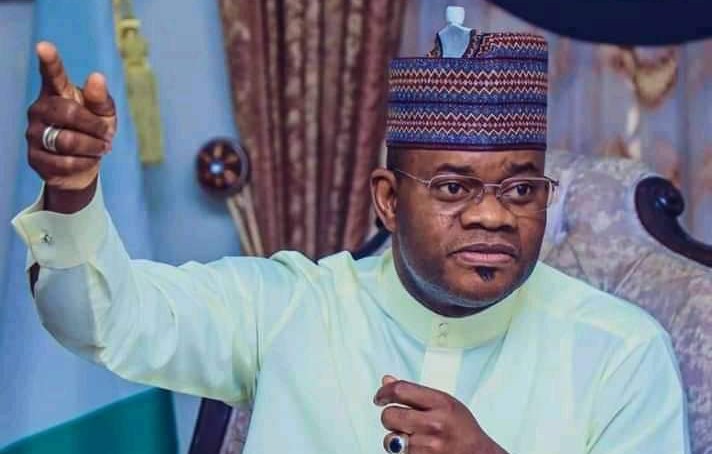
However, the Kogi State Governor, Alhaji Yahya Bello, is doing something different and commendable. In a Nigeria stuck with a replete of security challenges, Bello seems to be a shining example worthy of emulation by the president and his brother governors. This explains the relative peace we enjoy in Kogi, although it shares borders with about ten states in the country. Even while the country’s capital is under siege by terrorists and bandits, the same can not be said of Kogi State, which is about two hours drive from Abuja. 

Other state governors have to learn that as chief security officers of their states, the responsibility of protecting the lives and properties of people in their state falls on their shoulders. As much as collaboration is necessary between the states and the federal government on internal security issues, there is apparent incompetence of the highest order on the side of President Muhammadu Buhari.

For example, whenever there is a security challenge in Kogi State, the governor actively engages locals and traditional rulers in the area of the security breach to proffer solutions. This has proved effective in curtailing crimes. Although every state has its peculiar security problem, it is high time the governors realized this and came up with creative solutions like Bello is doing. 

Although many Nigerians have realized President Buhari is a grand failure, it would still do the country immense good if the president adopts Bello’s carrot and stick approach to security. Bello queries and suspends government officials and traditional rulers complicit in security infractions.

Bello similarly rewards the officials who do the needful in forestalling attacks and maintaining peace. But, sadly, the president only expresses shocks and issues empty threats that are never backed with actions. He honestly needs to learn from Bello, his political son and acclaimed mentee.

Ahmad Deedat Zakari wrote from Kogi State via ahmadzakari111@gmail.com.

The dilemma of being a hostage in the kidnappers’ den (II)

By Alkasim Harisu Alkasim

The abductors got bewitched by Hajiya’s daughter and wanted to hold her for marriage. Had they ever had sex with her? This remains an unanswered question, although such an act is their capital source of chillaxing. During their stay, the abductees could not be in the arms of Morpheus. I told you earlier that the kidnappers do different assignments, such as denying the victims a chance to sleep. There are others assigned to supply food and water and those to provide bullets, etc. 

Naturally, women suffer from menstruation period. How do they look after themselves during their monthly friend? It is devastating that the kidnappers eject from the den any victim suffering continuing ill health by gunning him. The kidnappers love talkaholism. They talk their ears off after drinking alcohol and dragging marijuana until an uproar overwhelms the place. Nobody is to tax the patience of these bestiality-stricken people unless they want to die.  

The bitterest part of this tragic story was where Hajiya came the selfish with the driver. Given the opportunity to call a blood brother residing in Saudi Arabia, she said something that made my blood boil. When the Saudi-Arabia-based brother asked how many of them got abducted, she shamelessly said they were two, deliberately forgetting to mention the driver. This unprintable selfish behaviour of Hajiya redounded back on her as the kidnappers held her daughter all the more and threw away the key. What a world! The driver got sorrow-ridden as problems slammed him. 

The superior kidnappers exploit the inferior by capitalising on their weaknesses and expertise. The inferiors bust their asses to gather money for the superiors, yet they can’t get the money that is worth their effort. The toil of the junior kidnappers is worth hundreds of thousands of naira. Things continued to pick up steam. As a result, they got pretty fed up with how the senior kidnappers capitalised on their expertise to gain money. This dilemmatic situation they got entrapped in emerged as a genuine concern. 

As raging parties, the senior and junior kidnappers failed to ensure a common mind among themselves. As the high frequency of their getting exploited steamed more, the juniors cut corners with some of the hostages despite their being under the magnifying glass of the kidnapping honchos. The new abductors collocated their new abductees in a new hidey-hole. Hmm! There is betrayal and sabotage even among the abductors.

One of them said to the driver, “Between you and me and these four walls, do you have relations who can ransom you?” The kidnapper did this to gain money to recompense the exploitation he had stomached when under the employment of their former superiors. But will they ever mend fences with their bossyboots? Nobody knows. The seceded kidnappers considered releasing whoever paid a ransom. They ordered the driver to pay some handsome amount to compensate himself. He told the kidnappers that his whole family could not gather such an amount. 

The driver bequeathed his wife and children through Hajiya, who was released on that very day following her ransom payment. So that the driver could not afford the amount they requested, they told him to pay any amount he could, no matter how smattering. Upon payment, he finally got relieved of being a hostage.

At this juncture, society and the government must do their utmost to see the youth walk a straight line in their respective communities.  Otherwise, they will always be putting a foot wrong. We all need to stop this problem, for failing to do so means we are putting a gun to our heads. It is also good to know that gaoling the criminals is not the only solution. Because at times, gaoling does not end social ills such as this.  Rather, the criminals should be rehabilitated, educated, enlightened and offered jobs. If you give them jobs, they can put butter on their bread.

Parents, too, should stop spoiling their children rotten to avoid paving the way for them to stubbornness. They should be more thorough with their children and reprimand them if they go wrong. They should be taken to market to learn the basics of trading. Maybe, some of them have got a Midas touch. Some boys are brilliant for they can work like clockwork. They can perform like a duck takes to water at anything they start. Let’s help them mend their lifestyle to begin to feel like a million bucks. It is disgusting that some parents contribute to spoiling their children by refusing to admit to handling even simple misbehaviour their children start to embody. This makes me lose the run of myself. This fact can’t admit to two interpretations. First, it is your faux pas. Period! 

I feel like a chicken with its head cut off to see our children engaging in the misbehaviour of flirting, misspending, playing truant, etc. Like it or lump it, our youth are rampantly becoming wayward. They abuse drugs like it is going out of style. They don’t only like it, but rather like it like mad. They busy themselves smoking and drinking like nobody’s business as if their lives depended on it. But indeed, if we make it our business, stopping this behaviour is just like taking candy from a baby. 

In conclusion, the government should redouble efforts, tighten security and reconnoitre suspicious places. The more disturbing thing the government should know is that the Chadians, Cameroonians, and other Fulani tribespeople form most of the kidnappers, while Nigerian kidnappers form a minority of those abductors. The government should also wake up to this, work hard to gain a wonder drug for the situation and record a great success. Let us strike while the iron is hot.

Alkasim Harisu Alkasim wrote from Kano via alkasabba10@gmail.com.

Banditry: FGC Kwali closes after attack

By Ahmad Deedat Zakari

Federal Government College Kwali-Abuja has been shutdown after midnight attacks on the neighbouring Sheda community.

Gunmen, suspected to be bandits, attacked Sheda community on the night of Saturday June 23, 2022. According to locals, there were gunshots which lasted almost an hour and a resident was kidnapped.

Following the attack on Sheda, a community that shares the same border with the college, the school management has informed parents to pick their children from the school.

A senior staff of the college who spoke to the Daily Reality on ground of anonymity said:

“The management has gotten the approval of the Ministry of Education for parents to pick their children from the school pending when their safety can be guaranteed”.

The incident has prevented the students of the institution from completing their third term examinations, which supposed to come to an end on Tuesday.

Why do people hate this regime?

By Lawi Auwal Yusuf

The unfortunate attack on the advance team ahead of President Buhari’s visit to his hometown, Dura, Katsina State, made the day of so many people. Indeed, it’s unarguable that, initially, the administration commanded deep respect. It was the most liked, revered and popular in this country’s history. But, of course, today, it’s the most loathed, and people solemnly disown it with an excessive feeling of hate. What stimulated such offensive aversion and malice? Why did this esteem veneration turn a disgust overnight? What made such immense support go swiftly on the wane? These are questions we need to ask ourselves.

For over a decade, people gave their lives, wealth and resources for the success of the assumed emancipator to wipe out the woes and salvage the country that came within the whisker of a failed nation come rain, come shine. People expected the saviour to be whiter than white, demonstrate ingenuity and were very optimistic that he would make life far better off than in the previous regimes. Instead, failure to create a framework for his success led to an embarrassing fallacy change, contrarily making life worst off. Moreover, forging policies behind the times really ravaged people’s lives, making the poor poorer.

Unfortunately, things went downhill after taking over the big office; life became an epic struggle for the masses to earn a living at a push. The economy is flat on its back, while markets are dead. We also witness a significant rise in unemployment, inflation, heinous crimes and terrorism. The security forces were overwhelmed and couldn’t check the horrific security threats, lest dancing to the tune of politicians and remain only specialised in molesting those that come out against the status quo or political opponents.

Moreover, to add insult to injury, tertiary institutions were closed for almost a year, whereas no society can develop unless its citizens are well educated. Regrettably, the country descends deeper into crisis. Hence, no one enjoys life at the moment, and hopes of a better life have faded.

As a result, the administration fell flat on its face, fell from favour due to corruption and mismanagement, disappointing even the most loyalist cohorts. They should have taken the great expectations, faithful confidence, and trust reposed on them seriously, not an indifferent attitude.

However, taking a leaf from the books of other dynamic leaders who made history was a good idea. They should have picked the brains of successful personalities like Lincoln, Mandela, Lee or Mao. But instead, they show a great zest for life, spend public funds like water, engage in swanky trips that break the bank and award lavish contracts for self-enrichment and kinsmen. Indeed, the damage done in those few years will surely take decades to repair. Today, people are not out of the woods yet and have realised that the wolf in sheep’s clothing and the past malignant regimes are but six of one and half a dozen of the other.

Not realising the long-lost potential of this nation and forging a global superpower blew their best chances of becoming great leaders without equality. This consequently irritates people and turns their back on them for achieving nothing important. It is so vexing that they cannot be courteous enough to return such favour, going down in history as the worst actors.

This abnegation has shown that people are in hot water. They are on the wrong side of the people and have pushed them too far. They are in their bad books for stabbing them in the back and no longer run the country’s affairs with their consent. However, it manifested the frustration, anxieties and disparagement that depict the lives of the citizens of this dystopian country. Thus, they are worn out of the cruelty and no longer anticipate any help. They are only anxious to survive to the end of this hardship.

As they are still blind to their faults, they will soon realise the error of their ways when given the push come 2023. The future of the party hangs in the balance, while history will always show them in an unfavourable light. However, we will never despair because we honestly believe that where there is life, there is hope.

Lawi Auwal Yusuf wrote from Kano, Nigeria. He can be reached via laymaikanawa@gmail.com.

APC ‘stole’ my NNPC plan, Atiku boasts

By Ahmad Deedat Zakari

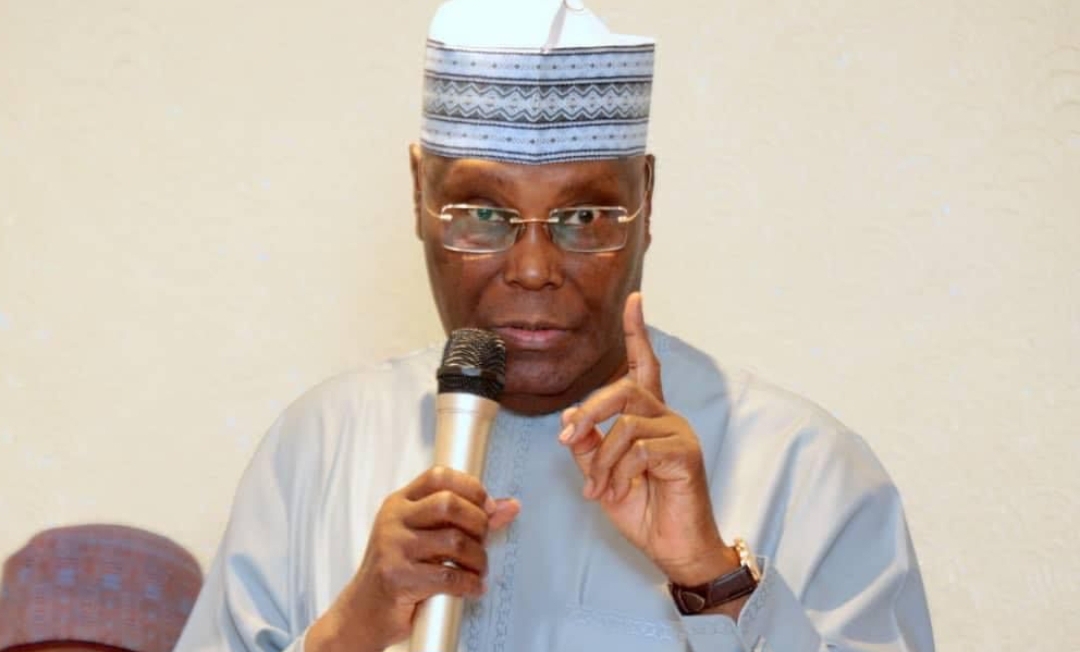
Nigeria’s former vice president and presidential candidate of the Peoples Democratic Party, PDP, Alhaji Atiku Abubakar, said the Buhari-led government had adopted his proposal to rebrand the Nigerian National Petroleum Company, NNPC

Atiku disclosed this in a post he made on his verified Facebook page on Wednesday, July 20, 2022. He said he is happy the decision was taken, but there is still more to be done to make the NNPC a world-class company.

“I had in 2018 made public my plans to reform the NNPC to make it more profitable, transparent and efficient. The APC-led government denigrated me for my patriotic vision. But today, I am happy to note that the same government has taken a tentative step along the lines of the suggestions that I had made. It is a step in the right direction, but we are still far from what I had envisaged. I hope I’ll have the opportunity to complete the process of turning the NNPC into a genuinely world-class company in the mould of NLNG, Aramco of Saudi Arabia and Petrobras of Brazil, where Nigerians and institutions will invest in. ” Atiku posted 

 Recall that President Muhammadu Buhari, in a televised programme on Tuesday, officially unveiled the rebranding and commercialization of the NNPC.

ASUU strike: Buhari intervenes, gives minister two weeks ultimatum 

By Ahmad Deedat Zakari

President Muhammadu Buhari has reportedly intervened in the ongoing impasse between the  Academic Staff Union of Universities, ASUU, and the Federal Government. 

Presidential Spokesperson Femi Adesina posted on Facebook on Tuesday, July 19, 2022, that the president was in consultation with ministers and government officials over the lingering ASUU strike.

“President Buhari in consultation with Ministers and other Government Officials over [the] lingering ASUU Strike in [the] State House on 19th July 2022”, Mr Adesina posted. 

In attendance in the meeting with the president were the Minister of Education, Adamu Adamu; the Minister of Finance, Budget and National Planning, Zainab Ahmed; the Minister of Labour and Employment, Chris Ngige, Minister of Communications and Digital Economy, Isa Pantami; the Head of Service of the Federation, Folashade Yemi-Esan; the Chairman of National Salaries Income and Wages Commission, Ekpo Nta, and the Director-General Budget Office, Ben Akabueze.

Sources in the presidency confirmed that the president had directed the Minister of Education to resolve the industrial crisis within two weeks.

It can be recalled that ASUU embarked on strike on February 14, 2022, which has crippled the academic and commercial activities in all the Nigerian universities.