President Muhammadu Buhari

Buhari’s daughter-in-law graduates from foreign university

By Ahmad Deedat Zakari

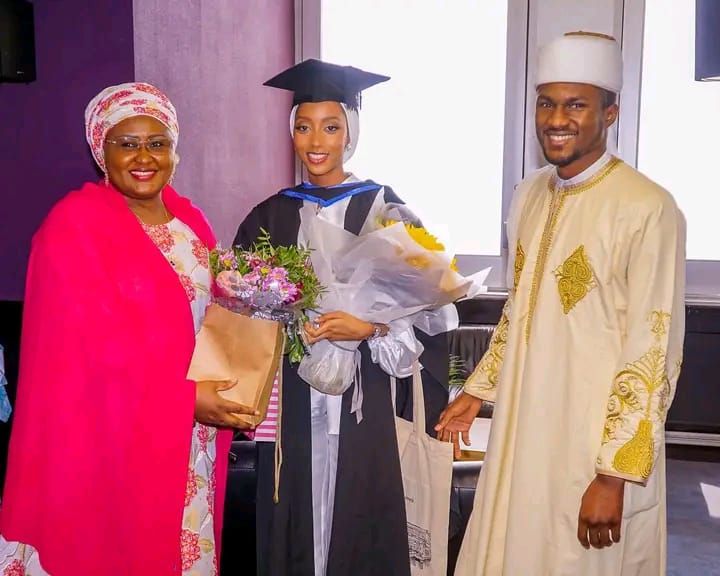
Zahrah Buhari, one of the daughters-in-law of Nigerian President, Muhammadu Buhari, has graduated from a foreign university.

Nigeria’s First Lady, Aisha Buhari, broke the news of the family’s milestone on Facebook on Tuesday.

The First Lady, who posted pictures from the graduation ceremony, congratulated her daughters-in-law on graduating with a first-class degree in architecture.

“Congratulations to Mrs. Zahra B Buhari on your graduation with First Class Honors in Architectural Science. Wishing you all the best!” She wrote.

This is coming amidst the Academic Staff Union of Universities, ASUU, months-old strike. Consequently, many Nigerians condemn the first family for being insensitive to the plight of Nigerian students.

ASUU Strike: Lecturer puts library for sale in Maiduguri

By Uzair Adam Imam

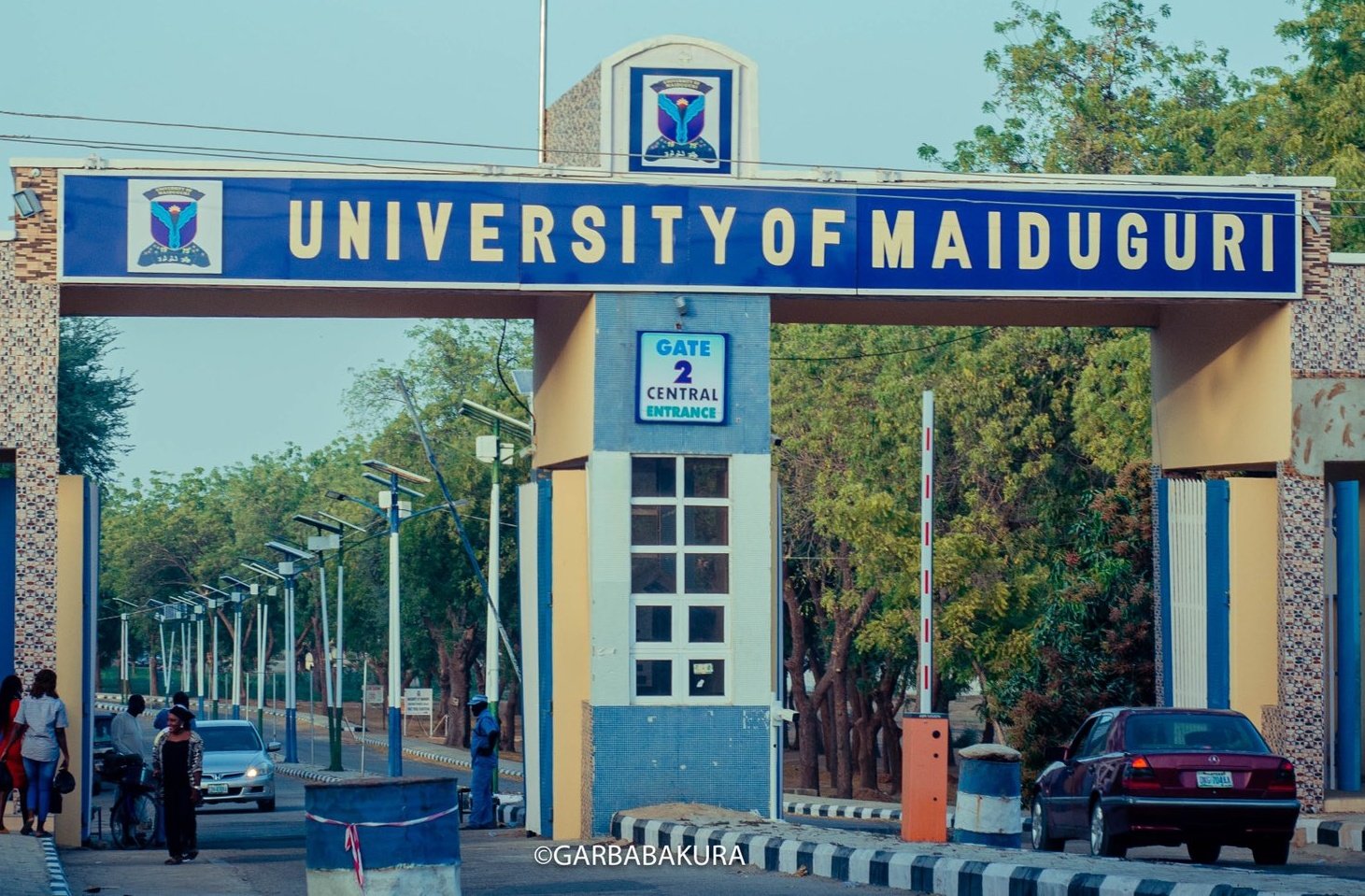
An aggrieved lecturer at the University of Maiduguri has put his personal library for sale as the dispute between the Federal Government and the Academic Staff Union of Universities (ASUU) lingers.

The lecturer, Othman Abubakar, disclosed this in a short note, which The Daily Reality verified, titled, “Goodbye To Education In Nigeria, No Hope”.

The Daily Reality recalls that ASUU has been on strike since February 14, 2022, resulting in the shutdown of public universities nationwide for over seven months.

The union is protesting against alleged infrastructure decay at various institutions and neglect of its members’ welfare.

Abubakar said, “With the destruction of university education in Nigeria today, and the starving of university lecturers by the insensitive APC government, I no longer need these books. 

“Those that still believe that education in Nigeria is important, please come to my office at the address below and buy these books at your own price l am available in the office from 9 am to 5 pm daily, including weekends.

“Access Address: Department of English and literary studies, University of Maiduguri. Sign. Dr Abubakar Othman,” he stated.

Currently, the case between ASUU and FG is in court as the FG dragged the union before the court to put an end to its lingering strike that led to the shutdown of all public universities nationwide.

Buhari grants Nigerian citizenship to 286 foreigners

By Muhammadu Sabiu

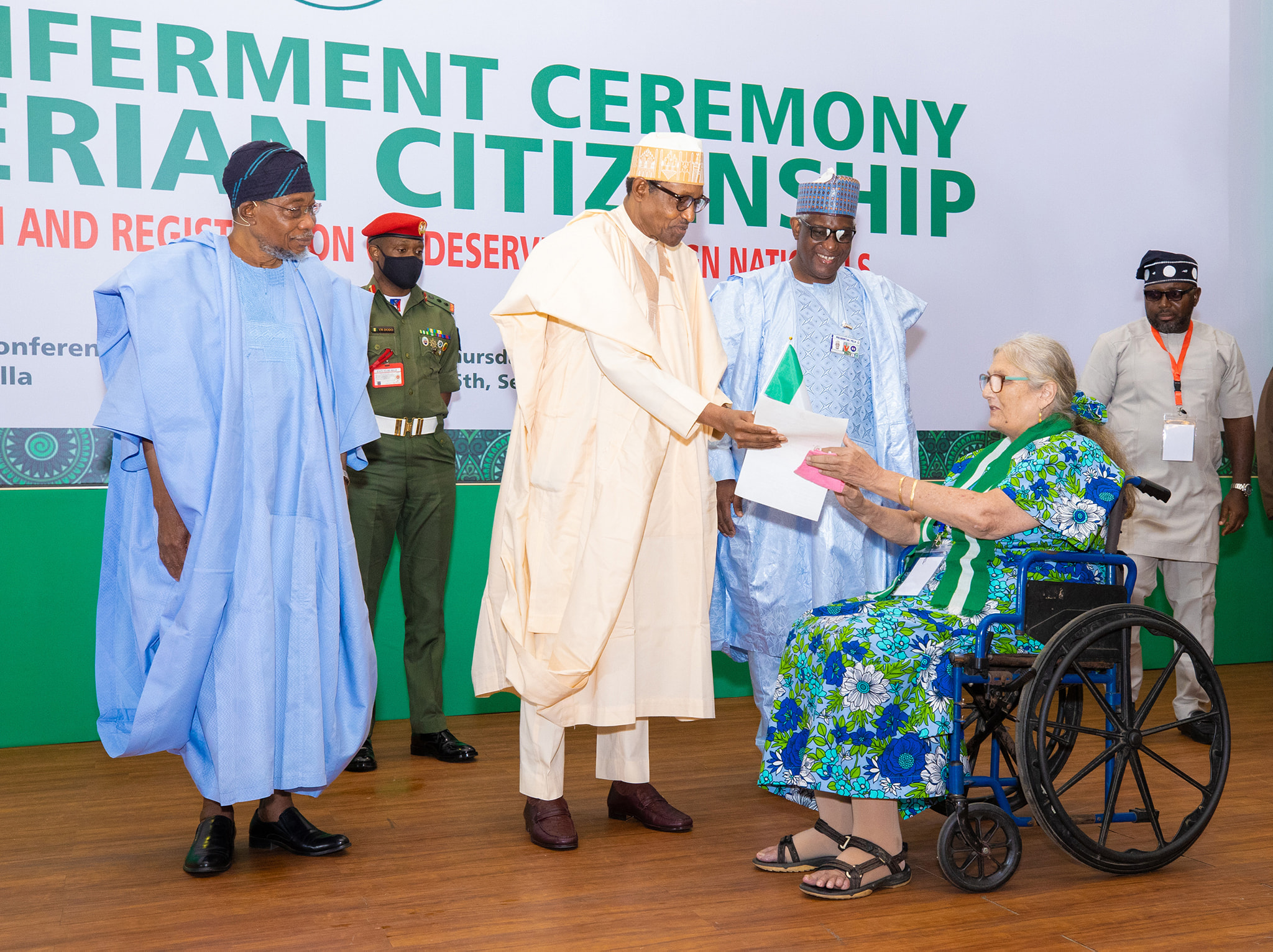
A total of 286 foreigners, including 86 Lebanese, 14 Britons, and 4 Americans, received Nigerian citizenship on Thursday in Abuja from the Federal Government.

At the State House, President Muhammadu Buhari granted the affected foreign nationals the status of Nigerian citizens.

By means of naturalization, 208 qualified individuals who signed the declaration declaring themselves to be Nigerians received citizenship.

After they had formally uttered the national pledge and oath of allegiance for Nigeria, the remaining 78 were granted the same status by registration.

Speaking at the occasion, Mr Buhari gave the Nigerian Immigration Service (NIS) instructions to present the new Nigerians with the proper credentials right away.

According to him, this would allow people to start enjoying the prestige bestowed upon them, regardless of where they reside in the nation.

Mr Buhari asked them to uphold national beliefs and make an effort to positively impact the communities in which they live.

The president noted that the event was required under the constitution and was intended to exonerate all lawful citizens of the nation from the label of “statelessness.”

Meanwhile, Rauf Aregbesola, the interior minister, had earlier disclosed that the foreigners had undergone a series of exhaustive examinations by the country’s security agencies before being deemed qualified and deserving of Nigerian citizenship.

He was quoted to have said: “Today’s ceremony is a reminder of our common human ancestry.

”These people came from near and distant lands, from different races, religions, ethnicity, and other social affiliations and identities.”

Enough of educational apartheid in Nigeria

By Sule Muhammad Zubairu, (PhD)

“I appeal to the federal government under the leadership of President Muhammadu Buhari to declare a state of emergency in the Education sector for the country to be able to change the fortunes of the system. Indeed, even among Sub-Saharan African countries, we are trailing far behind smaller and less endowed nations in terms of our investment in education. There is a need for a major investment in education in the national interest” – Adamu Adamu, 2017.

Let me express my sincere sympathy to the patriotic Nigerians in the education profession for their sheer sacrifices and selfless services for the betterment of public education. It is a heartfelt piece of article that aimed at mourning the last relic of the educational sector in a country where its policy makers think that university education is a mere burden that needs to be dropped aside. I am always in disbelief whenever I woke up to see how pitiful is the condition of the public universities in this country. Most often, I ask myself what went wrong with our leaders? Is this borne out of capitalists’ instincts, ignorance, self aggrandisements, corruption or a combination of all?

Nigerians and Elitist’s Sheer Hypocrisy:
In fact, if one wishes to see the real ‘educational apartheid’ then, one should have a look into the Nigeria’s educational system. Paradoxically, the primary stakeholders, managing the affairs of Nigeria’s public education are largely not enrolling their children in the public universities. For how long the masses will be deceived? How on earth this could even be possible? We have seen lots of graduation photos and selfies from foreign universities with their children, year in year out. Indeed, recently, we have seen them sending their pictures from Harvard University, while the public universities back home are still shutdown for months.

The poor attention given to our university education in this is simply about creating and maintaining different classes between so-called elite and others, the masses. But, they don’t want you to see it that way. Those in power may argue that they have been doing a great service to our educational sector, particularly the universities. Logically, if that is true why are they not patronizing them?


The sheer hypocrisy of the ruling elites in this country is a real source of concern and disturbing. But, I don’t think these guys understand it very well. I’m still wondering why up to this time there is no comprehensive statistics of children of high ranking office holders that school abroad. Imagine they use tax payers money to educate their children and leave those of poor in darkness. What a shame!

I pity my fellow poor Nigerians for generations to come, if they are destined to be ruled by these types of leaders. The writing is clear on the wall: the university education, as we know it, would be only for the rich!

ASUU members and their families’ woes:
I also pity ASUU members across the country for their steadfastness dodgedness to defend the remnants of our universities’ past glories. However, when dealing with shameless people one needs to be extra careful and have a rethink. In other words, how can you deal with a situation when some of the officials are thinking that education is not a critical issue, falsifying the outcomes of their own committees, and the Head of state seems not to be fully aware or even grasp the core issues at stake? In serious societies, education always tops the table and takes a reasonable share of their annual budget.

Shockingly, they are punishing the only set of people who stand against the total collapse of our public university system, by inflicting hunger, starvation and threats on them and their innocent family members. What a country! I sometimes use to thinking that the hate from our current ruling elites towards ASUU members and their families in this country is by far bigger than that of Boko Haram members, Niger Delta militants and treasury looters. Because these guys have been enjoying series of amnesties and even presidential pardon. I argue that even the Palestinians, black Americans (during the civil right movement) and black South Africans (during the Apartheid) have experienced fair or even better treatments from their oppressors than what ASUU members and their families are experiencing currently in their sovereign country.

My fellow ASUU members, whenever any second thought pops in your mind, you should remember what Adamu Adamu once said: “This nation owes a debt of gratitude to ASUU and the strike should not be called off until the government accepts to do and does what is required. So, instead of hectoring ASUU to call off its strike, the nation should be praying for more of its kind in other sectors of the economy” – Adamu Adamu, 2013.

To this end, as a concerned citizen, I pray to God, to guide us and our leaders to the right path and save public education from total collapse, amen.

Zubairu teaches Geography at Ahmadu Bello University, Zaria. He can be reached via; sulemuhd@gmail.com

ASUU Strike: FG declares war on ASUU, and the questions we are scared of asking

By Prof. Abdelghaffar Abdelmalik Amoka

The parents are angry over the strike. I can understand their frustration. Nobody can be happy seeing their kids at home while they are supposed to be in school studying. Some of the affected students are supposed to have graduated but can’t because of the strike. So, who should the parents vent their anger on? The government or the union of lecturers?

It is called a public university, funded with public funds, and we are all stakeholders. We are all meant to be concerned about the state of our universities. But they have been closed for the last six and a half months. Meanwhile, there are questions we are not asking as we take the side of the government or the lecturers.

Why is ASUU on strike? Where is a fund for other things but education? Why will the government set up committees, invest resources in them for weeks to work, and reject the report after the conclusion of their work? Why is FG not bothered about students spending months at home instead of being in school? ASUU is on strike. Why will it take FG 6 months to make an offer? What is the content of the Nimi-Briggs committee report that they are hiding? Why are they not ready to make our universities attractive to international students and scholars like they used to be in the 80s? The VP recently told people below him that “we” need to do something about the ASUU strike and the only person (the president) that he should be talking to was not there. So, who is the “we”? Are we in a hopeless situation?

Why are we not asking these questions? Let me review the situation.

There was a  strike in 2020 just before the COVID-19 lockdown. The government refused to and did not solve the issues that led to the strike till after the lockdown. After a  series of negotiations, ASUU and FG had a signed agreement they both called the Memorandum of Action (MoA). One of the items on the signed MoA was the renegotiation of the 2009 ASUU-FGN Agreement. Then, the Emeritus Prof Munzali’s renegotiation committee was inaugurated in December 2020. The committee concluded the renegotiation and submitted the report around June 2021.

There was no action after the committee submitted the draft agreement. ASUU lobbied for the implementation of the 2020 MoA and to take action on the submitted report by the FG renegotiation committee without result. ASUU reached out to NASS leadership. They promised to intervene without any result. ASUU members in December 2021 wanted the strike to be declared, but the executives pacified the members to exercise patients as religious leaders (NIREC) were intervening and a meeting scheduled. The intervention did not yield any results in January 2022.

Since all the lobbying failed, ASUU re-activated its last option. “Strike”! Then, ASUU declared the four weeks warning strike on the 14th of February. The government did not take it seriously. On its expiration, it was extended by 8 weeks. That was when they picked up the Munzali’s committee report to have a look at it and later said it is not implementable. They inaugurated the Nimi-Briggs’s renegotiation committee for another round of negotiation.

ASUU agreed. By then, the guys in the government were more concerned about the APC internal crisis and the primary elections. The 8 weeks elapsed without anything serious, and it was rolled over for 12 weeks. By the end of the 12 weeks, the Nimi-Briggs report was ready with the Minister of Education.

Shortly after then, Ngige and Keyamo were everywhere, blackmailing ASUU of some N1.3trn that nobody knows the source of the information. They were even blackmailing the committee that the FG set up. It was so embarrassing that the renegotiation team had to respond. I am sure you read the paid advertorials on national dailies.

Then, the Nimi-Briggs committee report was also set aside. And the minister came up with an “awarded” of N30k to N60k salary increase on gross for the lowest to the highest level, respectively, on a take-it-or-leave-it basis. It was an arrogant presentation, like he was talking to small boys. The ASUU team politely said they would present the offer to members for deliberation and revert even though it was obvious that it would be rejected outright by all the branches. The withheld salary was not discussed as it was not seen as an issue. You can only discuss that after the members accept the offer.

Adamu Adamu was a fan of ASUU and had written several articles justifying the previous strike actions by the union. He is very familiar with how ASUU operates. ASUU usually doesn’t disclose any discussion with the government to the Press till the offer is presented to members at the branches for deliberation. The minister took advantage of that principle and attempted to blackmail ASUU to the public. You are aware of his misinformation during the press briefing. He surprised everyone.

Meanwhile, for these last 6 months, the public was supposedly with ASUU on the struggle, support they said ASUU is losing. So, the public supported ASUU but watched FG drag the strike for 6 months before making an offer. There was no outcry from the public. So, what is the impact of public support then? If that public support is withdrawn, what will be the effect? It is not very likely to have an impact. ASUU seems to be in the fight alone.

In March 2022, after the strike was declared, a member of the House of Reps raised a motion to make it compulsory for public servants to patronize public schools for their kids. His reason was that if that happens, attention will be given to public schools. The motion was rejected by the House instantly. There was no outrage from the public. Unlike the rejected bill on women that attracted protest from women for weeks in the NASS complex, there was no protest from the public or the students to sustain that motion on education. It appears we are enjoying the slave-master relationship that is between the public and the supposed public servants.

But then, has the public ever been on the side of ASUU during any strike? What steps did they take for a quick resolution? The public never really supported ASUU’s struggles for the universities, and I feel their pain. They want their kids to go and get a degree. They are unconsciously not bothered about the quality of teaching in the university. The state of their lecture rooms, lecture facilities, available learning resources, and hostels; are not all important. They are expected to MILT. After all, as long as they know somebody or have the cash to buy a job, the kids don’t need to know anything to get a job. They just want a graduate to be celebrated. You can’t be happy seeing that your child at home due to the ASUU strike. Since you can’t afford a private university and those emperors in the government are too big for all of us to fight against, it’s natural to transfer the anger to the oppressed side, the lecturers!

Dear parents, ASUU did not keep your kids at home but FG. If FG is sincere and does the needful instead of threats, ASUU members are willing to return to classes tomorrow. The whole crisis is shrouded with insincerity. If the government is sincere, the strike would not have lasted a month. They know the minimum to offer that will be acceptable if they want the strike to end. As Dele Ashiru, the Chairman of ASUU Unilag, rightly stated, the Federal Government declared war on ASUU, and lecturers in the public varsities are only responding to the unacceptable treatment with the indefinite strike.

To my colleagues, there is an invitation for a meeting in Abuja on Tuesday. Expect anything. But whatever happens in Abuja, you have 2 choices: to give up, get nothing after the 7 months of hardship, lost your withheld salaries, or endure and get what you are on strike for and get your withheld salary released.

Dear Malam Adamu Adamu, please remind Mr. President that Nigeria is still a developing nation and education is key to our development pace and must be placed on the priority list. No serious government will keep their universities inactive for 6 months and still counting. That displayed ego that shocked everyone must be set aside for a serious discussion to end this crisis. The declared war against ASUU won’t end it but dialogue.

Education must be properly funded, sir!

ASUU strike: Socio-economic theories and everything in-between

By Sagiru Mati, PhD 

I’m an academic and, therefore, a member of the adamant trade union known as the Academic Staff Union of Universities (ASUU), which has been on strike since 14th February. However, I’m not writing to judge who is right or wrong, as both the Federal Government (FG) and ASUU have their share of the blame. Caveat: this write-up does not represent the position of ASUU; all opinions are mine.

To understand the genesis and dynamics of the contention, it is crucial to see the issues through the lens of the theories proposed by Emile Durkheim’s consensus theory, Karl Marx’s socialism and Adam Smith’s concepts of rivalry and excludability, which form the basis of modern capitalism. I will briefly explain these concepts in light of the ASUU-FG imbroglio.

Durkheim asserts that humans, as political animals, are innately egoistic, and only the “collective consciousness” – in the form of social facts such as values, norms and beliefs – controls the egoism and ensures the stability of the society. He developed the consensus theory, which studies society holistically rather than individualistically. Durkheim believed that social reality should be found in the collective consciousness, not individual consciousness. The whole is greater than the sum of its parts.

The societal equilibrium is attained through consensus by the parts based on social facts: language, norms, customs, values and so on. The society itself metamorphoses from a simple society that correlates with mechanical solidarity, where individuals are brothers’ keepers, to a complex society that corresponds with organic solidarity, where individualism prevails.

Nigeria is currently in a transition from a simple to a complex society. Hence, unlike a few years ago, it is now easy to distinguish the children of the poor from those of the rich, even if they come from the same family or neighbourhood. Gone are those days when one man in a family provided for his family’s needs and that of his close relatives. The main argument of the consensus theory is that societies don’t always have to resort to raising their contradictions to crisis and then resolving them through conflict.

Socialism advocates the total ownership and control of economic entities by the authority rather than private individuals, with the main motive of maximising citizens’ welfare. Karl Marx, as its proponent, grouped the individuals into Proletariat and Bourgeoisie. The former is the working class, while the latter controls the means of production. The ASUU’s members and students are the epitome of the Proletariat and subscribe to socialism as they fight to improve their service conditions and university funding and reject the idea of transferring the burden of tuition fees on students.

Capitalism is the direct opposite of socialism and promotes private ownership of the means of production, with the sole aim of maximising profits. Adam Smith, as a proponent, explained what goods and services private individuals and authorities should own based on two concepts: rivalry in consumption and excludability.

Rivalry in consumption implies prevention or reduction in the ability of simultaneous consumption of goods and services. Excludability refers to the extent to which non-payers can be restricted from consuming goods or services. If goods or services are rivalrous and excludable, like university education, they should be owned by private individuals. On the other hand, the state should own the national defence, which is, to a great extent, non-rivalrous and non-excludable. The FG, which subscribes to capitalism, has been privatising and commercialising public economic entities since the introduction of the Structural Adjustment Program (SAP) in 1986.

The capitalistic FG utilises three tools to manipulate the Proletariat: starve them, don’t educate them and divide them. The FG has been starving ASUU’s members as it has been withholding their salaries since March in the name of the no-work-no-pay policy. Barriers to education have been created by not funding universities adequately. Hence admission seekers may meet all requirements but may not get admitted due to the admission limit imposed by the FG. The FG is trying to divide ASUU by considering registering a splinter union known as the Congress of University Academics.

The FG has recorded little success regarding the first and second tools. However, ASUU has fallen into the FG’S trap, as evident by the recent ASUU Chairman’s no-pay-no-work utterances, which hint at venting their frustrations on students and calling some universities quacks, thereby emboldening the line between the State and Federal universities. Obviously, the FG has divided the Proletariat into State Universities and Federal Universities, and into ASUU and students, even though most students have supported ASUU.

Given the foregoing, we can discern that the ASUU-FG face-off is nothing but the clash between socialism and capitalism in a society transitioning from Durkheimic mechanical solidarity to an organic one. Therefore, ASUU needs to change its modus operandi so that its efforts to liberate the Proletariat shouldn’t be hurtful to themselves. The ASUU Chairman needs to be cautious of his utterances. He should understand that both states-owned universities and students share the same economic class with ASUU: Proletariat.

A recent proposal by the National Parent-Teacher Association of Nigeria (NAPTAN) to offer ten thousand Naira (10,000.00), and subsequent rejection of the offer by ASUU, indicates that the two bodies are not working together. ASUU alone cannot win this “battle”; it will be a good idea if it involves the NAPTAN. The duo may develop better wisdom and influence to make things happen, as two good heads are better than one.

The FG should fund universities adequately as Nigeria is too unripe for privatisation or commercialisation of university education, which deserves public finance as it is a merit good. The FG should pay the ASUU’s withheld salaries on the condition that the universities run three semesters a year until they compensate students for the striking period.

Sagiru Mati, BSc (BUK, Nigeria), MSc, PhD (NEU, North Cyprus), wrote from the Department of Economics, Yusuf Maitama Sule University Kano, Nigeria. He can be reached via sagirumati@yahoo.com.

Unlike students and ASUU, what will the Nigerian government lose?

By Abba Muhammad Tawfiq

Instead of a strike, I suggest the Academic Staff Union of Universities (ASUU) should honestly scheme other ways to fight back against the unfair treatment of its members.

Fighting the government with a strike is like a futile attempt to break a mighty rock with an egg. As a group of intellectuals, the only key to the locks of unceasing demands of ASUU is to think out of the box and remain level-headed. But instead of thinking logically to arrive at a substantial outcome that can help ease our education and its entire elites,  the thick curtain of fury guiding the sole objectives of ASUU always obstruct the proper view of the political gladiators!

Like other governments, blessed and lucky is ASUU indeed to have its veteran members in the APC government, ranging from the vice president and the chief of staff to the president to other key figures nesting in the national and presidential offices. With them, I believe that ASUU has the ball rolling in their court. But, of course, nothing can hinder the prosperity of their goal-oriented behaviours.

The strike and on takes us nowhere but to a town of academic Sodom where we, the students, live in the terror of academic denial and our lecturers in the brutality of salary denial! In addition, ASUU’s constant fighting of a superior force like the stolid Nigerian government over its worthy right never had, in the past, and will never in the present, be a forthright approach for a substantial outcome.

Therefore, I wish ASUU  could politely liaise with our Professors at the tiptop of governmental offices to reach a peacefully assuring panacea that can save them and us from turmoil besieging us all together.

Abba Muhammad Tawfiq, a 500L Medical Rehabilitation student at the University of Maiduguri, wrote from Yola.

Misconception about ASUU

By Sulaiman Maijama’a

If not because of the dogged determination and great perseverance of the Academic Staff Union of Universities (ASUU) in defence of education in Nigeria over the years, public universities in the country would have since been in a dilapidated condition with poor infrastructure, poor remuneration of staff.

Moreover, the universities would have been stocked with unqualified teachers, just like what is happening to our public primary and secondary schools or perhaps worse than that. Those who misconceive ASUU, for its struggles, as being selfish know nothing about what education takes to be efficient.

It is common knowledge that people who had the luxury of attending private primary and secondary schools in Nigeria earn more prestige than those who attended public ones. This is so because the quality of education in public schools at the basic level has since been diminished. But the reverse is the case at the university level; products of public universities in Nigeria can show a trick or two to their counterparts who are produced by private institutions. This is to the credit of the ASUU.

The Union, despite the meagre resources it receives and the poor funding the universities suffer, is able to produce professionals who are rising and shining in respective disciplines globally. Notwithstanding this feat, the union has been pushed over the years to go into industrial action at the detriment of students and the action by the ASUU is always greeted with criticisms from the public domain.

As a university student, the fact that our academic pursuit is being elongated owing to strikes is paining, and so, I agree wholeheartedly that strikes embarked upon by the ASUU almost annually are not the best solution and not the best way to put pressure on the government to meet its demands but, to crucify the union for its doggedness is not fair at all. If we ever dug deep to understand how much education costs in the countries across the globe and compared it to the demands of the striking ASUU members that are yet to be met for over a decade, for which they have always protested, we would discover that education in Nigeria is as worthless as a waste dump.

According to the United Nations Educational, Scientific and Cultural Organisation (UNESCO) recommendation, for any nation that wants to adequately meet the demands of education, 15 to 20 per cent of its annual budget should be earmarked for the sector. Unfortunately, Nigeria’s budget for education has always fallen below the recommended benchmark.

Despite the daunting tasks and the challenges that are posing threat to the sector and the need for additional funding, President Buhari’s 2021 budget share for education is the lowest in ten (10) years. Out of N13.08 trillion budgeted for the year, only N742.5 billion, which is equivalent to 5.6 per cent, was allocated to education, which is the lowest allocation since 2011. This is about half of what President Jonathan earmarked for education in the 2015 budget.

In 2011, President Goodluck Jonathan allocated 9.3 per cent of the total budget to education. It was further increased to 9.86 per cent in the 2012 budget; elevated to 10.1 per cent of the total 2013 budget. It was 10.5 per cent in the 2014 budget, and the same President Jonathan earmarked 10.7 per cent of the 2015 budget, which happened to be the highest in the last decade.

However, when President Muhammadu Buhari came on board, in his first budget in 2016, the education share was cut short drastically to 7.9 per cent of the total budget, and in 2017, it was reduced to 7.4 per cent of the total budget; in 2018 it was 7.04 per cent, while 7.05 per cent of the 2019 budget was allocated to the sector and in 2020 it was 6.7 per cent, and 5.6 and 7.9 in 2021 and 2022 respectively.

While former President Jonathan had every year increased the budget share for education throughout his stay as president from 9.3 per cent in 2011 to the highest 10.7 in 2015, President Buhari has been drastically reducing the budget from 7.9 in 2016 to the lowest 5.6 in the 2021 budget.

In any case, the Buhari/APC-led administration’s lackadaisical approach toward education is indisputably disastrous to the lofty dreams of young Nigerians to attain global recognition academically. How could a serious government that values education give only 5 per cent of its annual budget to the most sensitive sector like education? This is beside the series of outstanding memoranda of understanding the government signed with the ASUU in 2009, 2013 and 2017, as well as the Memorandum of Action (MoA) of 2019 and 2020, but yet to be implemented. How on earth could you expect the ASUU not to be aggrieved?

And now, the Minister of Education is further fuelling the disagreement by telling the ASUU members that their six months denied salaries during which they were on strike would not be paid, making reference to the “no work, no pay policy”. I don’t know the provision of law on this, but my concern is, how can you come to meet with a union of intellectuals like ASUU and dare to tell them that this is the final government’s offer and that there is no need for negotiation; it is either they accept or reject it? This is highly ridiculous.

In my view, education is a treasure. Whatever huge amount of money is invested in it, it will definitely pay off eventually. A member of the Senate Chamber, whether or not they raise a motion, whether or not they contribute to a debate, earn a whopping thirty 30 million or thereabout monthly. This is minus all other illegal earnings which are obtained through leakages and corruption. In comparison to academics, a professor who spends his life sacrificing his time and pleasure doing research to contribute to knowledge does not earn a mere five hundred thousand a month, with all the inflation.

I don’t want to dwell much on making comparisons with the fortune allocated to the National Assembly. But, if such an amount of Naira notes which is beyond imagination, would be given to the National Assembly, why can’t the Federal Government meet all the demands of the ASUU to proffer a lasting solution to this lingering strike that is jeopardizing the future of the Nigerian youth, wreaking havoc on the economy and threatening the fabric of our social structure?

It is evident during the EndSARS protest in 2020, when students were on strike, that the strike was a contributing factor that fueled the agitation, which later turned tragic. Had it been the youth who were mostly the ones at the forefront of the demonstration who were on campuses, busy coping with their academic activities, the move would not have been accepted to such an extent, and therefore, the government would have easily controlled it.

As the saying goes, “an idle mind is a devil’s workshop”. Now, the 2023 forthcoming elections are fast approaching, and the youth are bored doing nothing and, therefore, can indulge in anything that comes their way. Who knows what could possibly be the next trend if the youth remain idle?

The Federal Government must understand and appreciate the value and power of education, respect all agreements reached with the ASUU and invest more resources in the sector in order to save the future of young Nigerians. This is because, without education, man is like an animal.

The ASUU, on the other hand, needs to understand that strike is nothing but a calamity to education. They should adopt amicable and diplomatic ways of engaging the government. “When two elephants fight, grasses suffer the most”.

Maijama’a is a student at the Faculty of Communication, Bayero University, kano. He can be reached via sulaimanmaija@gmail.com.
FG mulls ending fuel subsidy after 2023 general election

By Muhammad Aminu 

The Federal Government (FG)has proposed June 2023 after the general election to eliminate subsidising fuel in Nigeria.

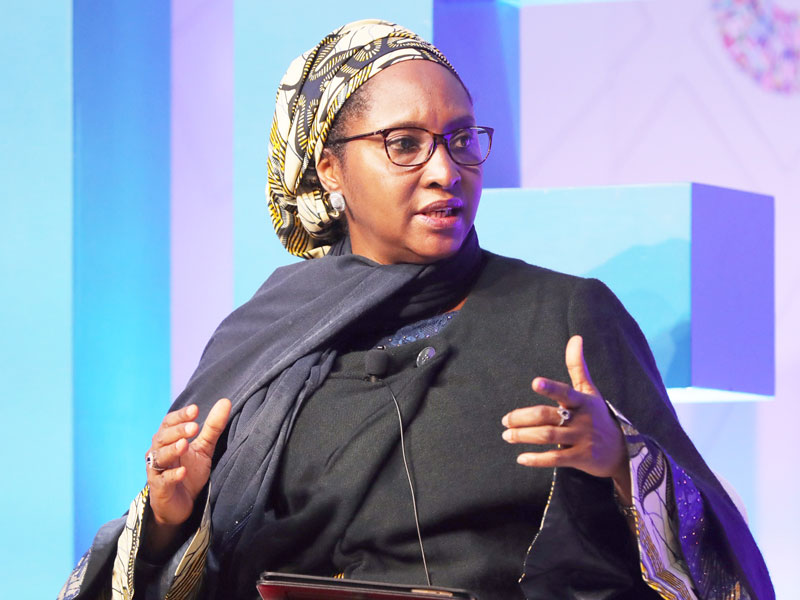
Minister of Finance, Budget and National Planning, Zainab Shamsuna Ahmed, disclosed this at the hearing of the House of Representatives Ad Hoc Committee Investigating the Petroleum Products Subsidy paid between 2013 to 2022 on Thursday.

Ahmed, who disclosed that the FG is planning a new date to end payments on under-recovery between the landing cost and regulated pump price of PMS, stated that the subsidy regime was not sustainable and may force more borrowing in 2023.

She said that the government, in the 2023-2025 Medium Term Expenditure Framework and Fiscal Strategy Paper planned for payment of the subsidy for only the first six months of 2023. 

Ahmed further disclosed that President Buhari transmitted the MTEF/FSP to the Senate and the House of Representatives as approved by the National Economic Council and the Federal Executive Council.

“One thing that stands out in the Medium Term Expenditure Framework was that if the nation holds on to fuel subsidy as it is designed now, we will be incurring from January to December a subsidy cost of N6.4tn. But we suggested to the Federal Executive Council, and the council approved that maybe, we could look at the option of exiting the subsidy (regime) for half a year. So, if we did that, then the cost would be N3.35tn, which is half of the N6.7tn.

 “The Federal Executive Council approved the second option. That is the option that was conveyed by His Excellency, the President, to the National Assembly. But Let me also say that even though this is a reduced option, it would mean that we are borrowing more than we would have borrowed if we did not have fuel subsidies.  In 2022 we are carrying the cost of subsidy throughout the whole year.

“Recall that the initial MTEF and approval by the parliament was for us to exit the subsidy by June of this year. But during the course of the year, making assessment of the difficult fiscal challenges in the economy and the hardship that our citizens are bearing due to high inflation and other challenges, we were asked to re-submit our plans and review them to include provision for fuel subsidy throughout the year 2022. That was how we came back to parliament with an incremental expense from N443bn which we had planned to up to N4tn subsidy expense in 2022,” the minister said.

She added that“This situation is not desirable and it is not sustainable. It is putting the country in a very serious, dire financial situation and we do hope that we will be able to exit this subsidy regime in the shortest possible time.

“The N3.35tn in the approved MTEF that is now before the National Assembly for consideration could have been funds that would apply to other vital sectors of the economy such as health, education and social protection. So, we are carrying a burden and we must sit back as citizens and really assess whether it is beneficial for us to continue to do so.”

The minister also presented a breakdown of withdrawals from the Consolidated Revenue Fund and the Excess Crude Account for payments to oil marketers under the subsidy regime.

She said, “Deduction of PMS under recovery shortfall by NNPC for the period 2013 to 2022: We are reporting that there is a total sum of N4.436 trillion which was deducted as PMS under-recovery by NNPC for the period January 2013 to December 2021.

“In this report, we are reporting the sum of N1.774 trillion has been paid to independent oil marketers as subsidies from 2013 to 2016.

“I will like to call the attention of the committee to note that the total sum of N6.210tn – that is the N4.4tn plus the N1.774tn – was expended on PMS under-recovery by NNPC as well as payment of subsidy to independent oil marketers from 2013 to 2021.

“I want to report on the funding of subsidy payments to independent oil marketers for 2013 to 2016. Payments that have been made to them were directly from the domestic Excess Crude Account through the reduction of Sovereign Debts Instruments that we call the SDIs.

“The SDIs are negotiable short-term instruments that were issued by the government at that time to give marketers comfort and enable them access financial support from their bankers for the importation of PMS. The instrument was approved by the then President in 2010.”

 She added, “It is also important to note that there were instances where funds were transferred from the Consolidated Revenue Fund to the domestic Excess Crude Account for subsidy payments.

 “For 2015, there are two instances: N31bn from the FGN’s excess domestic account, transferred from the CRF. Again in 2015, N156.1bn transferred from the CRF in another instance to the domestic Excess Crude Account.”

The minister, however, told the committee to request the statement of account of the NNPC from the company directly.

The committee resolved to request documentary evidence of the beneficiaries of the N500bn after some members expressed their reservations about the payments, especially without knowing the actual volume of PMS consumed daily.

27 train victims still in captivity, Buhari should intensify efforts – lead negotiator

By Sumayyah Auwal Usman

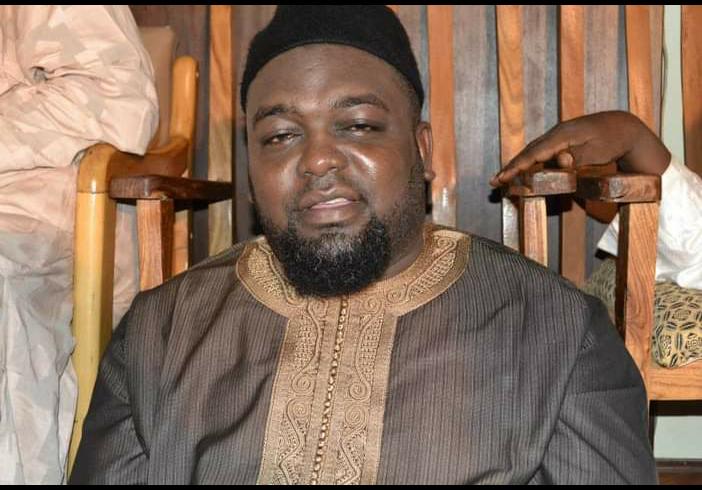
The lead negotiator with the abductors of the Abuja-Kaduna train passengers, Malam Tukur Mamu, has confirmed that the remaining 27 victims of the train attack are still in captivity.

Mamu confirmed this in a press release he personally signed in Kaduna on Tuesday. He said “this is to confirm without doubt that the remaining 27 passengers of the train attack are still being held by their abductors, nearly 5 months after the unfortunate and preventable incidence”.

“Though I have disengaged myself from negotiating, anxious family members, pressmen and concerned Nigerians have been calling to confirm the veracity of the news while many others justifiably have been celebrating and even congratulating relatives of the innocent victims” he said.

“While it is a news we are all praying earnestly to hear, it is highly irresponsible for peddlers of FAKE NEWS to circulate sensitive contents that are not only unverifiable, untrue but news items that will certainly trigger anxiety and concerned amongst the family members of those that remained in captivity and millions of their well wishers across the globe”.

“The condition of the remaining victims is still very bad, many of them are sick, the raining season is affecting them so much. I urge President Muhammadu Buhari to intensify efforts in securing their release immediately as the situation remains highly unpredictable while the families of those that are still in the bush are incapacitated in whatever way to negotiate the safe release of their loved ones”.