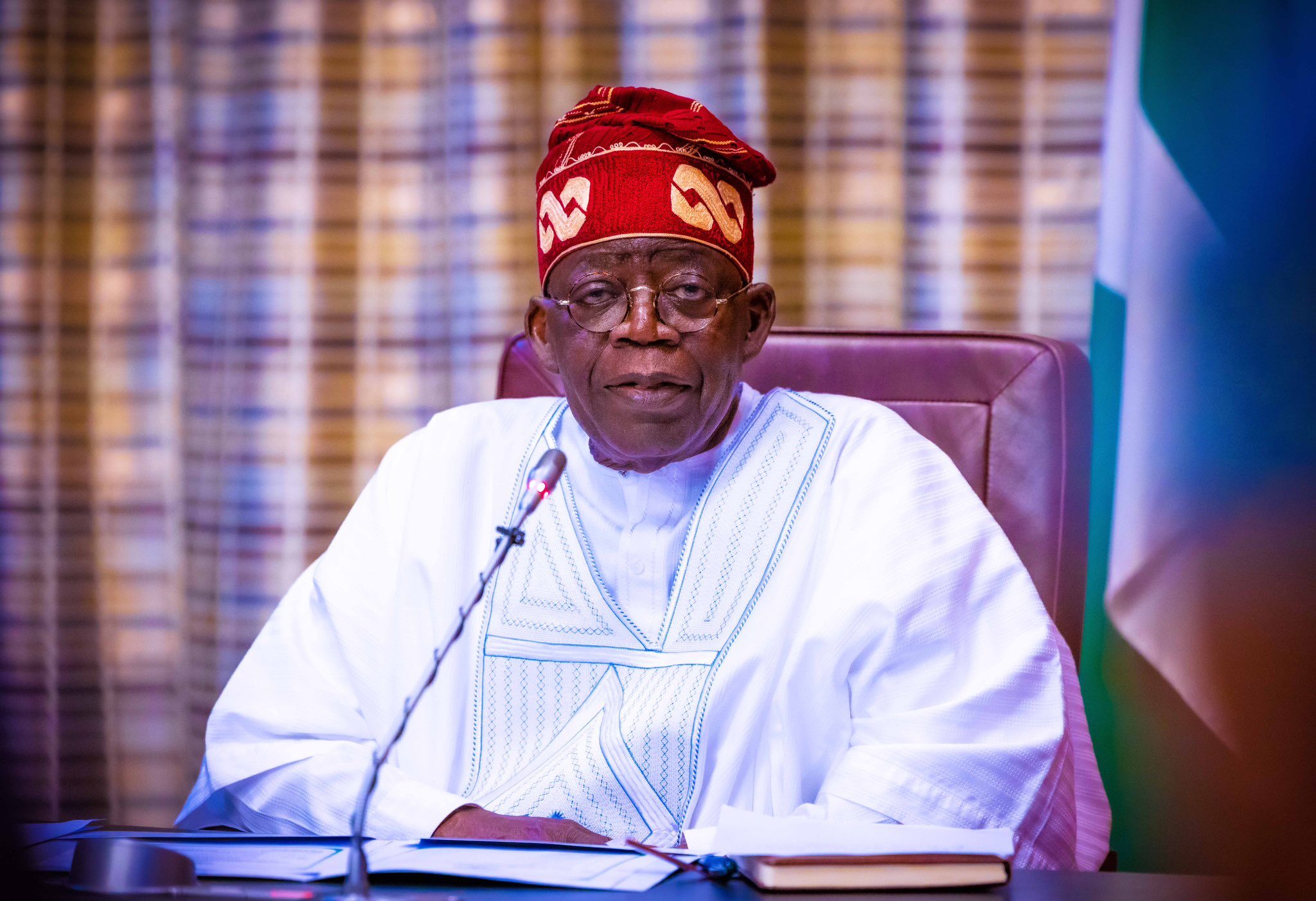
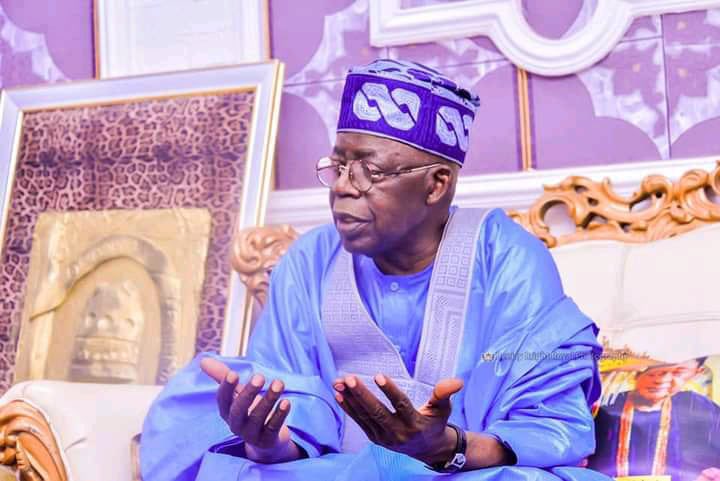
President Bola Ahmed Tinubu

PDP slams Tinubu over hardship caused by new petrol price

By Uzair Adam Imam

The Peoples Democratic Party (PDP) has slammed President Bola Ahmed Tintubu over the bitting economic hardship caused by the recent hike in the pump price of fuel from N534 to N617 per litre in Nigeria.

Mr. Debo Ologunagba, the National Publicity Secretary of PDP, mounted this challenge in a statement he made available to journalists.

Ologunagba also described the new price as provocative and extortionate, adding that the recent increment worsened the already suffocating economic situation under the leadership of the APC.

The statement read in part, “Our party insists that the N617 per litre of fuel is excessive, unacceptable and cannot be justified under any guise. This is especially given the economic potential and prospects within our country.

“It is appalling that instead of seeking ways to stabilise and grow the economy, the APC administration has abandoned the welfare of Nigerians which is the primary purpose of government under Section 14 (2)(b) of the Constitution of the Federal Republic of Nigeria, 1999 (as amended) and left the citizens to the vagaries of market forces and exploitative cabal; a disposition that is characteristic of a government that is not accountable to the people.

“The PDP is alarmed that with its ill-thought out, badly planned and hurriedly-executed policies, the APC is running Nigeria’s economy aground with the value of naira rapidly plummeting, businesses and production shutting down; citizens losing their means of livelihood, commercial and social activities crippled, with millions of families no longer able to afford their daily needs as the costs of food, medication and other essential goods and services continue to skyrocket.

“Indeed, this is not the nation that Nigerians yearned for after the abysmal, harrowing and inhuman eight years of the Buhari-led APC administration as the situation has currently gone from a frightening bad to a terrifying worse with no hope in sight,” the statement said.

According to Ologunagba, “Even with the removal of subsidy on petroleum products, with a deft, transparent and innovative management of resources, economic potentials, national comparative advantage and expanded value chain in refining capacity, fuel should not sell for more than N150 per litre in Nigeria.”

Is Tinubu Awoist – a disciple of Awolowo?

By Abdullahi Khairalla

Given the recent tsunamic and fundamental economic and educational reforms in the country, people have started raising historical and comparative questions of whether President Bola Ahmed Tinubu holds dearly the sacred political and economic principles and ideals of a centenary Yoruba saint Obafemi Awolowo known as ‘Awoism’.

Since the 1960s, Yoruba politics has been dominated by a political orientation known as ‘Awoism’. The phrase refers to the political philosophy of the late Yoruba political leader Awolowo, who espoused policies he called “democratic socialism”. Its primary tenets were welfarerism, free social services and job creation. Awolowo loomed large over Yoruba politics for over forty years. He was an intensely intellectual figure with great energy.

Awolowo had a ground-breaking term of office as the premier of Nigeria’s Yoruba-dominated Western region between 1955 and 1959. During this time, he introduced free education and health care in his region with other social welfarist policies.

Awolowo’s political ideology did not die with him. He was a great and transformational leader who was loved, revered and cherished like the rock of Gibraltar by the Yorubas and all who benefitted from his pioneering social welfare programmes. They refer to themselves as ‘Omo Awolowo’ (Awolowo’s children) or Awoists (disciples of Awolowo and his principles). Awolowo’s ideas remain so deeply ingrained in the political psyche of the Yoruba that being an Awoist is regarded by many Yorubas as the only legitimate apprenticeship before becoming a Yoruba politician on the national stage.

President Tinubu has very few in common with Awolowo. Tinubu, just like MKO Abiola, is not like Awolowo. Awolowo was trim, dapper and austere. In contrast, Tinubu is well known for his staggering wealth and flamboyance, which made him appear larger than life. Awolowo was a socialist: Tinubu is an ultra-capitalist billionaire who sits atop— bringing in completely capitalist-oriented policies in the education sector, oil and gas industry, health, electricity and many others, which makes him look like the opposite figure of Awolowo in Yoruba land.

Of course, Awolowo’s death politically orphaned the Yoruba. He had served or played a dual role as the Yoruba leader and also their political representative on the national scale. After his death, Yoruba politics were dominated by one trend. First, there was the search for another iconic and radical socialist to inherit Awolowo’s dual role. 

Many thought Tinubu would apply some Awoist policies on Nigerians now that he became the Nigerian president, but the recent developments and realities seem to belie this hope. 

Abdullahi Khairalla writes from the Department of Political Science, University of Maiduguri.

Subsidy Removal: 12m low-income families to get ₦‎8000 for 6 months

By Muhammad Abdurrahman

In a letter addressed to the House of Representatives, President Bola Ahmed Tinubu stated that 12 million families will receive N8,000 for a duration of six months. This is aimed at easing the difficulties experienced by Nigerians due to the removal of subsidies.

The President announced an initiative that aims to assist impoverished and vulnerable Nigerians in managing the expenses associated with meeting their fundamental necessities.

Tinubu’s slots to opposition parties move for one Nigeria

By Uzair Adam Imam

The reservation of some slots to the opposition parties by President Bola Ahmed Tinubu could be seen as a move afoot to get a better Nigeria which was one of the things his administration promised Nigerians since his victory.

The Daily Reality recalls that Tinubu promised to run an inclusive government that would thrust Nigeria into greatness.

Speaking as the president-elect in March, Tinubu said he was seeking a better country not just for himself and his supporters but for all Nigerian people, regardless of their political affiliations.

The Kwara State Governor and Chairman of the Nigeria Governors Forum, Abdulrahman Abdulrazaq, relayed the news about the slots reservation to journalists at a meeting of the forum in Abuja on Tuesday.

He said that Tinubu reserved some appointments in the governing boards of agencies, parastatals, institutions and government-owned companies for members of the opposition Labour Party and the Peoples Democratic Party.

Abdulrazaq stated that the President asked the governors to nominate competent persons to serve on the boards and parastatals of Federal Government agencies which were dissolved last month.

According to him, Mr Tinubu dissolved the boards last month, which left no fewer than 2,000 vacant positions expected to be occupied by new nominees.

He added that “Among the agencies are the North-East Development Commission with 12 vacant board slots, Independent Corrupt Practices and Other Related Offences Commission with seven board seats; Joint Admissions and Matriculation Board, seven; Teachers Registration Council of Nigeria, 21.

“Nigeria Social Insurance Trust Fund, 12; National Universities Commission, 21 and Transmission Commission of Nigeria, 14; National Health Insurance Authority,12

“Others are the Nigerian Safety Investigation Bureau, 7; Nigerian Meteorological Agency, seven; Nigerian College of Aviation Technology,8; Nigerian Police Trust Fund, 8; Nigerian Natural Medicine Development Agency,10; Federal Institute of Industrial Research, 11 and National Centre for Technology Management, 11 among others,” he stated.

Has Tinubu forgotten North’s agriculture?

 By Zayyad I. Muhammad

On October 17, 2022, at Arewa House, Bola Ahmed Tinubu presented to the north his blueprint for the region. He said he would fight bandits and terrorists with the technology the Buhari administration began to use in 2022. Tinubu pledged to turn the North’s fertile land into grain fields- the North would become the agriculture hub. The dairy economy and agro-allied industries would be promoted as he accelerates the Mambila Project and rejuvenates existing power stations. He vowed to exploit the gold in Zamfara and iron ore in Kogi State. Tinubu also promised to bring millions of North’s out-of-school children back to school through incentives. He further pledged to create a special commission for Almajiri education, including employing Almajiri teachers.

So far, President Tinubu has appointed eight (8) Special Advisers (SAs), appointments seen by many political pundits as the direction of his administration’s policies and programs. Of the portfolios of the eight SAs, agriculture gets none.  Has Tinubu forgotten agriculture, or has he major policies and programs planned for the sector?

The North needs a unique recovery program in the agriculture sector- the mainstay of the region’s economy is now devastated by banditry, insecurity, floods, and corruption. Some of the previous administrations’ beautifully designed programs for agriculture have been abused.  Many ‘real’ farmers have tearfully complained that the custodians of the programs and projects have hijacked the benefits.

The Anchor Borrowers Programme, Presidential Fertilizer Initiative (PFI), Youth Farm Lab, Paddy Aggregation Scheme, Agricultural Trust Fund, Presidential Economic Diversification Initiative (PEDI), Food Security Council, etc., including other CBN interventions programs, are good. However, the implementation and targeting were not 100 per cent successful. For example, under the Presidential Fertilizer Initiative (PFI), fertiliser blenders benefit from government resources and smile to the banks, while the farmers for whom the scheme was primarily designed to buy fertilisers through their noses.   Instead of the 5,000 Naira per bag, as envisaged by the programme, a bag of fertiliser now costs between 20,000 to 25,000 Naira.

Despite the shortcomings of some of the programs,  Nigerian agricultural production has improved. For instance,  rice milling created many productive jobs.  The Central Bank of Nigeria (CBN) said the Anchor Borrower Programme (ABP) supported about 4.57 million smallholder farmers who cultivated over 6.02 million hectares of 21 agro-commodities nationwide. The programme has helped to improve the national average yield per hectare of these commodities, with productivity per hectare almost doubling within eight years of the programme’s implementation.

Also, the Food and Agriculture Organisation (FAO) statistics indicated that some of these programmes contributed significantly to the increased national output of commodities, with maize and rice peaking at 12.2 and 9.0 million metric tons in 2021 and 2022.

However, one of the fundamental bottlenecks that these projects and programs faced was their managers. For instance, the last two Ministers of Agriculture were somehow ‘disconnected’ from agriculture. Moreover, some programs and project managers are not agro-enthusiasts or farmer-friendly.

With workable and real farmer-friendly agricultural policies, programmes, and projects, President Tinubu will have a golden opportunity to directly ‘talk’ to millions of northerners. What should Tinubu do?- First, his Minister of Agriculture should be an agricultural enthusiast and an agile practising farmer who understands the entire agricultural value chain, politics, and markets.  A personality who understands the needs and global trends in agriculture and has a connection with real farmers and private initiatives. Tinubu’s agriculture minister should see agriculture from the prisms of entrepreneurship, wealth creation, and national GDP growth. Tinubu should also appoint a  Special Adviser on agriculture and an agricultural advisory team, which should be populated by competent real farmers. The Forum for Agricultural Commodities Association Chairman, Sadiq Darewa, once said: The Tinubu administration should sustain and improve upon programs and projects that have clear benefits for Nigerians. At the same time, those that have wasted Nigerians’ time should be rejected.

Tinubu may wish to sustain but redesign all the current agricultural policies, programs, and projects.  He needs to remove the apparent opacity which characterises most of the programs.

Tinubu should bring real farmer associations and groups on board to assist the government in redesigning the programs. They have a good grasp of what went wrong with the schemes, programmes, and projects and how to rejuvenate them for millions of real farmers in the country.

The redesigned and improved programmes should incorporate livestock production and the establishment of more herbicide and pesticide factories. Nigeria has no business spending billions of naira on importing water mixed with some chemicals; it should work on reducing the cost of seeds, fertilisers, and other inputs, including labour and transportation costs.

 Zayyad I. Muhammad writes from Abuja and can be contacted via zaymohd@yahoo.com.

Student Loans: Good or bad?

By Kasim Isa Muhammad

In 2016, Femi Gbajabiamila, the immediate former Speaker of the 9th House of Representatives, took a bold step by introducing a bill to address the financial challenges faced by students in higher education institutions nationwide. The proposed legislation, known as the Student Loan Act, sought to provide students with access to loans from the federal government to alleviate the burden of educational expenses. After its initial introduction, the bill was later reintroduced in 2019. However, when it resurfaced in 2022, it sparked a heated debate within the National Assembly, with members expressing divergent views.

The revival of the Act triggered intense discussions and disagreements among the members of the National Assembly. On one side, some legislators strongly supported the motion, citing the potential benefits of student loans for expanding access to education and reducing financial barriers. Proponents of the bill argued that it would provide equal opportunities for students from various socio-economic backgrounds, enabling them to pursue higher education without financial constraints.

Lo and behold! On June 12, 2023, President Bola Ahmed Tinubu signed the Student Loan Bill into law, demonstrating his administration’s commitment to strengthening the country’s educational sector.

Although concerns have been raised regarding the extent of student access to these loans, considering the persistently high rate of unemployment afflicting the country, One of the key considerations surrounding the implementation of the Student Loan Act is the number of students who will benefit from the financial assistance, as it remains unclear how many students will qualify for and receive loans.

However, some suggested that providing massive job opportunities for graduates would be a more practical approach than granting them loans. This sentiment is echoed by those who believe most graduates possess the skills but lack the capital to enhance their businesses. For instance, providing them N500,000 to start a business could be a viable alternative.

Whoa! The current provision stating that loan repayment begins two years after the completion of participation in the NYSC programme is being questioned. The government should reassess this strategy with graduates struggling to secure employment for up to eight years or longer. Given the prevailing circumstances, it is doubtful that the debt collectors will be able to repay their loans within such a short timeframe.

I was also taken aback when I discovered a particular element of the loan procedure: defaulters risk being fined N500,000 or even being incarcerated for up to two years. This revelation left me astounded and raised an essential question in my mind. Is it, not a grave injustice to punish our helpless teeming youths who are already battling to secure jobs with imprisonment simply because they cannot repay their loans?

The fundamental component of the loan process that exceedingly caught my attention is the requirement for students to provide at least two guarantors who must meet specific criteria, such as being a civil servant of at least level 12, a lawyer with at least ten years of post-call experience, a judicial officer, or a justice of the peace. This provision raises concerns, particularly for individuals residing in rural areas or those without any relatives in government positions who could serve as guarantors.

Since the loan programme intends to support the financially disadvantaged, the requirement of guarantors with specific professional backgrounds seems to create a barrier for those who lack connections with people in high positions in the government. 

Another facet of the Act that appears contradictory is the provision that a student’s family must have an income of less than N500,000 to qualify for the loan. This condition seems to limit the accessibility of the loan to only a select few people, raising questions about the effectiveness and inclusivity of the loan act.

Setting an income threshold may have been intended to target students with financial constraints, ensuring that those with the greatest financial need receive the necessary support. But the specific income limit of N500,000 may inadvertently exclude many students who could benefit from the loan.

Considering the drawbacks of the Loan Act, it becomes evident that the federal government should augment its efforts to fund tertiary institutions across the country. By so doing, education can become more affordable and accessible to a broader range of students.

Likewise, the recent increase in school fees at several institutions, including UNIMAID and BUK in the northern part of the country, highlights the pressing need for government intervention. While providing student loans is one possible solution, addressing the underlying issue of inadequate budgets for public universities is essential. By allocating sufficient funds to 109 public universities—50 federal and 59 state institutions—education can become more affordable for students.

The United Nations Educational, Scientific, and Cultural Organisation (UNESCO) recommended that developing nations give up to 15–20 per cent of their annual budget to public education. Nigeria’s allocation to the Education sector has not been meeting the UNESCO standard.

Dataphyte, a media research and data analytics organisation aiming to deploy data tools and technology for Nigeria’s socio-economic development, stated that the education budget analysis between 2016 and 2022 shows that the education sector has not received the recommended 15%.

This has indicated that the government at all levels should prioritise funding for education as a necessary step before implementing student loans. By addressing infrastructure deficiencies, making education affordable for underprivileged students, and providing needed resources, the government can create an environment where all students have equal opportunities to succeed. Investing in education will yield long-term benefits for people and society, fostering development and ensuring a brighter future for future generations.

Kasim Isa Muhammad is an investigative journalist who contributes as a full-time journalist at both Kanempress and The Citizen Reports newspapers.
EU report is an imperialist agenda – MURIC

By Muhammad Abdurrahman

An Islamic human rights group, the Muslim Rights Concern (MURIC), has faulted the final report of the European Union observer team on Nigeria’s 2023 general election. MURIC described the report as an imperialist agenda.   

The group spoke on Tuesday, 4th July 2023, through its Executive Director, Professor Ishaq Akintola.

His full statement:

“The Chief Observer of the European Union Election Observer Mission (EU EOM), Barry Andrews, at a news conference in Abuja last week presented its final report on the 2023 general election in Nigeria. The report was an undisguised indictment of Nigeria’s electoral system.

“We are nonplussed by this blatant attempt to push an imperialist agenda down the throat of Nigerians. The report is a premeditated attempt at inciting anarchy in the country with the hope of gaining political and economic influence at the outbreak of commotion.

“The EU EOM final report is the odd one out when juxtaposed with those of other election monitoring groups. We saw nothing close to this in the report of the US-based International Republican Institute (IRI) and the National Democratic Institute (NDI). NDI/IRI came with 40 observers from 20 countries led by Dr. Joyce Banda, former president of Malawi. They did not sow any seed of confusion.

“229 different observer groups deployed 146,913 domestic and international monitors. 33 of these were international observer missions which deployed 2,113 observers and the Independent National Electoral Commission (INED) threw its doors wide open for them.

“Why is the EU EOM report a different cup of tea? Is this group trying to tell the world that the Commonwealth Observer Group led by Thabo Mbeki which also covered the elections is blind? The African Union had its team and so did the Economic Community of West African States (ECOWAS) observer team led by Dr Kwadwo Afari-Gyan.

“Nigerians should not allow the EU EOM to destabilise the country. Imperialists will never teach you what will benefit your country but what will make you despise it. The aim is divide et impera. MURIC rejects this EU EOM report. It is jaundiced.”

University don questions Nigerian governors for donating millions to pilgrims

By Muhammadu Sabiu

A German-based Nigerian lecturer at the University of Cologne, Germany, Dr Muhsin Ibrahim, has taken to his social media handles to question some Nigerian governors for donating a huge amount of money to Nigerian pilgrims in Makkah, Saudi Arabia.

The Daily Reality understands that some of the governors who made the donations include Abba Kabir Yusuf of Kano State, Dikko Radda of Katsina State and Bala Abdulkadir Mohammed of Bauchi State.

According to reports, Governor Kabir gave 6,166 Kano pilgrims N65 million; Governor Radda gifted N278 million to Katsina pilgrims, while Governor Bala gave over 300 pilgrims 300 Saudi riyals each.

Questioning the governors’ actions, the lecturer asked what the essence of this is, looking at Nigerians’ critical situation.

His words, in Hausa, and translated into English: “For God’s sake, what is the essence of donating millions of naira to pilgrims by some governors?

“Giving out is good, but is this gift a “priority”, especially at this critical moment people are in? Hmm.”

Nigerians are in a critical situation characterised by the inflation of almost every consumable product nationwide.

Recall that an announcement of fuel subsidy removal by President Bola Tinubu during his inauguration triggered an increase in the prices of petrol by over 100%, leading to a significant increase in transportation fares and the prices of commodities.

An urgent plea for prayers for President Tinubu

Dear beloved Nigerians,

I pray that this message finds you in the embrace of joy and tranquillity. Today, I humbly beseech your kind hearts to join me in fervent prayer for the esteemed President Bola Ahmad Tinubu (PBAT). Let us come together, enveloped in a sweet, soothing aura of prayer for our beloved leader.

Recently, a poignant incident unfolded during President Tinubu’s visit to France, which has captured our attention. In a video circulating on social media, an enchanting French lady, amidst the ensemble of waiters outside the Presidential Jet, momentarily received an item, surreptitiously placing it tenderly within her pocket. Soon after, she had the extraordinary privilege of shaking hands with our beloved President Tinubu, only to return the item discreetly to the ever-vigilant security personnel.

While the intentions and essence of this encounter remain shrouded in mystery, it is of utmost importance that we, as noble citizens, approach this situation with tenderness and delicacy. Let us refrain from hasty conclusions or harsh judgments. Instead, let our collective energies converge towards a more meaningful, fruitful response.

President Bola Ahmad Tinubu has dedicated his life to the noble cause of public service, exemplifying an unwavering commitment to the growth and prosperity of our beloved nation. He has illuminated our path with hope, championing positive transformation and kindling the fires of inspiration in the hearts of generations of Nigerians. In these trying times, our beloved leader needs our unwavering support and the solace of our heartfelt prayers.

Therefore, I beseech each and every one of you, with the gentlest of requests, to join hands in a tapestry of prayer for President Tinubu’s well-being, wisdom, and divine guidance. Let us fervently implore the heavens for his enduring strength, robust health, and celestial protection as he toils ceaselessly to steer Nigeria towards an even brighter future.

We must always remember that unity stands as our most formidable strength. Regardless of our political affiliations or personal opinions, let us set aside our disparities and unite in a harmonious symphony of solidarity, placing our unyielding trust in the power of prayer. Together, we possess the might to craft an ethereal atmosphere of unwavering support and boundless goodwill, uplifting our cherished President during these trying times.

May our prayers, like the sweetest nectar of a thousand blossoms, serve as a balm for President Bola Ahmad Tinubu’s spirit, reminding him that he is cradled in the loving embrace of the Nigerian people. Let us emanate waves of positive energy, affirming our resolute belief in his visionary leadership.

With hearts overflowing with gratitude for your steadfast devotion and boundless love for our beloved nation, let us remain steadfast in our prayers for the well-being of President Bola Ahmad Tinubu and our great Nigeria.

May divine blessings cascade upon Nigeria abundantly!

With utmost sincerity,

Abdurrazak Muktar Makarfi.

Nigerian biofuel policy and incentive: 16 years after

By Bilyamin Abdulmumin

On Tuesday, at a meeting with the United States Assistant Secretary of State, Bureau of Energy Resources, Ambassador Geoffrey Praytt, at the State House, Abuja, President Bola Ahmed Tinubu reiterated Nigeria’s commitment to honouring all its obligations to climate change and the quest for clean energy.

The president further called for stronger and better ties with the United States as Nigeria and the rest of the world move in the quest for renewable and other clean energy sources. This revelation made by President Bola Ahmed Tinubu made it imperative to bring to the front a related issue: Nigerian Biofuels Policy and Incentives.

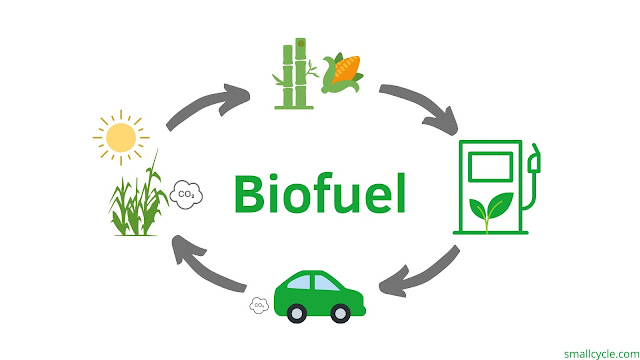
To contribute to the global fight against climate change, Nigeria implemented the biofuel policy and incentive in 2007. This policy aims to encourage bioethanol and biodiesel production as supplementary to conventional transportation fuel, which is unfriendly to the climate.

It provides several incentives for potential investors, creating a conducive environment for biofuel production, and promises to establish a Biofuel Commission along with a dedicated Research Centre for the development of the sector. However, 16 years after, limited progress has been achieved, with only a few Memoranda of Understanding (MoUs) between Nigerian states like Kebbi, Niger, Ondo, Kogi, and the Nigerian National Petroleum Corporation, NNPC.

The policy has considered one of the major challenges of the biofuel sector globally: the expensive cost of production compared to conventional fossil fuels. As such, a range of incentives was offered, such as tax holidays, withholding tax exemptions, waivers on import and customs duties, waivers on value-added tax, long-term preferential loans, insurance, and most importantly, creating market demand (a promising alternative that the policy overlooked however was the use of cheaper local technology, materials, and equipment). Despite these incentives, the success of biofuels in Nigeria hinges on the government’s political will.

According to the policy, the Federal Government is responsible for providing necessary infrastructure, amenities, and facilities to communities where biofuel companies operate. The State Governments are mandated by the policy to facilitate the procurement and utilisation of agricultural land by biofuel companies. Additionally, in collaboration with State Governments and biofuel companies, the Local Governments are expected to organise out-grower schemes and other cooperative initiatives.

The feedstock of biofuel is grains/sugar, and oils. So, this highlights the hope the biofuel industry holds for the Nigerian poor who rely on subsistence farming. Traditional farming practices in Nigeria have remained unchanged for centuries. But thanks to the policy, farming technology can be drastically improved by integrating agriculture with the energy sector by adopting biofuels, hence more wealth and prosperity. 

However, there is trouble in Paradise; biofuel feedstock brings about another major challenge: food vs energy conflict. But the policy did not keep a blind eye, as there were provisions for out-growers schemes for massive crop production. In Kebbi State, more than 5 000 hectares were procured for cassava cultivation.  Other measures put in place to counter food vs energy conflict include the development and adoption of transgenic varieties of the feedstock to be specifically customised for the efficient production of biofuels (a promising alternative to food that the policy didn’t capture is utilising second-generation feedstock, which is more abundant and cheaper, that is, waste lignocellulosic materials and underutilised agricultural and forestry).  

In effect, the biofuels mission holds dual benefits:  foster economic growth and inclusivity for farmers while addressing the pressing issue of climate change, which the president just reiterated. Dear FG, considering the immense potential of this policy, and against the backdrop of celebrated bold actions on critical issues you have been undertaking, please give this policy a second chance, summon new hope, and get it hit the ground running.

Bilyamin Abdulmumin wrote via bilal4riid13@gmail.com.