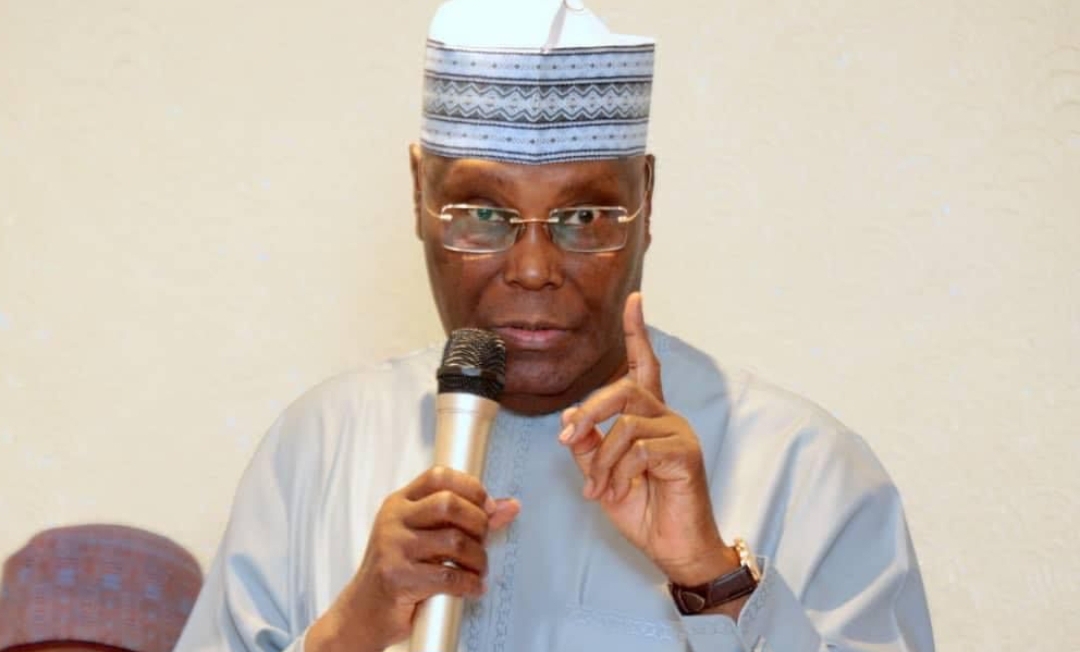
President Bola Ahmed Tinubu

Tinubu’s 100 days: The ticking time bomb and the danger of the elite’s silence

By Abdelghaffar Amoka

It is 100 days in office and six months after President Bola Ahmed Tinubu won the election, and the government seems directionless. It is more news that the hardship that President Muhammadu Buhari introduced us to has multiplied. Whether he removed the fuel subsidy or Buhari did, he has no excuse to be clueless for the past six months on the way forward. He asked for the job.

My problem is how our leaders are comfortable putting burdens on the people, burdens they have not prepared them to carry. There was a plan to remove the fuel subsidy. Common sense should tell them that it will affect purchasing power. It is that simple. But why was it so difficult to put up a parallel plan to stabilise the purchasing power of the people once the subsidy was removed? How some people are comfortable with a policy that does not follow the natural law of growth and development beats my imagination.

When a child is born, he is nurtured and trained to become an adult. He is either sent to school or learns a trade and gets empowered to take responsibility. He then gets a wife, has kids, and starts to take responsibility. Imagine giving the boy a wife with kids at 15 without empowering him to take care of the responsibility and expecting him to be fine. It is against the law of nature to burden anyone without preparing him for it.

Fuel subsidy removal was a long battle, and many people have campaigned to remove fuel subsidies since 2010. They made it look like the removal would save the government money for infrastructure and do wonders. But they never discussed the consequences of the removal on the people. How much have we saved for 100 days, and what have we achieved with it? What infrastructure is better than the general well-being of the people?

Funny enough, some of the advocates of the subsidy removal are currently complaining about the hardship on the land. That made me wonder what they were thinking when advocating for the removal. Some are even intellectuals. They thought subsidy was like a tap that you just switch off, and everything is fine. They think it’s that simple. The state government has now given money to share some stuff as palliative. Is 5kg of rice or Semovita all we need to overcome this heartless burden? Who are the people giving them economic advice?

There are three schools of thought on the post-fuel subsidy removal. Those benefitting from the removal will never see anything wrong with it. Those who feel we should endure the hardship and wait for the government to invest in infrastructure. Then, those who see everything wrong with the removal instead of fighting the corruption that shrouded fuel subsidies.

We are being advised to cut our expenses. They seem to have agreed with Buhari’s “Sharholiyah” (wasteful spending) principle. Where is the waste to cut? Those people think everyone has as much as they have to spend. How do you expect a junior staff working at the federal secretariat earning about N40k monthly to cut his expenses and manage? What will he cut? How do you expect a graduate working at the federal secretariat and earning about N60k monthly to cut costs? What will he cut?

For the first time since I became an adult,  federal government workers are being asked to work 2 or 3 days a week to reduce the cost of going to the office. Unfortunately, that will not help reduce the cost of living.

Fuel subsidy is removed, and we are expected to be patient and cope. School fees have increased due to the present economic reality, as acknowledged by FG, and we are expected to come with it. Floating naira to dollar in a country that imports 80% of its needs is a disaster.

The danger of keeping quiet.

It is no more news that crime rates have increased over the last months and are getting worse. Meanwhile, there are three classes of people: the upper, middle, and the lower class. The upper class is inaccessible. They have security escorts, bulletproof cars, tall fences, and gigantic gates with security dogs. The kids are abroad or well-secured. The middle class is accessible and lives not far away from the lower class. As far as the lower class is concerned, the upper and middle classes ( a fast-depleting class) are responsible for the difficulties they are experiencing.

As long as you can still manage to drive your car and feed, you belong to the haves as far as the lower class is concerned. As the crime rate soars, your house will be the first target to be vandalised and bugled. This narration from my friend, Muhammed Hashim Suleiman, keeps ringing the bell in my ear. The narration keeps reminding me of our likely danger in this situation. 

He managed to muster the courage to buy a few litres of petrol for his old Tokunbo car. The petrol station was swarming with people, young and old, not buying petrol but waiting for any buyer to saunter in, and they descended on that unlucky buyer begging for alms. After he purchased the few litres he could afford, entering his car became a struggle because the beggars were begging between him and the car. He silently ignored them and found his way inside the car. Then, a very old woman stood before the car until the petrol attendant shouted at her. 

Instead of leaving the front of my car, the old woman walked towards the driver’s side. On reaching his window, in a cold voice, she said: “Kun kwashe kuɗin ƙasar, kun bar mu da yunwa, yanzu muna roƙon ku abun da zamu ci amma kun hana mu. Wallahi, idan muka mutu da yunwa, sai Allah ya kama ku.” That: “You people have stolen the nation’s money and left us in hunger, now we are begging you for what to eat, but you won’t give us. If we die of hunger, I swear God will never allow you free.”

We are all victims of public embezzlement, but the old woman who happened to belong to the lower class is unaware of it. As we keep quiet adjusting to living with the burden placed on us by these elitists in government, know that the lower class that has been driven far below the poverty line has placed you on the same page with those that have stolen the nation’s money.

It is 100 days of disaster. I hope the government gets its acts together and be purposeful. Any government that fails in the general well-being of the people is a failed government.

Dear Nigerians who are supposed to be in the middle class but tending towards the lower class, If nothing is done and the time bomb should explode, you will be the first casualty. Your silence will cost you a lot. That will be a double casualty for a crime you and I are victims of.

Abdelghaffar Amoka Abdelmalik, PhD, wrote from Ahmadu Bello University, Zaria. He can be reached via aaabdelmalik@gmail.com.
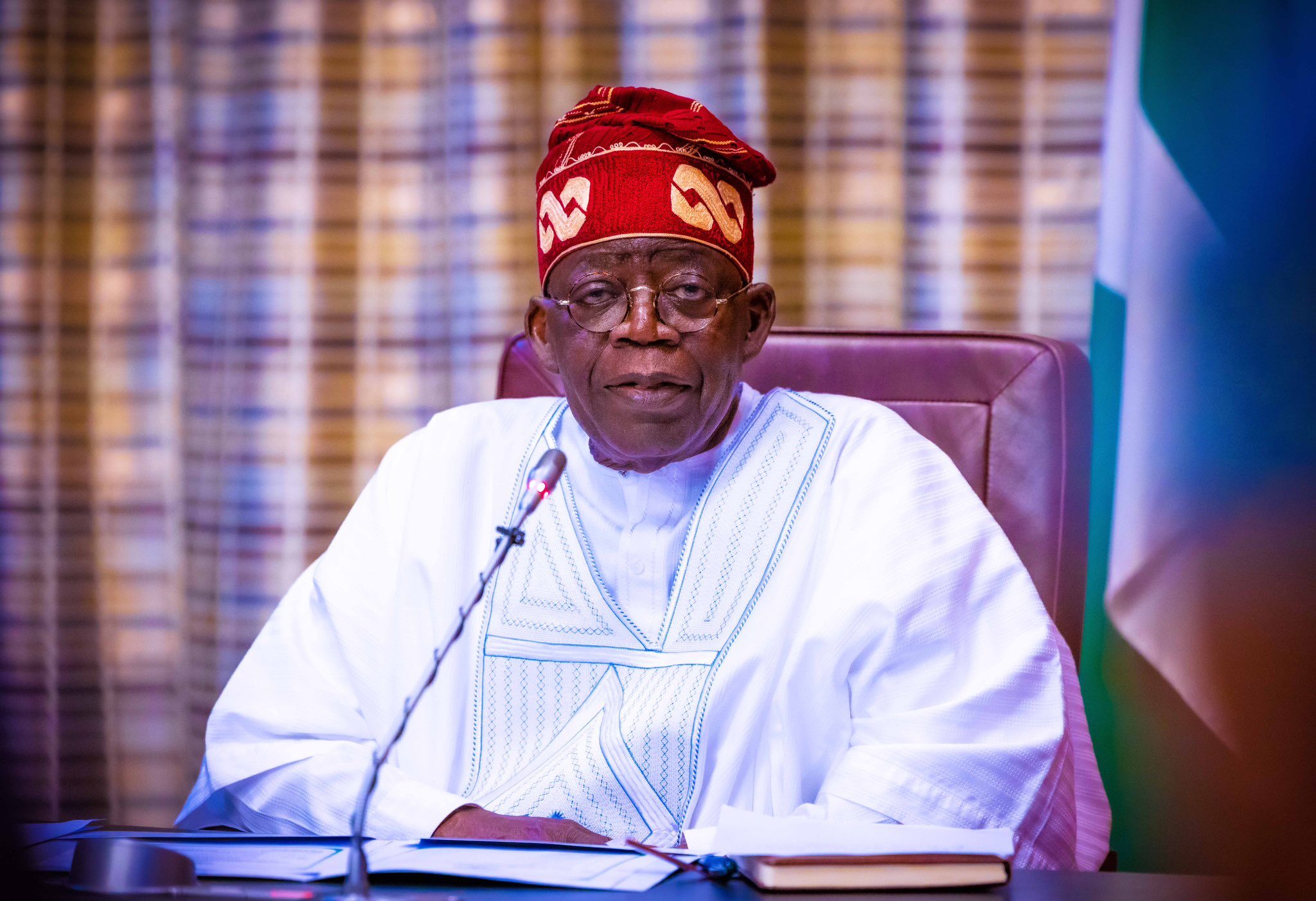
Tinubu’s ministers and APC’s new faces

By Zayyad I. Muhammad

President Bola Ahmed Tinubu has assigned portfolios to his Ministers-designate, bringing an end to weeks-long speculation but also bringing to the fore new discussions and analyses on the ministers’ portfolios and the new ministries created. A journalist and an editor, Jaafar Jaafar, said, ‘The Northwest has many ministers but no weight’.

While a chieftain of the All Progressive Congress (APC), Adamu Garba, said, “It is one of the most balanced ministerial portfolio allocations of recent history. Adamu also pointed out that “President Tinubu – dedicated Infrastructure and Finance to the South. While Agriculture and security are to the North. Soft infrastructure like health and education to the North, and Humanitarian and Innovation to the South. Productivity and Job creation in the North- The North needs more security and agricultural productivity to grow and industrialise, while the South is good with services and infrastructure.”

 In Tinubu’s ministerial portfolios, there were surprises, and there were no surprises, so to speak.

In most democracies, ministers are selected from politicians who contributed to victory at the polls and from technocrats with strong professional track records. Cabinet ministers are not just a team but a collection of great thinkers—silicon valley-thinkers—men and women who can move the government with the speed of the imagination of most Nigerians, and their sense of judgment must be centred on the challenges of unlocking the future for ordinary Nigerians. and also bring new thinking and synergy to the public sector’s role in providing for the needs of all Nigerians.

Most Nigerians expect Tinubu’s ministers to be not just members of the cabinet but to add value to governance; they must be propellers for greater equality of opportunity for all Nigerians. They must be able to build a system that will swing the government away from the traditional methodology of concentrating on only the ‘off-the-shelf way of improving society. 

Some Nigerians are complaining that Tinubu’s cabinet has too many politicians. However, the truth is a right-thinking President brings on board top-notch grassroots politicians to hold the political front for him when the need arises. President Tinubu and the Dr Abdullahi Ganduje-led APC should, as a matter of ‘need’ maintain and ‘oil’ that area. This is where the synergy between the Executive and party supremacy comes into play.

President Tinubu and the APC, as a matter of policy and politics, should make sure that those appointed as ministers know what is expected of them. A ministerial appointment is a call for a national assignment. Nigerians expect ministers not only to saddle themselves with the responsibilities within their respective portfolios but also to be team players that will bring feasible ideas and be at par with local and global realities. Nigeria will be keen to see new ideas for fighting poverty, tackling the skyrocketing prices of food commodities, improving electricity supply, and finding new ways to fight insecurity in the north and southeast, etc.

On the political side, apart from supporting the president, ministers should see themselves as the ‘faces’ of the APC in their respective communities; their political presence and contact with locals are very important. For example, during the 2019 presidential elections, most of Buhari’s first-term appointees, especially from the north, became mere spectators in their states due to their weak link with the grassroots. Tinubu’s ministers may find themselves in such situations if they operate with weak links with the grassroots and poor rapport with the public. In this regard, in the weeks to come, many eyes will be on Nyesom Wike, FCT, and Ministers, whether he will remain ‘a PDP’ or crossover to the APC.

On the other hand, there are some young people in Tinubu’s cabinet, so many eyes will be on them. Their performance or underperformance will greatly impact youths’ participation in governance and politics, as well as give the Tinubu government the ‘strength’ to boast that youths are adequately represented in the government. This will also create a strong link between the government and the youth, who form more than half of Nigerian voters. This would also serve as an impetus for a good image and a sound political strategy for the All Progressive Congress (APC) because young people’s political participation and engagement in governance are essential at this moment.

Lastly, President Tinubu should, as a matter of importance, be firm in assessing every member of his cabinet. Non-performing ministers should be replaced quickly so as not to lose time and also keep others on their toes.

Zayyad I. Muhammad writes from Abuja via zaymohd@yahoo.com.

Breaking: Tinubu assigns ministers portfolios

By Muhammadu Sabiu

President Bola Ahmed Tinubu has assigned portfolios to his recently confirmed ministerial nominees, a document obtained by The Daily Reality shows.

Although the date of their inauguration has not been confirmed, the document has shown that the portfolios are as follows:

1. Yusuf Sununu – Minister of Education

2. Nyesom Wike – FCT

3. Mohammed Badaru – Defence

4. Ahmed Dangiwa – Housing and Urban Development

5. Simon Lalong – Labour and Employment

6. Bosun Tuani – Minister of Communications, Innovation and Digital Economy

7. Ishak Salaco – Minister of State, Environment and Ecological Management

8. Wale Edun – Minister of Finance and Coordinating Minister of the Economy

9. Bunmi Tunji – Minister of Marine and Blue Economy

10. Adedayo Adelabu- Minister of Power

11. Tunji Alausa – Minister of State, Health and Social Welfare

12. Dele Alake – Minister of Solid Minerals Development

13. Lola Ade-John- Minister of Tourism

14. Adegboyega Oyetola – Minister of Transportation

15. Doris Anite – Minister of Industry, Trade and Investment

16. Uche Nnaji – Minister of Innovation Science and Technology

17. Nkiruka Onyejeocha – Minister of State, Labour and Employment

18. Uju Kennedy – Minister of Women Affairs

19. David Umahi – Minister of Works

20. Festus Keyamo – Minister of Aviation and Aerospace Development

21. Abubakar Momoh – Minister of Youth

22. Betta Edu – Minister of Humanitarian Affairs and Poverty Alleviation

23. Ekperikpe Ekpo – Minister of State, Gas Resources

24. Heineken Lokpobiri – Minister of State Petroleum Resources

25. John Enoh- Minister of Sports Development

El-Rufai Plc and the Presidency

By Dr Aliyu U. Tilde

How many times have I restrained my fingers from writing on this topic? It first came to mind when I heard His Excellency, Malam Nasiru El-Rufai, hinting that he would not be part of the Bola Ahmed Tinubu administration. I watched the clip and laughed. I said does not Malam know that he is now a Plc and no longer an individual enterprise? Can Aliko Dangote one day dream of returning to his quiet personal status of 50 years ago?

Once you are a Plc, forget it. You no longer own your life. We own it. You are our property. Our slave. Period. That is the liability you become to yourself when you prove to the public your competence in serving it. The prize of hard work is more work, they say.

I knew the positions of SSG and COS did not fit people of his personality even if he eyed them. Malam is at his best either as an executive or a project person tasked with a very difficult task, like Ministry of Power.

After missing him on campus, I came to know him through many of his intimate friends in Kaduna since 1986. But I knew him from a distance the more when he started public service in BPE, then as Minister of FCT and lastly as Governor of Kaduna State. In summary, he is one Nigerian that has proven his competence beyond a reasonable doubt.

That is not to say Malam, 63, is not human. Nobody can come straight in these positions without stepping on many toes, especially in a country that is as tortuous as Charles H. Robinson described the African footpath in 1892. Those adversely affected by his policies, which were necessary to straighten up things, will understandably complain and write petitions against him.

Then Malam is also a politician, a fierce one for that matter. We have seen that much during the build-up to the last presidential election. To complicate matters, he is vocal, unrelenting, open and many times politically incorrect; yet, calculating enough to yield result. These are enough to court him for many troubles.

One of those troubles is with the legislature. He had a problem in 2003 when the Senate refused to clear him. Finally, he got cleared by the intervention of President Olusegun Obasanjo and went ahead to prove his worth as FCT minister. This time the media is saying it is not about money or even the legislature per se but about some petitions or security issues.

Today President Tinubu needs to play the role that Obasanjo played in getting the Senate clearance in 2003. He campaigned for Godwill Akpabio, the President of the Senate. Some say he also intervened for Festus Keyamo. He stood for two other competent people before: Vice President Kashim Shettima and NSA Nuhu Ribadu.

The President has promised to choose for the country the best talents to serve under his government. Though he had difficulties keeping this promise on some of his nominees, the nation may not forgive him for missing the target on Malam. He should defy Malam’s opponents just as he did for many others.

Both the security apparatus and APC owe Malam a debt. His doggedness on power shift to the South and in fighting to neutralize the effect of last-minute anti-people’s policy of the Buhari administration that would have cost the APC the Presidency are moral debts that both the President and the party owe Malam; otherwise, both will suffer a trust deficit in the eyes of the public. I have told many—and I may be wrong—that even from a strategic point of view, not having a cerebral and politically hyperactive El-Rufai on board will be a grave political miscalculation for the administration.

The security apparatus has no moral locus to abandon Malam either. He stood by it and acted on its reports to literally go on the ethnic cleansing of Shi’ites in his State—his one act that I strongly abhor and wrote against.

The President now has three major contentious issues at hand: Removal of fuel subsidy, dollar deregulation and the coup in Niger Republic. He must make El-Rufai Plc become the fourth.

Dr Tilde tweets via @Dr_AliyuTilde.

Tinubu, Pate, Okonjo-Iweala meet 

By Muhammadu Sabiu

President Bola Tinubu is currently having a meeting with Ngozi Okonjo-Iweala, the WTO’s director general, at the Presidential Villa in Abuja.

At around 2:50 on Tuesday, Dr Ali Pate, a former minister of state for health, and Okonjo-Iweala arrived at the Presidential Villa.

This medium has not been able to gather the purpose of the meeting as of the time of filing this report.

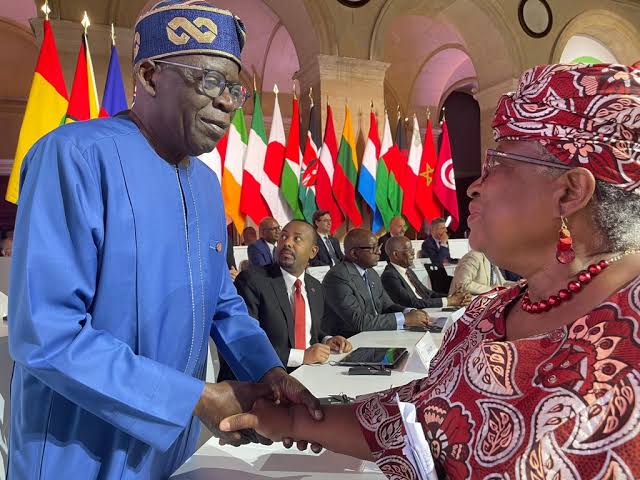
Recall that Okonjo-Iweala and Tinubu met earlier in June while attending the leadership summit in Paris, France.

Okonjo-Iweala served as finance minister under the administration of former President Goodluck Jonathan.

War is not an option – MURIC cautions Tinubu on Niger coup

By Abdurrahman Muhammad

The Muslim human rights advocacy group, the Muslim Rights Concern (MURIC), has sounded a note of caution to the Economic Community of West African States (ECOWAS), a regional bloc under the leadership of President Bola Ahmed Tinubu, to shelve the idea of invading Niger Republic to reinstate the former President Muhammad Bazoum, who was unceremoniously ousted and detained by the military junta on 26th July 2023.

The Muslim rights organisation was reacting to a letter written and sent to the Senate and read on the floor of the red chamber by the President of the Senate, Godswill Akpabio, Friday, 4th August 2023.

In the letter, President Tinubu listed several measures already taken to pressurise the soldiers behind the coup to release and reinstate President Bazoum. 

Some of the measures in place included cutting off the electricity supply to the Niger Republic, mobilising international support for the implementation of the provisions of the ECOWAS communique, closure and monitoring all land borders with the Niger Republic and reactivating the border drilling exercise, as well as military build-up and deployment of personnel for military intervention to enforce compliance should the military junta remain recalcitrant.

While strongly condemning the unconstitutional change of government in the Niger Republic, MURIC believes the handling of the situation by the ECOWAS is harsh, unpragmatic and may be counterproductive.

MURIC’s position was contained in a statement released on Saturday, 5th August 2023, by the Chairman of its Kano State Chapter, Malam Hassan Sani Indabawa.

The statement further states:

“Military action should never be an option in solving the problem of change of government in the Niger Republic due to the current and historical relationship between Niger and Nigeria, two brotherly neighbours in West Africa. Relations between the two countries are based on a long shared border and common cultural and historical interactions.

“Citizens of Nigeria and people living in Niger are predominantly Muslims and share a solid socio-cultural and religious affinity. Nigeria also shares about 1,500 kilometres of land border with Niger.

“The Nigeria-Niger border is artificial. It was drawn in the colonial period by London and Paris, a process driven in part by the desire to check German expansion in West Africa rather than recognition of ethnicities or other indigenous factors. 

“Border crossings are also practically impossible to control. In many ways, Niger and northern Nigeria have much in common culturally, and the local language of both regions is Hausa.

“Significantly, Nigeria should maintain its age-long foreign policy of non-interference in the internal affairs, especially of a friendly neighbour.

“Before Niger, there were some unconstitutional changes of government in at least three Sahel countries, sharing the same historical and common border with the Niger Republic. Non of the countries were attacked, even though some of the countries are home to military bases of some European and US forces.

“Since 1990 till date, there have been 44 coups and 41 failed attempts in Africa. The fewest attempts, 13, came in the period between 2000 and 2009, compared with 36 attempts between 2010 and 2019 and then ten attempts since 2020 till date. The latest is that of the Niger Republic, carried out on 26th July 2023.

“The Nigerien transitional military government has already warned against any external intervention. On Wednesday, 2nd August 2023, its counterparts in Mali and Burkina Faso warned that they would treat any attempt to restore Bazoum to power militarily as a “declaration of war” against them, and it would split ECOWAS.

At the home front, the internal convulsions will escalate as the Oduduwa Republic, Arewa Republic, Biafra secessionists, Niger-Delta separatists, and other sundry anarchists may have a field day with the opening of another avoidable conflict theatre.

“Already, European countries have started the evacuation of their nationals in Niger, as Mali, Burkina Faso, and Guinea expressed support for the coup.

“Military interventions could certainly be unpopular in Nigeria and possibly lead to violent and widespread protests. This could only aggravate the worsening security situation in Nigeria.

“The situation in Niger Republic, like the rest of Africa, is an African problem that requires African solutions; going to war should never be one of those solutions. 

“It is more to do with the oppression and domination of France, the former colonial power that refused to allow her former colonies their rights to true independence.

“In the end, we call on President Tinubu, as a listening leader, to immediately withdraw the letter he sent to the Senate and toe the path of dialogue and diplomacy. 

“We also call on the Senate to flatly reject Mr President’s ill-advised request for its counterproductive and far-reaching, negative consequences that may only worsen Nigeria’s economic and socioeconomic conditions.

“We further call on Muslim faithful and other faith-based groups to intensify prayers for Allah the Most High to avert any disaster that may spell doom for Nigeria and Africa.”

Tinubu removes Maryam Shetty as ministerial nominee

By Ahmad Deedat Zakari

President Bola Ahmad Tinubu has reportedly withdrawn the nomination of Maryam Ibrahim Shettima as a minister in his government. 

According to reports, the 44 -year-old Kano lady, popularly known as Maryam Shetty, has been yanked off the lists of ministerial nominees. 

Maryam Shetty, a famous political and social activist and social media personality, was nominated the President Tinubu on Wednesday.

Sources confirmed that she was told her name was removed from the list upon her arrival for screening in the Senate. 

The reasons for withdrawing Maryam Shetty’s nomination have not been made public. However, former Nigerian Minister of Labour, Festus Keyamo, was added to the new list sent to the red chamber.

Atiku warns against using military force to resolve Niger unrest

By Muhammadu Sabiu

Atiku Abubakar, a former vice president of Nigeria, has cautioned the Economic Community of West Africa (ECOWAS) against using military hostilities to resolve the Niger Republic’s leadership obstacle.

Following coups in neighbouring Mali and Burkina Faso, President Mohamed Bazoum of the Niger Republic was deposed on July 26 by his own guard in the third putsch in the region in as many years.

After the coup in Niger, the regional economic bloc threatened military action.

Atiku criticised the strategy in a tweet on Thursday night, stating that deploying military techniques may make the situation worse.

He contends that the situation calls for diplomatic efforts, which implies that open lines of communication are essential.

President Tinubu’s broadcast: A Muslim’s plea 

By Abubakar Suleiman 

1. The 7 pm national broadcast by President Bola Ahmed Tinubu on the 31st of July 2023 was timely, especially as many Nigerians are still trying to pick up the pieces of their lives necessitated by the country’s current economic realities and hardship. The removal of oil subsidy and redressing of the multiple exchange rate system are undoubtedly the major causes of this new current of hardship and inflation. 

2. There is seemingly no love lost between the government and the hoi polloi; hence Nigeria’s presidential speeches or live chats are not accorded due relevance. The masses see them as the old regurgitated rhetorics or decoys used to sway them from nagging realities. 

3. However, no matter how much we have lost confidence in the government’s promises, we still need to give it the benefit of the doubt and allow it to test-run its policies and strategies. At the same time, critical stakeholders hold it as responsible and accountable as is humanly possible. 

4. The little over 1700 words speech tagged “After Darkness Comes The Glorious Dawn” sounds promising and reassuring that Mr President’s removal of the subsidy and his intention or action plan to cushion the effect of its removal are noble. However, the noblest of plans might still fail if the economic and even cultural behaviours of the actual or direct beneficiaries of lofty government interventions are not considered. 

5. Therefore, it is against this backdrop that I wish to interrogate some aspects of the government interventions in the broadcast speech that have hugely and negatively affected many practising Muslims in the past and will invariably have the same effect in the coming months. 

6. In his speech, Mr President rightly emphasised that his economic interventions will drive financial inclusion by onboarding beneficiaries into the formal sector, but I think this inclusion did not take into cognisance many practising Muslims’ behavioural approach towards accessing loan facilities as it contravenes a delicate aspect of our religious dictates – usury

7. For instance, the economic intervention with the noble, planned scheme of funding 100,000 MSMEs and start-ups with N75 billion, whereby promoters will access between N500,000 and N1million, is laced with 9% interest per annum and a repayment period of 36 months. Despite the loan’s appealing single-digit interest rate, many practising Muslims who want to venture into start-ups have been shortchanged because a “non-interest” model seems not to have been incorporated into this scheme. 

8. Plus, the aforementioned is also the case with interventions in the manufacturing sector that is aimed at funding 75 enterprises that have the potential to “kick-start sustainable economic growth, accelerate structural transformation and improve productivity.” President Tinubu earmarked N75 billion between July 2023 and March 2024 for this promising purpose. Still, the “9% interest per annum” is a huge stumbling block for practising Muslims. 

9. In the twenty-third paragraph of the text speech, Mr President hinted that the know-how of Development Finance Institutions and commercial and microfinance banks would be tapped for a viable and appropriate transactional structure for all stakeholders. 

10. Therefore, an encompassing financial inclusion plan that carries all members of social strata (especially practising Muslims) bearing the brunt occasioned by oil subsidy removal and the eradication of multiple exchange rates is feasible and should also be implemented. And this should be quickly considered to bring business ideas to fruition, resurrect dying businesses and lift millions from among the Muslim populace above the poverty line. 

11. If there is one thing Tinubu’s presidency should help the Muslim Ummah with, then it should be financial inclusion through non-interest loans and financing of businesses. 

12. As a matter of necessity, the National Assembly shouldered with the responsibility of making laws should look into the Acts of Banks and other financial institutions and tweak certain provisions that impede the development of viable and encompassing solutions around non-interest loans and financing of businesses. 

13. Consequently, the likes of the Central Bank of Nigeria, the Bank of Industry, the Development Bank of Nigeria, the Bank of Agriculture, the Federal Mortgage Bank of Nigeria and other financial institutions should have workable solutions around non-interest issues to bring a significant chunk of the Muslim population on board government’s socioeconomic interventions. It is a gateway to take many Muslims out of poverty, in sha Allah

14. Again, the other thing Muslims would find useful from this presidency is collaborating with state governments to find a way around street begging and almajiranci – reformation or whatever works. 

15.  As a matter of urgency, Ulamas or faith-based organisations should make these demands as bargains for the 2027 presidential and National Assembly elections, for it will indeed augur well for Muslims going forward. These demands need nagging, strategic campaigns, and comprehensive media coverage. And immediate, mid and long-term results should be attached to these demands.

Abubakar Suleiman writes from Kaduna and can be reached via abusuleiman06@yahoo.com.

Tinubu, the kindle of hope is still glowing

By Musa Kalim Gambo

Approaching the first 100 days since Bola Ahmed Tinubu took oath as the president and commander in chief of the armed and unarmed forces of our beloved federation, life seems to have taken a painful and difficult dimension. This comes from the orthopaedic approach deployed to heal our irredeemably crippled nation –now on the edge of a hopeless recuperation from the previous government’s futile attempts at ‘change’.

How did we get here? Renewed hope! We rode on the feeble back of an aged horse, ultimately believing we could reach a place distant from the troubles of our land. Tinubu inspired hope for a better nation, that life will be better for even those ‘papa-mama-pikin’ fanatics who would rather ‘waste’ their inconsequential votes, in the words of a certain Woman of God. However, Tinubu remains the best horse for this turbulent race and is just coming on board.

We shouldn’t expect birth from a government that is still on honeymoon. The intercourse is not over yet. Tinubu’s government is still on a rough foreplay with the crippled Nigerian state, so there will be no immaculate conception.

After all, Tinubu has never promised to sell PMS to anyone at a cheaper rate! He has rather, at different times, threatened to withdraw government subsidy from this critical element of our daily lives – he said, “no matter what”, he will remove the subsidy. He boldly reiterated that there was no going back when he eventually inherited a nation without such subsidy. His top two contenders made similar threats, so why are we disturbed that he is now fulfilling one of his campaign promises?

We clapped at the justification because we believed the popular narrative that a certain top few political and business elite was short-changing us in this whole subsidy deal. We did not call on the government to go after them. We just simply hold this toxic populist notion that some big men are feasting on our commonwealth, which often comes in the format of ‘them’ against ‘us’.

What should be known is that no amount of political gra-gra can flip the side of the wealth distribution coin to favour the overwhelming destitute majority in a failed system. The few profiteering elites will always find their way around unfavourable government policies and return the burden on the proletariat.

In an edition of the Daily Trust (25th July 25, 2023), President Tinubu’s Senior Special Assistant on Print Media, Abdulaziz Abdulaziz, came up with the “Tinubu’s Seven Wonders in Seven Weeks” – a summary of his principal’s efforts as leader of Africa’s most populous nation, or rather the most complex and complicated country in Africa.

Abdulaziz started by reaffirming Mr President’s physical and figurative energy in grabbing some of Nigeria’s hitherto scary and untouchable issues with courage and decisiveness. Grabbing the bull of fuel subsidy and dollar rent-seeking by the horn is undoubtedly commendable – no one will disagree with Tinubu’s government. However, while Abdulaziz does his job quite well for his principal, it is possible that he is now too far and dining directly from the sound-proofed kitchen of power to hear the unending cries of the collateral victims of their policies. But Daily Trust’s editorial of July 24, 2023, which called for the reversal of Tinubu’s ‘chaotic subsidy policy’, painted a high-definition image of the situation. So it is possible that Abdulaziz’s “Tinubu’s Seven Wonders in Seven Weeks” is an attempt to neutralise the arguments contained in Daily Trust’s call for the reversal of the subsidy policy.

Now is not the time for arguments and counter-arguments; it is time to listen to the distant voices that defied the heat of the sun and, in some places, the threat to life by non-state actors to bring on board this much-anticipated government. The kindle of hope is still fresh and glowing, don’t blow it out.

Musa Kalim Gambo wrote from Zaria via gmkalim@hotmail.com.