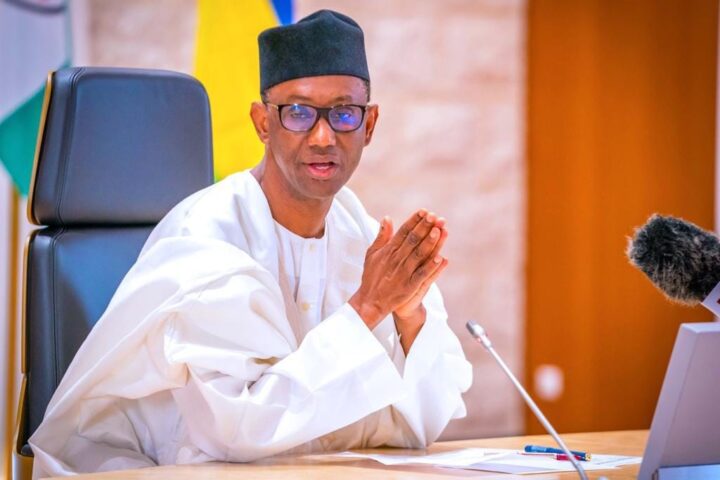
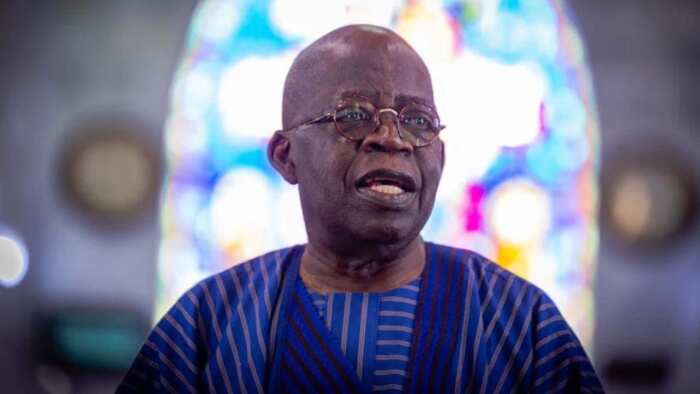
President Bola Ahmed Tinubu

Tinubu appoints Ali Nuhu MD Nigerian Film Corporation

By Uzair Adam Imam

The appointment was disclosed in a statement Friday by the Special Adviser to the President ( Media & Publicity), Chief Ajuri Ngelale.

President Bola Tinubu has given his nod to the appointment of Ali Nuhu, aka the King of Kannywood, and ten other distinguished individuals to spearhead various agencies under the Federal Ministry of Art, Culture, and Creative Economy.

The appointments could be seen as a strategic move to foster growth and innovation in the arts, culture, and creative economy sector.

The recently appointed Chief Executive Officers are set to bring a fresh wave of leadership and expertise to their respective roles:

1. Tola Akerele: Takes the helm as the Director-General of the National Theatre.

2. Dr. Shaibu Husseini: Assumes the role of Director-General at the National Films and Censors Board.

3. Mr. Obi Asika: Appointed Director-General of the National Council for Arts and Culture.

4. Aisha Adamu Augie: Steps into the position of Director-General at the Centre for Black and African Arts and Culture.

5. Ekpolador-Ebi Koinyan: Appointed Chief Conservator of the National War Museum.

6. Ahmed Sodangi: Assumes the responsibility of Director-General at the National Gallery of Art.

7. Chaliya Shagaya: Takes on the role of Director-General at the National Institute of Archeology and Museums Studies.

8. Hajiya Khaltume Bulama Gana: Appointed Artistic Director of the National Troupe of Nigeria.

9. Otunba Biodun Ajiboye: Assumes the position of Director-General at the National Institute for Cultural Orientation.

10. Ali Nuhu: Takes charge as the Managing Director of the Nigerian Film Corporation.

11. Ramatu Abonbo Mohammed: Assumes the pivotal role of Director-General at the National Commission for Museums and Monuments.

Data protection legislation and the future of Nigeria’s digital economy

By Muhammad Mikail

On the 12th of June 2023, President Bola Ahmed Tinubu signed the Nigeria Data Protection Bill into law, setting the historic course for a new data-protected Nigeria. As a matter of fact, the bill was among the very first bills assented to by President Bola Ahmed Tinubu upon assumption of Office. This is no doubt a demonstration of Nigeria’s commitment to safeguarding digital privacy and building trust with global partners and stakeholders; a bold statement and alignment with the cliché’ ‘hit the ground running.’ 

The newly assented Data Protection Act 2023 provides a legal framework for the protection of personal information, safeguarding people’s basic rights and freedoms while supporting the establishment of ‘The Nigeria Data Protection Commission (NDPC)’ for the regulation of the processing of personal information and data. Hence, the law doesn’t only address privacy concerns but also sets the stage for responsible data usage, fostering a secure, trustworthy and progressive digital economic environment.

This also signifies the Federal Government of Nigeria’s full-proof commitment to the “Digital Transformation Strategy for Africa (2020-2030)” as commissioned by the African Union (AU). The overarching objective of the “Digital Transformation Strategy for Africa (2020-2030)” is for every country within the African continent to harness digital technologies and innovation to transform African societies and economies to promote Africa’s integration, generate inclusive economic growth, stimulate job creation, break the digital divide, and eradicate poverty for the continent’s socio-economic development and ensure Africa’s ownership of modern tools of digital management.” The Nigeria Data Protection Commission will be a major player in achieving this lofty goal.

At one point, there was a lot of scepticism by development partners, international financial institutions, critical stakeholders in the digital economy and even potential investors about Nigeria’s lack of data protection legislation.       

Addressing these concerns, the Federal Government of Nigeria, under former President Muhammadu Buhari, established the Nigeria Data Protection Bureau (NDPB) in 2022 as the regulatory institution responsible for ensuring that people’s personal information is kept private and safe when used for ‘digital things’ with Dr Vincent Olatunji as the National Commissioner. However, the Bureau lacked a law establishing it and giving it the robust legal framework required for a full-fledged agency of government to adequately address issues bordering on the security and privacy of data in Nigeria.

In January 2023, the Federal Executive Council (FEC) approved the Nigeria Data Protection Bill presented by former Hon. Minister of Communication and Digital Economy, Prof. Isa Ali Ibrahim Pantami, for transmission to the National Assembly for consideration.      

The then Nigeria Data Protection Bureau, NDPB, now NDPC, led by the National Commissioner, Dr Vincent Olatunji, in collaboration with the Nigeria Digital Identification for Development Project (NDID4D), worked with critical stakeholders, Ministries Departments and Agencies, captains of industries and policymakers perfecting the bill. 

A Focus Group Discussion, national policy dialogue and validation workshop was held to present the draft bill to stakeholders, the 9th National Assembly, and the Federal Ministry of Justice for their buy-in, comments, criticism, and suggestions to improve the bill.  Prior to that, Nigeria had no policy instrument that focused on supporting data privacy and data protection. 

Described as one of the most forward-thinking Acts across the African data ecospheres, the Nigeria Data Protection Act recognises innovations, blockchains, Artificial Intelligence and robotics. The Act also fosters an environment where companies prioritise robust cybersecurity measures and protect sensitive personal information from unauthorised access.

Furthermore, the law empowers users by ensuring that their data is handled responsibly and ethically since, as a fact, the law emphasises informed consent, which enables users to make conscious decisions regarding the use of their data. With this regulation, organisations are bound by law to promptly adapt their practices to comply with the new data protection standards. This brings a balance between leveraging data for business growth and respecting individuals’ privacy rights.

In terms of job creation, Dr. Vincent Olatunji, the National Commissioner of the Nigeria Data Protection Commission, NPDC launched the Nigeria Data Protection Strategic Roadmap and Action Plan, NDP-SRAP 2023-2027 on the 13th of December 2023, in Abuja. The action plan is expected to create about 500,000 jobs and generate more than N125 billion in revenue.

Dr Vincent said in an interview that the NDP-SRAP 2023-2027 is in conformity with President Bola Ahmed Tinubu’s renewed hope agenda. He said, “Part of the ‘Renewed Hope Agenda’ of President Bola Ahmed Tinubu’s administration is to create about two million jobs in the digital economy sector. The data protection sector alone could create more than 500,000 jobs.”

According to the National Commissioner, “The NDP-SRAP comprises interlinked initiatives and activities like job, wealth creation, human capital development, revenue generation, foundational initiatives for the digital economy and enhancing Nigeria’s global reputation. These activities are expected to create about 500,000 jobs, generate revenue of more than N125 billion and expand the sector within the lifespan of this roadmap”.

In the same vein, the former Minister of Communication and Digital Economy, Prof. Isa Ali Ibrahim Pantami, was quoted in an interview to have said that “in two years of the implementation of the Nigeria Data Protection Regulation, NDPR, a novel sub-sector of the economy was created, 7,680 Nigerians were employed. Nigeria was appointed as the Vice Chair of the Data Protection Laws Harmonization Working Group at the African Union (AU) and was the only country in Africa to publish a data protection report in two years.

According to the DG/CEO of the National Identity Management Commission, “integrated identity is the backbone of e-governance initiatives as it provides an enabling environment for key government programmes of social safety net, financial inclusion, as well as for companies that want to provide innovative products and services to people.  She said, “An integrated identity system will strengthen the government’s fiscal management, promote good governance and transparency through inclusivity and social equality, as it ensures that marginalized and vulnerable populations are not excluded from government services.”

The Nigeria Data Protection Act is an enabler of inclusive identity issuance and management and a precursor for the growth, integration, and stability of Nigeria’s digital identity system. It is part of efforts to issue legal digital identities to 99.9% of people in Africa as part of a civil registration process by 2030. 

In this vein, the Act serves as the launch pad for the government’s efforts in building inclusive digital skills and human capacity across the digital sciences, judiciary, and education, both technical and vocational, to lead and power digital transformation, including coding, programming, analysis, security, blockchain, machine learning, artificial intelligence, robotics, engineering, innovation, entrepreneurship, and technology policy & regulation. This is evident in the recent launch of the 3 Million Technical Talent (3MTT) programme by the Hon. Minister for Communication, Innovation and Digital Economy, Mr Bosun Tijjani. The programme is aimed at building Nigeria’s technical talent backbone, powering her digital economy and positioning Nigeria as a net talent exporter the first phase of the programme, executed in collaboration with NITDA, is set to involve multiple stakeholders, including fellows, training providers, partners, and placement organisations.

Consequently, the nation hopes to witness robust digital economic growth, especially with the growth of digital platforms. These platforms are essential elements of digital infrastructure and can serve people, businesses, and government agencies in all aspects of life, including healthcare, education, commerce, transportation, and public benefits. Digital platforms serve or enable other products or services. For the people who use these platforms to receive their monthly pensions, securely login to a government e-services portal, pay their utility bills, submit a complaint, access public information, or find a person to rent their car, these platforms can provide a seamless service delivery experience that increases user convenience, savings, and agency. For governments, digital platforms can increase the efficiency and effectiveness of core functions and services, reduce unnecessary duplication of systems, and combat fraud.

Finally, as data subjects and responsible citizens, we must stay informed about data protection laws; demand transparency from organisations that collect our data and support NPDCs initiatives to sustain and promote international cooperation on data protection, its continuous improvement, and efforts to secure our digital economic future.

Muhammad Mikail writes from Abuja and can be reached via muhammadnmikail.mm@gmail.com.
CBN instructs banks to disregard initial ban on cryptocurrency

By Abdurrahman Muhammad

The Central Bank of Nigeria’s financial policy and regulation director, Haruna Mustapha, announced in a circular on Friday.

The central bank has issued guidelines and regulations for banks on managing cryptocurrency in accordance with global standards to prevent misuse. They also urge banks to comply with these guidelines and regulations.

See the full statement below: 

FPR/DIR/PUB/CIR/002/003

CIRCULAR TO ALL BANKS AND OTHER FINANCIAL INSTITUTIONS

GUIDELINES ON OPERATIONS OF BANK ACCOUNTS FOR VIRTUAL ASSETS SERVICE PROVIDERS (VASPs)

The CBN in February 2021 issued a circular restricting banks and other financial institutions from operating accounts for cryptocurrency service providers in view of the money laundering and terrorism financing (ML/TF) risks and vulnerabilities inherent in their operations as well as the absence of regulations and consumer protection measures.

However, current trends globally have shown that there is need to regulate the activities of virtual assets service providers (VASPs) which include cryptocurrencies and crypto assets. Following this development, the Financial Action Task Force (FATF) in 2018 also updated its Recommendation 15 to require VASPS to be regulated to prevent misuse of virtual assets for ML/TF/PF.

Furthermore, Section 30 of the Money Laundering (Prevention and Prohibition) Act, 2022 recognizes VASPs as part of the definition of a financial institution. In addition, the Securities and Exchange Commission (SEC) in May 2022 issued Rules on Issuance, Offering and Custody of Digital Assets and VASPS to provide a regulatory framework for their operations in Nigeria.

In view of the foregoing, the CBN hereby issues these Guidelines to provide guidance to financial institutions under its regulatory purview in respect of their banking relationship with VASPs in Nigeria.

The Guidelines supersedes the CBN’s circulars referenced FPR/DIR/GEN/CIR/06/010 of January 12, 2017 and BSD/DIR/PUB/LAB/014/001 of February 5, 2021 on the subject. However, banks and other financial institutions are still prohibited from holding, trading and/or transacting in virtual currencies on their own account.

Accordingly, all banks and other financial institutions are hereby required to immediately comply with the provisions of the Guidelines.

HARUNA B. MUSTAFA

DIRECTOR, FINANCIAL POLICY AND REGULATION DEPARTMENT

NSA Nuhu Ribadu style: A critique 

By Zayyad I. Muhammad 

For 24 years, most Nigerians were only familiar with one style of operation by their National Security Advisers (NSA)—a regimental style—because of the complete military background of the previous NSAs. Having NSAs with military experience is an excellent idea, but some critical situations require looking at things from different angles, including outside-the-book approaches.

The coming of Nuhu Ribadu as Nigeria’s National Security Adviser is a paradigm shift and a systemic and systematic approach by President Bola Ahmed Tinubu. Tinubu brought not only a person that he understood but also a person who understood his steps. It’s a kind of quality assurance.

Because for two decades, Nigerians have been used to one style, they need to be educated from a layman’s perspective. NSA Nuhu’s style will and must always be soft and hard, silent and loud, publicly and secretly, unique and ordinary because of his background, training, and experience—an excellent police officer and an anti-corruption czar who has gone through the mills of his fields.

Before his appointment and signs that he would be President Tinubu’s NSA, some people thought de-marketing and painting him black would deny him the position. They forgot that security matters; it goes beyond politics when dealing with goal-getters like Tinubu. It’s a matter of the quality of Nuhu Ribadu and Tinubu’s philosophy on exceptional human resources.

The National Security Adviser manages Nigeria’s security on behalf of the President, and he is the chief advisor on all matters vital to Nigeria’s very survival.

The big questions are: has Nuhu Ribadu brought on board something new, being a new face with different backgrounds from the previous NSAs in 24 years? Has Nuhu Ribadu been able to separate politics from policy? He has actively participated in politics before now. Has Nigerian security improved under Nuhu Ribadu?

Analysing security issues and their managers is often difficult, or rather futile because the gains achieved in a decade can be wiped away within a few minutes by one senseless act by terrorists, bandits, or common criminals. Nuhu has brought something unique: Nigerians are being informed of happenings in the fight against criminality, the NSA is now visible when required, confidence has been built, and resources are appropriately distributed while separating needs from wants. Under NSA Nuhu Ribadu, kinetic and non-kinetic approaches are being applied to tackle the security challenges in Nigeria. Inter-agency synergies are now a key in the security architecture.

Furthermore, all security agencies are being reformed and reinvigorated to play their role in internal security effectively. At the same time, the military is being freed from the burden of performing both its constitutional role and that of the police, thus allowing it to concentrate on external security fully.

Politics and man are like love and humankind—they co-exist. Human beings must always love something; the same is true of politics: once one knits tight with politics, they live together. Even his adversaries must admit that Mallam Nuhu was able to separate his office from politics, knowing fully the enormous responsibilities on his head, and Nigeria and the world are keenly watching him. Furthermore, Mallam Nuhu has been able to drive the ONSA back to its original status as a National Security Vehicle, not the sad belief that it is a kind of  ‘big pot ‘for politicians to scoop from.

Silently and interestingly, NSA Nuhu is building a strong interface among all the security agencies. Roles are being defined to allow seamless work to achieve one goal: the peace of the country and its people. Mallam Nuhu is piloting and overseeing security through the eyes of a well-trained security czar who understands both the hard and soft approaches.

Inter-agency collaboration has improved; ordinary Nigerians now view the NSA as just for security only; NSA words now not only matter but work. An example is the recent off-cycle governorship election in Bayelsa, Imo, and Kogi states. Mallam Nuhu assured Nigerians that the governorship elections would be conducted without interference. And it was. This is how NSAs work—their worlds translate into actions and results.

Zayyad I. Muhammad writes from Abuja via zaymohd@yahoo.com.

The “Boko Haramisation” of University Education in Nigeria

By Kabiru Danladi Lawanti, Ph.D.

Since 2018, when Nigeria’s public universities started announcing hikes in school charges or what is popularly known as service charges, the survival of indigent students in these universities has become threatened. Public universities are the last hope for children from poor backgrounds. According to Emmanuel Onwubiko, the National Coordinator of the Human Rights Writers Association of Nigeria, over 70% of youths from poor backgrounds attend these universities. Therefore, denying these institutions funding is a direct declaration of war on Nigerian youths.

While it becomes necessary for public universities to increase the shortfall in government funding, the increase in school fees means millions of youths will be denied the opportunity to acquire a university education. To say that Nigerian public universities are underfunded is an understatement. That our public universities are in serious crisis is a fact. That universities are unable to achieve the goals of contributing to national development is sadly true.

Two schools of thought exist on this issue. On one hand is the Academic Staff Union of Universities (ASUU), which opposed increasing school fees. Their argument is quite simple: increased school fees automatically mean denying the children of the poor the opportunity to acquire a university education. They argue that there is a need for more citizens to have a university education. The logic is simple: more people with university education in the population automatically translate to positive economic growth, social development, and political cohesion.

To show their seriousness in what they believe in, ASUU had to go on strike several times for several years, starving their members to push forward with this idea. However, there are people who believe education should be removed from social services. They argue that since students are the direct beneficiaries, then the funding of universities should be shifted “from society to the students who are the beneficiaries of the higher incomes their degrees will provide.” These are the advocates of “commodification of university education.”

There are broadly three sources of funding for public universities in Nigeria, as identified by Professor Olanrewaju Fagbohun, the former Vice Chancellor of Lagos State University. These are government grants or subsidies, student/parent contributions (charges fees or allied non-instructional fees) and the income derived by the institution from commercial or quasi-commercial ventures or services, investments, donations, and endowments.

With overpopulation, teeming unemployed graduates, falling standard of university education, corruption in the management of university education and the shift from a mixed economy to a neoliberal economic system since 1986, Nigerian universities are left struggling to survive. Also, the attitude of the people’s government towards education since democracy’s return in 1999 has combined to suffocate the system already in the ICU.

However, in 2017, the universities came to grapple with a very hostile regime under President Buhari. The regime not only cut funding to public universities but imposed an embargo on the recruitment of academic staff in the universities. For over six years now, universities have not employed any fresh staff. Where they are employed, they are imposed on Vice Chancellors from Abuja. Departments no longer have the power to recommend to the VC to retain the best-graduating students in the departments. IPPIS was the last straw that broke the camel’s back. Departments are short-staffed, and IPPIS stopped universities from engaging contract staff, visiting and adjunct lectures and sabbatical staff.

These are the issues that Nigerians need to look at holistically. As it is now, most people have realised the mistake of not supporting ASUU to force the government to investigate the crises of the public universities. The reality clearly shows that indigent students or children from poor backgrounds cannot afford university education. While many analysts gave ASUU strikes the Boko Haram Logic interpretation, no one sees the onslaught on public universities by government agents as “bokoharamisation” of the university education. It is a disservice to Nigeria to remain silent about the current crises confronting the Nigerian public universities and find our voices when ASUU declares strike. This is succumbing to Boko Haram’s wishes. Already, our public primary and secondary schools are in ruins, and it will take the grace of God to resuscitate them. We are now confronted with the collapse of the public university system.

What is the way forward?

Addressing the current crises requires all stakeholders in the Nigerian Educational System. This is a matter of saving Nigeria from collapse. Already, parents have taken 60% of the burden of educating their children in the university. Parents now pay from N50,000 to 250,000 a year for service charges for their children. They provide for their upkeep – accommodation, feeding, laundry, clothing and, of course, purchase of textbooks. Added to that, they take the burden of transporting their children to and from the schools every now and then when the need arises, which can be weekly, monthly, or quarterly. Already, they are involved in funding their children’s education at the university.

The government is supporting universities with infrastructure payments of staff salaries (both academic and non-academic). The government also pays a fraction of the running cost to the universities. TETFUND will not be counted as government funding because it comes from 2% education tax contributions. People in government are leveraging on this and using funding as a weapon of control, as we saw in 2022 when ASUU members were starved for eight months for declaring an industrial dispute with their employer.

Industrial disputes should not be seen as confrontations or a narrow material interest of “greedy lecturers” or “Boko haram logic” of denying Nigerians the opportunity to acquire a university education. It should be seen as a patriotic intervention to salvage a collapsed system.

The commodification of university education in developing nations like ours is never a solution to the lingering crises in the public university system. Commodification destroys “the value of intellectual challenge and exploration by reducing knowledge to quantifiable, job-oriented results”. In fact, commodification is what derives the idea of a “skills rather than degree” gang promoted by a former minister.

I deliberately ignored the push by the present regime of education banks that will serve as lending institutions for university students because it is deceptive, unrealistic, and impracticable in a country like ours. What we need is an acceptable cost-sharing formula that is realistic and acceptable to all stakeholders. And this can come only through negotiation and mutual agreements between university unions, parents, and the government. We need to start this conversation to save our public universities.

Budget and National Planning

By Bilyamin Abdulmumin

Last week, during the FEC meeting, the Minister of Budget and National Planning, Senator Abubakar Atiku Bagudu, made a groundbreaking announcement by revealing the budget forecast for 2024. It sent shockwaves through the nation, and understandably so, as the projected budget of 26 trillion naira was unprecedented; it was a staggering  4 trillion compared to the previous year.

Nigerians have consistently expressed concerns about the ever-increasing budget forecasts year after year. Regrettably, this budget inflation trend has persisted. For instance, the budget started at 299 billion during the Obasanjo government in 1999 but ballooned to 2.3 trillion when he left office. Yar’adua handed over a 4.4 trillion budget to Jonathan, who returned the exact figure in 2015 (despite presenting a 4.9 trillion budget in three previous years). The budget increase went wild during President Muhammad Buhari’s tenure, reaching a staggering 21 trillion in 2023 when he left office.

Although I am not an expert on budget matters, it’s apparent that every budget must consider factors such as market dynamics, inflation, and the growth of the national population and its demographics.

Rather than fixating solely on the budget figures, we, as citizens, should focus on the prudent and effective utilisation of these budgets. If the Nigerian budget had been prepared and executed more efficiently, we might have already achieved the promised Eldorado.

For example, 43 years have passed since the Shagari and Gowon green revolution, 33 years since Vision 2000, and a decade since Jonathan’s Agricultural Transformation Agenda. However, the majority of Nigerians still lack access to quality housing and healthcare, and we continue to struggle to feed ourselves. Similar ambitious visions have come and gone, including IBB’s structural adjustments, Abacha’s Vision 2010, Obasanjo’s Vision 2020, Yar’adua’s seven-point agenda, and PMB’s Vision 2050.

One crucial issue highlighted by BudgIT, a civic organisation monitoring the Nigerian budget, is the disconnect between our budget and national planning, hindering the realisation of the promised utopia. Our budget is not aligned with our national planning, and it seems that from the beginning, Nigeria has not been drawing the budget structure from national planning.

In the words of Oluseun Onigbinde, Global Director of BudgIT, “The Nigerian budget has delivered sub-optimal results because it has not been linked with national strategic plans written for the medium or short term. The current President has a public manifesto, and the Federal Government recently, at a significant cost, also delivered strategic plans that terminate in 2025 and 2050. It does not make sense if the national budget is not linked to these documents. The budget needs to stop just being a contract vending machine stuffed with varied interests but a thorough planning document.”

If the masses can redirect their attention to this issue rather than merely reacting to budget forecasts, expecting more effective and desirable results is plausible.

Interestingly, the Minister of Budget and National Planning, Senator Atiku Bagudu, has pledged to address this issue and reached out to the public for understanding and engagement. This outreach occurred during an official visit by the House of Representatives Committee on Alternative Education. The minister reaffirmed the government’s commitment to the APC comprehensive plans, particularly Agenda 2050 and the 5-year development plan.

Dear Nigerians, it’s time to refocus our priorities and stop chasing after the shadows.

Tinubu’s dwindling image in the North

By Zayyad I. Muhammad

Before and during his 2023 presidential campaign in the North, Bola Ahmed Tinubu was a household name among the ordinary citizens in the North. Now, President Tinubu’s public relations (PR) image in the north is fast dwindling; the Christian community is still bitter with the All Progressives Congress’s (APC) Muslim-Muslim ticket in the 2023 presidential elections, and the Muslim majority is feeling sidelined in the Tinubu government despite their massive vote for the APC during the 2023 presidential elections.

The Tinubu government has some of the best minds in public relations (PR) and the media space in its media team, but the truth of the matter is that Tinubu’s PR image in the north is dwindling and suffering, so to speak. What went wrong?

First, to be fair to Tinubu, he has allocated some good positions to the North according to its ‘rights’, but it was poorly communicated, and the appointees are in a kind of incommunicado with the North.

Secondly, many people, even outside the north, felt that the southwest had taken most of the ‘lucrative posts’—well, it is normal for any president to bring on board his own economic teams, including the people that he knows too well and has confidence in them to deliver his agenda and his party’s manifestos. Tinubu has the right to appoint anyone he wishes to, but unlucky for him, his predecessor’s actions and inactions will be used to gauge his government’s actions and inactions. President Tinubu couldn’t have jettisoned a little bit of this privilege—the idea of appointing only the people he knows too well in his economic team and close aides—since he succeeded a Buhari government that was highly accused of nepotism.

Thirdly, Tinubu’s government interaction with the north appears limited to the high echelon of society; thus, the people at the bottom of the ladder who were told that the Muslim-Muslim ticket would be ‘their government’ now feel they’re sidelined and were misled.

Fourthly, the Tinubu media and public relations teams are good, but they’re disconnected from the real north; they are not sufficiently aware of the approach and ‘language’ to talk to the north, especially APC’s strongholds. A good example is the recent CBN’s lifting of FOREX restrictions on 43 items. The general belief in the north is that the government has opened the borders for rice, maize, and other farm produce; thus, it is a direct attack on northern farmers and rice mills in the north. Up until now, there is no explicit explanation in a language, and from the ‘faces’ the northern farmers and rice millers will understand and believe.

Lastly, the Tinubu government is missing one point: it basically campaigned in its strongholds in the north on the fulcrum of the Muslim-Muslim ticket; now, its body language is that it has tilted away from the north’s political and economic interests; thus, even the ulama ( the clergies) who  ‘campaigned’ for it, is now not talking on its behalf; in fact, many of them are hammering the government. The Muslim-Muslim ticket is like an albatross to the APC, which the party must carry till and after the 2027 presidential elections; it has to continue to ‘nurture’ it like a nursing baby and also, at the same time, prove to its opponents that there is no harm in it.

What Tinubu should do: his subsequent appointments and policy pronouncements should try to pacify the north, especially the APC’s strongholds. Politics is about reward systems, and Tinubu is a master of reward systems in politics.

Secondly, appointees from the north should be visible and reachable to their communities. Many people in the APC’s strongholds in the north don’t even know some people from their folds are now appointees in the Tinubu government.

Thirdly, as earlier said, the Tinubu PR and Media team is good, but it must still be jack-up with more people from the north who know the ‘language’ and have faces that the north will understand.

Lastly, and most importantly, the Tinubu government should constantly inform the north of its efforts and activities in the areas of security, agriculture, and youth programmes in a way and in a language the north will understand and appreciate.

Zayyad I. Muhammad writes from Abuja. He can be reached via zaymohd@yahoo.com.

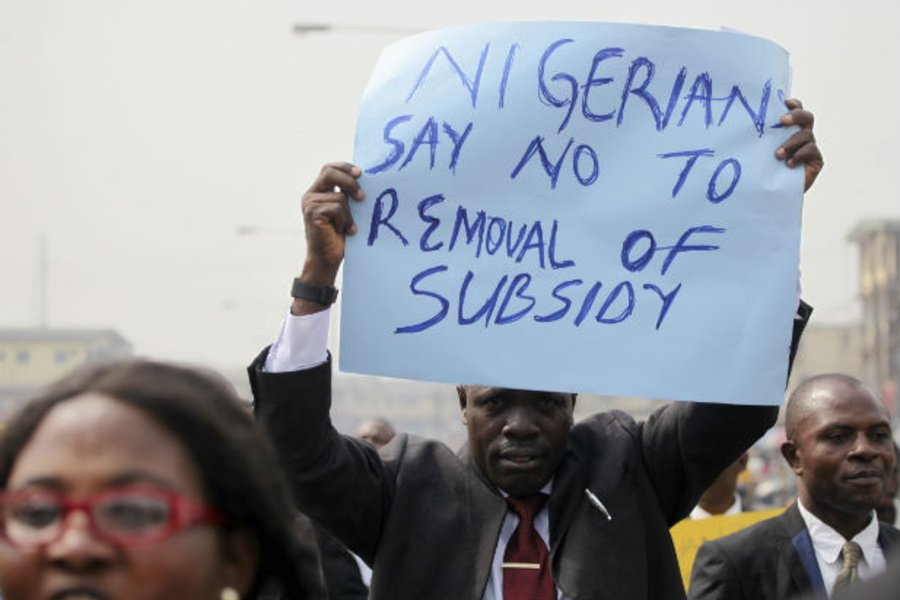
As oil subsidies made a comeback

By Yusufu Musa

During his inaugural address, President Bola Tinubu made what appeared to be a bold statement – ‘fuel subsidy is gone’- which I received, as many people who advocate for channelling public resources to nation building,  in an inexpressible ecstasy. Though discontinuing subsidy payments made the list of his campaign promises, like his close rivals, the duo of Peter Obi of the LP and Atiku Abubakar of the PDP, the declaration came sooner than expected. 

After watching his debut speech as president, many people were unsure when the order would come into force. For instance, a news item made the rounds in the first quarter of this year, suggesting that the immediate past government had dropped its plans of removing the PMS subsidy. The then minister for finance, Zainab Ahmed, swiftly issued a release to discredit the story. She said the public misunderstood their stance.

According to her, the government only expanded the hitherto planned implementation of the subsidy removal team to allow for the participation of representatives of the incoming government. She insisted that the federal government made estimates for subsidy payments until June 30, and there would be no funds for that after this date. 

We gathered that Nigerians would continue buying fuel at the subsidised rate of N195 per litre. We misinterpreted it. A day later, the NNPCL raised its pump price to N550. But, had the company waited until July 1 to adjust, Nigerians would have spent long hours in petrol retail outlets. Marketers would have hoarded the fuel to create an artificial scarcity to ‘cash out’ after July 1.

It took Nigerians not long to feel the attendant effects of the policy. Transport fares immediately tripled, and prices of consumable goods have been on the increase. However, an average Nigerian is convinced that the action is necessary and is for our collective good. So, we are ready to make sacrifices for the nation. Two, a worker in Abuja who boards a cab to go to his workplace and visits his hometown only during festive thought that big men fuel their motorcades and the government only subsidises their ostentation.

From Jonathan to Buhari, corruption in the system is the loudest criticism against the subsidy. Critics of it argued, and still do that it benefits a handful of people, ‘the oil cabal’. For instance, Malam Isah Yuguda, a chieftain of the APC, disclosed that one of the cabal members approached President Buhari to say they were tired of making money [from subsidies]. Another reservation is that some marketers illegally export the product to our neighbours such as Niger, Cameroon and Benin, thus placing a heavier burden on our government to pay subsidies for what other countries enjoy. They told us that our daily consumption was not consummate with our needs. 

In 2012, Ngozi Iweala, the then coordinating minister of economy, was in Lagos to tell proponents of subsidies that the subsidy funds would reduce maternal deaths in the country and the infrastructural deficit. Sanusi Lamido Sanusi followed the same pattern of thought. Their articulate points could not help convince Nigerians that paying subsidies was evil.

President Buhari was the fiercest in putting forward arguments against subsidies. He is credited with a question he did not answer in his eight years as our president – ‘Who is subsidising who?’  One of those being subsidised was in his office, but he did not take the opportunity to ask him questions. Nonetheless, his administration undertook to let the subsidies go, but in phases. The plan was to go after the PMS subsidy in the final phase.

Governors, who budget billions of naira in the name of security votes whose details are never in the public space, were angry that Buhari was too slow in abolishing subsidies for the health of the country’s economy. 

With borrowing that became a ritual under the last government and the constant blame on the subsidy as the greatest impediment to our development as a nation, we were looking forward to departing from the tradition to set the economy on the path of prosperity.

Four months after making one sentence, which we believed ended the subsidy regime, several papers reported that the government paid about 162bn for subsidy in August.  Onlookers have a reason to ask whether this removal will answer its purpose. Despite the hardship in the country, this news is utterly bad for Nigerians.

If the system encouraged corruption in the past and the government did away with it, how does it intend to convince Nigerians that large-scale corruption would not continue now that the subsidy is back? What assurance would the Tinubu’s government give Nigerians that importing the product to other countries will no longer continue? 

Continuing to vote for such a big figure in enriching oil titans, it repeatedly pointed out they are the actual beneficiaries of subsidies, which means it has no satisfactory cause to starve the poor Nigerians any longer. The philosophy has been thrown out. The amount is not much different from what the previous governments were paying. It should unconditionally reverse the policy. 

Suffering is pronounced in towns and villages. Practical strategies to alleviate the hell are not forthcoming. The government, last month, considered distributing food items to the poor. It went as far as handing funds to state governors. That is not sustainable. It would be difficult, if not impossible, for one man to take more than a sack of grain home. This man has, say, five wards under his roof. There is another chapter of life after the palliative is gone. 

Yusufu Musa writes from Kaduna.

Tinubu names El-Rufa’i replacement

By Ahmad Deedat Zakari

President Bola Ahmad Tinubu yesterday, named Balarabe Abbas Lawal from Kaduna State as minister-nominee to replace former governor Nasir el-Rufai, who was rejected by the Senate in August.

This replacement was communicated through a letter read by the Senate President, GodsWill Akpabio, during the plenary session on Tuesday.

Balarabe’s nomination was announced alongside Dr. Jamila Ibrahaim and Ayodele Olawande, who were nominated by the President for the roles of Minister of Youths and Minister of State for Youths, respectively.

In August, El-Rufai’s name was conspicuously absent from the confirmed list of ministerial nominees presented to the Senate.

During the screening process, which took place about a month ago, the Senate approved and confirmed a total of 45 out of the 48 nominees sent by President Bola Tinubu.

Several petitions, including those from Senator Sunday Karimi (APC, Kogi West), were presented against the former governor during the screening.

Senator Sunday Karimi, representing Kogi West, voiced his opposition to the former Kaduna State governor during the ministerial screening.

Tinubu’s appointments lopsided, favours mainly Yorubas and Christians – MURIC

By Abdurrahman Muhammad

An appeal has gone to President Bola Ahmed Tinubu to ensure that all regions, faiths and sections benefit from political appointments made by his government while no ethnic group or faith is seen to be favoured above others. 

Making the appeal on Monday, 18th September 2023, was the Executive Director of the Muslim Rights Concern (MURIC), Professor Ishaq Akintola. The head of the Islamic human rights organisation added that appointments made so far by Tinubu are lopsided because they favoured mainly Yorubas and Christians. He advised the president to ensure balance in coming appointments. 

The full text reads:

“We are shocked to our marrows that President Bola Ahmed Tinubu has been appointing Christians and Yorubas mainly to key positions since the inception of this administration at the expense of Muslims. For instance, five out of eight security chiefs appointed earlier are Christians. Ministerial posts have not been different.

“All five key appointments made by President Tinubu to revive the economy were given to Christians and Yorubas mainly. These new appointees include the Minister of Finance, Wale Edun; the newly nominated CBN Governor, Dr. Michael Cardoso, Hon. Zacch Adedeji; Acting Chairman, FIRS; the Chairman, Tax Reforms Committee, Mr. Taiwo Oyedele and Mr. Tope Fasua, Special Adviser on Economic Affairs.

“Many competent Muslims who campaigned and voted for Muslim-Muslim ticket during the presidential election were ignored. It is interesting to note that some of those Muslims are eminently qualified to hold key political offices since there are professors, engineers, medical doctors and holders of doctorate degrees among them.

“To add salt to injury, one of the best Muslim ministerial nominees, the man who championed the Muslim-Muslim ticket and mobilised the whole North behind Asiwaju, has been jettisoned. Also, Professor Ali Isa Pantami, who took the communication and digital economy to enviable heights during the last administration, was ignored. Where, then, is our Muslim president taking Nigerian Muslims?

“MURIC rejects this trending narrative that makes competence the raison d’etre for concentrating appointments in any particular tribe, religion or group. Government’s tentacles should be spread nationwide in the search for competence. Neither should the need for skills be used as a cover for the marginalisation of some sections of Nigeria. 

“We assert clearly, emphatically and unequivocally that competence is not the monopoly of any tribe, faith or group. Talented Nigerians are to be found everywhere if sincere searches are conducted. 

“Besides, government should take the lion share of the blame if competent hands cannot be found in any section, creed or group for certain assignments. It means the government has not, ab initio, allowed educational and training facilities to be fairly and evenly distributed, or that the government has failed to consciously integrate all segments of the Nigerian society. All sectors must therefore have equal opportunities to participate in governance.

“This regime must be wary of allegation of nepotism, which the previous regime was accused of. Nigeria is a vast country with talented men and women in all nooks and crannies. The government must not just pick the low-hanging skills or those on the water surface. It must send its underwater swimmers to dive below the surface in order to bring the gems to dry land.

“Our message to President Tinubu is this (and we want the president’s handlers to take this to him) the cacophony of voices of dissatisfied Muslims has reached an unbearable crescendo such that MURIC is now constrained to speak up. People are complaining, particularly Muslims from the North and South West, and they can only be ignored at the risk of foregoing 2027. 

“President Bola Ahmed Tinubu is our Muslim brother, but that should not stop us from criticising him if he does the wrong thing. The Prophet (SAW) said, “Help your brother when he is wronged and even when he is wrong…”

“Traceable as well as well-known authors on social media are exchanging lopsided lists either tilted in favour of Christians who did not vote for the Muslim-Muslim ticket or in favour of Yorubas only. Such lists raise questions of nepotism and that of marginalisation of the same Muslims who stood behind Asiwaju and voted massively for him. 

The pervading hunger everywhere in the land may force some regions to seek a pound of flesh in 2027 if they are denied political appointments where it matters. In particular, President Tinubu should ensure that the North, which was his strategic ally in the 2023 presidential election, is not stinted of political appointments. Otherwise, he will destroy the thin veneer of solidarity which currently exists between the North and the South West.

“We remind President Bola Ahmed Tinubu that all regions, faiths and sections deserve political appointments. The Tinubu administration must not be the exclusive preserve of the Yorubas at the expense of other tribes, nor the monopoly of Rome at the expense of Madinah. No region must be sentenced to hunger, starvation and political isolation. 

“Tinubu’s next appointments must see a shift in body language. All regions, faiths and sections must benefit from political appointments made by this government, while no ethnic group or faith is seen to be favoured above others.

“Meanwhile, we in MURIC accept full responsibility for the dilemma facing Nigerian Muslims as their Muslim-Muslim ticket has turned into a ‘Christian majority government’. We admit being in the forefront of the campaign for a Yoruba Muslim presidency which has become a bone in the throat of Yoruba Muslims in particular and Nigerian Muslims in general. 

“With heavy hearts, we tender unreserved apology, first, to the former governor of Kaduna State, Mallam Nasir El-Rufai, for what we led him to even though he showed no interest at the beginning, and to other Nigerian Muslims, particularly those who have been accusing us of misleading them.