Poverty

From export hype to empty stomachs: A response to Mr Tanimu Yakubu, the DG of the Nigeria Budget Office

By Nazeer Baba

For context, Mr Tanimu, in defence of the economic freefall under the current administration, claimed that the naira has bounced back to dominance as a result of Nigeria’s non-oil commodity exports. In reality, however, non-oil exports accounted for only about 9% of Nigeria’s total exports between Q1 2024 and Q4 2024, while mineral fuels, mainly crude oil, maintained their traditional dominance with 91% of export volume. In other words, nothing has fundamentally changed in Nigeria’s dependence on a major oil-exporting economy.

Yes, non-oil exports indeed rose from $2.696 billion in H1 2024 to $3.225 billion in H1 2025—a 19.62% growth. Much of this was driven by the naira devaluation, which makes our commodity cheaper in the foreign market at the expense of Nigerians. Another reason is the climate challenges that disrupted cocoa production in major producers like the Ivory Coast and Ghana, temporarily creating space for Nigerian cocoa. But this is both an incidental and a policy blunder.  

The more urgent question is how this growth affects the key aspects of development. Poverty, unemployment, and inequality, especially for the 133 million Nigerians living in multidimensional poverty? As the economist Amartya Sen argued, real development should be gauged by what happens to these three dimensions. Unemployment

The official unemployment rate fell to 4.3% in Q2 2024, down from 5.3% in Q1. But this decline has little to do with any job boom under President Bola Tinubu. Instead, it is the product of a statistical adjustment. In the past, the NBS only counted those aged 15–64 who worked at least 20 hours per week as employed. Under the new guidelines, anyone 15 years or older who worked for pay—even for just a single hour in a week—is now considered employed. At best, this is a manipulation of numbers.

For young people, the reality is harsher. Unemployment among 15–24-year-olds was 6.5% in 2024 under the new formula, but under the previous methodology, it had peaked at 53.4%. The World Bank confirms this paradox: low official unemployment rates coexist with widespread poverty. Millions are “employed” but still trapped in poverty. Job quality, not misleading headline numbers, is what truly matters. Today, most Nigerians endure insecure, informal, and underpaid work.

Poverty

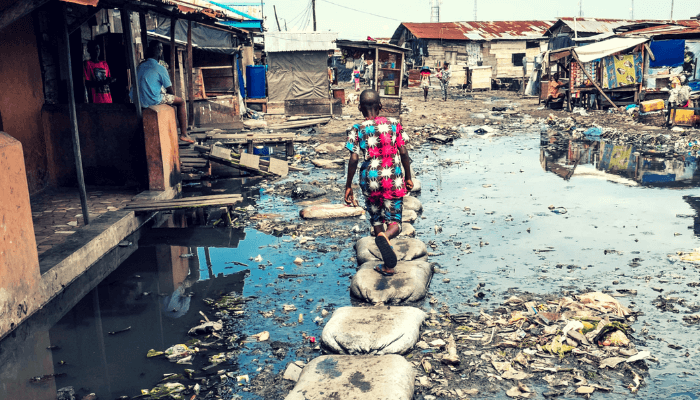
Nigeria has long been an economy under strain, but the shock of 2024–2025 has been unprecedented. Over 54% of Nigerians now live in extreme poverty, surviving on less than $2.15 per day. Rural poverty is staggering at 75.5%, while urban poverty stands at 41.3%. According to Reuters, by August 2025, an estimated 33 million Nigerians are facing acute food insecurity. Inflation, naira devaluation, fuel subsidy removal, recurrent floods, and internal displacement have left two-thirds of households unable to afford food.

Inequality

Nigeria’s inequality gap has never been wider, despite being Africa’s largest economy. With abundant human capital and vast resources, Nigeria has the economic potential to lift millions out of poverty. Yet the wealth distribution remains grotesquely skewed. According to Oxfam, the combined wealth of Nigeria’s five richest men $29.9 billion, could end extreme poverty nationwide. Meanwhile, over 5 million Nigerians are at risk of hunger and starvation. More than 112 million people live in poverty, yet the richest Nigerian man would need to spend \$1 million a day for 42 years to exhaust his wealth. His annual earnings alone could lift 2 million people out of poverty for a year. This is the textbook case of an economy trapped in extreme inequality.

Policy Recommendation

If Nigeria is serious about reversing this deterioration, the government must move beyond statistical gimmicks. A realistic policy response would be to mandate a Commission that directly links export earnings to job creation and poverty reduction. This means:

1-Mandating that a percentage of non-oil export revenues be reinvested into agro-industrial value chains to generate decent jobs.

2-Expanding targeted social protection programs funded from windfall oil revenues to cushion the poorest households against inflation and food insecurity through deliberate and direct cash transfers.

3- Enforcing progressive taxation on extreme wealth to finance healthcare, education, and rural infrastructure. Areas where inequality is most glaring.

Without policies that directly address poverty, unemployment, and inequality, Nigeria’s so-called “export-led rebound” will remain nothing more than a statistical illusion.

Nazeer Baba wrote from Abuja, Nigeria, via Babanazeer29@gmail.com.

Nigeria’s predicament: Why the gods are not to blame 

By Zekeri Idakwo Laruba

Many years ago, though I can’t quite recall what class I was in at the time, I read with deep suspense the secondary school play The Gods Are Not to Blame, a gripping adaptation of Sophocles’ Oedipus Rex by Ola Rotimi. The story left a lasting impression on me.

‎‎The play retells the classical Greek tragedy in a Yoruba setting, replacing Delphi with Ifa, but retains the central tragedy: a prophecy that Odewale would kill his father and marry his mother. The oracle had spoken. His parents, terrified and confused by the fate foretold, did everything to avoid it. They gave the boy away, hoping to cheat destiny. But in doing so, they unknowingly set in motion the very events they hoped to prevent.

‎Like a mirror held up to society, the play reminds us that fate, while powerful, is often enabled by human choices. And as I reflect on Nigeria’s present economic and political situation, I am compelled to draw a parallel. The gods, be they ancestral spirits, destiny, or structural circumstances, are not to blame for our predicament. The fault lies within us, among the citizens, and in our daily conduct. Nigeria’s crisis is not rooted in some divine curse, leadership, or preordained calamity. The tragedy is man-made, self-reinforced, and perpetuated by generations of unchecked habits.

‎The go-to culprit for our country’s dysfunction is always leadership; yes, he must be voted out. And in fact, we have had our share of weak, corrupt, selfish or visionless leaders. But to lay the entire burden of national failure on leaders alone is to ignore the broader ecosystem that produces and enables them. Leadership, in many ways, reflects the society from which it emerges.

As the former national secretary of the Congress for Progressive Change (CPC), Buba Galadima, recently argued on Arise TV, the problem isn’t merely the constitution or even the political structure. The constitution may have its flaws, yes, but no document, no matter how perfectly worded, can save a people who refuse to uphold its spirit. The rot goes deeper, into the very fibre of society.

‎The average Nigerian seeks change, including better roads, reliable electricity, transparent governance, and reduced costs for transportation and foodstuffs, but is reluctant to make the personal sacrifices necessary for this transformation. We want leaders who won’t embezzle funds, but we are ready to bribe our way out of traffic offences, rig student union elections, or inflate business invoices for profit. We demand accountability from the top while practising impunity at the grassroots.

‎‎What we face is not a constitutional crisis, but a moral and cultural one. An attitudinal crisis. A society where dishonesty is normalised and rewarded cannot produce integrity at scale. A nation where people cheat customers, underpay staff, evade taxes, and applaud fraudsters as “smart” will always find itself circling the drain of underdevelopment.

‎‎You see it in business, in education, in religious institutions, even in our homes. The trader who mixes sand/stones in beans to increase weight; the employer who withholds salaries while funding a lavish lifestyle; the pastor or imam, even herbalist, who uses fear to manipulate followers; the teacher who extorts students for grades; the parent who teaches a child to lie to visitors, these are not the acts of the gods. They are human choices.

‎‎Much is said about fighting corruption in public office. But who will fight it in the private lives of citizens? In that small business of yours, are you sincere? Do you treat your staff the way you demand to be treated by your political leaders? Do you keep your promises? Are your scales balanced? Do you honour contracts? These questions are not rhetorical; they are foundational.

‎Corruption does not begin at the national budget office; it begins in the market stall, the classroom, and the family dinner table. Before it becomes institutionalised, it is psychological. We must cleanse the mindset that normalises dishonesty, excuses shortcuts, and praises the rich regardless of how their wealth was acquired.

‎What Nigeria urgently needs is a complete national reorientation campaign, not the kind that involves empty slogans or jingles on the radio, but a sustained, grassroots movement to rebuild ethical standards. We need to teach honesty not just as a virtue, but as a power. We must reintroduce shame where wrong is done and rekindle collective pride in doing things right.

‎This means rethinking our educational curricula to emphasise civic duty and moral reasoning. It means reforming religious institutions to prioritise substance over spectacle. It means applying social pressure on influencers, celebrities, and community leaders to model ethical behaviour. It also means supporting the rare public officials who dare to lead by example.

‎‎If the gods are not to blame teaches us anything, it is that destiny is not an external enemy; it is a consequence of our own decisions. Nigeria is not doomed. It is not a failed state by fate. But we must be honest: we are dangerously close to reaping the full harvest of our collective neglect.

‎To change our national direction, we must start with the mirror, not the ballot box. Reforms must begin in the marketplace and the family unit before they can translate to public office. Only then will the constitution come alive. Only then will good leadership be sustained. Only then will Nigeria’s story turn from tragedy to triumph.

‎The gods are watching, yes. But they are not to BLAME. WE ARE!

Zekeri Idakwo Laruba is the Assistant Editor of PRNigeria and Economic Confidential. He can be reached via idakwozekeri93@gmail.com.

Nigeria’s rural poverty worse than what was seen in 1960—Report

By Abdullahi Mukhtar Algasgaini

A new report by the Big Tent coalition, a political reform group, reveals that rural poverty in Nigeria has deteriorated to levels worse than at independence in 1960, with 75% of rural Nigerians trapped in chronic poverty.

The study, led by political economist Prof. Pat Utomi, highlights severe hunger, insecurity, and failing infrastructure, accusing the political class of prioritizing “power and propaganda over purpose.”

“Walk the streets of Ibadan or Maiduguri, and you’ll see the new destitution,” the 14-page report stated. It noted that 30 million Nigerians face acute food insecurity, with rural resilience destroyed by neglect and violence.

The report condemned government spending on projects like new presidential jets and the Lagos-Calabar highway while millions suffer.

It warned of collapsing trust in leadership, citing a grassroots survey showing citizens are “angry and hungry.”

Agriculture, once Nigeria’s economic backbone, now suffers a N1.04 trillion trade deficit, with farmers crippled by insecurity and poor policies.

The coalition urged urgent reforms, including university-led farming programs and regional industrialization.

With Nigeria’s debt rising and corruption unchecked, the Big Tent called for digitized elections and balanced budget laws.

“We are mortgaging the future,” the report warned.

“The state of our nation is terrifying,” Utomi said. “Citizens must reclaim the public square—this is the urgency of now.”

The Nigerian state has failed its people

By Muhammad Umar Shehu

Let’s stop sugarcoating it. Nigeria’s leaders have failed the very people they swore to serve. The signs are everywhere. Millions go to bed hungry, communities are under constant threat from bandits and terrorists, and families bury loved ones over avoidable tragedies. The cry from the North to the South is the same: “Where is the government?”

For decades, we have watched politicians campaign with promises and disappear after elections. We have listened to speeches full of hope, only to wake up to worsening hardship. Whether in education, healthcare, security, or the economy, Nigerians are primarily left to fend for themselves in a country that seems to work only for the elite.

Electricity is unstable. Public schools are underfunded. Hospitals lack basic equipment. Roads are death traps. Jobs are scarce. The police often protect the rich while the poor face brutality. The gap between government and the governed has become dangerously wide.

But the failure didn’t start yesterday. It results from years of corruption, mismanagement, and lack of vision. Successive governments, both military and civilian, have chipped away at the country’s foundations while enriching themselves. The civil service, once respected, is now known more for inefficiency and bribery than service delivery.

What’s worse is that people have grown tired. Tired of voting without results. Tired of protesting with no response. Tired of hoping for leaders who never come. This fatigue is dangerous because when people lose faith in the system, they seek alternatives. And that is where chaos begins.

Still, all hope is not lost. The first step is honesty. We need to admit that things are not okay. Then, we must demand better. Louder. Consistently. In unity. Good governance doesn’t happen by chance. It happens when citizens hold leaders accountable during elections and every day after.

Nigeria is not poor. Nigerians are not lazy. The failure lies in a leadership that treats public service like a private business. Until that changes, the suffering will continue. But if the people find their voice and use it, we may turn this broken system into something that works for all.

Muhammad Umar Shehu wrote from Gombe and can be reached via umarmuhammadshehu2@gmail.com.

Nigeria’s cycle of greed: When will the poor breathe?

By Muhammad Umar Shehu

Nigeria is arguably the only country where the impoverished masses are forced to manage the situation as it is while those in power enjoy life to the fullest. People endure abject poverty, yet our leaders show no sympathy for humanity.  

Nigerian politicians lack compassion, empathy, and conscience for the populace. In this country, the poor must bear the suffering their leaders impose while so-called politicians revel in its intensification. Hunger is a condition no human can survive, yet our leaders compel us to endure it. 

The Nigerian economy is in a dire state because the government is being run by the incompetent, corrupt, unscrupulous, and among the least qualified. One thing I’m sure of is that Nigerian politicians would rather sell their country for power and wealth than pave the way for the poor.

Nigeria’s leaders have turned governance into a tool for personal enrichment. Public healthcare, education, and infrastructure funds vanish into private accounts, leaving citizens to endure crumbling hospitals, overcrowded schools, and impassable roads. While politicians flaunt luxury cars and foreign estates, millions struggle to afford one meal daily. This intentional neglect ensures the masses remain too desperate to challenge their oppressors. 

Coming back to the basics, in the past, before the 2023 general election, the nation’s current president, Bola Ahmed Tinubu, had been weaponizing hope with the slogan “Let the poor breathe”. Do the poor people actually breathe? And when are they going to breathe in this country of plenty?  

Nigerian politicians are used to using fake campaign promises to lobby votes from the poor masses. Still, they cannot be found once the election ends, and those campaign promises become unfulfilled. All my life, I’ve never seen people as shameless as Nigerian politicians. After all the fake promises, they still return during another election cycle with more fake promises. Are you not ashamed of yourselves at all?

Nigerian politicians hoard resources for themselves, raise their own salaries and silence dissent with violence. Meanwhile, families starve, workers go unpaid, pensioners are left starving, and youth lose hope. Until Nigerians unite to reject this cycle of greed, suffering will remain our nation’s legacy.

Muhammad Umar Shehu wrote from Gombe State and can be reached via Muhammadumarshehu2@gmail.com.

10 dead, 8 injured in Maitama church stampede

By Uzair Adam 

The Federal Capital Territory (FCT) Police Command has confirmed the death of ten people, including four children, following a stampede during a food distribution event at the Holy Trinity Catholic Church in Maitama. 

The incident, which also left eight others injured, occurred early on Saturday, December 21, 2024.  

The distribution of food items was intended to assist vulnerable and elderly individuals but tragically resulted in a chaotic scene around 6:30 a.m. 

According to a statement signed by the FCT Police Public Relations Officer, SP Josephine Adeh, four of the injured have already been treated and discharged, while the remaining victims are still receiving medical attention.  

Expressing condolences to the families of the deceased, the Police Command called for increased caution in organizing such events to prevent future tragedies.  

“To prevent such unfortunate incidents, all organizations, religious bodies, and groups planning public gatherings in the FCT are directed to notify the Police Command in advance to ensure adequate security measures are in place,” the statement read.  

The Command warned that failure to comply with this directive would lead to holding organizers accountable for any loss of life or injuries caused by negligence.  

The Police also reiterated their commitment to protecting lives and property in the FCT and urged residents to report emergencies through the control room lines provided: 0803 200 3913 or 0806 032 1234.

Nigeria’s economic distress: A country battling overwhelming inflation

By Idris Mustapha

 The National Bureau of Statistics (NBS) revealed in a heart-wrenching report that Nigeria’s inflation rate climbed to an excruciating 33.88% in October 2024. The pain and suffering reflected in these official figures tell a story far more profound than mere economic indicators—they represent countless nights of parents going to bed hungry, having sacrificed their meals to feed their children.

The NBS’s latest report paints a devastating picture, showing a relentless climb from September’s already unbearable rate of 32.70%. “Looking at the movement,” the Bureau notes with clinical precision that contrasts sharply with the human suffering it represents, “the September 2024 headline inflation rate showed an increase of 0.55% compared to the August 2024 headline inflation rate.” Behind these sterile statistics lie the anguished faces of market women watching their businesses crumble.

The Bureau’s year-on-year analysis reveals an even more distressing reality, with October’s rate standing 6.55 percentage points higher than the 27.33% recorded in October 2023. The NBS report states, “This shows that the headline inflation rate (year-on-year basis) increased in September 2024 when compared to the same month in the preceding year.” Each percentage point represents another burden on the shoulders of ordinary Nigerians, many of whom are already stretched to their breaking point.

The official data traces a cruel journey through 2024, from January’s troubling 29.90% to the current devastating peak. The NBS’s monthly tracking shows how “the rate of increase in the average price level is more than the rate of increase in the average price level” each month. Behind these technical terms lies the reality of young graduates seeing their dreams fade and elderly citizens finding their pensions increasingly worthless.

Perhaps most heartbreaking is the Bureau’s documentation of the Premium Motor Spirit (PMS) price surge, which the NBS directly links to the inflation crisis. This price hike, implemented in early September and again in October, has dealt a cruel blow to our society’s most vulnerable members. Families are forced to make impossible choices: buying food or medicine, paying school fees, or keeping their small businesses alive.

The statistical evidence presented by the NBS serves as an official testament to the widespread suffering. Markets that once bustled with life now echo the whispered concerns of traders and customers alike, haggling not for profit but for survival. The weight of this economic burden is visible in the tired eyes of parents who must explain to their children why they can no longer afford their favorite meals or school supplies.

As we look to the future, the NBS’s continuous monitoring of this crisis is a stark reminder of the urgent need for intervention. While the Bureau diligently records these devastating figures, real families make painful sacrifices to survive another day. The official data serves as a clarion call for immediate action, as each statistical update pushes more Nigerians below the poverty line, leaving deep scars that may take generations to heal.

The National Bureau of Statistics meticulously documents this crisis, which demands policy changes and a fundamental recognition of the human suffering it represents. Behind every percentage point increase lies a story of resilience: families supporting each other through unimaginable hardship, communities coming together to share what little they have. Yet, without significant intervention, these stories of resilience documented in the national statistics may soon turn into tales of despair as more Nigerians find themselves unable to cope with the relentless rise in the prices of basic necessities.

Idris Mustapha wrote via idrismustapha25@gmail.com.

G20: President Tinubu endorses global coalition against hunger, poverty

By Abdullahi Mukhtar Algasgaini 

President Bola Tinubu has hailed the creation of the Global Alliance Against Hunger and Poverty, championed by President Luiz Inacio Lula da Silva of Brazil. 

Tinubu described the alliance as pivotal in the global fight against hunger and poverty. He made this statement on Monday at the 19th G20 Leaders Summit opening session in Rio de Janeiro, Brazil.  

He lauded the initiative and described it as the right step to address one of the world’s most significant challenges.  

“This bold and visionary step underscores Brazil’s leadership in addressing one of the most urgent and persistent challenges facing our world today.  

“The creation of this Alliance marks a significant milestone in our global efforts to eradicate hunger and poverty, and it also sends a powerful message of solidarity to vulnerable populations around the globe. 

“By fostering collaboration between governments, international organisations, and civil society, this initiative offers a comprehensive approach not only to addressing immediate needs but also tackling the structural causes of hunger and poverty,” he said. 

President Tinubu compared this global initiative to one of the eight priority areas he outlined at his inauguration 18 months ago, expressing Nigeria’s eagerness to adopt international best practices to advance its economic development. 

According to President Tinubu, Nigeria’s endorsement of the declaration of commitment to join the Global Alliance is a significant step in its efforts to address hunger and poverty by leveraging international cooperation and resources to bolster domestic strategies. 

He added that by supporting the initiative, Nigeria also demonstrates a solid commitment to realising the Sustainable Development Goals (SDGs), particularly SDG 1, which focuses on eradicating poverty, and SDG 2, which aims to achieve zero hunger. 

“These goals are at the core of Nigeria’s development agenda, and the Alliance offers a platform to accelerate progress towards them.  

“By collaborating with international partners, Nigeria aims to leverage best practices, innovative solutions, and financial support to enhance its efforts to combat poverty and hunger. The endorsement reinforces Nigeria’s role as a key player in global efforts to promote sustainable development and improve the quality of life for all its citizens,” President Tinubu said.

64 years after Nigeria’s independence

By Rabi Ummi Umar

A few weeks ago, Nigeria marked its 64th independence anniversary, commemorating more than six decades since gaining freedom from British colonial rule on October 1, 1960. However, this year’s celebrations were unusually subdued, devoid of the usual fanfare, pomp, thrills and frills. 

The once-familiar scenes of face painting, jubilant crowds, and flags waving in patriotic pride were replaced by an eerie silence that echoed across the nation. Despite this significant milestone, many Nigerians found little reason to celebrate. The mood was sombre, reflecting a collective sentiment that these are not times for revelry.

Instead, citizens believe it is a time for reflection and a renewed commitment to steering the country back toward prosperity, as envisioned by the men and women who fought for the independence we now enjoy. In the eyes of most Nigerians, the celebration only serves as a distraction from the harsh realities of daily life.

The more one reflects on the state of the nation, the more troubling it becomes. What exactly are we celebrating? Is there anything genuinely worth commemorating at this point? After the fireworks, what awaits us—more suffering? The unspoken truth is that the situation has grown so dire that it is almost impossible to ignore the country’s challenges, no matter how much we might want to.

One of the major concerns plaguing citizens is the aftermath of the subsidy removal, which continues to wreak havoc on lives and livelihoods. While the minimum wage has been signed into law, its implementation remains uncertain, casting doubt on the government’s ability to deliver on promises and its tendency to prioritise talk over tangible action. 

These discrepancies raise questions about the effectiveness of policies aimed at alleviating the struggles of Nigerians. Our leaders have made numerous promises, but despite their assurances, little has been done to address the suffering of the people. Take the much-touted Compressed Natural Gas (CNG) buses, for example. Despite promises, these buses have failed to materialise in significant numbers. Even the few introduced fall short of addressing Nigeria’s transportation challenges. 

How much progress can we realistically expect from such initiatives? Unemployment remains a persistent issue, exacerbating the nation’s woes. Although the National Bureau of Statistics (NBS) reported an unemployment rate of 5.3%, many believe the actual figure is much higher, especially given Nigeria’s struggle with accurate population data.

Insecurity is another critical concern. Terrorism, banditry, and kidnapping for ransom plague every region, with countless lives lost, even after ransoms have been paid. Nigerians are grappling with hunger as the crisis reaches alarming proportions. Starvation, suffering, and even death from hunger have become stark realities.

According to the Food and Agriculture Organization (FAO), 80 to 82 million Nigerians are at risk of severe hunger if the current trajectory continues. Given our vast agricultural potential, how did we reach this point? Politics in Nigeria remains largely a curse, with politicians exploiting religion, region, and ethnicity to garner support. 

Instead of uniting to solve the nation’s problems, they engage in ridicule, even on pressing national issues, as seen in the aftermath of the President’s October 1 address. Poverty also remains a major concern. The NBS reports that 63% of the population—approximately 133 million people, or six out of every ten Nigerians—are trapped in multidimensional poverty. 

It is little wonder that Nigerians are not in a celebratory mood. So much has gone wrong recently that even wishing someone a “Happy Independence” feels offensive. What, after all, have we indeed achieved in these 64 years? Nigeria has the potential for greatness, and the government can and should do better. President Tinubu, please, we are begging—Nigeria deserves better.

Rabi Ummi Umar is an intern at PRNigeria and a student at Al-Hikmah University, Ilorin. She can be reached via rabiumar058@gmail.com.

From protest to silence: Is there hope for a better Nigeria?

By Nafisa Ismail Sadiq 

As a concerned Nigerian, I feel deeply disappointed in our leaders and ourselves. When President Bola Tinubu assumed office, many hoped for a significant shift. After years of enduring bad governance, we were desperate for leadership that would bring transparency and accountability. However, instead of progress, his administration has deepened our despair.

Bad governance didn’t begin with Tinubu’s administration. It has plagued Nigeria for decades. According to a study by the “Council on Foreign Relations” (CFR), corruption and bad governance have been key factors in Nigeria’s underdevelopment since the military era, particularly following the first military coup in 1966. The report highlights how the military regimes laid the foundation for systemic corruption that has persisted into civilian rule.

Yet, Tinubu’s rise to power came with promises of change. Many Nigerians believed that his leadership would mark the end of this destructive cycle. Unfortunately, as a report from “Transparency International” in 2023 indicates, Nigeria remains among the most corrupt countries globally, ranking 150 out of 180 in the Corruption Perceptions Index. This has cast a shadow over any hope for reform under the current administration.

On August 1, Nigerians took to the streets in protest. The protests lasted for ten days and were driven by frustrations over rising fuel prices, food costs, and economic hardship. 

When President Tinubu addressed the nation, many expected solutions or a roadmap to alleviate the suffering. However, political analyst Ayo Obe noted, “The President’s address was a missed opportunity to connect with the people and provide tangible solutions.” Instead of relief, Nigerians were met with more hardship—fuel subsidies were removed, and prices soared, pushing many into deeper poverty.

The removal of fuel subsidies, which the government argued was necessary to stabilize the economy, has had devastating effects. According to a “World Bank” report, the removal has led to a 40% increase in transportation costs, which has cascaded into higher food prices and other essential goods. This has further strained the already stretched budgets of ordinary Nigerians.

The protests, which started with hope, ended in silence. The momentum faded, and the issues we protested against remain unresolved. The media has moved on, and our leaders have offered no real solutions.

The tragic loss of innocent lives during the protests is a stark reminder of the high cost of bad governance. As noted in “Human Rights Watch” reports, the Nigerian government’s response to demonstrations often involves excessive force, leading to unnecessary casualties.

Given this history, it’s clear that we need new strategies to address our challenges. Political scientist Larry Diamond states, “Strengthening civil society is crucial for Nigeria’s democratic development.” Civil society organizations (CSOs) are vital in holding governments accountable and advocating for political reforms.

Moreover, technology offers a powerful tool for promoting transparency. In a 2022 paper, the “Brookings Institution” highlighted how blockchain technology could revolutionize governance in Africa by preventing the manipulation of elections, budgets, and resource allocation. Nigeria, with its tech-savvy youth, is well-positioned to leverage these innovations.

The solution isn’t in one man or one protest. It’s in our collective action, our shared resolve. We must come together to unite to build a better Nigeria. This is our moment. If we don’t seize it, the silence we hear now will only deepen, and our country will be the one that suffers.

Nafisa Ismail Sadiq wrote via nafisasadiq005@gmail.com.