Plateau

64 communities now under bandits’ control—Plateau Governor

By Uzair Adam

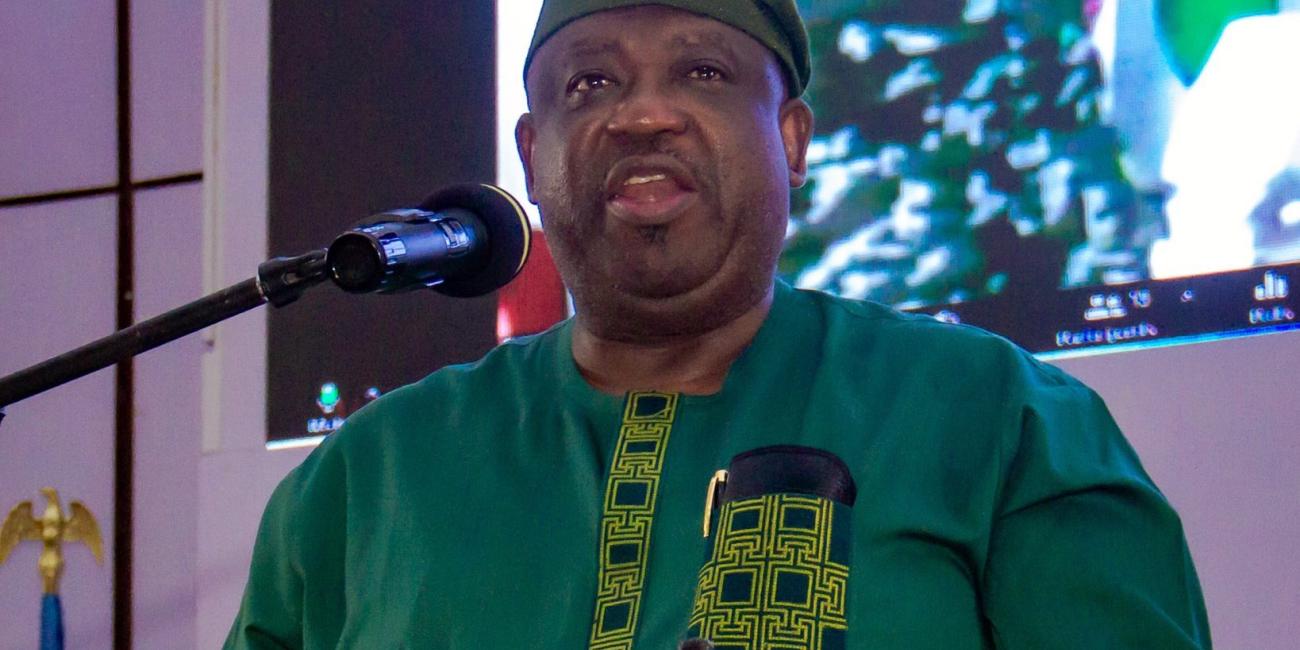
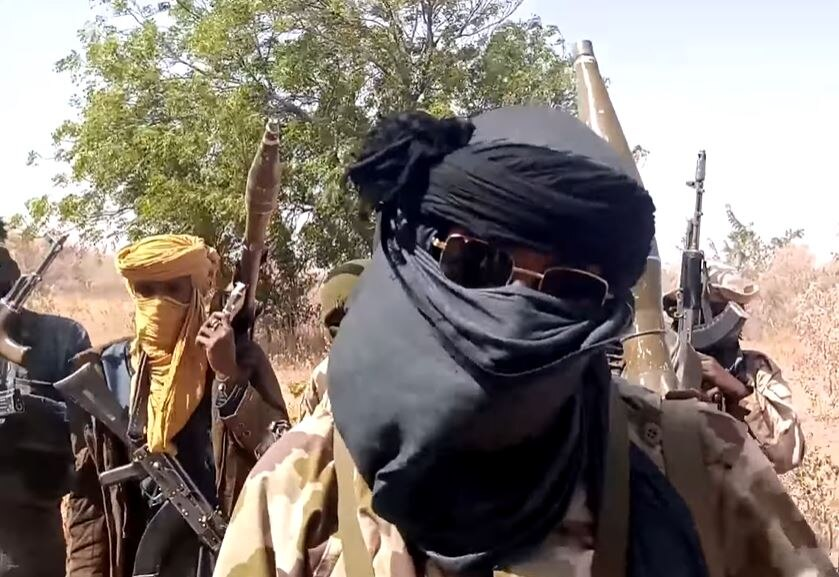
Governor Caleb Muftwang of Plateau State has decried the escalating insecurity in the state, revealing that no fewer than 64 communities have been overtaken by bandits.

Speaking during an appearance on Channels Television’s Politics Today, the governor described the situation as a form of genocide, allegedly perpetrated by terrorist groups backed by unidentified sponsors.

“I can tell you in all honesty that I cannot find any explanation other than genocide sponsored by terrorists,” he said, adding that security agencies must uncover the identities of those behind the acts.

Muftwang explained that the affected communities, located within Bokkos, Barkin Ladi, and Riyom Local Government Areas, had been previously attacked in 2023.

Despite efforts by residents to rebuild, he lamented that renewed assaults have now forced them out, with their lands being occupied and renamed by the assailants.

“As I am talking to you, there are not less than 64 communities that have been taken over… People are living there conveniently on lands they pushed others away from,” he said.

The governor further noted that the nature and scale of the violence indicate an organised effort, stressing the need for coordinated security action.

He said, “If these attacks have been going on for close to 10 years, it tells you that there is a deliberate, conscious attempt to clean out population. I am sure that in the coming days, the security agencies will work together, not at cross purposes but in unison.”

He reiterated that the violence in Plateau has gone beyond farmer-herder clashes, asserting that the crisis is the handiwork of organised criminal elements bent on destabilising the state.

“The aim of the enemy is to throw the state into gloom and mourning but we will rise above their intent,” he assured.

“This is not a farmer-herder issue… it is organised crime by malicious elements who do not want peace to reign.”

Muftwang concluded by expressing hope for divine victory and reaffirmed his administration’s resolve to resist the forces of instability.

Plateau governor bans mining activities over insecurity

By Anwar Usman

The Governor of Plateau State, Caleb Mutfwang, has thwarted all mining activities in the state due to security concerns.In an executive order dated Friday, February 21, Mutfwang said the suspension, which is with immediate effect, subsists until further notice.

He added that his administration would undertake a rigorous review of the security situation in all the mining areas in the Plateau and ensure an appropriate Community Development Agreement to address the socio-economic contributions of the rights holders.

The statement reads, “There is the need to ensure measures taken to protect places of mining activities in Plateau State and to ensure only persons that are licensed to conduct mining can enter or leave such premises. The suspension of all mining activities has become necessary.There is an increase in illegal mining activities and insecurity associated with such mining activities in various Local Government Areas in Plateau State.

“There is an increased influx of foreigners in the mining areas of Plateau State, which significantly increased insecurity in the State, including but not limited to offences of Rape, Banditry, Illegal Possession of Firearms, Drug trafficking and Kidnapping.

He further stated that “I, Barr. Caleb Manasseh Muftwang, the Executive Governor and Chief Security Officer of Plateau State, deemed it necessary to suspend all mining activities in Plateau State for security reasons.”

The governor said his administration will partner with the federal government to come up with appropriate standards and monitoring framework between the state, local government areas, host communities and minerals right holders.

Jos North PDP chairmanship aspirant commends PLASIEC

By Abdullahi Mukhtar Algasgaini

The People’s Democratic party (PDP) chairmanship aspirant for Jos North, Hon. John Christopher Kyohroh has commended the Plateau State Independent Electoral Commission (PLASIEC) for peaceful conduct of elections in Plateau State.

He made this statement at his polling unit -012, Area Directorate Office, Ministry of Education, Vanderpuye ward, in Jos North local Government Area of the state.

Kyohroh said although many hours were spent waiting for the voters verification system device to pick up but to no avail, the technical hitch should be expected because of the new technology introduced in the electoral process, saying it will be improved with time.

He described the effort of PLASIEC as a giant stride, adding that the process will be successful at the end of the day.

The chairmanship aspirant cast his vote using the manual process due to the hitches experienced on the voter verification system device.

He urged the people to come out and exercise their right by voting for the candidate of their choice.

Governor Mutfwang inaguarates justice reform project committee

By Abdullahi Mukhtar Algasgaini

Plateau State Governor, Barr. Caleb Mannaseh Mutfwang, has formally inaugurated the Justice Reform Project Committee, with a charge to members to take their job seriously.

The Governor acknowledged the wealth of experience and exposure among the consultants, and challenged them to lay a good legacy for others to ride upon which he said is a stepping stone for higher heights.

Held at the Victoria Gowon Hall, New Government House, Little Rayfield, Jos, Governor Mutfwang said that the inauguration of Committee was the first of its kind in the history of Plateau State and stated the need for documentation and record keeping because, according to him, there was noticeable lack of documented laws with resultant challenges faced in locating necessary legislation.

Governor Mutfwang said it was, therefore, time to change this trajectory, adding that ‘’we can’t keep using the laws that apply to the time past, hence the need for this reform project which is critical at such a time as this.’’

Head of the committee, who is the Attorney General and Commissioner for Justice, Philemon Daffi, Esq. delivered a keynote address, stating that the aim of the Law Reform Committee is to modernize and strengthen the state’s legal framework, address outdated laws and ensure they meet societal needs.

Furthermore, he said the commencement of the Law Reform in Plateau State will create a legislative framework that is just, equitable and reflective of the cultural, religious, traditional and economic aspirations of the people.

The Attorney General called for a collaboration with the judiciary, legislature, professionals, civil society, traditional institutions, labor, farmers, market men and women, tribal associations, and the general public to ensure the success of the law reform project.

He said, because the laws are dynamic and forward-looking, they will address new realities such as the digital economy, cyber security and data protection.

The event featured key stakeholders including traditional leaders, judiciary members and legislative officials who emphasized the importance of law reform for governance, economic development and social justice.

Solicitor General and Permanent Secretary, Ministry of Justice, Joel Tahvan, Esq. who made the opening remarks expressed gratitude to the governor for seeing the need to kick-start the law reform process.

He highlighted the need for consistent review and reforms of laws to meet the demands of the times.

Tarvan also acknowledged the Attorney-General and the consultants for their vision and commitment to guiding the state in this direction.

His Royal Majesty, Gbong Gwom Jos, Da Jacob Gyang Buba said the foundation of all laws is in the 10 commandments and prayed for wisdom for the committee members.

Speaking on behalf of the council of chiefs and emirs, the monarch also urged on the need for forgiveness and reconciliation outside of courts.

Chief Judge of Plateau State, Hon. Justice David Mann in his goodwill message highlighted the importance of Law Reform as a vital process that reflects commitment to justice, equity and progress.

He acknowledged the critical role of the committee in shaping the legal landscape and ensuring the law serves the need of all citizens.

Lingering water scarcity in Jos

By Usman Muhammad Salihu

Jos, the capital city of Plateau State, has for long been grappling with the persistent issue of water scarcity, leaving residents to endure the consequences of insufficient water supply from the body responsible. The lack of functional boreholes and wells further compounds the challenge, painting a grim picture of daily life for the city’s inhabitants.

The city, despite being blessed with natural water sources, finds itself in the grip of a water crisis. Government efforts to address this issue have fallen short, with inadequate infrastructure and supply systems unable to meet the teeming demand.

To effectively bring an end to the menace, the government must prioritize infrastructure development, including the construction of water treatment plants and distribution networks, to ensure equitable access to clean water across the city.

Implementing and enforcing water management policies and regulations can help curb wastage and ensure responsible usage of available resources.

Engaging with local communities to understand their needs and involve them in decision-making processes can foster a sense of ownership and accountability in water management initiatives.

On the other hand, well-to-do individuals and private companies operating in Jos should integrate water provision mechanism and sustainability practices into their corporate social responsibility initiatives.

Collaborating with government agencies and NGOs can amplify the impact of private sector efforts, leveraging resources and expertise to address water scarcity more effectively.

Empowering residents with knowledge about water conservation and hygiene practices can promote responsible usage and reduce strain on limited water resources.

Supporting grassroots initiatives aimed at water conservation, such as community-led well drilling projects or water purification programs, can foster resilience and self-sufficiency within our neighborhoods.

By implementing comprehensive solutions that span governmental, private, and community sectors, the city can break free from the cycle of scarcity and ensure a sustainable water future for generations to come.

Usman Muhammad Salihu writes from Jos, Nigeria.
muhammadu5363@gmail.com

Over 30 people feared dead in Plateau violence 

By Sabiu Abdullahi 

Plateau State witnessed a night of terror as Kwahaslalek village in Mangu Local Government Area fell prey to a savage attack by gunmen in the early hours of Wednesday.

Shockingly, over 30 lives were claimed, with the majority being women and children who had sought refuge in the house of a community leader following earlier unrest. 

Mark Haruna, a local community leader, revealed the details, noting the calculated nature of the assault during a distraction in Mangu town.

He somberly stated, “For the second time, my village Kwahaslalek came under attack… They came at about 12:30 am and killed over 25 people, mostly women and children.” 

Joseph Gwankat, Chairman of the Mwaghavul Development Association, condemned the heartless act, narrating the ordeal of villagers who, in a bid for safety, had gathered in one location only to face brutality.

Gwankat expressed disbelief at the absence of security, saying, “How can people who are in their villages be targets of constant attacks and killings without anything being done to stop the perpetrators?” 

In response to the escalating crisis, Plateau State Governor Caleb Mutfwang imposed a 24-hour curfew on Mangu LGA on Tuesday.

This decision comes in the wake of heightened insecurity, including the Christmas Eve attacks that left over 150 dead in various local government areas. 

The state police command, through spokesman Alabo Alfred, claimed to be unaware of the incident, promising an investigation.

As Plateau State grapples with the aftermath of these brutal attacks, the community remains on edge, haunted by the recurrent violence that continues to plague its villages.

Drama as PDP Lawmakers sacked by court defy court ruling, vow to resume duties today

By Sabiu Abdullahi 

Sixteen ex-Peoples Democratic Party (PDP) lawmakers in Plateau State, ousted by the Court of Appeal in November 2023, plan to defy the court ruling and return to legislative duties.

Despite having their election nullified over party structure issues, they argue that the recent Supreme Court judgement, validating Governor Caleb Mutfwang’s election, supports their claim as authentic members. 

Led by Ishaku Maren, the former majority leader, they stress their commitment to democracy and assert their constituents’ unwavering support.

The lawmakers are set to resume today, raising concerns from the APC and warning against potential legislative and security implications in Plateau State.

This is coming as observers await developments and reactions to this audacious move by the former lawmakers.

As bandits relocate to Taraba and the Plateau 

By Zayyad I. Muhammad

Recently, the media have been awash by the news of bandits’ attacks in Taraba and Plateau states. On November 24, 2023, it was reported that gunmen in their numbers attacked and killed 20 people in the Yangtu Development Area of the Ussa Local Government Area of Taraba State. In the early hours of Tuesday, December 19th, 2023, other gunmen attacked the Pupule community in Yoro Local Government Area of the same Taraba state, kidnapped Umaru Nyala, the chief of Yorro chiefdom, and also abducted 22 other people.

The Taraba State police command and other security operatives killed over 50 bandits terrorizing villages along the corridor of Bali Local Government Area on Tuesday, November 28th, 2023. On the other hand, on Wednesday, December 27, 2023, a group of bandits stormed the Gondon Maliki weekly market in Taraba State, kidnapped scores of people, and carted away food and wares using motorcycles.

The Sultan of Sokoto, Alhaji Sa’ad Abubakar III, while condemning the gruesome murder of over 100 people in the Plateau, said, “The bandits seem to be ahead of the government.”

To be fair to all the Nigerian security operatives, they’ve done an excellent job in the Northwest states of Zamfara, Kaduna and Katsina, in facing the menace of the bandits. These states have witnessed a visible improvement in security in areas being terrorized by the bandits, and the Abuja-Kaduna highway is secured while the Niger axis is a little bit silent.

It appears that the military onslaughts on the bandits and other terrorists have killed many of their leaders, and they have dispersed to the Northeast axis and some parts of the Plateau. Why did the bandits settle in these areas, especially the Northern parts of Taraba State – Yorro, Lau, Jalingo and Ardo Kola local government areas? Is it due to its topography, location or economy? Taraba State is among the poorest states in Nigeria but rich in agriculture and forestry. Probably the bandits found solace in Taraba due to its uniqueness in geography and agricultural activities. Furthermore, the Cameroonian mountains, which stretch almost to the entire Northern and Southern parts of Taraba, linking the state with the River Niger, will certainly provide a hiding place for criminals, bandits in particular.

The only way of this menace is for the state, federal and local communities to work together; collaboration is key to security management. For example, at its 8th and 9th meetings held in Maiduguri, the Borno State capital, on September 9th, 2023, and in Yola, the Adamawa State capital, on November 24th and 25th, 2023, the Northeast Governors’ Forum expressed its concern about the new dimension of the growing banditry in Bauchi, Gombe and Taraba states, and this may be as a result of the concerted efforts of the military on neutralizing the bandits from other parts of the country. The governors called on the federal government to intervene and promised to work with and support all security agencies.

Managing security in a vast country like Nigeria with inadequate modern technology for security management can be very difficult, and our security operatives cannot be everywhere and anywhere at the same time. So what is the solution?

The re-invigoration of the kinetic and non-kinetic security approaches by the Office of the National Security Adviser (ONSA) has resulted in many successes and breakthroughs; however, more intelligence gathering is needed; community engagement and direct communication with the bandits should be employed. In community engagement, the model being used by the Governor Ahmadu Umaru Fintiri-led Adamawa state government in tackling farmer-herder conflict should be adopted; the community should be made to feel part of the solution in security management, thus providing intelligence and also being a watchdog for security operatives without being endangered.

Secondly, the reported ongoing ‘soft approach’ should be sustained and, indirect communication with the bandits. Most of them now also use social media; thus, a kind of smooth operation should be launched by the ONSA and other relevant bodies to recruit people who speak the languages of bandits to send convincing messages to them on the ills, disadvantages and evils associated with their dangerous ‘trade’ while showing them the beauty and benefits being enjoyed by their ‘kind’ who adopt normal lives, go to school both western and religious, but still maintain their culture, beliefs and inherited legal trade.

Furthermore, radio and TV are also tools to reach the bandits, as satellite TV and solar power technology have now made it possible to watch or listen to the world, wherever one is – bandits, hiding in thick forests, use solar power and satellite technology to charge their phones, watch TV and listen to the radio. Above all, justice and fair play by those in power in providing the basics of life and alleviating poverty and ignorance away from these bandits will surely assist a lot in reforming them back to society.

Zayyad I. Muhammad writes from Abuja via zaymohd@yahoo.com.

Northern governors outraged by attacks on Plateau communities

By Uzair Adam Imam 

The Northern Governors Forum today strongly denounced the Christmas Eve attacks on communities in Bokkos and Barkin-Ladi Local Government Areas of Plateau State. 

The Chairman of the Forum, Gov. Inuwa Yahaya of Gombe State, described the attacks as reprehensible and heinous. 

Gov. Yahya expressed disgust on behalf of the 19 governors in the northern parts of Nigeria. 

He expressed the forum’s deepest condolences to the affected families and communities, as well as the government and people of Plateau. 

“It is disheartening to hear of the loss of more than 100 lives and the destruction of property that occurred during these attacks, especially when people were preparing to celebrate Christmas. 

“Such acts of violence are not only cowardly but also run counter to the spirit of unity and coexistence that our region upholds. 

“We must all prioritise peace and harmonious living in our communities. Now, more than ever, we must reaffirm our commitment to peaceful coexistence and solidarity regardless of our differences. 

“We must unite in our commitment to peace and security, and stand firm against all forms of violence and divisions,” the chairman said in a statement issued in Gombe by his media aide, Mr Ismaila Uba-Misilli.

Yahaya commended Gov. Caleb Mutfwang of Plateau for his leadership in handling the situation in the aftermath of the attacks. 

The northern governors assured Mutfwang of their solidarity and support in the face of adversity. 

They pledged to work together to ensure lasting peace in Plateau State. They stand united in their commitment to peace and stability.

Plateau bloodbath: 16 killed in fresh attack as governor vows justice, action

By Sabiu Abdullahi

A wave of outrage and grief swept through Plateau State as news broke of a brutal attack on Mushu village in Bokkos Local Government Area, leaving 16 innocent lives lost.

Governor Caleb Manasseh Mutfwang, in a swift and scathing response, condemned the “barbaric, brutal and uncalled for” act, pledging swift justice and proactive measures to curb further violence. 

The attack, details of which remain unclear, has plunged the community into mourning and heightened anxieties across the state.

While the perpetrators remain unidentified, Governor Mutfwang’s strong stance served as a beacon of hope amidst the tragedy.

He directed security agencies to “promptly apprehend those responsible” and ensure they face the full weight of the law. 

Expressing deep concern over the incident, the governor urged communities to remain vigilant.

“Reporting any suspicious activities to security forces” was emphasised as a crucial step towards preventing future attacks.

He assured the public that the government would take “proactive measures” to curb the ongoing violence that continues to plague the state. 

Beyond promises of action, Governor Mutfwang extended his heartfelt condolences to the affected families.

He urged them to “find solace in God” as the government diligently works to end the cycle of violence that has claimed far too many lives in Plateau State. 

This latest attack calls for the urgent need for effective intervention and sustainable solutions to address the complex security challenges plaguing the region.