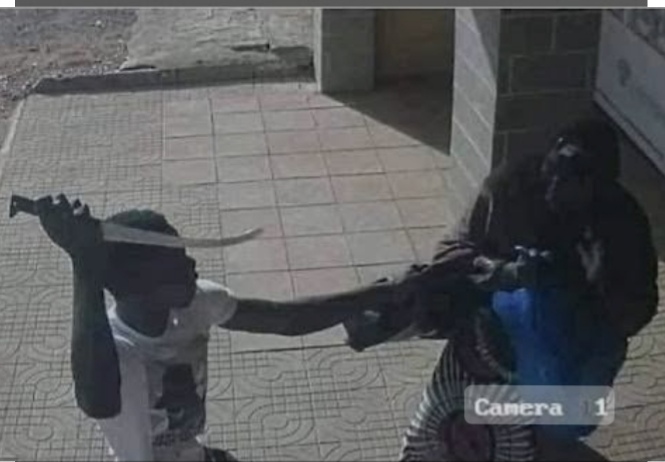
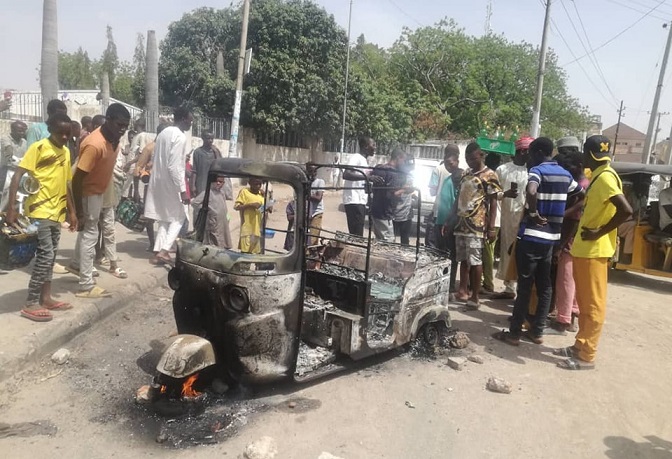
Phone robbery

Phone snatchers tighten grip on Katsina metropolis — Authorities must respond swiftly

By Usman Salisu Gurbin Mikiya 

Katsina, as the name resonates, is widely regarded as a home of hospitality — a land where people live in harmony and mutual respect. It is a place of comfort where the warmth of its people makes life pleasant and fulfilling.

Recently, however, the long history of relative peace has begun to fade; an uncharacteristic catastrophe once thought distant has started unfolding, becoming a major concern for residents of Katsina Metropolis and beyond, especially as it adds to the decade-long insecurity bedevilling the state.

The issue of phone snatching in Nigeria originated from wristwatch snatching in Southern Nigeria, particularly in Lagos and other highly populated state capitals. It often occurred in strategic areas with heavy traffic, and over time, it evolved into a practice of phone snatching.

In Northwestern Nigeria, phone snatching started in Kaduna State about eight years ago. I vividly recall my visit to Kaduna in 2020, when I was on assignment for my media organisation. A Keke Napep rider warned me to hide my phone from criminals after noticing me pressing it through his mirror.

What began as an alarming trend in Kaduna escalated into a catastrophic issue, with phone snatching syndicates extending their activities into Kano, creating panic and undermining public safety.

During one of my visits to Kano, two of my brothers, on different occasions, warned me not to use my phone while on a tricycle in certain areas. They cautioned that I could lose my life over a phone, as snatchers were everywhere, and even advised me to choose the Keke Napep I boarded carefully.

Indeed, what started as an alarming wave in Kaduna has gradually spread like wildfire, creeping into Kano and now reaching Katsina. Once considered a distant menace, the problem has arrived at the very doorstep of Katsinawa, turning a basic necessity —the mobile phone — into a source of constant fear. This epidemic of criminality is no longer a local crisis but a regional catastrophe demanding urgent attention.

In Katsina Metropolis, residents of Sabuwar Unguwa are no strangers to this menace, as multiple reported cases of phone snatching have occurred, particularly targeting visitors and strangers in the area.

During Governor Ibrahim Shehu Shema’s administration, wayward youths, popularly known as Kauraye, emerged in Katsina. They crippled businesses and created tension in the metropolis, especially in areas such as Sabuwar Unguwa, Inwala, Sabon Layi, and Tudun Ƴan Lahidda.

Their reckless activities frustrated Governor Shema to the point where he took decisive measures that restored sanity and ended the menace.

Similarly, during Governor Aminu Bello Masari’s administration, persistent attacks by delinquent youths, suspected to be from Inwala in the ATC area, forced the government to establish a special Civil Defence outpost. This step drastically reduced the menace.

In his first year in office, Governor Dikko Umaru Radda also faced resurging activities of wayward youths in Sabuwar Unguwa. He personally led security agents in night operations, which eventually restored peace in the area.

However, with three different phone snatching incidents recorded within just three days on major roads, it is clear that social vices are escalating in the city. If not urgently addressed, they risk crippling businesses and threatening public safety.

The first incident occurred on 20th September, when Mrs Sada Shu’aibu was attacked near Sabuwar Dan Marna graveyard, and the attackers attempted to snatch her phone and inflicted serious injuries on her body. 

The following day, 21st September, during the grand finale of the Maulud procession, Usman Marwan was brutally attacked by phone snatchers at his business centre near the MTN office in Kofar Ƙaura.

Furthermore, on 26th September, another victim narrowly escaped death after being attacked by snatchers. This incident has heightened concerns among residents of the metropolis.

With insecurity already ravaging some local governments in Katsina State, the fact that the capital city is now battling phone snatching suggests that Katsina is increasingly under the control of thugs.

This menace has resurfaced under the leadership of Governor Radda, who had earlier recruited hundreds of youths to fight insecurity in the state. Many residents are now watching closely to see how he will respond to this rising threat.

Phone snatching can still be contained within a short period if several urgent measures are taken, including:

The government should initiate a law prescribing either the death penalty or life imprisonment for anyone convicted of phone snatching, alongside a shoot-on-sight order for fleeing offenders.

The government should declare a state of emergency on phone snatching so that the fight against this menace does not derail broader security efforts in the state.

Usman Salisu Gurbin Mikiya, M.Sc. student, Department of Mass Communication, Bayero University, Kano. He can be reached via his Email: usmangurbi@gmail.com.

Kano State under siege by thugs 

By Abbas Datti

Our beloved Kano State has now become a nightmare of unprecedented violence, lawlessness and phone-snatching all courtesy of thugs’ criminal activities. Once-peaceful communities now live under the shadow of fear as ruthless and armed gangsters unleash a reign of terror daily. These assailants, wielding deadly local weapons, have maimed, killed, and left countless families in mourning.

The attacks often strike without notice. Some places have now become theatres of war in the dead of night, forcing residents, young and old, to flee into the darkness with nothing but the clothes on their backs. Homes must be locked in broad daylight for fear of being a victim of some happy, menacing marauders. 

The cruelty has engulfed so many metropolitan places of Kano State, with no concerted effort to stop the horrendous activities of those brutal thugs. We wonder when these horrible experiences will stop? Thugs have become a significant threat to the collective well-being of the people of Kano. 

In the chaos, the gang of thugs attack with no mercy. Men are butchered as they defend their families; they have no scruples to attack even women and children as they attempt to escape. Residents speak of the horror of seeing loved ones hacked with machetes, swords and other local dangerous weapons. They destroyed properties, smashed buildings and cars parked outside houses and buildings. 

As this wave of violence rages on, we call for urgent and decisive action from security agencies. Moreover, the Inspector General of Police is to dispatch a special intelligence unit to analyse the situation on the ground and subject it to a holistic review of the present strategy. 

The people of Kano demand not only the arrest and prosecution of the perpetrators but also the establishment of permanent security posts in the most vulnerable areas. Although some security posts were built in some places for that purpose, they are yet to be fully operational, leaving residents with only the building structures. Without swift intervention, Kano risks slipping further into lawlessness, and the fragile threads of peace may be torn beyond repair.

This is not merely an attack on individuals; it is an assault on our shared humanity and our future. We ask for definite action before the fires of thugs consume us all. We ask for an end to this bloodbath that has been threatening the peace and stability of Kano and its people. 

Abbas Datti writes from Kano via comradeabbasdatti@gmail.com.

The alarming rise of thug violence and phone snatching in Kano State 

By Alhassan Hassan Salihu

The shocking surge of thuggery and phone snatching in Kano State has evolved into a grave crisis. This escalating violence threatens the safety, security, and well-being of residents, particularly in the metropolitan areas.  

Despite the overwhelming fear gripping communities, remaining silent is not an option; silence could very well mean becoming the next victim of these ruthless gangs preying on innocent people.

Kano’s Youth Violence

From the streets of Kurna to Dorayi, and Rijiyar Lemo to Gwagwarwa, chilling reports of violence have become commonplace. Street clashes, stabbings, daylight robberies, and innocent lives traumatised by gangs wielding machetes, stones, and knives have turned these areas into unsafe zones. 

The brutality of these gangs is more devastating. Social media platforms are inundated with graphic videos and images depicting these violent incidents. 

Terrified bystanders film young thugs attacking victims who resist having their phones snatched, with many victims bleeding from multiple stab wounds. 

These violent encounters are no longer isolated incidents but part of an alarming pattern that threatens the peace and stability of Kano.

A Personal Near-Miss in Dorayi

Just days ago, a student narrowly avoided becoming a victim during a routine trip from Zoo Road to Dorayi in a commercial tricycle (Keke Napep). 

Two young men suddenly jumped into the vehicle; one sat beside them, the other beside the rider. Despite explaining that it was a private drop-off, one of the youths became aggressive. 

Thankfully, the presence of a nearby police outpost likely deterred any violent intentions. They dropped off at a university gate without incident.

This encounter serves as a sobering reminder that violence can erupt anytime, anywhere. Such an incident was lucky, not guaranteed. For many others, it ends in tragedy.

Violence Spreads Beyond Kano

The wave of thuggery and phone snatching extends beyond Kano State. In neighbouring Kaduna, the tragic stabbing of a naval officer, Lieutenant Commander M. Buba, shocked the region. 

While changing a flat tyre in the Kawo area, he was attacked and stabbed in the chest after he refused to surrender his phone. Despite intervention by local vigilantes, he was pronounced dead on arrival at Manaal Hospital.

Authorities have since detained at least 13 suspects and initiated covert operations to dismantle gangs terrorising Kaduna’s streets. Yet the spread of this violence signals a regional issue that calls for coordinated responses beyond the borders of individual states.

 Tragic Loss of a Community Leader

Closer to home, Kano mourned the brutal murder of Alaramma Jabir Lawan Abdullahi, a respected Islamic teacher and tech expert. 

On the evening of May 17, 2025, near Gidan Sarki, he was attacked while travelling in a commercial tricycle amidst heavy traffic. When he resisted attempts to snatch his phone, he was stabbed multiple times by suspected thugs and left to die on the roadside.

This horrific act has ignited outrage across Kano. The fact that a well-known and respected educator could fall victim so brutally sends a clear message: no one is safe in the current climate of violence. 

Arrests Made, Yet Violence Continues

According to the Kano State Police Command, over 200 suspected thugs and phone snatchers have been arrested over the last six months. 

In March 2025 alone, the police paraded over 85 suspects from hotspots such as Kofar Ruwa, Dan’agundi, Zango, and Dorayi. Weapons, stolen phones, and illicit drugs were seized.

Despite these efforts, the menace persists, the gangs’ deep-rooted networks rapidly replenish lost members, highlighting the inadequacy of enforcement alone. 

Underlying socio-economic challenges, including high unemployment, widespread drug abuse, and poor educational opportunities, fuel the cycle of crime and violence.

Steps Taken, But More Must Be Done

The Kano State Government has made commendable strides in tackling this crisis. 

Rehabilitation centres in Kiru and Dorayi, alongside the National Drug Law Enforcement Agency’s (NDLEA) facility for addiction treatment, are important tools in combating the link between substance abuse and violent crime.

However, these centres require urgent expansion and increased funding to meet growing demand. With rising numbers of youths affected by drugs and crime, scaling rehabilitation services is essential, and more compulsory.

Need For Holistic Action

Security agencies cannot rely solely on arrests to solve such enduring crises, which require a community-based approach. 

Strengthening community policing, empowering neighbourhood vigilante groups, improving local surveillance, and fostering trust between residents and law enforcement are critical for restoring safety. Equally important is addressing the root causes of youth involvement in crime. 

The government must urgently invest in job creation schemes, vocational training centres, and youth empowerment initiatives such as sports and cultural programmes. 

Idle youth are more vulnerable to gang recruitment and drug addiction. Productive engagement is the key to prevention. Moreover, effective rehabilitation programmes and mental health support for addicted offenders must be prioritised. Without this, many youths will remain trapped in a vicious cycle of crime and incarceration.

Lastly, the justice system must be reformed to ensure quick and fair prosecution. Many arrested criminals return to the streets quickly due to weak legal follow-up, undermining deterrence and public confidence. Stronger, faster legal processes and appropriate sentencing are necessary to break the cycle, as it was previously demonstrated.

Conclusion

The menace of “fadan daba and phone snatching” in Kano has reached a tipping point. No one is immune, from students and traders to community leaders and law enforcement.

Naval officer killed in Kaduna phone snatching attack

By Abdullahi Mukhtar Algasgaini

A senior naval officer, Lieutenant Commodore M. Buba, was fatally stabbed by a robber in Kaduna while resisting a phone-snatching attempt near Kawo Bridge.  

Eyewitnesses reported that the officer, undergoing training at the Armed Forces Command and Staff College, Jaji, had stopped to fix a flat tire when the assailant attacked him. After refusing to hand over his phone, the robber stabbed him in the chest.  

A vigilante, Suleiman Dahiru, who intervened, was also injured. The attacker was later lynched by an angry mob.  

The officer was pronounced dead at Manaal Hospital, and his body has been moved to the 44 Nigerian Army Reference Hospital mortuary. Security forces have intensified covert operations in the area to curb crime.  

Kaduna Police PRO, ASP Mansir Hassan, confirmed the incident and assured increased security measures.

Phone theft in Kano: A growing threat we can’t ignore

By Faizah Suleiman

In Kano State, phone theft has become more than a petty crime. It’s a nightmare for residents who can barely go about their day without clutching their phones nervously. From bustling markets to quiet streets, no place seems safe anymore. The once vibrant and lively atmosphere of Kano is now shadowed by fear as criminals prey on unsuspecting victims.

But why has phone theft spiralled out of control, and what can we do about it? For many residents, phone theft stories are no longer distant tales but personal experiences. Abdullahi Musa, a trader at Kurmi Market, recalls how his phone was snatched in broad daylight.

“I was talking to a customer when two men on a motorcycle came out of nowhere. Before I could react, my phone was gone, and they disappeared into the crowd,” he said.

Sadly, Abdullahi’s story isn’t unique. It’s part of an alarming trend that affects students, workers, and businesspeople alike. These criminals are smart, fast, and ruthless, and they’ve turned Kano into a hunting ground. You might wonder why this is happening so often in Kano. Well, the reasons aren’t far-fetched.

First, economic hardship has pushed many young people into crime. With unemployment rates soaring, some see phone theft as a way to survive. A recent survey showed that 78% of Kano residents feel unsafe using their phones in public. This fear isn’t paranoia. It’s a reality.

Then, there’s the issue of the thriving black market. Places like Sabon Gari are notorious for dealing in stolen phones. These criminals know they can easily sell a stolen phone, often within hours.

Losing a phone isn’t just about losing a device; it’s about losing a lifeline. For many in Kano, their phones hold contacts, bank details, business deals, and even educational materials. A lost phone means a significant setback.

“I saved for months to buy that phone,” lamented Fatima Ahmed, a university student. “When it was stolen, I didn’t just lose my device; I lost my school notes, assignments, and peace of mind.”

It’s a vicious cycle. The more phones are stolen, the more fear spreads, and the more cautious people become, yet the thieves always seem one step ahead.

To their credit, the authorities haven’t been sitting idle. The Kano State Police Command has ramped up hotspot operations, recovering hundreds of stolen phones in 2024 alone. There’s also been a push for awareness campaigns, encouraging residents to secure their phones and activate tracking features like IMEI.

But there’s a problem. Many victims feel the response isn’t fast enough, and even when thieves are caught, they often face light punishments. This lack of consequences only emboldens the criminals.

So, how do we stop this? It will take the collaboration of everyone: government, police, communities, and individuals.

  • We need more community policing. Vigilante groups working with the police can monitor neighbourhoods and markets.
  • Harsher penalties must be imposed on those caught stealing phones. If the punishment is severe enough, it could deter others.
  • The government should clamp down on illegal sales of secondhand phones. If stolen phones can’t be sold, the incentive to steal them disappears.
  • As residents, we also have a role to play. We can make a difference by avoiding phone use in crowded areas, enabling phone tracking, and reporting suspicious activity.

Phone theft in Kano is more than just an inconvenience. It’s a threat to our security and peace of mind. It’s time we took a stand. The next time you see someone holding their phone tightly, remember: it’s not just a gadget they’re protecting; it’s a part of their life. Let’s work together to make Kano safe again.

Faizah Sulaiman wrote from Kano via suleimanfaizah01@gmail.com.

NBS: Over 25 million phones stolen in Nigeria within a year

By Uzair Adam

The National Bureau of Statistics (NBS) has revealed that over 25 million phones were stolen in Nigeria between March 2023 and April 2024.

This is according to findings from the bureau’s Crime Experience and Security Perception Survey 2024.

The report highlighted that approximately 17,965,741 individuals experienced phone theft during the reference period, making it the most prevalent crime at the individual level.

It noted that 13.8% of Nigerians reported phone theft, which accounts for a significant proportion of the 21.4% of citizens who reported being victims of crime overall.

The survey further disclosed that seven out of every 10 stolen phones were taken either at home or in public spaces.

Despite this, less than 10% of victims reported these incidents to the police, citing various reasons for their reluctance.

Among those who reported, only 11.7% expressed satisfaction with the police response.

This report underscores the pervasive nature of phone theft in the country, emphasizing the need for improved security measures and better law enforcement responses.

Demons called phone-snatchers

By Sulaiman Maijama’a

In recent times, the most vicious of all vices in our society is phone snatching. This dastardly act is perpetrated by gangs of youth of 15 to 25 years who carry weapons and terrorise people. Sometimes, these youth injure their victims or even stab them to death.

This evil act usually is plotted and carried out at night, but sometimes, in broad daylight, the youth disguise themselves as tricycle operators and unleash their cruelty against people. There is hardly a week that would pass on without a report of a victim of phone snatching.

This activity becomes a nightmare for people and poses a great threat to the freedom of movement of innocent citizens, making it difficult for them to go about their everyday business, especially at night, without the fear of being attacked by phone snatchers.

It is common knowledge that phone snatching continues to be pervasive in different states of the North. It assumes a higher degree in states like Kano, Bauchi, Plateau, and Gombe.

The nefarious activity can be directly or indirectly attributed to a lack of proper parental care and broken homes. The youth who lack good parental care or come from broken homes usually move with the wrong people, and their movements are not queried or followed up, thus having the freedom to do anything without being probed.

Peer pressure is another cause of youth involvement in social vices. The youth who spend more time with their friends easily get influenced due to their weak nature and tender age.

Youth have a high level of curiosity to learn, have fun and practice new things, thus making them deviate. And as the saying goes, “Show me your friends, and I will tell you who you are” The significance of friends and how they influence lives is so enormous that many youths were conscripted into phone snatching.

Parents’ negligence also makes the wards turn to their friends for love, emotions, care, and advice, who can lure them into deadly acts. An abandoned child can look up to their friends for love and affection. Some maids, house helpers, and family members who are always around children without parents can introduce these vices to them.

Not only that, but unemployment has also added intensity to immorality that graduates to this monster called phone snatching that threatens the social well-being of the people. 

According to the report by a Global consulting firm KPMG, titled “Global Economic Outlook”, Nigeria’s unemployment rate was projected to rise further to 40.6 per cent this year. This revelation is alarming and must be uppermost in the mind of every responsible citizen. “An idle mind”, as an adage says, “is a devil’s workshop”.

Drug abuse is another social determinant. Despite the pronouncements of the efforts by the National Drug Law Enforcement Agency to curb the menace, the percentage of drug abusers is on the rise, and they quickly and freely access the hard drugs of their choice. This allows the youth to be intoxicated before they carry out their devilish act of phone snatching.

It is pertinent that all stakeholders should rise against social vices. Youth that engage in these dangerous acts need help, advice and rehabilitation for the addicted ones.

Parents need to know their children’s friends, status, and other people the children associate with. This is majorly the role parents should play in their children’s lives. Mothers should, in particular, be close to their children. Close monitoring and time should be given to children by parents. Children should be taught the moral values that might help shape their cognitive abilities.

The media ought to be playing their roles of education and information by organising forums to enlighten people about the dangers associated with social vices. Similarly, they should be playing surveillance by warning early on of any potential danger.

Security operatives, government and all stakeholders must be active and alert to caution, rehabilitate or punish (where necessary) any person seen as a threat to others.

All hands must be on deck to combat the menace of phone snatching in our societies.

Maijama’a wrote from the Faculty of Communication, Bayero University, Kano. He can be contacted via sulaimanmaija@gmail.com.

Phone robbery and the perils of vigilante justice

By Abdurrahman MN

Many of us have undoubtedly noticed the alarming increase in phone-snatching cases in the Kano metropolis over the past few months. However, in recent weeks, a concerning shift has occurred. We are now witnessing more audacious attacks that have resulted in the loss of several lives.

It appears that some criminals have abandoned their usual tactic of targeting victims who refuse to surrender their phones and have adopted a new strategy of incapacitating victims from the start before making off with their phones and valuables. The police have also released images showing the growing sophistication of the criminals’ custom-made weapons, which inflict severe injuries and can lead to the quick demise of unfortunate victims.

Following the reports of numerous deaths resulting from these incidents in recent weeks, a groundswell of calls for action has emerged on social media. However, it has become evident that the authorities responsible for addressing this problem are woefully ineffective in fulfilling their mandate and instilling a sense of security in the terrified populace. This call for action was not directed at them but at ordinary people who have grown weary of the escalating terror and pervasive uncertainty accompanying each new case. It is a plea for individuals to take matters into their own hands and punish the culprits as they see fit through vigilante justice and mob action.

I do not intend to delve into the underlying criminal motives of these hoodlums and the terror they have inflicted upon our minds, as many have exhaustively discussed and understood. Instead, I would like to address the legitimacy, extent, and extremes of the resulting extrajudicial punishments meted out by the public.

As theorised by Max Weber, the state holds a monopoly on violence. In exchange for relinquishing their right to inflict harm upon each other, individuals entrust the government with the responsibility of maintaining sustainable peace and order through the imposition of laws and legitimate use of force (incarceration, penalties, etc.). When the state fails to uphold its end of the social contract, individuals resort to taking up arms to protect themselves.

Regarding the legitimacy of such actions, I recall writing about the case of Deborah’s blasphemy and subsequent lynching. I still firmly maintain my view on the illegitimacy of jungle justice. According to Islamic and Nigerian legal provisions, dispensing justice without legal authority is a grave offence. However, there is a crucial distinction between the original crimes committed in the two cases (Deborah’s blasphemy and phone snatching): the threat to life. In the latter case, the victims face a potentially lethal assault, whereas the former represents an affront to the collective conscience of the Muslim faithful.

The permissibility of self-defence against a threat to one’s life is not the point of contention; logic and law permit the defence of one’s life when under attack. The critical issue here is determining the limit of self-defence and when a retaliatory attack exceeds the boundaries of self-defence.

There is a significant difference between a victim of theft who harms or kills their assailant in self-defence and a mob that ruthlessly lynches the assailant after the fact. While amputation or physical punishment, as seen in some cases, is gruesome, it is still preferable to murder and serves the same intended lesson. Under Sharia provisions, a victim of an attack is only permitted to retaliate with the necessary force to protect themselves and repel the assault. For example, responding with a forceful blow to a spell that could be dispelled with a simple slap would be wrong.

Therefore, it is understandable and alarming to witness people advocating for the outright murder of anyone caught stealing a phone. Some individuals are explicitly advocating for the “slaughtering” of the culprits upon capture. This raises concerns about the kind of person who would consciously attempt to take another human life, even if the victim had committed an offence deserving of punishment. How would such an act affect (or corrupt) their conscience in the long run? Wouldn’t entrusting justice solely to the masses, without the necessary checks and limits, spiral out of control and harm innocent individuals?

Yes, I agree that the current trend of mob action will likely deter hoodlums and reduce the recurrence of such incidents as we are witnessing today. However, what happens when people are emboldened to take physical action against any perceived wrongdoing? Do we possess enough moral rectitude to prevent ourselves from crossing reasonable boundaries in our frenzy?

The government is responsible for safeguarding our lives, property, and conscience by taking decisive action against these hoodlums. Such action would serve as a powerful deterrent to potential offenders, discourage criminal attempts, and spare the masses from the traumatic ordeal of violent mob action.

While the act of jungle justice in this instance may yield short-term positive results where the obligated authority has failed, I believe that ultimately, restoring that power to the hands of the state would serve us better. Unfortunately, destroying the walls of legal fortification and moral conscience may come back to haunt us. I fear that when the monster we are currently encouraging has no more prey to pounce upon, it may turn its salivating jaws toward us now that we have stripped away the protections provided by the walls we dismantled ourselves.

In conclusion, the rise of phone robbery and the subsequent resort to extrajudicial punishment highlights the failures of the authorities to ensure the safety and security of the populace. While the public’s frustration is understandable, we must be cautious about the extent and extremes of vigilante justice. Instead, we should strive to hold the government accountable and demand effective measures to combat crime, ensuring a fair and just society for all.

Abdurrahman MN writes from Kano and can be reached via abdulmnasir99@gmail.com.

It’s phone robbery, not phone snatching

By Salisu Uba Kofar-Wambai

It is no longer a front-page story that phone robbery has become a mammoth calamity in Kano state. And it’s gradually spreading like cancer to other parts of Northern Nigeria. One trait peculiar to Northern Nigeria as a geographical entity is that new trends quickly spread and gain ground like wildfire without being questioned. This is precisely what occurred with kidnapping cases.

 If one has no guiding principle, one will always be carried away in imitating others, whether good or bad actions. Phone robbery is now a trend. Many caught in the act would testify that they were not such but got tempted by what others were doing and getting away with it. What a society!

However, unsuspected members of the public have lost their phones, valuable properties and above all, their dear lives and some got injured as a consequence of this brutal and barbaric act. And 95% of the confessions of the wrongdoers have shown that they’re drug addicts and Indian hemp smokers.

Unfortunately, phone users can no longer display their phones or pick up a call because those robbers are somehow like invisible elements and can appear with their life-threatening weapons to pounce on you, which include thorny knives, hatchet, long sharp metals and have you. Often, any attempt to resist their advancement will land one in trouble of losing his life or getting a severe injury that may eventually threaten his health and life. The victims of this are uncountable in Kano and other parts of the North.

However, our legal system is not helping to curb the menace either. Many caught red-handed are seen getting their freedom back. At the same time, those arrested for capital offences are languishing in prisons without meeting appropriate punishment measures on capital offences. And the politicians who have just finished using these thugs and other undesirable elements of society are also contributing a lot in this direction.

Politicians employed them in their recent campaigns as a strategy for winning elections. After the campaigns and elections, they usually leave them alone after spoiling them with vast amounts of free money from the state treasury to enjoy. Those thugs have nowhere to turn in the absence of such goodies but to terrorise unsuspecting and innocent citizens.

Before this, society had its traditional way of dealing with truants and miscreants. The schools of “Yan Mari” are used to shackle those children and disassociate them from the public so that they were given moral remedy of teaching them Quranic recitation, training them on new religious upbringing, and making them off drugs. Owing to the weakness of this system, the Federal and State governments abolished the system by tagging it “gross human rights abuses and violations” instead of helping them to improve and enhance it.

Nevertheless, what’s on everyone’s lips now is that since the government has failed in checkmating the catastrophes, let’s employ jungle justice that everyone caught in the act should be maimed and killed on the spot to serve as a deterrent to others. But can our society accept this? The sanctities of our moral and religious upbringing won’t allow us to think like Lagos Area Boys of burning suspected thieves with tyres alive. Instead, we need to think of more civilised methods.

First, most perpetrators of this act are Indian hemp smokers and drug addicts. So, what are we doing to mitigate it? We allow Igbo drug traffickers to make our state their paradise. And in turn, they are every day, every minute spoiling our young men (and women) who are our future.

Secondly, we haven’t built rehabilitation centres to change these criminals to develop positive characters and morals so they can be reincorporated into society again. And those built were closed down for the greedy notion that the government could no longer feed them. Sad!

Thanks to the new legal thinking, such suspects will be tried as armed robbers from now on. But all these measures cannot solve the problem in toto until we fight Indian hemp and drug smugglers. We can only end up killing our children and still, others joining. Parents also have to do more for their kids.

May Allah guide our children and us all, amin.

Salisu Kofar-Wambai wrote from Kano and can be contacted via salisunews@gmail.com.