Peter Obi

Why Nigerians should thank Peter Obi

By Prof. Abdussamad Umar Jibia

The 2023 general elections have come and gone, and like every set of elections, there are winners and losers. Typical of Africans, those who lost alleged rigging and those who won hailed the process.

In addition to winners and losers, there are other people we should cheer for their roles in the elections. First, we should give credit to President Muhammadu Buhari for being true to his promise of organizing free, fair and credible elections. The President himself has observed that Nigerian voters have become more sophisticated. One manifestation of this is that voters no longer vote along party lines. It doesn’t matter if he is a card-carrying member of a political party; once a Nigerian voter sees a better candidate in another party, they go for them. That is the new normal if you like, and it is a good lesson for our politicians.

We must also hail the INEC Chairman. Just like his colleague Prof. Attahiru Jega, Prof. Mahmoud Yakubu has shown an uncommon tolerance in dealing with politicians, even in extreme cases in which an ordinary person would lose control.

My man of the day is His Excellency Peter Obi, a former Governor of Anambra State. I have never met Peter Obi, and he did not attract my attention until he began to claim that he wanted to become Nigeria’s president. From the way he started up to the time he crashed, I knew that Obi didn’t have a good understanding of the country he wanted to govern.

First, Obi wanted it under the PDP. Despite being a failed party, a PDP ticket would have earned Peter Obi a distant second regardless of the part of the country he is coming from. When he could not clinch its ticket, he jumped to the Labour Party. Then he started his campaign, the method of which we all saw.

The part of his political activity that we should thank Peter Obi for is his ability to solve one of the greatest puzzles of the Nigerian census. I mean the question of religion.

Nigeria is a big country with a Muslim majority and a minority that includes a good number of Christians and some pagans. Nigeria’s last census that collected data on religious affiliations was in 1963. According to the 1963 census results, there were 47.2 % Muslims, 34.3% Christians and 18.5% others. In the North, the ratio was 71.7% Muslims, 9.7% Christians and 18.6% others.

Talking about South West, the 1963 census figures identified the present-day Oyo, Lagos, Ogun and Osun as Muslim-majority states, with only Ondo and Ekiti as Christian-majority states.

Subsequent censuses either did not capture religion like the case of the 1991 and 2006 censuses or were cancelled due to controversies surrounding their conduct which was the case with the 1973 census.

Demographic experts make projections based on past trends, fertility and mortality rates and in the case of religious proselytization, migration, etc. The Ibrahim Badamasi Babangida administration decided to remove religion in the 1991 census due to bogus claims of being majority especially made by the church, and since then, the Nigerian Population Commission has avoided conducting standard projections involving religious affiliations.

Without a head count and/or unbiased, professionally made projections, Nigerians are continuously bombarded with unrealistic population figures. At one point in time, Christians claimed that they constituted more than 45% of the Northern Nigerian population, a claim ignored by Muslims for being ridiculous.

While ordinary Nigerians can be misled by propaganda, politicians looking for votes have always been calculative in their determination of who constitutes the majority and should attract their campaign and who is a liar.

And it is not difficult to figure out. Political affiliation in Nigeria is a good pointer to religious affiliation. For example, it is well known that Northern Christians do not vote for Muslims, whereas the former are in the majority. The examples are many and well-known. Thus, the number of Christian elected politicians in a particular state would approximately tell you the percentage of Christians in that state. In addition, the number of predominantly Muslim states with large populations like Kano and Katsina makes the population of the two Christian-majority states of Plateau and Benue a joke.

As a politician who needs votes of the majority to win a national election, Obi should have known all these figures and used them to gauge his level of preparedness. Unfortunately, he lost it and was going from one Church to another, vividly falling into the propaganda trap of the Church. He was carried away by the belief that the Middle Belt is Christian. But where is the Middle Belt? Is it North Central? Who, among the Governors of Niger, Kwara, Nasarawa, and Kogi, is a Christian? Obi was simply too naïve.

However, it is not bad at all. The clergy campaigned for him. Christians were mobilized nationwide. The outcome is what the NPC could not achieve in its censuses. Christians overwhelmingly voted for Obi. The number of Muslims who voted for him was simply insignificant, just like the number of Christians who voted for the Muslim-Muslim ticket of Tinubu-Shettima. The few Christians who did not vote for Obi were seen campaigning for PDP. Overall, more than 14 million voted for either Tinubu or Atiku, both of whom are Muslims. Even if we take 10% of that and add it to Obi, Christians are still a small minority.

As Muslims, we have avoided these arguments as we consider them unhealthy since, after all, our eternal prosperity in Islam is not dependent on whether or not Muslims are in the majority at a particular time or location. But we have been boxed into it, and it is helpful.

Professor Abdussamad Umar Jibia wrote from Kano. He can be reached via aujibia@gmail.com.

Just In: APC’s Bola Tinubu wins 2023 Presidential Election

By Muhammadu Sabiu  

Asiwaju Bola Ahmed Tinubu, the candidate for the All Progressives Congress, has been declared the winner of the 2023 presidential election by the Independent National Electoral Commission. 

After gaining 8,805,420 votes to win the election, Tinubu, a former governor of Lagos State, was named president-elect. In the wee hours of Wednesday, INEC Chairman Professor Mahmood Yakubu made the declaration at the International Collation Centre in Abuja. 

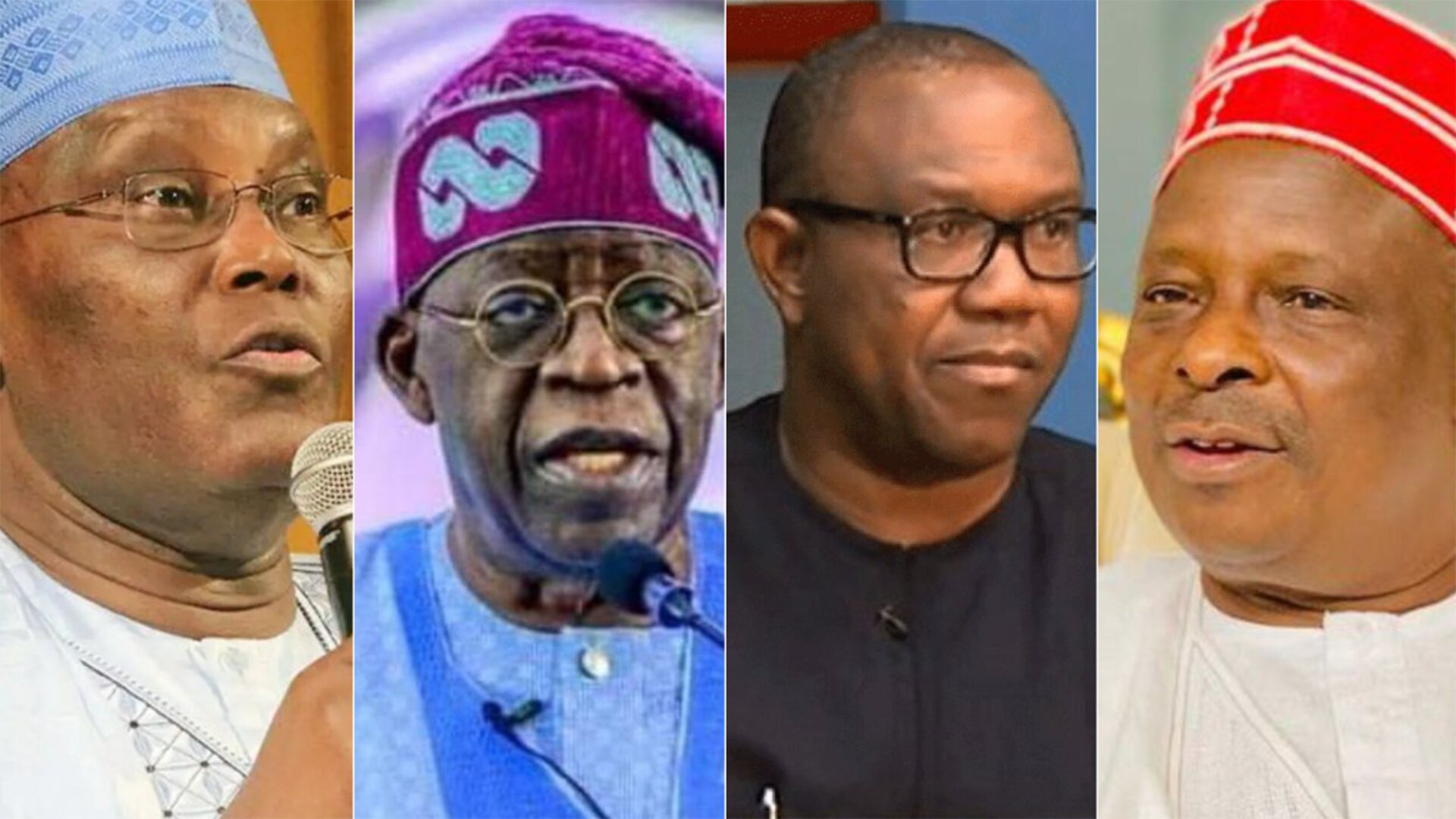
Tinubu triumphed against rival candidates Atiku Abubakar of the Peoples Democratic Party, Peter Obi of the Labour Party, and Rabiu Kwankwaso of the New Nigeria Peoples Party. 

The three front-runners for president each won 12 states, although Kwankwaso only won Kano State. Atiku, a former vice president and his closest rival, lost to Tinubu by a margin of no less than 1.8 million votes. 

Other candidates vying for the presidency of the country, in addition to Tinubu, Obi, Atiku, and Kwankwaso, are Dumebi Kachikwu of the African Democratic Congress, Kola Abiola of the People’s Redemption Party, Omoyele Sowore of the Africa Action Congress, Adewole Adebayo of the Social Democratic Party, Malik Ado-Ibrahim of the Young Progressive Party, and Prof.

Christopher Imumulen of the Hamza Al-Mustapha of the Action Alliance, Sani Yusuf of the Action Democratic Party, Nnnadi Osita of the Action Peoples Party, Oluwafemi Adenuga of the Boot Party, Osakwe Felix Johnson of the National Rescue Movement, and Nwanyanwu Daniel Daberechukwu of the Zenith Labour Party are also on the list. 

Ogun, Oyo, Ondo, Kwara, Ekiti, Kogi, Benue, Zamfara, Borno, Rivers, and Jigawa are among the states that Tinubu has won, while Atiku has triumphed in Bauchi, Yobe, Gombe, Kaduna, Kebbi, Bayelsa, Adamawa, Akwa Ibom, and others.

Lagos: Tinubu appeals for peace as hoodlums attack traders over APC’s loss

By Uzair Adam Imam

Bola Ahmed Tinubu, the Presidential Candidate of the All Progressives Congress (APC), has urged the Lagos State people to avoid violence against his loss to Peter Obi, the Presidential Candidate of the Labour Party (LP), in Lagos State.

In Saturday’s presidential elections, Obi defeated Tinubu in Lagos with a total vote of 582,454, whereas Tinubu got 572,606 votes.

Different reports from the state indicated violence in some parts of the state as hoodlums attacked some traders.

However, reacting to the incident in a statement by his Director, Media and Publicity of the APC Presidential Campaign Council, Bayo Onanuga, Tinubu said the defeat should not be a source of violence in Lagos State.

He added, “The fact that the APC narrowly lost Lagos State to another party should not be the reason for violence.

“As a democrat, you win some; you lose some. We must allow the process to continue unhindered across the country while we maintain peace and decorum,” the former governor of Lagos State said.

Religion and the 2023 presidential election: A quick take

By Muhsin Ibrahim

Religion was central to Bola Tinubu’s emergence as the APC’s candidate for the 2023 presidential election. We discussed the issue as if it would not end. Since the 1993 annulled election of Abiola/Kingibe (both Muslims), no major candidate and his running mate have ever come from the same religion until now: Tinubu/Shettima (both Muslims). But, as the election approaches (we are, in fact, counting hours), only a few people talk about that. However, religion will play a significant role in the voting pattern.

The wild popularity of Labour Party’s Peter Obi on social media and his appeal to foreign media has something to do with his religion. I know this may sound controversial, but it is so. The three other front candidates are Muslims, while Obi is Christian. Besides this, I can’t see a glaring difference between him and NNPP’s Engr. Rabiu Musa Kwankwaso per se.

Tinubu and PDP’s Atiku Abubakar are in their 70s, while Kwankwaso and Obi are in their 60s. The four leading candidates are stinking rich and belong to 1% of the Nigerian elite. Interestingly, the candidates represent Nigeria’s so-called major ethnolinguistic groups of Yoruba, Hausa and Igbo, alias WAZOBIA.

Though, there is a parallel between Obi and Tinubu. Many people will vote for them because of their religious identities. I learned that many churches, especially in the North, had ordered their members to vote for Obi. Likewise, the faith-based civil liberties organisation Muslim Rights Concern (MURIC) recently “reminded Northern Muslims of their promise to support a Southern Muslim [i.e. Tinubu] in the 2023 presidential election”.

Given the above, I agree with some observers and analysts that Obi may surprise his critics, such as myself, in the upcoming election. The votes from his Christian brethren and others supporting him for other reasons will make a difference. However, Tinubu has many more advantages – being APC the ruling party and his decades-old political footprints, among others.

Anyway, we hope for the best and pray for peaceful elections. But, please, stay away from violence. Your safety should be your most treasured possession. No politician or political party is worth dying for.

With love from a disenfranchised Nigerian citizen.

Muhsin Ibrahim works and lives in Cologne, Germany and can be reached via muhsin2008@gmail.com.

Naira Scarcity: Peter Obi urges Nigerians to be patient with FG

By Ahmad Deedat Zakari

The Presidential Candidate of the Labour Party, Peter Obi, has urged Nigerians to be patient with the Federal Government as regards the hardship caused by the new currency redesign.  

Mr Obi made the appeal in the early hours of Sunday in a tweet via his official Twitter handle.

The redesign of Nigeria’s currency has enthroned scarcity of Naira notes and caused severe hardship to Nigerians who are unable to get cash to carry out their daily transactions. 

Mr Obi, while pleading with Nigerians, said currency redesign is not peculiar to Nigeria, and it comes with long-term economic advantages despite the initial inconveniences. 

He tweeted: “The currency redesign is not peculiar to Nigeria. It is an exercise that comes with some inconvenience and pain, but it has significant long-term economic and social benefits. Even though there are improvements that can be made, I urge Nigerians to bear with the CBN and Federal Government with the hope that the general populace and Nigeria will harvest the gains that will come with the reforms.”

2023: Does Obasanjo still have any electoral value?

By Mubarak Shu’aibu

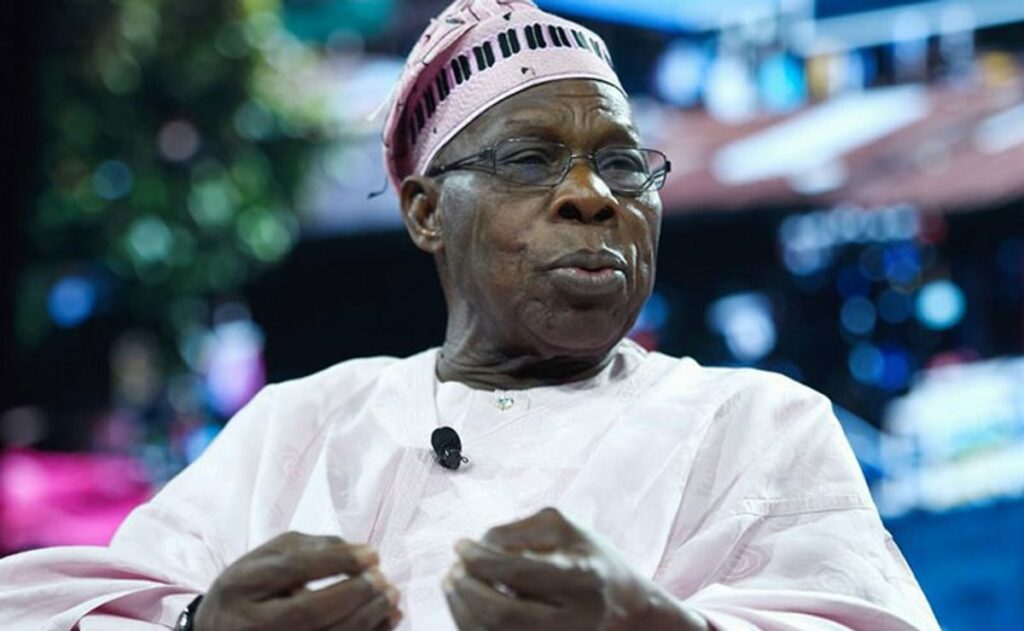
With the 2023 general election close at hand, the former President of Nigeria, Chief Olusegun Obasanjo, has released a six-page letter of appeal to Nigerians, targeting the youths in particular.

In the letter, Obasanjo eschewed the likes of Alhaji Atiku Abubakar, his former deputy, Bola Ahmed Tinubu, and his mentee, Engineer Dr Rabiu Musa Kwankwaso and settled for Mr Peter Obi of the Labour Party. The choice has lent credence to those who believed Obasanjo is on a mission to scuffle Atiku’s presidential ambition comes February 2023. It’s in the public domain that former President Obasanjo is embroiled in a conflict with his former Vice,  and that is a good reason to disagree less with those that held such views. 

But, the good news for Atiku and his fanbase is the fact that the letter of his former boss, when placed in brackets with the 2023 presidential election, is a political featherweight. And here’s why.

Regardless of his exaggerated shortcomings, his broad political war chest, vast experience, and first name recognition have put him in the best stead to blitzkrieg the ruling All Progressive Congress (“APC”), a party which is currently battling for its existence. 

Exploring the more contentious articles against Atiku, either from his former boss or any other individual, it only emanates from a phobia that revolves around Atiku’s tendency to resuscitate Nigeria and rewrite his name in the book of history from the bad opinions sold publicly about him, to what he really is.

Another bullet point, unlike Buhari in 2015, the ruling party candidate, Bola Ahmed Tinubu, does not have the overwhelming support of his people. Some of his rebellious allies, such as Professor Yemi Osibanjo, Babachir Lawal, Akinwunmi Ambode, Rotimi Amaechi, and Rauf Aregbesola, are seriously plotting to ambush his ambition. 

These, and a wealth of other reasons, have unsettled  Obasanjo and the G-5 camp, who now looked marooned. However, Atiku’s victory is eminent (by the  Grace of the Almighty). Meanwhile, he’s one Nigerian [Obasanjo] whose opinion, whether right or wrong, doesn’t mean anything to Nigerian youths. As a former military officer, he, along with others, created problems for the country. When we revolted against them, they went through the back door. They’re the chief reason why our democracy is built in such a way that only the interest of the “elites” is protected. And it’s no wonder the last Military Head of State is the political ombudsman of Nigeria. They feel that they’re the power brokers, and anyone seeking a political office must lick their shoes.

And by his assertion that Obi has people who can pull his ears if and when necessary, he’s just trying to muffle the fact that Atiku won’t listen to the cabals. But that’s the sort of President Nigeria needed at this material time.

So, how much electoral value does his letter brings? Zero, I guessed!

Mubarak Shu’aib writes from Hardawa, Misau LGA, Bauchi State, Nigeria. He can be reached via naisabur83@gmail.com.

JUST IN: Okupe resigns position over money laundering charges

By Uzair Adam Imam

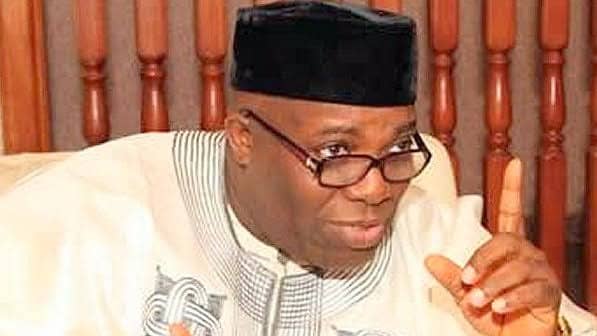
There has been tension in Labour Party (LP) as Dr. Doyin Okupe, the Director General of the party, resigned his position.

The Daily Reality gathered that Okupe resigned following his conviction over money laundering charges.

The disclosure was made Tuesday in a later Okupe wrote to Peter Obi, the Presidential Candidate of the party.

He argued that he had rather invested so much in the party’s campaign.Details later….

Getting out of the closet: Mr Obi’s conundrum

By Mubarak Shu’aib Hardawa

With the 2023 general election underway in a matter of weeks, it turns out that William Shakespeare was right about sound and fury, signifying nothing: All the ObiDient social media noise and online activism will ultimately amount to zilch, zero, and zip. And here’s why!

The ObiDient online movement is still ongoing but packed significantly less of a punch, especially in the Northern part of the country where Obi needed to do a lot of backbreaking work to sell his candidacy. The fan base alone cannot push a candidate to the glory. Suppose there’s one general rule about winning Presidential Election in Nigeria. In that case, the candidate must have the luxury of time, money and a bare-knuckled brawler, which Mr Obi is trying to midwife at the moment. 

Remember in 2015, when President Muhammadu Buhari was contesting against then-President Goodluck Ebele Jonathan? Despite commanding the respect of the masses, he had to make an alliance with some political parties and run to the support of Atiku Abubakar et al. to make it to the finish line. That’s the trick Mr Obi wants to get up his sleeve by romancing Governor Nyesom Wike of Rivers State. But, unfortunately, it is a  move many ObiDient find uncanny, as some reactions suggest in the aftermath of his meeting with the Rivers State Governor. 

In a piece titled “I think this romance is dangerous”, Princewill ODIDI, a staunch ObiDient and a public figure, wrote: “Obi’s romance with Wike and the likes is gradually killing the ObiDient message of change.” He added, “I strongly feel as a leader of Labor party, Obi is playing a dangerous game. When the chips are down in February next year, all these guys will abandon Obi and return to their parties.”

I have never been one to jump on the ObiDient-hate bandwagon, but the fact is that Obi has to form allies with the people you, again and again, castigate if he means business. That’s politics for you. I’m saying this with neither glee nor sorrow, merely as an absolute political fact. The Obi’s goose is cooked.

But whether romancing with those whom ObiDient consider ‘corrupt’ affects his popularity among the fan base is another thing altogether. After all, the former PDP  vice-presidential aspirant has reshaped the Labor party in his image and still commands the loyalty of a deeply devoted core of die-hard fans, for whom he can do no wrong. 

Money, mo what? Money. Money plays a significant role in Nigerian politics. The last gubernatorial election held in Osun State was mainly seen as a repudiation of the claims that money isn’t a factor. ‘You no dey give shi-shi? Nigerian politics is not for you! You have to spend, spend and spend. Downplaying this fact is defined as “perilousness.” 

Although I understand criticism such as this one pointed at Obi’s way, among the ObiDient is like criticising Jesus in a rural evangelical church. I guarantee you; it would change no views. 

But these are hard pills which Mr Obi should make his supporters swallow. And that’s what real politics is. Breaking the duopoly of APC & PDP will cost not only Shi-Shi but also Bullion vans. I hope that didn’t ring a bell, Lol.

So rest in peace, ObiDients, it’s been a wild ride, but it looks like the world will finally return to normality again. And as much as it’s been fun, sooner or later, Mr Obi will be out of the closet by choosing between you or the power brokers.

Mubarak Shu’aib Hardawa wrote from Misau LGA, Bauchi State, Nigeria, via naisabur83@gmail.com.

Obidients and the Godification of Obi

By Sule Abubakar Lucky Mark

The throwing of verbal punches soars dramatically, and I don’t know when it will come to a screeching halt. These Obidients are radical but not tactical. To them, all that glitters is Obi, and all that is Obi glitters! And if it is not Obi, then it should not be any other person. All that is Obi should be deified, but all that is not should be demonised, demolished and desecrated. What insolence!

Of course, political wrangling is not bad. On the contrary, a sensible, harmless political dispute beautifies democracy, especially as it has almost become our culture in Nigeria during electioneering. However, if it is taken to the extremes, that is when such political culture becomes autocratically undemocratic!

When people declare their interest/candidacy, they automatically sign up for public scrutiny and surveillance. And as we all know, deep-seated criticism is one of the essential components of democracy. ‘It’, according to Professor Farooq Kperogi, ‘marks the difference between autocracy and democracy.’ Unfortunately, this central democratic constituent is subdued in Nigeria, especially by some of these Obidients.

Peter Obi has been literally deified (aka ‘godified’) by most of his supporters, especially the ones I have seen and met. Whenever Obi is subject to intense scrutiny, it is considered blasphemy. They have malevolently vilified me (and others, too) for harmlessly asking questions and even writing objectively on Obi. Some of them come up with unsubstantiated claims that some people have paid me to write what I write or that I have some political affiliations with certain presidential candidates. Some of the Obidients go as far as sending irritating, threatening and accusatory PMs to me. Funnily enough, an elderly Obidient told my first cousin that my cousin should not greet him again for supporting a different candidate from his.

This visceral deification of Obi was surprisingly taken to the extremes when I saw some Obidients threaten other people with metaphysical and extrajudicial threats of death. On Facebook and, especially, on Twitter, the more intense your criticism of Obi, the higher your threat. And the milder your criticism of Obi, the milder your invective from the Obidients!

Democracy, as I always say, is choice-driven. So, you can’t use asinine threat, weak-kneed verbal causticity, and the modern pejorative sense of rhetoric to compel others in a democratic setting. Coercion is an infringement on the democratic rights of people!

Every criticism hurled at Obi is considered by this set of Obidients as sacrilegious. When Obi is brought under even the littlest public scrutiny, such public scrutiny would be instantly met with their stiffest form of opposition. Their belief in the sacredness of Obi is as strong as they come, but I can unequivocally say that Obi, like every other Nigerian politician, is not some infallible demigod. So, the beatification of Obi should stop now!

If the ‘Obidient movement’ is for ‘political revolution’, as they say, why do they still tow the path of vulgarity which could eventually stymie their goals? Such hostility towards other people could make Peter Obi’s chance of winning the election peter out because the more they are hostile towards people, the more they unwittingly drive prospective supporters away.

Supporters are won over through brilliant persuasion, not through the usual throwing of verbal punches at other people and the hurling of rhetorical missiles at prospective voters/supporters!

Sule Abubakar Lucky Mark via suleabubakarmark2020@gmail.com.

I was not behind your detention – Obi tells El-Rufa’i

By Uzair Adam Imam

Peter Obi, the Presidential Candidate of the Labour Party, denied the allegation made by the Kaduna State Governor, Nasir El-Rufa’i that he was detained during Anambra governorship election in 2013.

El-Rufa’i laid the claim on Monday at an event for presidential candidates organised by the Arewa Joint Committee, saying that Obi ordered security operatives to detain him some nine years ago.

Responding, the LP candidate stated that he was not behind the directive for El-Rufai’s detention in Anambra.

He said, “When I came in now, somebody told me that my brother, the governor of Kaduna state, said that he came to my state and I detained him. Let me tell you, it is good when these things happen, you clarify them.

“Number one, in my eight years of being governor, only in the first three months did I have a commissioner that is not from the north — Commissioner of Police. And that’s because I met the person.

“At the time the governor said this, it was during election. The police commissioner that was there then was from Adamawa — CP Gwari from Adamawa. The AIG that supervised that election was CP Nasarawa from the north. The DIG that came for that election was from Kano.

“Tell me my power, that I was in APGA — government was PDP and APC. Tell me how APGA person will issue order for somebody to be detained. Even me was detained in my local government.

“However, the only offence I committed is that when they asked me, I said ‘that’s how they treat everybody; that I wouldn’t be in Kaduna on the day of election’. That was the only thing.

“I cannot do that. As governor of Anambra state, I had the best ADC in Nigeria — the best policeman. My ADC, Mohammed, is from Kano. He’s the best policeman that I have ever met. Who will I give the order? How will I tell who lives in my house every day; I’m close to his family; I get up and say ‘Mohammed, I want to deal with your people’, and he will stay there.

“Call my ADC today. I will give you his phone number. He’s the best policeman. He’s a CSP now. So, when people say Peter Obi is black. 2019, I was [vice-presidential candidate], I was a good man. Now that I want to be president, I’ve become a bad man. I did not do anything wrong. I want to change Nigeria.”