PDP

PDP needs to rethink, regroup and reclaim to save Nigeria!

By Abdulgaffar Tukur

The ongoing internal wrangling within our great party, the Peoples Democratic Party (PDP), is deeply disheartening—especially at a time when Nigeria desperately needs a united and visionary opposition. As a committed member and believer in our shared democratic values, I speak not out of sentiment, but out of a sense of duty: this is not a time for blames, ego, division or personal ambition.

Nigeria is bleeding. Under the reckless and dictatorial leadership of the APC-led government, headed by President Bola Ahmed Tinubu, the nation is suffering from severe economic hardship, rampant insecurity, deepening poverty, and increasing political intimidation. Our democracy is under siege—and the people are losing hope.

The PDP must rise above these petty divisions. We must remember who we are and what we once offered this nation—16 years of stability, progress and pride. That legacy is worth defending. It is worth reviving. But to do so, we must become a united and formidable force, focused not on personal ambition, but on national salvation.

It is time we start thinking strategically, patriotically, and selflessly.

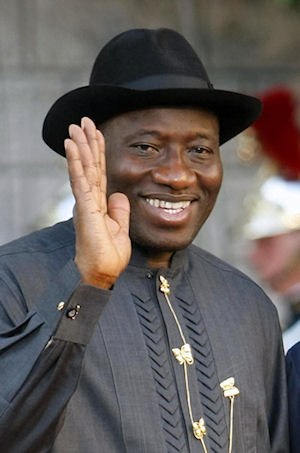
Why can’t our leaders rally behind a powerful, unifying ticket—such as His Excellency Dr. Goodluck Jonathan and His Excellency Senator Bala Abdulkadir Mohammed? This is a ticket that could inspire confidence, promote healing and unite Nigerians across board. It is realistic, respectable and widely acceptable.

And to our elder statesman, His Excellency Alhaji Atiku Abubakar—sir, your legacy and lifelong contributions to this party are undeniable. But now is the moment to write your name in gold by becoming the father of a new movement. Step in not as a contender, but as a peacemaker and unifier who helps to rescue Nigeria when it matters most. That act alone could define your legacy more than any presidency ever could.

Let us make no mistake in 2027: this is not just about winning an election—it’s about saving the country. It’s about restoring dignity, good governance and democratic values. It’s about telling the Nigerian people that PDP is still their party—and that we are ready to fight for them once again.

Let us rethink. Let us regroup. And together, let us reclaim the soul of our beloved Nigeria.

Abdulgaffar Tukur is a PDP member; he writes from Kebbi State, Nigeria. He can be reached via:
abdulgaffarkalgo@gmail.com

By Anas Abbas

The Federal Capital Territory Minister, Nyesom Wike, has expressed concerns that the Peoples Democratic Party (PDP) risks losing the 2027 presidential election to President Bola Tinubu unless it revises its zoning system.

During a live media interaction on Monday, Wike highlighted the party’s failure to adhere to its constitutional guidelines regarding the zoning of both the Chairmanship and presidential candidacy.

This statement comes on the heels of a recent induction ceremony led by former Senate President and Chairman of the PDP Board of Trustees, Adolphus Wabara, where former governors Samuel Ortom of Benue State, Ifeanyi Ugwuanyi of Enugu State, and 38 other members were welcomed into the party’s Board of Trustees.

Since the conclusion of the 2023 elections, the PDP has been grappling with significant internal turmoil.

Tensions escalated following a confrontation between Governor Sim Fubara and former Governor Nyesom Wike in Rivers State, compounded by ongoing leadership disputes in the South-South region and the unresolved position of National Secretary, which has been vacant since December 2024.

Efforts to mend these divisions have been made by various top party organs, including the National Working Committee, Board of Trustees, National Executive Committee, and Governors Forum.

However, these initiatives have only served to deepen existing fractures within the party, further fragmenting state and zonal chapters.

Amidst this, several party members have chosen to defect to the All Progressives Congress (APC).

A significant shift occurred on April 23, when Delta State Governor Sheriff Oborevwori, former Governor Ifeanyi Okowa, and other prominent officials transitioned to the APC, delivering a substantial blow to the PDP’s reputation and diminishing its prospects for the upcoming 2027 general elections.

Patience Jonathan rules out return to Aso Rock, pledges support for Remi Tinubu

By Maryam Ahmad

Former First Lady Dame Patience Jonathan has ruled out any intention of returning to Aso Rock Villa. She affirms her support for the incumbent First Lady, Senator Oluremi Tinubu, ahead of the 2027 general elections.

Speaking at a public event over the weekend, Dame Patience expressed her commitment to working closely with Senator Tinubu to promote unity and women’s political participation. 

Mrs Jonathan noted that her focus is on national development and supporting the current administration’s efforts, rather than seeking a return to political power.

“I have no interest in returning to Aso Rock,” she said. “I am fully behind our First Lady, Senator Remi Tinubu, and I will campaign alongside her come 2027.”

Analysts see this move as a significant show of solidarity between two of Nigeria’s most prominent political women and a potential boost for the ruling party’s female outreach ahead of the polls.

Tinubu to opposition: Stop blaming me for your failures

By Uzair Adam

President Bola Tinubu on Sunday advised opposition parties to accept responsibility for their internal crises rather than blame him for their inability to manage their affairs.

Tinubu said that political defections are neither new nor unique to Nigeria, citing examples from more advanced democracies where notable politicians have switched parties without controversy.

Speaking through his spokesman, Bayo Onanuga, Tinubu dismissed allegations that his administration is tilting towards authoritarianism, describing such claims as baseless and exaggerated.

He insisted that democracy in Nigeria remains vibrant and under no threat.

The President questioned why defections from the ruling All Progressives Congress (APC), such as that of former Kaduna State Governor Mallam Nasir el-Rufai to the Social Democratic Party (SDP), are celebrated, while defections to the APC are condemned.

In a statement titled, “Democracy strong and alive in Nigeria, ignore alarmists,” Tinubu said: “We have read the alarming claims of disgruntled opposition figures, some partisan human rights crusaders, and emergency defenders of democracy over recent defections of key members of opposition parties into the governing APC.”

He noted that recent political shifts, including Akwa Ibom Governor Umo Eno’s support for Tinubu, the defection of Delta State Governor Sheriff Oborevwori, and former PDP vice presidential candidate Dr. Ifeanyi Okowa, had unsettled the opposition.

“While the opposition elements are understandably heartbroken over the failure of their grand coalition, it is disturbing they are resorting to false claims of promoting a one-party state against President Tinubu, who is working hard to reverse decades of economic mismanagement,” the statement said.

It added that accusations of bribery, blackmail, and weaponisation of state institutions are mere fabrications from politicians who have failed in their roles as opposition.

Tinubu stressed that he bears no responsibility for the internal disorganisation and incompetence within opposition ranks, saying it is not his job to manage or strengthen their parties.

He also criticised what he described as hypocrisy, saying those celebrating the formation of an anti-Tinubu coalition now cry foul when politicians defect to the ruling party.

The statement further reaffirmed Tinubu’s commitment to freedom of association, freedom of speech, and democratic principles, asserting that Nigerians freely migrating to the APC do so because they believe in the reforms being implemented.

It concluded that under President Tinubu, democracy remains strong, and Nigeria’s multiparty system will continue to thrive.

“President Tinubu is an avowed democrat whose political activism and democratic credentials in galvanising opposition to defeat a sitting president stand as proof of his commitment to multiparty democracy,” it said.

Nigerians were urged to support the administration in defending democracy and disregard alarmists promoting baseless narratives.

Coalition, 2027 power play and the need for unity 

By Isyaka Laminu Badamasi

In the move to ouster Bola Ahmed Tinubu’s administration and the All Progressive Congress (APC) from the mantle of leadership in 2027, the need for unity among our political leaders can not be overemphasised.

The recent visit by Atiku Abubakar and other top politicians to former president Muhammadu Buhari for the post-Sallah, cast serious doubts in the minds of Nigerians who are yet to recover from the shocks of the former president’s betrayal of 2015 – 2023. The Wazirin Adamawa clearly stated that the visit has nothing to do with the proposed merger.

Be that as it may, Atiku as the prominent opposition leader should also be very careful with the crop of politicians is aligning with to achieve this objective, as some of those seen in his entourage during the visit are people with questionable backgrounds, whose their reigns in power left an indelible mark of anger and uncertainty in the minds of their people, they are heartless with no sense of sympathy to the people, they are not different with Tinubu.

As the Hausa saying goes, one need not select water in an attempt to squelch a fire, but in some situations, there is a need for that, as some waters may be more harmful than the fire. The selection of who to join hands with towards emancipating this country from the hands of incessant geezers is of the utmost importance. Sending President Tinubu out of the villa in 2027 is non-negotiable and shouldn’t be handled with kid gloves.

As it stands today, Nigerians yearn for someone who is ready to implement policies and programs that will make their lives very easy and promising, someone who will bring an end to the wanton killings all over the country caused by one insecurity or another, someone who is ready to ensure that Nigeria remains one and united. 

For this, the need for the political leaders to unite and make necessary adjustments to face the heartless APC administration head om is very paramount,  any move that can not guarantee the aspirations of common man in the streets can not move to an inch, and, it will be for the advantage of Bola Tinubu and his APC to remain in power beyond 2027.

To those power drunk, who are making a mockery of the movement, should be reminded that the pre-2015 merger that brought APC to power is still workable. APC and Tinubu should get prepared.

Isyaka Laminu Badamasi,  a public affairs commentator and advocate for sustainable development,  writes from Bauchi. 

Is the PDP dead?

By Kabiru Danladi Lawanti, PhD

By every objective measure, the People’s Democratic Party (PDP) has ceased functioning as a viable political entity in Nigeria. Its carcass continues to move but without pulse, purpose, or coherence. As a ruling party, the PDP had its moments, but its legacy is weighed down by monumental abuses of power, systemic electoral malpractice, and industrial-scale corruption. 

From the open manipulation of election results mid-process to the weaponisation of state institutions for partisan gain, the party leadership helped normalise impunity at the highest level. Two decades on, many of these cases—alleging theft of billions—are still unresolved.

But the party’s death didn’t happen overnight. It began in 2007, when President Olusegun Obasanjo imposed a sick candidate on Nigerians, followed by Goodluck Jonathan’s directionless presidency. In 2014, a mass defection gutted its internal cohesion, when five of its governors established the new PDP to challenge what they called a lack of internal democracy within the party. 

Losing power in 2015 should have been a moment for self-correction. Instead, the PDP lost its ideological compass. It abandoned the one role opposition parties must play in democracies: the duty to provide clarity, contrast, and credible alternatives. 

Even as the All Progressives Congress (APC) drifted into policy incoherence from 2017 onward and the confusion that followed – petroleum prices increase, ASUU and other university union strikes, economic recession, open stealing never seen before in the nation’s history, fuel subsidy removal, minimum wage controversy, etc.- the PDP remained inert—leaderless, rudderless, and largely invisible.

Today, what remains of the PDP is a loosely held patchwork of political actors in retreat. Governors are defecting. Its 2023 vice-presidential candidate has walked away. State-level structures are hollowed out. Internal leadership is fractured, and there is no unifying idea or strategic doctrine to rally around. What does this tell us? The PDP is not in decline. It is defunct.

Nigeria is experiencing a vacuum of governance across federal, state, and local levels. What is needed is a credible alternative with intellectual spine, strategic clarity, and moral authority. The PDP has forfeited that opportunity. Nigerians are now confronted with two bleak options: to stick with a failing ruling party or scavenge among opportunistic startups branded with catchy acronyms and no ideological soul.

The PDP’s collapse is more than a party’s fall—it is a signal of deeper systemic decay in Nigeria’s political architecture. But in every collapse lies an opening: for principled political entrepreneurship, grounded in values, competence, and execution. Who will offer that? The people that landed us in this mess in the first place or new faces? 

We need new faces in the political arena. These people parading themselves as opposition are no different from the PDP or APC; they are the same. Our youth need to return to their senses, and most people we see in leadership positions started showing their ability to lead in their early 20s. We must step forward if we want to see a Nigeria of our dreams. The time for lamentations is over.

The future belongs to those who can build systems, not just win elections.

APC, PDP, and the rest: A three-way battle for 2027

By Zayyad I. Muhammad

As politicking for the 2027 elections gradually gains momentum, both new and familiar scenarios will inevitably emerge. Nigeria’s political landscape is dynamic and often shaped by geopolitical factors, and 2027 will be no exception.

The truth is, despite its internal wranglings and historical baggage, any coalition that does not have the PDP as its central pillar is unlikely to achieve the kind of national spread required to win a presidential election in Nigeria. The PDP, with its extensive grassroots network and long-standing presence across all six geopolitical zones, remains the only opposition party with a truly nationwide structure, even if its influence has somewhat waned in recent years.

Peter Obi and Rabiu Musa Kwankwaso, notable third-force figures from the 2023 elections, lack enthusiasm for any clearly defined coalition. Obi appears ready to pursue the presidency again, but the conditions that fueled his surprising 2023 performance- particularly the support from urban youth and disenchanted Christian voters— have significantly waned. This support was initially driven by fear over Tinubu’s Muslim-Muslim ticket, which caused concerns among Christians. Today, that fear has faded, and ironically, the Muslim-Muslim arrangement includes more Christian participation in government than anticipated.

Kwankwaso, on the other hand, appears to have adopted a more pragmatic, localised approach- ‘ state capture. Kwankwaso’s posture suggests a strategy of quiet autonomy: “I have Kano; let me control it. I won’t interfere with you, and don’t interfere with me.” This ‘state capture’ mentality may give him relevance at the regional level but severely limits his national appeal.

President Tinubu, meanwhile, has carelessly  or perhaps inadvertently squandered the political capital that the APC enjoyed in the North from 2015 to 2023. During that period, the APC could count on overwhelming support from northern voters , often to the extent that votes from a single state could nearly cancel out those from entire geopolitical zones elsewhere. That dominance was largely tied to a geopolitical strongholds strategy . Tinubu’s failure to maintain and galvanize this strategy will eat up the APC’s traditional votes in the North, which are very key for the APC’s return to a second term.

Furthermore, Tinubu has, whether knowingly or not, revitalised the dormant CPC bloc — a faction of the APC that once represented the ideological and political base of Buhari’s loyalists. Now, with the central leadership perceived as disconnected from northern interests, the CPC bloc sees an opportunity to reassert itself. In regions like the Northwest, particularly, this could lead to a realignment of loyalties, with Tinubu’s influence weakening in favor of those viewed as more authentically representing northern interests. 

Nepotism is nepotism. While Buhari’s nepotism was largely regional and driven by northern priorities, Tinubu’s appears more ethnic and focused on Lagos, which could prove politically costly if not urgently recalibrated. That said, Tinubu still has time and political tools to course-correct before 2027, if he chooses to use them wisely.

The current coalition promoters, however, appear to be relying on an outdated strategy. The 2015-style bandwagon movement, built around the idea of ‘change,’ is unlikely to resonate with voters in 2027. Buhari’s eight-year presidency has left a mixed legacy, with many citizens feeling disillusioned by the unmet expectations. The old formula simply won’t work again.

In 2027, two key elements will determine electoral success, not only at the center but also in the states: substantial resources, both financial and structural , and science. The days when charisma and rhetoric alone could deliver victory are over. Any political group serious about winning must adopt a data-driven strategy. This entails conducting thorough research into voter behavior, turnout patterns, demographic shifts, and regional voting strengths. 

It also requires understanding the psychology of the electorate, particularly among young voters, who now constitute a decisive segment. Apolitical political scientists, data analysts, and behavioural experts will play a more vital role than ever before. Without this approach, even the best-funded campaign could fall flat.

Finally, it is important to accept that the coalition model of 2015 and the voting behavior of 2023 are not likely to repeat themselves. Nigeria’s political terrain has evolved, so to speak . As of today , although tomorrow is uncertain, the three major blocs heading into the 2027 elections appear to be Tinubu’s APC, the PDP, and the rest . It is shaping up to be a near-zero-sum game. 

Zayyad I. Muhammad writes from Abuja via zaymohd@yahoo.com.

Rivers State: The dangers of political betrayal and unconstitutional interventions

By Zayyad I. Muhammad

I strongly disapprove of Governor Siminalayi Fubara’s betrayal of his political godfather. Fubara entered the political arena without established structures, financial resources, or widespread recognition; he was relatively unknown. 

Former Governor Nyesom Wike provided him with the platform, support, and influence that ultimately led to his rise as governor. Yet, despite this, Fubara has turned against the very person who paved the way for his political ascent. 

Both sides should share the blame for not shifting grounds. The declaration of a state of emergency in Rivers State came at a critical time to address rising insecurity and unrest that threatened to spiral out of control. Left unchecked, the situation could have led to a resurgence of militancy and severely disrupted oil exploration activities, which are vital to both the state and national economy. 

Beyond the economic implications, the deteriorating security situation also risks derailing governance and has somehow ‘assisted’ Governor Fubara in escaping impeachment. President Tinubu may justify his decision—he has access to security intelligence and reports that the general public does not.

However, although addressing security concerns is essential, suspending an elected governor and members of the state assembly is not only unconstitutional but also sets a dangerous precedent for Nigeria’s democracy. This issue goes beyond the 2027 elections; it strikes at the heart of democratic governance and the principle of electoral legitimacy. 

Our democracy has matured to a point where a sitting governor can be removed only through due process, as outlined in Section 188 of the 1999 Constitution of the Federal Republic of Nigeria (as amended). If we are not careful, one day—God forbid—a president or his allies could create chaos in a state simply to justify declaring a state of emergency and unseating an elected governor for political gain. Such actions would undermine democracy and erode public trust in the electoral process. They pose a danger to our future. 

The Rivers state or any political conflicts should be resolved within the framework of the law, not through forceful interventions that threaten democratic stability.

The key actors in Rivers State must set aside their personal and political grievances to prioritize reconciliation. Prolonged instability is unacceptable, as it harms the people, governance, and economic progress. A peaceful resolution is the only path forward.

An elected Governor’s mandate is sacrosanct and must be respected. He is the top citizen in the subnational.

 Zayyad I. Muhammad writes from Abuja via zaymohd@yahoo.com.

Not all that glitters is gold

By Isyaka Laminu Badamasi

As the wave of politicians leaving various political parties, especially the ruling party, to join the SDP gains momentum, remember that not everything that glitters is gold.

During the buildup to the 2015 general elections, some politicians capitalized on the failures of the PDP administration at that time. They formed what is now known as the All Progressives Congress (APC), a decision we all regret in unison. 

As observers, and considering the caliber and number of individuals joining the Social Democratic Party (SDP), I must confess that the county’s political landscape leading up to 2027 will be fascinating in the days, months, and years ahead. 

Before then, we should not fold our arms while watching the gullibility of our people and how it has led us to where theAPC administration has brought us today. It is crucial that we examine the actors involved in this process of decamping, reminding ourselves not to be swept away by the razzmatazz of this drama and to avoid making another unforgivable mistake, as not all that glitters is gold. 

We should be very observant of who joined SDP from our states and from which political party. What are their contributions to the development of the state? Are they relevant to the party they left? Are they capable of changing the narratives in the scheme of things, or is it just to make headlines? 

While they have the right to make whatever political decisions regarding 2027, we shouldn’t be naive enough to believe that the ongoing alignments and realignments are unrelated to us. Remember the pervasive nature of politics.

Isyaka Laminu Badamasi wrote from Bauchi State via makwalla82@gmail.com.

Wike revokes PDP’s new secretariat land over unpaid dues

By Uzair Adam 

The Minister of the Federal Capital Territory (FCT), Nyesom Wike, has revoked the land allocated for the new National Secretariat of the Peoples Democratic Party (PDP) in Abuja’s Central Business District.  

The Daily Reality reports that the 12-story building, which has remained uncompleted for two decades, was initially estimated to cost N16 billion when construction began in 2008. 

Despite raising over N62 billion through fundraisers and electoral activities, the project remains unfinished.  

A letter confirming the revocation, signed by the Director of Land Administration, Chijoke Nwankwoeze, on behalf of the minister, was addressed to the PDP National Chairman. 

Dated March 13, 2025, the letter cited the party’s failure to pay annual ground rents for 20 years—spanning from January 1, 2006, to January 1, 2025—as the reason for the decision.  

The letter referenced several public notices issued by the FCT Administration since 2023, urging allottees to clear outstanding dues on their properties. 

It also cited Section 28, Subsection 5 (a) and (b) of the Land Use Act, which grants the government the authority to revoke land over breaches of the terms of occupancy.  

With the revocation now in effect, the land has reverted to the FCT Administration, which plans to take immediate possession. As of the time of filing this report, PDP had yet to issue an official response.