PDP

Sen. Lawal Yahaya Gumau: An epitome of fulfilling promises.

By Muwaffiq Fa’izu Saleh

Since the demise of Sen. Ali Wakili (RIP), many of us have taken an interest in who will succeed him, probably due to our admiration for the unique style in which he carried out the affairs of his constituency (as the then Chairman of the Senate Committee on Poverty Alleviation and member of various committees) to the numerous constituency and developmental projects. There came his replacement in the person of Sen. Lawal Yahaya Gumau, a.k.a. “Maliya”.

Many progressives doubted the ability and capability of Sen. Maliya to sustain the level of Wakili’s performance, not even surpass it. Therefore, all eyes were on him, whether he would deliver or not. Lo and behold, there came a silent achiever in him.

I, however, said “silent achiever” because of how it is being said. The achievements of Senator Gumau are too enormous to be silent, for they are conspicuous. From reviving long-abandoned boreholes to renovating and or constructing and reconstructing classrooms and providing essential reading and writing materials for primary and secondary schools, among other projects. These works cut across his constituencies.

The dividend of Democracy, they say, is the beneficial results of superficial investments made by the people to bring about a government to power. In Sen. Maliya, we have seen quite many of them. They can only be highlighted in the various empowerment programs in his constituents. These include distributing sewing machines, motorcycles, grinding machines, car washing machines, utility vehicles, and SUVs for his political associates, giving various gifts in cash and kind.

In today’s society, the importance of these laudable gestures cannot be overemphasised. As I heard him in one or two speeches where he made some promises, most or all that he focuses on are projects and developments that will directly touch people’s lives, and he made it clear that it always touches his heart to see people suffering. He rarely speaks, but he is a man that works the walk.

Furthermore, you have most likely heard once, twice, or even many times that Sen. Maliya has given an award, a scholarship, or an employment opportunity to a close associate or even a family member. I may not work with figures on these gestures, but some never come to the limelight until one circumstance or another brings them, and I believe some may never do so. I can tell you that of all the qualities of a distinguished senator, this particular one is the most fascinating to many of us. 

The religious institutions are not left out in the pools of the Senator’s good deeds as he extends his hands to them. Suppose you did not hear about him renovating and/or building this and that mosque. In that case, you must have heard about him giving one Imam/Sheikh/religious figure a big and luxurious car (s) or bus (es) for the smooth running of religious activities.

I cannot remember a week in the last couple of months that I didn’t see or hear about the Distinguished Senator fulfilling one promise or another and building on so many good works that he never even promised. It has now reached the extent that Gumau has a new slogan, “Maliya Mai Sati-Sati”. A few days ago, he did some of these stunts that became the talk of the town in a state whose government gives out “Akuya” as empowerment.

Bauchi may be a state where circumstances brought the PDP to govern. Still, with Senator Lawal Yahaya Gumau and many others in the APC making substantial positive impacts on their people, the PDP is already a standing-dead party only waiting to be buried come 2023.

Muwaffiq Fa’izu Saleh wrote from Bauchi State via muwaffiq005@gmail.com.
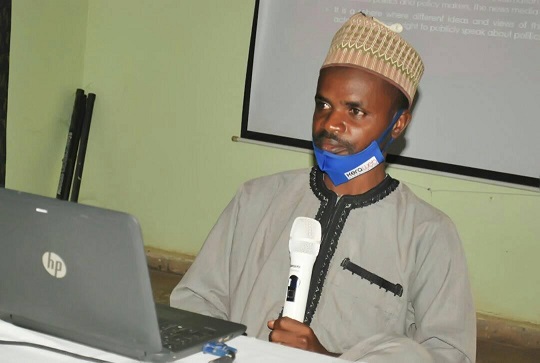
X-raying Hon. Usman Bello’s representation in Akko

By Kabiru Danladi Lawanti

In a liberal democracy, political representation is a straightforward concept. In Nigeria, every four years, there are elections where citizens pause and turn back to see what their political representatives did to them during their four-year tenure. In a defined geographic area or constituencies, the citizens choose from a range of candidates—themselves citizens living in (or near) that same area—and elect a few to sit in the national assembly as representatives of the people of these constituencies. Yet both theoretically and in practice, it is far more complicated.

While representative democracy is often poetically described as government ‘of the people, by the people, for the people,’ it is not only the people who are represented: political parties, ideologies (in this sense religious and ethnic), business, urban and rural people — to name but a few—are also represented. Furthermore, even the very notion of ‘the people’ is amorphous as a representative cannot possibly represent the full diversity of ‘the people’ and all their divergent and conflicting interests.

Since the return of democracy in Nigeria in 1999, many representatives have been sent to Abuja to represent their constituency at the national level. These constituencies comprise a group of local government areas in a particular state. In some states, the constituencies are formed of a single local government area. For example, in Gombe State, there are six federal constituencies: Akko, which covers the Akko LGA, Balanga/Billiri that covers Balanga and Billiri LGAs, Dukku/Nafada that comprises Dukku and Nafada LGAs. Others are Gombe/Kwami/Funakaye, which contains Gombe, Kwami and Funakaye LGAs; Kaltungo/Shongom, which covers Kaltungo and Shongom LGAs and lastly, the Yamaltu/Deba federal constituency that covers Yamaltu/Deba LGA. These constituencies have sent representatives since 1999. Of particular interest to me is the Akko Federal Constituency, where I came from.

Politics, they said, is a network of no permanent foes but only connected interests. In the last 22 years, the constituency has had six representatives. Of this six, two remained the longest-serving representatives – Bello Suleiman and Usman Bello Kumo. Bello Mohammed spent only one tenure in the National Assembly, from 199-2003. In contrast, Umaru Barambu and Samaila Mu’azu Kashere spent two years each in the hallowed chamber after a court sacked Umaru Barambu in 2017.

To be fair to the reps mentioned above, each tried to develop the area in his way. However, a careful analysis of what came to the constituency in the last three and a half years cannot be compared to any in the previous 22 years. The level of human and capital development witnessed is unprecedented in the entire northeast. The only representative that can match the level of human and capital development brought to the constituency by Usman Bello Kumo (UBK) is Mukhtar Betara. This is obvious, knowing that Betara is Chairman House Committee on Appropriation.

A consummate and highly experienced politician, Usman Bello Kumo has a deep commitment and unrivalled passion for grassroots development. For instance, in his second coming alone, 2019 to date in the National Assembly, he has attracted infrastructural development in many areas of human development like education, health, water, roads, electricity, youth and women empowerment all over the constituency for the betterment of their economy and improved standard of living.

As Chairman, House Committee on Police, Hon UBK was able to also send more than 100 youth into the Nigeria Police Force. One thing is clear, UBK has always stood out among other politicians of his calibre. He has never allowed the trappings and grandeur of office to stand between him and his avowed goals of lifting his people from the shackles of poverty, hunger, disease, homelessness and mass unemployment.

As 2023 approaches, we shall soon be inundated with a mix of the serious, the incredible and sprinkles of the comical as political parties jostle to promote candidates of varying capabilities. These include those who appear to have genuine intentions for service to the people and aspirants who seem pretty content with no more than having their faces splashed around on party banners. Already, we have seen some campaigns of calumny against his person when some rabble-rousers, fighting for recognition, working under the instruction of politicians are sponsoring political jobbers to say many things against the man. This, they do discredit him in the eyes of his teeming supporters. One thing is clear; it seems UBK is not even distracted with these political mudslingers.

Holding onto his mission – an intense zeal for total political, economic and social liberation of his people, Hon UBK has always seen his primary vocation in the political arena as being one of service, duty, benevolence and charity towards his constituents. In this regard, he has abided by his campaign promises of using elective office to improve a lot of his people. This is the direct opposite of what his detractors are doing. His opponent definition of representation is that of trying to use political office to feather their nest, irrespective of the economic fortunes of the electorate that voted for them in the first place.

Notwithstanding these outstanding credentials and track record of success, we must remind Hon UBK, as stakeholders and indigenes of this area, that rural areas need his attention. Most of us in the rural regions of Akko, especially villages like Lawanti, Malam Jamo, Gamadadi, Akko and surrounding towns, are currently facing an acute shortage of water never seen in more than thirty years. My last visit in December 2021 to my home town made me pity the dwellers of these areas. Most have to travel many kilometres to get drinking water. Others use water from streams, competing with their animals. It is a pitiful scenario.

There are also allegations that his empowerment programmes are not all-inclusive. Recently, some communities in Gona District have a cause to go to press to complain that his empowerment programmes were only targeted at Kumo, his hometown. 

As a political maestro, who can be taken literally for his words, Hon UBK needs to pause and turn his attention to these people and listen to their complaints, even if they come from a minority voice. We have no doubt, considering the excellent job he did to his constituency in his first coming 2011-2015 and now, his words, as the proverbial saying goes, can be taken to the bank.

As we approach 2023, politicians, including Hon UBK, understand the importance of an alliance. There is no better time to do this than now. And I am sure he needs the rural areas to launch his return to the National Assembly.

Kabiru Danladi Lawanti wrote from the Department of Mass Communication, Ahmadu Bello University, Zaria, via kblondon2003@yahoo.com.

Road to Aso Villa 2023

By Ahmad Murtala

Ever since Asiwaju Bola Ahmed Tinubu declared his ambition to succeed President Buhari earlier this month, the political sphere off and online stirred up debates in favour of Tinubu and the potholes along his way. People cite some irrelevant motifs that may hinder Tinubu’s success. However, these are not paramount of any buyable candidate at the moment, and of course, for the electorate.

The intrinsic status quo of our polity entertains those factors that undermine the democracy and the governance—rating region, tribe, religion, age, school attended, above competency and capacity going even further to dig up the ancestral root of a candidate. The result we are cultivating under this administration says a lot about the mistakes we’ve committed in the past – from  2015 to date—by using only those yardsticks to scrutinize a candidate. Can we still pelt with our intelligence to subscribe to the same mistake of the past come 2023, which appears new dawn to our country?

We imported the American presidential system of government, which is quite expensive and implemented its only cover page. It’s a multi-party system that compels too much spending which a saleable candidate capable of taking the lead is hindered from contesting by the processions. These include the ticket, the campaign, and the mobilization. In this context, two major parties are on the run, which the rest endorses the party that has the chance of winning in subterranean manoeuvre.

The Southeast has configured and domesticated PDP as its political party since 1999, while APC appears nascent in the region—the weakness of the ruling party and the deterioration of the security across the country under the watch of APC makes the nascent party lose its credibility far to the NE. If the president is to emerge from the region, two possibilities may arise.

First, northern people stereotype and characterize PDP as evil, callous and looters, which most of the states in the region are under. Second, APC has lost its shining plate before the people based on what appears on the ground since coming to power in 2015. Therefore, no matter the candidate’s credit from the SE, if APC deems it fit to give the flag bearer to the region to entertain zoning as postulated by some northern state governors, the chances are its success would be a bottleneck.

The polarization within the spheres of politics that SouthEast translates to secession if not given a chance to rule, it appears that PDP would have to play the same card of the last election, by choosing the running mate from the SouthEast, here the North would draw a line looking at the indices of the carnage their businesses faced in the region. Meanwhile, APC would play the South-West and the running mate from the North, perhaps a Muslim-Muslim ticket. The result would be determined by the primaries from the parties in a couple of weeks ahead.  

In those countries that have built the social establishments and have smooth working systems with literally little or no corruption, the age of presidential aspirants is not a matter of concern. We see Biden of US—unlike Nigeria when chunks of domestic battle are entangled yet to be addressed. The age of the candidate matters a lot in this context. Tinubu, who appears to be more robust so far from those who declared their aspiration, is brazenly feeble. If not a good diet and wealth make politicians appear strong, most of the politicians at the frontline ought to assume coach duties guiding the upcoming ones. We forbid the like we’ve seen in this administration by encasing the president in the Villa and plunging the country into anarchy.

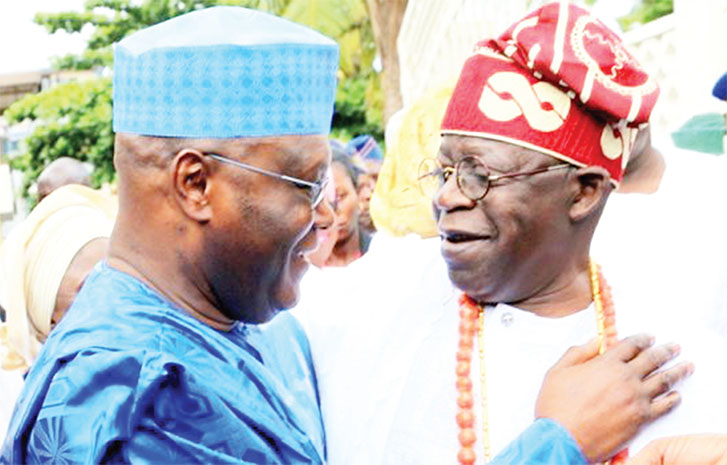
From the view and the colour of the game, Atiku Abubakar, the former vice president, would swiftly take the PDP flag and Tinubu APC. Both have been dented by the people’s court to have maliciously accumulated wealth—having no other alternative polling box for the electorate. If history is to repeat itself, Buhari contested four times before he won. Now, Atiku is running on his fifth time is likely to have a smooth ride based on APC losing its credibility because of insecurity across the country. 

The extreme thirst for power to fulfil the ‘need hierarchy’ is not dangerous to the beholder alone. The motive is only to possess the authority without a sketched-architectural blueprint and clear manifestos which will coalesce with the national need. Buhari came on this platter, and the result is unbecoming.

So far, the two giants have not made it to the public the what-and-how to attend to the tangled problems agonizing every sector. The currently delicate security and imbalanced economy are at the top, strangling the country by the neck—finding it arduous to breathe. We, for now, don’t need the so-called ‘kingmakers’ who cannot heed or take advice from the public opinion but become foreign puppets—since, intrinsically, the presumption of superiority as the number-one citizen is established. 

Road to Villa 2023 must come from the parties and play the game card to sew the polarization across the region. The Villa in 2023 and beyond begs for a head that has both stick and carrot in his hands, the one who has a clear understanding of foreign policies and has immediate treatment to our problems, both short and long-term solutions. If to suggest best candidates, there are a multitude of them from SS, SW and NW, both fit in into position of President and Vice President, but for now, let’s see the outcome of the parties convention, which is the utmost decider.

Ahmad Murtala sent this article via ahmadmurtala@outlook.com.

As Tinubu commences the difficult and easy journey

By Zayyad I. Muhammad

The battle for the 2023 elections will be fascinating. Asiwaju Bola Ahmed Tinubu has commenced a challenging but exciting quest to be President of Nigeria in 2023. Tinubu would face five significant obstacles.

Firstly, his faith. Secondly, the choice of a running mate. Thirdly, the rugged politics the PDP would play – the PDP may present a northern presidential candidate and just ‘Siddon-look’, putting the APC on the defensive. And fourthly, how the North would vote relative to Omatekun and anti-Fulani sentiments in the southwest. And fifthly, Vice-President Yemi Osinbajo supporters are on the move, solely focused on the presidency with confidence.

Tinubu, a Muslim from the Southwest, might have a free sail at home because of the complex nature of the socio-political settings of the southwest. But to appeal to other zones in the country, he will be in a quandary regarding his choice of a running mate. If he picks a Christian from the North, the bulk of APC support in the North, particularly the Muslim North, will look the other way. If he chooses a Muslim from the North, the country will undoubtedly be against a presidential Muslim-Muslim ticket. However, if the PDP picks its presidential candidate from the North, he may get some ‘relief’ in the South

Operation Amotekun and Sunday Igboho’s January 2021 one-week ultimatum to Fulani herders to vacate the southwest, Tinubu’s old statement – ‘ I don’t believe in one Nigeria’ will be another weapon that will be used against him in the North.

Tinubu’s war chest is enormous. His political tactics are shrewd; his political structure is solid, widespread, and well-organized They recently ‘bombarded’ the North and scared their opponents. Tinubu is a good candidate but has a big dilemma, as mentioned above.

On the other hand, the 2023 presidential election battle will be exciting – PDP will be on the offensive, while the ruling APC will be on the defensive. The flag bearers of either political party will also have many political hurdles to cross.

Most people expect the 2023 presidential election finale to be an Atiku vs a Tinubu game. Atiku vs Tinubu will be an interesting big game, a very BIG one. Two similar people with similar public perceptions and similar game styles; “I-know-you, you-know-me” scenario will come to play. The two have well-established political structures that can easily scare an opponent. They pay their bills; the contest would be 100 per cent politics, politics, politics- even the choice of the running mates. It will be a fascinating zero-sum game. Both have similar advantages and disadvantages.

Zayyad I. Muhammad writes from Abuja via zaymohd@yahoo.com.

Political crisis rocks Gombe as thugs storm Atiku’s campaign office, set PDP secretariat ablaze

By Uzair Adam Imam 

Suspected political thugs have stormed the campaign office of former Vice-President Atiku Abubakar, situated some few kilometres away from the Gombe metropolis.

The Daily Reality gathered that the office had its windows broken by the thugs while taking away valuable items like air conditioners.

The thugs were also reported to have set the Gombe State Secretariat of the opposition Peoples Democratic Party (PDP) ablaze. 

Confirming the incident, an eyewitness said that men in the area extinguished the fire with the help of Fire Service personnel.

Addressing reporters, PDP Chairman General Audu Kwaskebe (Rtd) blamed Youth Leader of the All Progressives Congress (APC) in the state, Kawu Lero, saying he was the one who led youths to burn the secretariat.

He added that they had already written a petition to the state police command for the appropriate action.

Meanwhile, State PRO of the APC, Mr Moses Kyari, alleged that it was PDP members that set their office ablaze “due internal crisis over control of the party structure.”

Efforts made to speak to the Police Public Relations Officer (PPRO) in Gombe, SP Obed Mary Malum, were fruitless.

Zulum is an exceptional political player

By Abdulrahman Yunusa

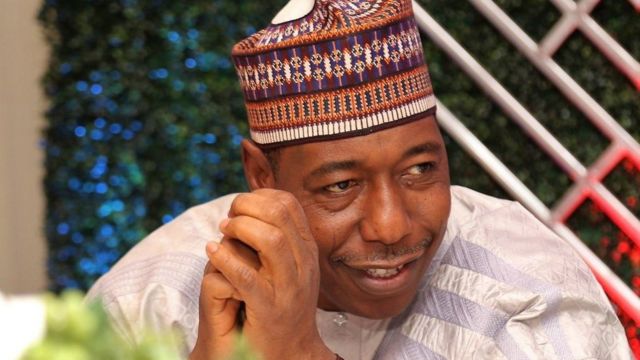
Borno State Governor Prof. Babagana Umara Zulum’s dealings with the power are enough to prove that he is an exceptional political player. He is extra cautious when sensitive issues are involved regarding the people he leads. He stood for his armless people during the tough days of Boko Haram activities and succeeded.

Unlike any other politician, Zulum neither puts his personal interest above his people’s nor allows his sentiment to overshadow his rationality. On the contrary, he often puts his people first before anything else. Thus, this aptly depicts how he resembles a statesman rather than a politician.

To attest to this, look at how he confronted several tragedies in the past. He does everything to get his people out of the cave of fear. Meanwhile, his recent assertion that says, “I’m not a politician, it’s my destiny that made me governor”, is another point of contention.

Either he said this wittingly to make an endpoint for his political voyage because he figured out something despicable attached to his govt, and he can’t withstand it. Perhaps he gets compromised as other politicians do, or he isn’t satisfied with his performance as a leader. That’s what we anticipated from President Buhari and his cohorts. But, instead, they end up disappointing us.

However, I do not support Zulum quitting politics so soon because he is the only man I have utmost conviction and respect for. And with people of his likes out of this dirty game, I can say we will be at a loss till God knows when.

Though I don’t know what the future holds for us, I’m terrified of losing such a rare gem among Nigerian politicians, for they always stand unique and prove to be the best among the rest.

I pray to have a lot of people of his personality amidst these useless politicians of ours because no matter how awful things go, they will surely change the narratives.

May Allah protect our Zulum, amin.

Abdulrahman Yunusa is a political and public affairs analyst. He writes from Bauchi and can be reached via abdulrahmanyunusa10@gmail.com.

Hanifa’s murder: Kano PDP applauds security agents, cautions Ganduje

The Peoples Democratic Party (PDP), Kano State, has issued a press release applauding the security agencies for the quick and perfect response to the murder of a five-year-old Hanifa by her primary school teacher. In the statement, the opposition party also warned and cautioned the state government over what it alleged as “extorting” the private school owners over the sad incident. According to them, the good ones among the private school owners should not be punished or penalised based on the evil wrongdoings of others.

The full release:

“The Kano state chaper of Peoples Democratic Party(PDP) has applauded the efforts of security agencies for their swift response in investigating, arresting and arraigning the kidnapper and killer of Kano school girl Hanifa Abubakar.

The party wishes to acknowledge the successful operation that led to the arrest of the suspected culprit Abdulmalik Tanko and his cohorts through strategic intelligence gathering and tactical security operation.

As members of the opposition in Kano, we wish to join other well meaning Nigerians to also commend the prompt prosecution/ arraignment of the suspects before a senior magistrate court in the state to pursue justice on late Halifa without any delay.

On reforming the private education, the PDP therefore advised Kano State government under the leadership of Abdullahi Umar Ganduje to follow the necessary due process in accordance with law establishing Kano state Private School Board which regulates the activities of all non public schools in the state.

“We learnt that Governor Ganduje has withdrawn the operating licence of all private schools in the state, with all sense of humility and patriotism, we will like to caution the state government not to use this opportunity to extort money from the proprietors of private schools in the state”

The party noted that there have been a standard operating procedure provided by the law establishing the private school board developed by the previous administration of Sen. Rabi’u Musa Kwankwaso.

Despite the importance of reforming the private education sub-sector which has been long overdue, the Kano state government should not see it as a window of opportunity for extortion of money from the hands of the schools proprietors.

The party is hereby extending its heartfelt condolence to the family of late Hanifa and the good people of Kano on the unfortunate incidence that have put people in deep sorrow and sympathy.

Signed

Shehu Wada Sagagi
PDP Chairman
Kano State Chapter

Between 2014 and 2022 and the race for Nigeria’spresidency

By Ahmad Mubarak Tanimu

It’s 2022. The twilight of Buhari’s administration is here, and the political permutations that will produce his successor are about to come bare. “Change” was the mantra in 2014. The Giwa barrack attack in March by Boko Haram, the Kibaku school girls abduction in April, the capture of Gwoza in August, the occupation of Bama in September and the ransacking of Baga in December by the terrorist group together with the over ten thousand lives lost during the year made 2014 an unforgettable year.

Goodluck Jonathan carried so many political accruals that outweighed his political assets, giving him an unfavourable political balance sheet that led to his well-anticipated defeat at the polls in 2015, becoming the first-ever one-term president in Nigeria. It’s an unusual political crash that the former presidential spokesman, Segun Adeniyi, calls ‘Against The Run of Play’.

Jonathan’s political misfortune didn’t start in 2014. He promised Nigerians a breath of fresh air after winning the 2011 elections. His major decision after the victory was fuel subsidy removal. He sent the then CBN Governor, Sanusi Lamido Sanusi and the then Finance and Coordinating Minister of the Economy, Ngozi Okonjo-Iweala, to beg and convince Nigerians to accept subsidy removal.

The first nail on the political coffin of Jonathan was hit on January 1, 2012, with the announcement of fuel subsidy removal, which birthed a national outrage and mass protest known today in our history books as Occupy Nigeria. After that, Boko haram insurgency, the slump of oil prices in the global market, and the PDP crisis he poorly managed sent him to an early political abyss.

Whilst all these were happening, one man positioned himself suitably and leveraged on every misstep of the President, often described as clueless. The man is Muhammadu Buhari. When the commoner was not happy, as late political siege J.S Tarka would say, Buhari offered himself as the hope, the happiness and the long-awaited missing piece of the jigsaw. Buhari moulded all Nigeria’s problems into just one thing that he kept saying repeatedly; ‘corruption, corruption, corruption’. He then placed himself as the one and only man with an incorruptible toga in the political arena that could solve Nigerian security challenges and economic turmoil.

He became president in 2015, Nigeria’s economic crisis soared, and like the sunshine, insecurity moved from east to west in the North. But unlike 2014, in 2022, no one is leveraging Buhari’s ineptitude. Though to be fair to Buhari, with Nigeria’s over-reliance on oil for export revenue and foreign consumer goods, an economic crisis will always be inevitable in the situation of a fall in the global prices of oil.

The polity in Nigeria still looks primordial. No one is ready for issue-based conversation. Even the pundits often put in more sentiment than logic in their analysis. The reaction of Buhari’s detractors shortly after Tinubu’s declaration to run for the presidency in 2023 says it all. They want him to surrender a platform he built with his sweat over some decades of enduring and surviving political persecution under Abacha, Obasanjo and Jonathan.

One doesn’t need to be a seer or bookmaker to predict that Nigerians will face Tinubu and Atiku’s choices in 2023. This could be a run that will not dig and damage the image of Buhari. Atiku may keep things ethical as he did in 2019, whilst Tinubu will primarily defend the Buhari administration throughout the campaign and make promises of improvements.

In 2014, there was an exodus from the ruling party to the opposition. Governors Kwankwaso of Kano, Wammako of Sokoto, Amaechi of Rivers, Ahmed of Kwara and Nyako of Adamawa all defected to the APC and other party chieftains like Atiku, Saraki and Baraje. The defection made the ruling party’s defeat imminent even before the elections.

On the contrary, the ruling party is taking governors to its fold this time. Governors Umuahi of Ebonyi, Matawalle of Zamfara and Ayade of Crossriver defected to the ruling APC last year. While the long-awaited APC national convention can make or mar the party’s fortune in the next general elections, the current atmosphere spells gloom for the opposition again come 2023.

Going by the non-negotiability of Nigeria’s unity as enshrined in the constitution and the unwritten political arrangement of political parties in Nigeria, the next president should be ethnically and culturally Igbo. Still, the ethnic group can only claim that stake in the PDP, a party they supported wholeheartedly since 1999. They rejected the APC, and I don’t think the party will pamper the same region with a presidential ticket in 2023. I am harbouring a feeling that an Igbo presidency is all Nigeria needs to turn its fortune around as a country. It will bring integration and a sense of belonging for all, which may translate into socioeconomic success. But that’s a conversation for another day.

Ahmad Mubarak Tanimu wrote via ahmadmubarak.tanimu243@gmail.com.

A letter to Prof. Farooq Kperogi

By Muhammad Rabiu Jibrin (Mr.J)

I write this letter to you as a Nigerian and your follower for a long time. I am deeply concerned about having a better Nigeria, which is only possible if responsible leaders are elected. Leaders who have the country at heart think of her first before themselves or their families.

But the process or the means of discovering remains the problem to many Nigerians due to so many factors. We need to face that and address it as soon as possible. In so doing, Nigerians need to be guided by farsighted men like you. 

Prof. Kperogi, if Buhari, Osinbajo and Tinubu are “a troika of a treacherous villain” or “tarred with the same brush or the monsters of deceit and fraud” and Atiku happens to be among the “warhorses of corruption and ineptitude” as you pointed out in your recent piece, then who do you think should Nigerians go for come 2023?

It is indisputable that those you called names failed Nigerians on many fronts and seem not equal to the task based on the historical antecedents. But just pinpointing their lacunas that justified them as incapacitated and incompetent alone can’t suffice.

As a patriotic citizen, a critical thinker of reasonable foresight, with a wealth of experience and vast knowledge, you can endorse someone for Nigerians to vote for. Please, who do you think can lead Nigeria to the promised land?

With your pen, which is mightier than the sword they say, you can attempt changing the narration and have the Nigeria of our dream. Out of the 78,250 followers and 4999 friends you have on Facebook alone, plus those on your other social media handles, only God knows how many you can influence. As you shape their minds, they can also do the same to others, and the trend will go continuously. 

Nigerians want to stop being “clueless” and take off their heads the laurels of “enablers of Nigeria’s descent to the nadir of hopelessness”. So let’s do this together and make 2023 different.

Muhammad Rabiu Jibrin (Mr J) wrote from Gombe State via muhammadrabiujibrin@gmail.com.

A call to Nigerian youths on political apathy

By Salaudeen Teslim Olamilekan

Over the years, there has been an erroneously hard held belief among some Nigerians, especially the teeming youths of intellectuals, that, ordinarily, electorate votes don’t count in an election. This belief is more evidenced in social media discussions, particularly Facebook. Whether they vote in an election or not, the winner of an election is already known to the powers that be, even before the election day.

In preparation for the 2023 elections, I visited my local government secretariat to register my voter’s card. It was pretty disheartening and mind-boggling for me, realizing that what I observed the very first day I went, there was still the same thing I noticed. About 85% of the people on the queue waiting to be captured are old and mostly unlettered. They are illiterate market women, farmers and some senior civil servants. The numbers of youths in the queue were minuscule.

Many acclaimed young, exposed, and educated individuals who should know better about how a country is built are focused on venting anger and frustration on social media and gatherings against politicians. We fail to do what truly matters for the betterment of our country. It’s safe to say some youths and informed older people don’t even have voters cards, much less planning on voting. A fragment of this proportion doesn’t obtain the card for election purposes. It’s only some one-third among the youthful large social media users who lament and often weep for the country now and then will vote. In the end, the irony is, when an election comes, the old market women and farmers we often view as ill-informed and uneducated are the ones that pull the most votes.

In my conversation with some youths my age in my neighbourhood and the older ones, I discovered seemingly educated people who pride themselves on not having voters cards. They even hold and justify such ignorant views with their full chest. More surprising, a lady once told me that voters are the problem of Nigeria. She believes she’s wiser because she has never voted for any corrupt Nigerian leaders in the past. She has never exercised her right to choose who governs her country and who doesn’t, and she doesn’t seem to care. She sees people that vote as accomplices to the fraud in government. She’s among the many complainants that know every politician that’s not performing by their names but failed to see voting as a reasonable way to push them out of government and establish a new people-oriented government.

To say our votes don’t count in determining who wins or loses the election in Nigeria is a talk borne out of utter ignorance. The fact that the educated ones propagate such opinions makes it more embarrassing. Don’t let us fool ourselves. If our votes don’t count, politicians will not be spending billions of naira on advertisements and campaigns, touring every nooks and cranny of the country begging for votes. I believe anyone who shared in the anger, disappointment and dissatisfaction many of us have towards this current government and doesn’t have a voters card shouldn’t be taken seriously. You can’t complain your way into changing the political order of your country. You take action by voting. Your ignorance towards the poll keeps terrible people in power.

The thing about democracy is that you can’t separate or remove elections from its guiding principles and practices. The moment a country fails to choose its leaders by the polls, directly or indirectly, it cannot be identified as a democratic country. Elections are conducted to elect a leader to represent the people and ensure people’s dreams and aspirations are fulfilled. This mechanism hasn’t proven to be successful in choosing good leaders all the time, but it’s successful in making the majority’s will come to fruition.

It is wise that your hatred towards the ruling government should be why you’re voting, not why you’re apathetic to the poll. If you refuse to vote because you hate the government, your apathy will continue to keep bad people in power, and in so far as bad people are in control, their poor decisions will be ruling every aspect of our lives.

Nigerian politicians understand the power voters have. That’s why they focused more on enticing our poor, uneducated and easily-deceived parents with some handful of rice and N500 so that they could vote for them. Unfortunately, politics is a game of numbers. The more crowd a wrong person pulls based on his war chest, the more that wrong person will have chances of clinging to power.

My fellow Nigerian youths, come 2023, blame yourself if the wrong people win our most important national and regional political offices. Never complain. It’s your fault that you don’t vote. You should now understand that the quality of your life determines the quality of the people in power. How safe and healthy you’re, depends on the outcome of your political decisions. The political aspirations of the government in power affect the country’s political economy, including the highly established businesses and the small and medium scales. It will affect the bread sellers, labourers, and our society’s disadvantaged. We should do away from ego and ignorance and exercise our rights to vote for good and future-focused leaders.

Salaudeen Teslim Olamilekan is an undergraduate of the Federal Polytechnic Offa, Kwara, studying Mass Communication.