PDP

Reps to hold emergency session on Monday

By Ahmad Deedat Zakari

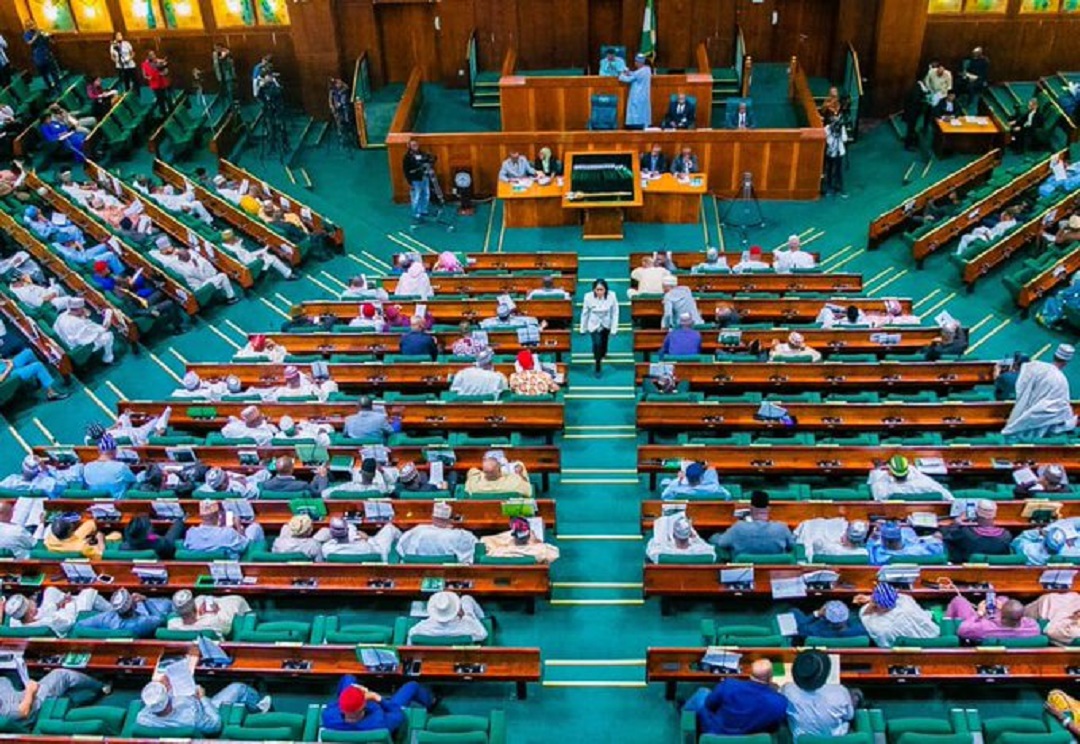
Nigeria’s Green Chamber, the House of Representatives, has called for an emergency session scheduled to hold on Monday. 

The clerk of the House, Yahaya Danzaria, in a statement on Saturday, April 6, 2022, announced that the emergency session would hold on Monday. However, the clerk did not state any specific reason for the emergency but said in the terse notice that critical issues of national importance would be discussed. 

“This is to inform all Hon. Members, staff, media and the general public that the House hereby recalls all Hon. Members for an emergency plenary session against Monday, 9th May, 2022, at 2:00 pm. It is particularly intended to discuss critical issues of national importance. The House regrets any inconvenience this short notice would have caused,” The notice reads.

It is unusual for the House to sit for plenary on Mondays. Usually, they sit on Tuesdays, Wednesdays and Thursdays.

However, the House members have been reportedly neglecting plenary sessions. It is believed that the incoming political parties’ primaries are the reason.

Mass defection rocks Kano State House of Assembly

Ibrahim Nasidi Saal

Nine members of the Kano State House of Assembly elected on the Peoples Democratic Party (PDP) platform have defected to the New Nigeria People Party (NNPP).

The spokesperson of the Assembly, Uba Abdullahi, announced this in a statement he issued on Friday. He said the members had sent a letter to the Speaker of the House notifying the House of their defection.

He said some of the members cited a leadership tussle in the PDP at state and national levels for their action.

The affected members include:

 Isyaku Ali Danja (Gezawa Constituency), 

Umar Musa Gama (Nassarawa Constituency),

Aminu Sa’adu Ungogo (Ungogo Constituency),

Lawan Hussain Chediyar ‘Yan Gurasa (Dala Constituency)

Tukur Muhammad (Fagge Constituency).

Mu’azzam El-Yakub (Dawakin Kudu Constituency)

Garba Shehu Fammar (Kibiya Constituency)

Abubakar Uba Galadima (Bebeji Constituency)

Mudassir Ibrahim Zawaciki (Kumbotso Constituency).

Earlier on April 29, the House announced the defection of a member representing Kano Municipal, Salisu Gwangwazo, from the PDP to the ruling All Progressive Congress (APC), also citing an internal crisis in the main opposition party

However, the latest defections are widely seen to be connected to the movement of a former governor of the state, Rabiu Kwankwaso, from the PDP to the NNPP.

Mr Kwankwaso moved to the NNPP earlier this year and is expected to run for president on the party’s ticket.

Kwankwaso’s defection has triggered the mass defection of his followers from the PDP to the NNPP. Some of them have taken party positions ahead of the party’s primaries.

2023: Will Emefiele Declare?

By Zayyad I. Muhammad

Godwin Emefiele, 60-year-old Governor of the Central Bank of Nigeria, is one of the presidential hopefuls whose ‘aspiration’ has become a surprise to some people, and admiration to some other people.

Some people were surprised when Emefiele’s name popped up among the presidential hopefuls. This class of people thought that as an experienced economist heading Nigeria’s apex bank, Emefiele should concentrate on his job of formulating monetary policies, controlling inflation, and managing other economic fluctuations, while championing innovation to ensure the nation’s economic and financial stability.

On the other hand, the people who see Emefiele as a strong candidate believe that with the remarkable successes of the programs and schemes initiated or being implemented by Emefiele; if as president of Nigeria he will not only expand them but will also apply his wealth of experience as a development finance expert to stimulate the economy via other economic programs that will reflect on local needs in line with global trends. This group of people always cite schemes like the anchor borrower program- which has successfully created economic linkages between smallholder farmers and reputable companies involved in the production and processing of key agricultural commodities and the COVID-19 intervention that has cushioned the adverse effects of COVID-19 on households and MSMEs.

In the last five years, the CBN under Emefiele has disbursed over N114.09 billion to support the fertilizer industry- Nigeria had seven Fertilizer blending plants in 2016, and only four were operational. As of today, there were 62 functioning blending plants. These and many economic policies and progress are the ladders these people stand on to cheer Emefiele on, as a strong aspirant. There are reports that many farmers in the north, especially rice farmers have termed their successes as ‘Emefiele’.

Furthermore, political pundits are of the view that Emefiele’s candidature can be a very important political balancer for the APC ahead of the 2023 presidency game. Firstly, no camp in the Southwest will feel cheated with the Emefiele candidature since he directly doesn’t belong to any of them; but can be incorporated into any camp seamlessly.

Secondly, Emefiele from Ika South, Agbor region of Delta State, SouthSouth Nigeria, can also be linked to the cousins of the Igbos in the Southeast. This will to some extent calm the nerves of the advocates of the Igbo presidency and achieve geopolitical equity. For example. Goodluck Jonathan’s presidency was a stabilizing force in the southeast’s politics and social order.  Some political pundits believe that Emefiele, as president can also play that role, now that the Southeast is in agitation for the presidential seat. 

The time has come for Emefiele to officially declare whether he will contest or not. This is very important to clear the air- politics or CBN Governor.  If Emefiele will not contest- let him continue with his task as the driver of Nigeria’s monetary policies and other important roles of the CBN. However, if he decides to contest – this will be a big one in the field of the 2023 presidency game in the APC- already groups like the Emefiele Support Group and Arewa Alliance for the Presidency of Godwin Emefiele (AAPGE) have reached out to many quarters in the country campaigning for Emefiele.

So, what remains for Emefiele is political alliances, negotiation, and courting- this will be easy for him because of his privileged position. However, he also needs to understand that politics is not Development Finance. It is a game where a primary school dropout can teach or even ‘scold’ a Central Bank Governor!

Zayyad I. Muhammad writes from Abuja via zaymohd@yahoo.com.

Ganduje to Wike: You will lose 2023 presidential election

By Muhammadu Sabiu

Governor Abdullahi Ganduje of Kano State has predicted that Nyesom Wike of Rivers State will lose the presidency in 2023.

Wike, according to Ganduje, would be a good loser because he is courageous.

He made the remarks while receiving the presidential candidate from the Peoples Democratic Party, PDP, in Kano.

Ganduje said, “So, you have come to see your brothers and sisters. Good. You are aspiring for the president of the Federal Republic of Nigeria. We see your efforts.

“And at the end of it, you’d lose, but you’ll be a good loser. I appreciate good losers because they have courage. And since you are doing it peacefully, you’ll live long to fight again. I congratulate you, Mr ‘Wise’ Wike. Thank you, and God bless.”

Recall that the Rivers State governor has recently shown his aspiration to govern Nigeria in 2023, noting that he stands a good opportunity to clinch power from the All Progressives Congress, APC.

2023 Elections: Only the living vote

By Ibrahim Mustapha Pambegua

As the 2023 general elections fast approach, so also the worsening of insecurity in the country. In preparation for the next year’s polls, aspirants from various political parties are emerging in numbers. This is what we call democracy in action.

However, the incessant killing in the country has raised a serious question. Have our desperate politicians ever pondered and assessed the threat posed by the insecurity for their 2023 ambition? It seems the country has been divided into two. One is being controlled by the terrorists and the other by the Nigerian government.

The sultan of Sokoto and other religious leaders have expressed fear of the likely conduct of the 2023  general elections. They based their arguments on the country’s deteriorating insecurity, with the government looking helpless. The recent attack on the Abuja-Kaduna train by suspected members of the Ansa-Ruddeen terror group has furthered indicated Boko haram expansionism. The terror group, which suffered a massive onslaught by our gallant soldiers and is presently in disarray, must have moved to northwestern states.   

The movement of Boko Haram to some northwestern states and part of Niger state did not come to many Nigerians as a surprise. Sometimes last year, the governor of Niger State, Abubakar Sani Bello, raised the alarm over the presence of Boko Haram in his state. The governor warned the deadly terror group is a few kilometres away from Abuja. The shocking statement from the governor, who happens to be the chief security officer of his state, must have forced the government to deploy security officers to scoop necessary intelligence gathering. But, I don’t think the government has acted on the governor’s claims or taken the urgent action required to arrest the situation. Now, Niger State is at the mercy of rapacious bandits cum Boko Haram who have continued to sack communities.

In the south-east, the security situation is not different from the north. The region has been battling with IPOB. Through its armed wing, the Eastern Security Network (ESN), the secessionist group has held some states to ransom. The group that assumed the state role has since declared Monday a work-free day and directed law-abiding citizens to remain indoors. Public places, banks and markets have to obey the draconic order for their own safety. Besides free day declaration, the arsonists have been attacking security formations and innocent people on a daily basis.  

There is no doubt that Nigeria is waging a survival war against the violent activities of non-state actors. While the country is gradually moving into a failed state with corpses littered its length and breadth, our politicians are busy scheming on how to be or remain in power. They don’t give a damn about the escalation of tension or how Innocent lives are being soaked into the ocean of blood. 

The above reminds me of the recent sermon by Sheikh Nuru Khalid, former Imam of Apo legislative quarters, Abuja. In his Friday sermon, the Islamic cleric advises Nigerians not to come out and vote in the 2023 elections unless the government agrees to protect them. There is nothing wrong with his sermon. However, he has just called the government’s attention to live up to its essential responsibilities. The primary function of government is to protect lives and properties. However, the government is no longer performing this constitutional duty.

It has become imperative to say nowhere is safe in the country. Our road, airport and rail station have been targeted and attacked by terrorists. Our rural communities that serve as the country’s food basket have become a ghost of their former selves.

Elections can only be conducted in a peaceful and secure environment. Evidence suggests that unless security improves, the country will go to poll with more corpses. There is no gainsaying the facts; dead people don’t vote. Elections are meant for the living. It is quite disturbing that most of the aspirants do not have the blueprint for tackling the insecurity that bedevilled the country.

When the Buhari administration came on board in 2015, it promised to secure the country. One year for the administration to go, it seems, security has worsened under its watch. For the 2023 elections to hold and the living to vote, the government should quickly stem the tide of growing insecurity in the country. This can be achieved through intelligence gathering, negotiation, massive bombardment, and unravelling the sponsors of these terrorists.

Ibrahim Mustapha Pambegua wrote from Kaduna state via chambasimeh@gmail.com.

Is the Buhari-led government on holiday?

By Shafi’i Sheikh Jr.

I tried to resist the temptation to speak on matters that fringe around governance and government policies. This is because there are things that an observer can only see if he resists the temptation to jump into the fray and become an actor himself. But recent happenings have reawakened my enthusiasm to march to the stake like the man my mom had always desired me to be and take the bullet in the chest should the need arise. 

In 2015, we supported APC with our sweat and money chanting “change” wherever we found ourselves so much that it caught every household’s mood. Why? Because we thought a Buhari-led government would have no trouble handling the heaps of problems bedevilling our mettlesome Nigeria. 

Now, let’s get down to the nitty-gritty of why we-the masses brought Buhari to power in the first place. 

First of all, Nigeria, Africa’s biggest oil-producing country, was rapidly growing its economy, but the wealth had not been shared appropriately. Half of Nigeria’s population was living below the poverty line. The corruption that was partly to blame was eating into every fabric of Nigeria’s being. 

Secondly, the menace of Boko Haram was spreading wider than it started and had already claimed over 20,000 people and forced out some 3 million others from their homes. We accused the previous Goodluck E. Jonathan-led administration of not taking the menace seriously and posited that Buhari, who’s from the region, would do better if given the opportunity. 

We, therefore, came out en masse to vote Buhari into power. The 2015 election was and still is of massive significance in Nigeria’s turbulent history because, for the first time in Nigeria’s history, an opposition candidate won a presidential election free and fair. 

The president-elect (as he then was) told his supporters that “We have proven to the world that we are people who have embraced democracy. We have put the one-party state behind us.”

“You, Nigerians, have won. The people have shown their love for this nation and their belief in democracy,” He mentioned. 

It was the beginning of a new era. Nigeria and Nigerians refurbished a new hope. But these hopes were soon quashed by his incompetence to constitute a cabinet after 100 days in office. It was opined that a leader who couldn’t form a cabinet for that long is ill-prepared for the most important job in the country. 

Albeit hinging his voter appeal on waging war against corruption, fighting terrorism, and revamping the economy, the Buhari-led government had nothing to show except a plethora of controversies that embroiled his first 100 days in office. 

Today, the government only succeeded in pulling us from the shackles of Boko Haram into a dungeon full of kidnappers, IPOB and the so-called Unknown Gunmen. 

Ours is a country where lives are no longer sacred. Education has been exiled, social amenities are declared “extinct”, and food! Well, you’ll have to take a bank loan if you want to eat healthily. These terrorists attack and operate in broad daylight. 

Even after the president’s declaration in 2019 that Nigeria has “technically won the war” against Boko Haram, the country is still ravaged by insurgencies ranging from kidnappings to coordinated attacks on security forces and population centres. 

The recent attack on the Abuja-Kaduna train is a clear example that Nigerians will not forget for a very long time.

If holiday refers to that time of the year when one usually takes time away from home, work, or business to travel and relax, then this so-called government has betrayed Nigerians and gone on a holiday! 

Shafi’i Sheikh Jr. is a student of the Nigerian Law School, Kano Campus. He writes from Jos and can be reached via talk2sheikh.esq@gmail.com.

Sheikh Nuru Khalid: The way they and I see it

By Bilyamin Abdulmumin

The nation has woken up with yet another round of controversial news, as the committee to the National Assembly mosque, Apo legislative quarters Abuja, deemed it fit to suspend the renowned Islamic cleric Sheikh Nuru Khalil before sacking him later. The committee cited incitement and lack of showing remorse as reasons for the suspension and the final sacking, respectively.

Last week’s Friday prayer sermon the Sheikh delivered was the action that earned him the sack. In the sermon, reeling from the Abuja-Kaduna train attack tragedy, the Sheikh supported a boycott of the upcoming 2023 general election should the government fail to protect the lives of Nigerians. This message immediately went viral to generate a heated debate among the public on social media.

Those who support the message have some reasons. Because it was just history that repeated itself; before the 2015 general election, Nigeria, especially the North, was literally on fire. Amidst the chaos majority of the northern Islamic clerics openly criticized the government of the day – PDP, while drumming support for the opposition – APC.

Fast forward, seven years later, the table has turned. The APC is in charge, and similar to the eve period of the 2015 general election, the insecurity is threatening the country again. So, for this category of view, what is good for the goose should also be good for the gender.

Some try to strike a balance. According to these people, the Sheikh’s sermon was right, but they argue that leadership comes with responsibility. So, a leader with a large audience has both privilege and responsibility. Some of these responsibilities are eschewing opinion, unlike any ordinary person who doesn’t mince words. In other words, the Sheik should have a tread with caution. 

Some categories look at it from the extremism tendency. According to them, some extremists, such as Muhammad Yusuf, the Boko haram leader, started as a spokesperson to the masses. First, he became a fierce critic of the government, but later, when his antics escalated to insurgency, those masses clapping for him became the most victims in the end.

Some sought to politicize the controversy. According to them, the Sheikh has pitched a tent around the opposition – PDP, so they claim he has been a critic of the Buhari government for the last seven years. These critics sealed their arguments with the allegations that the Sheikh was appointed an Imam at a mosque built by Atiku Abubakar, a new Jumu’at Mosque behind the Central Bank Nigeria (CBN) Quarters, Abuja.

The peculiarity of any argument is that if anyone is allowed to explain his view, one will somehow see a reason for their claim. The above four viewpoints on the same thing are good examples.

By and large, if there is anything this raging debate achieved, it is one thing: it made Nigerians forget the series of other pressing issues like the ASUU strike, fuel scarcity, the naira to dollar depreciation, VP Osinbajo, Minister Pantami, and Farooq debates, even the plight of the actual victims of the attack (may theirs be a speedy release, harmless). One Nigerian coined this scenario: “one rising issue after another makes Nigerians forget their suffering; Nigerians live for the moment.”

Bilyamin Abdulmumin is a PhD candidate in Chemical Engineering at ABU Zaria. He is also an activist for a better, informed society.

Pantami and the bitter taste of politics (I)

By Aminu Nuru

Isa Ali Ibrahim Pantami’s odyssey into public service, and mainstream politics in Nigeria by extension, is so far filled with notable controversies that muddy the stream of his public image despite being received and welcomed with a reservoir of goodwill and optimistic anticipations by many Nigerians.

Although some people may argue that, before Pantami’s appointment to public office, there were members of the Federal Executive Council (FEC) equally knowledgeable in the matters of Islam and could be regarded as scholars in their own rights. Still, the fact is that both Mallam Aminu Kano and Senator Bello Maitama Yusuf made a name for themselves in politics and public service before Islamic scholarship and preaching. Or, to say it better, the duos are more widely known for their political engagements than anything else. Thus, they were seen as full-time politicians in the public eye. While Pantami, on the other hand, got his fame strictly from Islamic teachings and discourses.

Therefore, Pantami is a trailblazer who pioneered a cause in Nigerian polity – a revolution of Islamic clerics from Northern Nigeria joining national politics and public service. This position naturally accords him the status of a role model for subsequent clerics from the North that are willing to join public service in the future.

Though preaching and propagation of Islam would have played a role in Pantami’s rise to prominence and subsequent appointment into Nigerian public service, the controversial minister, to be fair, has demonstrated some degree of competency and seems to be averagely prepared, to say the least,  to the job he has been offered as the Director-General of NITDA  and later Minister of Communication and Digital Economy. In the same vein, he has also recorded some achievements so far. Unfortunately, however, a series of controversies are beginning to overshadow these achievements, which are at the same time complicating his polity. Still, some of these complications may not be disconnected from his past. On the contrary, they could be best appreciated if one revisits and analyses the context and content of his previous preaching vis-à-vis the atmospheric politics of the time.

Efforts to corroborate the exact date Pantami made his debut into the realm of Islamic preaching in his first preaching base – Bauchi – proved abortive. But what is certain was the unique style he adopted in delivering lectures, Tafseer sessions and Friday sermons, which promptly endeared him in the hearts of the local audience.

In the early 2000s, most Western-styled educated Muslims were looking for a fresh voice in Islamic preaching and seemed to be tired of the “oldies” and their archaic modus. They wanted something different and were eager to access the new approach that analyses and interprets contemporary issues from Islam’s perspectives. They were looking for an Islamic preacher to address and speak to them in the manner and tongues they would align and reason with. A preacher that could, for example, scrutinize the EU’s foreign policies and the US invasion of the Middle East and validate his points with the verses of the Holy Qur’an.

In Pantami, they saw the exponent of those ideals. This was due to his ability to demonstrate basic knowledge of global politics, international relations, and science and technology through the lenses of the Quran and Hadith. In addition, he commanded a very good English Language (a rare talent among Islamic clerics at the time). He exhibited a charming oratory skill sauced with puritanical diction – a personal endowment and enchantment that he consciously or subconsciously deployed to arrest, startle, and move his audience. The eloquence with which Pantami delivered his sessions was what stood him out among his contemporaries. Consequently, Pantami became the darling of Muslim populations in Bauchi and beyond for this and other intellectual traits. The Western-styled educated populations saw a 21st-century Islamic cleric of their dream in his shape.

As an influential preacher with access to grass-root populations, his pulpit echoed a dissenting voice against the government of the day. He was explicitly critical of PDP’s government at both the state and national levels and openly promoted the presidential ambition of General Muhammadu Buhari (GMB). It is on record that Pantami was not the only cleric to uphold the candidature of GMB via his pulpit; other clerics had also promoted him with equal conviction. However, Pantami’s open romanticism and penchant for the General were so extreme that when his old “friend” – Governor Isa Yuguda – fell out with Buhari’s ANPP and decamped to PDP, Pantami was not reluctant to denounce this move. Therefore, he launched out series of attacks and criticisms of the Yuguda administration in his Friday sermons (despite being a back-door “friend” of the Yuguda administration).

In an article titled “Nigerian Politicians and Hypocrisy”, Pantami wrote: “I do not know a profession anywhere in the world that is full of professionals who fulfil all the characteristics and signs of hypocrites aptly described by our infallible Prophet like Nigerian politicians in the corridors of power, particularly the companions of the largest, and probably the most dangerous party in Africa (PDP)” (Premium Times, 2012).

Nobody felt Pantami was not doing the right thing among the population. He was even celebrated and eulogized for his vilification of the PDP’s government and support for GMB. His effort was appreciated as a selfless service to the poor masses. He was practically dancing to the bits of the society. Naturally, this created a public image for Pantami – an image of an honest Islamic cleric who told the truth to power (PDP’s government?). 

Considering this background, it is not entirely out of sight if some groups work to step back on Pantami’s toes now that he has been appointed a Minister of the Federal Republic of Nigeria. They would not also relent to feed him the same bitter pills of politics through (de)constructive criticism, malice and deliberately cooked scandals. Therefore, it is not a surprise if, for example, some pundits dug into his past utterances to make the polity difficult for him now. Or it is not least expected if some of his critics alleged that he used the garment of Islamic preaching to reach where he is now – an allegation echoed loudly by his fellow preacher and former neighbour in Bauchi. This particular preacher believes that Pantami is not worthy of being considered an Islamic cleric simply because he did not attend any Islamic school.

This allegation could be dismissed as sheer envy, especially as it comes from a fellow Salafi cleric who does not hide his aspersion of the minister. Reputable Islamic scholars have, time without number attested to Pantami’s intellectual prowess and competence in Islamic scholarship. Besides, altogether, he has tackled those accusations cleverly by not quitting the teaching of Islam even after being appointed a Minister.

The accusation that may have firmly stood is how Pantami’s pulpit swiftly changed from being a pro-people voice to one with less interest in the matters of governance and the governed. There’s no more dissent voice against the government. Even the choice of his texts for his ta’alims at Annur Mosque were deliberately strategic in the sense that their content analysis and commentary of moral truth and calls for proper conduct may not be extended explicitly to subjects within the present government. From their titles, both Kindness to Parents and Kindness to Relatives and Loved Ones would surely give a soft landing for anybody willing to avoid activism in his preaching.

His defenders may argue that Pantami now has unlimited access to the government. Therefore, he can channel his grievances privately, but the atrocities for which he vilified the previous government have also been committed, doubled and tripled by the present administration. Morality demands that he does more than voice his anger privately, considering his earlier vituperation.

One would think he will not hesitate to relinquish anything that has to do with this administration to demonstrate his unreserved solidarity for the masses. But, unfortunately, Pantami – an erstwhile vibrant advocate of good governance – is not the man to surrender power for posterity. Therefore, while it may not be the wisest decision to leave the government to demonstrate his pro-masses stand, Pantami should do better in making patriotic moves decisions no matter whose ox is gored. He could do that while avoiding avoidable controversies and political tussles that may tarnish his image and the institution he represents.

Aminu Nuru wrote from Bauchi. He can be contacted via aminuahmednuru@gmail.com.

PDP and consensus presidential candidate

By Zayyad I. Muhammad

The 2023 presidential elections will present to the Peoples Democratic Party (PDP) a golden opportunity to wrestle power from the ruling All Progressive Congress (APC). However, the greatest challenge facing the PDP is how to utilize this opportunity seamlessly by presenting a candidate that can secure for the party sufficient votes throughout the country.  

Today, all indices indicate that the APC’s presidential candidate may come from the southwest. Since 2015, APC’s trump cards have been the north and the southwest. However, the north may be APC’s biggest dilemma in 2023- the party has to appease the north while striking a balance on Nigeria’s complexities- this is where the PDP can take advantage if it plays its own cards very well.

Former Senate President Bukola Saraki, Governor Aminu Tambuwal, and Governor Bala Mohammed, all presidential aspirants on the PDP platform, have kick-started a move for the PDP to present a consensus candidate for the 2023 presidential elections. Saraki said the reason they were pushing for a consensus candidate was to reduce the likely rancour in the process of choosing the party’s flag bearer. Apart from having a rancour-free process, a consensus candidate will give the PDP an opportunity to pull resources together for a common goal. Furthermore, the party will have ample time to campaign for the general elections, as it has eliminated the long and tedious campaign for the primaries.

The big question is, who is PDP’s ideal consensus candidate among all the aspirants? The person should be someone who is well-known, have a network and connection, and is sellable across the country.

As a matter of real politics, the PDP may consider a one bloc vote. That is the Buhari cult-like followers, who, as of now, have undecided votes. The PDP can win the vote of that bloc vote and combine it with its own traditional votes by presenting someone different from Buhari but acceptable to Buhari’s cult-like followers. In addition, a consensus candidate should be someone who knows the Nigerian political terrain –and is acceptable to the common people- someone who Nigerians see as capable of tackling the current problems in the country.

If the PDP agrees to go for a consensus candidate- the party should do this based on certain logic. Firstly, the PDP should analyze the North and Southwest- two parts of the country with the highest number of voters- to define which of them will give the party some cutting-edge advantage. The party should then present a candidate that can bring the votes from that region.

Secondly, as the APC is looking southwest, the PDP should analyze the entire south and do its arithmetic with an open heart on just how to win the election.

Thirdly, PDP’s ideal consensus candidate should be chosen relative to the APC’s likely presidential candidate. It should be someone from the PDP ranks who has the clout, the political structure, the war chest, and the human resources to face any candidate from the APC.

An open discussion among the PDP presidential aspirants can produce good results for the consensus candidate. Though some of the aspirants will fizzle out from the race if the party does not use a zoning formula because their aspirations are based on permutations that the ticket is zoned to a particular section of the country.

Consensus is good for an opposition political party with an opportunity to get power. But some observers are of the view that a primary election will eliminate any hassle for the good candidate- as he may be tied down with many demands from other aspirants and interests.

If the call for a PDP consensus presidential candidate by Bukola Saraki, Governor Tambuwal, and Governor Bala is without any ulterior motive, it will be a welcome and excellent idea for the PDP. Former Vice President Atiku Abubakar said, all the presidential aspirants don’t have issues with each other, once they sit down in a room, they will select the best candidate among themselves. Most political observers said Atiku made the statement because he is fully aware that, as of today, all the odds are in his favour – either consensus or primary election.

 Zayyad I. Muhammad writes Abuja via zaymohd@yahoo.com.

Kwankwaso and his over-ambitious movement

By Sagir Ibrahim

Recently, we witnessed a new direction in our modern politics, whereby former Governor of Kano State, Engr. Rabi’u Musa Kwankwaso and other former political heavyweights formed a new movement with an ambition to upset the status quo ante of our politics.

No doubt, Kwankwaso is a political juggernaut with a track record of achievements within his state. I don’t think it will be an exaggeration to say, none among his peers can match him in terms of positive impact on the lives of the poor. From that, he successfully built a team of educated youth that penetrated the nook and crannies of Northern Nigeria. On a visit to any tertiary institution in the North-West, it is rare to register the absence of a lecturer who happened to be a benefactor of the Kwankwaso government or under his present Kwankwasiyya Foundation.

And on the other hand, looking at his peers, for instance, Sokoto, under Governor Aminu Waziri Tambuwal, is not yet free from the shackles of illiteracy despite being a former speaker a second-term governor. Moreover, Sokoto is ravaged by persistent banditry insecurity. So then, how can he save the nation from the current insecurity challenges if he can’t secure his state? But in terms of party acceptance and the 2019 PDP presidential primary election’s result, his political strength is more extensive than Kwankwaso’s.

Although, that will not be unconnected with his ability to forge a good relationship with his party leadership, unlike Kwankwaso, who is known to have mad love for dominating relationships and space without considering others. For instance, when he left PDP for APC in 2014, he dominated the APC in his state by anointing his preferred candidates on the party tickets leaving no room for those he met in the party. The same happened when he defected to PDP from APC. He cornered all the party structure and candidates to his faction without regard for others that were there before him. That forced people like Sen. Ibrahim Shekarau to leave the party.

Kwankwaso’s New Movement

Recently, Kwankwaso launched a new movement that aimed to bring a positive change to the country’s political atmosphere. Known political figures that attended the launching are ex-governors, ministers, political actors and some technocrats. But, there is a possibility that the movement would join an existing political party outside the two major parties to serve as a third force in the upcoming election. Assuming that it joins another party, is he the only person in the movement with a presidential ambition? How ready are his colleagues to assist him financially and politically? Are they influential enough to sway people to vote for him? These and many more questions are begging for an answer.

Currently, forming and marketing a new political party in Nigeria less than a year before the election is almost impossible unless it is a merger of existing political parties. But, unlike this new movement, the influence of its convener is the most potent force that can be marketed. And if he can be sold in his Kano quickly, could that be done in Northeast, which has VP Atiku Abubakar, Ahmed Mu’azu, and Gov. Bala Muhammad that are eyeing the same seat?

Even in the North-West, how well prepared is the movement to confront the likes of Tambuwal that outshined him during the 2019 primary election?

What about Southerners who believe this is their perfect time to clinch the seat? Therefore, Kwankwaso has a lot to face in this new direction.

If not for wishes being horses, he would’ve exercised enough patience to join either of the two bigger parties, especially the APC. Because if the likes of Prof. Yemi Osinbajo emerge as the party flag bearer, they will be left with no perfect match to serve as his running mate than him. But his desperation is for leadership is second to none.

But looking at the constitutional provision, one needs a political party to contest any political seat since there is no constitutional provision for independent candidacy. With this, we can understand the political calculation of Kwankwaso. Going by the obstacle(s) mentioned, there is no possibility of Kwankwaso being the flag bearer of any of the two major parties. At best, joining NNPP could serve as an avenue for him to test his relevance in the national political space since his new party has no candidate of his calibre. Therefore, there’s every possibility for him to clinch the party presidential ticket.

Can He Win?

This is something that only time could tell. But, indeed, if any of the political parties give their ticket to a Northerner, Kwankwaso will now turn into a major spoiler to the Northern votes and a distraction. Thus, this could pave the way for a Southern candidate to victory. And in the end, if God lend us long life to 2027, maybe then he’ll contest again and luckily emerge as a winner since most of the contestants are either in old age or have given up their ambition

Sagir Ibrahim is a graduate of Economics from the Department of Economics, Bauchi State University Gadau. He can be reached via ibrahimsagir1227@gmail.com.