PDP crisis

Wike: The deepening threat to Nigeria’s democratic landscape

By Abba Hikima

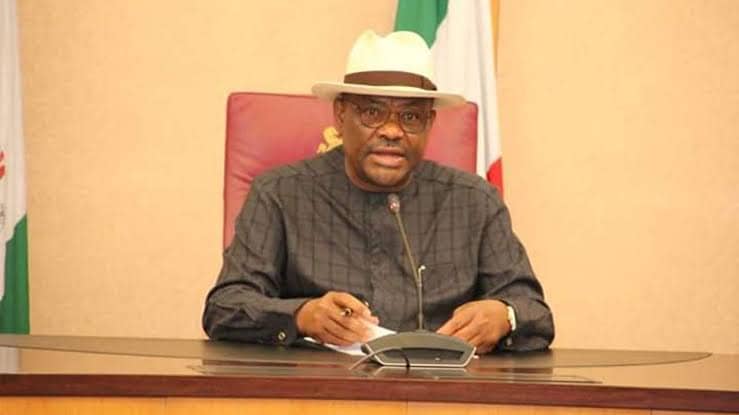
It is clear to even the most daft Nigerian that Nyesom Wike, a serving member of President Tinubu’s Federal Executive Council, is only in the PDP to sabotage it and clear the path for his benefactor, the President, come the 2027 elections. What may not, however, be clear is the extent to which Wike’s tactics and antics can undermine Nigeria’s democracy.

Whether you are APC, PDP, ADC or even politically indifferent, Wike’s actions should bother you, as long as you dream of a truly democratic Nigeria where institutions transcend whimsical meddling of the few.

From any angle, one sees a deliberate pattern that systematically seeks to dismantle the country’s main opposition party and tilts the political landscape dangerously toward one-party dominance.

The recent Federal High Court injunction, restraining the PDP from holding its planned November 15 National Convention, issued by Justice J. Omotosho, only reinforces this pattern. It aligns with a string of judicial outcomes and political manoeuvres that have consistently favoured Wike’s factional interests, all at the expense of Nigeria’s fragile democratic balance.

Between 2023 and 2025, Wike’s loyalists seized the PDP’s national secretariat at Wadata Plaza, installed their own acting chairman, and plunged the party into even deeper crisis. Earlier, he had been linked to moves to demolish the PDP headquarters in Port Harcourt and to lawsuits that derailed planned conventions.

These deliberate acts of sabotage are calculated to dismantle opposition structures and weaken the political alternatives that every democracy relies on. In Nigeria today, prominent political opposition actors are crosscarpeting from their political parties to the ruling APC, not because the APC is doing better, but to salvage their seats and realise their aspirations, which appear rather vivid with the APC.

In saner climes, inclusion of opposition figures within ruling governments is a laudable means of promoting national unity and bridging gaps. But in Nigeria’s case, Wike’s dual role, serving as a federal minister while wielding extraordinary control over an opposition party, is clearly a means of manipulation.

It blurs ethical boundaries and deprives citizens of genuine democratic alternatives.

Even more disturbing is Wike’s perceived closeness to certain segments of the judiciary- what Professor Chidi Anselm Odinkalu aptly described as a “pathological fixation.”

From 2019 to 2025, at least five major cases tied directly or indirectly to Wike’s interests have been heard before the same judge, fueling concerns of judicial clientelism —a scenario where powerful litigants can select their forums by proxy.

The danger goes far beyond politics.

If political elites can manipulate opposition parties while simultaneously bending judicial processes to their favour, then democracy becomes mere theatre. A performance that preserves power and erodes accountability.

Having said this, the National Judicial Council should randomise the assignment of politically sensitive cases and ensure that no single judge repeatedly handles matters involving the same litigants. A stronger ethical firewall must also be built between judicial officers and politically exposed persons.

Politically, Nigeria must introduce conflict-of-interest rules that bar sitting ministers or presidential appointees from exerting control over opposition parties. Democracy cannot thrive when the same hand both governs and manipulates its opposition.

Coming this far, we must accept that reform is not optional; it is existential.

Abba Hikima, Esq. wrote from Kano, Nigeria.
2027: A gale of defections, eroding opposition and quest for power

By Emeka Blaise Okpara

As the 2027 general elections draw closer, the gale of defections that has rocked the People’s Democratic Party in recent times has thrown those in the current ruling All Progressives Congress (APC) into wild ecstasy. Once the largest political party in Africa, the PDP ran out of luck in 2015 when it lost the presidency to the APC. Before then, the party held power for sixteen years. 

In fact, at the peak of the party’s stronghold in power, the national chairman, Chief Vincent Ogbulafor, boasted in 2008 that the PDP would rule Nigeria for another sixty years. Perhaps lost in the effervescent aplomb of public office, he forgot that the future cannot always be assured. His boisterous vituperation was perceived as the height of braggadocio, a trait synonymous with most Nigerian political elites. 

Many were not surprised when, a few years after this declaration was made, the party started witnessing some implosion within its ranks. The fall of the PDP was masterminded by members of the party who formed an alliance with the opposition, which eventually led to its calamitous loss in the 2015 general elections.

Sadly, the party that once reigned monstrously in Africa’s most populous black nation has become a shadow of itself. Unfortunately for the PDP, since they found themselves out of power, they have not been able to play the role of the opposition because it is not in their DNA to do so, unlike the APC, which was birthed through opposition. 

In fact, it would not be out of place to say that the APC has so mastered the art of opposition that it has even devised means of creating its own opposition within and outside the party to keep any real opposition party at bay through controlled opposition.

With the open declaration of support for Tinubu’s presidency from governors of supposed opposition parties, and the defection of notable figures like the current Governor of Delta State, Mr. Sheriff Oborevwori, and Senator Ifeanyi Okowa, the immediate past governor of Delta State and running mate to Alhaji Atiku Abubakar in the 2023 presidential elections, many in the President’s camp have picked up a trumpet to sound it to whoever cares to listen that President Tinubu is a master political strategist.

As far as those in the President’s camp are concerned, the 2027 presidential election is already in the bag, awaiting to be transported home. In their assessment and assertiveness, nobody can defeat the chief political strategist of our time in the forthcoming elections.

It would be simplistic for anybody to assume that the mere fact that opposition members are trooping into the President’s camp is enough reason to believe that he will have an easy ride into his second term – far from it! If anything, Nigerians should be worried, as such actions only indicate state capture.

Nigerians are well aware of the politics their political office holders play. With the nature of politics played in Nigeria,where stomach infrastructure and personal interest supersede national interest, this junketing shouldn’t be a surprise.  What do you expect from politicians in a land where political parties lack ideologies apart from grabbing power? 

Interestingly, these massive defections should teach Nigerians that there is obviously no difference between the APC and the PDP. These political elites only care about themselves and not the welfare of Nigerians! At a time when Nigerians’ living standards are at an all-time low due to ill-thought-out policies by the Tinubu-led administration, politicians are falling over themselves to dance owambe in the APC. 

To keen observers of the Nigerian political landscape, these mass defections to the APC are nothing short of a defense mechanism employed by the party to give the impression that it is in total control, and for the defectors – whose priority should be governing and serving the people – to have a haven when the chips are down.  Unless on paper, there is no clear evidence that this administration has performed well enough to warrant admiration from the supposed opposition,who now join them in troops.

Moreover, the only reason political elites are decamping is that Nigeria has a flawed electoral process where the votes of the electorate do not count. If the so-called independent electoral umpire, INEC, were living up to its mandate, political office holders would learn to be disciplined and understand that only performance can guarantee their election or re-election.

While those who believe that the President is a political strategist continue to bask in his political mastery, one is compelled to ask why he has not been able to apply his strategy effectively in governance. Politics, according to Plato, should be for the common good. Nigerians would love to see and benefit from President Tinubu’s acclaimed strategy. 

Political strategy should not begin and end with seizing power. Where is his strategy for overhauling the economy since he assumed the presidency? Are Nigerians better off today than they were three years ago? Why hasn’t he employed his renowned strategy to tackle the nation’s insecurity? Or has the security of lives and property ceased to be the government’s primary responsibility? Where is his plan for reliable power, and why must Nigerians pay excessively for unstable electricity? Don’t we need his strategy for quality healthcare facilities? These vital sectors urgently require his strategic attention!

It would be ludicrous for anyone to believe that the future of Nigeria is solely in the hands of the political officeholders. Whether or not anyone wants to believe it, 2027 is still a long time off. Though Nigerian politicians are always thinking of the next elections, and not how to better the lives of their citizens, they must realise that the political dynamics can change anytime. 

General Sani Abacha was almost certain of becoming a civilian president in 1996. He had convinced all the key political actors of the time to endorse his presidency, and everything was working for his good, but fate had other plans. 

The only thing that will guarantee any political office holder a re-election in a constitutional democracy like ours is performance! A second term in office is like a referendum on an individual’s first term. The power to elect still rests with the people and not with politicians, except that we are no longer a democracy. 

If President Bola Ahmed Tinubu is keen on his second term, he should up his game. If he is unaware, someone should inform the President that Nigerians are not having it easy. Instead of focusing on the 2027 reelection in 2025, he should take advantage of the remaining two years of his first term in office to show his work. PR without performance is pure propaganda!  

A working Nigeria benefits all, irrespective of religion or tribe. Nigerians are groaning under his knee-jerk policies, which have plunged a vast majority of citizens into penury. More than ever, this is when Nigerians expect to feel the impact of his much-trumpeted strategy. Nigerians want to see evidence beyond the rhetoric.

Blaise Emeka Okpara, a student at the International Institute of Journalism, writes from Abuja and can be contacted at: emyokparaoo1@gmail.com

Wike vows to lead PDP campaign in 2027, denies sabotaging party

By Abdullahi Mukhtar Algasgaini

The Minister of the Federal Capital Territory (FCT), Nyesom Wike, has declared his intention to lead the Peoples Democratic Party (PDP) campaign in the 2027 general elections. He made the statement on Monday during a media interaction in Abuja, dismissing claims that he was undermining the PDP while serving in President Bola Tinubu’s cabinet.  

“I am still in PDP. I worked hard for the party,” Wike said. “No one can question my membership because nobody has contributed more than I. I will lead the PDP campaign in Rivers in 2027.”  

Wike, a former Rivers State governor, has faced criticism from PDP members for his role in the All Progressives Congress (APC)-led government. However, he defended his actions, stating that he takes pride in making tough decisions, even if they upset powerful figures.  

“I step on the toes of big men, and it makes me happy,” he said. “If you don’t do the right thing, too bad. I don’t care.”  

On the political crisis in Rivers State, Wike denied any personal rift with Governor Siminalayi Fubara and stated that he would have opposed a state of emergency if consulted by the president.  

“I don’t have any crisis with Fubara,” he said. “If Mr. President had asked me, I wouldn’t have agreed to a state of emergency.”  

Wike’s remarks come amid growing tensions within the PDP, with his loyalty remaining a contentious issue among party members.

Is the PDP dead?

By Kabiru Danladi Lawanti, PhD

By every objective measure, the People’s Democratic Party (PDP) has ceased functioning as a viable political entity in Nigeria. Its carcass continues to move but without pulse, purpose, or coherence. As a ruling party, the PDP had its moments, but its legacy is weighed down by monumental abuses of power, systemic electoral malpractice, and industrial-scale corruption. 

From the open manipulation of election results mid-process to the weaponisation of state institutions for partisan gain, the party leadership helped normalise impunity at the highest level. Two decades on, many of these cases—alleging theft of billions—are still unresolved.

But the party’s death didn’t happen overnight. It began in 2007, when President Olusegun Obasanjo imposed a sick candidate on Nigerians, followed by Goodluck Jonathan’s directionless presidency. In 2014, a mass defection gutted its internal cohesion, when five of its governors established the new PDP to challenge what they called a lack of internal democracy within the party. 

Losing power in 2015 should have been a moment for self-correction. Instead, the PDP lost its ideological compass. It abandoned the one role opposition parties must play in democracies: the duty to provide clarity, contrast, and credible alternatives. 

Even as the All Progressives Congress (APC) drifted into policy incoherence from 2017 onward and the confusion that followed – petroleum prices increase, ASUU and other university union strikes, economic recession, open stealing never seen before in the nation’s history, fuel subsidy removal, minimum wage controversy, etc.- the PDP remained inert—leaderless, rudderless, and largely invisible.

Today, what remains of the PDP is a loosely held patchwork of political actors in retreat. Governors are defecting. Its 2023 vice-presidential candidate has walked away. State-level structures are hollowed out. Internal leadership is fractured, and there is no unifying idea or strategic doctrine to rally around. What does this tell us? The PDP is not in decline. It is defunct.

Nigeria is experiencing a vacuum of governance across federal, state, and local levels. What is needed is a credible alternative with intellectual spine, strategic clarity, and moral authority. The PDP has forfeited that opportunity. Nigerians are now confronted with two bleak options: to stick with a failing ruling party or scavenge among opportunistic startups branded with catchy acronyms and no ideological soul.

The PDP’s collapse is more than a party’s fall—it is a signal of deeper systemic decay in Nigeria’s political architecture. But in every collapse lies an opening: for principled political entrepreneurship, grounded in values, competence, and execution. Who will offer that? The people that landed us in this mess in the first place or new faces? 

We need new faces in the political arena. These people parading themselves as opposition are no different from the PDP or APC; they are the same. Our youth need to return to their senses, and most people we see in leadership positions started showing their ability to lead in their early 20s. We must step forward if we want to see a Nigeria of our dreams. The time for lamentations is over.

The future belongs to those who can build systems, not just win elections.

The fall of the mighty

By Bilyamin Abdulmumin, PhD

When the PDP began its first tenure in 1999, there was a level of humility and fairness. But it was in their second tenure that their invincibility began to take shape.

As a former military Head of State, Olusegun Obasanjo did not help matters. For the second time in Nigeria’s history, he declared a state of emergency in Ekiti and Plateau and threatened several other states. During this period, the legislature was allegedly weaponized for political control, and allegations extended even to the Economic and Financial Crimes Commission (EFCC), a respected anti-graft agency. 

Arguably, the PDP reached its zenith in 2007 and became so confident that it could “do and undo. ” The opposition could no longer hold any chance; instead, they covertly or overtly carried out the bidding of the powerful PDP. This exuberance and excesses of the then-ruling party culminated in a ditch for democracy: reports indicated that the 2007 presidential election results were declared while the collation was still ongoing. 

In 2011, Goodluck Jonathan’s administration continued its escapade. Allegations of corruption and mismanagement ran rampant, and the PDP became a haven for anyone singing its praises. This perception was palpable, and the public echoed that anything labelled ‘dubious’ came from the party. 

Complacency eventually led them to boldly declare that the party would remain in power for sixty years. Instead of sixty, the PDP barely added another six years. Even the former party chairman, who initiated the sixty-year maxim, considered leaving the party in 2015. 

Never mind the masses’ outrage, founding fathers decrying maltreatment, and bigwigs, including governors, decamping to the opposition. PDP could not see the handwriting; they thought it would be normal. 

The death of the PDP would be slow, with several deep cuts. One of them was shunning them by decamping opposition. Shehu Sani, Nasir El-Rufa’i, Rabiu Musa Kwankwaso, and Peter Obi should all naturally have considered the PDP as an alternative. 

Another blow to the slowly fading party is an internal crisis. One crisis after another continues to shake the once-indomitable party, providing those looking to defect a compelling reason to change sides. 

Perhaps the deepest cut was Nyesom Wike’s presence, who actively undermined the party from within. As Minister of the Federal Capital Territory, Wike not only revoked the PDP land title of the new secretariat but allegedly facilitated a Supreme Court victory for his ally, Mr Samuel Anyanwu, against the current party secretary.

History is replete with the downfall of the mighties. Leaders, nations, and brands often reach a status where they seem invincible, only to succumb to the very excesses that caused their rise.

Wike revokes PDP’s new secretariat land over unpaid dues

By Uzair Adam 

The Minister of the Federal Capital Territory (FCT), Nyesom Wike, has revoked the land allocated for the new National Secretariat of the Peoples Democratic Party (PDP) in Abuja’s Central Business District.  

The Daily Reality reports that the 12-story building, which has remained uncompleted for two decades, was initially estimated to cost N16 billion when construction began in 2008. 

Despite raising over N62 billion through fundraisers and electoral activities, the project remains unfinished.  

A letter confirming the revocation, signed by the Director of Land Administration, Chijoke Nwankwoeze, on behalf of the minister, was addressed to the PDP National Chairman. 

Dated March 13, 2025, the letter cited the party’s failure to pay annual ground rents for 20 years—spanning from January 1, 2006, to January 1, 2025—as the reason for the decision.  

The letter referenced several public notices issued by the FCT Administration since 2023, urging allottees to clear outstanding dues on their properties. 

It also cited Section 28, Subsection 5 (a) and (b) of the Land Use Act, which grants the government the authority to revoke land over breaches of the terms of occupancy.  

With the revocation now in effect, the land has reverted to the FCT Administration, which plans to take immediate possession. As of the time of filing this report, PDP had yet to issue an official response.

PDP dismisses Zamfara governorship aspirant over anti-party activities


 By Muhammadu Sabiu 
 
Ibrahim Shehu, a Peoples Democratic Party (PDP) candidate for governor of Zamfara State, was expelled from the party for allegedly engaging in anti-PDP conduct.
 
Shehu was expelled due to anti-party activities that violated Article 58(1)(a), (b), and (c) of the PDP’s 2017 amended constitution, according to the expulsion letter signed by Hon. Aliyu Hassan, the party’s secretary in Mayana Ward.
 
According to the letter, the party’s Mayana Ward Working Committee made the decision, which would take effect in January 2023.
 
Recall that Ibrahim Shehu was twice in charge of having the party’s governorship primary election annulled.
 
Ibrahim Shehu, who served as a representative in the Federal House from 2011 to 2015, didn’t comment about it yet.
 
The state chapter of the party, meanwhile, claimed to be unaware of the development, noting that it had not been officially alerted by the ward and that any complaints made against Shehu would be thoroughly probed before any action was taken.

Tinubu, other politicians eyeing me – Wike

By Uzair Adam Imam

Governor Nyesom Wike of Rivers State said that the All Progressive Congress’s (APC) Presidential Candidate, Asiwaju Bola Tinubu, has offered him a senatorial slot.

Wike also stated that other politicians from other party, including the Labour Party, are requesting for his support ahead the 2023 general elections.

Tinubu and Wike reportedly met in London last month amidst the political crisis storming the opposition party these days.

However, Wike did not accept the invitation by Tinubu to dump PDP and join the ruling party, APC.

Wike was qouted to have said, “When Tinubu offered me senate slot, I didn’t go for it. If I want power or want to be in power, I would have gone ahead to take the senatorial ticket. But I said no. That is a man who believes in equity, fairness, and justice.”

He added that, “Aside from Tinubu, who is from the APC, other political parties are talking to me as well including Labour Party because they all know my worth and how I can ensure that they win the 2023 poll.

“But I have not accepted any of the offers presented by those parties,” Wike stated.

Can Atiku crack the Wike’s puzzle? (I)

By Tordue Simon Targema

The Rivers State Governor, Ezenwo Nyesom Wike’s puzzle is proving extremely difficult to crack by the presidential flag bearer of the People’s Democratic Party (PDP), His Excellency Alhaji Atiku Abubakar.

Like the proverbial lizard on the edge of the water jar, Wike has proven to be Atiku’s biggest dilemma in his current presidential bid. The options before him are weighty: to ignore Wike and put up with the consequences given the latter’s influence in the leading opposition party and seaming control over the party’s structure especially in the South-South geopolitical zone; or give in to his weighty concessions as an act of either compromise or cowardice and subjugation to the whims and ego of an emerging emperor in the party’s fold.

These are certainly weighty options, serious enough to cost an ambitious aspirant- desirous of occupying Nigeria’s topmost seat as a crowning moment of his age-long political career- his precious sleep.

As events in the aftermath of the party’s presidential primaries continue to unfold, Wike has emerged the most sought-after political bride in Nigeria. Just last month, he was entangled in a series of meetings in London with the three topmost aspirants- Bola Ahmad Tinubu of the All Progressives Congress (APC), Peter Obi of the Labour Party (LP) and his arch political rival, Atiku Abubakar of the PDP who is at the centre of the whole palaver.

The meetings were graced by household names in Nigeria’s political arena such as former President Olusegun Obasanjo, incumbent governors and several other political stakeholders. Prior to these marathon meetings in London, his Port-Harcourt residence had suddenly turned to a venue of political pilgrimage by Nigerian presidential hopefuls and their emissaries.

Apparently, Wike’s grudge seem like one massaging his personal ego after suffering a resounding defeat in a keenly contested jostle for the main opposition party’s flag. This explains why he has not hidden his rift with the party’s National Chairman, Senator Iorchia Ayu.

A day after the primary election, when Wike was busy nursing the agonizing wounds of the defeat, Ayu was caught on camera- flanked by His Excellency Atiku Abubakar- showering praises on Governor Aminu Waziri Tambuwal of Sokoto State as the “hero of the convention”. Of course, Tambuwal’s abrupt withdrawal at the last minute in support of Atiku was, no doubt, influential to the latter’s victory; a move that Wike interpreted as a well-orchestrated conspiracy, laced with ethno-regional bigotry to edge him out of the race and scuttle his ambition of occupying the country’s top seat.

From that moment, he made his instant decision- and publicly so- that Ayu must go as the preeminent condition for peace to reign in the party. However, subsequent developments have further deepened the crisis in the party and made it messier for the party in general, and Atiku Abubakar in particular, to handle.

For instance, having lost the flag, one would have expected that as the first runner up, Atiku would compensate Wike with the vice presidential slot to run a joint ticket, or at least, give him the benefit to nominate a protégée to run as a move towards reconciliation.

Incidentally, having won the ticket from the North, the vice presidential slot automatically was expected to come from the South, and as the leading figure of the party in the region, all eyes were on Wike for the vice presidential slot. Atiku’s snubbing of Wike for the Delta State Governor, Ifeanyi Okowa is clearly understood by many political analysts.

Everyone would prefer a calm, cooperative and more introverted vice to a lousy, boisterous, loquacious, egoistic and power-drunk demigod who is so full of himself and intoxicated with self-invested powers and a sense of relevance that defies all principles of logic. Yes, this is my personal opinion about the person of Governor Wike, but I am sure many would share the same opinion about him, and it is likely the foremost reason why His Excellency, Atiku Abubakar snubbed him without a second thought to the damning consequences to his campaign.

Yes, Wike would have been a difficult candidate to sell especially in the Northern region where his controversial position on states control of the Value Added Tax (VAT) that Rivers State has the lion share, restructuring and other controversial national issues lurking the Nigerian federation leave him with more enemies than friends.

Yet, others dislike him for being excessively assertive and domineering, dictatorial in his approach to handling complicated political situations and crude in his dealings with delicate political matters without minding hurting sensitivities and stepping on toes. All these understandably culminated into Atiku’s eventual preference of Okowa, who is more subtle- if one is careful of using diplomatic- in his political approach as a co-flag bearer.

But having made his choice- barring all consequences, the effects are right here with him, and have, at the moment, overwhelmed the leading opposition party. How best His Excellency Atiku Abubakar and his party navigate the challenges confronting it and form a formidable all-inclusive campaign team remains to be seen, as efforts to woo Wike and his allies back to the fold have always hit brick walls.

Already, the presidential campaign team is set with Governor Emmanuel Udom of Akwa Ibom State- Wike’s neighbour- as the Chairman and Governor Tambuwal of Sokoto State as the Director General. Key members of the Wike’s camp such as governors Seyi Makinde of Oyo State, Samuel Ortom of Benue State, Okezie Ikpeazu of Abia State and Wike himself are sandwiched in the list as members, with the exception of Makinde who is named the Vice Chairman (South).

The big question to ask at this point is: will these governors throw their weight behind the campaign as they should, given the prevailing state of affairs? Perhaps, some historical illusions would be in order to put things into perspective. One is tempted to infer that the complications that confront the PDP at the moment are capable of repeating the ugly 2015 nightmare.

Yes, Wike is a force to reckon with. It is to his credit that he sustained the PDP in states where it was nose-diving to oblivion. His macho in odd-hour elections such as Edo, Osun and Anambra among a host of other states confer on him, the prestige in the party that is second to none among his fellow governors. It is no wonder that they rally around him in his moment of great travails.

To be continued

Tordue Simon Targema writes from the Department of Journalism and Media Studies, Taraba State University, Jalingo. Email: torduesimon@gmail.com

Zamfara PDP reacts to court’s decision that nullifies state gubernatorial primaries

By Uzair Adam Imam

The Zamfara State Peoples Democratic Party (PDP) has reacted to the Federal High Court decision that nullified the state gubernatorial primary election, which produced Alh. Dauda Lawal as its flag bearer in the forthcoming general election.

The Daily Reality reported Friday that the court, preceded by Justice Aminu, has invalidated the PDP’s primary election and ordered that a fresh primary election must be conducted to ensure just and fairness.

Alh. Ibrahim Shehu Gusau, a former federal lawmaker, who contested against Dare in the primary election, took the case to the court seeking justice, adding that there had been many irregularities in the election.

However, reacting in a statement by the state it secretary, Faruk Ahmad, the party said we “wish to acknowledge the Federal High Court Gusau Judgement which ruled that, the Primary election conducted by our noble party is null and ordered for fresh primaries.

“We in the PDP are known to be law-abiding and grassroots politicians who respect and believe in the supremacy of law and the constitution of the Federal Republic of Nigeria and that of our party as well as the guidelines enshrined to guide us in the party affairs.

“As defendant in suit failed by some of our aggrieved members concerning the Governorship primary election which produced Dr Dauda Lawal as the flag bearer of the PDP in Zamfara State, we received the court’s decision in good faith, and a team of our lawyers are studying the judgment with a view to coming up with the next line of action within the ambit of the law.

“The PDP in Zamfara state did well in conducting the primary election in a well manner for fairness and justice, but the Federal High Court, Gusau, after intense debates, ruled against our party and other defendants in the suit.

“Meanwhile, we remain committed and determined to reclaim Zamfara State and bring it back to life and make it work again for the betterment of our people who are now living under abject tension, restlessness, fairness, hunger and other atrocities. We shall (Insha Allah) cross these hurdles and ensure the solid unity of our members.

“Our decision as regards the judgment will be made available after our lawyers conclude the study of the judgment and present to us their recommendations which the PDP leadership will decide on.

“We are therefore calling on our members to be calm and remind resolute in ensuring the success of the PDP in Zamfara State and county in General. We employ you to continue giving support and cooperation to party leaders at all levels,” the statement added.