PDP

Plateau Governor Mutfwang defects from PDP

By Ibrahim Yunusa

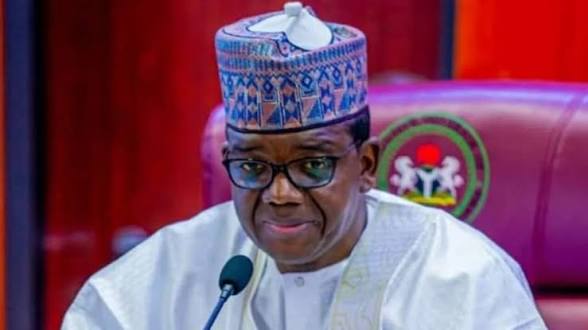
Plateau State Governor, Caleb Mutfwang, has officially resigned from the Peoples Democratic Party (PDP), citing the need for purposeful leadership, clarity of direction, and improved service delivery.

In a letter dated December 29, addressed to the Chairman of the PDP in Ampang West Ward, Mangu Local Government Area, Governor Mutfwang expressed that the current political reality necessitated a shift in platform.

He wrote: “Given the realities of the moment and guided by my commitment to purposeful leadership, clarity of direction, and service delivery, I am compelled to seek an alternative political platform.”

Rumours of the governor’s potential defection had been circulated, with reports suggesting he had been in talks with the ruling, All Progressives Congress (APC).

His official exit from the PDP appears to confirm those earlier speculations.

PDP faults Tinubu administration over handling of U.S. strikes in Northwest Nigeria

By Sabiu Abdullahi

The Peoples Democratic Party (PDP) has criticised the Federal Government over what it described as poor public communication surrounding reported United States military strikes against terrorists in parts of northwest Nigeria.

The opposition party urged the Tinubu administration to adopt a more proactive and transparent method of addressing sensitive national security matters.

Reports had earlier emerged that on Christmas Day, December 25, 2025, former United States President Donald Trump announced that American forces carried out what he called “numerous precise strikes” against terrorist elements in northwest Nigeria. He claimed that the targets were militants responsible for attacks on Christians in the region.

Trump stated that the operation took place under his authority as Commander-in-Chief. He said the strikes focused on ISIS-linked fighters who have operated for years in areas affected by violence and insecurity.

According to him, the militants had been “viciously killing, primarily innocent Christians, at levels not seen for many years, and even centuries.” He also said he had earlier warned the groups to halt the killings or face consequences.

The Nigerian government later acknowledged that strikes had taken place in parts of northern Nigeria through the Minister of Foreign Affairs. Authorities, however, did not disclose details about the operation or clarify the level of Nigeria’s involvement.

In a statement issued on Friday, December 26, 2025, by its National Publicity Secretary, Comrade Ini Ememobong, the PDP said Nigerians first became aware of the reported operation through verified social media accounts linked to Trump and other American officials. The party said this happened long before any formal reaction came from Nigerian authorities.

The party noted that the Ministry of Foreign Affairs only released what it described as a “vague statement” several hours later. The statement, according to the PDP, merely offered passive confirmation that Nigeria was aware of and cooperated in the operation.

“While international cooperation in the fight against high crimes like terrorism is very much appreciated, the Peoples Democratic Party is deeply concerned about a communication structure where foreign powers break the news of security operations in our country before our government does,” the statement read.

The PDP warned that such an “inverted communication approach” does not protect the interests of Nigeria or its citizens. The party referred to reports that the United States military had in the past entered Nigerian territory and carried out operations without the prior consent or knowledge of Nigerian authorities.

The opposition party said the Federal Government ought to have taken the lead in informing the public about the operation. It added that such an approach would have helped in properly sensitising Nigerians instead of waiting to confirm information that was already circulating widely.

“The government should not be in a position of merely reacting to foreign announcements on security operations within its territory, unless it was taken unawares like the rest of the citizens,” the party stated.

PDP crisis: INEC explains decision to convene feuding factions

By Sabiu Abdullahi

The Independent National Electoral Commission, INEC, has explained why it invited the two rival factions of the Peoples Democratic Party, PDP, to a meeting amid the leadership dispute within the party.

The Commission stepped into the internal crisis after summoning representatives of both camps to its national headquarters in Abuja on Friday. The intervention followed growing tension within the opposition party.

INEC Chairman, Prof. Joash Amupitan, said the decision became necessary after the electoral body received contradictory letters from the factions involved in the dispute. He noted that the conflicting communications made it important for the Commission to hear directly from all sides.

According to Amupitan, the meeting was intended to provide a platform for dialogue and clarity ahead of future electoral activities.

“We felt that by rubbing minds together, it’ll be a good opportunity for us to forge the way forward concerning the elections,” Amupitan said.

He also stressed that INEC remains guided strictly by existing laws in carrying out its duties.

“Actually, INEC sits on the tripod of three legal regimes, the Constitution, the Electoral Act and the regulations that have been made,” he said.

Amupitan further assured that the Commission would act within the limits of the law in addressing the situation.

“So we are determined to ensure that we follow the provisions of the various laws, the Constitution, and the regulations that we have made.”

The PDP has been grappling with internal disagreements, which have raised concerns about its preparedness for forthcoming elections. INEC’s move is seen as an effort to ensure order and compliance with electoral regulations as political activities intensify nationwide.

Gov Lawal sets terms for APC defection, targets ministerial change

By Uzair Adam

The governor of Zamfara State has intensified efforts to secure major political concessions from the federal government as part of conditions for his planned defection to the All Progressives Congress (APC).

Sources familiar with the development said the governor is seeking full control of the APC structure in Zamfara ahead of his anticipated move from the Peoples Democratic Party (PDP) to the ruling party.

He was said to have held a strategic meeting with President Bola Tinubu in Paris, France, alongside the governors of Enugu and Taraba states.

At the meeting, he reportedly expressed willingness to join the APC if his demands were met.

The Paris meeting, held months ago at the Peninsula Hotel, was described as a turning point, prompting the governor to return home and tighten his conditions for defection.

Insiders alleged that he has consistently pressed the Presidency to remove the Minister of State for Defence, Bello Matawalle, and hand over the APC structure in Zamfara to him as part of the deal.

The resignation of Mohammed Badaru as Minister of Defence was said to have renewed the governor’s push, with reports suggesting he urged the Presidency to act swiftly in easing Matawalle out of the cabinet.

Political analysts say the governor’s demands reflect his desire to secure full influence within the APC if he eventually joins the party.

There are also claims that the governor is receiving backing from certain security quarters to facilitate reports capable of weakening Matawalle’s standing in government.

Sources alleged that once the minister is removed, the governor plans to mobilise his PDP structure and loyalists into the APC to consolidate power ahead of the 2027 elections.

Observers note that the governor sees Matawalle as a major obstacle to his political ambition, especially within the northwest.

Matawalle has recently gained recognition for key security interventions, including the rescue of abducted students in Kebbi and efforts to restore peace in parts of Sokoto and Zamfara.

The unfolding power struggle now signals a potentially significant realignment in Zamfara and the wider northwest as both figures compete for control, influence, and relevance ahead of future elections.

PDP faction expels Makinde, two other governors in major purge

By Abdullahi Mukhtar Algasgaini

A faction of the Peoples Democratic Party (PDP) National Executive Committee (NEC), led by the Minister of the Federal Capital Territory, Nyesom Wike, has taken drastic disciplinary actions against several high-profile members.

At its 103rd NEC meeting held at the party’s national secretariat in Abuja, the faction announced the expulsion of Oyo State Governor, Seyi Makinde; Bauchi State Governor, Bala Mohammed; and Zamfara State Governor, Dauda Lawal.

Prominent chieftain, Chief Bode George, was also expelled.Furthermore, the committee ratified the suspension of several other leaders, including former Board of Trustees Chairman, Senator Adolphus Wabara; Senator Kabiru Tanimu Turaki; and the Deputy National Chairman (South), Ambassador Taofeek Arapaja.

In a sweeping move, the NEC also ratified the dissolution of the State Executive Councils in Bauchi, Oyo, Zamfara, Yobe, Lagos, Edo, and Ekiti States.

Presenting the memo for the expulsion, the Acting National Chairman of the PDP, Alhaji Mohammed Abdulrahman, stated that the action was a consequence of the affected members’ disregard for court judgements.

He argued that their actions had brought the party into disrepute.These decisions mark a significant escalation in the internal crisis rocking the main opposition party.

Gunfire disrupts activities at PDP national secretariat

By Anas Abbas

Heavy tension gripped the Peoples Democratic Party (PDP) headquarters in Abuja today, after gunshots reportedly rang out as rival factions attempted to stage simultaneous meetings.

According to reports, an eyewitness says the incident occurred at the party’s Wadata Plaza secretariat, where competing groups are vying for control of the National Working Committee.

The shots triggered panic and prompted a security response, although the exact number of persons involved remains unclear.

At the moment, there has been no official confirmation of fatalities or injuries. The situation remains fluid as party operatives and security agencies assess what led to the outbreak of violence.

This escalation underscores lingering fractures within the PDP, following recent reports of parallel leadership claims and protests at the same venue.

As of now, neither the party’s national leadership nor the relevant security authorities have issued a comprehensive statement on the gunfire incident.

Taraba Speaker, 15 house members dump PDP for APC

By Anas Abbas

The Speaker of the Taraba State House of Assembly, Rt. Hon. John Kizito Bonzena, has officially dumped the Peoples Democratic Party (PDP) and joined the All Progressives Congress (APC).

Alongside him, 15 other PDP lawmakers.The 15 lawmakers announced the defection in a submitted letters of defection, according to a statement by the Speaker.

The defectors include high-ranking figures such as Deputy Speaker Hamman Adama Abdullai (Bali 2), Majority Leader Jethro Yakubu, Wukari 1.

However, and othe representatives from key constituencies: Tafarki Eneme (Kurmi), Akila Nuhu (Lau), Musa Chul (Gassol 1), Josiah Yaro (Wukari 2), Tanko Yusuf (Takum 1), Veronica Alhassan (Bali 1), Anas Shuaibu (Karim Lamido 2), Nelson Len (Nguroje), Umar Adamu (Jalingo 1), Joseph Kassong (Yorro), John Lamba (Takum 2), Happy Shonruba (Ardo-Kola), and Zakari Sanusi (Ibi).

Bonzena noted that the decision was not personal but driven by what they believe is in the collective interest of Taraba State.

“Our people should not misinterpret this decision … It is for the interest of the state,” he said.

With the mass defection, the Speaker announced that all 24 members of the House of Assembly are now APC members, effectively eliminating the minority party presence in the chamber.

Welcoming them, former Speaker Peter Diah, now with the APC, described the move as a hopeful new beginning for Taraba.

Bonzena, for his part, expressed his optimism that the shift would mark a fresh era for the state, aligning with the vision of President Bola Tinubu.

PDP Convention: Court orders party to sell chairmanship form, screen Sule Lamido‎‎

By Ibrahim Yunusa

One day before the elective convention of People’s Democratic Party, PDP, a Federal High Court in Abuja ordered the party to stop it is planned convention preparations and sell the form of the chairman to the former governor of Jigawa state, Alhaji Sule Lamido, and screen him.‎‎

The seating was presided by Justice Peter Life by 2:12 pm and the judgement added that the tomorrow’s convention of the party will be null and voided if the party failed to adhere with the court judgement and the judge asked INEC to distance itself with the convention.

‎‎Sule Lamido who is a former governor of Jigawa and former minister of Foreign Affairs during Obasanjo’s democratic regime and one of the founding fathers of the party has disagreed with the consensus of Northwest Caucus of the party under Zamfara state governor, Lawal Dare in which the caucus unanimously agreed that Tanimu Turaki is the consensus candidate of the chairman of the party that is zoned to northwest, the agreement that resulted in denying to sell the chairmanship form to Lamido.‎‎

Wike: The deepening threat to Nigeria’s democratic landscape

By Abba Hikima

It is clear to even the most daft Nigerian that Nyesom Wike, a serving member of President Tinubu’s Federal Executive Council, is only in the PDP to sabotage it and clear the path for his benefactor, the President, come the 2027 elections. What may not, however, be clear is the extent to which Wike’s tactics and antics can undermine Nigeria’s democracy.

Whether you are APC, PDP, ADC or even politically indifferent, Wike’s actions should bother you, as long as you dream of a truly democratic Nigeria where institutions transcend whimsical meddling of the few.

From any angle, one sees a deliberate pattern that systematically seeks to dismantle the country’s main opposition party and tilts the political landscape dangerously toward one-party dominance.

The recent Federal High Court injunction, restraining the PDP from holding its planned November 15 National Convention, issued by Justice J. Omotosho, only reinforces this pattern. It aligns with a string of judicial outcomes and political manoeuvres that have consistently favoured Wike’s factional interests, all at the expense of Nigeria’s fragile democratic balance.

Between 2023 and 2025, Wike’s loyalists seized the PDP’s national secretariat at Wadata Plaza, installed their own acting chairman, and plunged the party into even deeper crisis. Earlier, he had been linked to moves to demolish the PDP headquarters in Port Harcourt and to lawsuits that derailed planned conventions.

These deliberate acts of sabotage are calculated to dismantle opposition structures and weaken the political alternatives that every democracy relies on. In Nigeria today, prominent political opposition actors are crosscarpeting from their political parties to the ruling APC, not because the APC is doing better, but to salvage their seats and realise their aspirations, which appear rather vivid with the APC.

In saner climes, inclusion of opposition figures within ruling governments is a laudable means of promoting national unity and bridging gaps. But in Nigeria’s case, Wike’s dual role, serving as a federal minister while wielding extraordinary control over an opposition party, is clearly a means of manipulation.

It blurs ethical boundaries and deprives citizens of genuine democratic alternatives.

Even more disturbing is Wike’s perceived closeness to certain segments of the judiciary- what Professor Chidi Anselm Odinkalu aptly described as a “pathological fixation.”

From 2019 to 2025, at least five major cases tied directly or indirectly to Wike’s interests have been heard before the same judge, fueling concerns of judicial clientelism —a scenario where powerful litigants can select their forums by proxy.

The danger goes far beyond politics.

If political elites can manipulate opposition parties while simultaneously bending judicial processes to their favour, then democracy becomes mere theatre. A performance that preserves power and erodes accountability.

Having said this, the National Judicial Council should randomise the assignment of politically sensitive cases and ensure that no single judge repeatedly handles matters involving the same litigants. A stronger ethical firewall must also be built between judicial officers and politically exposed persons.

Politically, Nigeria must introduce conflict-of-interest rules that bar sitting ministers or presidential appointees from exerting control over opposition parties. Democracy cannot thrive when the same hand both governs and manipulates its opposition.

Coming this far, we must accept that reform is not optional; it is existential.

Abba Hikima, Esq. wrote from Kano, Nigeria.

The political identity crisis in a “horse” race for power

By Abdulrahman M. Abu-Yaman 

The title race is between two horses and a little horse that needs milk and needs to learn how to jump. –  Jose Mourinho

When the controversial Jose Mourinho made this statement above, it was about football and the race to the Premier League title in 2014, but we never knew a time would come when it would be more suitable to fit into the Nigerian political context as it relates to the switch and frequent change of allegiance from one political party to another.

THE FIRST HORSE

The first horse, being the All Progressives Congress (APC), is the current defending champion in political power and the acclaimed favourite to retain the presidential title going into 2027, based on the power and influence that come with being an incumbent leader in Nigeria. Only once has it occurred since the fourth republic that an incumbent was defeated, and even that took what some have tagged as a miracle when President Jonathan made the famous call to the late former President Muhammadu Buhari (of blessed memory) and conceded. 

This horse has taken on different forms over the years and has been given various names by the political power brokers who have bet on it to win. Part of its defunct origin was the All Nigeria Peoples Party (ANPP), formed in 1998, a year before the fourth republic general elections. However, its popularity was quite limited to the northern part of Nigeria, not as pronounced in other regions of the country. Former President Muhammadu Buhari had contested twice and lost under the ANPP in 2003 and 2007, respectively.

Another major segment of its primordial origins emerged from the Action Congress of Nigeria (ACN), which was formed in 2006. It was formerly known as the Action Congress, which in turn was formed from the merger of its factions with minor political parties, including the Alliance for Democracy (AD), the Justice Party (JP), and the Advanced Congress of Democrats (ACD), among others.

Then came the Congress for Progressive Change (CPC), founded in 2009. It gained significant influence due to the impact of late Muhammadu Buhari and his millions of supporters in the northern part of Nigeria, who contested under the party’s platform in the 2011 elections. 

In 2013, the progressives and congresses in some major political parties with these words present in their acronym merged into one; the Action Congress of Nigeria, Congress for Progressive Change (CPC), a faction of the All Progressive Grand Alliance and finally, the All Nigeria Peoples Party (ANPP) to form the All Progressives Congress (APC) – the most formidable opposition group as a party in Nigeria since the return to democracy in 1999 to unseat any incumbent President in power.

THE SECOND HORSE(S)

The second horse(s) in the race are obviously divided and sharing that position based on recent trajectories and events that had left one of the horses deemed as second favourite to crumble and hanging on a thin thread; speaking of the Peoples’ Democratic Party (PDP), as long as it still has time to regroup and put its house in order, it cannot be ruled out of the race based on its political structure long established that cuts across all states in Nigeria.

The PDP was formed in 1998, in the twilight leading up to the 1999 general elections, by a group of political bigwigs who adopted Chief Olusegun Obasanjo, a former military head of state and a prisoner released from the dungeon after the end of the Abacha era. Obasanjo, coming from the south-west region of the country, was seen by many as the best candidate to step into what would have been Chief MKO Abiola’s rightful position as winner of the annulled June 12 elections if he had lived up to 1999 but for his sad and shocking demise in 1998.

The PDP won the 1999 election by a majority of votes and held a majority of seats in the National Assembly. In 2003, the party continued to dominate the political space in Nigeria, growing in influence and power, albeit under some questionable electioneering processes in 2003, 2007 and 2011, respectively, having spent sixteen years in power as the ruling party. During that period, it became the largest party not only in Nigeria but also on the African continent.

However, unfortunately for the PDP, their dream of achieving the milestone of twenty years in power was cut short in 2015 when the APC, a new, formidable force energised and regrouped, ran them out of control. 

Since then, the PDP has contested twice as an opposition party and lost to the APC in 2019 and 2023, but edged them out in 2015. The PDP has also had to lose some of its members who have decamped to the APC and has since struggled to remain as firm and relevant as it once was. The only reason it occupies the second spot as a favourite is its longevity, structural base, and the influence of some stakeholders behind the corridors of power, who are still salvaging what is left to stand firm.

Moving away from the PDP, the other second favourite only came to fruition and gained traction a few months ago, orchestrated by one man, Mal. Nasir El-Rufai, who initiated the movement that led to the formation of a coalition that later evolved into the political party rebranded as the African Democratic Congress (ADC). The party had been in existence before its formation in 2005 as the Alliance for Democratic Change. 

The formation of the ADC elicited mixed reactions in the Nigerian political space. While some saw it as the long-awaited vibrant opposition to challenge the incumbent party in power, others viewed it as a selfish endeavour created by those who had been bruised and pushed out of the epicentre of power, seeking to make a comeback by any means necessary. This notion was proven to be more relevant when the ADC reached out to past or aggrieved members of the APC and PDP to form part of its board and core membership from the official flag-off. 

Nevertheless, it is still considered the second favourite in the race because if history is anything to go by, just as in the words of Jesse Jackson: 

“In politics, an organised minority is a political majority”

Just as in the case of the APC, which was formed two years short of the 2015 elections and later emerged as the winner, the regrouped ADC party and its influx of new members can’t be underestimated.  

Another reason the ADC could be frontrunners could be their ability to capitalise on the harsh economic realities in the country that have affected the masses and present the party as an alternative to better their welfare, just as the same members of the ADC did way back in 2015 when they were members of the APC, which they now want to substitute out of power. 

THE LITTLE HORSE IN THE RACE

The little horse that needs milk to learn how to jump is the Labour Party (LP). It was also driven and triggered to relevance in the 2023 general elections due to the influence of one man, specifically Peter Obi, who was spoken of as the party’s flag bearer. The LP not only defeated the APC in their own stronghold in Lagos but also defeated the ruling party in the Federal Capital Territory, Nigeria’s capital and centre of governance. It was unprecedented and sent a clear message that the LP did not just come to make up the numbers like some minority parties. 

But be that as it may, their numbers in Lagos and Abuja, coupled with the ones from the east and the Niger Delta region, were not enough to put them in second position in the race. This is why it needs to spread its wings to cover all political nooks and crannies in other regions, especially northern Nigeria, where it is yet to get a solid grip.

The recent involvement of Peter Obi with the ADC could lead to a compromise and weaken the party’s strength, as it revolves around him. One of the LP’s former spokesmen also lamented him for not doing enough as a leader and his inability to resolve the party’s internal crisis. He also raised concerns about his failure to build a strong party base to secure the mandate. 

Still, the only reason the LP is coming in third in the horse race is because of the unexpected stunt it pulled and its potential to do more if, and only if, it can capitalise on its momentum to leap ahead like other horses in the race.

THE EXODUS AND CONVENIENT SWITCH BETWEEN PARTIES 

Nigerian politics and politicians tend to switch sides to any political party that offers them a higher chance of winning. It occurred in 1999, when the PDP was formed and founded by members of various political parties. 

In 2003, as the PDP grew in strength and power, it received more members, and others had to decamp from their prior political platforms to join it. It was beginning to look like the only way to win an election was to join the party that was already winning. 

2007 and 2011 were no different as the PDP retained power in government. However, the only parties that managed to maintain some of their strongest and most popular members were the ANPP in 2003/2007, and the CPC in the 2011 general elections, when they fielded Muhammadu Buhari as their presidential candidate in the respective years.

In the buildup to the 2015 election, a massive exodus of politicians decamped from the ‘umbrella’ that had sheltered them in political office to the newly formed APC, which was gaining immense popularity, especially in the northern and western parts of Nigeria. The presidential flag bearer was a familiar figure who was contesting for the fourth and possibly his last attempt, having been persuaded to do so. The APC, like the PDP in the past, also welcomed all members from other parties, irrespective of their past reputation or allegations while in office. In the end, the party grew from being the strongest opposition to becoming the favourite to win the election, which they eventually did.

LOST OF POLITICAL IDEOLOGIES/IDENTITIES

When we start seeing political players decamping at will, it is time to question whether any of the political parties place a high premium on their criteria for membership in relation to their ideologies before accepting any candidate into their fold. Do politicians care any less if the party they join aligns with their manifestos and visionary blueprint for good governance and leadership?

It is beginning to look like a game of chess, with calculated moves aimed at checkmating the ultimate power in the political positions they crave. The only pawns in this game are the masses who have yet to figure out that changing their clothes to another has nothing to do with the real person behind those clothes. A stained reputation, especially in previous leadership positions, coupled with a proven track record of underperformance and incompetence, cannot be covered by new political platforms.

However, the interesting aspect of all this is the emergence of a solid opposition to keep the ruling parties on their toes. Previously, with the decline and crisis in the PDP, Nigeria was moving towards a single-party state due to the frequent switch of its members to joining the APC. It is well timed that the LED coalition, which has resolved to adopt the ADC as its political platform, includes big names like former Vice President Atiku Abubakar, who is also a former PDP presidential aspirant. Peter Obi, the Labour Party’s presidential candidate, has also been seen and involved in some of their meetings. And for the first time since the APC’s ascension to power, they seem concerned about the growing popularity of the ADC and the threat it may pose to their hold on power. Deja vu?

Conclusively, all the parties involved in the horse race have exhibited similar symptoms of identity and ideological crisis in their consistent switch of allegiance to suit their needs. The thin line between them is getting blurrier in their actions and adoptions. Everyone is welcome to any party at any time. No litmus test, exceptional integrity, or individual evaluation criteria needed. Once you are in, all sins are forgiven, and then you are baptised as a new member. 

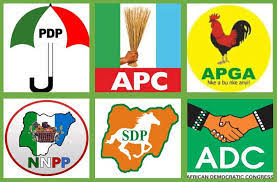
The ADC is not only like the APC alphabetically, but also in the content of its members and its contextual existence. The primary concern here is whether some members of the ADC could potentially break away from the party in the future, particularly in the event of any unresolved disagreement or fallout within the party. Are we to brace ourselves for another hypothetical ‘ABC’ party if it comes to that? Time is the ultimate revealer.