Palliatives

Palliatives are not solutions for hardship: The bitter truth

By Rabiu Musa

The removal of fuel subsidy has become increasingly problematic for the masses. The declaration was made by Bola Ahmad Tinubu on 29 May 2023, during the inaugural speech as Nigerian president.

On the occasion, the president said, “We commend the decision of the outgoing administration in phasing out the petrol subsidy regime, which has increasingly favoured the rich more than the poor. Subsidy can no longer justify its ever-increasing costs in the wake of drying resources. We shall instead re-channel the funds into better investment in public infrastructure, education, health care and jobs that will materially improve the lives of millions.”

As a result, several filling stations, not less than 24 hours after the president declared an end to fuel subsidy, saw the pump price of Premium Motor Spirit, commonly known as petrol, soared to N600 per litre from N195/l in many parts of the country.

This also triggered a 100 per cent hike in transport fares, and queues in filling stations worsened because many stations were shut down. The situation has become unbearable for many citizens due to government policies drastically affectingtheir livelihoods. The surge in hardship has been linked to rising insecurity and widespread hunger, leaving millions in dire circumstances.

Poverty in the country is escalating at an alarming rate, and many people can no longer afford necessities like food, healthcare and education. Civil servants, for instance, are forced to sell their cars or abandon them entirely due to skyrocketing and unstable fuel prices.

The government has introduced various palliative measures to relieve vulnerable citizens and ease their hardship. However, These poverty alleviation schemes are far from sufficient to address the root causes of economic distress many Nigerians face.

The former head of state, Gen. Abdulsalami Abubakar, recently expressed concern over this approach, stating that palliative measures alone are not the answer to the hardship and will continue to urge the government to address the hardship confronting the people. He said this during a visit from a delegation of Campaign for Democracy (CD), a Civil Society Organization (CSO) hosted in Minna, Niger State. He emphasised the need for the government to find more sustainable ways to alleviate the economic struggles of the people.

In an estimation of  216 million Nigerians population, according to the National Bureau of Statistics (NBS), Nigeria’s palliative distribution efforts are not enough to address the depth of poverty and hunger affecting the masses. The key questions are: Will these palliative measures truly alleviate the hunger people are experiencing? Are the goods and support reaching the most vulnerable citizens? 

Numerous reports of corruption and mismanagement in the distribution of palliatives have been published. For example, a report published by Punch Newspaper on September 5, 2023, highlighted that the Department of State Services arrested some Nasarawa State Emergency Management Agency officials for allegedly diverting palliatives meant for vulnerable citizens.

The government should rethink its policy-making process and prioritise the needs of the poor before implementing any new actions. One crucial step would be to create an enabling environment that attracts investment, which can, in turn,positively impact the lives of citizens. Achieving this requires adopting a flexible and inclusive approach to policy-making

—one that genuinely considers the welfare of the masses.

Rabiu Musa wrote from the Department of Mass Communication, Bayero University, Kano. He can be reached via musarabiu913@gmail.com.

Palliative Tragedy: Distributions in tertiary institutions can go differently

Bello Hussein Adoto

The tragic deaths of two students and the injury of 23 more at the botched distribution of palliatives at Nasarawa State University on Friday is a disturbing addition to what has been a troubling period for undergraduates in Nigeria.

Just last Friday, nine students of Federal University Gusau regained their freedom after spending over 170 days in terrorists’ captivity. On Thursday, three medical students of Abia State University died in a road traffic accident while returning from their seniors’ induction.

Unlike these other tragedies, however, the Nasarawa stampede could have been envisaged and prevented. The successful distribution of similar palliatives at the University of Ilorin shows us how we can do things differently.

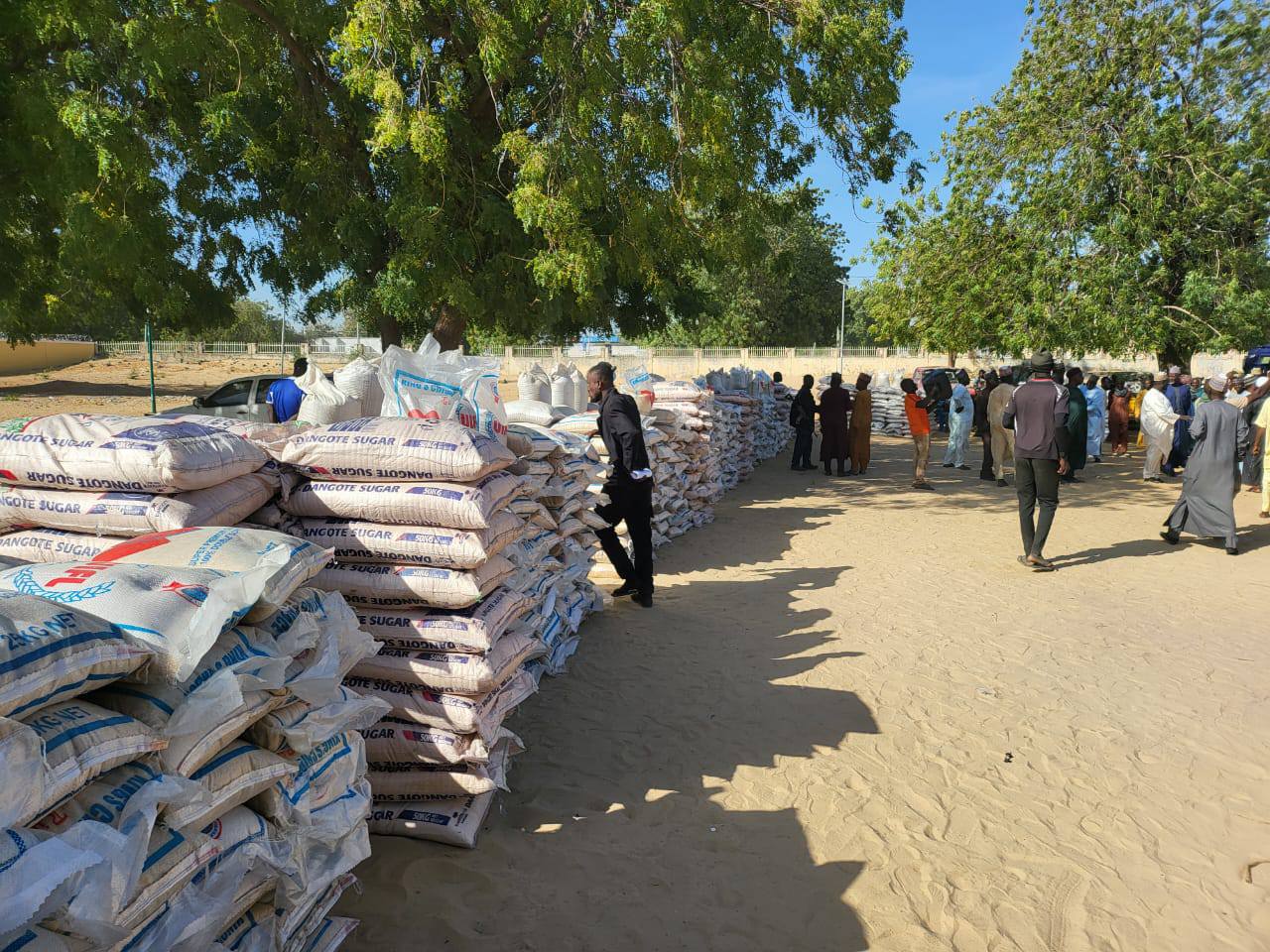
Following subsidy removal and the attendant inflation in the country, several state governments distributed palliatives—foodstuffs and stipends—to ease the economic burden on citizens. Some states like Kwara and Nasarawa recently extended the palliatives to students in their tertiary institutions.

The initial distribution of the palliatives across institutions in Nasarawa state was peaceful. A government statement released after Friday’s stampede noted that previous distributions were “a huge success.” Students got two 7.5 kg bags of rice and 5,000 naira each.

However, events leading to the stampede at Nasarawa State University, Keffi, points towards a mismanagement of crowd control by the organizers responsible for distributing the palliatives. According to media reports, the palliatives were scheduled at the university convocation square until students arrived in large numbers and disrupted the distribution.

“After our arrangement for the distribution of palliatives to the students which was to hold at the University’s convocation square, they (students) suddenly arrived at the venue in their numbers and overpowered the security,” said Yunusa Baduku, National President of the Nasarawa State Students Association, in a Punch Online report.

He added that the students “broke through the gate into the Convocation square where the bags of rice was to be shared,” leading to the stampede that consumed the two students and injured many more.

Sadly, such chaos is not new. In February, the Nigerian Customs Service had to suspend its sale of seized bags of rice after seven people died at one of its centres in Yaba, Lagos. Some two years ago, 31 people died at a stampede at the King’s Assembly in Rivers state church during the distribution of palliatives to church members; seven more were injured.

Although the state governor, in a statement by his Chief Press Secretary, was quoted as calling the tragedy “a needless stampede,” the state could have prepared better for it. Distribution events, especially those intended to provide aid or relief, tend to draw large crowds, making effective crowd control essential.

In Unilorin, for instance, where students received palliatives—cartons of noodles—from the Kwara State government, distributions were such that students did not have to gather in their numbers at the arena or use vouchers.

The government sent the palliatives to the university, who distributed them to the faculties. From the faculties, they were distributed to departments, where class representatives from each level went to retrieve the packages for their class. It was as seamless as public distributions go.

I suppose the Unilorin model could help other tertiary institutions plan more effectively. The university leveraged student associations and divided the population into manageable chunks. Such divisions made it difficult for hoodlums to gatecrash, as the class reps knew their colleagues. The strategy also eased accountability.

While I admit there is a risk of student representatives appropriating the palliatives or shortchanging their colleagues, this is more manageable than asking a crowd of desperate undergraduates to gather for government handouts.

A departmental or level advisor can be mandated to coordinate the distribution, even if he has to be paid or receive palliatives, too. It is not likely that the coordinator will conspire with the student reps to loot the palliatives. In the rare event that that happens, then so be it. Nigeria students have suffered enough than to die in avoidable stampedes.

Adoto writes from Ilorin via bellohussein210@gmail.com.

COWA president gives palliatives to more members in Abuja

 By Sabiu Abdullahi 

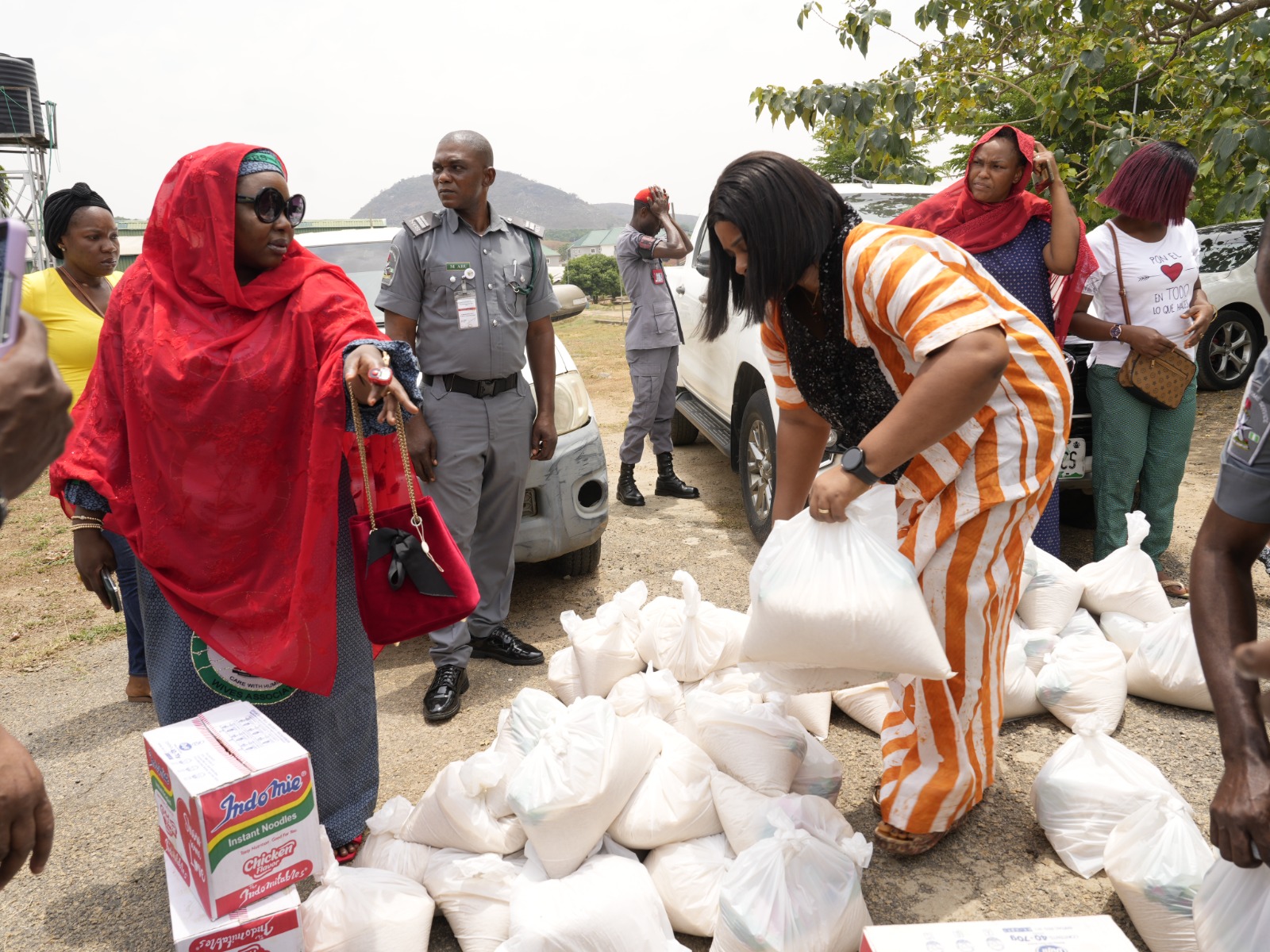
Kikelomo Adeniyi, the National President of the Officers’ Wives Association (COWA), and wife of the Comptroller-General of Customs, spearheaded the extension of palliative distribution to COWA members in Abuja on Wednesday, March 13, 2024. Mrs.

Adeniyi embarked on a tour that included visits to the Federal Capital Territory Command, Nigeria Customs Command, and Staff College Gwagwalada.

During these visits, she delivered a resounding message of solidarity and support to the officers’ wives in attendance, acknowledging their immense challenges and reaffirming COWA’s commitment to providing assistance and empowerment. 

Expressing gratitude to the attendees for their unwavering commitment, the COWA president recognised the sacrifices made by officers’ wives and their invaluable contributions to the Customs community.

She emphasized the significance of empowering women, aligning COWA’s initiatives with the broader national agenda of women’s empowerment championed by the First Lady, Remi Bola Tinubu. 

Encouraging swift registration as members of COWA, President Kikelomo elucidated the myriad benefits awaiting registered members, ranging from access to support services to participation in empowerment programs.

She also articulated COWA’s vision of institutionalising the association and maintaining a comprehensive database of registered members to ensure effective service delivery and support. 

Highlighting the pivotal role of COWA in uplifting women across the nation, Adeniyi reiterated the association’s commitment to empowering widows, orphans, and officers’ wives alike to be self-reliant.

She emphasised the symbiotic relationship between personal empowerment and the ability to uplift others, fostering a culture of support and solidarity within the association. 

Addressing officers directly, the National President urged them to embrace their wives’ participation in COWA activities, recognizing the positive impact on family dynamics and societal progress.

She reassured officers of the benefits stemming from their wives’ involvement, highlighting the transformative power of mutual respect and support within marital relationships. 

During her visit to the Nigeria Customs Command and Staff College Gwagwalada, Mrs. Adeniyi commended the Commandant of the College, Assistant Comptroller-General of Customs (ACG) Kingsley Egwuh, for his unwavering support of COWA activities and dedication to the institution’s growth and development.  

ACG Egwuh reaffirmed the Command’s commitment to providing unwavering support to COWA, recognizing the pivotal role of the association in fostering unity and support within the Customs community.

He pledged continued collaboration and assistance, acknowledging the indispensable nature of COWA’s initiatives in driving positive change and empowerment.