Palestine-Isrsael

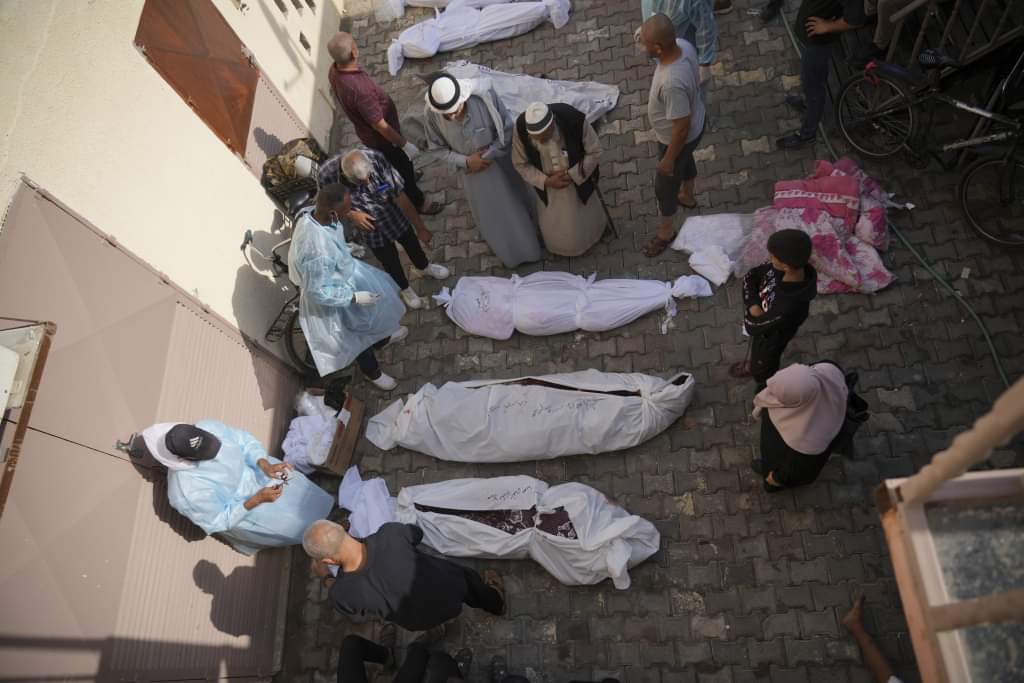
Canada, Australia and UK formally recognise Palestinian state

By Muhammad Abubakar

In a historic diplomatic shift, the governments of Canada, Australia, and the United Kingdom have formally recognised the State of Palestine. The announcement, made in a joint statement on Sunday, marks a significant moment in international support for Palestinian statehood.

Leaders of the three countries said the recognition was aimed at advancing a just and lasting peace in the Middle East, reaffirming their commitment to a two-state solution. They urged both Israel and Palestine to return to negotiations and called for an immediate halt to violence in the region.

The move has been welcomed by Palestinian officials, who described it as a “courageous step towards justice and self-determination.” However, Israel has expressed strong opposition, warning that such recognition could undermine peace efforts.

The decision by three of the world’s most influential Western nations is expected to increase pressure on other countries to follow suit, potentially reshaping the dynamics of the Israeli-Palestinian conflict on the global stage.

The United Nations and eight decades of impotence

By Amir Abdulazeez

The United Nations is currently holding its 80th General Assembly sessions in New York. Some days earlier, the U.S. State Department, under the pretext of national security and anti-terrorism laws, revoked visas for dozens of Palestinian officials, including President Mahmoud Abbas slated to participate, at the General Assembly and a high-level two-state conference. This move drew criticism from the UN itself, EU and some human rights groups, with calls to relocate Palestinian-related meetings outside New York. This echoes historical precedents, notably the 1988 visa denial to Late Yasser Arafat, which forced the UN to shift one of its sessions to Geneva to allow him participate.

Although the 1947 ‘Headquarters Agreement’ obliges the United States to admit all UN participants, Washington occasionally and selectively invokes security and legal excuses to discriminate between entrants. Such practices explain how the UN’s operations remain vulnerable to U.S. control, thereby undermining its independence, authority and credibility. As the UN marks the 80th anniversary of the ratification of its charter on 24th October 2025, the organization which was founded on the ashes of World War II in 1945 faces an existential crisis of credibility and effectiveness.

While it has achieved notable successes in humanitarian aid, educational research and global environmental and health initiatives, its core mission of maintaining international peace and security has been repeatedly undermined by structural and diplomatic flaws. The organization’s inability to meaningfully respond to crises from Syria to Ukraine and most visibly in the Israeli-Palestinian conflict, has exposed fundamental weaknesses that warrant urgent reform. The UN’s record is one of profound paradox: a body designed for action but often defined by its inaction. Nowhere is this impotence more starkly illustrated than in its 70 years’ failure to resolve the Palestinian question or to hold Israel accountable for its international impunities.

From the outset of the Israeli-Palestinian conflict, the United Nations assumed a central role by proposing the 1947 Partition Plan, which sought to establish separate independent states for both parties. Although initially conceived as a potential path to peace, the plan was never enforced and the UN has since struggled to translate its own decisions into reality. Further failures are documented in a paper trail of unimplemented resolutions: Security Council Resolution 242 (1967) called for Israel’s withdrawal from territories occupied during the Six-Day War; Resolution 338 (1973) and countless subsequent resolutions reaffirmed this demand that was not only ignored but instead empowered Israel’s massive expansion of illegal settlements.

Beyond the unimplemented resolutions, a critical UN failure in this regard is that of narrative framing. It has been unable to consistently enforce a foundational principle: that the right to self-determination for one people (Israelis) cannot be predicated on the denial of that same right to another (Palestinians). The organization’s various bodies often treat the conflict as a symmetrical dispute between two equal parties, rather than an asymmetrical struggle between a nuclear-armed occupying power and a stateless, occupied population living under a brutal blockade.

The core of the UN’s ineffectiveness lies in the flawed decision-making structure of its Security Council, where the five permanent members (United States, Russia, China, France and United Kingdom) hold the autocratic privilege of veto power. This system of outdated World War II geopolitics has frequently paralyzed the organization in hours of need. Since 1946, the veto has been selfishly exercised about 300 times. Between 2011 and 2023, Russia and China blocked 16 resolutions on Syria, enabling the Assad regime’s brutal campaign against civilians. The United States, meanwhile, has used its veto more than 50 times to shield Israel from accountability, making Palestine the single most vetoed issue in UN history. Instead of serving as a platform for global security, the Council has become an arena for shameless and hypocritical power politics.

The General Assembly, despite representing all 193 member states equally, has been relegated to a largely ceremonial role in matters of international peace and security. While the Assembly can pass resolutions by majority vote, these carry no binding legal force and are routinely ignored by powerful nations. The 2012 resolution calling for an arms embargo on Syria passed with 133 votes but had no practical effect, as Russia continued supplying weapons to the Assad government. This has created a two-tiered system where the views of the international majority are systematically subordinated to the interests of Security Council Super Powers.

The selective enforcement of international law has become a defining hallmark of UN impotence. While the organization has at times demonstrated resolve such as coordinating global sanctions against apartheid South Africa in the 1980s or authorizing military intervention in Libya in 2011, its responses to other similar crises have been inconsistent and politically driven. Similarly, the International Criminal Court, often operating with UN support, swiftly indicted leaders of Liberia, Sudan and Libya, yet no Western or allied leaders like George W. Bush or Tony Blair have been held to account for baseless interventions in Iraq, Afghanistan or Yemen. These double standards have eroded the UN’s credibility and moral authority, particularly in the Global South, where it is increasingly viewed as an instrument of Western hegemony.

The UN’s peacekeeping apparatus, while successful in some contexts, has also demonstrated significant limitations when confronting determined state actors. The United Nations Disengagement Observer Force (UNDOF) on the Golan Heights and the United Nations Interim Force in Lebanon (UNIFIL) have maintained buffer zones during their operations, but have been powerless to prevent violations by all parties. During the 2006 Lebanon War and subsequent conflicts, these forces could only observe and report violations rather than enforce compliance.

Financial manipulation has emerged as another tool of selective pressure within the UN system. The United States, which contributes 22% of the UN’s regular budget, has repeatedly withheld or threatened to withhold funding to pressure the organization on specific issues. In 2018, the Trump administration cut $285 million from UN peacekeeping operations and reduced contributions to various UN agencies. The UN’s human rights mechanisms face similar challenges of selective application and political manipulation. The Human Rights Council, reformed in 2006 to address criticisms of its predecessor, continues to be influenced by bloc voting and political considerations rather than objective human rights assessments. Countries with questionable human rights records have served on the Council while using their positions to deflect criticism and protect allies.

Critics argue that the UN has become a stage for symbolic debates while real decisions and tangible actions are outsourced to global bullies like the US, less formal coalitions like the NATO and regional actors like the EU. For example, the U.S.-brokered Abraham Accords normalized relations between Israel and several Arab states without addressing core Palestinian concerns while side-lining the UN. Similarly, its response to Russia’s invasion of Ukraine in 2022 was limited to humanitarian aid and symbolic condemnation, as bodies like EU looked more relevant and assertive.

The rise of new global powers and changing geopolitical realities have rendered the UN’s 1945 structure increasingly obsolete. Reform proposals have circulated for decades but have consistently failed due to the resistance of existing power holders. Things have changed since World War II, nations have evolved, others have declined and hence the UN must be reformed to reflect current realities. The permanency of the Security council membership must be reviewed and the senseless veto authority must be abolished or modified along the lines of justice and accountability. As the United Nations approaches its 80th anniversary, the choice is clear: fundamental reform or continued irrelevance.

Maintaining the United Nations system costs about $50–55 billion per year, not counting military deployments and opportunity costs. Beyond money, states commit significant diplomatic, military, humanitarian and bureaucratic resources to maintain their participation. This makes the UN one of the most resource-intensive international organizations ever created. Without serious reforms to address structural inequalities, eliminate veto abuse and restore the primacy of international law over great power politics, the UN risks becoming a historical footnote rather than the cornerstone of the global governance its founders envisioned. The international community must decide whether it will tolerate continued dysfunction or demand the transformative changes necessary to address 21st century challenges.

Israel is committing genocide in Gaza, scholars say

By Muhammad Abubakar

The world’s foremost body of genocide experts has declared that Israel’s military campaign in Gaza meets the legal definition of genocide.

In a resolution issued this week, the International Association of Genocide Scholars (IAGS) urged Israel to “immediately cease all acts that constitute genocide, war crimes and crimes against humanity against Palestinians in Gaza.”

The association cited starvation, the blocking of humanitarian aid, and forced displacement among the practices that, in its view, fulfill the criteria set out under international law.

The resolution adds to growing international pressure as civilian casualties and a deepening humanitarian crisis continue to draw condemnation from human rights groups and global leaders.

More than 60% of Gen Z in US back Hamas over Israel, survey finds

By Muhammad Abubakar

A new survey published by The New York Post has revealed that more than 60 per cent of Generation Z in the United States sympathise with Hamas over Israel in the ongoing conflict.

The findings highlight a significant generational divide in perspectives on the Middle East, with younger Americans expressing stronger support for Palestinians compared to older demographics who largely align with Israel.

Analysts suggest that Gen Z’s views may be shaped by social media narratives, human rights advocacy, and growing criticism of U.S. foreign policy in the region. The data underscores shifting attitudes that could have long-term implications for American politics and international relations.

The survey has sparked debate across the political spectrum, with some commentators arguing that the results reflect rising awareness of Palestinian suffering, while others warn of increasing radicalisation among youth.

US Congress demands Wikipedia reveal editors in Israel content probe; Wikimedia vows to fight

By Muhammad Abubakar

A U.S. congressional committee is investigating the Wikimedia Foundation, demanding it hand over data on contributors who edited articles critical of Israel, a move the nonprofit is calling an “act of government overreach.”

The House Committee on Oversight and Accountability claims the probe is necessary to examine “potential misinformation and anti-Israel bias” on the online encyclopedia. 

In a letter to the foundation, lawmakers requested internal communications and, crucially, the identifying information of volunteer editors.

The Wikimedia Foundation has vowed to reject the request for user data. “We will not comply,” a foundation spokesperson stated, arguing the demand jeopardises free speech, privacy, and the project’s neutral model. 

Digital rights groups have also condemned the investigation, calling it an attempt to intimidate and identify anonymous critics.

The standoff sets the stage for a significant legal battle over congressional power, free speech, and the independence of digital platforms.

Nine Dutch ministers resign in solidarity with Gaza

By Muhammad Abubakar

In a stunning act of political defiance, nine Dutch ministers have resigned en masse, declaring they could not be complicit in what they described as the “silent endorsement of a humanitarian catastrophe” in Gaza.

The resignations have sent shockwaves through the Netherlands’ political establishment, shaking the foundations of the coalition government and igniting fierce debate across Europe. In their fiery joint statement, the departing ministers condemned the West’s “selective morality” and accused their own government of “turning a blind eye to mass suffering.”

Crowds gathered outside parliament in The Hague to applaud the move, with activists hailing it as an unprecedented moral stand in modern European politics. Critics, however, warned the resignations could plunge the government into chaos at a time of deepening international tensions.

“This is not about politics; it is about conscience,” one of the resigning ministers declared. “History will not forgive silence in the face of Gaza’s devastation.”

Analysts say the mass resignation marks a rare moment where political survival has been sacrificed for principle—an act many believe will reverberate far beyond Dutch borders.

Columbia University disciplines students over pro-Palestinian protests

By Muhammad Abubakar

Columbia University has announced disciplinary actions against dozens of students involved in pro-Palestinian demonstrations on its campus earlier this year. Measures taken include suspensions, expulsions, and the revocation of degrees, according to a university spokesperson.

The protests, which drew national attention, had sparked controversy over their tone and messaging. The Trump administration, citing concerns of antisemitism, accused the demonstrators of promoting hate speech and paused federal funding to the university in March.

University officials stated that the disciplinary process was based on violations of campus policies, not political content. “We support free expression, but actions that disrupt university operations or threaten community safety are subject to consequences,” the spokesperson said.

Student and civil rights groups have condemned the punishments, calling them excessive and politically motivated. Advocacy organizations continue to demand transparency in the university’s disciplinary procedures.

Matthew Miller: Israel has ‘without doubt’ committed war crimes in Gaza

By Muhammad Abubakar

Matthew Miller, former spokesperson for the U.S. State Department under President Joe Biden, has said Israel has “without doubt” committed war crimes in Gaza.

In a recent interview, Miller pointed to the targeting of civilian infrastructure, the high civilian death toll, and the ongoing blockade as clear violations of international law. His remarks mark a significant departure from the official U.S. position, which has largely avoided directly accusing Israel of war crimes.

Miller’s comments come as independent investigations into alleged violations by Israeli forces continue. He also criticized the Biden administration’s support for Israel, warning it risks enabling serious breaches of humanitarian law.

Spain urges sanctions against Israel amid Gaza humanitarian crisis

By Muhammad Abubakar

Spain has called for international sanctions against Israel following its ongoing military campaign in Gaza, which has led to heavy civilian casualties and a worsening humanitarian situation.

At a high-level summit in Madrid, Spanish Foreign Minister José Manuel Albares proposed suspending the EU’s cooperation agreement with Israel, imposing an arms embargo, and targeting top Israeli officials with sanctions. 

Mr Albares also called on world powers to recognise the State of Palestine as a step toward peace.

Spain has joined South Africa’s case at the International Court of Justice, accusing Israel of genocide, further escalating diplomatic pressure. 

Meanwhile, public protests across major Spanish cities have amplified demands for an end to arms sales and more decisive action against Israel.

Louis Theroux explores life inside Israel’s West Bank settlements in new BBC documentary

By Muhammad Abubakar

Acclaimed British documentary filmmaker Louis Theroux returns to the screen with his latest project, The Settlers, an in-depth look at the controversial and deeply divisive issue of Israeli settlements in the occupied West Bank.

Premiering this week on BBC Two, The Settlers offers viewers unprecedented access to life inside some of the most ideologically driven and politically sensitive Israeli settlements.

Known for his immersive style, Theroux embeds himself in communities where religious conviction and nationalist sentiment run high, engaging with settlers, Palestinians, and human rights activists alike.

The documentary explores the motivations behind the settlers’ presence in the region, the tensions it creates with Palestinian residents, and the broader implications for peace in the Middle East.

Theroux approaches the subject with his signature calm and probing demeanour, seeking to understand rather than judge, even as he confronts conflicting worldviews and stark realities on the ground.

Critics have praised the documentary for its nuanced storytelling and bold exploration of one of the most intractable issues in modern geopolitics.

As Theroux notes in the film, “What’s striking is not just the conflict, but the normalization of it — the way people live their daily lives in a place most of the world sees as a flashpoint.

The Settlers is currently available on BBC iPlayer and will be broadcast internationally in the coming months.