Olusegun Obasanjo

A personal tribute to Ghali Umar Na’Abba

By Amir Abdulazeez

Sometime in 2006, I walked into the famous Gidan Akida building, the then-Kano State headquarters of the Advanced Congress of Democrats (ACD), a new party formed by the breakaway PDP faction. I was there to inquire about how lowly-placed people like us can actively participate in the development of the party. The State Public Relations Officer told me that I have the option of choosing to belong to any of the four main houses within the party: Muhammad Abubakar Rimi, Malam Musa Gwadabe, Alhaji Gwadabe Satatima and Ghali Umar Na’Abba.

When the PRO heard that I cherished them all but wanted to work in the Na’Abba camp, he congratulated me for working under a disciplined, courageous and principled politician. Unknown to him, I had already known Ghali Na’Abba some ten years before, maybe earlier. Apart from being too young to know much about the other three political leaders practically, I have taken time to follow the stewardship of Ghali Na’Abba as the Speaker of Nigeria’s House of Representatives for the better part of 1999-2003. 

In that same year, 2006, Na’Abba was declared for the Kano State Governorship. I was genuinely convinced that if elected, he would make Kano one of Nigeria’s most disciplined and organised states. His discipline, confidence and organisation have often been misunderstood as arrogance. On this, he has cleared the air on many occasions. From what I know of him, he was a man of few words expressed only when necessary; he has a gentle and reserved personality, which makes him never delve into affairs that don’t concern him. 

I remember working with like-minds to engage in one of the best intellectual mobilisations any young undergraduates could do to garner support for Na’Abba to become Governor then. Unfortunately, he withdrew from the governorship race some weeks before the Action Congress (AC) primary elections. This new party was the product of a merger between ACD, Bola Tinubu’s Alliance for Democracy (AD) and other groups. Ghali’s withdrawal speech wasn’t detailed, but his arguments were that the process was too manipulated for any honest and disciplined aspirant to withstand. I think that was the last time Ghali contested for any position in his political career.

Ghali Umar Na’Abba was more than a political figure—a beacon of integrity, courage, and unwavering dedication to Nigeria. As a former Speaker of the House of Representatives, his legacy resonates far beyond his political tenure. Na’Abba’s commitment to democratic values and principles shaped the course of Nigeria’s political landscape. His leadership during a critical juncture in Nigeria’s history marked him as a staunch advocate for transparency and accountability.

Beyond politics, Ghali Na’Abba was a symbol of resilience and fearlessness, unafraid to challenge the status quo for the betterment of his nation. His vision for a prosperous, united Nigeria was evident in every action and word he spoke.

Na’Abba’s tenure as the Speaker of the House of Representatives marked a significant chapter in Nigeria’s political history. He was known for his principled stance and his assertive approach to upholding the legislature’s independence and separation of powers, particularly in the face of President Olusegun Obasanjo’s bullish administration.

The Fourth Republic in Nigeria was still in its infancy when Na’Abba assumed the role of Speaker. With the country transitioning from years of military rule to a democratic system, the political landscape was rife with challenges. However, Na’Abba brought to the forefront a blend of experience, political acumen, and a commitment to legislative oversight. He staunchly believed in the autonomy of the legislative arm of government and its pivotal role in checking the excesses of the executive. This belief set the stage for numerous clashes between the National Assembly, under Na’Abba’s leadership, and Obasanjo’s administration.

Obasanjo could not have the audacity to unleash his anti-democratic tendencies until Na’Abba left the Speakership in 2003. Every Nigerian who witnessed the two tenures of Obasanjo (1999-2007) will testify to this. During his tenure, Na’Abba led the House of Representatives with a firm hand, asserting the legislature’s independence and challenging executive actions deemed against the national interest. One of the notable confrontations arose from the legislature’s insistence on its oversight function. Na’Abba’s House of Representatives was resolute in investigating various issues, including allegations of corruption within the government, regardless of pressure from the executive arm.

Sadly, today’s many young political followers did not have the opportunity to witness and be inspired by the era of great and principled leaders like Ghali Na’Abba. They are unlucky and unfortunate to find themselves supporting reckless crooks and shameless greedy people who have turned them into sycophants, social media warriors and other roles that have kept them perpetually stupid. These are some of the reasons that have kept Na’Abba on the sidelines since 2007. 

Since 2007, whenever Ghali has attempted to reactivate his participation in Nigeria’s political landscape, he has immediately realised there is no space for disciplined people like him. Rather than adjust and follow the trend, he simply retreats and faces his private issues. He had always chosen integrity over selfishness. In 2011, his house was burned down in Kano by hooligans because he supported President Jonathan. I have never heard him complain publicly about this treatment meted out to him by his people. As always, he was calm, reserved and simply forged ahead. That was how he permanently minded his business away from the murky, dirty and irresponsible waters of Nigerian partisan politics.

Today, 27th December 2023, we have lost Ghali Na’Abba, a few months after turning 65 and almost exactly one year apart from the death of his mother, another woman of trust, integrity and kindness. May Allah have mercy on them both. His legacy lives on as an inspiration to current and future leaders. Ghali’s contributions to Nigeria’s democratic journey will forever be remembered and cherished, a testament to the enduring power of principle-driven leadership.

At a point when Kano’s reputation soared by the Salisu Buhari Toronto certificate scandal, Ghali Na’Abba, his successor as Speaker, worked diligently to give the state a good name nationally and even globally. His active career was short-lived, but he managed to enter the comity of the political all-time greats in the history of Kano State. It now remains to see how the current custodians of the state will work to have his name honoured and legacies preserved. 

After surviving numerous blackmails, countless threats, and several impeachment attempts as Speaker, President Obasanjo later ganged up with his foot soldiers and garrison commanders in Kano to deny him a return to the National Assembly in 2003. First, they failed to stop him from getting the Kano Municipal PDP ticket, and then they later ganged up to work against him and their own party in the General Elections, and they succeeded. The fall of Ghali Na’Abba marked an abrupt end to the era of Legislative Independence and Political courage in Nigeria.

Twitter: @AmirAbdulazeez 
Fuel Subsidy: Thoughts and Reflections

By Bilyamin Abdulmumin

Since the return of democracy in Nigeria, successive governments have contemplated removing fuel subsidies. The then government of President Olusegun Obasanjo (OBJ) saw multiple fuel price hikes, from N20 per litre it inherited from the transitional military government to the last unforgettable fuel hike. In 2007, two days before the expiration of his tenure, OBJ jacked up the pump price from 65 to 75 naira per litre.  However, the incoming president Umar Musa Yar’adua returned the honest nest to order.

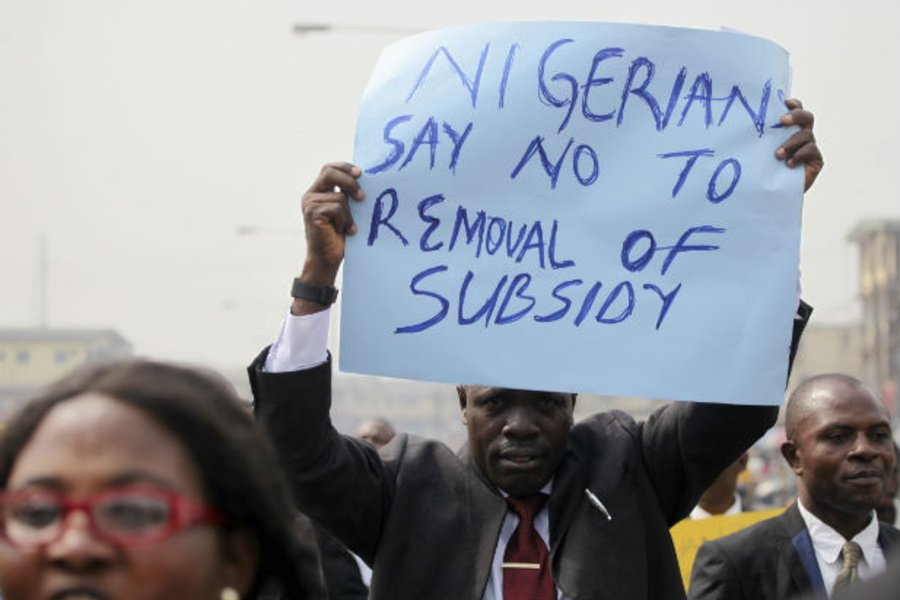
The subsequent struggle to remove fuel subsidies, perhaps the biggest standoff, came in 2012 during the government of Goodluck Ebele Jonathan (GEJ). Vibrant labour, trade, civil and student unions, and agglomeration of opposition descended on the government for the decision, forcing GEJ to lower the price from the initial N141 to N97 and later in 2015 to 87 naira per litre. The struggle would continue. As soon as President Muhammadu Buhari (PMB) ascended to power, he greeted the public with partial subsidy removal.

PMB took the pump price from the official N87 to N145 before hitting N187 at the end of his tenure. But all out on fuel subsidy removal came during the run-down to the 2023 general election, where all the major presidential candidates dismissed any doubt left on fuel subsidy. They all warned the point black electorates that they would remove fuel subsidies so that President Tinubu would walk the talk even from the inaugural stage. 

The government and subsidy removal activists argue that an unbelievable amount of funds are being poured into the scheme while the national infrastructure languishes in bad condition. The large amount spent on the subsidy has been said to reach this height dubiously, no thanks to inflated numbers by some unscrupulous officials and the diversion of subsidised fuel to neighbouring countries by rogue marketers. To add insult to injury, Nigeria borrows to sustain this counterproductivity. Although this argument is plausible, instead of throwing a baby with the bath water, why not the government sanitise the scheme so that it brings the amount to within its capacity?

Another pro-subsidy removal argument was that only a few rich Nigerians benefit from the subsidy, the poor masses who were the target of the scheme are not benefiting the way it is supposed to. This slogan is challenging to explain to people; which ‘The poor masses are not benefiting the way it is supposed to’? When people can visibly see the effects of the subsidy when they buy fuel. No answer is as crunching as for a Nigerian to enter a filling station, and after purchasing an expensive fuel, he declares, they said we don’t benefit from subsidy!

 GMB and APC supporters have an additional puzzling dilemma to unravel because GMB had outrightly opposed the plan in 2012 when President Goodluck Jonathan mulled the idea of its removal. GMB and other APC chieftains famously proclaimed ‘over their dead bodies’ would they allow it. Meanwhile, by the side of the TV screen, we threw roses at them.

So, one of the top Buharist El-Rufai’s tried to rescue the situation in the aftermath of the then PMB’s backpedal. According to an accidental civil servant: ‘When fact changes, decision changes.’ This was to defend the then PMB decision even though he opposed it earlier. This philosophy convinced me; I said that Elrufai rightly arranged the pieces together. But one of my friends would make my life miserable; he said the same philosophy could also be applied to Jonathan as his reason behind fuel subsidy removal. I became speechless.

The speed with which the marketers change fuel prices immediately after price changes from NNPC (Nigerian National Petroleum Corporation), regardless of what’s in their stock, whether old or new, is perhaps the biggest showdown between the public and marketers. As soon as NNPC announces a new price, marketers countrywide change the price in the blink of an eye. The public argues that since the new price is for the new product, the marketers with the old product should stick to the old price. One Sheik brought this public sentiment to the fore when he calculated the difference between the old and new prices and multiplied that by a presumably large number of litres for one marketer. The profit he got was staggering, about 300 million naira.

I share this public sentiment, and I, too, initially thought the marketers were doing it illegally until Mele Kyari explained it on BBC Hausa Ra’ayi Riga program. According to the NNPC MD, marketers must sell their old products at a new price. This approach enables them to recoup their old investment. For instance, if a marketer had 100 litres, he had to sell them at a new price so that he could buy the same amount, but if he sold them at the old price of N250, he would not be able to buy the same 100 litres of new product at a higher price.

This is a plausible reason from a market viewpoint; what of the masses? Because while the market provides safety measures for marketers, it does not offer the same to the general public, especially the poor. Economics and the related professionals’ expertise are needed here; they should help us balance these conflicting but appealing arguments.

Although it could be too late to cry when the head is chopped off, Nigerian policymakers may need to learn from thermal shock phenomena when it comes to subsidy removal or any government policy implementation.  Thermal shock is a situation a material experiences when exposed to sudden changes in temperature conditions; it can lead to the material cracking or even breaking down. 

Take a glass cup of tea, for instance. If the tea glass cup is scorching and you suddenly put it in cold water to cool the tea inside, the glass may crack or even break depending on the level of the thermal shock, but to cool the tea inside the got glass cup successfully without harming the glass, you apply gradual cooling. First, you put the glass cup in warm water, then gradually reduce the water temperature until it becomes cold; in this way, the tea inside the glass cup can cool without causing any injury to the glass.

Bilyamin Abdulmumin is a doctoral candidate in Chemical Engineering at ABU Zaria, a public affair commentator, and a science writer.

El-Rufai Plc and the Presidency

By Dr Aliyu U. Tilde

How many times have I restrained my fingers from writing on this topic? It first came to mind when I heard His Excellency, Malam Nasiru El-Rufai, hinting that he would not be part of the Bola Ahmed Tinubu administration. I watched the clip and laughed. I said does not Malam know that he is now a Plc and no longer an individual enterprise? Can Aliko Dangote one day dream of returning to his quiet personal status of 50 years ago?

Once you are a Plc, forget it. You no longer own your life. We own it. You are our property. Our slave. Period. That is the liability you become to yourself when you prove to the public your competence in serving it. The prize of hard work is more work, they say.

I knew the positions of SSG and COS did not fit people of his personality even if he eyed them. Malam is at his best either as an executive or a project person tasked with a very difficult task, like Ministry of Power.

After missing him on campus, I came to know him through many of his intimate friends in Kaduna since 1986. But I knew him from a distance the more when he started public service in BPE, then as Minister of FCT and lastly as Governor of Kaduna State. In summary, he is one Nigerian that has proven his competence beyond a reasonable doubt.

That is not to say Malam, 63, is not human. Nobody can come straight in these positions without stepping on many toes, especially in a country that is as tortuous as Charles H. Robinson described the African footpath in 1892. Those adversely affected by his policies, which were necessary to straighten up things, will understandably complain and write petitions against him.

Then Malam is also a politician, a fierce one for that matter. We have seen that much during the build-up to the last presidential election. To complicate matters, he is vocal, unrelenting, open and many times politically incorrect; yet, calculating enough to yield result. These are enough to court him for many troubles.

One of those troubles is with the legislature. He had a problem in 2003 when the Senate refused to clear him. Finally, he got cleared by the intervention of President Olusegun Obasanjo and went ahead to prove his worth as FCT minister. This time the media is saying it is not about money or even the legislature per se but about some petitions or security issues.

Today President Tinubu needs to play the role that Obasanjo played in getting the Senate clearance in 2003. He campaigned for Godwill Akpabio, the President of the Senate. Some say he also intervened for Festus Keyamo. He stood for two other competent people before: Vice President Kashim Shettima and NSA Nuhu Ribadu.

The President has promised to choose for the country the best talents to serve under his government. Though he had difficulties keeping this promise on some of his nominees, the nation may not forgive him for missing the target on Malam. He should defy Malam’s opponents just as he did for many others.

Both the security apparatus and APC owe Malam a debt. His doggedness on power shift to the South and in fighting to neutralize the effect of last-minute anti-people’s policy of the Buhari administration that would have cost the APC the Presidency are moral debts that both the President and the party owe Malam; otherwise, both will suffer a trust deficit in the eyes of the public. I have told many—and I may be wrong—that even from a strategic point of view, not having a cerebral and politically hyperactive El-Rufai on board will be a grave political miscalculation for the administration.

The security apparatus has no moral locus to abandon Malam either. He stood by it and acted on its reports to literally go on the ethnic cleansing of Shi’ites in his State—his one act that I strongly abhor and wrote against.

The President now has three major contentious issues at hand: Removal of fuel subsidy, dollar deregulation and the coup in Niger Republic. He must make El-Rufai Plc become the fourth.

Dr Tilde tweets via @Dr_AliyuTilde.

Obasanjo is a danger to democracy, says Gen. Akinrinade

By Ahmad Deedat Zakari

A former Chief of Army and Defence Staff, General Akinrinade Alani, has faulted President Obasanjo’s call for the suspension of the collation of results of the presidential election.

In a press statement released to the public on Tuesday and titled, “An Interloping Former President is a Danger to Democracy”, General Akinrinade condemned the former president’s stance on the ongoing presidential election.

The retired soldier said, “The recent statement by former President Olusegun Obasanjo over the recently concluded elections must be condemned in the strongest terms by democracy loving Nigerians and those who care about the unity of this country.”

President Obasanjo in a press statement had earlier requested for the stoppage of collation of result on ground of electoral malpractices.

General Akinrinade further stated that, as Obasanjo’s contemporary, who fought for the unity of this country, he finds it disturbing that Obasanjo made such suggestion.

He therefore called on President Muhammadu Buhari to ignore Obasanjo’s vituperation and focus on the lawful process.

He noted that he is confident President Muhammadu Buhari will let the process run its full course and will not intervene in an undemocratic manner.

2023: Does Obasanjo still have any electoral value?

By Mubarak Shu’aibu

With the 2023 general election close at hand, the former President of Nigeria, Chief Olusegun Obasanjo, has released a six-page letter of appeal to Nigerians, targeting the youths in particular.

In the letter, Obasanjo eschewed the likes of Alhaji Atiku Abubakar, his former deputy, Bola Ahmed Tinubu, and his mentee, Engineer Dr Rabiu Musa Kwankwaso and settled for Mr Peter Obi of the Labour Party. The choice has lent credence to those who believed Obasanjo is on a mission to scuffle Atiku’s presidential ambition comes February 2023. It’s in the public domain that former President Obasanjo is embroiled in a conflict with his former Vice,  and that is a good reason to disagree less with those that held such views. 

But, the good news for Atiku and his fanbase is the fact that the letter of his former boss, when placed in brackets with the 2023 presidential election, is a political featherweight. And here’s why.

Regardless of his exaggerated shortcomings, his broad political war chest, vast experience, and first name recognition have put him in the best stead to blitzkrieg the ruling All Progressive Congress (“APC”), a party which is currently battling for its existence. 

Exploring the more contentious articles against Atiku, either from his former boss or any other individual, it only emanates from a phobia that revolves around Atiku’s tendency to resuscitate Nigeria and rewrite his name in the book of history from the bad opinions sold publicly about him, to what he really is.

Another bullet point, unlike Buhari in 2015, the ruling party candidate, Bola Ahmed Tinubu, does not have the overwhelming support of his people. Some of his rebellious allies, such as Professor Yemi Osibanjo, Babachir Lawal, Akinwunmi Ambode, Rotimi Amaechi, and Rauf Aregbesola, are seriously plotting to ambush his ambition. 

These, and a wealth of other reasons, have unsettled  Obasanjo and the G-5 camp, who now looked marooned. However, Atiku’s victory is eminent (by the  Grace of the Almighty). Meanwhile, he’s one Nigerian [Obasanjo] whose opinion, whether right or wrong, doesn’t mean anything to Nigerian youths. As a former military officer, he, along with others, created problems for the country. When we revolted against them, they went through the back door. They’re the chief reason why our democracy is built in such a way that only the interest of the “elites” is protected. And it’s no wonder the last Military Head of State is the political ombudsman of Nigeria. They feel that they’re the power brokers, and anyone seeking a political office must lick their shoes.

And by his assertion that Obi has people who can pull his ears if and when necessary, he’s just trying to muffle the fact that Atiku won’t listen to the cabals. But that’s the sort of President Nigeria needed at this material time.

So, how much electoral value does his letter brings? Zero, I guessed!

Mubarak Shu’aib writes from Hardawa, Misau LGA, Bauchi State, Nigeria. He can be reached via naisabur83@gmail.com.

Nigeria’s future in hands of youths – Obasanjo

By Uzair Adam Imam 

Former Nigerian President, Olusegun Obasanjo, said the country’s future is in the hands of youths.

The ex-president, who put all hopes in youths, stated that the solution to the country’s challenges was in their hands.

Obasanjo charged the youths to do the needful and change Nigeria into a better country in a chat with a famous singer, Charly Boy.

He said in parts, “I am the father of frustrated youths in Nigeria. That we are poor and frustrated is not the fault of God. 

“It is the choice of our leaders, and if we are going to change that situation, the youths have to change leadership. Pure and simple. There is nobody who will do it other than the youths.”

Many people in Nigeria share this belief that the solution to the country’s challenges is in the hands of the youths.

However, still few people, on the other hand, argue that the youths are not even ready to shoulder this responsibility.

Choosing Atiku as a running mate was a mistake – Obasanjo

By Ahmad Deedat Zakari

Nigeria’s former President, Olusegun Obasanjo, said his choice of Atiku as a running mate during the 1999 general election was a mistake. 

Obasanjo disclosed this on Saturday, June 25, while addressing students in Abeokuta at a leadership and entrepreneurship mentoring session. 

The former president admitted to having made many mistakes in his life. He also disclosed that one of such mistakes was his choice of running mate in the 1999 presidential election.

“I don’t say I don’t make mistakes – I made many of them,” Obasanjo said.

“But one thing that has happened to me is that God has never disappointed me. And that is very important.

“For instance, one of the mistakes I made was picking a number two when I was going to become President.

“But because it is a genuine mistake, God saved me out of it.”

The presidential candidate of the People’s Democratic Party, Atiku Abubakar, contested alongside Obasanjo in the said election.

Why Dattijo should succeed el-Rufai

By Abu Hibbah Ibrahim

Typical of a penultimate election year, pictures and billboards of aspiring politicians have littered major and minor roads in Kaduna State. People who share in the leadership ideologies or principles of the Governor of Kaduna State, Nasir Ahmad El-Rufai, have all started indicating interest to succeed him. Also, people who are at variance with all he stands for have likewise thrown their hats in the ring.

In his quiet moments and as he drives out of Sir Kashim Ibrahim House through the state metropolis, billboards of different politicians erected in strategic locations staring at him, only God knows what runs in El-Rufai’s mind regarding his successor in 2023. It seems William Shakespeare had El-Rufai in mind when he captured in Macbeth that: “There’s no art to find the mind’s construction in the face.”

As El-Rufa’is second tenure nears its end, and after exhibiting a tremendous performance, the next most audacious and bold decision left for him is to anoint a successor, rally his supporters around him and subsequently aid him in attaining victory at the polls. Verily, this singular act will make or mar the sustainability of his hard-earned and stellar achievements. More reasons why el-Rufai should be meticulous.

To understand the importance of having a credible and competent successor, let’s cast back our minds to the second tenure of former president Olusegun Obasanjo. After failing to extend his tenure, the infamous third term, Obasanjo, imposed a sick president on the country. Unfortunately, this singular act almost erased the decent achievements he recorded in his second term.

Interestingly, during his interview with Seun of the Channels Tv last Wednesday, Governor el-Rufai made sketchy explanations on who will likely succeed him. He highlighted that he would want someone from his team with whom they have developed and implemented policies to take on the baton of leadership from him.

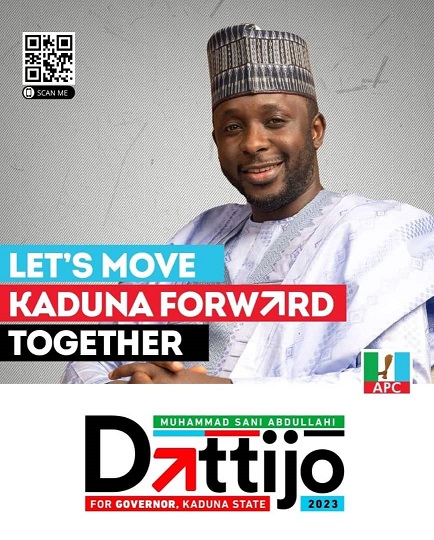
Being a youth myself, I have a bias for Muhammad Sani Abdullahi, popularly known as Dattijo, considering his age. Of course, age in itself isn’t a recipe for good governance or positive results, but young age coupled with competence, experience, the ability to form a capacitated team and then lead them to drive reforms and produce results would do magic. And Dattijo exudes these sterling qualities in addition to the advantage conferred on him by age.

Plus, he has exhibited these qualities and delivered outstanding results as the Commissioner of Planning and Budget Commission of Kaduna state and Chief of Staff to the Governor. Under the governor’s tutelage and with his experience as a commissioner, he has been armed with the ability to allocate resources amidst competing demands or interests for the betterment of the state. In addition, he chaired the Infrastructure Council, one of the policy councils initiated by el-Rufai to fast track soft and hard infrastructural developments.

Dattijo is a development practitioner trained in the University of Manchester and a graduate of Economics from the prestigious Ahmadu Bello University. With dwindling federal allocations, effects of COVID-19, the possibility of subsidy removal on petrol, and security challenges, economic difficulties will be harder for the state governments. However, I believe his deep knowledge of economics will help him navigate the state through tough financial times. Consequently, he has the mettle to sustain the growth in revenue mobilisation that has characterised el-Rufai’s tenure.

El-Rufai has done remarkably well in revenue mobilisation. This terrific effort has pushed Kaduna above the commercial nerve of Northern Nigeria, Kano State, in terms of internally generated revenue (IGR). Moreover, he has consistently invested in education and health as these two sectors gallop the highest percentage of the state’s budget. And as one Indian writer posited, “nobody bothers about education because results take a long time to come.” But el-Rufai cares. This fantastic idea of investing in critical sectors, especially education and health, needs to be continued.

Temperament and intellect. Ever since Dattijo’s body language signifies an intent to be the governor of Kaduna State, he has been under scrutiny and verbal attacks by some political opponents or sycophants. This is expected in electioneering, though. However, he has demonstrated thoughtful calmness and grace under pressure. He is even-tempered and not given to volatile gestures. These virtues are pertinent in a governor who would want to continue leading the Kaduna state towards greatness by reducing or eliminating ethnic tensions and building bridges.

On a final note, the saying that power corrupts people is a tag sincere seekers of the truth, or any discerning person cannot place on Dattijo’s neck. In all the leadership positions he has been appointed into by his boss, el-Rufai, he has served the people of Kaduna with humility, loyalty and hard work.

I believe Dattijo has the moral compass to build on el-Rufai’s legacies. He is blessed with intellectual rigour and has the courage to make sound, careful and bold decisions that hold generational transformation. Dattijo has officially declared his intention to succeed his boss. Therefore, I beseech Governor el-Rufai to rally other APC aspirants to support him. He is prepared and ready.

Abu Hibbah Ibrahim writes from Kaduna and can be reached via hibbahabubakar1505@gmail.com

A word of courage for Senator Oloriegbe and the 9th Senate

By Ibraheem Abdullateef

Praises may not come often. But the impact will always be felt – wherever it is being made. 

On the heels of the above, I write to the leadership of the Nigerian senate to commend them for conducting investigations into the N400 billion National Primary Health Centre projects awarded during the tenure of President Olusegun Obasanjo 2006 but were abandoned for strange reasons by the contractors. 

The administration initiated the National Primary Health Centre to deepen access to quality and affordable healthcare facilities for the less privileged at the local levels. It was originally conceived to build in each of the 774 LGAs in Nigeria a sixty (60) bed-capacity primary health centres; complemented with a three-bed flat; doctors quarters, ambulance, drugs; and other basic hospital equipment. 

To prosecute the projects, the federal government deducted monies from the excess crude account of all the 774 LGAs every month until the budgeted funds required for the project was realised. Despite that, little or no notable jobs have been done 15 years after. The majority of the projects have not been started, while many are simply abandoned to waste across the country. I wail at this culture of abandonment, sleaze, corruption, and wickedness to humankind. 

The consequences of this suspected case of breach of contract, diversion, and misappropriation of public funds are far-reaching on national health. According to the World Health Organisation (WHO), cited by the Journal of Global Health Report, the Maternal Mortality Ratio in Nigeria is 814 per 100,000 live births in 2020. It accounted for about 20 % of the global maternal deaths. The malaria figures are as grim, if not worse. The World Malaria report 2021 revealed over 50 million cases and 207,000 deaths annually. It means that the giant of Africa accounts for at least 27% of malaria deaths worldwide. 

Findings from global health reports linked the high mortality rates and malaria cases to delay in seeking maternal healthcare, delay in locating medical facilities, and low-quality healthcare services for the patients. It is safe to conclude that the full implementation and execution of the National Primary Health Centre project would have improved accessibility, availability, and affordability of quality care services in all the 774 LGAs in the country. As they were not handled well, it might have cost the nation over 7 million lives, mainly women, infants, and young adults. 

It is good this has not been made to pass yet. Upon the motion by Senator Yahaya Oloriegbe of Kwara central and the adoption of the resolution of an investigation by the senate a fortnight ago, some of the unscrupulous contractors have started works on the abandoned projects. In Ilorin South Local Government Area, one of the LGAs making up Kwara Central, work has resumed at the site, and some of the equipment are being returned. But will that be enough to compensate for the delay in the last 15 years? Who are these people? What would be the price of justice? 

I urge the media, the civil society groups, and the security agencies to aid the outstanding Senator Oloriegbe and the 9th senate’s bid for justice and probity. 

Kwara Central Senator Yahaya Oloriegbe’s alarm shows uncommon bravery, patriotism, and excellent knowledge of the industry as chairman of the Senate Committee on Health. This should propel investigations into the case deep and thorough. The conclusion of this issue is weighty. One, it would stimulate healthcare services across the country. Two, it may grant due punishment or sanctions to wrongdoers, setting a template for future conduct. The third point is that it may lead to a review, introduction or implementation of stricter laws and processes, including the roles of the ministries and agencies, in bidding and drawing funds for projects. 

Looking at the history of Nigerian politics, I am aware that this is hard to pull off. But it is not impossible. Leaders are elected to make hard, cracking decisions in the interest of the people and nation. The nation, especially the Nigerian youths, is happy with this step and are proud of the 9th senate. We urge them to go all out for justice in the larger interest of the nation. Here is our word of courage. 

Ibraheem Abdullateef is the Kwara Central Representative in the Nigerian Youth Parliament 5th Assembly. He tweets via @_ibraheemlateef

OBASANJO: Nigeria should have state police

By Hussaina Sufyan Ahmad


The former president of Nigeria, Olusegun Obasanjo has called for the creation of state police while delivering his speech at a lecture titled, ‘Social responsibility in nation building,’ to mark the 78th anniversary of Island Club in Lagos, on Friday.


Obasanjo said Nigeria needs state police to efficiently tackle the insecurity challenges of the country. He said only a safe environment can guarantee nation building.


According to Obasanjo:

“I have said it before and I will say it again. Nigeria should have state police all over the various states so that insecurity can be tackled efficiently. uaranteeing citizens a safe environment and round security is one thing a government must do.


No nation can be built where peace, security and stability are not guaranteed and with reasonable predictability of the President and the future not enthroned.”