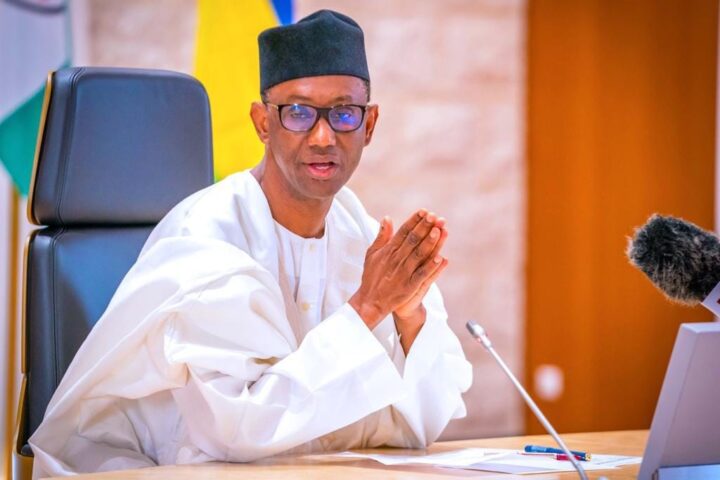
Nuhu Ribadu

Tinubu and efforts at addressing insecurity

By Kabir Fagge Ali

Sir, Nigeria has been plagued by various security challenges for over a decade, including insurgency, banditry, kidnapping, and separatist agitations. Despite high expectations from President Bola Ahmed Tinubu’s administration, the situation has deteriorated further, with increased abductions and ransom demands. According to a recent report, 3,707 citizens have been killed and 3,238 abducted between May 2023 and now.

The worsening security situation can be attributed to several factors, including under-resourced and poorly equipped security forces, corruption, high unemployment, poverty, weak governance structures, and a lack of political will.

However, it is encouraging to note that President Tinubu’s administration is adopting a comprehensive approach to address insecurity through the Office of the National Security Adviser (ONSA), Mallam Nuhu Ribadu. The strategy focuses on strengthening security forces, enhancing intelligence capabilities, and fostering regional and international collaboration.

According to the feeler from ONSA, the administration has increased funding and provided modern equipment and comprehensive training programs to enhance the operational capacity of the military, police, and other security forces.

Additionally, we were told that the administration has prioritised addressing economic factors contributing to insecurity, investing in education, healthcare, and job creation to mitigate the underlying causes of crime and violence. Efforts to combat corruption within the security sector have also been intensified, and regional security cooperation has been enhanced through diplomatic engagements with neighbouring countries.

I strongly believe that a comprehensive and multifaceted approach is required to effectively address Nigeria’s security challenges. This includes reforming and adequately equipping security agencies, enhancing accountability, investing in economic development programs, building trust between security forces and local communities, establishing effective mechanisms for resolving disputes, and implementing judicial reforms.

The government must also demonstrate strong political will, consistent policies, adequate funding, and transparency. Citizens must also recognise that security is a collective responsibility, not just the responsibility of security forces.

It is indisputable that President Tinubu’s administration has shown a commitment to addressing insecurity. Still, more must be done to restore public trust and confidence in the government’s ability to protect the nation. With a comprehensive approach and collective effort, Nigeria can overcome its security challenges and ensure peace and stability for its citizens.

Kabir Fagge Ali, a youth corps member with PRNigeria Centre, wrote via faggekabir29@gmail.com.

Rising food prices: A simple solution

By Zayyad I. Muhammad 

The rising prices of foodstuffs and the general high cost of living are global things. Nigeria is not immune to that; however, the case seems different because of our poor basic infrastructure in roads, education, healthcare, security, and communication. Moreover, traditional solutions from established sources appear ineffective, prompting consideration of alternative off-the-shelf solutions.

The masses are looking at the governments at the federal, state, and local levels. In particular, many Nigerians criticise the federal government due to the removal of petroleum subsidies and the decision to float the Naira.

Some short-term measures to tackle the current hardships are the following: the government should engage in healthy discussions with farms-produce marketers and large-scale farmers. 

These two groups have significant stocks of foodstuffs in their warehouses in many locations, especially in the north. The government should engage them in purchasing their farm produce mutually beneficially (without imposing prices on them). The Presidential Order to the National Security Adviser (NSA) Nuhu Ribadu, the Inspector General of Police (IGP) Kayode Egbetokun, and the Director General of the Department of State Service (DSS) Yusuf Bichi to work with governors and go after those hoarding foodstuffs is a right step, but it is not a silver bullet; in fact, it’s an intricate issue—how do you differentiate between foodstuff hoarders and large-scale farmers and legitimate farm-produce marketers who have large warehouses where they keep their commodities before distributing them to other parts of the country? Including supplies to humanitarian agencies 

A healthy engagement with legitimate farm-produce marketers and large-scale farmers is a simple and feasible solution to the soaring food prices. 

After purchasing the foodstuffs in large quantities, the government can package them into 2, 3, and 5 kg bags and resell them to the masses at affordable rates throughout all the local government areas (LGAs).

Bulk purchases by individuals or groups should be discouraged. Ward levels, markets, and schools can serve at the reselling centres. In addition, politicians should be off the resell team, and no one should purchase more than 10 kg since the target is the common man looking for daily meals. This is workable if the government truly wants to reach low-income people.

We should put it in our minds that, generally, the prices of foodstuffs shouldn’t have gone through the roof in the north, but what is currently happening in the north is that our farm-produce—rice, corn, millet, beans, etc.—is being exported to neighbouring African countries due to the weak value of the Naira. Naira is cheaper for buyers in nearby countries, while farm-produce marketers and large-scale farmers in Nigeria are making substantial profits. The high cost of logistics, illegal taxation, and checkpoint corruption are also major factors contributing to the high prices of foodstuffs. 

The above solution is a short-term measure; however, the real practising dry-season farmers should be directly supported to sustain it since this is dry-season farming time. They can be supported with solar-powered pumps, fertilisers, seeds, extension services, pesticides, etc. This will further increase food production. It also increases the popularity of the government, including reducing tensions and insecurity in the country. 

On the other hand, we must tell ourselves the truth: no programme or project can help the government sustain social order without factoring the youth into the equation. The Bola Tinubu government should devise a means to create some quick, productive jobs for the massive youth in the country. 

The federal government can launch job creation and empowerment programmes targeting young people and women in the following areas: agriculture, technology, entertainment, trading, and SME support and vocational training and support on welding, fashion, carpentry, home decoration, make-up, lucrative northern traditional cap making, etc. 

Agriculture: This should be divided into two segments: big and small. A group of graduates should be formed into “agribusiness entrepreneurs.” Then, the government should provide them with land, offer all the necessary extension services, and provide collateral or security for financial institutions to make the necessary funds available. This will promote the true generation of wealth through agriculture by young people. Secondly, women and young people rearing poultry, snailery, fish, etc., at home can be supported by providing highly subsidised feeds and more training on new techniques.

In technology, many young Nigerians are into coding, cryptocurrency, data processing, phone and computer sales, repairs, etc. The government can commission private sector firms to, on behalf of the government, train, equip, and provide capital to young people in this area. 

Another way to create productive jobs for young people is in the creative industries. For some talented young people, all they need is publicity through the correct medium. The government can employ advertising and marketing firms to promote selected talented individuals nationwide. Many young people are now involved in trading both online and offline. They can be trained, provided with additional capital, and promoted.

The government should avoid the usual government bureaucracy. A firm should be contracted to design the job creation programme. Then, the firm should also employ other responsible and resourceful firms to implement the programme across the country. Thus, the government will only deal with one firm, ensuring professional services are offered in implementing the programme.

The government can explore various avenues to secure quick funding for implementing this programme during these challenging times. Firstly, the Federal Government and its Ministries, Departments, and Agencies (MDAs) can leverage their underutilised assets, such as scrap assets, derelict buildings, abandoned structures, and damaged movable assets nationwide. Identifying, valuing, and disposing of these assets could generate substantial revenue for the programme implementation.

Additionally, the government could consider issuing special bonds and tapping into pension funds under the management of Pension Fund Administrators (PFA) and Pension Fund Custodians (PFC). Exploring partnerships with international donors and foundations, particularly in the Middle East and Asia, could provide valuable funding opportunities, especially with expert guidance.

Zayyad I. Muhammad writes from Abuja via zaymohd@yahoo.com.

Ribadu: An icon at 63

By Muntaka Abdul-Hadi Dabo

Monday, 21st November 1960 will forever remain a memorable day for Nigeria and the rest of the world. For it was on that day an iconic figure was born. The day is also a birthday for some prominent and famous people like Brain Ritchie and Brian McNamara in the United States,  and in this special month of November, people of the US went to the polls to elect their 46th president.

Malam, as he is fondly called by many is celebrating his 63rd birthday today. A man of impeccable character who exemplifies iconic leadership traits in all his public and private life is a globally recognized brand. He was, and still is a blessing and inspiration to millions of people near and far. He has successfully built an incorruptible record of service that still remains unbeatable by any public officer in the past and present Nigeria. Needless to add that he was the pioneer chairman of the Economic and Financial Crime Commission (EFCC).

Since leaving the service of the EFCC, his unstained reputation continues to ring loud bells in almost every household across Nigeria and beyond,  because of his outstanding performance in every office he occupied, particularly in the last two decades. He rose to global prominence when he was appointed to head the anti-graft Agency by the then President Chief Olusegun Aremu Obasanjo between the period of 2003-2008. His doggedness, foresightedness and fearlessness made him confronted corruption head-on, and this exemplary style of leadership catapulted EFCC as the most performing agency at then. Presently, the EFCC has lost its past glory. The excellent, selfless and competent services that were rendered and the subsequent achievements recorded by Mallam still remains undefeated to this day.

Recalled that it was during his tenure that most corrupt politicians and public office holders were brought to book for various but grave corruption charges labelled against them. The brave and fearless Malam touched those who thought they were untouchable, and they all ended up in prison. It’s interesting to note that contrary to what some misguided people say about him – that he was being used by Obasanjo to witch-hunt the latter’s political opponents, most of the people that were arrested by the EFCC under Ribadu were all convicted and sent to jail by a competent court of law. Under the leadership of Nuhu Ribadu, EFCC issued thousands of indictments and achieved about 270 convictions. One notable case was that of his boss, the then Inspector General of Police Tafa Balogun, who was convicted, jailed and made to return £150 million under a plea bargain. Bode George, DSP Alamieyeseigha were not all spared by the Nuhu Ribadu-led EFCC.

It is a common knowledge to any discerning mind that one of the arrested politicians James Ibori offered $15 million bribe and a mansion abroad to the EFCC boss so that his case could be closed, but as expected of the no-nonsense and honest police officer, Ribadu turned down the offer by not accepting the illegal money that can turn his fortune to a billionaire! He deposited the money in the central bank of Nigeria to serve as evidence against Ibori of Delta State who then fled the country in 2010 but was apprehended in Dubai and eventually extradited to the UK. Ibori was found guilty by the UK court on money laundering where he served only a 4-year prison term out of the initial 13-year sentence handed to him.

It saddens me whenever I read negative comments about Nuhu Ribadu, even though I don’t expect him to be liked by everyone, but it’s quite unfortunate when people who made a lot of sacrifices and served their fatherland diligently are not much celebrated in their homeland. Could it be a deliberate attempt to let the labour of our present heroes go in vain? While in the service of Nigeria police force and the Economic and Financial Crime Commission (EFCC), Malam Nuhu Ribadu diligently served his motherland and recorded quite a number of tremendous achievements that no one has so far recorded such in the history of EFCC. The most notable amongst his achievements are the delisting of Nigeria from the FATF’s list of Non-cooperative countries and territories, admission into the prestigious Egmont group and the withdrawal of US Treasury advisory on Nigeria by the FINCEN, these, together with many unmentioned achievements, were critical to the perception of Nigeria globally.

Nuhu Ribadu, a trained lawyer and fearless crime fighter, is a proud recipient of several awards as a police officer, prosecutor and chairman of EFCC. He received the IGP special awards in 1997, 1998 and 2000. In 2008, he received the World Bank’s Jit Gill memorial award for outstanding public service for having led a courageous anti-corruption drive in Nigeria as head of EFCC. In 2008, Ribadu completed the senior Executive course of the Nigeria Institute of Policy and Strategic Studies where he was conferred with the Membership of the National Institute, MNI.

In June 2010, Babcock University Ogun State awarded him a Doctor of Laws (honoris causa) in recognition of his resolute change as well as his fierce stance against corruption in the face of sponsored disgrace and death threats. This has resulted into positive changes and global acclaim hitherto considered impossible. Since 2014, notable newspapers and magazines have repeatedly voted Dr Nuhu Ribadu as man of the year, in recognition of his outstanding achievements as a committed crusader against corruption and other related crimes.

No matter how Malam is perceived, one thing is certain, and that’s his outstanding achievements which can’t be questioned or taken away from him. The diligent and excellent services he rendered to his fatherland were not only recognized in Nigeria, but internationally. His outstanding performance later earned him a work with the United Nation as the UN Special Envoy to Afghanistan by the UN Department for International Development. The Adamawa-born politician, TED fellow and a Senior Fellow in St. Anthony’s College of University of Oxford, London has since written his name in Gold, especially when he conceded defeat in the 2015 gubernatorial elections in his state, losing to the candidate of APC. Sincerely speaking, Ribadu was the best governor Adamawa couldn’t have because of his party affiliation then (PDP), not because he lacks the basic qualities to govern the good people of Adamawa State. But as a true believer, Malam accepted the outcome of the elections in good faith and congratulated the then Governor Jibrila Bindow, knowing fully that power belongs to Allah alone, and He gives it to whosoever He wishes and at any time. This is something very rare to get from our politicians, but Ribadu stands out to be entirely different among today’s politicians.

In 2018, Malam was alongside eight individuals and organizations from Asia, America, Africa, Oceania, and Europe for their decisive role in curtailing the menace of corruption and corrupt practices. He together with former vice President of World Bank, Leonard Frank McCarthy, became the joint winners in the category of Anti corruption lifetime achievements

Indeed, Malam Nuhu Ribadu has received the ‘Game Changer’ award by ThisDay newspaper 2015 for initiating a series of no-nonsense measures as chairman of the EFCC and for giving individuals with questionable character a big chase. He is still the best in every capacity he occupied. His white garment of integrity still remained unblemished even after coming into contact with people of questionable characters.

Since 2010, Ribadu has been involved in active politics, and as one of the founding members of the APC, he played a key role that ensured the re-election of former President Muhammadu Buhari in 2019 general elections and President Bola Ahmed Tinubu in 2023. The retired Assistant inspector general of police has done a lot for Nigeria and the international community, and we can’t deny the fact that his quest to serve humanity has contributed immensely to the growth of our democracy to its present state.

Ribadu, the greatest anti-corruption Czar of Africa has indeed shone among stars, led among leaders and shown what it takes to be a great agent of change. At the moment, he is the most adorable and celebrated politician in Nigeria and is gaining aggressive popularity both home and abroad on daily basis. It’s my candid opinion that it will take a decade or more before any politician can compete with Malam in terms of popularity, acceptance and public goodwill.

The year 2012 saw Nuhu Ribadu accepted to head an inquest into government’s revenue from the oil sector under the administration of one of the most patient and tolerable President Nigeria ever had Dr Goodluck Jonathan, an assignment he handled with his characteristic passion and dexterity, turning in a report that has since become reference point on reforming the Nigeria’s oil industry.

He (Ribadu) is today, the current National Security Adviser to President Bola Ahmed Tinubu, a position he assumed in June this year and he’s doing an amazing job.

On the occasion of his 63rd birthday today being 21/11/2023, I join well-meaning Nigerians and the international community in wishing this exemplary leader all the good things that life can offer. May Allah (SWT) continue to shower him with more blessings, grace, good health, wisdom and knowledge to contribute more to the development of Adamawa State in particular, Nigeria, and the world at large. In sha Allah.

NB: This article was written in November 2022 to celebrate the 62nd Birthday of the greatest anti-corruption Czar Africa has ever witnessed Mallam (Dr) Nuhu Ribadu and edited for the same purpose in November 2023 to celebrate his 63rd Birthday.

Muntaka Abdul-Hadi Dabo is a Research Scholar, African Centre of Excellence on Technology Enhanced Learning (ACETEL)
National Open University of Nigeria (NOUN). He can be reached via; ace21160006@noun.edu.ng, muntaka.dabo@gmail.com, +2348036397682

NSA Nuhu Ribadu style: A critique 

By Zayyad I. Muhammad 

For 24 years, most Nigerians were only familiar with one style of operation by their National Security Advisers (NSA)—a regimental style—because of the complete military background of the previous NSAs. Having NSAs with military experience is an excellent idea, but some critical situations require looking at things from different angles, including outside-the-book approaches.

The coming of Nuhu Ribadu as Nigeria’s National Security Adviser is a paradigm shift and a systemic and systematic approach by President Bola Ahmed Tinubu. Tinubu brought not only a person that he understood but also a person who understood his steps. It’s a kind of quality assurance.

Because for two decades, Nigerians have been used to one style, they need to be educated from a layman’s perspective. NSA Nuhu’s style will and must always be soft and hard, silent and loud, publicly and secretly, unique and ordinary because of his background, training, and experience—an excellent police officer and an anti-corruption czar who has gone through the mills of his fields.

Before his appointment and signs that he would be President Tinubu’s NSA, some people thought de-marketing and painting him black would deny him the position. They forgot that security matters; it goes beyond politics when dealing with goal-getters like Tinubu. It’s a matter of the quality of Nuhu Ribadu and Tinubu’s philosophy on exceptional human resources.

The National Security Adviser manages Nigeria’s security on behalf of the President, and he is the chief advisor on all matters vital to Nigeria’s very survival.

The big questions are: has Nuhu Ribadu brought on board something new, being a new face with different backgrounds from the previous NSAs in 24 years? Has Nuhu Ribadu been able to separate politics from policy? He has actively participated in politics before now. Has Nigerian security improved under Nuhu Ribadu?

Analysing security issues and their managers is often difficult, or rather futile because the gains achieved in a decade can be wiped away within a few minutes by one senseless act by terrorists, bandits, or common criminals. Nuhu has brought something unique: Nigerians are being informed of happenings in the fight against criminality, the NSA is now visible when required, confidence has been built, and resources are appropriately distributed while separating needs from wants. Under NSA Nuhu Ribadu, kinetic and non-kinetic approaches are being applied to tackle the security challenges in Nigeria. Inter-agency synergies are now a key in the security architecture.

Furthermore, all security agencies are being reformed and reinvigorated to play their role in internal security effectively. At the same time, the military is being freed from the burden of performing both its constitutional role and that of the police, thus allowing it to concentrate on external security fully.

Politics and man are like love and humankind—they co-exist. Human beings must always love something; the same is true of politics: once one knits tight with politics, they live together. Even his adversaries must admit that Mallam Nuhu was able to separate his office from politics, knowing fully the enormous responsibilities on his head, and Nigeria and the world are keenly watching him. Furthermore, Mallam Nuhu has been able to drive the ONSA back to its original status as a National Security Vehicle, not the sad belief that it is a kind of  ‘big pot ‘for politicians to scoop from.

Silently and interestingly, NSA Nuhu is building a strong interface among all the security agencies. Roles are being defined to allow seamless work to achieve one goal: the peace of the country and its people. Mallam Nuhu is piloting and overseeing security through the eyes of a well-trained security czar who understands both the hard and soft approaches.

Inter-agency collaboration has improved; ordinary Nigerians now view the NSA as just for security only; NSA words now not only matter but work. An example is the recent off-cycle governorship election in Bayelsa, Imo, and Kogi states. Mallam Nuhu assured Nigerians that the governorship elections would be conducted without interference. And it was. This is how NSAs work—their worlds translate into actions and results.

Zayyad I. Muhammad writes from Abuja via zaymohd@yahoo.com.

Labour unions temporarily suspend nationwide strike after Ribadu intervened

By Sabiu Abdullahi 

The Nigeria Labour Congress (NLC) and Trade Union Congress (TUC) have temporarily suspended their nationwide strike following mediation by the National Security Adviser (NSA), Nuhu Ribadu. 

The decision, announced after a one-hour meeting, reflects the unions’ trust in Ribadu’s commitment to addressing their concerns without political bias.

The National Deputy President of the TUC, Tommy Etim, clarified that the suspension is temporary, pending the government’s response to their demands. 

The strike, triggered by an alleged assault on NLC President Joe Ajaero during a protest in Imo State, prompted the NSA to apologize for the incident and assure the labour leaders of justice.

While the labour unions find solace in the NSA’s intervention, the organised Private Sector (OPS) criticizes the timing, expressing concerns over potential economic repercussions. 

The nation awaits further developments as the temporary suspension hinges on the government’s actions within the specified timeframe.