Northern Nigeria

Sultan Sa’ad rewards Keke Napep rider with 500,000 naira

By Abdurrahman Muhammad

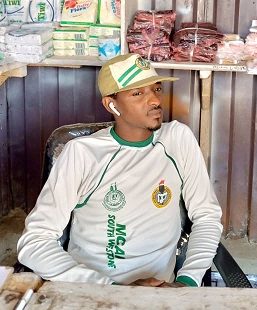
His Eminence, Sultan Muhammad Sa’ad Abubakar MNI, has honoured a Keke Napep rider, Malam Akilu Gangare in Jos, with the sum of NGN500,000, for returning NGN500,000 left in his Keke Napep to its rightful owner.

A passenger boarded Malam Akilu’s Napep to a particular place. After reaching his destination, the passenger hurriedly alighted leaving his back behind. A little while longer, Malam Akilu sighted the bag in his Napep after his passenger has disappeared. He opened the the bag out of curiosity only to see a large sum of money NGN500,000 inside.

Malam Akilu quickly turned back in search of the passenger. After he located him, he handed him back the bag with his money intact.

On receiving the news, His Eminence the Sultan made the necessary investigation and the information turned out to be true.

Yesterday, Saturday, 23-10-2021, His Eminence rewarded Malam Akilu in Jos with the sum of NGN500,000. The exact amount he honestly returned to the owner.

For His Eminence, this is not the first time of doing this kind of great gesture. He has done it several times before. It is his way of rewarding honesty and encouraging people to be good citizens.

Kebbi gov’t confirms release of 30 abducted students

By Muhammad Sabiu

The Kebbi State Government has on Thursday confirmed the release of about 30 students of the Federal Government College, Yauri, who were in June abducted by the terrorists operating in northwest Nigeria.

The confirmation came in a statement made available to journalists by Yahaya Sarki, the spokesperson to Governor Atiku Bagudu of Kebbi State.

Recall that even as of the time of the abduction, the exact number of the kidnapped students was unknown. This makes it impossible for the government to confirm the number of students still in captivity after the release of the said 30.

Confirming the release, Mr Sarki wrote, “Today Thursday, the 21st of October, 2021 thirty (30) students of the Federal Government College, Birnin Yauri have arrived Birnin Kebbi, the Kebbi State capital following their release, while efforts are still continuing to secure the release of the remaining.”

He added that the students would “undergo medical screening and support while being reunited with their families.”

Although, unlike other northwestern states that have perpetually been suffering from kidnappings and killings by terrorists, Kebbi State also faces the same menace.

The Igbo Presidency!

By Mohammed Zayyad

The debate that the presidency moves to the South in 2023 has gained momentum. Also, presidential hopefuls from the North, like Atiku Abukar, Sule Lamido, Senator Bala Mohammed, Senator Rabiu Musa Kwankwaso, are also effectively playing their games.

The calls for power to shift to the South have further triggered permutations and realignments in the polity. Both the Peoples Democratic Party (PDP) and the All Progressive Congress (APC) have strong candidates from the South. But these candidates have their respective baggage, and the parties have internal squabbles that must be resolved.

The APC has its stronghold in the Northwest, Southwest, Northeast and Northcentral – four of the nation’s six geopolitical zones. The PDP has strong structures in the six zones with a stronghold in the Southeast and Southsouth. However, the APC has moved into the Southeast in full force. Before the 2015 elections, nobody had ever thought that the APC would someday have even a ward councillor in the Southeast. But, today, the party has two state governors, senators, House of Representatives members, state house of assembly members, local council chairmen, councillors and formidable party structures in all the five southeastern states.

Come 2023, the APC has no reasons to retain power in the North, but there is strong politicking by some governors and other bigwigs to maintain power. This will mean the APC contravening the unwritten agreement between the North and the South on power rotation. In any case, the APC does not have a strong presidential candidate from the North. This is a big plus to the presidential hopefuls from the South, or Southeast, in particular. Furthermore, the Southeast has a strong case to present based on a plank that the Southeast is the only geopolitical zone in the South that has not produced a President or vice president on any political party platform since 1999.

If APC picks its presidential candidate from the South, especially Southwest, the PDP may attempt to outwit this by looking to the North for its presidential candidate. This, as well, will put the  PDP in a catch-22 situation on how to explain this to the South, especially the Southeast and the South-South, why the North again, after eight years of the North being in power.

PDP has good candidates in their own ‘rights’ from the Southeast and South-South. Enugu State Governor Ifeanyi Ugwuanyi, Peter Obi from Southeast and Governor Nyesom Wike from the South-South. Obi does not have friends in the North and has never tried to pull an appeal from the region, directly or by proxy.  His deportation of other Nigerians to their states when he was governor of Anambra state was used against him in the North during the 2019 campaign, and it worked.

For Wike, his words, ‘Rivers is a Christian state’ will be used against him in the North like Governor El-Rufai’s Muslim-Muslim ticket in Kaduna can be used against him (El-Rufai). This is how local politics impact a candidate’s wider political opportunities. Some young people in the north are also campaigning for  Enugu State Governor Ifeanyi Ugwuanyi. Still, the IPOB issue will be a significant hindrance in the North, but it is not insurmountable. Advocates of secession appear not to understand Nigeria. There are massive inter-marriage, friendships, business links and political alliances, among other ties, between many northerners and many Igbos.

Some nationalistic politicians from the Southeast have started to convince other Nigerians to support the region to produce the Nigeria president of Southeast extraction in 2023.  The bigwigs’ forefront presidential hopefuls are Governor David Umahi,  Orji Uzor Kalu, Governor Ifeanyi Ugwuanyi, Rochas Okorocha, Chris Baywood Ibe, Ken Nnamani, Minister of State for Education, Dr Chinedu Nwajiuba, Sen Osita Izunaso and many others. Of course, these politicians have their political baggage and controversies. However, people like Chris Baywood Ibe are new faces without any political baggage and controversy-free.

A thorough understanding of how Nigerian politics works is paramount in achieving the political goals of a group, a region, or individuals. There are so many conflicting interests in Nigeria. Still, there are always windows for alliances, give-and-take, a hand of friendship, and convincing others to support a particular political cause or an individual’s.

For the 2023 presidency, the Southeast should present a candidate with a new face, no controversies, no political baggage and who has friends and is well-known across the Niger. For both the APC and the PDP, it will be an opportunity to reunite Nigeria and rekindle the historical political alliance between the north and the southeast while maintaining the partys’ current national. The Igbo presidency is possible through the spirit of one Nigeria.

Zayyad I. Muhammad writes from Abuja. He can be reached via zaymohd@yahoo.com.

Zoning or merit: what path Nigeria?

By Abdulrazak Iliyasu Sansani


Nigeria, the most populous African country: endowed, cerebral, and should have been one of the most promising countries in the world has democracy as its form of government.

This has not always been the case for a country that will be celebrating her 61st anniversary as an independent country on October 1, 2021. Nigeria’s path to Independence was rather long,  laced with procrastination, and unlike most of her fellow African countries. Some of them getting Independence earlier than Nigeria, even when Nigeria was more prepared to handle the travails of life in a newly independent country.

Some of the founding fathers of Nigeria, especially from the northern part of the country had a hand in how this panned out. So many accounts point to the fact that they did all that to protect the interests of our compatriots from the north, who were lagging behind in education, what is referred to as western education, especially in northern Nigeria to differentiate it from the Islamic education, which the north was already well established as a region, with the Kanem Bornu empire having a documented history of more than a millennium in Islamic scholarship.

Thus, some of the founding fathers thought that having independence at one point in time would have affected their region in managing the affairs of an independent state. They worked and took their time in preparation for having what it took to run self-government, which in the end delayed our independence from colonial rule. I hold no brief for any of them despite the fact that I will always have utmost esteem for all of our founding fathers’ because of their contributions to our dear country.

Six decades after Independence. We have tested disparate forms of government and systems. In these periods, Nigeria has seen what it means to be under any of these. It has taken us a long time to settle for what we today practise: democracy. Having experienced many civilians and military regimes in Nigeria. This civilian, democratic dispensation has lasted longer than any in our quest for true nationhood.

When on May 29, 1999, Chief Olusegun Aremu Obasanjo mounted the podium to take the most sacred oath of office, as the President and Commander-in-chief of the Nigerian armed forces. It was not only in fulfilment of the legitimate aspirations of Nigeria for a sound democratic country but also the inherent freedoms, respect for rule of law, justice, and all ensuing benefits of living in a country where a much-revered document, the constitution explicitly guaranteed all rights that preserve as well as uphold the dignity of all citizens irrespective of faith, region, gender, age, social status, etc.

22 years afterwards we are yet to decide on even the most salient of issues, which deciding who governs the country forms a big part of it at any given time. Since the zoning lexicon was introduced in the 2nd republic by the iconic Dr K.O Mbadiwe, zoning has taken centre stage throughout. Becoming more prominent by every electioneering even when it has been assumed erroneously to become less crucial. In fact, zoning in Nigeria is like the proverbial cat with nine lives that has refused to die.

Zoning of positions has taken an integral place in the political office sharing formula prior to elections and endorsements among political power cycle whether subtly or glaringly. It has reached a point where zoning has almost become a norm. Even though, it is not enshrined in our constitution or clearly stated in the constitution of any of the major political parties in Nigeria to the best of my knowledge. But there seems to be an unwritten rule vividly engraved in the minds of most of the major political actors, followers, average politicians, political pundits, etc. It is a stark reality that there is a gentleman agreement that drives agitation for zoning in the political sphere of Nigeria. This has continued to lead the quest for power at all levels: regions, zones, states, local governments, districts, wards, villages, etc.

Yet, we have failed as a nation to give zoning the priority it deserves in our political discourse. As far as Nigeria is concerned, we are living in self-denial as regards zoning. Zoning is abhorred, cherished, and even discussed when political interests are at stake on many occasions without the pure intent of the interest of the masses at heart. Examples abound in many states of Nigeria where people could study and comprehend zoning. I will dwell more on the presidency, which today is the focal point of strong proponents of zoning who have resolved to ride on the back of it to the Aso Rock Presidential Villa, the Nigerian President’s official workplace and residence.

‘The Forum reiterates its commitment to the politics of equity, fairness and unanimously agrees that the presidency of Nigeria be rotated between Southern and Northern Nigeria and resolved that the next president of Nigeria should emerge from the Southern Region,’ said in a communique issued at the conclusion of the meeting of governors of Southern Nigeria at the Lagos State Government  House, Ikeja, Lagos State, on Monday, July 5, 2021, Nigeria.

While the same journey to the coveted  Aso rock villa has invited the wrath of the sudden champions of merit over zoning, or any political consideration, the problem is that one doesn’t just grasp anything when zoning is the topic of discussion. For the same proponents of zoning today who believe it is the flawless solution to our difficult decision of the leadership of our country at any given time, most of them were the people who were absolutely against it and clearly asserted that it impedes our progress as a country. They believed only the best deserved to lead this country.

‘The Forum observed that some Northern States Governors had earlier expressed views for a power-shift to three Geo-Political Zone in the South with a view to promoting unity and peace in the Nation. Notwithstanding their comments, the Forum unanimously condemn the statement by the Southern Governors Forum that the Presidency must go to the South. The statement is quite contradictory with the provision of the Constitution of the Federal Republic of Nigeria (1999) as amended that the elected President shall:- score the majority votes; score at least 25% of the votes cast in 2/3 States of the Federation. In the case of run-up simple majority win the election,’ one of the resolutions of the Northern States Governors’ Forum meeting with Northern Emirs and Chiefs held on Monday, September 27, 2021, in Kaduna.

Today, the views remain astoundingly the same but the majority of those who shared them have seamlessly changed positions from Arewa Consultative Forum (ACF) is a political and cultural association of leaders in Northern Nigeria, which has sizeable influence in the political scene. Afenifere pan Yoruba socio-political group. Ohanaeze Ndigbo is the apex Igbo socio-political group. Northern Elders Forum, Southern Governors forum, an avalanche of powerful politicians from all over the country, and just recently Northern Governors Forum followed suit, etc.

When former President Goodluck Ebele Jonathan succeeded his boss, late President Umaru Musa Yar’adua I could vividly recall the north was against his candidacy, especially the  PDP chieftains from the north who said it was the north’s tenure. I recounted the national press is awash with news that concentrated on the candidacy of the then occupant of the Presidential Villa, Dr Goodluck Jonathan. I remembered one of the popular songs then, which was urging him to contest. ‘Run, Goodluck, Run,’ which the amazon Onyeka Onwenu MFR recorded and released in 2011 in support of the former President’s electioneering.

Most of the people who are ardent supporters of zoning today are from the south and they were blatantly against it then and had the unconstitutionality of zoning as their chief reason. Of course, because it didn’t favour them. While those who are mostly antagonistic about it today, are amazingly from the north and have similar motives like those, who were against it then, certainly because it doesn’t favour them too now.

 As it is President Muhammadu Buhari who hails from Katsina State, the northern part of the country finishing his last tenure. Should the next President come from the south, we would be back to this same situation in eight years time, if the needful is not done now. That is if we don’t make zoning constitutional now. We have to tackle this issue once and for all.  If we fail to do it now, the northern and southern parts of Nigeria will simply change stance without any shame let alone remorse whenever it suits them. What country do we want to bequeath to our children and the future generations indeed, that is if we survive all these self-defeating and self-destruction onslaughts against the country?  We must ponder on these things.

It must be noted some of these organisations I have mentioned above are not directly political in nature while others are.  But they all have joined this discussion with all vigour, tenacity, and everything they have. This obviously shows that the issue of zoning in Nigeria has transcended political membership and affiliations. It has gone far beyond that.

Take the two different governors fora whose members come from different parties namely: the leading, All Progressives Congress, the main opposition party, People’s Democratic Party, and the All Progressives Grand Alliance. This speaks volumes for anyone to understand that zoning is what should be thoroughly discussed. For it is what the politicians talk about all the time and reject it only when others are to benefit from it. It is laughable,  worrisome, and unfortunate. But it is the most consistent thing about zoning I have painstakingly observed over the years in Nigeria. Take your time, follow, observe, and study Nigerian politics with an emphasis on zoning you would arrive at my point. Nigerians must not shy away from discussing zoning. We have to talk over it with a view to finding lasting solutions.

Over the years, I have constantly advocated for merit over zoning. I have remained consistent on that with copious evidence. But I think there is a need for acceptance of a little change or even outright in my position with the benefit of insight.  Time and again the idea of zoning remains constant in Nigeria, while politicians decide what the masses support more often than not without the people having a clue that they are being sacrificed on the altar of self-serving political goals.

Yes, to be fair to them there are quite a number of politicians who are genuinely interested in the sincere and fair sharing of power at all tiers of government. This is a huge reason for us to push forward for a critical discourse that treats this matter frankly with the ultimate goal of eventually completing this seeming personal jigsaw that has refused to fall in place or more correctly we haven’t done much as Nigerians as regards to this.

‘As I ponder on today’s event, I remember with great euphoria that one striking beauty of democracy is the glamour and solidity of majority rule in which the greater number of the people participate in the decision-making process of the system. Hence, de-emphasizing majority rule is a strong negation of democracy and an attempt to deprive the society of that unalienable privilege. However, there is also, the other side of the coin in this discourse…’ because the classical democracy oversimplified its essence to the exaltation of the tyranny of the majority and to the chagrin of the oppressed minority. Thus it is the effort to diminish the tyranny of the majority that people came up with various ideas of which consensus democracy and zoning of political power, etc. are part of.

‘Nigeria’s multi-faceted problems can be encapsulated into economic, cultural, religious and political, but I am of the opinion, that if we can be able to get our politics right, the others will follow suit, this is because, no Nation can be able to achieve meaningful national development if the polity is corrosive, structurally imbalanced and defective, no matter the amount of abundant resources at its disposal,’ Senator (DR.) Ben Ndi Obi CON said, in a seminar organised in 2017 on zoning in Anambra State, Nigeria by Anambra State council of traditional rulers.

Nigerians have to comprehend the peculiarities of their country. It is a unique, complex, diverse, sharply divided along ethnic and religious lines country. If you are a Nigerian full aware of these and all the consequences of these, how best do you advocate that we address this? Do you think after seeing this issue arising over and over again that the best way is to remain static and gloomily speculate that things will change on their own?  This is apparently not the best route to take.

Nigerian lawmakers must make new laws or enact ones that will make zoning constitutional until we hopefully reach a point where Nigerians comprehend that only the best or those we believe to be the best based on their proven records of excellence service regardless of region, faith, gender, etc deserve to lead us. I pray that time comes in our lifetime. I hope we all match prayers with great efforts to see it through.

For now, we must address this issue based on the urgency, the state of our polity, and our realities permit. I propose that zoning be institutionalised in Nigeria. This should be made by amending the Nigerian constitution to incorporate zoning into it. But this idea should experiment within some specific years. There should be a well-defined scope of the zoning. I suggest it should be first among regions and then geo-political zones. Regions here means the north and south. Geo-Political zones here represent the northeast, the north-central, the north-west, the south-east, south south, and south-west.

 Everyone must be carried along if we must close loopholes that politicians exploit. What is good for the north should definitely be good for the south. What is bad for the north should surely be bad for the south vice versa. If this country should thrive, we must eschew all sentiments and pursue causes that aid the whole country. We must have mutual respect, understanding, and love for one another. It doesn’t help any of us being acrimonious.

So many Nigerians may not agree with what I proposed. As I earlier stated, I was not a supporter of zoning. I still prefer merit to it. But in a country like Nigeria with the level of ethnic tensions, misunderstanding, mistrust, mischief, polarisation, evil machinations, etc: it is for the best that we make sacrifices, test new ideas, or old ones we have shied away from in our aim to get a workable solution for the country we all love.

Nigeria needs an accommodating, more inclusive, and better polity that gives room for everyone, even if it means getting it turn-by-turn. With time, we could reach the level where Nigerians will decide that we do away with zoning. Our level of understanding, maturity and development will warrant that one day. Policies, legislation, laws, and whatever are there for the purpose and time they best serve. Once they are no longer fashionable, they don’t address issues they were made in the first place to; amendments or new ones outrightly will be employed.

 Nothing is too complicated, overly strenuous, inconceivable, or even impossible to explore in the quest of building that truly great nation that will be the envy of other nations and a clear example of the incredible success that could be achieved when we get it right. I work and I long for the day we will get it right as a nation. Happy 61st Independence anniversary Nigeria. God bless Nigeria.

Abdulrazak Iliyasu Sansani wrote from Turaki B, Jalingo, Taraba State. He can be reached via abdulrazaksansani93@gmail.com.

PDP can still zone presidency to the North

By Abdulhaleem Ishaq Ringim


Zoning, especially of the presidency, is not a product of a national consensus but that of certain political parties’ internal dynamics. It is pertinent that we understand that. Nigerians did not sit in a national conference and agree to zone or rotate power. So it is not binding on the broader national politics.

The idea of zoning started with the PDP in 1998, it was entrenched in PDP’s constitution in Article 7, Section 7.2(C), and it prescribes that “In pursuant of the principles of equity, justice and fairness, the party shall adhere to the policy of rotation and zoning of party and public elective offices and it shall be enforced by the appropriate executive committees at all levels”.

Chief Olusegun Obasanjo, a southerner, became president in 1999 and prevailed as president for two terms representing eight uninterrupted years. In 2007, Umaru Musa Yaradua was nominated to fulfil this zoning principle and rotation of power to the North. Hence, he was supposed to also prevail as president for eight uninterrupted years as the president of Nigeria.

Unfortunately, he was only able to serve for about three years due to his ill health and subsequent death. As a result, president Goodluck Jonathan, who was the Vice President, assumed office as Acting President through the invocation of the “Doctrine of Necessity” principle and completed the term, which was supposed to be between May 2007 to May 2011.

However, according to the zoning agreement, it was still the turn of the North as a Northern President was supposed to go for eight uninterrupted years. But Goodluck Jonathan was not going to have it; he insisted on contesting the presidency, thereby jettisoning the PDP’s zoning principle.

A serious crisis erupted within the party, and a section of the party’s membership was hell-bent on adhering to the zoning agreement and even went ahead to endorse Atiku Abubakar as the Northern Consensus candidate to complete the North’s uninterrupted eight years.

The stalemate prevailed until a case was made that Jonathan would only be completing the Yaradua Ticket, which he was initially part of. And it was agreed that Jonathan would only be going for a single term. The decision still contravened the zoning arrangement, but Jonathan had his way; he contested and won the 2011 elections.

Jonathan, however, went back on his promise and still contested for the 2015 elections even while it was supposed to be contested by a Northern candidate as per the 2011 agreement and the broader zoning principle. And he lost.

Hence, it is only fair that the presidency is rotated back to the North “In pursuant of the principles of equity, justice and fairness”.

So no matter where the party chairmanship is zoned, the party’s zoning principle will still favour the North for the Presidency. And come to think of it, the circumstance is not novel, for this is not the first time a Northern Presidential candidate would emerge during the chairmanship of a Northern Party Chairman in the PDP. Col Ahmadu Ali was PDP’s Chairman from 2005 to 2008, and Yaradua was nominated to fly PDP’s flag and was voted to office in 2007 while Col Ali was still chairman.

Coming back to the National outlook, the (unofficial) zoning agreement in the APC favours the South for the 2023 elections, while that of the PDP favours the North. And this is where the calculation is!

Peradventure the parties adhere to these zoning agreements, and we get a PDP Northern Candidate (for example, Atiku Abubakar with a running mate like Peter Obi, Nyesom Wike or Okonjo Iweala) and an APC Southern Candidate (for example, Asiwaju Bola Ahmed Tinubu with a running mate like Babagana Zulum, Maimala Buni or Boss Mustapha), who would the calculation favour?

Answer this, and you would understand why PDP would want to lure APC into fielding a Southern candidate!

Abdulhaleem Ishaq Ringim is a political and public affairs analyst. He writes from Zaria and can be reached through haleemabdul1999@gmail.com.

GOGIS under Dr Kabiru Usman Hassan

By Adamu Umar Kumo

Gombe Geographic Information Systems (GOGIS) is an agency under Gombe State Ministry of Lands and Survey saddled with the responsibility of modernizing land administration in Gombe State in accordance with international urban planning standards and practices to pave the way for infrastructural development in Gombe State.

To ensure a solid foundation has been laid for successful takeoff and smooth running of the agency, His Excellency, Governor Muhammadu Inuwa Yahaya appointed a competent personality and Contemporary Town Planner with more than a decade of experience in the profession, Dr Kabiru Usman Hassan to pilot the affairs of the Agency.

GOGIS, under the leadership of Dr Kabiru Usman Hassan, has modernised the process of issuing land titles and other related documents using state-of-the-art facilities. The transition and integration of land information into a unified geographic database has given the agency easy access to information about any piece of land or landed property with a click of a finger. This has drastically reduced duplication and other forms of malpractices and corruption in land administration.

With the approval of adequate funds for aerial mapping that will cover the whole Gombe State (both inhabited and uninhabited areas) using high resolution remote sensing facilities, GOGIS will soon be partaking in the exploration of resources in the state. This will go a long way in wooing investors to Gombe state and eventually boost our economy.

As GOGIS continue to undertake “Operation Show Your Land Title Documents”, the operation aimed at sensitizing people on their duty as law-abiding citizens to pay their ground rent and other related taxes, the agency has succeeded in many fronts by mobilizing industries, banks, fuel stations and other commercial institutions to pay their dues. To lead by example, most at times this kind of operation is done by a team of professionals under the leadership of the DG himself. This singular task has helped Gombe State Government in broadening its revenue base to cope with the current economic realities.

The establishment of the Gombe State Special Development Zone has been one of the focal projects of Governor Inuwa Yahaya’s administration aimed at providing a well-planned layout with adequate social amenities for the establishment of institutions to consolidate investments in the state. GOGIS has been at the forefront in carrying out this task. From mapping, census of the existing structures to sensitization, the agency has been playing a pivotal role in making the project a reality.

Settling disputes is another aspect where GOGIS deserves recommendation. GOGIS corporate office receives numerous complaints on a daily basis regarding distortions of layouts and indiscriminate erection of structures. With prompt intervention from GOGIS, many community clashes and individual disputes have been averted.

With GOGIS under this workaholic Director-General, Dr Kabiru Usman Hassan, Gombe State is in sha Allah set to be the most convenient state to live in the country.

Adamu Umar Kumo writes from Gombe State.

The unlived legacies of Alhaji Ahmed Joda

By Ahmadu Shehu, PhD.

To continue our conversation on a better northern Nigeria, let me bring you three unlived legacies of Alhaji Ahmed Joda, one of the most accomplished civil servants in this country. These are fantastic ideas capable of turning around the socioeconomic situation of this region and the entire country for good.

For the benefit of those who do not know him, Ahmed Joda OFR, CON, CFR was born on February 13, 1930, in Girei, a village located a few kilometres from Yola, the capital of Adamawa state. His basic education started at Yola Elementary School, from where he proceeded to Barewa College Zaria, before graduating from Pitsman College, London, in 1956. Before delving into journalism, Baba Joda started his career in agriculture and later became one of the longest-serving permanent secretaries of various federal ministries, including education, information and industry.  

Sometimes in 2019, former minister of Federal Capital Territory Dr Aliyu Umar Modibbo invited us to a meeting with Alh. Ahmed Joda. At the age of 90, Baba Joda, as we fondly called him, had assembled younger minds to think about the way forward for Nigeria and rethink the approach northern Nigeria has taken in negotiating its state, status and privileges within the Nigerian state. Baba Joda was very particular about the unity of this country, just as he was deeply concerned about the socioeconomic problems bedevilling the north. I, particularly, was astonished to see that despite his age, Baba Joda was chairing a four-hour meeting, perusing through documents and making amendments where necessary. After several meetings, recruitments, and deliberations, that meeting resulted in the “Nigerian Platform”, a collection of thinkers, excelled public servants, professionals, and academics, helping to chart a way forward for this country. The rest, as they say, is history.

Having noticed our contributions at the meeting, Baba Joda ensured my friend Dr MD Aminu and I stayed close to him and learned about this country as much as possible. We, indeed, kept in touch, learned, benefitted and enjoyed our relationship with this seasoned civil servant, experienced administrator, excellent intellectual and a special breed of the Nigerian elites.

One of Baba Joda’s agendas behind mentoring young Nigerians is to develop what he envisaged as the Nigeria Unity Forum (or any name that might suit the cause at the later stage of its development). Under this cause, Baba intended to develop a genuinely Pan-Nigerian national platform where citizens of this country will come together to discuss their grievances without hindrance, fear or hesitation. This was (to be) the first platform under which Nigerians from all walks of life, backgrounds and social status would have a free space to discuss, analyse and subject any topic of national interest without limits or limitations. The aim was to start a citizen-driven healing process among Nigerians to guarantee the true unity of our country. In the beginning, Baba had sacrificed his farmland and the facilities therein for weekly/monthly meetings of the groups. He was also to provide funding and feeding for the takeoff meetings. 

Another concept Baba Joda nurtured was a Sustainable Agricultural Model in which he invested so much time and resources in its conceptualisation and trial. Noting the waning natural resources, especially land and water, and the ever-growing population, vis-à-vis climate change and the attendant crises we are already witnessing, Baba had commissioned research into various models adopted by other countries such as India and Botswana. These countries have faced or are facing similar socioeconomic and environmental challenges. After thorough comparative studies, Baba proposed an agro-livestock model that, in my opinion, will forever change our society for good. The most fascinating and novel aspect of his proposal is its capability to deal with land and water resources, and at the same time, create a sustainable economic model that will undoubtedly work for the majority.     

The third and most important to him was the creation of the National Livestock Development Authority. Again, looking at the proposal of this agency, one cannot help but see the extraordinary visions and foresight in the manner in which it was to be designed, administered and supervised. This would not be another government-funded agency that would serve as a conduit for financial embezzlement and docility. Instead, it was meant to be a self-funding, self-sufficient and revenue-generating government agency responsible for making money for the country via our large, prosperous, but abandoned livestock sector. It was going to be a multibillion-dollar government company, richer than the NNPC and most of our aviation agencies. It would have led to vast foreign investments into our livestock sector, building companies for our manure, beef, leather, blood and born, etc., all expensive raw materials that go untapped in this part of the world. It would have been a major regional investor in this part of Africa, as it will not have had competitors for many years to come.   

While all of these and many more programs were coming up slowly but steadily, we sadly lost Baba Joda on August 13, 2021, at the age of 91. While I pray to Allah for his forgiveness and mercy upon his soul, I equally pray that those of us who are alive and are lucky to have drunk from his ocean of wisdom and patriotism will continue the struggle for a better future. I also pray that Allah will lead many more people to this cause and that these dreams, these ideas, will see the light of the day. Since Baba Joda is no longer around to pursue these ideas, I invite you to join his disciples and those who genuinely love this country to vigorously pursue and patiently work towards realising these ideas and their possible implementation.  

Dr Ahmadu Shehu is a nomad cum herdsman, an Assistant Professor at the American University of Nigeria, Yola, and is passionate about the Nigerian project. You can reach him at ahmadsheehu@yahoo.com.

Is federalism about “eat what you kill”?

By Simbo Olorunfemi

Federalism is not a Nigerian creation, tempting as one might be led to assume it is. Federalism is a concept in Political Science, with a consensus on what constitutes its grundnorm and what its main features are. I had thought, as a student of Political Science, that I had a modest understanding of what federalism is, having taken a number of courses wholly devoted to it at undergraduate and postgraduate levels. But that was until Nigerians happened on the concept of federalism and I realised how little I knew about it. I have now come to accept that what Nigerians cannot happen to does not exist. Nigerians took hold of federalism, created the aberrant idea of ‘true federalism’, as if there is ‘false federalism’ in practice somewhere, and there has been no rest ever since.

Yet, even though dissensus over the definition of concepts is part and parcel of interrogation in the field of Political Science, there is, in fact, a broad consensus on the definition of Federalism. “What sets federal states apart from other national communities is not their values but a number of institutional design principles that include a division of legislative authority between two orders of government, each of which is elected directly by citizens, and each of which is sovereign in at least one legislative domain. This division of powers is set out in a written constitution that cannot be amended unilaterally by either order of government. In addition, federal states provide for the formal representation of their constituent communities (states or provinces) within the national legislature, although the means by which this is done range from direct popular election (Australia and the United States) to indirect election through constituent governments (Germany), and even to the appointment of friends and partisan colleagues of the prime minister (Canada)” (Watts,1998).

In simple terms, federalism is essentially about shared and self-rule is about sharing powers, functions and responsibilities, against the backdrop of forces of plurality and diversity pulling the people apart. In accordance with this principle considered by Political Scientists as the fundamental plank upon which the concept of Federalism rests, Watts (1996) submits that there are 23 federations in the world. “They vary widely, however, in the character of the underlying social diversity, in the form and scope of the distribution of legislative and administrative powers and financial resources, in the form and processes of the shared representative institutions, in the scope and role of the courts as constitutional umpires, in the character of intergovernmental relations, and in the processes for flexibility and constitutional adjustment”.

The variety out there again reinforces the argument against the ‘Nigerian’ assumption of one Federalism as true and another false. It is absolutely erroneous. As I have repeatedly argued, every federal arrangement is a work in progress, each with its imperfections, with no finishing line for any to arrive at, that it might be adjudged as having attained perfection. On account of constant friction and collision by what Tekena Tamuno described as ‘centre-seeking’ and ‘centre-fleeing’ forces, federations are often under stress and in a constant state of flux, coming under pressure to undergo recreation and adaptation.

In North America, Canada has been struggling with what Ronald Watts described as “three decades of political and constitutional crises, rooted deeply in its fundamental cultural cleavages”. Her neighbour, United States has her issues to deal with as the national and state governments clash. Mexico has its own issues, just like Argentina, Brazil, and Venezuela in South America. The situation is the same in Australia, countries in Europe, India and of course, in Africa as well.

While the nature of the stress in Nigeria, as to be expected, does differ from that of other places, that does not in any way vitiate the position that what is in practice in Nigeria is federalism, contrary to what some argue. It is simply a confirmation of the fact that federalism is a coat of many colours, with our green-white-green been one of the variants.

I recall that it was in the course of our conversations around federalism five years ago, that the distinguished Prince, Adekanmi Ademiluyi anchored his submission around a statement he attributed to the former Canadian Prime Minister, John Diefenbaker that ” Federalism means that you eat what you kill”. I disagreed with his position then and I, obviously, still do now. I don’t even think the essence of Federalism is about pulling apart, as the statement seems to suggest, as it is about pulling together. I do not think the essence of the coming together is that each might farm with the mind of self, by eating on the strength of the kill, rather I would suggest that it is more about broadening the collective base, that there might be enough for the collective good.


I have, however, only just decided to check up on the statement by John Diefenbaker to gain insight into the context in which he might have made it. Unfortunately, I have been unable to track it. Well, what does it matter? The statement provoked enough curiosity in me to have inspired this interrogation. Taking a second look at it, I cannot find grounds to agree with it. I would even argue that Diefenbaker must have been misled about what federalism to have made such a statement. What will be the point of a federation if it is all about self? Why will anyone want to be a part of a federation if the fundamental plank upon which a group, diverse in culture and other respects, is just to “eat what you kill”?

As I have repeatedly argued, federalism is primarily about pulling together, with accommodation for the interests and peculiarities of the component parts, with a view to widening the pool and leveraging on opportunities that come with size and other factors.


Indeed, there is the economic component embedded in the political shell of federalism and for some, it is about the political component tucked inside an economic shell, especially for federalist arrangements that started out as ‘customs unions’. I do not even think that the primary essence of federalism is about eating. Eating what one kills is not and cannot be the driver for federalism. Fundamental to the concept is shared duties and responsibilities with governance.

As we have come to see, the Nigerian elite has managed to make the arrangement here about eating, the same way everything else is reduced to food. That misunderstanding of the essence of Federalism is at the root of a lot of the crises – real, imagined or contrived. It is what is fueling the confusion around VAT. It is behind the divisive and bigoted positions increasing dominating the civic space. It is about people assuming themselves to be better endowed arguing that it should be about “eat what you kill”. If only the mentality can change from that to “eat what you need”.

The argument about eating what you kill is largely about revenue allocation. On that, I had this to say in 2017:

“Much has been made of the revenue allocation system which many see as rather lopsided in favour of the FG and have called for a review. One Senator declared the formula being used by the Revenue Mobilisation Allocation and Fiscal Commission (RMFAC) illegal’ by some weird deduction.

There is really nothing new to the debate as finding the most appropriate revenue allocation formulae, just like the debate, is an age-long one. Some recommendations have been made, just as reviews have taken place over time, especially In the last 40 years.

Before independence, there was the Phillipson Commission set up in 1946, the Hicks-Phillipson Commission of 1953, the Raisman Commission in 1958 and the Binn’s Commission of 1964, even after independence, all with the mandate to work out an acceptable formula, to no satisfaction of any group.

There was the Dina Commission in 1968, the Aboyade Technical Committee of 1977 and there was the Okigbo Commission which largely influenced the 1981 Revenue Act which allocated 55% to FG, 30.5% to State Governments, 10% to LGs and 4.5% for Special funds.

Modifications were further made in 1984 and 1992 which allocated 48.5% to FG, 24% to State Governments, 20% to LGs and 7.5% for Special funds, of which 1% for mineral-producing states on the basis of derivation.

By virtue of the current formula, about 52.68 % is allocated to the federal government from the Federation Account, 26.70% to the 36 states and 20.60% to the local government councils in the Federation.


Please note that sharing revenue among State governments and local governments were done on the basis of 4 principles, with different weights attached to each – population; equality of states or LGs, as the case might be; social development factor, revenue factor.

Also note how the allocation to Local Governments, in terms of percentage, going from 10% to 20%, even when many argue that the LGs are mostly non-functional, delivering very little in value.

So, by and large, there have been only marginal reviews in the structure of the allocation formula, over the years, especially the vertical aspect of it.

That, in spite of the fact that experts like Prof Okigbo and others have worked on it. So, when some reduce this to a North-South thing or hide behind the finger of restructuring to push it, it is obvious that they are not as guided on process or details behind some of the issues they pick up or simply echo”.

So, am I saying that there is nothing wrong with the system as it is? Far from it. The point I make is that Federalism is a work in progress and that as the journey goes on, what people do is engage in the process of negotiation to navigate into a more acceptable arrangement. It is not about seeking to bring the roof down. Our undue obsession with who eats what, when and how, makes our conversations convoluted and unhelpful. How we redirect the conversation to enlarging the pot, rather than wanting to have a bigger spoon or even making away with the pot should be of greater concern, as I think that is what federalism is supposed to foster.

There is nothing to suggest, either from the historical, ideological or philosophical premise, that federalism is supposed to be a closed shop arrangement, which locks one variant in and a different type out. It makes allowance even for hybrids, with quasi-federalist arrangements as well receiving the nod, as fundamental to the adoption of federalism is the desire to seek accommodation for forces seeking to pull and push. That being the case, where each federation finds its solution and how it adopts it will be up to it, as long as it is democratic, for Adele Jinadu maintains that “democracy is a condition of federalism”.

The challenge with some of our conversations is not just a defective recollection of history but the tragedy of assumptions about a number of things. This time, it is about what federalism is. I would suggest that the real essence of Federalism is in the traditional motto of the US – “e pluribus unum” which means “out of many, one. At the end of the day, we must remember the words of J.J. Linz that “federalism can only assure that nobody could be fully unhappy but certainly not that everybody will be happy with the solution.”

In Football, not everyone in the squad can make the team, not everyone in the team makes the field at once. Perhaps, there is something there as a cue. It should always be about what is in the best interest of the collective. As someone says, federalism can be a flexible system if the partners themselves are capable of flexibility.

Simbo Olorunfemi can be reached via simboor@yahoo.com.

VAT: Between common sense and critical observation

By MA Iliasu

The chart showing the performance of Nigerian State governments in internal revenue generation has done its part in unveiling the mixed performances of the state economies. As expected, the public reactions, which to me are warranted, carry both the weight of reason and emotion. And maybe for the first time in the history of the Nigerian political economy debates aren’t taken over by regionalism and ethnic jingoism. Instead, it seems that consciousness has succumbed after realising how laziness and incompetence have been fairly distributed among both the northern and southern ruling classes, governors mainly.

Having learnt the flow of sentiments from the day the revenue rankings were released to date, I conclude that the discussions around Internally Generated Revenue (IGR) and Value Added Tax (VAT) are more skewed toward the search for self-actualisation rather than exclusive state independence. For which I’m hoping to be correct. Because if I’m wrong, that’ll mean most of the commentaries are not more than unwarranted emotional outbursts on how the economy really works.

Critical observation will tell that states like Kano are painfully underachieving. Possibly because the government ignores countless taxable entities and many other revenue streams, or it doesn’t care to investigate the conduct of the revenue agencies, it’s very self inclusive. For it’s a fact that the government source massive revenue not only from taxation but from the sales of valuable assets, among others.

On the other hand, without even mentioning Lagos that no economy has come close to compete with, you’ve Kaduna and Rivers states. The economies that can quickly be agreed to be of similar strength if not inferior to Kano’s. Yet with the astronomical difference in IGR. The defining factor in that dilemma lies in their respective self-actualisation and economic competence. The same can be said on the other high-earning states against their low-earning counterparts. And where that’s concerned, questions are right to be asked on why should a state enjoy a sizable share of other state’s hard work when in itself it’s in a unique position to contribute as much if not more.

The way I see it, that’s where the conversation becomes critical. The high-earners think every state should enjoy as it earns. While the low-earners think the economic union should not be dissolved because they’re geographically and industrially rigged by nature. The indigenes of high-earners agree with their state’s notion. As do that of low-earners who think isolating their state expenditure with its earned revenue will awake them from the shameless slumber and make them more creative. The important of all is, does the economy work that way?

To begin with, governors who believe nature hinders their income stream must know that geography in an economic context is either an advantage or a symbol of unique opportunity. For example, it’s a fact that Lagos and Rivers, as the custodians of Nigerian ports, have found it easy, therefore, advantageous to source revenue. But it’s the same with Jigawa, that’s strategically positioned to be a massive tech-hub and schooling environment across Sahara, Yobe that’s agriculturally equipped to grow the most unique seeds and Delta that’s attracted to the non-fossils industry. Therefore, using nature as an excuse is beyond lazy.

Nevertheless, no matter what any state does to achieve economic supremacy, one state must earn more than another. Thus, one state must record a deficit in trade with another. It’s a simple law of nature that’s very sensitive in economic policy, especially in accounting internal trade.

For instance, it makes sense that Kano, the largest textiles market and importer in Africa, pays more to Lagos and Rivers, who are the custodians of ports than it receives. Likewise, if Kano, as the distributor of the shipment, receives more from Bauchi, a retailer, than it pays. The same line of argument can be asserted to the states that own what other states need more than it needs from them. And so, recording deficit by the paying state is inevitable because needs and economies of scale can never be the same.

Due to that vivid notion, the famous British economist John Maynard Keynes argued that economies must be bound together to solve the inevitable rigidities that’ll be caused by the unavoidable deficit bred by such economic interdependence. According to Keynes, crises can be redemptive and non-redemptive crises. The redemptive crisis is the type of crisis that’s capable of becoming its own medicine. In short, any problem that can paradoxically become its own solution qualifies as redemptive. While the non-redemptive crisis is the type of crisis that can’t solve itself.

For example, the ever prophetic General Theory explained how a trade-off exists between inflation and unemployment. That’s to say, by compromising inflation, unemployment often rises, which give rise to another wave of cyclical negativity. Meanwhile, inflation can be risked to reduce the level of unemployment. And the lower level of unemployment means higher employment which can help eliminate inflation. That way, inflation has laid the very foundation of its demise. The very redemptive crisis that Keynes had explained concisely.

The phenomenon with our state economies is that the internal trade between those respective states records deficit in the books of payers and surplus in the books of the receivers. The receivers are often the highest-earning in the ranking of VAT, while the payers are mostly the low ranking. And the intriguing dilemma is that where deficit and surplus are concerned, a serious tension occurs to the market flexibility that’ll need cohesive effort by those states to be released. And if they’re isolated from one another by warranting each state only to enjoy as it earns, it won’t be possible.

It’s like two siblings in a family of three. The older is a farmer who therefore is discharged with buying food and consumables. While the younger is an engineer, who’s charged with water and electricity bills. It was agreed that none should interfere with any’s responsibility. Interestingly a period of bumper harvest keeps taking place for the older. But sadly, the younger hasn’t been able to secure a job. Food has been available. But no water and electricity. The family eats, but it reaches the level where there’s neither the water to boil the food nor the electricity to power the oven. The bathrooms are inept too. Their mother becomes worried. Things begin to fall apart because the house has gone insane, and a family meeting gets summoned. A tension of similar magnitude will happen if state economies are left to their own mercy.

Firstly, in an economic context, Nigeria is a single-family because the states are bound by a single currency and enjoy free trade with one another. Secondly, the states must collectively pay for one another’s incapabilities like beloved siblings because they live within the same family. The flaw of one can devastate the situation of the other. Just like what happened when the above younger sibling couldn’t secure a job while the older enjoyed bumper harvests. Thirdly, all that has been mentioned doesn’t need to be accepted or agreed upon but must be complied with, whether one side is lazy or hardworking because it poses a direct threat to the economic stability of Nigeria. Moreover, it’s compensation for inflicting deficit in the event of a trade, which was why the US and its dollar have been more stable than Europe and its Euro; all because the same currency binds them.

It’s from that, therefore, that I learnt when Gov. Wike of Rivers suggested exclusive state supremacy on VAT, he was totally ignoring or ignorant of how the remittances among those states become what enables the highest-ranking states to record the surplus that they’re boasting about. It’s simple logic. As the lowest in the ranking, Bayelsa State is isolated with its small Internally Generated Revenue (IGR), its purchasing power would decline severely. And state’s purchasing power is the consumer’s purchasing power. If it drops, it’ll mean no buyers for the available commodities in the Bayelsa market, which will hinder restocking from the industries in Lagos and Anambra. When it persists, the commodity market will die. Deflation will strike, and consequently, the investment will disappear. Small enterprises will become bankrupt.

Trade deficit goes hand in hand with governments that are also in deficit. If an economic crisis occurs within any among the economies that are bound by the same currency, the fall in demand will trickle down to the deficit economies. Once the crisis began, whether in a surplus state or not, it would inevitably soon reach both the surplus and deficit states. Even if it arrived in the form of a slight downturn, some debtors would be made to feel that they were carrying too much debt. Keen to reduce their exposure, they would cut spending. But since, at the level of the national economy, society’s overall demand is the sum of private and public expenditure, when a large segment of the business community tries to reduce debt (by cutting expenditure), overall demand declines, sales drop, businesses close their doors, unemployment rises, and prices fall. As prices fall, consumers decide to wait for them to fall further before buying costly items. A vicious debt-deflation cycle thus takes hold.

Now that’s the question the Nigerian state economies must sit down and ask themselves; is this where we want to go?

From what we’ve learnt, recycling mechanisms are necessary to avoid the bubble from bursting. Likewise, it’ll be absurd to allow lazy economies to keep enjoying off the hard work of others. The best response, in my opinion, is to set a minimum threshold, one that each state must abide by. An evaluation of the state’s income streams must be made so that no state should source less than it should. Gubernatorial candidates must adequately explain henceforth how they intend to fund ambitious capital and recurrent projects. Both to the voters and intellectuals. Because the days of off-head projections are over. The truth is Nigeria is broke. And most states are lazy. While cutting them off will destroy the economy as a whole. The room for politicians who dreamt of becoming governors when they’re young is no longer there. What’s there is a capacity for difference makers. Policymaking bodies can no longer be filled with empty-headed pot-belly carrying nepotists. Trained economists must be engaged. For now, everything is up to the central authority; we shall see if it’ll tame the situation or sink the economy further.


MA Iliasu writes from Kano State. He can be reached via his email muhada102@gmail.com.

Nomadic Education: panacea for banditry

By Tajuddeen Ahmad Tijjani

As long as ignorance becomes the norm, insecurity, instability, lawlessness, and all sorts of violence will continue to erode, escalate, and nibble in every nook and cranny of Nigeria. According to statistics, the country has spent 6 trillion Naira on defence over the last ten years, with no end in sight. 

If a small fraction of this enormous sum of money had been spent on training the young people in the forest, the result would have been positive, with greater output and revenue for the country. Likewise, if herders were taught to raise cattle like Brazilians, Americans, and the rest of the industrialised world, the result would have been productive enough to cover the country’s domestic demands while increasing our foreign reserve.

Multiple flaws in the country’s administrative system and social values appear to be the source of these archaic sorts of violence. The federal government seems to have lost effective control over the North-West, particularly in relation to bandits and cattle rustlers, who have become more militarised and destructive in their operations, which have destroyed a significant portion of the economy and resulted in the deaths of an untold number of people with impunity. Lack of knowledge and cultural orientation are the causes of many forms of violence and insecurity. Education is the key to showcasing the human psyche’s behaviour pattern.

In fact, the vicious cycle of violence perpetrated by these hoodlums, murderers, and godless animals stands condemned by all well-meaning Nigerians. However, this shouldn’t allow us to forget that they are Nigerians who deserve a better life with the expectation of contributing their quarter to the country’s development. Unfortunately, they are brainwashed to take up arms against the state. Positive outcomes would have been much more likely if they had received adequate education.

These pastoralists are within our communities. It baffles me that ballot boxes reach them during elections, but they are hardly seen where Western and Islamic education is being taught. Perhaps they are considered second class citizens, but their ignorance has affected everyone in Nigeria. Only when they are well-informed educationally they can rationalise reasonably and be softhearted people who find it hard to deny any boon, whether it be for a friend or stranger or just general feelings towards humanity. 

Lastly, I would like to appeal to the government to consider educating these folks to reintegrate them into society. Thus, the hostility they have towards the Nigerian populace would indeed vanish, and innovations would emerge that could be of immense benefit to not only our country but the ‘world’ in general.

 Tajuddeen Ahmad Tijjani writes from Galadima Mahmud Street, kasuwar-Kaji Azare, Bauchi state.