Northern Nigeria

Tribute to the man I was born to be

By Umar Sani Yakubu

My parents or father, to be specific, see someone in me. Who is that person? I was not privileged to meet someone because he was called to glory years before I was born. This is a story I traced for myself, and I will share it with you. But wait, you must not tell anyone because it is my little secret. A secret nobody tells me, and until I discovered it for myself, I doubted if someone was even ready to tell me.

Well, my father might have kept it so dear to himself. Unknown to my father, if there is anyone’s gesture I understand so quickly, it is his. Thus, I know this among other gestures of his, and I will tell you how.

When I was first registered for my elementary school in 2001/2002, my father smartly registered me as ‘Umar Yakubu’, omitting his name ‘Sani’ as my surname. A development I fought even with my then little age. It happened that anytime my class teacher called me Umar Yakubu in the attendance register, I would keep mute. To the best of my belief, I had reasons to do that because I have repeatedly warned that that wasn’t my name. And correct it as Umar Sani.

Consequently, my struggle for self-defence grew to the level that the class teacher and the headteacher couldn’t tolerate any longer. Finally, the school invited my father, and they settled the case. I was eventually renamed “Umar Sani”.

However, growing up around stage 4 (primary 5), I began to think and reason with my dad’s earlier decision. It was clear that his love for the name Yakubu knew no bounds. And unfortunately, till then, I was his only son among my sisters. For that, I decided to put a smile on his face by adding Yakubu to my name, which I did, thereby making it Umar Sani Yakubu. I wrote that on all my notebooks. Although not the way he wanted it, I knew he was happy this time.

Now the secret: that man wanted to name me Yakubu. He has never told anyone, not even my mother, his wife. I think this is a secret only he and I share because I snatched it from his looks and maybe action just like the story above. But why did he name me Umar? I will tell you that too.

The combination above of ‘Umar Yakubu’ is two in one. Combination of a father’s name and his son’s. Umar is the last child of Yakubu. A younger brother who was so dear to my dad. After his death on April 22, 1995, followed by my birth on July 17, 1996, my father felt the joy of his life. It was the day he held on his hands his first child, who seemed to come with the confusion of his life.

This is because he wholeheartedly wanted to bring his father and his brother back to life. But, unfortunately, I am a twin to none. I am just me and one. So he had to choose between the two who to immortalise first. A confusing choice to make, he decided on Umar to console his mother for the immediate loss. Do you now see the reason for his combination of Umar and Yakubu? He wanted me to be two in one.

Enough for that story.

Now the question is: Am I even brave enough to bear the name Yakubu?

According to stories I gathered, Yakubu Danladi, as the name implies, was indeed the return of many bearers of the name before him, the likes of Prophet Yakub (may God be pleased with him) and in our recent past Yakubun Bauchi, Late Emir of Bauchi. He was brave, hardworking and kind-hearted.

However, from a decent background, Yakubu was born a farmer who turned out to be the best in the history of our locality through conversing his local experience with the civilised way he later acquired. Until his death, his love for agriculture and farming spoke for itself on the size of his farmland.

Taking about his service as a civil servant, he had gone around the country even before Bauchi was made a state. He wandered from Kano to Maiguduri to Mubi (where he gave birth to his first child Sani (my father)). He later went for an agricultural-related course in India and then back to Nigeria to Azare in Bauchi State.

He was once transferred to his local government (Dass) as Sole Administrator in 1987, a development that later led to his political participation. He contested and was voted for the office of local government chairman in December 1987 and till August 1989.

Obviously, Mr Chairman is my grandfather I never met. Still, as G.K. Chesterton once mentioned, “People who make history know nothing about history. You can see that in the sort of history they make.” I doubt my father knows many people that have offered me seats and told me about Mr Chairman. They tell me how it was sitting around him, being in his caravan of leadership, and even pointing to me things that make them remember him, which are their children they named after him.

According to them, he was a reformer who came and provided their basic needs at the right time. Mr Chairman constructed the first town bypass road, built feeder roads for villages, built all the village head houses, built numerous village dispensaries,  awarded to the youth the first football trophy, “Barde Laya Memorial Cup”. To date, he remains the only local government chairman to have a sitting president, Ibrahim Badamasi Babangida, to commission his project in Dass.

Sadly, as I write this, it is thirty years since he left the family, the community and the world, which occurred on January 30, 1992, and headed to heaven, in sha Allah.

Tellingly, I never had the privilege to meet him, but I used to have that mist-eye that he would have been a caring grandfather. May his soul continue to rest in peace, Amin Ya Rabbil’alamin.

Finally, father, I am not named after you. In fact, I now have a nephew who is so lucky to be. But, I believe, like you, I am strong. I am my kind of Umar. And be as it is, we feel your company in us. Your spirit is strong, and it follows everywhere we go. Also, I want to tell you that your family, even with eventual here and there, is still strong, and together we will go beyond a reasonable doubt to make sure that your generation lives till the end of time. Thus, the family miss you. So, continue to sleep well, father.

Sani writes from Dass, Bauchi and can be reached via saniumaryakubu@gmail.com.

Don’t stereotype people for their kinsmen’s ‘fault’

By Muhammad Isyaku Malumfashi 

People nowadays cease to understand that everything in this life is ‘do me, I do you’. Nonetheless, very few people have the discretion of paying good for the bad input. 

On several occasions, I have heard people complaining about why others don’t treat them as they had treated them or relate with them politely. But, unfortunately, even my humble self is not an escaped or sacred being to that temptation, to be honest. 

People want to be treated more kindly than they treat others. But we often forget that life is “reciprocal”. We don’t get in return more than what we do give. However, the clean-minded people would always do good even if otherwise was done to them and vice-versa. 

I recently witnessed fascinating neighbourly scenarios, which will be the foundation of this piece.

An elder brother from a distancing place narrated a heart-touching story between him and the community members in one of the states in the West. He lived there for a while as a civil servant. He left on transfer to another workplace.

That brother is a northerner who was lucky to have come from parents who nurtured good parental upbringing to their children so that they could live with others even when the parents are no more, and the children might still be young. 

His transfer announcement threw the entire mosque to sombre as if life was about to be lost. Now, come to think of it. This man was transferred from North to West for public service. Still, he understands that despite the seeming differences in culture and religion to some extent. We’re all humans and citizens of this beloved country, so we can still live in peace and harmony. And that was the secret behind his love by those people.

Similarly, a female Christian neighbour in our school’s postgraduate hostel was robbed on her way back home to  South-South from school for Christmas and New Year season. The news shocked us. We were all disturbed for not reaching out to her to sympathize because the phones were confiscated during the robbery, plus other valuables.

As a mature woman, she always takes precautions while interacting with us to maintain the opposite sex. You know North is very sensitive about religion. However, her friendly attitude made us so open to her. We once had a total blackout at the hostel for three weeks due to the theft of some expensive fuse from the transformer. This woman collected our laptops and phones down to the school’s clinic to charge. She still did that though their law didn’t allow anybody outside the clinic to charge there. Then, sometimes unknown to us, she would cook and take it to our rooms and plead with us to bless the food. 

Another case study was a female Christian corp member serving in our school. The corp member hails from West, but she’s that kind of person one could describe as snobbish. She stays in the PG hostel with us too, but you hardly see her talking or greeting people. Her case was not a familiarity issue as many females in the hostels socialize far better than many males.

Her fate came during Christmas and New Year seasons. I’m a living witness because I didn’t travel earlier for that break until I submitted my chapter three to my supervisor. One day, when coming from the town, I overheard her complaining to someone on the phone that she’s tired of this Katsina, adding that the people are not as hospitable and accommodating as being alleged. Nobody wished her Merry Christmas except those calling on the phone from distant places. She added that some people even frowned at her when they met as if they wanted to fight her. The submission came to me as a shock!

More so, a respected former corp member and brother from North Central who served in my local government area recently unfolded his ordeal on how some of our people maltreated him during his national service. Even though he deserved to be retained but nepotism didn’t allow it. 

Furthermore, I witness many such scenarios where in one way or the other, someone falls victim to “not being our tribe person or just for me been a Muslim and Hausa in the South”, but I never used that to stereotype the southerners. Because if some hurt me, I was accommodated and loved by others of the same tribe. Thus, every society has the good, the bad, and the ugly. 

May we be the reason why others will anticipate our race.

Muhammad Isyaku Malumfashi sent this via muhammadisyakumalumfashi@gmail.com.

A letter to my Fulani brothers and sisters

By Abdallah Jalo Abba

Dear Fulanis, I am writing this fully aware that this might never get to the Fulani herders journeying in forests. That is why I’m precisely writing in English instead of Fulfulde, hoping the educated amongst us will accept my message and join hands as we push to help our nomadic brothers.

Rest assured, I know we like to talk about nomadic cattle herding in glowing nostalgic terms. Still, over the years, this practice has only exposed our nomadic brothers and sisters to agony and a harsh lifestyle in their attempt to live an impossible 17th-century life in the 21st century. Sincerely, this isn’t bravery but naivety. 

Nomadism harms our Fulani cousins more than anyone. I won’t talk about the needless loss of lives this archaic practice has caused since almost everyone is aware of that. I will instead concentrate on the health and socio-economic dangers this primitive practice has brought to our brothers.

As I write this, more than two million of our tribespeople are illiterates and do not own a house due to their lifestyle. However, this isn’t surprising since a nomad cannot own a home or go to school if he’s always on a perpetual journey from Borno to Enugu.

Hitherto, our nomadic brothers die of snakebites, infectious diseases and fever. They live in the rain and under the scorching sun and naturally cannot vote during elections. They sleep out in open areas or in rare situations in thatched makeshift accommodation (for the lucky among them), both of which expose them to tsetse flies and mosquitoes. When they get sick, they lack access to medical care like you and I, thereby risking losing their lives because of their chosen lifestyle.

The nomads drink from polluted water sources contaminated with human faeces; the raw milk they drink carries dangerous bacteria, leading to food poisoning. In addition, they get respiratory diseases because of the dust they inhale while travelling in bushes and unfairly get extorted from security agencies.

Their children are born and raised under impoverished circumstances. They get driven from one place to another by fellow humans or natural forces. Often, this results in the loss of their lives or that of members of their family and/or their cattle.

Selfishly, sedentary Fulanis who live in cities and enjoy housing, electricity, decent water and healthcare like myself are the proponents of nomadic cattle-herding today. How convenient.

So, this same Town-Fulanis who send their kids to school want children of nomads as young as seven years old to continue chasing cows from Sokoto to Enugu and get paid N6000 every month. I know some of you may think this is mere exploitation, but I know slavery whenever I see it.

Obviously, nomadic cattle-herding in Nigeria is impossible. A country with a fast-growing population dependent on farm produce for sustenance cannot accommodate this practice because of the pressure on land and other resources.

A cattle route followed by a herd moving from Northern Nigeria to the South during the dry season is already filled with farmlands come rainy season, making it impossible for the same pack to return to the North via the same route. The problems are too many.

Indeed, it is northern states that have land for cattle grazing. So, it’s astonishing that our brothers choose to travel south where they’re desperately hated and where land is relatively scarce in search of greener pasture they already have in abundance in the North.

Undoubtedly, the land is the most precious of commodities, and land is what the North has and what the South lacks.

Borno state with a surface area of (70,898Km. Sq.) is 11 times the size of Abia state (6,320km. Sq). Niger state with a land area of (76,363km Sq) is 22 times the size of Lagos (3,345 km. Sq). 

The entirety of Ondo state and its forest reserves that Governor Akeredolu has been losing sleep over is only (15,500 Km. Sq), meaning you can remove four Ondo states and four Lagos states in one Niger state. In fact, the entire southeast boasts of only (41,440Km. Sq).

So, can anyone calmly explain to me why cattle herding is more viable in Ondo and not Niger or Borno states? 

This nomadic lifestyle has only brought hardship and suffering, turning our cousins into cheap and easily disposable labour, which has left them in extreme poverty of millennial dimensions and with no access to decent water, electricity, housing and healthcare.

Against this backdrop, the privileged and educated amongst us should advocate for the settlement of nomads, so they and their children can also attend school, watch TV, sleep in a conducive environment like ours and generally achieve economic emancipation. 

Doing that will improve literacy and reduce disease burden among our cousins, thereby freeing up more land to farmers and generally solving the problem of farmer-herder conflicts permanently.

When we do all that,  children of the retired nomads will become doctors in our Medical Centers, Engineers in our factories and lawyers that’ll represent us when people from other social groups seek to malign our loved ones or us.

Like it or not, we cannot disconnect ourselves from the advancement of the 21st century and peacefully coexist with people of this age. So, the earlier we abolish this archaic and primitive practice of chasing cows from pillar to post, the better for everyone – and more so for our landless tribe members.

Abdallah Jalo Abba is a Fulani and Engineer from Yola. He sent this article via hammedadam2@gmail.com.

Who will save our children?

By Lawi Auwal Yusuf

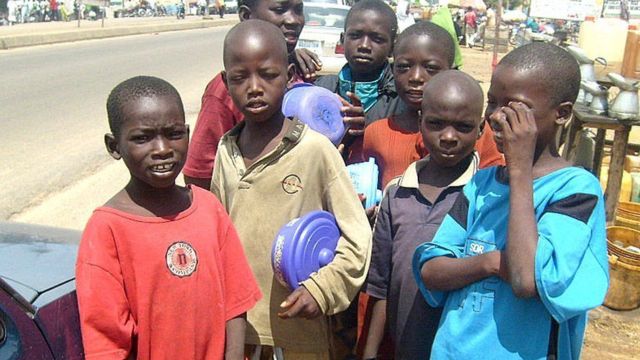
Any sympathetic person will surely ask himself these questions over the unfortunate fate of Almajiris: what wrong have they done to deserve such ruthless treatment? Are they not humans? Are they divinely condemned? Is it because we have heartless hearts? Or is it just because we have brainless brains? 

However, the Social Contract Theory extrapolates the relationship between the State, Citizens and Laws. Both the state and citizens have an overwhelming obligation to obey the law. These laws made it possible for leaders to assume the office and couples to marry and have legitimate children. Through these laws, leaders must cater to the needs of people and parents to take care of their children. Ultimately, justice is the philosophical underpinning and moral wisdom behind this idea. 

I wonder why leaders and parents breach the trust bestowed on them. Indeed, we need a professor in the law of trust to prove this before a jury so that the culprits will be locked up in prisons. 

Politicians have made these innocent children scapegoats of their misrule. They are severely castigated for offences committed by the government. Also, the lackadaisical and pitiless attitudes of parents worsen their plight. Even animals don’t dump offspring. On the contrary, they vigilantly look after them and guard them fiercely against any harm until they can take care of themselves.

Everyone abandons these children. They are left on their own to fend for themselves. Therefore, they scavenge through garbage, looking for food, wearing shabby clothes. They wander freely without a specific purpose or destination, with no shoes in the scorching heat. They equally have no one to attend to them when they fall sick. It seems like the ancient Indian caste system is gradually manifesting in 21st century Nigeria, and Almajiris form part of the Dalit (Untouchables) social group. 

When you ask them to define democracy, they will tell you that “it’s a government of the elites, for the elites and by the elites.” This is because it is purposely designed to cater to the needs of nobles only in their perception. It’s nothing to commoners but an inevitable woe. So they see it as subjugation, tyranny and distress. 

Almajiris have carried the cross for too long. They’re tired of this impudent desertion and have endured this problematic situation, and cannot withstand it any longer. Finally, they’ve been pinned down by the neck and are crying out for help with a thunderous scream, “we can’t breathe!” But, of course, this is cruelty in its cruellest form. 

These children are the future custodians of our society. Their desolation denotes that we undermine its continuity, progress and prosperity. We will bequeath to them a country that negligently failed to help them, forsake their welfare and future. They will take over a nation unable to develop humans, plagued by injustice and misery. Hence, it is unlikely that they will be patriotic to Nigeria. Is this what we are preparing for the next generation?

Indeed, they will remember us as imprudent forefathers that ruined their lives, put them in dismay and plotted the doom. The ones that disappointed them, those that couldn’t save them from grief. Those ancestors whose labour had been in vain. Indeed, they will utterly forget us, let alone pray for our eternal rest. 

We expect Tsangaya schools to consistently roll out erudite personalities, honourable scholars like late Dr Ahmad Bamba, Sheikh Ja’afar Mahmud Adam, Prof. Isa Ali Pantami or prof. Muhammad Sani R/Lemo. Unfortunately, we saw something entirely different. 

Nowadays, Almajiris are not purposely taken to Tsangaya for learning. Due to a lack of awareness concerning contraceptives, parents incessantly born children they can’t support. At long last, they discard them. How will a minor learn without provision for his necessities, vehement supervision of parents and also fend for himself far away from home? It can NEVER be possible.  

Let’s assume there are only one million Almajiris in the North, and only 5% ended up in criminality. Hence, there will be an additional 50,000 criminals to terrify the region, which is about 15% of the police workforce. So, how many more millions are there? 

Consequently, we are paying the price for our actions and inactions. We are suffering due to failure to resolve this criminogenic problem. We’ve undergone the agonies of Maitatsine dogmatism, and now we are in the bondage of Boko Haram, banditry, kidnappings, to mention a few. Have we learned lessons, or we will remain indifferent? Or are we now determined to dispel the injustice and save these downtrodden children? 

Lawi Auwal Yusuf wrote from Kano, Nigeria. He can be reached via laymaikanawa@gmail.com. 

Of criminality, economic stability, birth control and northern Nigeria

By Zakari Abubakar

It is evident that whenever there is an upsurge in criminal activities in parts of northern Nigeria, a perennial debate usually rears its head among those interested in the root causes of the problem. This is understandable. Without identifying the cause of a problem, its solution may not be in the offing. Like virtually every year, this debate is also gaining traction in this early part of 2022.

Admittedly, this view adds to the existing number of discussions on this topic. Those who are following the debates are not unaware that there are a group of people who link the rise in criminal activities in the north and the rate of excruciating poverty among its people, mainly to the large number of children born in virtually every family in the region. This group of people base their argument SOLELY on the superficial and generalised assumption that people with a large number of children, more often, engage in irresponsible parenting.

Another reason why this group of people see an individual with a large number of children as a potential source of criminality and economic stagnation is that Nigerian authorities have for long been finding it difficult to provide social services such as education, electricity and other life essentials to these growing number of citizens which leads to more people becoming poor. This is where I find their argument too simplistic. Because the same authorities are providing these services to themselves, their families or their cronies.

Going back to their first argument, it is glaringly verifiable that for every individual with many children who fail to cater for them, hundreds, if not thousands, bore many children and saw to their responsible upbringing. This example is on the level of individuals. There are many more such examples on the societal level. For instance, several countries and regions of the world have nearly the same population as northern Nigeria or are more populous but are not facing the same challenges.

Those societies have considered such a phenomenon as a gift and therefore utilise it positively. To buttress this point, the five most populous countries in 2021, according to sources, are China, India, the United States, Indonesia, and Pakistan. Although these countries may be facing their security and economic challenges, the standard of living in those societies is by far more robust than what is obtainable in northern Nigeria.

To cite a specific example: about 90% of China’s population is Han Chinese. They are over a billion people, yet, there is no accusation from the rest of the population in that country or the Hans themselves that the Hans are a potential source of poverty or criminality. Similarly, the most populous state in India is Uttar Pradesh, with over 200 million inhabitants. But go to India. How does Uttar Pradesh fare compared to the rest of Indian territories in terms of economic prosperity?

No one is disputing that northern Nigeria is recently replete with a high rate of criminality occasioned by poverty among its growing population. But to solely link this problem with the region’s birth rate is to accord the topic attention that is less than it badly desires. For example, what about the other seemingly systemic problems that have to do with governance and political leadership?

One may say, why do people resort to adding problems for themselves by producing more children since the government failed to sustain their needs? Then I would say, instead of blaming those who fail to provide those essentials (though they are providing them for themselves and their families), we resort to blaming the poor, despite his effort to always get himself out of the effects of poor/bad political leadership?

Elsewhere, other regions of the world are complaining of a decline in their population. Thus, they outsource other remedies for their problems, like encouraging men and women to engage in economic activities. Therefore, no matter how small, we should demand accountability from our political leaders and seek other possible options that are more viable than resorting to birth control, which has its implication on man’s overall health.

Zakari Abubakar is with the Department of Physical and Health Education, Aminu Saleh College of Education, Azare. He can be contacted via zakariabubakarnng@gmail.com.

Is the Nigerian public still divided over 2023?

By Kabiru Danguguwa

January 15, 1966, was the beginning of ethnopolitical division in Nigeria, followed by a civil war a year later. One may argue that colonialists initiated this division when they amalgamated the two, perhaps unrelated, protectorates for easy administration and exploitation in 1914. This manifested in the political parties formed on ethnic lines as a prerequisite for self-rule. Whatever the genesis of our division might be, January 15 1966, has been instrumental.

Different regimes have made several attempts, perhaps in vain, to create unity in diversity to address the above issue. Unfortunately, our democracy has not been a solution either. In a book chapter published in 2018, I argued that Nigeria’s democracy had recorded only one achievement. That’s the sustenance of “democratic rule” since 1999 without the return of the military. This is an outstanding achievement indeed. Thus, I conceptualised Nigeria’s democracy as an electoral democracy.

One of the most critical steps in electoral democracy is the transfer of power from the military to civilians, which happened in Nigeria in 1999. The remaining significant features are conducting elections as provided by the constitution and governing citizens with at least some concern of the process of law. From 1999 to 2019, we witnessed six general elections every four years as the constitution demands. The government also, to some extent, care about the citizens. Political science students may agree that we are operating above a facade democracy and, of course, below the liberal democracy found in the West. Put simply, unlike some countries in Africa and Latin America; we keep our military in the barracks and other places they constitutionally belong.

On the other side of the coin, the 23-year old Nigeria’s democracy is full of conundrums. The democracy is so illiberal that some citizens think of going back to the colonial era or the least, returning to military dictatorship. We often celebrate former military heads of state, especially when comparing them with civilian leaders. We almost unanimously prefer the military personalities of the people that ruled as military heads of state to their characters as civilian leaders. What is wrong with our democracy?

As 2023 approaches, just like the previous general elections, Nigerians are being divided over the choices of political parties and candidates that will govern the county. Several divisions emerged; some have been with us since the 1960s, while others were recently created. The North-South division might have come to stay. Southwest-Southeast has also been there for decades. There’s also Igbo versus the rest of Nigeria, mainly connected to January 15, 1966, and the Civil War.

There are at least two recently created or popularised divisions: Yoruba versus the rest of Nigeria and Yoruba versus the North. The duo, especially the former, is connected to the alleged concentration of the present government’s efforts on the welfare and well-being of Lagos and Lagosians.

Other popular divisions are APC-PDP and intra-political party rivalry between camps and political groups. I don’t believe in the religious division, for there are many Christians in the North and numerous Muslims in the South. There is Nigerian youth versus old-timers rift.

Political trends show that Northern Nigeria is more united politically. The North showcased its unity in 2015 when Boko Haram was on the verge of crippling socio-economic activities in the region. Out of optimism, people hated the regime of the day in favour of a Northern candidate. Forgive my conceptualisation of the North to include those who see themselves as Northerners.

There is a need for another unity as the region faces another severe problem mightier than pre-2015 general elections. In 2023, we must gear our unity using our strengths to present candidates who can deliver irrespective of their backgrounds and political parties. The South has never, since 1999, been united, but Yorubas have been. Look at how Southwest (Lagos), with Vice President, has been benefiting from this administration at the expense of the entire country. I firmly believe that we should only be united, not too ambitious. They say “politics is a game of numbers”, and we have the “numbers”.

Kabiru Ibrahim Danguguwa lectures at the Department of History and International Studies, Yusuf Maitama Sule University, Kano. He can be reached via kabiru.ibrahim87@gmail.com.

How bandits stripped me naked, cut off my two hands – Mechanic

By Uzair Adam Imam

A 25-year-old mechanic, Yahaya Muhammad Galadima, has recounted how he got his two hands cut off by unknown gunmen Tuesday on his way back from Agbabo along Rukubi before Yeluwa in Nassarawa State.

Galadima was reported to have been attacked while returning home from Rukubi after fixing a client’s J5 vehicle.

Narrating the incident, Galadima said that the incident occurred around 8 pm on Tuesday.

He said, “It happened around 8 pm on Tuesday night. I was with one of my boys, Salisu Haruna, who followed me to Rukubi, in Doma Local Government Area of the state. We went there on my motorcycle to work in one of my customer’s houses as his J5 had developed some mechanical fault.

“While on our way back from Agbabo along Rukubi before Yeluwa, all of a sudden, we were ambushed. Before we knew what was happening both of us felt off my motorcycle and my boy sustained some injuries on his left leg. However, they didn’t hurt my boy.”

He added that after they succeeded in stopping them, “They started shooting sporadically into the air, asking that I should give them money. I immediately handed over all the money I had on me, including his mobile phone.”

He also disclosed that after they had inflicted several matchete wounds on him, they snatched his motorcycle.

“Before asking them what was wrong, they cut off my two hands,” he added.

Asked if his boy was also attacked, Galadima explained saying, “My boy was not hurt at all. He was watching helplessly how they cut off my hand.”

The victim is currently receiving medical care at the Dalhatu Araf Specialist Hospital, in Lafia Local Government.

ASP Nansel Ramhan, the Nasarawa State Police Public Relations Officer, said the command was yet to be informed about the unfortunate incident.

Chinese-based company, Hikvision, certifies 14 Engausa apprentices

Hangzhou Hikvision Digital Technology Co., Ltd., often shortened to Hikvision, is a Chinese state-owned manufacturer and supplier of video surveillance equipment for civilian and military purposes, headquartered in Hangzhou, Zhejiang. The Chinese government owns its controlling shares. 

As part of the company’s mission to expand operations in northern Nigeria and Sub-Saharan Africa, Hikvision trained and rigorously assessed the theoretical and practical capabilities of 14 apprentices at the Engausa Global Tech Hub in Kano, Nigeria.

Impressed by the individual performance of the apprentice after the certification exams, the company has agreed to register Engausa Global Tech Hub as a Hikvision Training Academy, the very first training ever in northern Nigeria. 

We are joining the general public to congratulate these 14 Engausa apprentices that bagged Hikvision International Certification on CCTV tagged Hikvision Certificate Security Associate (HCSA-CCTV).

Recall that the founder/CEO of Engausa Global Tech Hub, Engr Mustapha Habu Ringim, has bagged a similar certification from Hikvision two years ago. And this makes a total number of 15 certified professionals in HCSA-CCTV. 

Let’s promote our culture

By Usama Abdullahi

It’s challenging that we are found wanting in our own culture. We don’t promote it simply because we don’t want to be looked down upon or mocked about it. Western culture has now substituted ours. We assimilate and worship anything western. Ironically, the West doesn’t force their culture on us; we rather westernise ourselves. 

Sometime in 2013, my uncle bought us pizzas. I used to see pizza as the best dish ever, but I was nauseous when I took my first bit. Being in the company of my cousins, I had to conceal my bitter feelings and fake some smiles to fit in. I was pretty low that day. 

For me, pizza is supremely overrated and not as delicious as I thought; it’s aromatic, though. Mind you, I’m not condemning the Italian dish in its entirety. But why do I bring this to light? I felt like sharing my experience, and I want my people to understand that not everything foreign is delectable.

As people with beautiful cultures, we have crazy good dishes that can excite and quench so many aliens’ appetites. Yet, we don’t promote that. We fault it instead. I have watched several western TV shows where the westerners expressed their liking for African culture, particularly their foods.

Arguably, most Nigerians tend to shun and dislike their culture because, to them, it’s worthless. The preference for western dishes leads to the decay of our cultural dishes. Sadly enough, most of the dishes are given western names, which has become difficult to catch on to. Those names don’t correspond and are mostly corrupt versions of the western ones.

Some of us, the so-called civilised ones, erroneously claim that most of our foods are detrimental to one’s health. Though I’m not medical personnel, the little I know tells me that foods like Tuwo provide the body with energy. Awara/Kosai, the most-avoided dishes by the corps d’elite, help build and repair tissues because they are “proteinaceous”. My claims are open to criticism because they are perhaps not well-grounded.

There are others too, which I guess could be harmless and good for consumption if thoroughly examined. It’s time we stopped self-hating or ridiculing ourselves merely because we want to look or sound different, say like the western. Until we promote our culture, our culture will go extinct someday.

Usama Abdullahi wrote from Abuja, Nigeria. Can be reached at usamagayyi@gmail.com.

Who will save the Nigerian donkeys?

By Aliyu Nuhu

It is indeed a horrible time for the Nigerian donkeys. Each day about 5000 donkeys leave the Maigatari market in Jigawa State to the East, where they are consumed as meat by many households.

That is just one statistics from Jigawa State alone. Some 15000 donkeys also passed from North East and the Niger Republic to the South East, mostly Agbor, Anambra, Onitsha, Enugu and Abakalaki, to meet a similar fate.

Now it seems the donkeys are in for bigger trouble as the Chinese have also developed an appetite, particularly for their meat and skin. As a result, demand for donkeys has tripled over a short period. Meanwhile, the donkey is not bred in Nigeria on an industrial scale, and it is an animal that does not multiply with its very slow birth rate.

It is terrible enough to consume the gentle beast locally but worse to see it exported to China. Then who will save the donkey?

States in the North should legislate against the trading of donkeys for export to other parts of the federation. Already the price of a donkey that used to be between 8000-10000 naira has hit 35000 naira, making it well above the means of the local farmers who use it as rural means of transport.

The Federal Government must urgently place a ban on the exportation of donkeys and their by-products to the outside world, for now, China.

Aliyu Nuhu is a popular social commentator. He lives in Abuja, Nigeria.