Northern Nigeria

Boko-Haram expansionism and the future’s gruesome picture

By Abdulhaleem Ishaq Ringim

The Abuja-Kaduna train attack has finally halted the speculations regarding Boko-Haram’s expansionism into North-West territories of Nigeria. Although warnings sounded as far back as 2-3 years ago were suggestive of the existence and operationalization of such an active expansionist agenda, it wasn’t until January 2022 that I saw what I consider the first official acknowledgement of the expansionist efforts of BH. This acknowledgement was contained in Kaduna State Ministry of Internal Security and Home Affairs’ annual security report wherein lies observations of escalating relationships between Boko-Haram groups and bandits.

It should be recalled that Boko-Haram ceased to exist as a single entity since 2014/2015 when factionalism befell the central entity. This factionalism yielded 3 different groups distinguishable by certain ideological and tactical contrarieties. They are; The Shekau Led Jama’atu Ahlis-Sunna Lidda’Awati Wal-Jihad (JASLWJ), The Al-Qaeda in the Islamic Maghreb (AQIM) supported Jama’atu Ansaril Muslimina fi Biladis Sudan (Ansaru) and The Islamic State (IS) supported Islamic State in West Africa Province (ISWAP). And they have been fighting one another for influence and jurisdiction ever since. 

Interestingly, establishing an influential presence in North-central and North-west Nigeria has always constituted a major aspect of these groups’ grand agenda. But for years, it had proven hard for this objective to be achieved by any of the groups even after staging several operations in the 2 subregions as none of them was able to establish that desirable level of hegemonic presence and influence. 

However, among the three groups, Ansaru remains the most influential in the North-west even though it is thought to have hibernated after the face-off that ensued from the factionalism. Terror watch reports suggest that while in hibernation, Ansaru embarked on a strategic recruitment exercise targeting NW’s most dominant non-ideological criminal groups – the bandits – through infiltration, training, tactical assimilation and arms supply. Apart from Ansaru, Shekau-led JAS through some commanders(like Adamu Bitri before he defected to ISWAP and eventually died) also established and maintained contact and relationship with leaders of some bandit groups. 

Last year, Nigeria’s terror network experienced heightened volatility due to the escalation of the conflagration between the two major terrorist organizations —the Shekau-led Jama’tu Ahlis Sunna Lidda’awati wal-Jihad (JAS) and Al-Barnawi-led Islamic State in West Africa Province (ISWAP) — operating in the North-east and Lake-chad basin. This resulted in the death of Abubakar Shekau by suicide which sparked serious disarray within the network and rendered the JAS somewhat defenceless. 

Consequently, ISWAP issued an ultimatum to all JAS commanders and fighters to either defect to ISWAP and pledge allegiance to Al-Barnawi or vacate all former JAS territories which now fell under their control. Some commanders and fighters complied and defected while many others surrendered to the Nigerian Army with the aim of becoming beneficiaries of the Nigerian government’s amnesty program(Operation Safe Corridor). The third group of JAS commanders and fighters who neither defected nor surrendered to the Nigerian army were thought to have migrated to NW to forge alliances with bandit groups. 

By implication, the above-stated events suggest that while Ansaru continues to remain the closest to NW bandits, ISWAP and former JAS fighters might have also re-ignited links with bandit groups in the NW. While ISWAP might have taken over control of the vast network of bandit groups that were formerly affiliated to Shekau-led JAS due to the carpet-crossing of JAS commanders (some of whom are the keepers of the link between JAS and the bandit gangs in the North-West just as Adamu Bitri) to the ISWAP side, JAS fighters that refused to surrender to both ISWAP and the Nigerian Army might, however, have also migrated to NW to forge alliances with bandits and escape ISWAP’s wrath. 

Now, the changing dynamics, improved weaponry and renewed offensive tactics seen in recent attacks thought to be staged by bandits are testimonials to an improved alliance between Bandits and members of BH groups. These attacks carry BH signatures all over from attacks on public infrastructure (as in the case of the two train attacks) to attacks on military formations (e.g NDA and the Birnin Gwari Army Forward Operational Base) and the efficient use of IEDs for offensive have increased in frequency in NW states. The recent videotape that was released in the aftermath of the release of the Bank of Agriculture’s MD also signals this unholy alliance. 

At this pace, North-west Nigeria is on the verge of becoming a deadlier terror zone than the North-East ever was. This is because we are dealing with two groups with complementary terror/criminal expertise synergy which holds the potential for the establishment of the most sophisticated terror network Nigeria has ever seen. The bandits indubitably boast of an unmatched knowledge of the local terrain and geography of North-west’s forests and other ungoverned spaces while BH groups, be it Ansaru or ISWAP, boast of a very deadly extremist-ideological core with a sophisticated array of terror-based expertise and affiliation to global terror networks through Islamic State(IS) African subsidiaries(for ISWAP) and Al-Qaeda in the Islamic Maghreb (AQIM) (for Ansaru) that allows them access to global terror resources and funding.

The bandits also have numbers sourced from a rich population of child soldiers. Their numerical preponderance, nonideological-cum-uneducated nature and relatively young base makes them extremely vulnerable to indoctrination and a suitable source for terror manpower. Sadly, the use of child soldiers for terror activities is attributed to both ISWAP and Ansaru, but ISWAP has gone further to institutionalize child recruitment and indoctrination using international terror recruitment standards. Hence, ISWAP might leverage this rich child-soldier manpower source opportunity more effectively. 

As I write this piece, I must confess to experiencing the oscillation of an overwhelming shockwave of fear that has been travelling through the deepest core of my body since I discovered ISWAP’s new recruitment and indoctrination strategy through open-source terror watch networks. And here is why:

The largest bandit-manpower source is predominantly the forsaken, uncivilized and uneducated population of forest-based Fulani. Several testimonies from victims of kidnapping further affirm that the bandits are mostly young boys aged 14-18. They have been adjudged to be tremendous in terms of population and now BH groups (ISWAP, ANSARU, fmr JAS) have infiltrated the vast bandit network due to the government’s avoidable mismanagement of the entire situation which metamorphosed from the farmer-herder crisis. Unfortunately, the continued mismanagement of this crisis now holds the potential of further transfiguring into an implosive generation-long extremist insurgency.

ISWAP has instituted a new recruitment and indoctrination initiative. This initiative aimed at recruiting an army they term “The Empowerment Generation” focuses on training and indoctrinating children aged 8-16 as seen in a propaganda video released by the group. The implementation of this training and indoctrination exercise is done through the instrumentality of a well structured educational institution named “Khilafah Cadet School”. Cadets, otherwise called “Cubs of the Caliphate” are drilled in extremist Islamic education; tactical military, arms and infantry training; and Jihad and enemy execution techniques. 

This school boasts of having a well-structured curriculum consistent with global terror standards and a strict entry requirement as students have to pass entrance exams before getting admitted. The school is well-funded and resourced. The scariest aspect of the video is the scene that shows the cadets practising special force warfare tactics. In the scene, the cadets are shown entering a building in special forces style to extract enemies. The enemies used for this drill were Nigerian soldiers captured by ISWAP. After the extraction, the 3 soldiers were made to kneel and they were all shot in the head by three different child soldiers barely aged 15. The precision, the tact and the efficiency in execution are consistent with that which is usually seen in war movies. 

The “Cubs of the Caliphate” are a product of a long-term strategy envisioned by ISWAP to continue the ideologically-driven war for another generation, serving as a formidable and inexhaustible manpower source for the terrorist army. As I watched that video, I reflected with fear on the young bandit population in the NW and the possibility that most of them might end up getting admitted into such kinds of indoctrination programs as a result of the strategic alliance between bandits and these terror groups. I could not help but weep at this gruesome picture of the future, asking what if Boko-Haram groups succeed in assimilating a major section of the young bandit population operating in this part of the country? 
The catastrophe that would result from this scenario is indescribable. Nigeria has managed to mismanage every security situation that it had ever faced. But we cannot afford to continue mismanaging this crisis for the future looks gruesome unless a de-escalation happens. But how do we tame this menace? 

The only security situations in Nigeria that the government had been able to manage to an extent are those that benefitted from robust dialogue and amnesty programs. And the closest we got to destroying insurgency through the use of brute force was when mercenaries were hired to fight Boko-Haram in 2015. But just like dialogue, the implementation of completely annihilating military offensives is as well another efficient option in countering terrorism and insurgency. But in Nigeria’s context, this method carries the smell of impossibility all over it. In fact, brute force clearly constitutes precedential failures in the fight against terror and insurgency in Nigeria.

The highest level of brute force(since the completely annihilating one has so far been simply unachievable) we have been able to exert could not tame Niger-Delta Militancy, it hasn’t been able to crush Boko-Haram for almost two decades now. And it is yet again proving inefficient in the fight against bandit-terrorists even before the infiltration of the very tactical and well-resourced Boko-Haram groups. 

We are left with two options; the Gumi option of dialogue and strategic engagement with stakeholders in the affairs of these bandits with the aim of securing a ceasefire and ultimately, surrendering of arms in exchange for amnesty and redress(before they completely get assimilated into the ideological war BH groups are fighting) or the Elrufai solution of engaging the services of mercenaries to perform a sweeping operation targeting all forests and hamlets harbouring these bandit-terrorists and their BH affiliates since the implementation of such method by our military seems impossible. 

Principally, the fundamental responsibility of every government is to safeguard the lives and properties of its citizens. Nigeria’s government under President Buhari has failed in that responsibility but we can no longer tolerate this failure for it holds the potential of consuming us and the country at large. Nigerians must rise up and demand an end to this barbarism NOW! 

Abdulhaleem Ishaq Ringim is a political/public affairs analyst. He writes from Zaria and can be reached through haleemabdul1999@gmail.com.

What’s the fate of the Almajiri?

By Abdulsalam Alkali

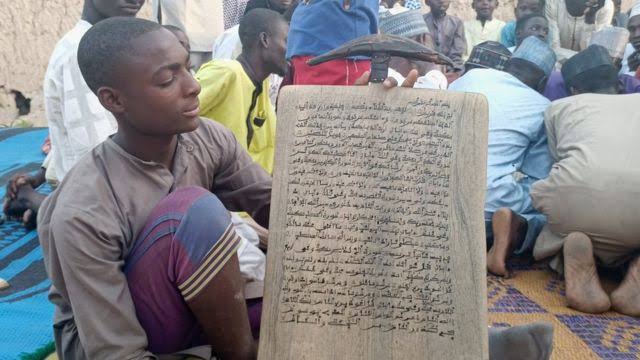
Almajiranci is an informal educational system that is predominantly practised in Northern Nigeria. Almajirai are teenagers ages 4-17 who are sent away from their dwelling by their respective parents to seek Islamic knowledge, a source for sustenance and clothe themselves by begging for alms from people.

The Almajiri system has produced prime leading Islamic intellectuals in Northern Nigeria. Still, along the cord, the system has been altered with the rise in population, making it a system that makes children of tender age susceptible to danger.

It’s awful how Almajirai are abandoned to cater for themselves even though parents should be responsible for their children’s needs and provide them with education. Sadly, parents choose to neglect their responsibility towards their children and abandon them at the early phase of their lives. This is unfair and should be tackled; else, it will erode our societal values.

Numerous discussions and symposia have been held on the predicaments of the Almajirai and how to reform the system. But it is all an exercise in futility because there has been practically no action to stem the tide.

The government, civil society organisations and traditional leaders have a role to play. First, the government should enact legislation prohibiting parents from taking their children to the Almajiri school. In addition, the government should make primary and secondary school free and compulsory so that poor and vulnerable parents can send their children to both formal and informal schools for our society’s good.

Abdulsalam Alkali writes in Maiduguri, Borno State, via abdulsalamyusufalkali71@gmail.com.

Giwa, banditry and internally displaced persons

By Musa Kalim Gambo

Before this kidnapping, banditry, and terrorism got to this scary stage, I consider(ed) Giwa my favourite and adopted Local Government in Kaduna State. This is a place where I have the largest number of friends in Kaduna State; many of these friends have come to assume the status of brothers to me. Not long ago, I visited Giwa frequently, almost weekly.

Now all things have changed. Giwa has become an epicentre of kidnapping and terror attacks on innocent individuals. Criminals attack people at home and on their farms; kill and abduct for a huge ransom. In the past few weeks alone, the rate of this criminality has intensified geometrically. Due to this tragic development, some villagers have been forcefully displaced. They have had to migrate to the Giwa town, which is relatively safer than their communities. About 3,000 of these displaced persons now take refuge in camps in Giwa town, Marabar Yakawada, and Yakawada. While a large number of the displaced persons have also moved to stay with their relatives in neighbouring towns of Sabon Gari and Zaria in Kaduna State and Funtua in Katsina State.

The families who have been sadly uprooted from their homes have obviously been denied access to the arable rural farmlands. Beyond the refugee crisis, this will result in an attendant shortage of food in the towns, which may eventually spill over to the rest of the country. Therefore, it is evident that life will not be easy for them in their camps and the host communities.

These refugees now have to contend with the gory reality in town, that while they run for their lives, they also definitely need food, medical attention and clothes to survive in their new temporary settlement. It has been reliably reported that the Giwa Local Government Chairman, Dr Abubakar Shehu Lawal, has made provisions for feeding them at various refugee camps in Giwa and across the Local Government. Also, Senator Uba Sani is reported to have delivered some relief items to the camps. This is indeed commendable. The local politicians have indicated a high level of commitment to responding to the plight of their people in distress.

However, all these are not enough. What is needed is a total end to this incessant spate of killings and kidnappings in Giwa. Within the week, this was one of the major issues raised on the floor of the House of Representatives by Honorable Shehu Balarabe, a member representing Giwa and Birnin Gwari federal constituency, in a motion of urgent public importance. Honourable Balarabe, in a very emotional tone conveying the gravity of the situation, highlighted the depth and dimension of the troubles and crises that these banditry, kidnapping and senseless killings have plunged his constituency in both Giwa and Birnin-Gwari. He called on the Federal government to direct all the relevant agencies to swing into action in order to address the crisis.

It is sad to note that the two Local governments that Honorable Shehu Balarabe represents at the House of Representatives are the two most dangerous places in Kaduna State in terms of banditry and kidnapping today. So it is easy to understand the difficult situation in which the Honorable finds himself as one of the voices of these people in Abuja. Birnin Gwari suffers way too much from the atrocious attacks of these bandits, and it also has its refugee crisis as well. However, I write on Giwa because of my deeper connection and access to the situation there.

So to an appreciable extent, it may well be concluded that the political leaders from Giwa are playing their roles to bring an end to this madness that has continued for too long. However, what remains is the commitment on the part of the federal government, which obviously does not seem to render any positive outcome yet. There has been a military presence in Giwa and other bandit infested communities. However, it has remained a puzzle that the criminals could still carry out attacks almost every day without any hindrance.

The month of Ramadan has just begun. While we keep calling on the governments at all levels to aid these communities in crises, it is also important for us to use this holy month to pray to Allah to provide succour and restore peace and sanity in the land. It is now evident that we should no longer pray for Allah to guide these criminals aright, no! They have unleashed an unforgivable magnitude of terror on our land. The least we can do now is pray for an eternal condemnation upon them, starting from here on earth. It should also be our point of prayer that whoever supports these criminals, in whatever way or means, from their informants’ right to the supply chain of their arms and ammunition, should face eternal perdition and body crippling afflictions here on earth before they meet their worse punishment in hell.

Finally, may Allah grant our leaders the will and ability to put in place the right measures to end these killings and kidnappings. At the same time, we should assist these displaced persons with the little we have in terms of food items and clothes; I have also seen a group of youths on Facebook led by the immediate past president of the Giwa Students Association, Nuhu Haruna mobilizing funds on Facebook to assist these displaced persons. We should contribute as much as we can.

Musa Kalim Gambo writes from Zaria and can be reached via gmkalim@hotmail.com.

Worsening Insecurity: Our lives latter 

By Najeeb Maigatari 

The recent attack on travellers along the Abuja-Kaduna road is shocking. The fact that those ‘terrorists’ could now detonate explosives before killing and kidnapping innocent people is damming and quite alarming. It says a lot about our security system. 

It also sends a clear message to everyone that no one is safe. We are all in this mess together; the ordinary people and the ‘elites’ alike. No transportation system is secure in the country. One could now be attacked when travelling by road, railway or even by air. 

The unfortunate train attack is not the first of its kind- and will seemingly not be the last unless the needful is done. The only difference is that this time around, unlike other attacks before, the ‘terrorists’ appear well-armed, more audacious with the hunger to kill, which shows their daunting strength. 

Those terrorists have been attacking villages and killing people, especially in the northern part of the country, where such attacks have become the order of the day. They have established themselves as an authority with several villages under their control. Some of their brutal attacks and heinous crimes are underreported in the news media. 

According to the Nigeria Security Tracker (NST), in a report published from January to February, at least 1761 people lost their lives across the country in incidents related to insecurity and protracted armed violence. 

Under our noses, our beloved country, once a nation of peace and tranquillity, is gradually turning into the likes of Somalia, Libya, and Afghanistan or worse; today’s Nigeria has become a slaughterhouse, and its citizens turned into walking corpses. 

Even worse, most of those killed are people trying to make a living for themselves and their families. People are killed in their homes, offices, markets, on roads, and virtually everywhere. It’s practically killings everywhere at every turn under every circumstance. 

It suffices to conclude at the moment that there’s seemingly the creation of ‘a state within another’. On the one hand, there’s almighty sovereign Nigeria – that continually fails to protect its citizens – and on the other hand, the hypothetical terror nation ruled by such terrorists as Boko Haram, bandits, kidnappers and the likes. 

The government is evidently failing – woefully so – in its fundamental responsibility of securing the lives of citizens, as they swore to do before taking over from the previous administration. 

Therefore all hands must now be on deck to nip in the bud this issue that threatens our existence irrespective of gender, ethnicity, religious or political affiliations. 

To begin with, the government should be bold enough to fish out and address the ultimate cause of all these crises, such as answer the question as to the genesis of the terror groups, their sponsors, financial channels, sources of arms and weaponry, contacts in the community, etc. 

In addition, such factors that tend to inflame the situation as poverty, social injustice, illiteracy, etc., should also be proactively addressed by devising measures to assuage people’s suffering and displeasure. 

Furthermore, the security forces should be well equipped with state-of-the-art weapons to take the war to the terrorists’ camp. They should also engage the public as people. If people can get trained, they can be utilized for intelligence gathering, informant tracing, reporting suspicious activities, etcetera. 

In conclusion, the people should also cooperate and work hand-in-hand with security forces and other relevant government agencies in every way legally possible in order to curtail the worsening insecurity crisis ravaging the country once and for all. 

Our lives must matter as long as we continue to call this our homeland. We should not allow those ‘terrorists’ to take over our homes and rule our lives in perpetual fear. If those in authority cannot secure our lives, they should honourably step aside and let competent individuals take over the helm of affairs in the country. Enough is enough! 

Najeeb Maigatari writes from Jigawa State and could be reached via maigatari313@gmail.com.

The bleeding North and the executive inaction of its leaders 

By Mohammed Baba Goro

God knows how hard I’ve been suppressing this uncontrollable urge to write about the damning insecurity, especially that of the bandits. Yes, our hues and heys do not matter, but the sigh that comes with someone pouring the biting grief of his heart out is a relief! Again, I wouldn’t want to get emotional in doing that, but the situation of insecurity is enough to cause any well-meaning leader to lose sleep.

I felt cold when all northern leaders could give President Muhammadu Buhari (PMB) during the convention as pass mark was hearty cheers, especially the remarks by the Senate President and Governor Atiku Bagudu of Kebbi State. The governor just lost over 60 vigilantes in one ambush, alongside police officers and a DPO. Yet, it all sounded like all was well with the North and the country.

The economy, insecurity, and corruption are the hallmarks promises of this administration, yet these are the areas the regime has failed the most. Even when you try to tinker with them because of some sparsely built infrastructures – though this is typical of every administration; the high economic numbers that have dragged more people into poverty keep staring at you in the face to have a second thought.

The recent attack on the Abuja-Kaduna train reaffirms that we don’t learn a lesson. The government is inactive, and this is an outright failure of leadership that has deserted the masses on the mercies of the Almighty.

All these tell us that, on the one hand, there is a disconnection between what those in the president’s echo chamber tell him and the reality the masses face. And on the other hand, the executive inaction of its leaders. If not, their remarks to Mr President at the convention shouldn’t have been praises alone but a mixture of some honest and collective concerns about the bleeding North and the urgent need to get to grips with it. 

I hope and pray Mr President will write his name in gold, at least for his last days in office, to exterminate these destructive elements and redeem the promise of peace and security he made amidst tears to his Northern kith and kins, and for him to have a befitting retirement.

Mohammed Baba Goro writes from Mokwa in Niger State. He can be reached at: mohammedbabagoro3@gmail.com.

Drivers: Insecurity is killing our business

By Uzair Adam Imam 

Drivers in Nigeria decried the current security challenges bedevilling particularly the northwestern part of the country, saying the situation is gradually killing their business.

The Daily Reality report that bandits activity has claimed thousands of lives, destroyed property worth millions of naira and sacked many villages.

Some analysts believe that the incessant security challenges are politically motivated.

The recent Abuja-Kaduna train attack is one of many bloody attacks by bandits that forced the citizens to remain deeply pessimistic, not to mention commercial drivers plying roads in the restive region.

Our correspondent gathered that those abducted during the infamous train attack were taken to nearby bushes by the notorious, heartless bandits. 

Twenty-four hours later, bandits blocked the Kaduna-Abuja highway and abducted dozens of travellers.

Drivers who spoke to The Daily Realty said the situation had done significant damage to their business, saying they are still in the business because they do not have an option.

A driver, Haruna Lawan Ahmad, recounted his bitter experience in dismay, saying sometimes they had to descend and run for their dear life on sighting the bandits. 

Ahmad said, “We used to see terrible things on our way. Sometimes we have to alight and run away to save our lives after sighting bandits and come back later to take our vehicles after they finished their operations and abducted the ill-fated individuals.”

“There are roads that we can no longer follow, such as Birni Gwari of Kaduna State. Before, the drivers used to team up with the security personnel escorting them.”

“But sadly enough, even the security personnel stranded and accelerated their vehicle at high speed and run away from bandits.”

“Many of my colleagues and I remain in the business not because we are still passionate about it, but because we don’t have anything to do other than this driving,” he recounted. 

Another driver, Idris Bamba, urged the government to come to their aid as the situation was getting out of hand.

He said, “Insecurity in the country is worsening day by day. We usually drive with uneasiness of mind. Before, I used to leave Abuja for Kano by 5 am and arrived around 11 am. But due to security issues, I no longer do that. Some of my friends have even moved to other businesses.”

‘Insecurity sponsored’

A lecturer at the Department of Business Administration and Entrepreneurship, Bayero University, Kano, Dr Mu’az Hassan Mu’az, said the incessant security challenge in Nigeria is quite unfortunate and sponsored by some scrupulous elements. 

He said, “It’s quite unfortunate that these things are happening to the most peaceful and hospitable people in this country. Words cannot express how saddened our people are by the recent experience of attacks on innocent Nigerians.”

“The continued insecurity situation in this part of the country, mastered by people who are illiterates (Islamic and Western) and is sponsored by some scrupulous elements in our society who are selfish and never cared about their people, who worship money and have given up on the hereafter.”

“It’s quite unfortunate that the situation is getting worse day by day in spite of the huge investment in security by the federal government.” 

“Many people see the train as the last resort and safe haven for the common people. He thought the warning attack on the train was treated with glove hands, and security was beefed up on the train operations to prevent subsequent attacks.”

“But it happened again, in a very terrible manner. Painfully, the minister of transport was quoted to have said he envisaged the attack but Federal Government did nothing to prevent it from happening. Our leaders should come back to their right senses.”

Dr Mu’azu added that the leadership of Nigeria is responsible for every Nigerian’s life. They must come back to their senses to face the problem squarely to the end. 

He urged the authority concerned to provide aerial surveillance of the train routes from Kaduna to Abuja, engage every security stakeholder in the discourse of solutions to the menace of banditry n kidnapping, negotiate with the culprits and later deal with them silently, declare war against their residency in Nigeria and kill them all.

He said, “Let the authority concerned track and block their supplies of weapons, send a few security personnel on a secret mission, i.e. to be amongst them for some time, recruit locals to join in the fight against the bandits and block all their food supplies and medications.”

Airspace and aviation security in Nigeria: Matters arising

By Mukhtar Ya’u Madobi

Another national embarrassment almost happened over the weekend. But alas, it wasn’t fated. Reports indicated that a group of bandit-terrorists, about 200 swarmed the Kaduna International Airport located in Igabi Local Government Area of the State.

The incident temporarily led to the disruption of activities, including the grounding of an Azman Air Lagos-bound aircraft. In addition, a security officer attached to the Nigerian Airspace Management Agency (NAMA) also lost his life.

It was learnt that the terrorists were on a revenge mission after some Nigerian military troops neutralized scores of them and equally retrieved some rustled cattle in their possession.

However, this unfortunate development is coming after another security breach had occurred last year, when the same category of criminal elements–bandits–invaded the country’s highest defence and security training hub, the Nigerian Defence Academy, NDA, in Kaduna.

Aside from killing some soldiers, reports claimed that the bandits abducted a senior military officer.

Nevertheless, the level at which these non-state actors are resurging and unleashing violence at will is something that needs to be treated with the adequate attention it deserves. Government and security agencies should live up to their expectations to surmount these lingering security challenges that disturb our nation’s peace.

It has been noted that an efficient transport system is part and parcel of national security as it entails the movement of people and goods from one place to another across the length and breadth of a particular geographical location. But in today’s Nigeria, it is disheartening to learn that people no longer travel comfortably with peace of mind due to uncertainties associated with our entire transport system.

For example, looking at the land transport system, the roads are in bad shape caused by numerous potholes that can easily plunge a motorist into an accident. Apart from that, the roads are also not safe as bandits, kidnappers and armed robbers are always having a field day launching attacks on commuters, robbing them of their hard-earned properties, abducting or even killing them.

Even the trains are no longer safe as terrorists have since devised a means of exploding rail tracks, thereby forcefully bringing them to a halt to pave the way for them to carry out their nefarious activities on passengers.

The recent bombing of the Kaduna-Abuja rail track by bandits is one of the worst attacks on the Nigerian transport system. Several passengers were killed, others got injured, while scores were equally abducted and yet to be accounted for.

Similarly, Nigeria’s waterways are also dangerous because they are swarmed by pirates who rob ships and sometimes abduct the entire crew only to release them upon payment of ransom. With the recent attack on the airport, it is right to deduct that the entire Nigerian transport system is compromised and has lost its calibre to serve the functions it is known to deliver.

The time is long overdue for Nigeria to rise to the challenge of safeguarding airspace and other transport sectors from the menace of criminal elements.

The importance of airspace and aviation security has been captured effectively in Nigeria’s National Security Strategy (NNSS 2019), a document published by the Office of the National Security Adviser (ONSA), Babagana Monguno, a retired Major General.

According to the document, “Efforts to secure the Nigerian airspace will be led by the Nigerian Air Force (NAF) in collaboration with other relevant agencies. Considering the vulnerability of the airspace, the NAF will employ preventive and protective measures to guard against airspace violations through [the] enforcement of international and national air laws.

“In addition, the NAF will deploy its resources to ensure the integrity of Nigerian airspace is maintained at all times. This will include [the] conduct of aerial surveys and delineation of security zones and liaison with appropriate agencies towards the completion of the Total Radar Coverage of Nigeria (TRACON) project to ensure effective monitoring and airspace security.

The primary stakeholders principally concerned with safety and security in the aviation sector include the Nigerian Civil Aviation Authority (NCAA), Nigerian Airspace Management Agency (NAMA), the Federal Airports Authority of Nigeria (FAAN) and the Nigerian Air Force (NAF), among others.

The role of these agencies is expected to be coordinated and enhanced in line with extant legislation and policy on Nigerian Aviation Security.

Nevertheless, another evolving phenomenon in airspace security is the preponderance of drones which constitutes safety challenges such as air misses and mid-air collisions with manned aircraft and security challenges such as air space violation, penetration of prohibited airspaces, a threat to VIP security, terrorism and espionage. Others are law enforcement challenges such as drug trafficking and proliferation, all inimical to national security.

To properly secure airspace and the aviation industry, the government must ensure the continuous provision of modern and up-to-date equipment and the promotion of adequate training and professionalism of various agencies handling different aspects of aviation security.

Additionally, Standard Operation Procedures must be developed to streamline the roles and responsibilities of the various agencies to optimize their performance and enhance the cohesion of their personnel.

Furthermore, it is imperative to ensure the development of standard safety protocols and resilience to protect critical aviation information infrastructure against cyber-attacks to enhance aviation security.

Mukhtar wrote from Kano via ymukhtar944@gmail.com.

The burning train of a burning country

By Khadijah Tijjani

It has been a while since I wrote about issues of national interest. I have decided to steer clear of such conversations because I doubt if it is really worth it. I used to pride myself in being a patriotic Nigerian until about a decade ago when the post-graduation shock shook me to the marrow.

Fresh out of medical school, I was determined to serve my country “with love and strength and faith”, using my knowledge and skills. But I was greeted with a cold welcome into a moribund system – a system that had almost nothing to offer but was ready to suck your sweat and blood and abandon your remains when you’re done with your heroism.

This is not about me and how I lost hope in the fatherland. If I’m still alive, I’ll tell you the whole story some other time. My grouse for today is stimulated by the recent terrorist attacks on the Kaduna-Abuja train. I’m sorry to bore you with this rant; I hope it makes me feel better. I’m just here to let it out and stop pretending to be oblivious.

I despise horror and tragic movies because of some traumatic scenes I watched as a kid. One of such movies is THE BURNING TRAIN, a Bollywood blockbuster that made waves in the early 80s. Vinod, a railway engineer, launched the Super Express, a dream project that was India’s fastest passenger train. Unfortunately, the train went out of control on its maiden journey due to a bomb planted by a rival. Directed by Ravi Chopra, the movie was known to have moved millions of people to tears.

Every time I replay that movie in the part of my brain that stores it for over two decades, I struggle to hold back the tears.

I never imagined something strikingly similar happening in real life, claiming several lives so close to home. The terrorists, having succeeded in stopping the Kaduna-bound train, reportedly shot sporadically and held the stranded passengers hostage for over an hour.

One of the victims was a promising young colleague – Dr Chinelo. This was a brilliant doctor who could have discovered the next best treatment for cancer, HIV or another disease yet unknown. But instead, she was wasted a few days after obtaining her GMC licence to practise in the UK.

Could she have survived if we had quick and effective disaster response teams? Only God knows.

She was lucid enough to tweet a distress call and probably breathed for a couple of hours before kicking the bucket. But what sort of treatment did she get? Welcome to Nigerian hospitals!

The train attack happened less than 24 hours after a similar incident along the same route. This mishap rekindled my memory of that catastrophic movie, The Burning Train. I’ve been trying not to talk or write about it, but my heart can no longer contain the pain.

I am a woman of faith and believe in the power of prayers. However, we’re on a burning train in this country, and faith is not enough to quench the fire.

This train is burning, and the political leaders are going about their rallies, spending millions of naira on branded clothes and live bands.

This inferno is consuming the best amongst us, but the worst amongst us are winning and dining.

This country is burning like wildfire, but there’s no fire truck anywhere.

They say there is light at the end of the tunnel. But the end of this burning tunnel is obscured by thick smoke that can kill faster than the fire itself.

We seek your aid, yaa Allaah!

Khadijah Tijani is a medical doctor. She writes from Ibadan and can be reached through askodoctorkt@gmail.com or @AskDoctorKT.

Waqf would have saved the situation!  

By Abdullahi Abubakar Lamido

Alhaji Abdullahi (not a real name) is a rich man from Northern Nigeria, famous for his multidimensional philanthropy. He was, at a time, among the three richest men in his town. He came from a polygamous family and was the 14th child of his dad. He was the only rich man. Being polygamous himself, he has close to 20 children from three wives. As the only well-to-do in his extended family, his house is like a local government secretariat, always jam-packed with visitors from among family members. This is in addition to dozens of his “sons and daughters” born by his brothers and sisters, who reside in his house, under his total care. But Alhaji takes care of them all; feeding, clothing, education, healthcare, Sallah clothes, etc. He does that with all pleasure. After all, he has the means, and of course, the heart, as a wealthy businessman.

Here is a religious, wealthy man and an influential politician cum Islamic scholar. He has built several schools and mosques, sponsored the education of many orphans, given capital to many people, sponsored the marriages of many poor girls, and sponsored dozens of people to hajj. He is one of the best philanthropists you can think of. After all, that is what is expected of an affluent Islamic scholar. His school was once among the best two primary and secondary schools in the town. When he singlehandedly built it about two decades ago (he had built others much earlier), he would pay teachers’ salaries, buy uniforms for the students, and give them other learning materials. He loves the Qur’an, being also a hafidh himself. And he would provide copies of the Qur’an to all the hundreds of his pupils. This is in addition to dozens of people who rely on him for their livelihood.  

As time went by, the “law of diminishing returns” began to affect his fortunes. Gradually, he began to withdraw the subsidies from the school due to continually decreasing income and ever-expanding family financial pressure. But he wanted to maintain the good deeds. Now the school needed expansion while his pocket had experienced contraction. He gave his big land close to the school for the purpose. But no funds to build it. So, he sold another land and built it. Note that the school fees could, at best, pay salaries and take care of the running cost. Every student pays. But it is a middle-class school, so the charges cannot be high. So, he went and sold another asset, built the classes. He sold another one again and again until virtually all the sellable assets became exhausted.

One day, while sitting at home, he saw his children returning before the school closing hours. “What is going on”? He asked them. They were sent home because they did not pay school fees. This happened when he was battling with how to feed his family and settle many other bills. Alhaji never envisaged a day when his fortune would dwindle to that level. Therefore, he did not save nor invest for that rainy day. He thought he would continue to secure contracts and earn considerable resources to fund his schools and even establish more. He, in short, did not benefit from the advice of a waqf expert who could have shown him the simple way of establishing an investment waqf, using a portion of his assets, that would perpetually generate a flow of revenues. The revenues could sustainably fund his schools and other charitable interventions. 

Waqf offers a variety of ways for planning the future of your family and supporting other charitable projects sustainably. For instance, the idea of an investment/productive waqf would have perfectly saved Alhaji Abdullahi from selling and reselling his properties to expand his school. As it is, there are two forms of waqf; direct and invest waqfs.

A direct waqf is one created to provide direct welfare and societal development services. Examples are mosques, boreholes, and tuition-free schools that offer direct benefits to designated beneficiaries. An investment waqf is a money generating waqf whose revenues are dedicated to financing defined welfare and socio-economic development projects. An investment waqf can be made to fund and maintain a direct waqf.

For instance, a well-managed orchard can be dedicated as waqf such that the revenues generated from the sale of its fruits will be used to finance a tuition-free school. So, when Alhaji Abdullahi built his school, which he wanted to be a subsidized one, he could have established an investment waqf that would mature and, within some time, continue to finance the school from its proceeds. His other assets would have been saved for other equally important purposes. He could as well have saved himself from the embarrassment of the failure to pay children’s school fees later in his life when the recession hit him.

For instance, nothing stops this rich man from building rentable shops or apartments and dedicating them as waqf, such that what they generate would be divided into two; half reinvented and the other half injected into supplementing what is generated as school fees. He could as well have purchased shares of a halal company and dedicated the investment as a waqf for funding the school waqf. This way, the waqf corpus would continue to expand, and its revenues would grow sustainably. What started as a small waqf can grow into a megaproject that benefits society on a larger scale. Not only subsidies, the investment, if properly managed by trustworthy investment experts, would have funded the construction of more and more schools and the provision of scholarships, among others.

 So, if he provided subsidies at the beginning of the school, part of such funds would have been invested, and gradually he could withdraw the subsidies as the returns from investment take over the funding of the school. This way, his children could have become permanent beneficiaries of the scholarship provided by the waqf of their formerly wealthy father. Better still, he could have simply established a family waqf (a topic for another day) specifically for his children. Waqf, in short, could have saved the situation

Abdullahi Abubakar Lamido is the Chairman, Zakah and Waqf Foundation, Gombe. He can be reached via lamidomabudi@gmail.com.

The political calculations of 2023

By Muhammad Sagir Bauchi

As the political atmosphere in the country started to get momentum, top political actors are back on the strategy board to put down action and execution plans for successful campaigns and elections victory. Overnight, some controversial politicians are now running away from their once arrogant and nonchalant attitudes to a born-again one, thereby looking away from whatever may dent their newly ‘customised integrity’. As a result, the usual campaign promises of provision of security, creating job opportunities, fighting against corruption, etc., now appears unsaleable talking points to the electorates as they once were.

News of the inter-party crossover from some prominent politicians like former Speaker Hon. Yakubu Dogara (PDP-APC), Matawalle of Zamfara (PDP-APC), Kwankwaso (PDP-NNPP), etc., are making headlines.

Hon. Yakubu Dogara is one of the major political figures in Bauchi State politics. His role in ousting the previous governor of the state would never be neglected or underestimated. He played a vital role in his constituency and other spheres of the system.

When he decamped from PDP, the party that brought the present administration of Governor Bala Muhammad, several opinions were expressed in respect to that. To some, he joined the ruling party in anticipation of giving him the party leadership (i.e National Chairman of the party). While, to others, he was craving for the seat of Vice-President, in case the party ticket is won by a Southern Muslim. In present Nigeria, a Muslim-Muslim or Christian-Christian ticket at the presidential ticket is a non-starter, as it will polarise the country, create chaos and mistrust.

Of the two opinions surrounding the decamping of Dogara, none could totally be disregarded as they contain some elements of truth. For instance, If APC assigns Bola Ahmed Tinubu as its flag bearer, the party must pick a Northern Christian politician with popularity, high political experienced and wide acceptance among the regional religious, political and traditional leaders/institutions. The aim is to convince the electorates to go out and vote for the party on the election day. Dogara is one of those Northern Christians with broad appeal and political experience. But, can he win the confidence of his Northern block to vote for their ticket?

For that answer, we have to examine the current political doings and his image in his home state, Bauchi, to answer that question.

The present political situation in the state is a bit complicated. We all witnessed how his doings in his constituency influenced the emergence of the current governor of the state during the last gubernatorial elections. Still, events have overtaken the once-political comrades’ romance between him and the governor. His popularity has significantly dropped in 2/3 of the constituency he’s representing. And that could affect his future career in the state and beyond. Therefore, the Dogara factor alone cannot influence Northerners to vote for his party.

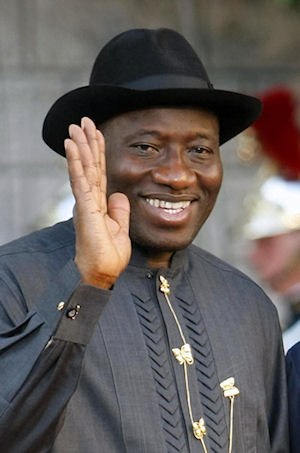
Now, away from Dogara to the party at large. Months ago, APC Governor’s Forum paid an unexpected visit to the former President, Dr Goodluck Ebele Jonathan. Of course, we did not know what was discussed during the visit. Still, looking at how the party is desperate to retain the president’s seat, it’ll be hard to disconnect it from what the Hausa people termed as “gaisuwa da ro’kon iri”. So they visited him, likely to ask for his blessing, sympathy and support to use his influence in the South-South to canvass support for their party flag bearer during elections. Or maybe, to lure him into accepting to contest for the presidency on the party ticket. 

If we take the party entirely and put it on a scale, we can see that the party is in a dilemma of who to be entrusted with the party ticket to retain the presidential seat. But looking at how the party zoned the national party executives, now it is clear that the flag of the party would come from the South.

Among the top Southern candidates that expressed interest in the presidency are Vice President Yemi Osibanjo and the party leader, Bola Tinubu. One of these two have every chance to win the party primaries. But, who among them can be an easy sale to all the regions of the country? Would the old rivalry between Igbos and Yorubas resurrect and allow Igbos to support anyone of them? Only time would tell.

But in the North, despite the significant drop in trust and popularity of President Muhammadu Buhari, there still exist those supporters that will go for whoever PMB anointed to succeed him at the polls. But many will be in a dilemma of choosing between one of their own, an outsider or may even decide not to vote.

After the country’s return to Democratic rule, PMB was among those with a desperate ambition to rule the country again. He contested three times but lost at general elections. Fortunately for him, he won at his fourth outing. Unfortunately, during his failed bids, his body language was that he only relied on the votes of his fellow Northerners.

By 2010, Buhari realised that that illusion wouldn’t give him the presidency. So, he aligned/merges his one-man party, CPC, with an umbrella forum of some rebellious and highly influential mainstream politicians from the ruling party, nPDP, ANPP and the Southwest’s AC to form the APC. This conglomeration of parties (merger) is what solely got him the presidency.

With all honesty, looking back at the significant contribution of the Southwest politicians, this is the right time for him to pay back those that helped him actualise his presidential ambition with the party ticket on a platter of gold, especially to a Southwestern candidate.

There’s not much tension within the PDP due to their discipline and expertise in handling intra-party conflict. However, the party must be careful with an emerging conflict from Wazirin Adamawa and governors’ overzealous ambitions. In addition, they must learn from their 2015 avoidable mistake that cost them the elections and government.

Sagir Ibrahim is a graduate of Economics from the Department of Economics, Bauchi State University Gadau. He can be reached via ibrahimsagir1227@gmail.com.