North Korea

North Korea slams Israel over strikes on Iran, warns of escalating conflict

By Sabiu Abdullahi

North Korea has issued a forceful condemnation of Israel’s recent military operations targeting Iran, describing the actions as “a crime against humanity” and warning they could plunge the Middle East into deeper chaos.

In a statement published by the state news agency KCNA on Thursday, a spokesperson for the North Korean Foreign Ministry voiced strong concern over what was described as deliberate attacks on Iranian civilian, nuclear, and energy infrastructure.

The spokesperson said the operations by Israeli forces reflect “state-sponsored terrorism” and pose a grave threat to regional stability.

“The killing of civilians in Israeli attacks was an unpardonable crime against humanity,” the statement read.

Pyongyang also criticized Washington and its Western allies, accusing them of backing Israel’s actions and inflaming an already volatile situation.

“The present grave situation witnessed by the world clearly proves that Israel, supported and patronised by the US and the West, is a cancer-like entity for peace in the Middle East and a chief culprit of destroying global peace and security,” the Foreign Ministry spokesperson said.

The North Korean government also advised the United States and Europe against further involvement in the conflict.

It claimed that international opinion is watching closely as these powers, in its words, “fan up the flames of war” while blaming Iran for defending itself.

“The international community is strictly watching the US and Western forces fanning up the flames of war, taking issue with the legitimate sovereign right and exercise of the right to self-defence of Iran, the victim,” the spokesperson added.

The warning came as U.S. President Donald Trump declared that his administration had exhausted its patience with Iran.

His remarks followed a firm rejection by Iran’s Supreme Leader Ayatollah Ali Khamenei of U.S. calls for an unconditional surrender. Khamenei also warned Washington of “irreparable damage” if it chose to interfere.

According to The Wall Street Journal, Trump recently approved military plans targeting Iran but decided to pause implementation, reportedly in hopes that Tehran might reconsider its nuclear ambitions.

North Korea has cautioned that the ongoing escalation—fueled by Israeli aggression and Western involvement—risks pushing the region toward what it described as “an uncontrollable catastrophic phase.”

As tensions continue to rise, Pyongyang’s statement adds yet another voice to the chorus of global concern over the deepening crisis in the Middle East.

Russian President Vladimir Putin arrives in North Korea for 2-day state visit

By Sabiu Abdullahi 

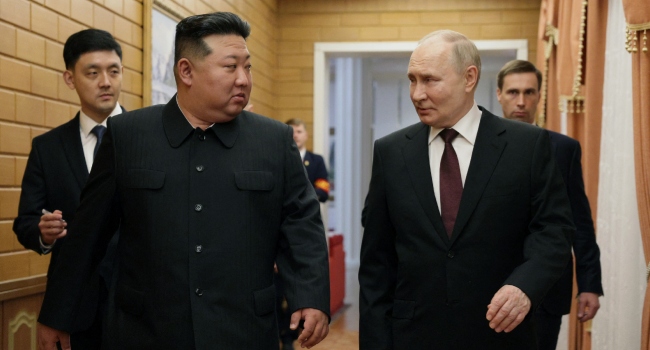
Russian President Vladimir Putin has arrived in North Korea for a two-day state visit, where he was received by North Korean leader Kim Jong Un at the airport in Pyongyang. 

The visit is expected to focus on further arms deliveries from Pyongyang, which Moscow intends to use in its ongoing war against Ukraine. 

According to the Russian news agency Interfax, the main part of the visit will begin on Wednesday with a meeting between Putin and Kim on Kim Il Sung Square, Pyongyang’s urban and symbolic center. 

The day will continue with long negotiations, first in one-on-one talks and then on a larger scale.

The two leaders will also share several meals together and participate in a wreath-laying ceremony and a joint concert visit. 

This visit marks a significant development in the relationship between Russia and North Korea, which has been strengthening in recent years.

Putin’s last visit to North Korea was in 2000, when he was received by Kim’s father, Kim Jong Il. 

Since then, the two countries have experienced a long break in their relationship, but they have recently moved closer together, particularly in the context of the Ukraine war. 

As reported by observers, the visit is expected to solidify the alliance between Russia and North Korea, with a focus on arms deliveries and military cooperation. 

The visit is seen as a significant development in the geopolitical landscape, with implications for the ongoing conflict in Ukraine and the broader regional dynamics.