North

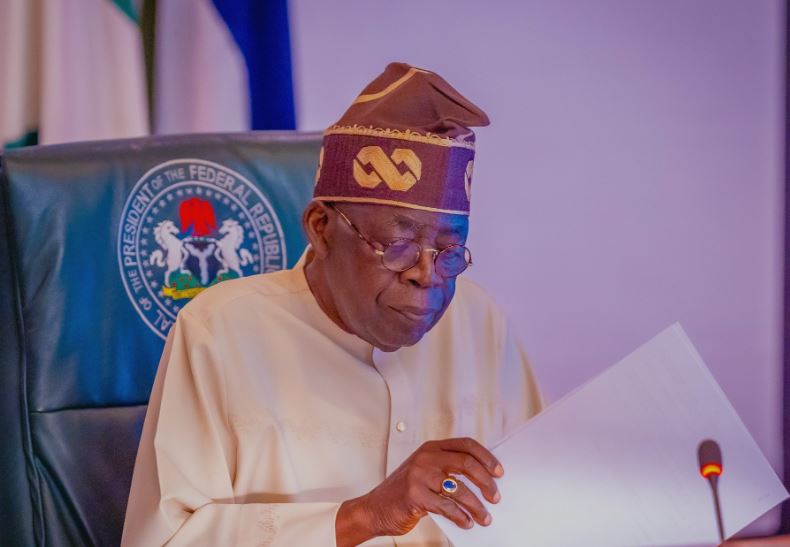
OPINION: Tinubu’s Policies Are Systematically Destroying Northern Agriculture While Boosting Southern Businesses

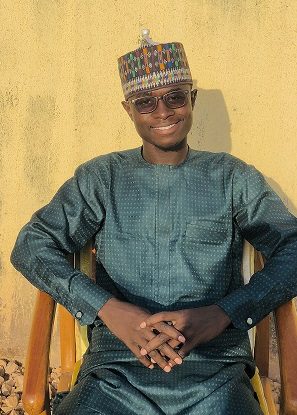
By Dr. Umar Musa Kallah

Nigeria’s food import bill has more than doubled under President Bola Ahmed Tinubu, rising from ₦3.83 trillion in 2023 to ₦7.65 trillion in 2025, according to the National Bureau of Statistics data.

This surge is not the result of global shocks or natural disasters alone. It stems directly from a deliberate policy of granting liberal import waivers on maize, rice, soybeans and other staples. Announced repeatedly as a measure to crash food prices, these waivers have instead achieved a far more targeted outcome: the collapse of Northern farms and agro-processing industries while delivering clear economic advantages to Southern importers, poultry conglomerates and port-based processors.

The contrast with the Buhari administration is striking. Between 2015 and 2023, agriculture was positioned as a cornerstone of national development. The Anchor Borrowers’ Programme channelled over ₦800 billion to more than four million smallholder farmers, enabling cultivation on more than five million hectares.

Rice production rose sharply from between 2.5 million and 3.7 million metric tonnes to peaks of 8.5 million to nine million metric tonnes, positioning Nigeria as Africa’s largest producer and, for a time, a net exporter in the region. The 2019 land border closure protected local value chains and revived rice milling, soybean crushing, groundnut and cotton-seed processing across the North.

More than 150 modern rice mills emerged nationwide, with over 100 located in Northern states. Oil mills in Kano, Kaduna, Gombe and Jigawa thrived on locally sourced raw materials, generating tens of thousands of direct and indirect jobs and triggering a strong post-harvest multiplier effect that spread prosperity through transport, packaging, marketing and local services.

That progress has been reversed under the current administration. Milled rice production has fallen to a projected 5.5 million metric tonnes in the 2025/26 season, down from Buhari-era peaks. According to the Rice Processors Association of Nigeria, nearly 90 of the country’s 150 rice mills have shut down since 2023, with many surviving mills operating at 30 per cent capacity.

Northern facilities have suffered the heaviest losses. Soybean, groundnut and cotton-seed crushing plants that once benefited from protected local supplies now run at below 20 per cent capacity or have been forced to liquidate assets. Fertiliser prices have escalated dramatically, with a bag of urea selling for  ₦58,000 and NPK for ₦120,000 in many markets.

Diesel and pms costs have tripled following the removal of fuel subsidies. At the same time, farm-gate prices for staples such as maize have collapsed to as low as ₦38,000 per 100kg bag, often falling below the cost of production, which exceeds ₦1 million per hectare in many areas. Farmers are abandoning their fields, selling at a loss or leaving the sector entirely.

These outcomes are not accidental. The import waiver regime, which offers zero-duty and VAT exemptions on key commodities and was first announced in 2024 before being effectively extended, has operated without any parallel measures to reduce input costs or protect local processors.

Maize waivers have primarily benefited major poultry conglomerates concentrated in the South, where the feed industry is dominated by Southern operators. Soybean imports allow Southern processors to bypass local crushing altogether. Rice milling is visibly shifting southward, with imported paddy now processed in expanded Southern facilities and the finished product shipped back to Northern markets.

Northern oil millers, who lack direct access to seaports, are placed at a severe disadvantage. They cannot import raw soybeans competitively and are instead forced to purchase already-crushed crude soybean oil from Southern refiners who enjoy the logistical advantages of Lagos and Port Harcourt ports. As a result, capital that once circulated within Northern communities now flows southward to port operators, importers, logistics firms and Southern feed mills.

The regional imbalance extends far beyond farming. Unemployment has risen sharply in the North, where agriculture remains the primary source of livelihood for the majority of the population. Each closed rice mill has eliminated hundreds of direct jobs and thousands of indirect positions in farming, transport and allied services.

With nearly 90 mills out of operation, tens of thousands of Northern livelihoods have disappeared. Rural underemployment has increased as the traditional post-harvest economic surge has vanished. Northern states, already facing challenges of insecurity and weak infrastructure, are experiencing accelerated rural-urban migration, higher youth joblessness and deepening poverty. In contrast, Southern urban centres have gained from expanded import-related activities, including more jobs in ports, poultry processing, logistics and distribution services tied to cheap foreign inputs.

Other factors compound the North’s disadvantage while strengthening the South. Billions of naira invested in Northern agro-industries during the Buhari years are now stranded or liquidated, while Southern processors with direct sea access and waiver-backed imports continue to attract fresh capital and expand operations.

The classic multiplier effect that once spread prosperity from Northern harvests across the national economy has been reversed, with money draining out of the North and concentrating in Southern hands. Food security has been undermined for the entire country.

A population exceeding 230 million now depends increasingly on volatile imports for basic staples, exposing Nigeria to global price shocks, foreign exchange crises and potential supply disruptions. The South, as the hub of processing and distribution, benefits from short-term consumer price relief and sustained industrial activity.

No policy under the Tinubu administration prioritises the strengthening of local farms and industries over importation. Instead, the waiver regime actively discourages domestic production by making imported raw materials artificially cheaper than locally grown equivalents, without corresponding support for Northern farmers or processors.

Government statements continue to celebrate minor drops in consumer prices while ignoring the collapse of local capacity. The pattern is consistent and unmistakable: repeated public commitments to crash farm-gate prices, unchecked waivers and complete neglect of Northern processing infrastructure.

Nigeria cannot achieve sustainable development by weakening its primary food-producing region. The deliberate marginalisation of the North’s agricultural economy risks mass unemployment, rural depopulation, social instability and long-term national food insecurity. Northern governors, traditional rulers, farmers’ associations, rice processors and business leaders must now break their silence. The evidence shows a clear agenda to render the North economically redundant so that Southern interests can dominate value chains and resource flows.

The mills cannot remain silent and the fields cannot be left fallow indefinitely. A nation of this size, increasingly dependent on foreign food while one of its most productive regions is systematically impoverished, faces grave danger. The people of the North must act to defend their economic future before it is lost forever. This is not development. It is calculated dispossession, and it must be confronted without delay.

Dr. Umar Musa Kallah wrote in from Kano, Nigeria.

FEATURE: How small businesses in Northern Nigeria struggle amid economic pressures, seasonal shifts

By Sabiu Abdullahi, Uzair Adam, Anwar Usman, Anas Abbas, Abdullahi Algasgaini, and Ibrahim Yunusa

As the summer season deepens across northern Nigeria, small business owners in various communities—from Kano to Kaduna, Jigawa to Bauchi—are raising the alarm over dwindling customer patronage.

The Daily Reality reports that the convergence of economic hardship, seasonal farming priorities, and insecurity is squeezing their operations, with many struggling to stay afloat.

Traditionally, the onset of summer in the Northern Hemisphere, beginning in May, signals a shift in consumer behavior.

For many local residents, it marks a transition from marketplace spending to full-scale agricultural engagement.

As people move into planting and harvesting, businesses dependent on daily and seasonal purchases are increasingly left behind. This year, that impact appears to be more pronounced than usual.

Hussain Ibrahim, a businessman at Kano’s Kofar Ruwa market, told The Daily Reality that while there is interest from customers, purchasing power has significantly weakened due to inflation and soaring prices.

He stated, “Although people want to patronize us, goods have become too expensive. The money you’d use to buy a ton of rod two years ago has doubled. Most people can’t keep up with the situation.”

He also attributed the crisis to the federal government’s removal of the fuel subsidy, which has drastically increased transportation costs.

Ibrahim added that, “Before, transporting goods from Lagos to Kano used to cost N800,000. Now, it’s N1.7 million. That alone inflates prices, and customers suffer for it.”

In Jigawa State, Umar Muhammad, a foodstuff dealer in Limawa, Dutse, highlighted another unique challenge: the irregularity of local civil servant salaries.

Muhammad said, “Our peak sales occur in the first and second weeks of the month when civil servants receive their pay. By the middle of the month, we might drop from N1 million in sales to just N200,000,” he revealed.

This pattern underscores how fragile small businesses are, relying heavily on public sector salary cycles for survival.

In Kaduna’s Zaria town, fertilizer dealer Yakubu Hussaini painted a bleak picture. According to him, the price hikes from suppliers—triggered by high import costs of raw materials—have slowed down the market significantly.

“The government’s decision to import maize, wheat, and rice discouraged many farmers. Coupled with the insecurity in rural areas, farmers are abandoning their lands. All of this has crushed demand for fertilizer,” he said.

As the rainy season approaches, and started in some areas, farming activities become top priority for most residents, further reducing commercial traffic in markets. This has hit businesses that depend on footfall the hardest.

Isah Mucika, a butcher at the Kwanar Ungogo abattoir in Kano, observed, “People are more focused on clearing their farms. I had to sell my motorcycle to invest in my farmland.”

He added that goods are seen as increasingly unaffordable, leading many to limit spending to farming essentials.

The story is the same in Bauchi, where a cosmetics seller said her weekly sales have been reduced to what she used to make in just two days.

“Now, people mostly buy only what they eat. Luxuries like cosmetics are no longer a priority,” she lamented.

A mobile phone dealer echoed her frustration. “Even fairly used phones are hard to sell. People come, ask for the price, and walk away. They’d rather fix their old phones than buy new ones.”

As small businesses continue to suffer under the weight of these intersecting challenges, local chambers of commerce and community leaders are calling for increased support for local enterprises.

There is a growing campaign urging residents to buy local, highlighting the social and economic ripple effects of every purchase.

“Supporting local businesses now is more important than ever. There is a strong connection between low patronage and the coming rainy season—but our collective choices can help cushion the impact.”

According to economic expert Abdulmalik Ibrahim, the low purchasing power of residents in northern Nigeria is a major factor behind the struggles faced by small businesses during this period.

Ibrahim pointed to a range of factors fueling the situation: high inflation, devaluation of the naira, and ongoing economic challenges that have shrunk household incomes.

He noted that Nigeria’s inflation rate reached 33.20% in March 2024, making it increasingly difficult for people to afford even basic necessities.

“The devaluation of the naira has pushed up the cost of imported goods, while economic instability and high unemployment have further reduced disposable incomes,” he explained.

Ibrahim added that rising prices for essentials like food, transport, and utilities have hit low-income households the hardest, reducing their spending power and affecting small businesses.

“Insecurity in farming communities and disruptions to supply chains have also driven up food prices, making the situation even worse,” he said.

He stressed that government borrowing from the Central Bank of Nigeria has contributed to inflation, further straining people’s ability to purchase goods and services.

“The combined impact of these factors is creating a harsh environment for small businesses across the region,” Ibrahim concluded.

NAF’s airstrike destroys bandits’ hideouts, kills over 20

By Anwar Usman

The Nigerian Air Force has said that, operatives in Katsina State have destroyed notorious criminal hideouts in Unguwar Goga Hillforest, Ruwan Godiya Ward, the Faskari Local Government Area of the state.

The operation, done by the Air Component of Operation Fansan Yamma in the early hours of Thursday, centered on cracking down the fortified camps of two notorious bandit kingpins, Gero (Alhaji) and Alhaji Riga.

In astatement on Friday night by the Deputy Director of Public Relations and Information, Nigerian Air Force, Group Captain Kabiru Ali, said the airstrikes successfully neutralised over 20 bandits, with additional casualties reported in the surrounding rocky hills.

The statement in part read, “The Nigerian Air Force has delivered a devastating blow to banditry in Katsina State, as the Air Component of Area.

“The airstrikes, which preceded careful and actionable intelligence advancing purposeful lethality, destroyed the fortified camps of notorious bandit kingpins, Gero (Alhaji) and Alhaji Riga, neutralising over 20 criminals, with additional casualties reported in the surrounding rocky hills.

“The action by the operatives had a decisive impact on the criminals, assessment of the full extent of the damage is ongoing.”

Ali said Riga and Gero were key perpetrators of banditry in the region, providing shelter and all household items for terrorist elements responsible for deadly ambushes along the Funtua-Gusau Road, particularly between Yankara and Sheme villages.

He added that their elimination is seen as a major victory in the ongoing military battles to restore peace in the North-West region.

Northern governors pay tribute to General Gowon at 90 

By Abdullahi Mukhtar Algasgaini 

The Chairman of the Northern States Governors’ Forum and Governor of Gombe State, Muhammadu Inuwa Yahaya, CON, has felicitated with General Yakubu Gowon, GCFR, on the occasion of his 90th birthday today. 

Mr. Inuwa described the ex-head-of-state as an exceptional patriot and statesman whose life epitomises service, unity, and peace. 

Governor Inuwa Yahaya described the former Head of State as an iconic leader and uncommon patriot whose resolve to preserve the unity of the country during the civil war remains a cornerstone of Nigeria’s national identity. 

The NSGF Chairman recalled General Gowon’s post-war efforts, encapsulated in the “No Victor, No Vanquished” policy, and the launch of the National Youth Service Corps (NYSC), which he noted cemented his vision of healing and national integration. 

He also noted the former Nigerian leader’s influence in the formation of ECOWAS, which continues to promote regional cooperation and development. 

“As you celebrate this milestone, we reflect on your legacy with gratitude and pride,” Governor Inuwa Yahaya remarked, on behalf of the 19 northern governors.   

“Your exemplary life has inspired generations of leaders, reminding us of the importance of unity, peace, and service to nation and humanity. We pray that the Almighty will continue to bless you with good health, strength, and fulfillment in the years ahead.”

Northern groups urge Nigerians to disregard “sponsored protests” against FG

By Uzair Adam Imam

An amalgamation of pro-democracy groups from the 19 Northern states, operating under the banner of Arewa Initiative for Defence and Promotion of Democracy, has dismissed recent protests staged against the Federal Government in Kano and Minna as “sponsored.”

Led by Professor Shehu Abdullahi Ma’aji, the groups attributed the challenging economic situation faced by Nigerians to the legacy of a faltering economy inherited by President Bola Tinubu from his predecessor.

In response to protests in Minna, Niger State, earlier this week, Ma’aji emphasized during a press conference in Abuja that such demonstrations were unwarranted, as the Tinubu-led government was actively addressing economic concerns.

He urged Nigerians to exercise patience and patriotism, emphasizing that it is premature to critique an eight-month-old government, particularly by individuals with vested interests.

Ma’aji called for cooperation with the administration’s efforts to tackle the twin challenges of economic instability and insecurity plaguing the nation.

Ohinoyi of Ebiraland, Dr. Ado Ibrahim, mourned by Northern governors

By Sabiu Abdullahi

The Northern Governors’ Forum has expressed its deep sadness over the passing of the revered Ohinoyi of Ebiraland, Dr. Abdul Rahman Ado Ibrahim.

Governor Muhammadu Inuwa Yahaya of Gombe State, the Chairman of the Forum, expressed heartfelt condolences over the demise of this iconic monarch. 

Mr. Yahaya, in a statement, praised Dr. Ado Ibrahim’s legacy of peace, unity, and cultural preservation in Ebiraland.

He extended his sympathies to the people of Kogi State and the entire Ebira community, urging them to uphold the late monarch’s values. 

In this time of mourning, the Northern Governors’ Forum stands in solidarity with the family of Dr. Ado Ibrahim, honouring his contributions to the region’s heritage and praying for his soul’s eternal peace.

Designing a New Nigeria: On governance and cultural considerations

By A.F. Sesay

When we talk of politicians, we speak about them like aliens or spirits from the evil forest. People came with their own beliefs, attitudes, approaches to life, and different perspectives on divine justice and the torture in Hell. We talk of them like we do of cold, callous people whose race is bent on inflicting the greatest damage possible on the human race. But wait…who are these politicians?

Let’s keep the answer in the brain and move on to something urgent: the design of governance experience. Do we see this as something we all could do better? Should leaders and followers look at governance from the lens of user experience design? I think they should!

If every product, starting from the Constitution to the Curriculum, was designed with the people they will affect in mind. I am sure the outcomes would be different. Hardly anybody is going to look at the current Constitution and Curriculum and say: Yes, these were designed with empathy, love and responsiveness to the needs of the citizens.

If the guy who presses the button at the Electricity House has the empathy to think that somebody is going out of business with every touch of the red button, a baby is dying in the hospital, an investor is packing his bag to leave Nigeria for good, a boy is missing vital lessons because he can no longer cope with doing his assignment in the dark, a family is exposing their lives to carbon monoxide generated by generators and so on.  If he had ever approached his work like a user experience designer, many problems could have been solved by now.

If the northerner or southerner stealing from the public treasury realizes that with every kobo stolen, a citizen dies and that this corruption-induced death is agnostic of region, religion or tribe, we wouldn’t need an Economic and Financial Crimes Commission (EFCC). Likewise, if every contractor realized that every badly-designed road is a graveyard for his fellow citizens, then potholes will become history.

If every Nigerian who had the opportunity to lead ten people or more or even less realized that these micro leadership tasks are a microcosm of the overall leadership output of the nation, then the nation’s leaders will be as upright as we want them. Suppose every employer knew that every right violated is the beginning of bad governance. In that case, the next commander-in-chief will make it a personal duty to provide the enabling ground for every citizen to thrive.


When every day becomes a reminder of the responsibility we all have as leaders in our various capacities, we will witness the birth of the ‘beautyful ones’ (apologies to Armah). There will be thoughtful and resourceful leaders in every cranny on the road to building a great nation.  


If every young person on Twitter and Facebook knew that every tweet or post could potentially destroy a life, fake news would be reduced to the barest minimum, even if it looks like a “catching cruise”. If every journalist knew that every fake report opens bigger wounds and increases the pain point of his readers, then nobody would invest millions in fact-checking. As a result, we all would have had less cause to verify the news and have fewer regrets for sharing harmful and divisive content.

We will be mentally ready to ask the right questions when we start seeing this all as a design problem and not just some issues caused by aliens or foreign species. And let’s know that INEC cannot give us what culture has deprived us of.

While scratching the surface for the past 60 years has given some temporary relief, the question of how far have we come and how many more years can we afford this mediocrity in governance here and across the continent?


We have ousted leaders we hate too much. We have brought in our tribesmen and “starmen” to power and opened doors to stupendous wealth for kinsmen. But in truth, the problems have compounded. So, it’s not an election problem; it’s culture, design and system that we have to work on.

Talking alone won’t win us good leaders. In the same vein, we can’t insult the elected into good governance. They have to want to. And the only way that happens is vision and a culture that makes it difficult for people to be bad at the top.

At the mention of Nigeria, everybody becomes an expert. But most of these experts only hit the surface, compounding the problem with false claims, unverified and alternative truths, faulty assumptions, stereotypes, bigotry, and received “wisdom”.

We have got to wake up and smell the coffee. There is a design problem out here. Until we are heavy on researching root causes and being genuinely interested in knowing all the whys of the problem, until we see ourselves beyond the just-a-citizen mindsets to the mindset of restless inventors, these problems are only growing bigger and more complex regardless of who is at the top.

We have to build a research culture and replace that with false assumptions and stereotypes. Until we see the governance products of today as collective input of everybody who played a role, no matter how little, until the people in power (from Local Government to Federal Government)  create a mechanism to capture feedback and continual improvement regularly, we will still have to come to these basics many years later.

Go to the archives and read headlines of the 70s and 80s and compare them to today’s headlines. You will observe a pattern that will shock you. In short, the design process is faulty, but we are finding it difficult to rethink the process because thinking itself will require an effort that we are not yet ready for.

A.F. Sesay sent this article via amarasesay.amir@gmail.com.

FG must stop these senseless killings in the North – Ulama Forum

By Aisar Fagge

The Ulama Forum in Nigeria is greatly concerned and saddened over the perpetual killings of innocent lives going on unabated in Nigeria, especially in the North West of the country in recent times.

The forum disclosed this in its press release signed by its secretary, Engr. Basheer Adamu Aliyu, on Monday, December 13, 2021, and sent to The Daily Reality today, Thursday, December 16, 2021.

The statement reads: “Our hearts bleed over the dastardly and inhuman act of burning alive of 23 passengers in Sokoto state. Other equally sad losses of lives that were witnessed in Niger, Kaduna, Zamfara and Katsina states over the last one week are heart touching, frustrating and to say the least unpardonable. It is highly inconceivable how bandits and terrorists move about freely in the land, committing heinous acts and atrocities unchecked by the power of government and its security agencies.”

“The terrorists have desecrated all religious, human and universal values and indeed, they have lost their faith and humanity; they must be confronted head-on with might and power. We most strongly urge the Federal Government of Nigeria (FGN) to sit up to its responsibility of protecting the lives of Nigerian citizens. It would be recalled that in the year 2020, out of similar concern over the deteriorating trend of insecurity, the Ulama Forum had advanced nearly a dozen suggestions to the governments at all levels so as to curb the Boko Haram menace, banditry and other security challenges facing the Northern region.”

“It is sad to note that most of our suggestions were ignored and security situation in the country has been moving from bad to worse,” the Forum lamented.

“Based on the foregoing, we would like to once more urge the FGN to re-assess its security strategies and spending with a view to unfolding a more holistic and all-inclusive approach. We believe that divine intervention is a most potent weapon against the bandits, insurgents and their collaborators.”

“To this end, members of the Forum have resolved to devote themselves to alqunut (special prayer in times of turmoil) during each prayer session. Similarly, special prayers should be observed in Madaaris (Islamiyyah Schools) and other places of gathering.”

“We pray to Allah to give our leaders the listening ears to hear the cries of its weak, terrorised and terrified citizens, particularly in the North. May they have the wisdom, will, determination and ability to do the needful and ensure peace and security in the land. There is no power or strength save in Allah,” it concluded.

The release was endorsed by its members such as:

Prof. Mansur Ibrahim (mni), Sokoto; Dr. Bashir Aliyu Umar, Kano; Dr. Abubakar Muhamad Sani B/Kudu, Jigawa; Dr. Khalid Abubakar Aliyu, Kaduna; Prof. Muhammad Babangida Muhammad, Kano; Dr. Said Ahmad Dukawa, Kano; Prof. Salisu Shehu, Bauchi; Prof. Ahmad Bello Dogarawa, Kaduna; Amir Abdullahi Abubakar Lamido, Gombe; Dr. Ibrahim Adam Omar Disina, Bauchi; Prof. Ahmad Murtala, Kano; Sheikh Tijjani Bala Kalarawi, Kano;

Chores before health education graduates

By Mallam Musbahu Magayaki

I write to advise and to equally draw the attention of the Nigerian 2021 Health Education graduates to the vital task of putting their obtained certificates into positive and useful ways before securing various job opportunities, whether in the government or private sectors.

Some determinants traumatize many Nigerians’ healthy conditions, such as open defecation, drug abuse, and sexual assault. These factors, if our educated health graduates would voluntarily embark on advocacy visits to people living both in rural and urban communities, would be averagely diminished, if not eliminated.

Let’s take open defecation as a case study, as Nigeria is ranked as the highest country with the highest percentage of people defecating openly. They do so either because they do not have toilets readily accessible or due to unhealthy traditional and cultural practices. However, as for me, a 200-level student of health education, the practices of this determiner are prevalent in rural areas due to traditional cultural practices, as said earlier.

As a result, health education campaigns in rural and urban areas by 2021 health education graduates and those who have obtained their certificates but have yet to start working would be hugely advantageous in updating or promoting many people’s thoughts.

Some people engaged in the practice of risking diseases, either deliberately or naively, are uninformed of the hazards of their false assumptions; paying them advocacy visits would enable them to fully comprehend their harmful ideas and substitute them with knowledgeable ones. You should not arrogantly approach them, asking them to stop doing this and start doing that. No, this is not the most effective technique to teach people. Many academics argue that polite communication effectively leads to a good understanding.

Finally, several primary health care centres in Nigeria do not have enough employees to care for patients. Apart from that, our health education graduates should look for these hospitals and volunteer to serve but with a bit of incentive that would make them more zealous in rendering their voluntary services. Without the support of its citizens, no nation will be able to overcome its insurmountable hurdles.

Therefore, it is not optional but binding for us to support our country by being involved in various positive innovations that would improve our country’s potential to achieve optimally positive advancements.

Mallam Musbahu Magayaki is a 200-level student of Health Education at Aminu Saleh College Of Education Azare. He can be reached via musbahumuhammad258@gmail.com.

On power rotation, Nigeria should face reality

By Aliyu Ammani Junior

Leadership has been one of the common unbalanced difficulties in Nigeria’s political space since independence: 1964 Federal Election Crisis, January 1966 coup, 1966 counter-coup, Nigeria/Biafra civil war, Gideon Orkar’s failed coup, post-June 12 political crisis, and more. All in one way or another—linkable to one part’s sentiment of being marginalized, omitted, or denied the sense of representation.

Ideally, merit, competency, integrity, and capacity are the benchmarks in selecting a leader, not a power rotation or sharing formula. Nevertheless, the situation in Nigeria, a complex country of multiethnic and multi-religious organizations with uneven federalism that is almost consolidated, is not about competency, merit, integrity, and capacity.

A centralized structure ravaged by agitation, deep suspicion of fear of ethnic and religious hegemony demands a rotating power between north and south to accommodate the emotions and sentiments of these regions and their people. Providing a rotation formula would go a long way in sustaining a united Nigeria considering the existing deep divisions among Nigerians. It will produce fairness, equality, equity, justice, a sense of possession, and identification.

Unless a requisite equate is attained, where every part and tribe has developed a sense of possession, identification, and the federalism is no longer leaning; Nigeria will always require a practical formula for unifying the diverging segments that formed ‘The Federal Republic Of Nigeria.’

The fault of power rotation is theoretical and unrealistic; some argue that it is ‘undemocratic’ because it deprives certain people with competence, capacity, and experience the right to be voted—for when zoning does not favour their locus. There is no universal structure of democracy; what is universal about democracy is the basic principles that guide it. The focus of democratic practical demands remains locally confined. As a substantial social value, democracy has complex and diverse considerations and needs. Therefore, it should be hacked to suit local conditions and circumstances.

It is deceiving and tricky to limit the democratic system to mechanical conditions (popular will) without referring to instrumental conditions like the blanket sense of identity—inclusiveness—possession from every component.

Another narrowed argument against the rotating formula is that it is ineffectual and of no help – since a typical citizen from the leader’s zone is not better comforted ‘materialistically’ than other citizens from distant zones. Realistically, it is restricting, reducing, and neo-Marxist to limit the decisive quest of political aspirations and struggles to ‘distribution of resources’ without appreciating other factors; recognition, possession, and sense of identification. In a heterogeneous populace, it is significant to feel represented and connected by having someone from your spot and its experience, occupying a high post (including the office of the President) at least—in a while.

As earlier acknowledged, in usual events—merit, competency, integrity, and capacity should be ‘benchmarks’ in deciding a leader, not a formula. Undeniably, the merit, competency, integrity, and capacity test is a dubious and probable trial.  With a power rotating procedure, the questionable and possible trial remains untouched. Except that something is going to be fixed, every portion will develop a sense of possession, identification, and responsibility “I played: it’s time for someone.”


Aliyu Ammani Junior

Kaduna, Nigeria.