Nollywood

Kannywood Movie Review: MAI MARTABA

Company: Blackville Media

Director: Prince Daniel (Aboki)

Producers: Aliyu Ahmad, Egor Efiok, Bature Zambuk, Shehu Bala Kabara

Language: Hausa

Cast: Adam A. Zango, Ghali Abdallah DZ, Auwalu Isma’il Marshall, Fatima Muhammad, Maryam Usman Shuaibu, Mukhtar Aminu etc.

Release date (Nigeria): 19-7-2024

It’s no longer news that TV series have recently dominated the Kannywood filmmaking sphere. However, Prince Daniel Aboki produced an epic period film titled Mai Martaba in a bold move to revitalize the film industry. The film, roughly based on the popular Arewa Radio drama series Kasar Jallaba, has generated immense excitement among fans eager to see the gripping story come alive on screen.

Made on a sweeping budget of over ₦125 million, Mai Martaba surpassed Nanjala (which had a budget of over ₦65 million) to become Kannywood’s most expensive production. But does it justify this substantial investment? I watched it on Sunday, and here is my review.

Mai Martaba is an exciting tale of a succession struggle among competing claimants for the throne of the Jallaba kingdom. The storyline unfolds through an omniscient narrator, beginning with a few flashbacks of the kingdom under the previous reign of the Agadashawa dynasty. Now occupied by the Jallabawa clan, a sacred decree secures the throne.

Before death, each king must name a successor from within the clan, ensuring the Agadashawas would never return to power. King Mu’azu honoured this legacy by naming Sanaya (Auwal Ismail Marshall) his heir, with a written agreement that Sanaya would one day pass the crown to Mu’azu’s son, Magajin Gari (Ghali Abdallah DZ). But Sanaya breaches the agreement and crowns his daughter, Princess Sangaya (Fatima Muhammad), as his successor, setting the stage for an intense power struggle.

Will Magajin Gari reclaim his birthright? Who is the other claimant to the throne? Can a female monarch win over the hearts of the Jallaba people? Find out in the cinemas.

The movie is generally captivating. However, with a short runtime of less than 90 minutes, the screenplay fails to do complete justice to the compelling story. It features little action scenes and ends quickly when it is supposed to be at its climax. For instance, there is a brave bandit kingpin, Shugaba (Adam A. Zango), whose brother was killed in the kingdom. He is in alliance with Magajin Gari. Driven by revenge, the two could have been shown in a fierce battle against the Jallaba kingdom, adding a dramatic action sequence to the film.

Also, as an adaptation of the Kasar Jallaba radio serial, apart from the setting and select character names, Mai Martaba shares minimal similarity with the original sourcing material. It’s somewhat like the American TV series House of the Dragons, where King Viserys appointed his female child, Princess Rhaenyra, as heir to the throne. The theme of ‘succession war’ is also prominent in many other local and international movies.

However, Mai Martaba remains a satisfactory period drama, boasting a spectacular setting and near-authentic period costumes. It may not be the most engaging Kannywood epic, but it could be the best in general production quality. Its exceptional cinematography and technical excellence is a breakthrough in the Hausa film industry. I salute the director, executive producer, and all other crew members.

The cast should also not be forgotten. Though it consists of new actors, they deliver impressive performances with good dialogue rendition. Ghali Abdallah DZ stands out as the ambitious Magajin Gari, plotting political machinations to get the throne. As Princess Sangaya, Fatima Muhammad was not given much scope but showed confidence in every scene she featured. Adam A. Zango (Shugaba) and Auwal Ismail Marshall (Sarki Sanaya) also deliver solid performances, fitting their roles perfectly.

Overall, Mai Martaba sets a benchmark for cinematic excellence in the Kannywood film industry. It’s a lavish epic film that justifies its hefty price tag. I strongly recommend it. Rating: 3.5/5.

Habibu Maaruf Abdu wrote from Kano. He can be reached via habibumaaruf11@gmail.com.

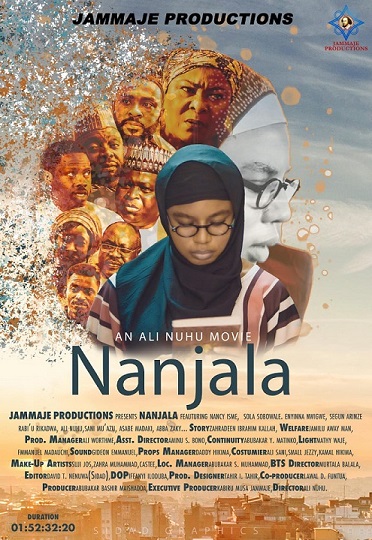
Kannywood/Nollywood film review: NANJALA (the Right Choice)

Company: Jammaje Productions

Director: Ali Nuhu

Producer: Abubakar Bashir Maishadda

Language: English

Cast: Nancy Isime, Sani Muazu, Sola Sabowale, Ali Nuhu, Enyinna Nwigwe, Rabi’u Rikadawa, Segun Arinze, Abba el-Mustapha, Asabe Madaki, Abba Zaki, etc.

Release date (Nigeria): 16-6-2024

After successful screenings in Turkey and the United States, the reportedly most expensive Kannywood movie, Nanjala, has finally hit our domestic screens. The movie is a groundbreaking attempt to bridge the gap between Northern Nigeria’s Kannywood and “mainstream” Nollywood by bringing actors from both industries together in a neutral setting and on an equal footing.

The film narrates the story of Nanjala (Nancy Isime), whose father, Captain Sembene (Sani Muazu), harbors a deep-seated disdain for female children. He, therefore, neglects his three daughters, focusing his care only on his son, Dititi (Abba Zaki). Nanjala has been a voracious reader with dreams of becoming a journalist since her childhood. However, her father’s constant discouragement makes his friend, Captain Jammoh Jummoh (Rabi’u Rikadawa), adopt her to help her realize her dreams.

Years later, Captain Sembene’s family falls apart. His favorite son, Dititi, becomes a drug addict, and his daughter, Jarry, leaves home, fed up with his mistreatment. Meanwhile, Nanjala achieves her dream of becoming a journalist but encounters problems with people in authority who want her to stop exposing their corrupt government.

How does the story unfold from there? Find out for yourself at Platinum Cinema.

The film addresses themes of women’s empowerment, the endurance of the human spirit, corruption, and moral decadence. It debunks the chauvinistic belief that female children are mere burdens to their parents and incapable of achieving greatness. We see how Nanjala suffers, initially at the hands of her chauvinistic father and later as a journalist hunted by a corrupt government. Despite these challenges, she overcomes her fears and insecurities to eventually emerge triumphant.

Nanjala is indeed a compelling film that has enough to hold viewers’ attention throughout its runtime. However, while it may lack attention-grabbing twists and turns, the wonderfully constructed screenplay and perfect use of flashbacks make it an enjoyable experience that you wish would never end. The cinematography is also spectacular, fully doing justice to the film’s scale. I haven’t enjoyed any Kannywood movie as much as this one recently. One must applaud the makers for their courage and financial strength in bringing such a big project to life.

The eponymous character seems to be inspired by Kenyan political analyst and activist Nanjala Nyabola. She also shares similarities with a character played by actress Miriam Osimbo in the Kenyan comedy series Hullaballoo Estate. Therefore, the film is likely to resonate with a broad African audience for that reason, and for its setting (a fictitious East African country), casting, character names, and universally relevant thematic preoccupations.

The film also deserves distinction marks for its English dialogue. The diction and flow of words are exceptional. What is even more interesting is how the Kannywood actors deliver their lines as flawlessly as their Nollywood counterparts in the cast. Thanks to Mallam Kabiru Musa Jammaje, the executive producer who pioneered the trend of “Kannywood films in English.”

In terms of performances, Nancy Isime fully immerses herself in the character of Nanjala and plays it exceptionally well. Sani Mu’azu is excellent as her chauvinistic father, delivering his dialogue with expressions that prove his acting skills. Rabi’u Rikadawa will win your heart as Nanjala’s foster father, who stands by her through thick and thin.

Asabe Madaki (Majuma), the character of Jarry, and Abba Zaki (Dititi) are first-rate as Nanjala’s siblings, but their mother, played by Sola Sobowale, does not live up to expectations. However, Enyinna Nwigwe is admirable as an accomplished author who later becomes Nanjala’s love interest. Segun Arinze, Ali Nuhu, and Abba el-Mustapha all shine in their brief roles. But it’s Hajara Haidar (Falmata) who will impress you with her adorable looks and fluent English, giving her small role a huge impact.

In conclusion, Nanjala has opened a new page in Nigerian cinema. It is a “Pan-Nigerian” film that will resonate across the country and beyond. I strongly recommend this insightful and inspiring film to every parent, young ladies, and, of course, anyone who enjoys seeing Africans speaking English on screen.

Habibu Maaruf

Kano, Nigeria abduhabibumaaruf11@gmail.com.

Northern Nollywood, Southern distorted mirrors: Nollywood and the rest of us

By Prof. Abdalla Uba Adamu

Recently, an extremely prestigious academic journal requested that I review a film made by a Nigerian. I was surprised, as that is Muhsin Ibrahim’s forte. Further, I really don’t watch Nigerian films, aka Nollywood, personally preferring African Francophone directors. Nevertheless, I agreed to do the review. 

However, the link they sent for the film was password-protected. I informed them, and they requested the filmmaker to send the password. Being a request from a highly prestigious journal, he sent the code, and I was able to get on the site and watch the film online. I was surprised at what I saw and decided to delve further into these issues. Before doing that, I wrote my review and sent it off. The film, however, set me thinking. 

Like a creeping malaise, Nollywood directors are rearing their cameras into the northern Nigerian cultural spaces. Again. The film I reviewed for the journal was “A Delivery Boy” (dir. Adekunle Adejuyigbe, 2018). It was in the Hausa language. None of the actors, however, was Hausa, although the lead actor seems to be a northerner (at least from his name since an online search failed to reveal any personal details about him). 

Nothing wrong with that. Some of the best films about a particular culture were made by those outside the culture. Being ‘outliers’, it often gave them an opportunity to provide a more or less balanced and objective ‘outsider’s perspective’ of the culture. Alfonso Cuarón, a Mexican, successfully directed “Harry Potter and the Prisoner of Azkaban” (2004), while Taiwanese director Ang Lee did the same with “ Brokeback Mountain” (2005), even earning him an Oscar. 

In 2006 Clint Eastwood, an American, directed “Letters From Iwo Jima.” The cast was almost entirely Japanese, and almost all of the dialogue was in Japanese. It was very well-received in Japan, and in fact, some critics in Japan wondered why a non-Japanese director was able to make one of the best war movies about World War II from the Japanese perspective. Abbas Kiarostami, an Iranian filmmaker, directed his film, “Certified Copy” (2020) in Italy, which contained French, Italian, and English dialogue starring French and British actors. 

British director Richard Attenborough successfully directed Ben Kingsley in the Indian biopic Gandhi (1982). The film was praised for providing a historically accurate portrayal of the life of Gandhi, the Indian independence movement and the deleterious results of British colonization of India. It took away eight Oscars. American director Steven Spielberg’s “Schindler’s List” (1993) on a German, Oskar Schindler, was equally a powerful portrayal of an auteur genius by a “non-native”. The film won seven Oscars. 

In each of these examples, the directors approached their subject matter with a clean, fresh and open mind that acknowledges the cultural sensitivities of the subject matter. My point is that a person, outside of a particular cultural context, can make sensitive films that portray the culture to his own culture as well as other cultures. That is not, however, how Nollywood plays when it focuses its cameras on northern Nigerian social culture. Specifically Muslims. 

I just can’t understand why they are so fixated on Muslims and the North. If the purpose of the ‘crossover’ films (as they are labelled) they make is to create an understanding of the North for their predominantly Southern audiences, they need not bother. Social media alone is awash with all the information one needs about Nigeria—the good, the bad and the ugly. You don’t need a big-budget film for that. Or actors trying and failing to convey ‘Aboki’ accents in stilted dialogues that lack grammatical context. 

Yet, they insist on producing films about Muslim northern Nigeria from a jaundiced, bigoted perspective, often couched with pseudo-intellectual veneer. To sweeten the bad taste of such distasteful films, they pick up one or two northern actors (who genuinely speak the Hausa language, even if not mainstream ethnic Hausa) and add them to the mix, believing that this will buy them salvation. For southern Nigerians, anyone above the River Niger is ‘Hausa’. 

They started in the early 2000s, and people just ignored them. The directors then included Oskar Baker (Ɗan Adamu Butulu, Abdulmalik), Yemi Laniyan (Makiyi, Uwar Gida), Tunji Agesin (Halin Kishiya), Matt Dadzie (Zuwaira), I. Nwankwo (Macijiya) and many others. These came on the heels of the massive success of “Sangaya” (dir. Aminu Muhammad Sabo, 1999) when this particular film opened up the northern Nigerian film market. 

Those Nollywood producers jumped into cash on the popularity of Hausa films and made their own for northern markets. For the most part, these early ‘crossover’ films that I refer to as ‘Northern Nollywood’ were fairly mild and evoked no reaction. They were still rejected, as the Hausa can be the most discriminatory people you can come across. If you are outside their cultural universe, you remain there. Forever. 

The few Kannywood actors eager to be seen on the ‘national stage’ allowed themselves to be used to deconstruct Islam and Muslims on the altar of filmmaking in subsequent Northern Nollywood films. Let’s not even talk about character misrepresentation, which Muhsin Ibrahim has written extensively about. In these scenarios, the usual tropes for northerners in Nollywood films is that of ‘Aboki’ (a term southern Nigerians believe is an insult to northerners, without knowing what it means), ‘maigad’ (security), generally a beggar. If they value an actor, they assign them an instantly forgettable role rather than a lead. Granted, this might be more astute and realistic marketing than ethnicity because it would be risky to give an unknown Hausa actor a significant role in a film aimed at southern Nigerians. 

A few of these types of portrayals in Nollywood included Hausa-speaking actors in films such as The Senator, The Stubborn Grasshopper, The World is Mine, Osama Bin La, Across the Border and The Police Officer. 

When Shari’a was relaunched from 1999 in many northern Nigerian States, it became an instant filmic focus for Nollywood. A film, “Holy Law: Shari’a” (dir. Ejike Asiegbu, 2001) drew such a barrage of criticism among Hausa Muslims due to its portrayal of Shari’a laws then being implemented in northern Nigeria that it caused credibility problems for the few Hausa actors that appeared in it. With neither understanding of Islam nor its context, the director ploughed on in his own distorted interpretation of the Shari’a as only a punitive justice system of chopping hands, floggings, and killings through foul-mouthed dialogue. As Nasiru Wada Khalil noted in his brilliant essay on the film (“Perception and Reaction: The Representation of the Shari’a in Nollywood and Kanywood Films”, SSRN, 2016) “the whole story of Holy Law is in itself flogged, amputated and killed right from the storyline.”

“Osama bin La” (dir. MacCollins Chidebe, 2001) was supposed to be a comedy. No one found it funny in Kano. Despite not featuring any northern actor, it was banned in Kano due to its portrayal of Osama bn Ladan, then considered a folk hero. The film was banned to avoid a reaction against Igbo merchants marketing the film. I was actually present in the congregation at a Friday sermon at Kundila Friday mosque in Kano when a ‘fatwa’ was issued on the film. Even a similar comedy, “Ibro Usama” (dir. Auwalu Dare, 2002), a chamama genre Hausa film, was banned in Kano, showing sensitivity to the subject matter. 

The reactions against crossover films seemed to have discouraged Nollywood producers from forging ahead. They returned in the 2010s. By then, northern Nigeria had entered a new phase of social disruption, and Nollywood took every opportunity to film its understanding of the issues—sometimes couched in simpering distorted narrative masquerading as social commentary—on society and culture it has absolutely no understanding of. 

In “Dry” (dir. Stephanie Linus, 2014), the director developed a sudden concern about ‘child marriage’ and its consequences. Naturally, the culprits of such marriage, as depicted in the film, are sixty-year-old men who marry girls young enough to be their granddaughters. The director’s qualification to talk about the issue (which was already being framed by child marriage controversy in the north) was that she has ‘visited the north’ a couple of times. With the film, if she could get at least “one girl free and open the minds of the people, and also instruct different bodies and individuals to take action, then the movie would have served its purpose.” The ‘north’ was living in darkness, and it required Stephanie Linus to shed light on ‘civilization’. 

 “A Delivery Boy” (dir. Adekunle Adejuyigbe, 2018) that I reviewed was about an ‘almajiri’ in an Islamic school who was kidnapped from the school, to begin with and repeatedly raped by his ‘Alamaramma’ (teacher). The almajiri somehow acquired sticks of dynamite to create a suicide vest and vowed to blow himself up—together with the teacher. The Alaramma in the film lives in an opulent mansion, far away from the ‘almajirai’. In this narrative universe, the ‘almajiri’ do not learn anything and are unwilling rape victims of their teaches who actually kidnapped them and forced them into the schools. 

“The Milkmaid” (dir. Desmond Ovbiagele, 2020) evokes the idealistic picture of a Fulani milkmaid and became a basis for a Nollywood film. Instead of focusing on the political economy of the Fulani milk trade, the film focused on the trope of terrorism. “The Black Book” (dir. Editi Effiong, 2023), touted as ‘Nigeria’s John Wick’ shoots a significant portion in ‘the north’ – with ‘Islamist’ hijab-wearing females touting assault rifles hidden underneath their hijab. “Jalil” (dir. Leslie Dapwatda, 2020) visits the recurrent theme of kidnapping for ransom. In the north, of course. 

Then came the latest, “Almajiri” (dir. Toka McBaror, 2022). Claimed to be a true-life story (although it is not clear whether it happened to specific people or based on what the director believed to be a common event), it featured muscle-bound badass types of thugs with guns and dreadlocks as Almajirai. The film reinforces the southern Nigerian trope of any beggar in the north being an Almajiri. Such ‘almajiris’ are kidnapped and sold into virtual slavery and horribly abused. The idea is to blame the parental irresponsibility of northerners. 

For southern Nigerians, especially the Nollywood crowd, an ‘Almajiri’ is a beggar, a product of a failed education system, a terrorist, a bandit, and an ‘aboki’. They use concocted figures bandied about by alphabet soup agencies to proclaim ‘over 10 million almajiri are out of school’ and, therefore, twigs of the terrorism inferno. How can someone who has been part of a system of education for over half a century be considered out of school? But for Nollywood, if it is not ABCD, then it is not education. 

“Northern Nollywood” films are the precise reasons why there will ALWAYS be different film cultures in Nigeria. Kannywood talks to its publics, happily churning out now TV shows that address issues it deems relevant—in its own way. Both the northern and southern parts of the country (covering the three major languages) were actively engaged. However, they were mutually non-legible to each other. This was essential because they operate on virtually opposing cultural mindsets – making the emergence of a truly “Nigerian cultural film” impossible. 

Quite a few writers seem to suggest that Kannywood is a ‘subset of Nollywood’, and indeed, many would prefer for the term Kannywood (created in 1999 by a Hausa writer) to be dispensed with and replaced with Nollywood (created in 2002 by a Japanese Canadian writer). It is to protect our cultural representation in films that I stand as a lone voice in advocating for a ‘Hausa Cinema’ to reflect the cultural universe of the Hausa.

Professor Abdalla Uba Adamu can be reached via auadamu@yahoo.com.
Impending collapse of Nollywood, Kannywood, and music industries due to the AI revolution

By Haruna Chiroma

Before the advent of the internal combustion engine, imaging two horses engaging in a conversation about the era of internal combustion engines. One of the horses envisions a transformative job landscape with new opportunities, while the other horse opposes the idea, seeing it as a potential threat to their relevance in transportation and a possible complete displacement from the realm of transportation. Horses have no position in the post internal combustion engine era. That is my prediction for the future of the movie and music industries in Nigeria.

The Nigerian movie industry is notably divided into two main sectors: Nollywood, primarily representing movies from the southern region and Kannywood, which focuses on movies from the northern region.

In the music industry, songs are typically sung in English, Hausa, Igbo, and Yoruba. Both the movie and music industries are currently confronting the looming threat of collapse due to the disruptive impact of AI innovations, inventions, and discoveries.

The process of writing movie scripts by scriptwriters is time-consuming and varies in duration depending on the complexity and proposed length of the film. It can take anywhere from two weeks to three months to complete the initial draft before further refinement. However, with the advent of AI tools like ChatGPT, scriptwriters can significantly enhance their productivity. By utilizing ChatGPT, writers can expedite the scriptwriting process, potentially reducing the time required from months to just one or two days for complex movie scripts.

The movie industry is on the verge of collapse in the near future with the emergence of generative AI tools capable of generating video from written text. In the near future, traditional methods of movie production may become obsolete. Instead of the laborious process of location shooting, hiring actors, coordinating camera movements, applying makeup, arranging logistics, etc. a movie script written by scriptwriter can simply be fed into a text-to-video tool converter. This innovative technology will then generate a movie video representation of the script, revolutionizing the way movies are created. The tool comes equipped with video editing features, enabling users to fine-tune the video to match their requirements. The process that involves many people with different expertise working from different perspective may likely require between 2 – 3 people instead of the large number of people required in the traditional process of movie production.

Recently, OpenAI unveiled Sora, a text-to-video conversion tool, garnering widespread attention from mainstream media. This development prompted a filmmaker in Hollywood, Tyler Perry to suspend his 4 years $800 million planned movie production studio expansion arguing that Sora will eventually impact every aspect of the movie industry and jobs in the entertainment industry.

In an intriguing development, yet another valuable AI tool for video translation has emerged. This tool enables users to translate their videos into different languages such as Dutch, French, Arabic, Swahili, Chinese, Malay, and more. By doing so, the movie video creators can extend their reach beyond Nigeria and cater to audiences across Africa, Europe, and Asia, thereby expanding their potential viewer base to a larger and more diverse audience.

A deepfake movie can be produced by using the faces of renowned movie stars from both Kannywood and Nollywood, eliminating the need for these actors to physically appear in any physical location. The movie developer only requires the consent of the actors to use their faces in the deepfake video, adhering strictly to ethical guidelines in the creation of deepfake content. With these permissions in place, a movie can be crafted featuring the prominent actor(s) as the central characters, offering new possibilities in cinematic storytelling.

These emerging concepts pose a significant challenge to the movie industry, making it increasingly difficult for the traditional model to sustain itself. This trend mirrors the significant decline or almost collapse witnessed in industries such as landline telephones, photo shops, and magnetic tape, suggesting that the movie industry may face a similar fate of eventual collapse to the changing landscape.

Already the adult content industry is facing tough competition from deepfake adult videos generated by AI tools. Recently, several dedicated platforms have emerged, exacerbating challenges for the traditional adult movie sector. These platforms are attracting millions of visitors, with one particularly renowned platform drawing over 17 million viewers monthly. Typically, the platform features short deepfake adult content videos as teasers, enticing viewers to access the full content elsewhere.

While the short videos span various platforms, the primary one serves primarily for advertising and provides links to other platforms where complete videos are available for purchase.

The proliferation of deepfake adult videos has led to a surprising revelation: these videos are not freely accessible but are instead sold in dollars, accepting payments via credit cards, debit cards, or cryptocurrency. This burgeoning industry has now become a multimillion-dollar enterprise. For anonymity and ethical reasons, I intentionally omitted specific platform names to prevent further traffic influx.

This discourse underscores a poignant observation: the inevitability of the movie industry’s potential decline due to the transformative impacts of AI research. In January of this year, a deepfake pornographic image featuring a celebrity, Taylor Swift surfaced on various social media platforms. The video quickly gained traction on X (formerly Twitter), spreading rapidly like wildfire and amassing over 47 million views in less than 24 hours. Despite ethical considerations, many X users shared the video extensively before it was eventually removed and searching for the image was blocked by X. I foresee the collapse of the adult content industry in the next 3 years with the deepfake videos taking over.

In the music industry, numerous AI tools for music generation are currently in various stages of development, testing, or initial release. For example, MusicLM, an AI tool developed by Google, is designed for composing music and has shown promising capabilities in generating music.

Currently, an advanced version called MusicFx is undergoing testing in Google’s test kitchen before its public release. Users can simply prompt ideas into the music tool, and it will automatically compose the music. This advancement suggests that the future of music composition may require fewer people, as one individual can prompt the tool with ideas to generate music without the need for multiple collaborators.

Another tool is Suno V3, it generates music from text easily. Therefore, the music industry is at the verge of facing stiff competition and eventual collapse of the industry from these revolutions from AI.

Haruna Chiroma, Ph.D. Artificial Intelligence University of Hafr Al Batin, Saudi Arabia, freedonchi@yahoo.com.

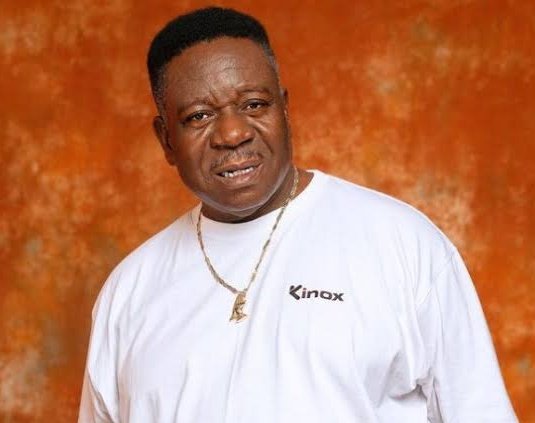
Nollywood veteran, Mr. Ibu, dies at 62

By Abdurrahman Muhammad

Nollywood actor, Mr. Ibu, has passed away at the age of 62. Mr. Ibu, whose real name is John Okafor, was a well-known and respected figure in the Nigerian film industry.

According to multiple reports from sources close to him, the veteran comedian passed away at Evercare Hospital. Many fans have shared condolences on X (formerly Twitter), reminiscing about movies the late actor has featured in.

Confirming his death, the President of the Actors Guild of Nigeria (AGN), Emeka Rollas, posted a message on his Facebook page.

According to Rollas, “Sad day for Actors Guild of Nigeria.

“Kate Henshaw lost her mother earlier today and Mr Ibu suffered cardiac arrest according to his manager for 24 years, Mr Don Single Nwuzor.

“I announce with (a) deep sense of grief that Mr Ibu didn’t make it.”

Details surrounding his death are still forthcoming. Also, Mr. Ibu’s family and representatives have yet to comment publicly.

The actor had been facing health challenges since October 2022 and had undergone several medical procedures, including the amputation of his leg.

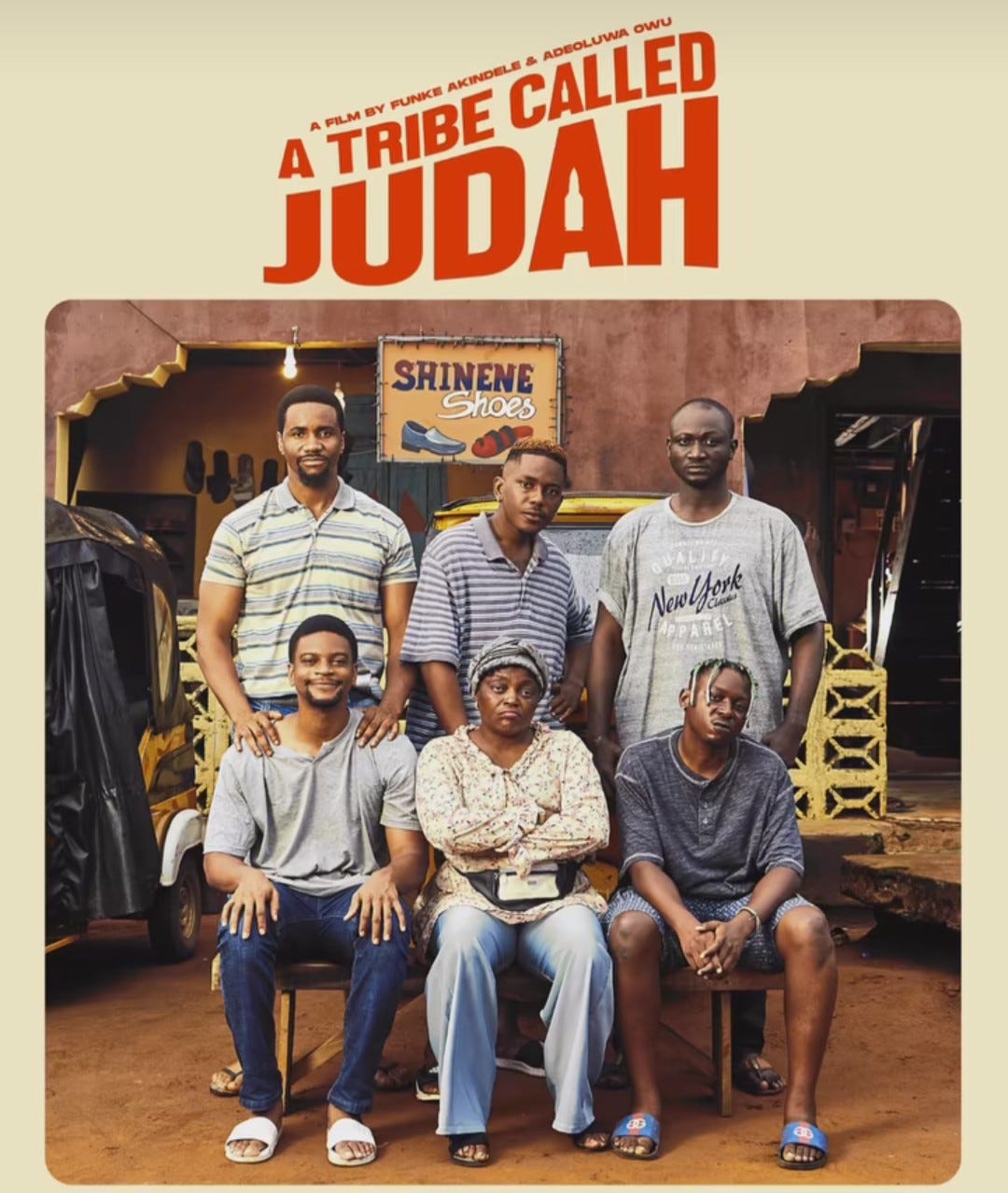
Nollywood Film Review: A Tribe Called Judah

The film with the title above came with a big bang and burst the block( in real terms, Blockbuster). I came to know of the film( I am not as good at motion pictures as books because in books you can see and hear and smell and feel and taste everything) when Atiku Abubakar and Sanwo Olu sent a twit of congratulatory message that one plagiarised one (same words same message) for hitting the 1 billion naira mark and becoming the highest money grossing film in Nigeria. I became interested. And I watched.

Why am I writing this? Honestly, I like celebrating good people and their achievements (a gift God gave me that I don’t ever think I have ever envied anyone. Rather, I celebrate him believing that, so long I keep clapping for them, one day they will also clap for me). 

After celebrating people, I love strong women. I truly do. Though honestly, my love for strong women (becoming them) had made me vulnerable in the eyes of weaker women. MY MOTHER IS A STRONG WOMAN, and on trying to be her(defending and protecting and advising and assisting all and sundry I became – in lowly goons eyes – a weak soul: reason if a woman doesn’t have empathy, I see her like a man–I will never get attracted to you: My little secret.

The above paragraph made me have a great likeness for the film A Tribe Called Judah.

The Storyline:

Jeddidah, played by Funke Akindele herself, is the mother of five boys from her five different men (East, North, South, West and “Mid-West”) that she vowed to protect with her life.

Emeka Judah, her first son, is the son of an Igbo man. He works in a Furniture shop, C&K, as a sales boy in a mall to a very wicked money laundering man.

Adamu Judah is the second son who works as a security guard at the same mall as Emeka.

Pere, the third son, is the black sheep of the house who goes about picking pockets in Lagos.

Shina, the fourth and second to the last born, always has his mother’s back and is a Lagos hooligan.

Ejiro, the last born, is a lover boy with–his life–Testimony (a beautiful young girl who can give him EVERYTHING, including her life, if it matters. Honestly, their love is something that can be seen only in films in the contemporary world.

As life keeps unravelling itself, every member of the family is loved by one another because their mother is solidly behind them. Emeka played his role as the big brother, always defending, fending, protecting and advising them. Adamu, the second from the womb, played his deputy role perfectly. He fell in love with a beautiful Hausa girl, but having no name or knowing the house of his father at Kano in Dala made him lose her. (Ejiro and Testimony’s love in reverse). Pere, the thief who, if not for sheer luck and the goodness you do, always find you wherever you are, would have been burnt alive by typical Lagosians, but for Jeddidah’s always love for goodness. She was there at the right time, and Pere was saved. Shina, the bloody bad English speaker and an area tout in a gang in Lagos, hears him, “I will work on me.” All these fingers are not equal.” despite his bad English guy, he is the man with the strongest will. He defended the family when it mattered most.

Ejiro, last born. The weakling and the somehow rejected cornerstone who, without the last heroic act of his lover, Testimony, would have all been killed.

You see, I have this belief that if you are good, you are good. Funke Akindele, both in the outside world and in the film she produced, is a good woman. The reason she has to be riding Keke Napep is to make sure that she loves her children despite having lost all their fathers one way or the other. So, when the time came for the children to stand by her, they all teamed up to save her by getting the needed money for a kidney transplant. 

The highly accented Igbo-speaking CEO of C&K Furniture, in fact, this guy is the salt of that film, is the wicked man who is Emeka’s boss that can’t lend Emeka money for his mother’s sickness but saying that Emeka should give him his mother’s number to give to his wife to join a strong “player glup in a church his wife is in.” You will laugh your life out and you will see in your very eye the statement “money miss road.” His dressing code, ehn! His I don’t care attitude, eh?! And his love for money is something I doubt I have ever seen.

Collette, the C&K General Manager (later have to “Correct don Collect” according to her boss), who was inherently wicked with a bad past, because hardly does a leopard shed its spots, Collette teams up with another gang to come and rob C&K. 

On that faithful day, the Juddahs agreed to rob that same. C&K and robbery turned into a war of two factions that Emeka paid the supreme price, but having a strong Deputy, Adamu picked up and made sure that EIGHT HUNDRED THOUSAND DOLLARS was moved for their mother’s kidney transplant. Collette was apprehended and was shown when she was breaking a CCTV unknown to her. Some lights are not for illumination alone. 

She tried to indict Emeka and Adamu, but Emeka has an alibi of saying he is travelling to Italy through the desert always and when sacked from C&K, his phone number hadn’t been reachable. Adamu was off duty on that day and part of the money was gotten from her gang. And for being “GILIDI”, she took a slug for her wickedness. And that was the end of a bad life, I believed.

The cinematography, the sounds, the colour combo, the settings, the scenes, the plots, the structure and everything that is required of a good film are contained in A Tribe Called Judah. 

Let’s make Funke Akindele the BILLIONAIRE that she deserves. Go watch the film. 

Written by

Engr. Mustapha Ibrahim, MNSE, R.Eng. BDSP.

President, Triple E Foundation.

Ali Nuhu’s appointment as MD of Nigerian Film Corporation is well-deserved 

By Habibu Ma’aruf Abdu

An interesting incident at the Awgu NYSC orientation camp, Enugu State, revealed to me the far-reaching popularity of Ali Nuhu in 2018. 

It was the early evening glow at the camp. As we strolled back from the training ground, a young Ijaw lady approached me with a cool smile on her face;

“Brother, may I ask you a few questions, please?” she inquired. 

“Why not?” I responded politely.

“Your platoon member, Oluwaseun, told me you are a Hausa from the North…”

I nodded my head in agreement: “Yes.”

“So, do you know Ali Nuhu?” she asked, her curiosity evident.

“Yes, I know him very well,” I affirmed.

Her face lit up with joy upon hearing my answer, and she muttered to herself: “No wonder!”

Curious, she continued, “Is he a brother to you…?”

Surprised, I responded, “Why this question? I know him as a famous actor. Nothing more. After all, who doesn’t know Ali Nuhu in the North? “

“Please don’t take offence; it’s just that I noticed a resemblance in your looks and actions…

“He is my favourite star. I love watching his films,” she added with enthusiasm.

From there, our conversation delved into a discussion about Nigerian cinema. I then discovered that the young lady knew no actor from Northern Nigeria besides him!

Ali Nuhu is probably the only Nigerian actor whose popularity transcends regional boundaries. His exceptional achievements in both Northern Nigeria’s Kannywood and mainstream Nollywood firmly established him as a pan-Nigerian superstar. 

I once encountered a young man in a faraway village in Igbo land wearing a T-shirt adorned with Ali Nuhu’s image. Again, when I visited Kebbi state in 2013, their most frequent question was, “Have you ever met Ali Nuhu?”

I, therefore, deemed his recent appointment as the Managing Director of the Nigerian Film Corporation by President Bola Ahmad Tinubu to be well-deserved. It is a testament to his dedication and significant contributions to the Nigerian film industry. Wishing the King of Kannywood continued success in this new position!

Habibu Maaruf Abdu wrote from Kano via habibumaaruf11@gmail.com

How Kannywood can change the northern narrative

By Aminu Mohammed

This article was inspired by a Facebook post by Dr Maryam T. Hamza, who urged northerners to stop casting aspersions on actors and practitioners of the Hausa language film industry, popularly known as Kannywood. The post got me thinking about my recent trip to Nigeria last year. I still recall how enthusiastic people at home were about the movie series Dadin Kowa shown on Arewa 24. I wondered what kept them glued to the TV while watching the Dadin Kowa drama.

It is a well-known fact that many families spend ample time at home watching movies from India, Korea, Turkey, the Philippines, and other countries. While in secondary school in the 1990s, I discovered that most of my friends were conversant with the names of famous Indian actors such as Amitabh Bachchan, Dharmendra, Jeetendra, Rajesh Khan, etc. We also became conversant with Indian culture, food and cities through the movies.

This reminds me of Funke Akindele’s recent movie A Tribe Called Judah, which has become the first Nollywood movie to hit one billion Naira from the cinemas in just three weeks of its release, marking a historic moment in the Nigerian movie industry. The film portrays the challenges bedevilling low-income families in their struggle for livelihood and survival. President Bola Tinubu congratulated Funke for the feat, and eulogies from former Vice President Atiku Abubakar and Peter Obi also followed this.

We Need to Tell Our Story

I have watched the movie Amina, which tells the story of Queen Amina of Zazzau, a 16th-century Hausa kingdom in what is now known as Zaria. Although the film was interesting and well-made, I was surprised to learn that the producers, Okechukwu Ogunjiofor and Izu Ojukwu, were not from Kannywood, despite casting Ali Nuhu, among other mainstream Hausa actors, in the film. I wondered why this was the case.

While I enjoyed the movie and praised the producers for their work, I couldn’t help but feel that something was missing. I felt uneasy that outsiders were telling the story of our traditional system while our people had overlooked or neglected to do so. It bothered me that we tend to criticise and demonise artists and icons in our society rather than promote them. Are we comfortable with outsiders telling stories about our culture and traditions? Are we okay with letting outsiders define who we are?

It’s concerning that people who watch American, Chinese, Korean, Indian, and Turkish movies are quick to condemn Kannywood actors and actresses, accusing them of spreading immorality. Why do we celebrate foreign celebrities and movie stars while looking down on our own simply because they speak the same Hausa language as us? How can we expect to progress as a society when we tear down our talents and icons?

During my undergraduate days at the Ahmadu Bello University, Zaria, American pop music and gangster rap were popular among students. However, things have changed over time, and many Nigerians now listen to our local music. Nigerian artists like Burna Boy, Davido, Wizkid, Tiwa Savage, Kizz Daniel, and others are now popular across the globe. Even former U.S. President Barack Obama listens to Nigerian music. Afrobeats singers like Burna Boy and Ayra Starr were on his 2023 summer playlist.

Kannywood Has Great Potential

Nollywood has become one of Nigeria’s biggest exports in the last decade, highlighting the immense talent of Nigerians. The creative and entertainment industry has seen tremendous growth over the years, improving the livelihoods of many practitioners. Similarly, Kannywood has created numerous job opportunities for people in the North, such as actors, producers, directors, costumiers, makeup artists, fashion designers, singers, dancers, scriptwriters, and bloggers.

We must support Kannywood and promote our own talents rather than criticise them. We must stop seeing the movie industry as a place for fostering immorality and social vices. Instead, we should harness Kannywood’s potential to generate foreign exchange and enhance economic growth and development in Kano state and the entire Northern region.

Film as Instrument of Positive Change

The movie industry has the potential to inspire diligence, hard work, honesty, and productivity among our youth. It can serve as a valuable tool to promote girl-child education, literacy, and women empowerment, generate employment opportunities for talented youths, as well as change the negative perception of the North as a place plagued by religious intolerance, banditry, and insurgency.

I enjoy watching Dadin Kowa and Kwana Casa’in on Arewa24 occasionally. I also listen to Hausa songs, especially those by Naziru Sarkin Waka, to stay connected to my culture and traditions as I live outside Nigeria. It is worth noting that Kannywood movies do not depict scenes of sex, kissing, hugging, or any other inappropriate content that could tarnish the industry’s reputation.

Promoting our culture and language through movies and home-grown creative efforts is essential. We can use movies to tell heroic stories about our forefathers and instil good values, family ethics, productivity, and religious morals in our youth. I firmly believe that harnessing Kannywood’s potential can bring about the desired change in our society and encourage us to hold our political leaders accountable for their stewardship. 

Aminu Mohammed wrote this article from Ingolstadt, Germany. He can be reached at gravity23n@gmail.com.

#2: Kannywood Chronicles – Aminu Hassan Yakasai and Turmin Danya

By Prof. Abdalla Uba Adamu

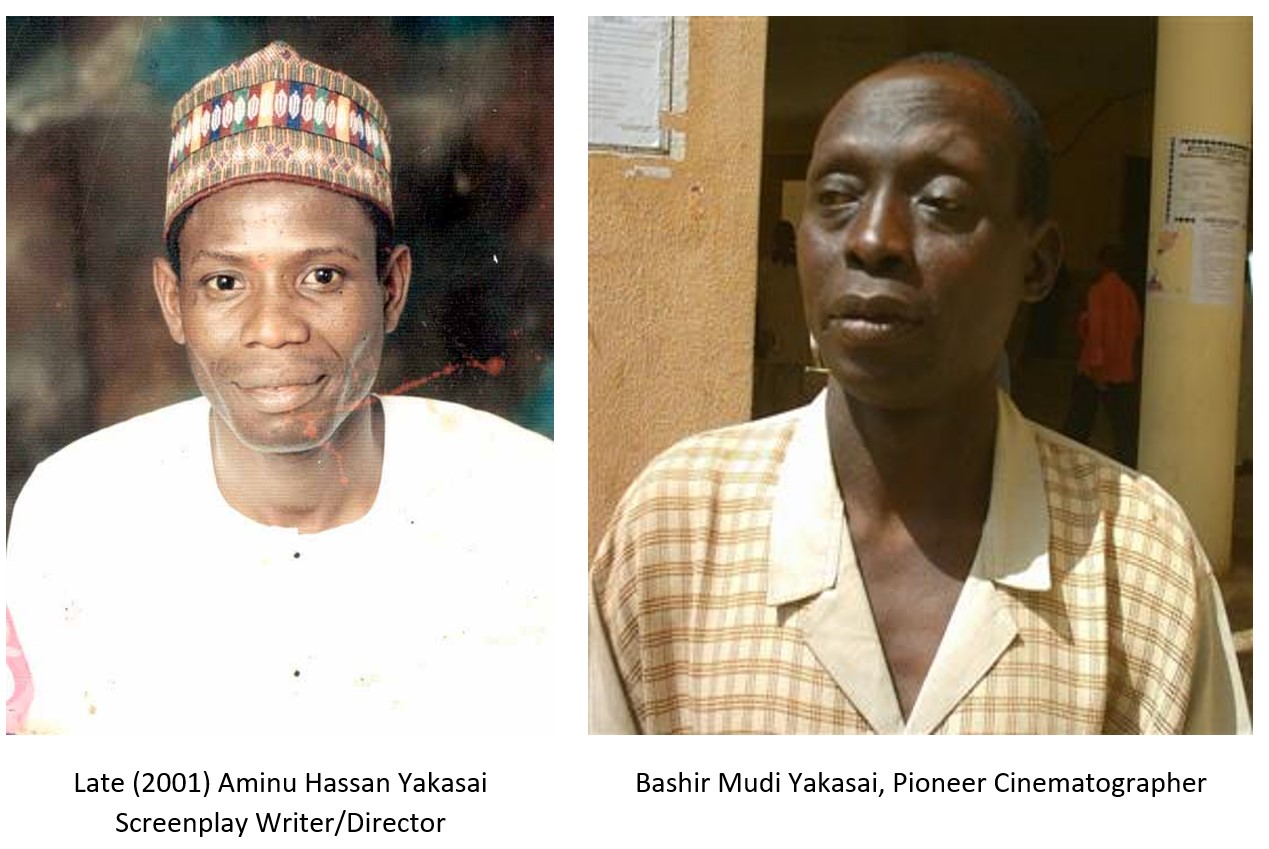
An industry is a system made up of interconnecting parts that synchronise together to create a perfect dynamic and functional entity. However, there is a central creative focus. Thus, while no one can claim to have been the actual originator of commercial Kannywood since many people – and processes contributed to its development – nevertheless, the creative spark that lit the fire of Kannywood was the late novelist Aminu Hassan Yakasai. If one person can be credited with creating the industry, it was him and only him. 

In the late 1970s, the Nigerian film director Ola Balogun directed two successful Yoruba films. The first, “Ajani Ogun”, was co-produced with the actor Ade Love. The second, “Ija Ominira”, starred Ade Love. Hubert Ogunde, a famous Yoruba travelling theatre showman, decided to join the trend. He invited Ola Balogun to direct Aiye, which was hugely successful and led to a follow-up, Jaiyesinmi. 

These Yoruba films found their way to Kano’s bustling “stranger” (or, more appropriately, “guest settlers”) communities of Sabon Gari in the 1980s, where they were shown in cinemas and hotel bars. This attracted the attention of Hausa amateur TV soap opera stars and crew, such as Bashir Mudi Yakasai (cinematographer), Aminu Hassan Yakasai (scriptwriter) and Tijjani Ibrahim (director). Surprisingly, despite the massive popularity of Hausa drama in television houses and government financial muscle, the idea of full-scale commercial production of Hausa drama episodes by the television houses was never considered. Individuals wishing to own certain episodes simply go to the television station and pay the cost of the tape and a duplication fee, and that was it. There was no attempt to commercialise the process on a full scale. 

In the same period, the northern cities of Kano, Kaduna, and Jos benefitted immensely from the massive transfusion of modern media influences caused by not only a liberal society but also the tolerant interaction of diverse cultures and religions in the same public spaces. They were, undoubtedly, the creative hubs of northern Nigerian popular culture. Jos was famous for its vibrant nightclub and music scene. Kaduna also had a rich musical heritage, coupled with a TV culture. Kano was more muted and relied on music and club life inflows to Sabon Gari from other regions. 

However, one aspect of popular culture Kano had that was absent in Kaduna and Jos was prose fiction. While other cities were grooving the night away, residents of Kano were burning the midnight oil. The first published modern Hausa fiction was “So Aljannar Duniya” by Hafsat AbdulWaheed from Kano in 1980`. It opened the floodgates and led to hundreds of novelists creating a whole genre of African indigenous fiction referred to informally as Kano Market Literature. 

Also, at the same time, Kano had many drama groups that enjoyed stage plays that were often improvisational and not based on any script but with a general focus on social responsibility. These drama groups became spawning grounds for those who established the Kannywood film industry. These included Tumbin Giwa Drama Group (Auwalu Isma’ila Marshall, Shu’aibu Yawale, Ibrahim Mandawari, Adamu Muhammad, Ado Abubakar, Jamila Adamu. (Gimbiya Fatima), Hajara Usman, Ɗanlami Alhassan, etc.), Jigon Hausa Drama Club (Khalid Musa, Kamilu Muhammad, Fati Suleiman, Bala Anas Babinlata), Tauraruwa Drama & Modern Film Production (Abdullahi Zakari Fagge, Shehu Hassan Kano, Iliyasu Muhammad, Hajiya Rabi Sufi, Auwalu Ɗangata, Ado Ahmad G/Dabino, Asama’u Jama’are), and Hamdala Drama Wudil ( Its members include Rabilu Musa Ɗanlasan (lbro), Mallam Auwalu Dare, Ishaq Sidi Ishaq, Bappah Yautai, Bappah Ahmad Cinnaka, Haj. Hussaina Gombe (Tsigai), Shua’ibu Ɗanwamzam, Umar Katakore etc.) There were many more, of course, but these were foundational to Kannywood. 

The TV shows from then Radio Television Kaduna were gripping and inspiring to these drama groups. TV show stars that became role models to these Kano drama groups included Ƙasimu Yero, Usman Baba Pategi Samanja, Haruna Ɗanjuma, Harira Kachia, Hajara Ibrahim, Ashiru Bazanga (Sawun Keke) and others. 

Thus, it was that at the time of producing Bakan Gizo in Bagauda Lake Hotel 1983 to 1984 Aminu Hassan Yakasai, Ali “Kallamu” Muhammad Yakasai, Bashir Mudi Yakasai started strategising creating a drama for cinema settings (thus Kannywood was often seen as the creation of a ‘Yakasai Mafia’ as those from Yakasai dominated its creative direction!).

The tentative title of the film they were thinking of shooting was to be called Shigifa. It was a story of four unemployed graduates thinking about setting up a company – a departure from the romantic or comedic focus of then-then-popular TV shows. A script idea was floated, and Aminu Hassan Yakasai was to be the scriptwriter. However, before the idea matured, the group started getting contracts for video coverage of social events, etc. Actually, part of the coverage was also stored as footage, although the film was not eventually made. 

The precise decision to commercialise the Hausa video film, and thus create an industry, was made by Aminu Hassan Yakasai in 1986, with technical support of Bashir Mudi Yakasai, the leading cinematographer in Kano, and Tijjani Ibrahim, a producer with CTV 67. 

Aminu Hassan Yakasai was a member of the Tumbin Giwa Drama Group. He was also a writer and a member of the Raina Kama Writers Association, which spearheaded the development of what became known as Kano Market Literature in the 1980s. Thus, the idea of putting Hausa drama—and extending the concept later—on video films and selling it was a revolutionary insight, simply because no one had thought of it in the northern part of Nigeria. The project was initiated in 1986, and by 1989, a film, Turmin Danya, had been completed. It was released to the market in March 1990—giving birth to the Hausa video film industry. Salisu Galadanci was the producer, director, and cinematographer, while Bashir Mudi Yakasai provided technical advice. 

The moderate acceptance of Turmin Danya in Kano encouraged the Tumbin Giwa drama group to produce another video, Rikicin Duniya in 1991 and Gimbiya Fatima in 1992 — all with resounding success. By now, it was becoming clear to the pioneers that there seemed to be a viable Hausa video film market, and this viability laid the foundation of the fragmented nature of the Hausa video film industry. While organised groups formed to create the drama and film production units, individual members decided to stake out their territories and chart their future. Thus, Adamu Muhammad, the star of Gimbiya Fatima, decided to produce his own video film, independent of the Tumbin Giwa group in 1994. The video film was Kwabon Masoyi, based on his novel of the same name, and outlined the roadmap for the future of the Hausa video film. At the same time, it sounded the death knell of the drama groups. This was because Aminu Hassan Yakasai, who created the very concept of marketing Hausa video films—and thus created an industry—broke away from Tumbin Giwa and formed Nagarta Motion Pictures. Others followed suit.

Other organised drama groups in Kano did not fare too well either. For instance, Jigon Hausa, which released a genre-forming Munkar in 1995, broke up with the star of the video film, Bala Anas Babinlata, forming an independent Mazari Film Mirage production company (Salma Salma Duduf). Similarly, Ado Ahmad Gidan Dabino broke away from Tauraruwa Drama and Modern Films Production (which produced In Da So Da Ƙauna) and formed Gidan Dabino Video Production (Cinnaka, Mukhtar, Kowa Da Ranarsa). While Garun Malam Video Club produced Bakandamiyar Rikicin Duniya, written by Ɗan Azumi Baba, after the video film was released, Baba left the group and established RK Studios (Badaƙala). 

From field studies and interviews with the producers in Kano, most of these break-ups were not based on creative differences but on financial disagreements or personality clashes within the groups. The number of officially registered “film production” companies in Kano alone between 1995 and 2000 was more than 120. There were many others whose “studio heads” did not submit themselves to any form of registration and simply sprang into action whenever a contract to make a film was made available. 

Interestingly, Adamu Muhammad of Kwabon Masoyi Productions produced the first Hausa video film entirely in English. It was “House Boy”. Although it was an innovative experiment by a Hausa video filmmaker to enter into the English language video genre, it was a commercial disaster. Hausa audience refused to buy it because it seemed too much like a “Nigerian film”, associating it with southern Nigerian video films. When the producer took it to Onitsha—the main marketing centre for Nigerian films in the south-east part of the country—to sell to the Igbo marketers, they rebuffed him, indicating their surprise that a Hausa video producer could command enough English even to produce a video film in the language. Further, the video had no known “Nigerian film” actors and, therefore, was unacceptable to them. Thus, the Hausa audience rejected it because it looked too much like a “Nigerian film”, while non-Hausa left it because it used “unknown” Hausa actors, so it must be a Hausa film, even though the dialogue was in English!

Tragically, Aminu Hassan Yakasai died in an automobile accident on Saturday, June 16, 2001, on his way to Katsina to participate in a film, “Arziki da Tashin Hankali”.

Kannywood movie review: The Princess of Galma

  • Director: Muhammad Galadima
  • Producer: Ali Saidu Worthme
  • Company: Jammaje Productions
  • Language: English
  • Release Date: 26th December, 2023
  • Cast: Hajara Yusuf, Magaji Mijinyawa, Abba Zaki, Billy O, Tijjani Faraga, Mustapha Musty, and others.

The Princess of Galma is another ‘Kannywood film in English’ from the promoter of the genre, Malam Kabiru Musa Jammaje, who has produced a few others before. The film was screened during an annual event, ‘Jammaje Day’, attended by hundreds of English language enthusiasts. Jammaje seems to have made the event a new way for showing his English movies as the attendees clearly make the audience he targets.

Despite its glorious title, The Princess of Galma is neither a historical drama nor an epic adventure. It’s a regal fiction set in a contemporary, fictitious kingdom, Galma, where King Ahmadu (Magaji Mijinyawa) suffers from a serious illness. The film begins with King Ahmadu’s illness, which caused widespread concern in the kingdom. His only daughter, Princess Nafisa (Hajara Yusuf), is deeply worried about her father’s deteriorating health condition. 

Meanwhile, the kingdom’s cabinet deliberates on the succession dilemma, as tradition dictates that the one who marries the princess inherits the throne. This makes Waziri (Tijjani Faraga), a cabinet member, send his son Sahabi to propose to the Princess. But she promptly rejects him despite his being a royal son and the most handsome young man in the Kingdom. The ensuing drama unveils Waziri’s struggle, the princess’s personal choice, and more…

Although the plot has its share of clichés, it maintains a reasonable flow, ensuring no dull moments throughout the story. But the screenplay runs too fast to a hasty finish. It would have been better if it had more scope, especially for Waziri’s secret schemes and the Princess, who suffers magic afflictions.

Beyond its regal and romantic themes, the film emphasises the healing power of prayers. We see how the prayers heal the king after everyone has begun to despair. It also highlights the prevailing theme of good triumphing over evil, as depicted in Sahabi’s loss of the princess despite his father’s magical attempt to acquire her. Besides, it also subtly addresses big security challenges in northern Nigeria.

The film also tries to be brim-full of cultural showcase but falls short of capturing the intrinsic value it truly deserves. It lacks the seriousness and dramatic intensity expected in a movie of its genre. The technical aspects are also average. A film like this should be carefully produced with a considerable budget to get the required impact. 

However, the English usage is generally flawless. The dialogue is captivating, and the actors deliver their lines remarkably. A few scenes were rendered entirely in the Hausa language, with others having lots of code-switching and mixing to accentuate comical effects and cultural representation.

On the other hand, all the actors try to pull off a good performance, especially Hajara Yusuf, who perfectly fits the role of Princess Nafisa and delivers her lines effectively. Abba Zaki leaves an impression in a brief role as the man of Nafisa’s dream. The scenes where he expresses his love for her captivate the most. Also, Billy O. gives a very real performance, similar to Malam Abdulhadi. The comic gestures he portrays get the audience laughing throughout.

Finally, The Princess of Galma qualifies as a worthy addition to Kannywood’s archive of English movies. It has little novelty but offers much to keep you glued to the screen. I commend the efforts of the director (Muhammad Galadima) and all the cast and crew members. Rating: 3/5.

Reviewed by Habibu Maaruf Abdu

habibumaaruf11@gmail.com