NNPP

We’ll give priority to education — Kwankwaso

By Muhammad Aminu

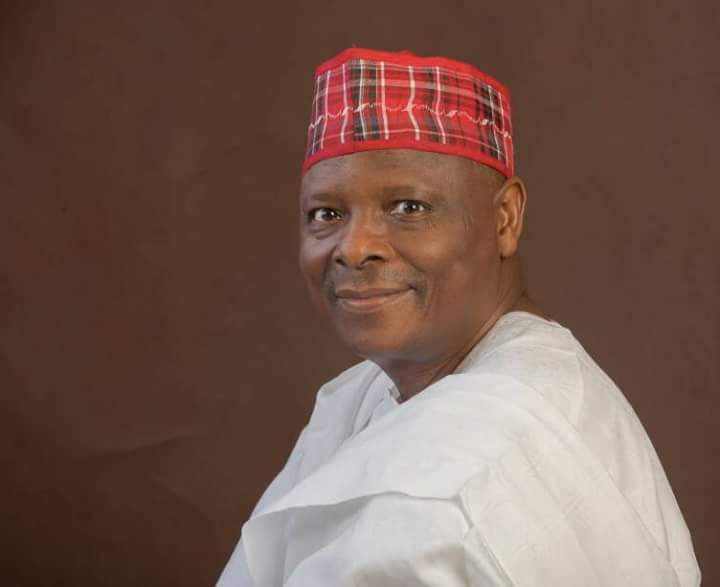
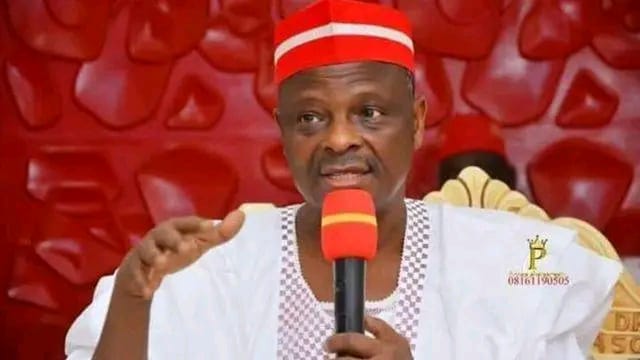
The Presidential Candidate of the New Nigerians People’s Party (NNPP), Dr. Rabiu Musa Kwankwaso, has said that he would give priority to education if Nigerians give him the chance in the forth coming general election.

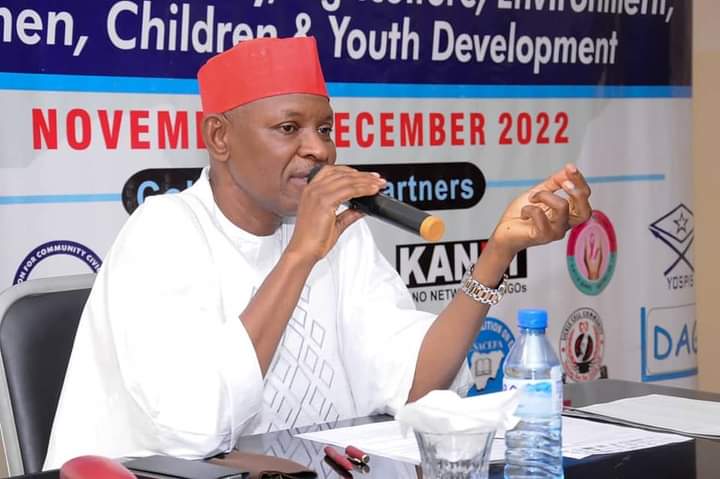
Speaking at the official presentation of his running mate, Bishop Isaac Idahosa, Kwankwaso also decried collapse of tertiary education under the current administration of President Muhammadu Buhari.

According to the former Kano State Governor, Nigeria is bleeding from severe wounds inflicted on it by the incompetence and insincerity of the APC-led government.

“The sad reality is that our country is bleeding from several and severe wounds inflicted on her either as a result of incompetence or insincerity of the operators of government or the total lack of the understanding of how to govern a multi-cultural, multi-religious and multiethnic country like our own.

“Their insincerity and intolerance has inflicted injurious wounds to the social fabric of Nigeria. Their nepotism and parochial approach to governance has inflicted severe wounds to the country. Their ineptitude and lack of empathy has dealt a damaging blow on the body psyche of all Nigerians.

“Their condescending arrogance and sense of entitlement has further widened the fault lines in our country and their nonchalant attitude towards the core functions of governance is causing dangerous escalation of insecurity,” he said.

The former minister of defence further lamented the rising inflation and unemployment in the country, saying the current economic statistics in Nigeria were unacceptable.

Bishop Idahosa, in his acceptance speech, said Nigeria is on a critical juncture where a fresh start is imminent.

“Nigeria deserves a fresh start and fresh ideas. Nigeria deserves a fresh deal that will steer the country away from division and hate. A fresh deal that will steer the country away from incompetence and cluelessness; a fresh deal that will steer the country away from insecurity and economic woes,” he said.

He therefore, urged Nigerians to register and obtain voters card to be able to bring about the desired change in the country.

Earlier, the National Chairman of the party, Prof. Ahmed Rufai Alkali, said that NNPP is the fastest growing party in Nigeria, adding that Kwankwaso’s sterling leadership is responsible for the growth.

“The NNPP entered the political space at the most critical time and is going to take the opportunity to give Nigerians hope because Kwankwaso is the man Nigerians are waiting for,” he said.

He further stressed that NNPP has a dream and a formidable team that Nigerians are waiting for because they posses the qualities to steer the affairs of Nigeria.

“With this winning team Nigerians should be hopeful that Nigeria shall rise again. The party is committed to building bridges across all socio-political divides,” he added.

NNPP EXCO in Bauchi rejects suspension of state chairman

By Muhammad Sabiu

The North East Zonal Secretary of the New Nigeria People Party, Babayo Liman, attempted to suspend Alhaji Sani Shehu Sanin Mallam, the party’s state chairman, in Bauchi.

However, State Working Committee of the party rejected the move. The suspension was announced yesterday and was alleged to result from the chairman’s efusal to accept the query issued to him.

Speaking at the Nigeria Union of Journalists, NUJ, Secretariat in Bauchi on Wednesday, Barrister Mohammed Mohammed, the Party’s State Legal Adviser, said that the Zonal Secretary’s action was invalid and in violation of the party’s constitution.

He said “Liman and his cohorts didn’t follow due process”, and had no constitutional right to suspend any executive council member.

“If any member of the State Executive Committee of the party is accused of any wrongdoing, a disciplinary committee must be set up to investigate, give the accused [a] fair hearing by giving him the opportunity to defend himself and submit recommendations before taking any action and they didn’t do anything like that.

“Since nothing was done to authenticate their action, it is null and void we the executives are with our chairman and we will not allow unconstitutional action of any member to cause confusion in the party,” Mohammed said.

He reiterated that Sani Shehu Sanin Mallam remains the Chairman of NNPP in Bauchi State.

Ruling APC loses 3 senators to PDP, NNPP

By Muhammadu Sabiu

Three All Progressives Congress (APC) senators have resigned from the ruling party.

Senators Ahmad Babba Kaita (Katsina North), Lawal Yahaya Gumau (Bauchi South), and Francis Alimikhena (Edo North) are the defecting lawmakers.

Gumau defected to the New Nigeria Peoples Party, while Babba Kaita and Alimikhena joined the opposition Peoples Democratic Party.

The Senate President, Ahmad Lawan, read three different letters in Tuesday’s plenary in which they announced their defections.

Senator Alimikhena’s decision to leave the APC was motivated by the “ongoing and complex crises that have plagued the APC,” particularly in his Senatorial District, “that has formed parallel executives that have weakened internal discipline, coherence, and commitment.”

Explaining the reason for his detection, Babba Kaita was quoted as saying, “As Senator representing Katsina North Senatorial District, I write to formally notify you of my resignation from the All Progressives Congress (APC), and registration declaration for the Peoples Democratic Party.

“My resignation from the APC was born out of the marginalisation of critical stakeholders by the State Government and Leadership of the Party in Katsina State, where small people like me do not have a chance.

“I have since been joyful and graciously accepted into the fold of the Peoples Democratic Party in Katsina State.”

Report that Kwankwaso will be Obi’s running mate is embarrassing – NNPP

By Ahmad Deedat Zakari

The New Nigeria People’s Party, NNPP, has made a clarification regarding reports that the party’s presidential candidate and former Governor of Kano State, Rabiu Musa Kwankwaso, would accept to be the running mate of the Labour Party’s presidential candidate and former Anambra State Governor, Peter Obi, in the 2023 presidential election.

This was made known on Sunday, June 19, 2022, in a statement by NNPP National Publicity Secretary, Agbo Major.

According to Major, there was no time such discussion or negotiation was held.

“NNPP has never at any time said its esteemed presidential candidate, His Excellency, Engr. Dr. Rabiu Musa Kwankwaso could accept to be Labour Party, Peter Obi’s deputy. The report is misleading and embarrassing to our great party, its Presidential Candidate, Kwankwaso and millions of supporters in Nigeria and in the diaspora, and urges journalists to crosscheck their reports before publishing them to avoid national disaffection ahead of the crucial 2023 general election.” He said

However, Major acknowledged the possibility of an alliance with the Labour Party in the interest of Nigeria and democracy.

“As a mass movement, NNPP acknowledged alliance talks with Labour Party that would consolidate and boost the nation’s frail democracy as we collectively strive for a new Nigeria which the party champions,” Major stated.

This is coming amidst the rumour of a merger of the NNPP and LP to unseat the ruling party, which was confirmed to be true by Kwankwaso in an interview with BBC Hausa on Saturday.

NNPP condemns Ganduje’s N10b loan request, cautions banks

By Muhammad Aminu 

The Kano State Chapter of the New Nigeria People’s Party (NNPP) has condemned the Kano State Government’s plan to secure a loan of N10 billion for CCTV installation in the State.

The party, in a statement signed by Kano State Chairman, Hon. Umar Doguwa described the loan as mortgaging the future of Kano children by the incumbent Governor.

The statement read: “The New Nigerian Peoples Party (NNPP), condemned in totality, the Kano State Governor, Abdullahi Umar Ganduje’s fresh demand of N10 billion loan request from Acess Bank to install CCTV cameras in the State. 

Governor Ganduje seems to be using his seat of power to mortgage the future of the State and that of our children.”

Hon. Doguwa stated that despite the acute water shortage in Kano, the Governor chose to fund insignificant projects.

“Ignoring the fact that the State is experiencing widely increased water scarcity, the Governor chooses to borrow to fund a project as insignificant as CCTV installation.

“The NNPP can’t sit down to watch this clueless administration stockpiling debts in the state without a commensurate achievement on the ground,” he added.

He lamented that the administration refused to settle secondary school students’ examination fees, which led to students dropping out despite taking loans in the name of reforms in education.

“Due to the failure of Ganduje’s government to pay their Senior Secondary School examination fees, countless students have been forced to drop out of school, and others are on the verge of dropping out.

“Kano people can vividly recall that Ganduje had borrowed the sum of fifteen billion naira on education reform, but the money was diverted to something else, and today, a significant number of our students dropped out from schooling as the government cannot cater for their common interest examination and senior secondary school examination,” he said

While appealing to the State Assembly to desist from granting such approval in the future by putting Kano’s interest ahead of Governor’s desire, Doguwa warned that should NNPP win the 2023 gubernatorial election; it will not honour the agreement.

“We wish to categorically draw the attention of all commercial banks and other financial lending institutions within and outside the country to be cautious with the Ganduje’s demand for loans as the next administration will not in any way honour such reckless borrowings.”

He stated, “Our great party is urging the State House of Assembly to refrain from granting trivial demands from the Governor like these.

“We implore honourable members to put the needs of Kano’s good people ahead of the Governor’s insatiable desire to wreck the future of the State before we defeat them in the 2023 election.

“We also call on the Access Bank to resist any temptation to advance any loan to the borrowing Governor Ganduje, who is hellbent on mortgaging the state to satisfy his self ends.”

He chided Ganduje’s administration for its failure to maintain CCTV installations deployed by the Kwankwaso administration only to plan to borrow funds for the same purpose.

“With a sense of nostalgia, the general public remembered that in the past, our party’s presidential hopeful, Engr, Dr Rabiu Musa Kwankwaso, deployed CCTV in strategic locations throughout the State.

“However, the current administration, that seeks N10 billion loan to install new ones, failed to handle them, and the good people of Kano can’t trust a governor with the installation of new ones at their detriment,” he noted.

It can be recalled that The Daily Reality reported that the Kano State House of Assembly had approved a loan request of 10 billion naira for Gov Ganduje’s administration to install CCTV installation in Kano to tackle security challenges.

More clarifications ahead of 2023

By Amir Abdulazeez

When President Obasanjo carelessly picked Goodluck Jonathan to serve as Umaru ‘Yaradua’s potential Vice President in 2007, little did we know that the politics of choosing running mates would later become complex and problematic. The death of Umaru, the ascension of Jonathan, the surprising emergence of Namadi Sambo and Patrick Yakowa becoming the first Christian Civilian Governor of Kaduna State would all combine to later add more relevance to the politics of running mate selection. In 2014, APC had more headaches picking a presidential running mate than the presidential candidate himself. It took them so much time and effort that one thought they would organize a new convention for that purpose.

Today, the Muslim-Muslim ticket debacle is the bane of Nigerian political discourse. While clamouring for fairness and balance, which are needed for a fragile system like Nigeria’s, we should also remember that from 1999 to date, no religion can claim any net gain from this Nigerian version of democracy. Ordinary followers of all faiths have been victims of bad governance, even pagans. We have suffered so much that if a pagan/pagan ticket will eradicate insecurity, fix the economy and bring development while being fair to all interests and affiliations, we should allow it. Therefore, the choice is between searching for solutions and satisfying sentiments; we seem to favour the latter.

A section of public commentators and spectators are already suggesting a walkover for Atiku Abubakar in the 2023 polls. That is the biggest complacency I have ever seen in contemporary Nigerian politics. How can you be facing a ruling party with almost 65% of political stakeholdership in the country and be expecting to have a walkover? Atiku is an institution, but his successes in the last two PDP primaries are more financial supremacy than political dominance. That aside, barring a Buhari-like scenario, Atiku will make a good president. He is perhaps the only fully independent candidate with a clear and accessible blueprint since 2007. In 2011, he had a better manifesto and approach than President Goodluck Jonathan; he only lost the PDP primaries to the power of incumbency. By the way, what happened to the Jonathan 2023 candidacy?

From 1992, this is Atiku’s 7th attempt at the Presidency, with 2019 being his closest to success. Many believe 2023 is his year, and so many apparent factors call for optimism in his camp. However, two fundamental things may haunt Waziri; (in)consistency and (un)popularity. Buhari and Tinubu are successfully reaping the harvests of consistency and perseverance; they stuck to opposition politics all their lives. Atiku should’ve remained in opposition when he decamped to Action Congress in 2007 or should’ve stayed in the ruling PDP when he decamped back in 2011. Ambition had kept him running from one place to another, making him neither establishment nor anti-establishment. The second question is whether there is a single state in Nigeria in which Atiku can secure one million votes or more in 2023? I hope we all remember Dr Rabi’u Kwankwaso’s 3-K States theory?

Tinubu’s boast in Ogun State over his role in the emergence of Buhari as President needs some revisiting and clarification. To avoid doubt, Muhammadu Buhari did not lose the 2003 presidential elections; it was brutally rigged to return Obasanjo for a second term. 2003 will easily enter the list of the worst elections in modern world history. In 2007, the results of the presidential election were simply written, so we can’t even call that election not to talk of who won or lost. I have never relied on 2003 and 2007 election figures for research or serious analysis because they are primarily fabricated. The 2011 elections were relatively fair, but at least 40% of the vote was rigged, written, or inflated, especially in the South-South and South-East.

In the circumstances like these, we cannot comfortably declare Buhari a loser of all the previous elections he contested and only became a winner when he met Tinubu. Although 2015 was indeed the weakest version of political Buhari, it was confirmed that he had lost hope and that the APC merger spearheaded by Tinubu was what brought him back to life. But it is also true that so many other factors other than Tinubu contributed crucially to Buhari’s victory. One major one was the abysmal performance of Goodluck Jonathan. One, however, is that, without Tinubu’s support, it would’ve been near impossible for Buhari to emerge APC flagbearer against the financial powerhouses in Kwankwaso and Atiku.

This brings us to the argument that access to public funds is why some candidates (not aspirants) are stronger than others. Supporters of a particular presidential candidate even claimed that if their man had equal access to public funds, he would be better than certain candidates. This is laughable; a debate like this will take us nowhere. Just campaign for your candidate and persuade people to vote for him. If we are talking about the abuse of people’s trust and the utilization of our commonwealth for personal political development, none of the prominent politicians in Nigeria will come out clean. So, let us not deceive ourselves and others.

Where are our smaller political parties who had spent most of their last four years fighting INEC over deregistration? This is a reasonable amount of time they would’ve spent coming together to form a strong bloc. In case we don’t know, 74 of them were deregistered for failing to meet the requirements to continue to exist as political parties. About 10 to 15 of the currently existing will be due for deregistration by this time next year. Instead of them to consider merging to form a decent alternative, they’ll rather hang on only to be fighting a legal survival battle with INEC next year. As the strongest and largest intellectual organization in West Africa, I don’t even know why ASUU is yet to form a political party or adopt any of the smaller parties to set up a path towards satisfying their own demands all by themselves instead of waiting and hoping for a hopeless Federal Government.

Why is nobody talking about the enormous task ahead of the next president, whom credible international reports suggest will have to use 100% of his revenue in servicing (not repaying) debts by 2024? To execute projects or even pay salaries, the next government may have to borrow further. Nigeria is in trouble. We are drowning in the ocean of foreign debts. Meanwhile, we are concerned over a presidential candidate’s religion more than his ability to bring us out of this mess. Buhari has failed because Jonathan had built a solid foundation for that failure. Now he has built a worse foundation for his successor. The possibility and danger of the next president, irrespective of his affiliation and preparedness to economically be worse than Buhari, is imminent. May God help us.

All of the political dynamics of today are closely related to 1999, some a bit earlier. Suppose you have not directly experienced Nigerian political development from 1999 with a mix of some pre-1999 historical knowledge. In that case, you will find it difficult, if not impossible, to connect specific dots that you see today. Extensive and intensive reading may help, but politely interacting with veterans will do better. Unfortunately, social media, where most of the political debates occur, is dominated by youths who knew little or nothing pre-2011 and don’t invest significant time in reading but trying to engage or even confront the same veterans that would’ve been their best opportunity at understanding the genesis of the current situation.

There are some visible changes in Nigeria’s socio-political spaces, although not new but have taken a different twist from the previous. The renewed order is the attempt to criminalize certain political choices against others. Between 2014 to 2018, discourses were dominated by hate, campaigns of calumny, fabrications and outright abuse. Today, political promoters are trying hard to make it appear that only their candidates are good enough, and any other choice is treason. This is extremism. Let’s be careful, everything is a matter of opinion, and everyone is entitled to his.

Twitter: @AmirAbdulazeez

Votes Count! Take note, Nigerian youths

Tordue Simon Targema

One of the most disturbing illusions in the Nigerian political space is the age-long notion that “votes don’t count”. This notion is mainly responsible for wide-scale political apathy among the citizens, especially the youths who constitute the majority of the voting population. A striking irony with the notion, however, is that those who peddle and promote it are active voters who always make sure they vote at each poll- from the ward to national elections! This irony, therefore, exposes the folly of those who accept the notion and, thus, disenfranchise themselves.

Of course, it is no longer news that the Nigerian electoral process is enmeshed in malpractices – from vote-buying to actual duplication of ballot figures. Yes, the enormity of malpractices in the Nigerian electoral system is weighty and serves to sustain this ugly notion that has become a great source of worry today.

Notwithstanding these malpractices, a fact that cannot be contested remains that votes are still essential and determine who wins the election. Yes, this is a reality, and even a casual observation of the Nigerian electoral process justifies it. For example, have you ever wondered why electoral evils such as vote-buying, underage voting, ballot snatching and massive thumbprinting of ballot papers by thugs all thrive during elections? The answer is simple: it is because politicians understand that the final vote-tally matters most and would stop at nothing to ensure that more individuals vote for them!

As a Presiding Officer in one of Nigeria’s most keenly contested national elections- the 2015 general elections, and as a voter at several elections, both local and national, I have sufficient grounds to attest to the fact that votes do not just count, but that politicians also realise this fact and stop at nothing to get their supporters to vote for them. The desperation they usually demonstrate during election seasons to woo voters justifies this. You can, therefore, refuse to vote at your sole expense!

I served as a Presiding Officer in one of the most strategic elections in Nigeria’s Fourth Republic. A popular candidate with a wide fan margin- Muhammadu Buhari, contested against the then-incumbent President Goodluck Jonathan. Buhari and his kingmakers had convinced the masses that they had all the solutions to Nigeria’s numerous problems- which were, at that time, overwhelming like always. This narrative was supported by the fact that realities proved Jonathan to be a clueless weakling who lacked the strategy and tact to successfully navigate the country out of its numerous woes- endemic insecurity, pervasive corruption and deteriorating living standards.

Despite his limitations, Jonathan had a pool of supporters who still believed in his leadership philosophy, sympathised with him based on his developmental strides, tribe, region and religion, and also had the potent privilege of incumbency! Never underestimate the power of incumbency in Nigerian elections. This made the election one of the most highly contested, as the margin between the two top contenders eventually indicated.

But most striking is the fact that technology was introduced for the first time in the conduct of elections – the almighty card reader! This made almost all the difference and took the political class aback during the polls. The political class, sensing that it would no longer be business as usual, embarked on massive mobilisation and canvassing for votes. Money flew in the air- as it has become the custom with elections in the country, gifts and inducements of all kinds – clothes, foodstuffs, livestock etc., exchanged between the political class and the masses to woo them to vote.

I had an experience as a Presiding Officer that made me believe that politicians believe in voting as the surest way to win elections! Stakeholders in my polling unit tried their best to get me to manipulate the outcome of the presidential election but to no avail. I would tactically tell them that I had a template, and any manipulation of the outcome would go against my template. Although I had no problem with that, the results would be rejected at the collation centre! This would quickly disarm them, and I had my way through without any rancour. That way, I finished the presidential election without a hitch from any angle.

By the second election- gubernatorial and state assembly, I had to contend with yet another challenge! The elite had studied the workings of the card reader and decided on how to manipulate the election, but that could only still be possible if they got people to vote- even if they were illegal voters. A particular stakeholder insisted he would convey me on his bike from the collation centre to the polling unit- some several kilometres away from the ward collation centre, which was equally an interior rural area, far removed from the local government headquarters. I obliged.

On our way, he intimated to me of his ambition: he had hundreds of unclaimed voters cards belonging to his polling unit, which he wanted to use. He observed during the presidential election that voters whose cards were successfully authenticated by the card reader and those that the machine could not authenticate their cards due to one reason or the other were eligible to vote.

The card reader operates at two levels: accreditation, which confirms whether a given card belongs to a polling unit or not, and authentication, which verifies that a voter’s biometric records match those of the card they are carrying. Authentication is usually successful once the card confirms a voter’s thumbprint. Where it fails to confirm, authentication is deemed unsuccessful, but the voter can still vote – provided that the card is successfully accredited. The Presiding Officer then fills an incident report form for such a voter. At the end of the voting process, the total number of successfully authenticated cards and the unsuccessful ones is expected to tally with- or at least, be more than the total votes cast, not the other way round.

The stakeholder pleaded with me to allow him to use the cards he was carrying since both those whose biometric records are successfully authenticated and those whose records fail are eligible voters. When I consulted with my team at the polling unit, I discovered that they had already mobilised and were ready to disrupt the election should we reject the bid. As a confirmation, we had early reports from the neighbouring polling unit that the electoral officers were booted out of the village! The Supervisory Officer had to call all of us and seek our tactical cooperation in the interest of peace.

Stakeholders at our unit then embarked on aggressive canvassing for voters- because I categorically told them that I would not allow one person to vote twice, whatever happened! So they had to pay willing young men with no cards to the turn of N500 per voting to use the unclaimed cards and vote for their political parties. Funny enough, all political parties cooperated and brought their supporters to use the unclaimed cards and vote. We had a peaceful voting process afterwards.  

During the 2019 general elections, I had an amusing but similar experience, this time around as a voter and not an electoral staff. The stakeholders of my polling unit had hundreds of unclaimed voters cards belonging to the unit. They undertook to pay each available voter N500 to vote for their parties. My friend was into the game and had to vote as many as four times! In the fourth round, the Presiding Officer warned him to respect himself and not return.

Now tell me: if votes don’t count as purported – or say they don’t matter, why would politicians go that far to get people to vote for their parties? Have you ever observed how desperate political stakeholders are during voter registration? For example, in the first and only voter registration exercise I participated in as ad-hoc staff, I was posted to the village of a one-time Member, the House of Representatives, a very interior village that is hardly accessible.

The ex-Member solely undertook to take care of our welfare; provided our accommodation, a generator for our comfort at night, ensured that we had the best meals and all of that. Why would a man do that if he had known that votes are needless and all he needs to do is manipulate election results during elections?

By my analysis, winning an election in Nigeria today is the responsibility of two sets of individuals within a political party: the individual voters and the elite class. As a voter, your duty to your party and the preferred candidate is to vote – and get as many of your friends as possible to vote for him as well. Once you do that, you have fulfilled your responsibility as a party loyalist and patriotic citizen. Leave the rest to the elite; it does not concern you. Even if your party did not win in the end, the conviction that you played your part- as a patriotic citizen would- is enough consolation.

The greatest disservice many young men do to their favourite political parties and the country at large is to make all the noise on social media while they do not know what a voters card looks like, have never voted and have no intention to vote, after all, wallowing in the illusion that “votes don’t count in Nigeria after all”. This crop of individuals is the major problem we have in Nigeria.

A clarion call to all Nigerian youths as the 2023 election approaches is to disabuse your mindset of this counterproductive notion, register, get your voters card and vote. Votes actually count! Don’t be deceived.

Tordue Simon Targema is a doctoral student at the Department of Communication Arts, University of Uyo, and teaches in the department of Mass Communication, Taraba State University Jalingo. Email: torduesimon@gmail.com.

Jigawa amid struggle to fight monarchy in democracy

By Kabir Musa Ringim

Since the return of democracy in Nigeria in 1999, Jigawa state has been governed by three governors: Sule Lamido, Ibrahim Saminu Turaki and the incumbent, Muhammad Badaru Abubakar. They all did their best to change the face of a once castigated state that used to come last in all human capital developmental indices. But Sule Lamido stands tall among them and marks his name as ‘the Father of Modern Jigawa’.

Lamido’s eight-year reign oversaw what many described as aggressive transformation in human, economic and infrastructural development. He changes the face of Jigawa from the poorest, least attractive and least-known state to one of the prettiest states where humans live a decent life. To use his own words, Lamido described Jigawa, under his leadership, as a state with new human species where things are done differently.

Lamido’s administration from 2007 to 2015 transforms every sector, ranging from education, agriculture, infrastructure, economy, etc. Hence, the administration was ranked as one of the best, if not the best, ever seen in any state in Nigeria since 1999.

In 2015, when the All Progressives Congress (APC) overtook power from the Peoples Democratic Party (PDP) from the federal level down to every elective position in Jigawa, Lamido and his men were left in ruins, crying over their downfall. The worst of it was the defeat of Aminu Ibrahim Ringim, the PDP’s and Lamido’s gubernatorial candidate in the election, and the victory of Muhammad Badaru Abubakar of the APC as the governor.

In 2019, as the incumbent, Badaru Abubakar, sought re-election, Aminu Ringim reemerged as PDP and Lamido’s gubernatorial candidate to wrestle power from the APC led administration. Aminu Ringim lost again, and things started to get rough between him and Lamido. Blames were traded between the two camps, and allegations became severe. The once amicable relationship got frosty. But, there was no love lost between the two in the end.

As the 2023 elections draw nearer, Aminu Ringim and his supporters have decamped to the new and fast-growing party, New Nigeria Peoples Party (NNPP). This has left the main opposition party, the PDP, under Lamido incapacitated as several supporters have followed Aminu Ringim to NNPP.

One of the allegations made by Aminu Ringim’s camp before their defection was that Lamido planned to impose his son, Mustapha Sule Lamido, as the gubernatorial candidate. They claimed that Lamido never really wanted Aminu Ringim to govern Jigawa. According to them, Lamido deliberately scuttled Aminu Ringim’s ambitions to prepare for his son’s candidature at the end of Badaru Abubakar’s tenure in 2023.

As the saying goes, whatever is covered up will be brought to light. Aminu Ringim left PDP for NNPP, and Mustapha Sule Lamido bought nomination and expression of interest forms to contest for 2023 gubernatorial elections under PDP. PDP’s prospects in Jigawa have dwindled with the departure of Aminu Ringim and the strength of the ruling APC. Lamido’s ambition heats the atmosphere of Jigawa politics. People felt insulted, maligned and downgraded by the Lamido family.

Moreover, Mustapha Lamido is an inexperienced man with no single record of public service or political experience. He knows close to nothing about the state he aspires to lead, and people accuse him of having no human relations and lacking respect for the elders, especially the poor. It is well-known that he is just a spoilt kid who got extremely rich when his father was the governor. He has never held an administrative position in local, state or federal governments. Neither has he ever held any position in any political party. His only political experience is that he contested for Senate in 2019 and lost.

In another twist, recently, former Jigawa state governor Ibrahim Saminu Turaki joined forces with Lamidos to revive his diminishing political enterprises. The trio were spotted recently at a political gathering, and it was gathered that Turaki is eyeing a return to the Red Chamber. Whatever the calculation, Mustapha Lamido’s gubernatorial candidacy will not be sold to the Jigawa populace. Turaki is already past his glorious days, as Jigawa people see him as a drowning man trying to get his relevance back. Therefore, his addition to Lamido’s camp will never convince the average person in Jigawa to rally behind, support or vote for Mustapha Lamido as the next governor.

The worst of it all for Lamidos is that the Jigawa people consider their (Lamido’s) dynasty as another face of modern-day slavery. They are condemning Sule Lamido’s moral decadence, from being the champion for the emancipation of the poor and downtrodden under the tutelage of late Mallam Aminu Kano to a dictator trying to impose monarchy in democracy by making his son a governor. Perhaps, after Mustapha’s reign, Lamido will choose another son to succeed him, and the cycle will continue with the Jigawa people under the permanent leadership of Lamido’s family.

But the burden is on the shoulder of all the Jigawa people. The state is not under monarchy or dictatorship; we’re under democracy, and leaders will emerge through our votes. So we should fight for our rights and the freedom of our children, remain true to ourselves and take better actions that will bring about a better tomorrow for the next generation.

We will fight this imposition and keep Jigawa under true democracy where a son of nobody can be somebody. We will neither relent nor surrender because no one else can mislead us and trump upon our liberation. Our choice is clear: we can’t allow monarchy in our democracy. We have several competent people with good character and track record of public service coupled with experience and exposure, capable of leading our state to greater heights.

Kabir Musa Ringim wrote from Hadejia via ringimkabir@gmail.com.

Tension in Kano APC as Garo mulls over defection to NNPP

By Uzair Adam Imam 

Another political crisis is rocking the Kano chapter of All Progressives Congress (APC) as the endorsed deputy governorship candidate, Murtala Sule Garo, is reportedly mulling over defection to the New Nigeria People’s Party (NNPP).

Governor Abdullahi Umar Ganduje endorsed Garo to pair with the current deputy governor, Nasiru Yusuf Gawuna, as governor in the 2023 gubernatorial election.

However, Garo was said to have felt slighted following a peace parley between Governor Ganduje and his political arch-enemy, Senator Barau Jibrin.

Recall that Ganduje had reconciled with Barau and agreed to step down for him for the Kano North senatorial ticket after the senator abandoned his gubernatorial ambition. 

According to a source who preferred not to be named, Garo plans to discuss the issue with his associates for a final decision.

He said, “he is planning to meet with his associates and make [a] concrete decision, but he is still very sad about the development (Barau back in the fold), but he has not defected or abandoned the ticket,” one source, who asked not to be named, said.

Kano court restrains Sagagi-led PDP executives

By Ibrahim Nasidi Saal

A Federal High Court sitting in Kano on Tuesday granted an order of interim injunction restraining the Shehu Sagagi-led executives of the Peoples Democratic Party, PDP, in Kano from exercising any power pending the hearing and determination of the Motion on Notice.

Mr Sagagi is allegedly loyal to a former governor of Kano State and national leader of the New Nigeria Peoples Party, Rabiu Kwankwaso.

The case was filed before Justice A.M. Bichi by one Bello Bichi against INEC, PDP and 40 others.

The order is as follows:

 “That in order not to create a serious power vacuum In the party at the State level and to prevent any anarchy which could result from such a vacuum, an order of interim injunction is granted restraining the 3″‘ to 42nd Defendants from parading or continuing to parade themselves as the Party Executives of the PDP in Kano State, from exercising any power pursuant thereto, or doing anything in that purported capacity pending the hearing and determination of the Motion on Notice herewith filed, which is fixed for hearing on the 24th day of May, 2022.

“That an order for leave is granted allowing the substituted service of the Court Order and the originating and other subsequent processes on the 3rd to 42nd Defendants by leaving same with or at the office of the 25th Defendant, Mr. I. Wangida, Esq.”

The daily Reality reports that on April 28, another court of concurrent jurisdiction, the Federal High Court sitting in Abuja, had reinstated the Shehu Sagagi-led state and 44 local governments’ executives of PDP, pending the determination of the substantive case before it.

Ruling on the matter, Justice Taiwo O. Taiwo granted all the prayers of the Sagagi-led executives and warned the PDP national leadership against taking any action that would undermine them.