NNPCL

Dangote Refinery, energy security and the monopoly of the oil sector

By Kabir Fagge Ali

Nigeria’s oil industry was recently thrown into chaos following disputes that erupted between Farouk Ahmed, the Chief Executive Officer (CEO) of the Nigerian Midstream and Downstream Petroleum Regulatory Authority (NMDPRA), and Aliko Dangote, President of the Dangote Group when the former accused the Dangote Refinery of producing substandard diesel and operating without proper licensing.

As stated by the NMDPRA, the diesel from Dangote’s refinery contained unsafe levels of sulfur, suggesting it was inferior to imported products. In response, Dangote countered these claims by presenting laboratory tests proving his diesel’s superior quality and compliance with international standards.

Dangote emphasised that the NMDPRA had previously accredited his refinery’s in-house laboratory, which added credibility to his defence—going ahead to criticise the reliability of the NMDPRA’s testing methods and called for an investigation into the standards of fuel testing laboratories in Nigeria.

During a visit by leaders from the House of Representatives, Dangote demonstrated the refinery’s production capacities and dismissed allegations of receiving special incentives. Industry analysts confirmed that although the refinery is in the pre-commissioning stage, it is already producing fuel.

This controversy brings to light critical issues surrounding energy security, monopoly, and the potential benefits to Nigeria’s economy as we understand the importance of energy security to national economic stability and development.

For Nigeria, the most populous country in Africa, ensuring energy security is essential for economic growth, industrialisation, and the overall well-being of its citizens. Recent changes, such as removing fuel subsidies, have underlined the importance of a robust and reliable energy sector.

Energy security can be viewed through both long-term and short-term lenses. Long-term energy security involves investments that support sustainable economic development and environmental needs. Short-term energy security focuses on the immediate availability and affordability of energy.

It is often noted that energy security encompasses availability (geological), accessibility (geopolitical), affordability (economic), and acceptability (environmental and social) considerations. These address concerns related to the depletion of fossil fuel reserves and environmental impacts.

The Dangote Refinery represents a significant step towards improving Nigeria’s energy security. By reducing the country’s reliance on imported refined products, the refinery aims to enhance energy independence and stability. This shift is expected to alleviate some economic burdens, particularly in light of recent subsidy removals, as I mentioned before, that have led to increased fuel prices and higher costs of goods.

However, there are concerns about monopoly and regulatory oversight. Under President Bola Ahmed Tinubu, the Nigerian government deserves a commendation for collaborating with the Dangote Refinery to address these challenges. Nevertheless, the government and the Dangote Group must work together to ensure that the benefits of this refinery extend to Nigerian citizens.

The Government should ensure that this collaboration includes fair pricing agreements and transparent operations, ensuring that the refinery’s products are affordable and accessible to the populace. According to the National Bureau of Statistics, the removal of the subsidy has led to a decline in economic growth, with the country’s GDP contracting by 1.92% in the first quarter of 2023.

The Dangote refinery is a welcome development for Nigeria’s energy security. The refinery, which is expected to be one of the largest in Africa, will have the capacity to produce 650,000 barrels of refined petroleum products per day. This will significantly reduce Nigeria’s dependence on imported petroleum products, thereby reducing the country’s energy costs and increasing its energy security.

Energy security is a critical component of Nigeria’s economy, and the Dangote refinery is a step in the right direction. By reducing the country’s dependence on imported petroleum products, the refinery will help to conserve foreign exchange, reduce the pressure on the naira, and increase the country’s GDP.

Furthermore, the refinery will create jobs, stimulate economic growth, and increase government revenue. However, the Dangote refinery’s dominance in the Nigerian energy market has raised concerns about an energy monopoly.

The NMDPRA has expressed concerns about the refinery’s potential to dominate the market, leading to a lack of competition and high consumer prices. Aliko Dangote has countered that the refinery will increase competition and reduce prices, as it will provide an alternative to imported petroleum products.

Despite the concerns about energy monopoly, the Nigerian government and Aliko Dangote have agreed to collaborate to ensure that the refinery benefits the Nigerian economy. The government has provided incentives and support for the project, while Dangote has committed to ensuring that the refinery operates transparently and competitively.

While the Dangote refinery is a significant development for Nigeria’s energy security, the country still relies heavily on fossil fuels. Nigeria needs to diversify its energy sources to include renewable sources such as solar, wind, and hydropower.

This will reduce the country’s dependence on fossil fuels, reduce its carbon footprint, and mitigate the impact of climate change.

Although concerns about energy monopoly need to be addressed, the collaboration between the government and Dangote is a positive development. However, Nigeria must diversify its energy sources to include renewable ones to ensure a sustainable energy future.

Kabir Fagge Ali, a youth corps member with PRNigeria Centre, wrote via faggekabir29@gmail.com.

NNPCL and Dangote refinery: whom will Nigerians trust?

By Ibrahim El-Caleel

This press release shows that Dangote Refinery is also enjoying the whole petroleum industry ruse and elongating it. NNPC said they bought your petrol at N898. Instead of this press statement to deny it, you simply tell the public the actual price you sold it to them.

For example, “We didn’t sell petrol at N898 to NNPC. We sold it to them at N619”. Is this too difficult to do or unethical?

When you do this, then let the NNPC come and deny it; then you take the next step by publicly sharing a sample of the invoice where they bought it at N619 from Dangote Refinery. This is what transparency means.

But how do you expect people to believe this? Why should people trust Dangote Refinery and not NNPC? Both DR and NNPC are only making statements; they go explain taya, no evidence. Where is the invoice?

The petroleum industry in Nigeria lacks transparency. Nobody wants to let Nigerians understand what is going on so that they can start asking the right questions. They are leaving everyone in the dark so that immediately you say anything, they will mock you that you don’t understand anything; you are a layman who doesn’t understand anything about the oil business! Yet, you are the same layman buying the petrol which fuels the industry.

What Dangote Refinery is doing at the moment is just a glorified, or let me say corporate “DM for price”. It’s the same “DM for price” that BUA Cement did one time saying it has reduced the price of cement without giving any details on how much was the initial price before they “reduced” it.

Hello DR, NNPC,

Price is not a trade secret, geniuses! If you are hiding the price of your product, then there is something shady you are doing. How can you be doing a “DM for price” strategy for a global commodity like petrol? It takes me just a click to know the price of a barrel of crude oil in the global market, same thing for an ounce of gold. What is so special about the price of the Nigerian refined petrol that you need to keep it a secret?

Anyway, lemme mind my business. You know over the last few weeks I decided to give up on my self-assigned goal of understanding the petroleum industry. I only drive into a filling station and buy petrol according to what I can afford at the time. How the petrol got there ain’t really any of my business any longer. I don’t care. When we all become tired of the nonsense going on in Nigeria one day, I am sure we will come and agree on the way forward. I am very sure this nonsense cannot continue to happen forever. It will end one day.

NNPC mobilises trucks to Dangote Refinery for petrol distribution

By Uzair Adam 

The Nigerian National Petroleum Company (NNPC) Ltd. has deployed over 100 trucks to the Dangote Refinery in preparation for petrol loading, scheduled to begin on Sunday, September 15, 2024. 

According to a post by NNPC on its official X handle, the trucks were dispatched to the refinery’s fuel loading gantry in Ibeju-Lekki on Saturday, with more expected to arrive. 

“As of Saturday afternoon, more than 100 trucks had been mobilised, and by the end of the day, up to 300 trucks are expected to be stationed at the gantry,” the company said.

The deployment marks a significant step toward ensuring timely petrol distribution from the Dangote Refinery, which is expected to enhance fuel availability nationwide.

NNPCL refutes MURIC’s claims on Petrol pricing, Dangote refinery

By Uzair Adam

The Nigerian National Petroleum Company Limited (NNPCL) has disputed claims made by the Muslim Rights Concern (MURIC) regarding the pricing of Premium Motor Spirit (PMS) and its impact on the Dangote Refinery.

MURIC had asserted that recent adjustments to petrol prices would prevent the Dangote Refinery from offering lower prices and that NNPCL had become the exclusive offtaker of all products from the refinery.

In a statement released by NNPCL’s Chief Corporate Communications Officer, Olufemi Soneye, the company clarified that petroleum product pricing, including that from the Dangote Refinery, is dictated by global market forces.

The recent changes in PMS pricing, it noted, do not affect the refinery’s access to the Nigerian market.

NNPCL noted that the refinery could sell its products at lower prices if the current market rates are perceived as high, and reiterated that domestic refining does not guarantee lower prices when compared to global parity pricing.

Furthermore, NNPCL stated that it would only become a full offtaker from the Dangote Refinery if PMS market prices exceeded local pump prices.

It also made clear that both the Dangote Refinery and other domestic refineries are free to sell directly to any marketers on a willing buyer, willing seller basis.

NNPCL denied any intention of becoming the sole distributor for the refinery’s products and underscored its billion-dollar investment in the business, urging MURIC to verify facts before making public statements that could incite the public.

We are not selling employment slots, NNPC warns

By Abdullahi Mukhtar Algasgaini

The Nigerian National Petroleum Company Ltd. (NNPC Ltd.) has called on the public, especially job seekers, to disregard rumours of employment slots for sale.

The company states that there is no iota of truth in the insinuations that it has employment slots on offer to anyone who wishes to buy, describing such antics as fraudsters who want to take advantage of unsuspecting applicants.

It cautions that as a responsible corporate entity, recruitment into the company is a straightforward process and does not involve the sale of slots or inducement of any kind.

It warns that anyone who pays money to anyone for any job in the company does so at his or her own risk.

Of Dangote Refinery and NNPC brawl 

By Usman Abdullahi Koli, ANIPR 

Experts say that the newly established Dangote Refinery might address Nigeria’s energy crisis, but this legacy project is finding its footing in navigating the rigours of International Oil Companies (IOCs). Not only this, but government strategy policy greatly affects operations in the business space. The refinery is facing a fresh challenge from regulatory bodies in Nigeria, which may make or mar its success.

The $19 billion Dangote Refinery project has ignited a fierce debate between the Nigerian National Petroleum Corporation Limited (NNPC) and Aliko Dangote – Africa’s richest man. This flagship project, poised to be the largest single-train refinery in the world, has the potential to transform Nigeria’s economy and reshape the continent’s energy landscape. 

Yet, the dispute between NNPC and Dangote threatens to derail this vision. Can Nigeria find a harmonious balance between private sector efficiency and public sector oversight, unlocking the full potential of this game-changing project?

Aliko Dangote’s vision for the refinery is to reduce Nigeria’s dependency on imported refined petroleum products, saving the country billions in foreign exchange. He emphasises the need for private sector management to ensure efficiency and accountability, citing historical inefficiencies in government-run enterprises. Dangote seeks assurances that his substantial investment will yield returns, expressing concerns about potential government interference that could jeopardise profitability.

On the other hand, the NNPC maintains that it must have a significant role in the refinery to safeguard national interests. The corporation argues that state involvement is crucial to ensure that the refinery’s output aligns with national energy policies and goals. NNPC also emphasises the need for regulatory oversight to prevent monopolistic practices and ensure that prices of refined products remain affordable for Nigerians.

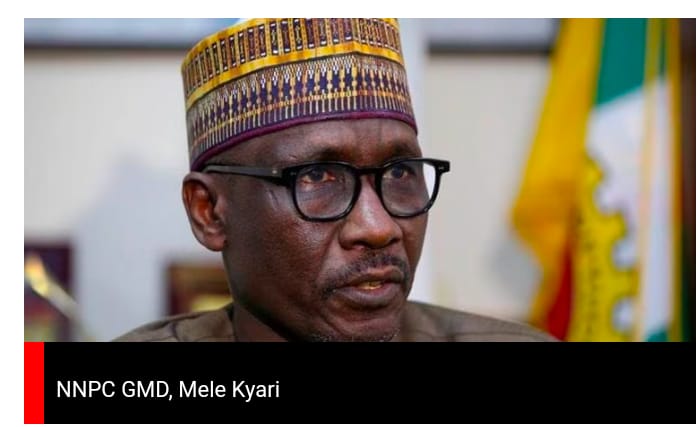
According to Mele Kyari, NNPC’s Group Managing Director, “Our involvement in the Dangote Refinery is to ensure that the project aligns with national interests and that the country benefits maximally from the investment.” Aliko Dangote, however, believes that “private sector efficiency is key to the success of the refinery, and government interference could hinder its progress.”

Dangote might be jittery about the government’s ineffectiveness in running similar assets. His fears would be that he who failed to turn around his refinery successfully wanted a front seat and, perhaps, direction. The business mogul’s aims surpassed the government’s fight against it after the allegations of monopoly attempts by the government. 

Dangote said his friend, who warned him against investing in Nigeria, now mocks him. He was ready to be bought out by the government when the regulatory body said that the refinery’s output was inferior to imported products. This statement ignited reactions from netizens.

The dispute highlights the tension between private enterprise and state control in critical sectors. Both sides present valid arguments that merit consideration. Balancing economic independence with national control, operational efficiency with public accountability, and investment security with public interest is essential to harness the benefits of both approaches.

As the saying goes, “Too many cooks can spoil the broth,” but in this case, finding a harmonious balance is key to ensuring the refinery’s success and, ultimately, Nigeria’s economic stability. Efficiency must be paired with accountability for any project to succeed, and this wisdom applies aptly to the current NNPC-Dangote situation.

Transparency and mutual respect are the pillars upon which this partnership should rest. By acknowledging the strengths and concerns of both parties, Nigeria can move towards a solution that advances the Dangote Refinery project while ensuring sustainable and inclusive growth for the nation.

In the words of Aliko Dangote, “The success of the refinery is paramount for Nigeria’s economic stability.” Mele Kyari also notes, “Our goal is to ensure that the refinery serves the national interest while also providing returns on investment.” Ultimately, the NNPC-Dangote dispute underscores the complexities of managing critical national assets. By finding a middle ground that balances private sector efficiency with public sector oversight, Nigeria can unlock the full potential of the Dangote Refinery and secure a brighter energy future for generations to come.

The path forward lies in a collaborative effort where the private and public sectors work together. If handled with care and foresight, this partnership can transform Nigeria’s energy landscape and set a benchmark for future endeavours. The Dangote Refinery has the potential to be a game-changer, and it is in the best interest of all Nigerians to see it succeed.

Usman Abdullahi Koli wrote via mernoukoli@gmail.com.

NNNPCL Boss: I will expose the truth when time comes

By Abdullahi Mukhtar Algasgaini

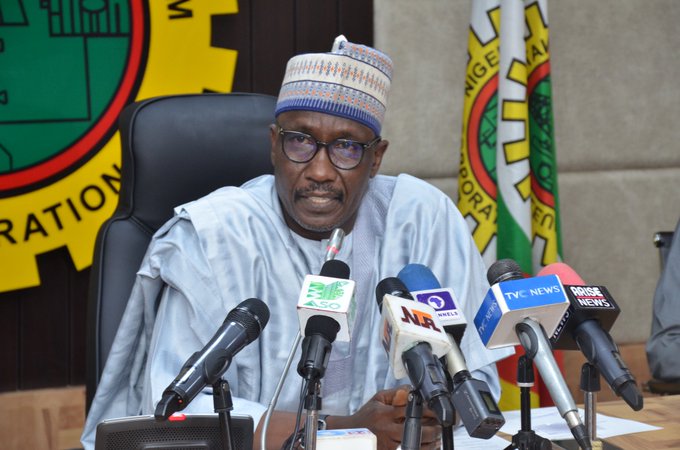
The Chief Executive Officer of the Nigerian National Petroleum Company Limited (NNPCL), Mele Kyari, has declared that he will reveal the truth about the company’s operations when the time is right.

Kyari made this assertion on Wednesday while testifying before a Senate ad-hoc committee investigating alleged economic sabotage in the petroleum industry.

Led by Senator Opeyemi Bamidele, the committee is probing the oil firm’s activities amidst controversy and public scrutiny.

Kyari denied any involvement in the importation of sub-standard products, stating that NNPCL is committed to transparency and honesty.

The CEO expressed frustration over unfair media attacks, which he believes are aimed at tarnishing the company’s reputation and creating the impression of economic sabotage.

“We are not criminals, we are not thieves,” Kyari said. “We will protect our dignity so we can serve this country.”

Kyari also revealed that the oil and gas industry is bleeding, hinting at undisclosed issues which “they” knew that cannot be made public “until the time comes.”

NNPC declares state of emergency on oil production

By Abdullahi Mukhtar Algasgaini

The Nigerian National Petroleum Company Limited declared a state of emergency on oil production.

This was a move towards increasing Nigeria’s crude oil production and growing its reserves.

Group Chief Executive Officer of NNPCL, Mele Kyari, disclosed this in a keynote address at the opening of the 23rd edition of the Nigeria Oil and Gas Conference and Exhibition Week in Abuja, on Tuesday.

“We have decided to stop the debate. We have declared war on the challenges affecting our crude oil production. War means war. We have the right tools. We know what to fight. We know what we have to do at the level of assets. We have engaged our partners. And we will work together to improve the situation,” Kyari stated.

Nigeria’s absurd crude supply crisis and loses N636bn revenue as oil production dips NNPC withdraws suit against ExxonMobil, Seplat $1.28bn deal.

According to him, a detailed analysis of assets revealed that Nigeria could conveniently produce two million barrels of crude oil per day without deploying new rigs.

Still, the major impediment to achieving this is the inability of players to act in a timely manner.

He added that the “war” will help NNPCL and its partners to speedily clear all identified obstacles to effective and efficient production, such as delays in procurement processes, which have become a challenge in the industry.

NNPCL’s importation monopoly signals return to subsidy era—expert

Mele Kyari, the head of the Nigerian National Petroleum Corporation Limited (NNPCL), revealed that the corporation has once again become the exclusive importer of petrol in the country.

Kyari stated that private companies are unable to import petrol due to difficulties in accessing foreign currency caused by shortages. 

“We are the only company importing petrol into the country. None of them can do it today. For them, access to foreign exchange is difficult. We create foreign exchange (FX), therefore we have access to FX, while their access to FX is limited,” Kyari said. 

This revelation has sparked discussions among experts, with oil and gas analyst Kayode Oluwadare unofficially confirming the return of the petrol subsidy in Nigeria.

Oluwadare highlighted that the move contradicts the initial purpose of deregulation, which aimed to enable independent marketers to import petrol independently. 

Oluwadare explained, “The government is gradually bringing back the conditions of the fuel subsidy regime. We are now back to the status quo. In the coming days, the petrol pump price will remain the same. We may also see the petrol pump price slightly coming down, with the current global trend, we are not likely to see an increase in petrol pump prices.” 

This development marks a significant shift in Nigeria’s energy landscape, raising concerns about the country’s economic stability and the implications for consumers in the face of global fuel market dynamics.

NLC to embark on nationwide strike over fuel subsidy removal

By Uzair Adam Imam

The Nigeria Labour Congress (NLC) has reportedly threatened to embark on a nationwide strike next month over the bitting economic hardship caused by the fuel subsidy removal in the country.

The Congress Spokesperson, Ben Upah, made this disclosure on Wednesday, adding that the they give seven days to the federal government go address the demand.

The Daily Reality recalls that President Bola Tinubu had, during his inauguration on 29 May, announced the removal of fuel subsidy.

The action had suddenly pushed up the price of the product, making life more difficult for the poor.According to Upah, the congress gave a nationwide strike notice beginning on 2 August to protest the removal of fuel subsidy by the federal government.

“Yes, the nationwide strike will commence on 2 August 2023. We will soon issue a communique to that effect,” Upah said.

This is coming a few hours after the National Association of Resident Doctors (NARD) began an indefinite strike in the country.

The doctors are demanding the implementation of a one-for-one replacement policy for healthcare workers, immediate payment of all salary arrears, implementation of a Consolidated Medical Salary Structure, and a new hazard allowance, among others.