Nigeria

President Tinubu confers GCON on house speaker, Tajuddeen Abbas

By Abdullahi Mukhtar Algasgaini

President Bola Ahmed Tinubu has conferred the nation’s second highest national honour, the Grand Commander of the Order of the Niger, on the Speaker of the House of Representatives, Tajudeen Abbas.

In his 64th Independence Anniversary Speech on 1 October, President Tinubu conferred the Commander of the Federal Republic( CFR) on the speaker and the deputy senate president.

However, this development led to a debate in the House of Representatives on Wednesday, calling on the President to confer a higher honour on the Speaker.

President Tinubu was persuaded by the House of Representatives position and has decided to remedy the historical error and oversight.

Thus, he has decided to upgrade the Speaker to GCON from CFR, in accordance with the National Order of Precedence.

The Speaker, the Senate President, other principal officers of the National Assembly and the Chief Justice of Nigeria will be formally decorated.

Kano: Where did we get it wrong?

By Engr. Alkasim Auwal

There was a time, not so long ago, when Kano stood tall as the industrial heart of Northern Nigeria. It was a vibrant, thriving city, neck and neck with Lagos, vying for economic supremacy in the country. Kano’s industries were buzzing, its economy flourishing, and its future seemed limitless. But today, that promise has faded. Kano has fallen behind — not just behind Lagos, but even smaller states like Ogun. How did we lose our way?

Nowadays, the only thing Kano can confidently claim is its large population. Economic stagnation, crumbling infrastructure, and leadership failures have become the sad reality of a state that once had so much potential. Since 1999, our leaders have come and gone — Kwankwaso, Shekarau, Ganduje, and now Abba — but none have been able to provide the clear vision and roadmap Kano so desperately needs. Their methods may have differed, but the results have been the same: little progress and missed opportunities.

Think about it — in 2024, we’re still talking about rehabilitating primary schools and constructing 5-kilometer roads. If we had a genuinely functional system, these tasks should be handled by local government chairmen, not state governors. We’re still facing water shortages, and our roads in the city and the rural areas remain in disrepair. These are problems that should have been fixed decades ago, yet here we are, still grappling with them.

Meanwhile, Lagos has moved forward. They now have a functioning metro train system, and traffic jams — once a defining feature of the city — have been significantly reduced. Lagos is not just growing; it’s thriving. It’s what happens when a state follows a clear and focused plan. While Kano should implement advanced transportation systems like Bus Rapid Transit (BRT) or Light Rail Transit (LRT), we’re still debating basic infrastructure. We should be pioneering new ventures like our state airline, much like Akwa Ibom did with Ibom Air. 

Then there’s agriculture. Kano is blessed with vast, fertile land that could revolutionise our economy. We could lead Nigeria in mechanised farming, feeding our state and the nation. Just look at what Niger State’s governor is doing with their agricultural reforms. Why aren’t we doing the same? Why are we letting such immense potential go to waste?

The neglect of Kano’s importance became painfully clear when the federal government launched CNG-free conversion centres in several states. Yet, Kano—the most populous state in Nigeria—wasn’t even considered. It’s a glaring omission that reflects how far we’ve fallen off the radar. Our leaders don’t seem to care. They’re more concerned with playing politics instead of pushing for development and innovation.

So, where did we get it wrong?

We got it wrong when we lost sight of long-term development, when our leaders prioritised political games over real progress, and when they abandoned the people’s needs for short-term gains. Kano’s downfall is not inevitable; it results from poor planning, lack of foresight, and a failure to act on the opportunities available.

The solution isn’t impossible. It requires leadership that listens to the people, plans for the future, and invests in infrastructure, education, and industries. Kano can rise again, but only if we recognise our mistakes and demand better from those who lead us. We need a vision for the future that builds on our strengths and addresses our weaknesses.

Until then, we will continue to watch as other states, big and small, leave us behind. Kano’s story doesn’t have to be one of decline. But to change the narrative, we need bold, forward-thinking leadership that understands the power of a clear and actionable blueprint for development. The choice is ours, and it starts now.

Kano governor distributes educational materials to local schools

By Uzair Adam

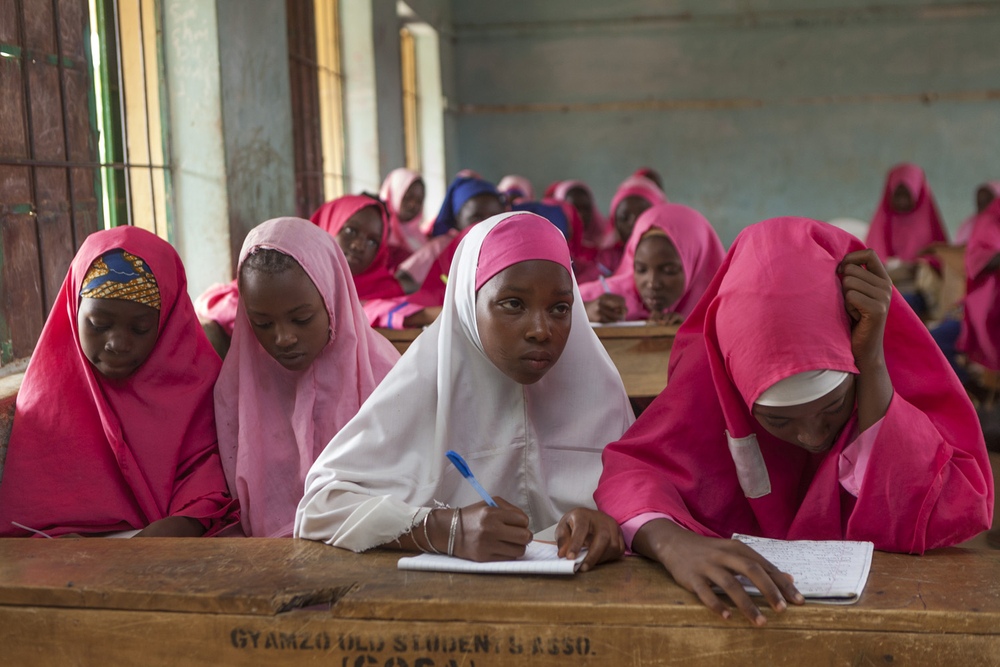
Kano State Governor, Abba Kabir Yusuf, has initiated the distribution of essential learning materials to schools across the state’s 44 local government areas.

The launch ceremony, held at the government house on Thursday evening, saw the distribution of 120,000 cartons of chalk, 97,532 workbooks, 93,600 exercise books, 199,234 classroom registers, 350,000 report sheets, 351 lesson observation books, and national anthem booklets to schools.

Speaking at the event, Governor Yusuf emphasized the importance of this effort in revitalizing the state’s struggling education system.

“This marks a significant step towards addressing the challenges faced by Kano’s education sector, which has suffered from inadequate infrastructure and a growing number of out-of-school children,” the governor remarked.

He further stated the government’s focus on training and retraining teachers, rehabilitating schools, and constructing new classroom blocks to create a more conducive learning environment for students.

The Commissioner of Education, Umar Haruna Doguwa, praised the governor’s unwavering support for the education sector and noted that the declaration of a state of emergency on education had led to meaningful reforms and exceeded expectations.

Insecurity and night travel in Nigeria

By Zayyad I. Muhammad

Many Nigerians are hesitant to travel at night, especially along routes considered red zones, due to security challenges, such as banditry and kidnappings. 

On Friday, September 1, 2024, we missed our flight from Yola to Abuja. The next day, Saturday, September 2, 2024, we embarked on an adventurous road trip from Yola to Abuja. We left Yola early, around 6 a.m., and reached the village of Lafiya Lamurde a few minutes before 8 a.m. Lafiya Lamurde is about 90 km away from Yola.

There, we encountered a security roadblock with several vehicles parked. Every Saturday is sanitation day in Adamawa State, so we had to wait until 10 a.m. when normal activities would resume. However, the road was opened 15 minutes earlier, at 9:45 a.m., allowing us to continue our journey toward Gombe.

A few kilometres before reaching Gombe, we had a flat tyre caused by our driver’s reckless overtaking on a sharp bend. An articulated vehicle had broken down on the road, and our truck struck some rocks while swerving to avoid it. We stopped to change the tyre, only to discover that there was neither a jack nor a wheel spinner in the car. Fortunately, the vehicle driver we had overtaken sensed the danger and stopped to assist us. With his help, we changed the tyre and continued to Gombe, where we bought a new tyre, visited acquaintances, and proceeded toward Bauchi.

We arrived in Bauchi around 3:30 p.m. After stopping at a fuel station to refuel the car, we took a break to perform our Zuhr and Asr prayers and had some small snacks. When we were ready to resume our journey, the vehicle refused to start. We initially thought it was a fuel pump issue, but after an electrician checked the car, he confirmed the fuel pump was OK. Suspecting an electrical fault, we called a mechanic, who determined the issue was actually with the timing chain. As it was approaching 6 p.m., we realised the car needed to be towed to a mechanic’s workshop for repairs.

With a morning meeting scheduled in Abuja, we hired a commercial vehicle for ₦70,000 to take us from Bauchi to Abuja. We left Bauchi just before 7 p.m., and it was already dark and raining when we reached Jos. Our driver mentioned that the road from Jos City to the famous “forest” was in poor condition.

From Jos, it was already past 8 p.m., and it was raining—we had embarked on a night journey, something many Nigerians try to avoid. Our journey from the famous “forest” to Abuja via Akwanga and Keffi was adventurous and surprisingly exciting. Despite the late hours and rain, there was heavy traffic and numerous security checkpoints.

We noticed that the checkpoints were strategically positioned, spaced a few kilometres apart. Some were manned by the military, others by the police, and some by civil defence officers. Additionally, we observed routine patrols by the army and the police, with some military patrols even using motorbikes. 

We must commend the security agencies—the heavy traffic was likely a result of people feeling assured by the strong presence of checkpoints. However, we also noticed the presence of local tax collectors operating on the road, even though it was late at night.

Transportation experts note that night journeys by road offer unique experiences: quieter roads, cooler temperatures, time efficiency, and even scenic beauty. However, they also come with challenges such as limited visibility, driver fatigue, and a heightened risk of accidents.

Our night journey from Bauchi to Abuja, which lasted from 7 p.m. to 2 a.m. via Jos, Akwanga, and Keffi, was exciting and adventurous. The security presence was excellent—kudos to the office of the National Security Adviser and all the security agencies. The heavy traffic reflected people’s confidence in the safety of the route. However, many sections of the road were in poor condition, which remains a concern.

Zayyad I. Muhammad writes from Abuja zaymohd@yahoo.com.

Court ruling restricts VIO from impounding, stopping vehicles

By Uzair Adam

The Federal High Court in Abuja has issued a ruling preventing Vehicle Inspection Officers (VIO) from stopping vehicles, seizing or taking possession of vehicles, and imposing fines on drivers. The Daily Reality reports that Justice Evelyn Maha announced the decision in a fundamental rights enforcement case, identified as FHC/ABJ/CS/1695/2023, filed by human rights activist and public interest lawyer Abubakar Marshal. The ruling also affects the Director of Road Transport, the Area Commander of Jabi, the Team Leader of Jabi, and the Minister of the Federal Capital Territory, who are listed as respondents.

Regret is a product of negligence

By Abdurrazak Muktar Makarfi 

Regret is a universal human emotion, a lingering shadow often following negligence or poor decision-making. It can be personal, like not putting in enough effort to achieve a desired goal, or it can be monumental, affecting entire nations or history. From personal experiences to the grand scale of global events, regret reminds us of the consequences of our actions—or inactions.

I, too, am a living witness to this. I aimed for a higher degree classification during my undergraduate studies, hoping to graduate with a Second Class Upper or even a First Class. However, due to a lack of focus and dedication, I had a second-class lower. I realise now that my negligence led to this outcome, which reminds us that what we fail to do today can haunt us tomorrow. In this case, regret is the product of what I did not do rather than what I did.

However, personal regrets are not unique to every person. Even the most powerful, successful, and celebrated figures in history have experienced regret for their actions or oversights. These moments of reflection often come too late, after the damage has been done, and serve as cautionary tales for the rest of us.

Napoleon Bonaparte and the Russian Campaign

One of history’s most infamous military campaigns is Napoleon Bonaparte’s invasion of Russia in 1812. His quest for dominance over Europe led him to undertake an ill-fated military venture that ended in disaster. Over 400,000 of his troops perished due to a combination of Russian scorched-earth tactics and the brutal winter. While Napoleon was not one to publicly admit fault, accounts suggest he acknowledged the enormity of his mistake. His ambition, unchecked by the realities of war, led to the unravelling of his empire and his eventual exile. In this case, the regret came too late to save his soldiers or his reign.

Robert McNamara and the Vietnam War

In modern history, Robert McNamara’s role in the Vietnam War stands as a significant example of deep, public regret. As U.S. Secretary of Defense, McNamara was a key architect of the war, which led to the loss of tens of thousands of American lives and countless Vietnamese. Years later, in his memoir *In Retrospect* and in interviews, McNamara admitted that the war was a mistake, reflecting on the misguided policies and assumptions that drove U.S. involvement. His regret was genuine, a stark acknowledgement that decisions made without fully considering their consequences can lead to tragedy on an unimaginable scale.

Oskar Schindler: The Regret of Not Doing More

Oskar Schindler is remembered as a hero for saving more than 1,200 Jews during the Holocaust. However, Schindler sincerely regrets not saving more lives despite his extraordinary efforts. He famously broke down in tears after the war, lamenting that he could have sold more of his possessions to rescue more people from the horrors of the Nazi regime. His regret was both real and deeply personal, showing that even those who do good can be haunted by the thought that they could have done more.

Thomas Jefferson and the Paradox of Slavery

Thomas Jefferson, one of the Founding Fathers of the United States, is a figure whose legacy is intertwined with regret and contradiction. Although he wrote eloquently about the moral wrongs of slavery, he continued to own slaves throughout his life. In his later years, Jefferson expressed regret for the institution of slavery, calling it a “moral depravity” and a “hideous blot” on the American experiment. Yet, he never entirely acted on his convictions, and his words often rang hollow in light of his continued participation in the system he condemned. His regret was intellectual but lacked the moral courage to manifest in his actions.

J. Robert Oppenheimer and the Atomic Bomb

Few regrets in history are as profound as J. Robert Oppenheimer’s remorse over the creation of the atomic bomb. As the lead scientist of the Manhattan Project, Oppenheimer’s work led to the development of the most destructive weapon ever used in warfare. After witnessing the devastation of Hiroshima and Nagasaki, Oppenheimer famously quoted the Bhagavad Gita: “Now I become Death, the destroyer of worlds.” His regret was not just for the immediate destruction caused by the bomb but also for the moral implications of unleashing such power on humanity. He spent much of his later life advocating against further development of nuclear weapons, but the legacy of his creation haunted him until his death.

The Lessons of Regret

What can we learn from these stories? Whether in personal or historical contexts, regret often arises when we fail to align with our values or ignore the consequences of our decisions. Napoleon’s ambition, McNamara’s overconfidence, Schindler’s sense of responsibility, Jefferson’s moral paradox, and Oppenheimer’s scientific pursuit—all illustrate the different forms that regret can take.

In my own case, I can see that my negligence in my studies was not just a matter of missed marks but of missed opportunities to reach my full potential. The grades I received reflected not just academic performance but also personal responsibility. Regret teaches us to confront the results of our choices and, perhaps more importantly, to make better decisions going forward.

In the end, regret is not just about what we did but about what we failed to do when it mattered most. While it’s a heavy burden to carry, it also offers a powerful lesson: that attention, dedication, and foresight can often prevent us from looking back in sorrow.

Abdurrazak Muktar Makarfi wrote via prof4true1@gmail.com.

Police arrest four kidnapping suspects, recover arms in Abuja raid

By Uzair Adam

The Anti-Kidnapping Unit of the Federal Capital Territory (FCT) Police Command has apprehended four notorious kidnappers in Abuja, acting on credible intelligence.

The suspects, identified as Yau Sani, also known as Baba (an ex-convict), Nuhu, alias Giwa, Kabiru Mohammed, and Yusuf Hassan, were arrested at their hideout in Sauka, Abuja.

According to the Command’s spokesperson, SP Josephine Adeh, the suspects had been living among the general population and confessed to being involved in a series of kidnappings in the FCT and neighboring areas.

The Daily Reality gathered that the gang’s activities had resulted in the deaths of seven victims.

The suspects also led the police to another hideout in Gauraka Forest, Suleja, Niger State, where officers recovered a significant cache of arms, including four AK-47 rifles, thirteen magazines, and 162 rounds of live ammunition.

The group had previously attacked areas such as Dakwa, Dawaki, Aco Estate, and villages in Niger and Kaduna States.

They also admitted to planning future attacks on government institutions and estates in Abuja, which were successfully foiled by the police.

The FCT Police Command reaffirmed its commitment to tackling crime in the region and urged residents to report any suspicious activities through provided emergency numbers.

Kano nurses, midwives threaten strike over unmet demands

By Uzair Adam

The National Association of Nigeria Nurses and Midwives (NANNM) has issued a 15-day ultimatum to the Kano State Government, demanding that their grievances be addressed or face an imminent strike.

This decision was reached during a meeting of the State Administrative Council, following the government’s failure to resolve issues previously raised in multiple correspondences.

In a letter signed by NANNM’s acting State Secretary and Public Relations Officer, Comrade Ahmad Hamzat Sharada, and addressed to the Kano State Head of Civil Service, the association warned that nurses and midwives across clinical facilities and training institutions in the state would withdraw their services after the notice expires on October 16, 2024.

The letter outlined key demands, including the payment of a revised hazard allowance for nurses, harmonization of their service scheme, and the payment of a 259% upward review of the CONHESS salary structure.

This development follows a similar ultimatum by the National Association of Government General and Medical Dental Practitioners, which began an indefinite strike on October 1, 2024, due to the government’s failure to meet its previous agreements.

President Tinubu embarks on two-week working vacation in UK

By Uzair Adam

President Bola Tinubu is set to leave Abuja on Wednesday, October 2, for the United Kingdom (UK), where he will begin a two-week working vacation, which forms part of his annual leave.

According to a statement from Bayo Onanuga, the Special Adviser to the President on Information and Strategy, the vacation will also serve as a retreat for the President to reflect on his administration’s ongoing economic reforms.

The statement added that President Tinubu will return to Nigeria at the conclusion of the two-week leave.

Nigeria faces serious problems that require bold, innovative solutions—Gov. Yusuf

By Anwar Usman

The governor of Kano state, Abba Kabir Yusuf says Nigeria is suffering from serious problems that require bold and innovative solutions to address.

He urged residents of the state to imbibe the spirit of patriotism to ensure that the sacrifices of Nigeria’s forefathers were not in vain.

Yusuf made the call at the celebration of Nigeria’s 64th Independence anniversary held at the Sani Abacha Stadium on Tuesday.

He said, “As we stand on the shoulders of giants, we must ask ourselves: What will be our contribution to the future of this great state? How will we ensure that the sacrifices made by our forefathers were not in vain? As we look ahead to the future, let us do so with optimism, unity, and a shared sense of purpose.

“Let us draw inspiration from our past achievements, learn from our challenges, and march forward with courage and conviction. Together, we can overcome any obstacle, achieve any goal, and realize the full potential of our great nation.

“Fellow Nigerians, it is clear that we face significant obstacles in our time. From economic pressures to social inequalities, from security concerns to the impacts of climate change, we are confronted with obstacles that require bold and innovative solutions. Yet, we cannot allow these challenges to deter us from our goal of building a better future for all citizens of Kano State and Nigeria at large.”

The governor while expressing optimism about a brighter future said it however lies in the ability of the citizens to work together, just as the country’s forefathers did.

He assured the public of his administration’s readiness to remain focused towards fulfilling the promises of delivering people oriented projects that will have positive impacts on the lives of the masses and the general development of the state.