Nigeria

Congress admits U.S. government’s financing Boko Haram, ISIS, other terror groups

By Maryam Ahmad

A groundbreaking congressional investigation has forced lawmakers to acknowledge a long history of U.S. government involvement in financing extremist organisations, including Al-Qaeda, Boko Haram, the Taliban, and ISIS.

The findings, revealed in a classified report leaked to the press, outline decades of covert operations, indirect funding, and intelligence blunders that have inadvertently empowered terrorist groups worldwide.

The report details how U.S. aid, weapons, and financial resources intended for allied forces or opposition groups often ended up in the hands of militants.

It cites instances where American-made arms supplied to anti-Soviet fighters in the 1980s ultimately bolstered the Taliban and where funding to Syrian opposition forces found its way to ISIS affiliates.

Lawmakers from both parties have responded with shock and calls for greater oversight. “This is a sobering moment,” said Senator James Holloway (R-TX). “We must rethink our foreign policy strategy to ensure that American resources are never again used to fuel extremism.”

The White House has yet to issue a formal response, but officials insist that past mistakes should not overshadow ongoing counterterrorism efforts. Meanwhile, critics argue that these revelations confirm long-held suspicions about U.S. interventionist policies and their unintended consequences.

The investigation’s full findings are expected to be declassified in the coming months, raising further questions about accountability and the future of American foreign aid.

UNIZIK expels female student for assaulting lecturer

By Ibrahim Yunusa

The Nnamdi Azikwe University has expelled the female student that allegedly assaulted a lecturer from department of Theatre an Film Studies, which was found to be a gross misconduct and violation of the Students Disciplinary Regulations.

The acting Vice Chancellor of the varsity approved the recommendation of the Students Disciplinary Committee that recommends the expulsion of Goddy-Mbakwe Chimamaka Precious of Department of History and International Studies who brazenly assaulted the lecturer for being passing on her front when she was making Tiktok video and this caused the video disrupted.

The announcement of her expulsion comes from the office of the acting Registrar of the university and it says the expulsion takes immediate effect.

“You are expected to vacate the university premises immediately and return any university property in your possession”, the statement added.

MTN apologizes for data price hike but increases tariff again

By Uzair Adam

MTN Nigeria has apologized for raising the price of its 15-gigabyte (GB) weekly data bundle by 200 percent but has further increased the cost despite the public outcry.

The telecom provider initially hiked the plan’s price from N2,000 to N6,000 as part of a broader tariff adjustment but later admitted the increase was a mistake.

“To our 15GB digital bundle lovers, you dey vex. We know,” MTN said in a statement. “We know how upsetting it must have been to suddenly wake up to a 200% increase on your favorite digital bundle.

“We could share several reasons and provide explanations, but omo, all that one na story. We don cast. We get it and admit it. Let’s just say na mistake.

“In this love season, don’t stay angry with us. Please forgive and forget. You matter die, and we will never stop showing you how much. Let’s continue our relationship. Thank you for your understanding.”

However, checks revealed that MTN not only raised the price further to N6,500 but also reclassified the 15GB bundle from a weekly to a monthly plan.

The tariff adjustments followed the Nigerian Communications Commission’s (NCC) approval of a request from telecom operators to increase prices, marking the first official review since 2013.

MTN’s price hike came despite the House of Representatives directing the Ministry of Communications, Innovation, and Digital Economy to suspend the 50 percent tariff hike approval.

Nigeria’s cycle of greed: When will the poor breathe?

By Muhammad Umar Shehu

Nigeria is arguably the only country where the impoverished masses are forced to manage the situation as it is while those in power enjoy life to the fullest. People endure abject poverty, yet our leaders show no sympathy for humanity.  

Nigerian politicians lack compassion, empathy, and conscience for the populace. In this country, the poor must bear the suffering their leaders impose while so-called politicians revel in its intensification. Hunger is a condition no human can survive, yet our leaders compel us to endure it. 

The Nigerian economy is in a dire state because the government is being run by the incompetent, corrupt, unscrupulous, and among the least qualified. One thing I’m sure of is that Nigerian politicians would rather sell their country for power and wealth than pave the way for the poor.

Nigeria’s leaders have turned governance into a tool for personal enrichment. Public healthcare, education, and infrastructure funds vanish into private accounts, leaving citizens to endure crumbling hospitals, overcrowded schools, and impassable roads. While politicians flaunt luxury cars and foreign estates, millions struggle to afford one meal daily. This intentional neglect ensures the masses remain too desperate to challenge their oppressors. 

Coming back to the basics, in the past, before the 2023 general election, the nation’s current president, Bola Ahmed Tinubu, had been weaponizing hope with the slogan “Let the poor breathe”. Do the poor people actually breathe? And when are they going to breathe in this country of plenty?  

Nigerian politicians are used to using fake campaign promises to lobby votes from the poor masses. Still, they cannot be found once the election ends, and those campaign promises become unfulfilled. All my life, I’ve never seen people as shameless as Nigerian politicians. After all the fake promises, they still return during another election cycle with more fake promises. Are you not ashamed of yourselves at all?

Nigerian politicians hoard resources for themselves, raise their own salaries and silence dissent with violence. Meanwhile, families starve, workers go unpaid, pensioners are left starving, and youth lose hope. Until Nigerians unite to reject this cycle of greed, suffering will remain our nation’s legacy.

Muhammad Umar Shehu wrote from Gombe State and can be reached via Muhammadumarshehu2@gmail.com.

NLC calls for boycott of MTN, Airtel, Glo over tariff hike

By Sabiu Abdullahi

The Nigeria Labour Congress (NLC) has strongly criticized the recent 50% increase in telecommunication tariffs by major service providers, demanding an immediate reversal to the previous rates.

Earlier, the NLC and the Federal Government had established a 10-member committee tasked with reviewing the tariff hike and providing recommendations within two weeks.

However, despite this agreement, telecom companies proceeded with the price adjustments, leading the NLC to issue a March 1 deadline for a total shutdown of their operations if the tariffs are not reversed.

In a communiqué signed by NLC President Joe Ajaero and General Secretary Emma Ugboaja following a Central Working Committee meeting in Lokoja on Tuesday, the union accused telecom firms of breaching trust and failing to follow due process by implementing the increase before the committee concluded its review.

The Congress also criticized the government for not taking adequate steps to protect Nigerians from corporate exploitation.

As part of its resistance to the tariff hike, the NLC has directed Nigerian workers and citizens willing to support the cause to boycott the services of MTN, Airtel, and Glo every day between 11:00 a.m. and 2:00 p.m. from February 13 until the end of the month.

“All workers and citizens are urged to suspend the purchase of data from these companies, which has also become one of their greatest tools for exploiting Nigerian citizens.

“We also demand the repatriation of all funds siphoned out of the country by these companies.If the telecommunications companies fail to revert to the old tariff by the end of February 2025, a total shutdown of their operations nationwide will commence from March 1, 2025,” the statement read.

The NLC also instructed all its state councils to begin immediate awareness campaigns and mobilization efforts among their members and the general public.

Additionally, the Congress called on its affiliate unions to encourage their members nationwide to observe an “electronic silence” during the specified hours.

During the meeting, the union also reviewed the government’s ongoing discussions on Tax Reform Bills.

While acknowledging the necessity of fiscal policy adjustments, the NLC maintained that any new tax policies should ease the financial burden on Nigerian workers rather than worsen their economic challenges.

Nigerian photographer Saidu Abdulrahaman sets Guinness World Record for most headshots in one hour

By Hadiza Abdulkadir 

Nigerian photographer Saidu Abdulrahaman has made history by earning a Guinness World Record title for the most headshot photographs taken in one hour. He successfully captured 897 portraits within 60 minutes, showcasing his exceptional skill, speed, and precision behind the camera.

Abdulrahaman, who hails from Yobe State in the Northeast, expressed immense gratitude for the support he received from fellow Nigerians, attributing his success to the encouragement of family, friends, and well-wishers. “This achievement is not just mine; it belongs to every Nigerian who believed in me,” he stated.

He emphasised that breaking a world record is no easy feat, requiring focus, endurance, and a strong support system. His accomplishment is an inspiration, proving that with determination, Nigerians can compete and excel on the global stage.

With this historic milestone, Abdulrahaman joins the ranks of Guinness World Record holders, setting a new standard in photography. He hinted that this is just the beginning, promising to continue pushing boundaries in his field.

What next for Local Government Administrations in Nigeria?

By Abdulrazak Iliyasu Sansani

The recent directive allegedly from the Central Bank of Nigeria (CBN) requiring the 774 local governments to present their budget proposals for the 2025 fiscal year has sparked renewed interest in local government autonomy. This development has been a long time coming, given the prolonged agitation for systemic changes in local government administration.

A 20-year-old university student is surprised that local governments in Nigeria prepared budgets highlight the widespread lack of awareness about local government operations perhaps because of the reality that local governments barely exist on paper in my states.

The student asked, “Do local governments actually create budgets?” I explained that, like every tier of government or organization, they are meant to do so. However, his curiosity clearly illustrates the uncertainty surrounding the local government autonomy in Nigeria.

After the Supreme Court’s landmark ruling in favor of the local governments in Nigeria on July 11, 2024, we thought it was over. The seven-justice panel of the apex court in the judgment delivered by Justice Emmanuel Agim, ruled that the 774 local government councils in the country should independently manage their own funds: millions of Nigerians thought the long wait for autonomy was finally over. However, the journey to true autonomy is often complex and winding as the history of the struggle for autonomy for this essential tier of government has shown.

With the recent directive that led to budget presentations across the 774 local governments for the 2025 fiscal year, this brought fresh perspective on the agitation and revitalised interest in local government autonomy. But will this directive translate into tangible action, or will it remain a mere rhetoric as with many critical issues in Nigeria? Nigeria’s history of struggling with local government autonomy, coupled with the stiff resistance from state governments, raise concerns about the feasibility of a true autonomy.

The Nigerian Constitution recognizes local government as a tier of government, but they remain restricted by financial and electoral constraints. Local governments are expected to provide basic services, promote development and ensure democratic participation. However, their lack of autonomy and financial power has hindered their ability to fulfill these responsibilities.

Nigeria’s experiment with various local government administration models despite so many reforms from the local government reforms of 1976, 1988 and the one embarked upon in this current dispensation, had been marked by a decline in autonomy, particularly since 2003. The state governments’ interference in local government affairs has eroded and degraded their powers and functions.

As someone who has advocated for financial and electoral autonomy for local government councils for so many years, I believe that it is crucial for addressing Nigeria’s security challenges, socio-economic issues, and building other sectors that require government’s attention at the grassroots level. The lack of autonomy has led to a power vacuum, allowing non-state actors to exert their influence.

Nigerians await the implementation of any meaningful reform that can transform local government administration and bring about positive changes. The question remains: is Nigeria truly ready to empower local governments and bring relief to the millions of rural dwellers who have been neglected for far too long?

For decades, local governments in Nigeria have been suffocated by lack of funds, rendering them ineffective in initiating or implementing meaningful projects. The joint account system, introduced years ago, has been a subject of controversy, with experts arguing that it undermines true federalism and hampers local government autonomy.

The current state of local government administration in Nigeria is a far cry from the intended vision. The 1999 Constitution, as amended, recognises local governments as a tier of government, but sadly this merely exists on paper today.

There is ample evidence to support the agitation for local government autonomy. It is a necessary step towards addressing societal ills and promoting grassroots development. Another question on everyone’s mind is: what is next?

Will the recent directive be a mere rhetoric, or will it translate into concrete action? Is Nigeria truly ready to empower local governments and bring relief to the millions of Nigerians who have been neglected for too long?

Only time will tell, but one thing is certain: the status quo is unsustainable. Nigerians await with bated breath the implementation of meaningful reforms that can revamp local government administration and bring about development.

As someone who has consistently advocated for financial and electoral autonomy for local government councils, I remain hopeful that this latest development will mark a turning point in Nigeria’s journey towards true federalism and grassroots development. For local government autonomy and administration generally in Nigeria, I ask again what next?

Abdulrazak Iliyasu Sansani wrote from Turaki B, Jalingo, Taraba State.

Remita launches 2025 UTME ePIN sales nationwide

By Maryam Ahmad

Remita has commenced the sale of ePINs for the 2025 Unified Tertiary Matriculation Examination (UTME) and Direct Entry following JAMB’s official announcement.

Sales will run from February 3 to April 7, 2025. Candidates can purchase ePINs via the Remita website, mobile app, and authorised agents nationwide.

Chinedu Alisa, Head of Enterprise Assets at Remita, reaffirmed the company’s commitment to accessible education, ensuring seamless payments for students regardless of location. He warned against unauthorised price hikes, stressing that ePINs must be sold at JAMB’s approved rates.

Remita has also empowered agents and schools to facilitate sales while offering bulk purchase commissions, reinforcing a fair and transparent registration process.

Court adjourns Nnamdi Kanu’s trial indefinitely

By Sabiu Abdullahi

A Federal High Court in Abuja has indefinitely adjourned the trial of Nnamdi Kanu, the leader of the Indigenous People of Biafra (IPOB).

Justice Binta Nyako made the ruling on Monday after Kanu insisted that she could not preside over his case, citing her previous decision to recuse herself.

The court’s decision effectively suspends proceedings until further notice.

More details to follow…

Ogun II Customs haiils officers as revenue surpasses ₦32 billion in 2024

By Sabiu Abdullahi

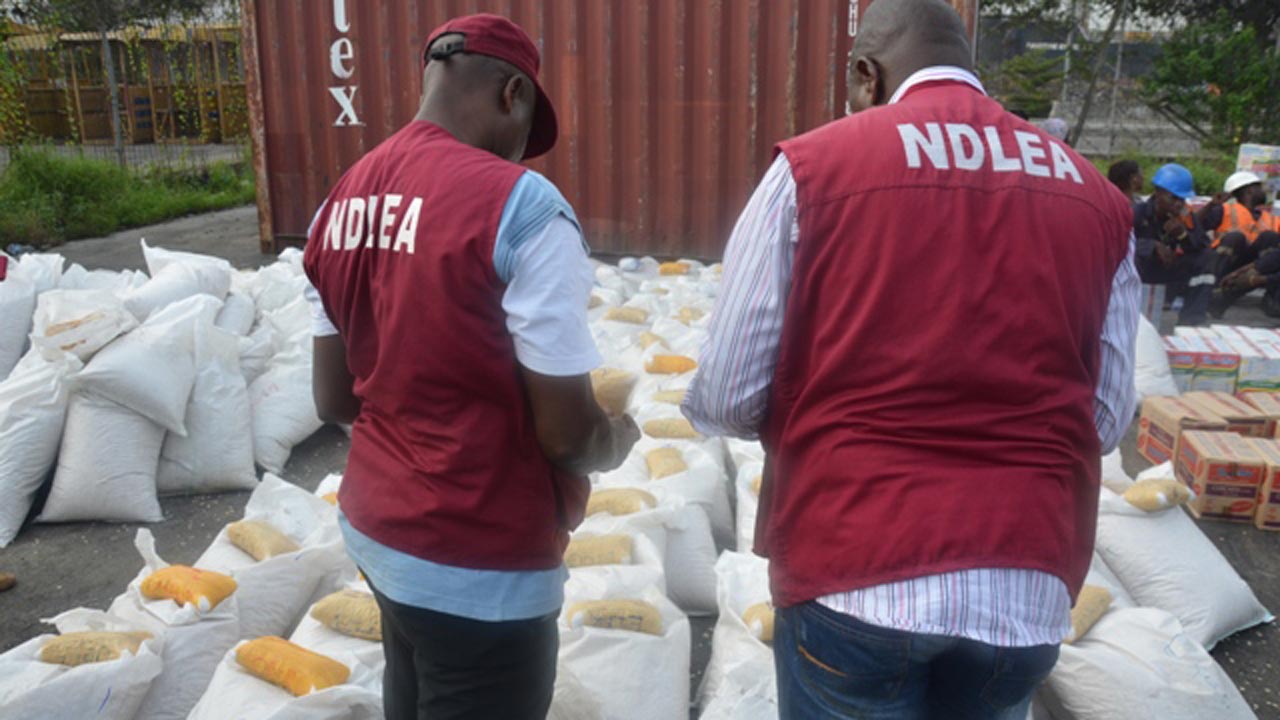
The Ogun II Area Command of the Nigeria Customs Service (NCS) has commended its officers for their dedication and professionalism after recording a total revenue of ₦32.46 billion in the 2024 fiscal year.

Speaking at a press briefing held at the command headquarters in Abeokuta on Thursday, February 6, 2025, the Customs Area Controller (CAC), Comptroller Olusola Alade, attributed the milestone to the hard work and efficiency of the command’s personnel.

“This remarkable growth is a testament to our officers’ commitment to duty and our unwavering dedication to strengthening the national economy,” he stated.

Alade also praised the Customs Intelligence Unit, Monitoring Unit, and Customs Police Unit for their contributions to compliance and enforcement, which played a significant role in boosting revenue.

In addition, he expressed appreciation to the Comptroller-General of Customs, Adewale Adeniyi MFR, for his leadership and policy direction, which he said had enhanced excise duty collection and industrial monitoring.

Acknowledging the role of businesses in compliance, Alade applauded traders and manufacturers who have adhered to customs regulations and encouraged more businesses to follow suit to support economic growth.

Providing further insights into the command’s achievements, he disclosed that revenue for January 2025 alone stood at ₦4.34 billion, representing a 104% increase compared to the ₦2.14 billion collected in the same period last year.

He also highlighted that improved monitoring of Free Trade Zones, particularly the Ogun Guangdong, Ceplast, and Flourmill Free Trade Zone, had significantly contributed to the revenue increase.

Additionally, the command identified four unlicensed factories—Evita Moore, Lekan Industries, Scarlet Eagle Ltd, and IBK Ventures—which were operating without proper authorisation.

These factories have now been placed under excise control and are undergoing registration.

Affirming the command’s commitment to enhancing revenue generation, facilitating trade, and enforcing national security, Alade assured that Ogun II Customs would continue striving for operational excellence to support Nigeria’s economic development.