Nigeria

Let there be Rice!

By Tahir Ibrahim Tahir Talban Bauchi. 

As intelligent, hardworking and technologically advanced as we brag about being, it is ironic that at the end of the day, we fail to show up for patriotism and country — and choose to dwell on the divides that do not crystallise into the positive building blocks of our national development. Instead, we tow the lines that harp on our differences and rhetorics based on political party apathy.

We often embrace the gulfs of ethno-religious segmentations of our society and deliberately fail to show up for our country. We are absent when it comes to celebrating the country’s achievements and progress. We instead converge to mock her, even when she has birthed something fruitful and prosperous. However, anytime we find ourselves stuck or in need of a dear country, our voices are gravelly with echoes of her name and her might.

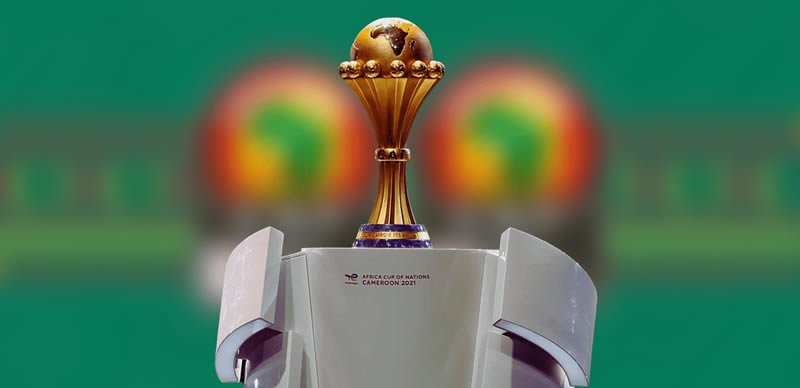
When D’Tigers made waves whacking USA’s Dream Team, it was called Igbo or IPOB teams. When it wobbled, it was Nigerian again. When the Super Eagles didn’t score, the striker is labelled gateman because he is of a particular demographic. Still, when he does, the Super Eagles are flying again and are the only team in AFCON 2021 to make the group stages on a stainless slate. 

The CBN and RIFAN (Rice Farmers Association of Nigeria) unveiled the pyramids in Abuja as seeds of the long and aggressive Anchor Borrowers Programme. Many rose to blindly and sheepishly discredit the programme. An old image from a certain state, which showed the assembling of rafters, as if constructing a roof, with rice bags placed as tiles, to simulate a huge pyramid, was shared to disillusion gullible ones, that the CBN/ RIFAN event was dubious and unreal. Some said the bags were filled with sand, while some dissected the event as a waste of resources and energy. Some didn’t want to credit the administration due to party affiliations, and others didn’t want to have any of it because of their own biases. Most couldn’t put Nigeria first and all other differences aside and be happy that the motherland has achieved this milestone, despite the overwhelming and depressing global environment for business and governance. 

In our importation bills, it is more than evident that the importation for food, especially rice, has stepped down many notches. This is because government intervention in rice importation has also dropped astronomically. One million bags which is just a percentage of what RIFAN has produced, were unveiled at the event, being an aggregation of the 2020 dry season and the 2021 wet season. They are the commitment from farmers in the repayment of their loans from the Anchor-borrowers programme.

No fewer than 230 small, medium and large scale rice mills have emerged all over the country from 2015 to 2021. A Kano-based lady has a 160 ton per day capacity rice mill, while another, one of the biggest, has a 32 metric tonnes per hour capacity built-in Lagos. From averaging less than 3 million metric tonnes per year, in 2015, an outstanding 7 to 9 million metric tonnes per annum was achieved in 2021. The rice revolution is unbelievable but far away from being a hoax. 

Ado Hassan, the Secretary of the Kano chapter of RIFAN, had said that their move was towards engendering the twin benefits of food security and economic diversification. Agriculture contributed over 21% of our GDP. This is incontrovertible evidence that a lot has actually been achieved in this sector. Nigeria has become the largest rice grower in Africa, and neighbouring countries are coming in to educate themselves on how Nigeria is dominating Africa, as the giant of any continent should rightly do. 

Nigeria is gradually achieving food security, which we should be proud of and glad to attain. Unfortunately, the vociferousness of global inflation is biting the most developed countries too, and not just developing nations like dear country. A Briton was lamenting that the cost of parking, which was just £.10 a few months ago, had risen to £.50! Perhaps if Nigeria were not hindered by insecurity and a pandemic for the last three years, we could have been celebrating a lot of such pyramids across the country.

The Nigerian military does a show of force, so does the NAF with jets in formations over our skies. Lecturers have conferences, and the NBA has annual conferences as well. Every sector of our economy has players coming together under one roof to showcase their achievements and discuss prospects. So why can’t our dear farmers, under the auspices of RIFAN, do their own show of rice? Isn’t it an important part of accountability?

We pray that their efforts will directly affect the market price of rice in the coming weeks, as the mills get busy husking the rice that was showcased. We also pray that unscrupulous marketers will not deny the everyday person the fruit of this labour. Those ones are a whole chapter of those unpatriotic ones we so have to live with. 

Tahir is Talban Bauchi.

Just In: Nigeria kick-starts use of 5G network

By Hussaina Sufyan Ahmed

President Muhammadu Buhari, GCFR, has today, Tuesday, January 25, 2022, kick-started the National Policy on Fifth Generation technology, which is widely known as 5G technology, for the development of Nigeria’s Digital Economy.

He said this at the presentation of the national policy on 5G, approved at the Federal Executive Council meeting.

He also directed all security institutions to make use of the new technology to ensure an enhancement towards curbing the insecurity in the country.

He said that the Federal Government would ensure the nation’s well-being by taking full advantage of opportunities provided by the 5G.

The Daily Reality has gathered that the arrival and usage of the new technology will enhance Nigeria’s networking activities and equally make Nigeria compete in the technological race in the world.

Hanifa’s murder: Kano PDP applauds security agents, cautions Ganduje

The Peoples Democratic Party (PDP), Kano State, has issued a press release applauding the security agencies for the quick and perfect response to the murder of a five-year-old Hanifa by her primary school teacher. In the statement, the opposition party also warned and cautioned the state government over what it alleged as “extorting” the private school owners over the sad incident. According to them, the good ones among the private school owners should not be punished or penalised based on the evil wrongdoings of others.

The full release:

“The Kano state chaper of Peoples Democratic Party(PDP) has applauded the efforts of security agencies for their swift response in investigating, arresting and arraigning the kidnapper and killer of Kano school girl Hanifa Abubakar.

The party wishes to acknowledge the successful operation that led to the arrest of the suspected culprit Abdulmalik Tanko and his cohorts through strategic intelligence gathering and tactical security operation.

As members of the opposition in Kano, we wish to join other well meaning Nigerians to also commend the prompt prosecution/ arraignment of the suspects before a senior magistrate court in the state to pursue justice on late Halifa without any delay.

On reforming the private education, the PDP therefore advised Kano State government under the leadership of Abdullahi Umar Ganduje to follow the necessary due process in accordance with law establishing Kano state Private School Board which regulates the activities of all non public schools in the state.

“We learnt that Governor Ganduje has withdrawn the operating licence of all private schools in the state, with all sense of humility and patriotism, we will like to caution the state government not to use this opportunity to extort money from the proprietors of private schools in the state”

The party noted that there have been a standard operating procedure provided by the law establishing the private school board developed by the previous administration of Sen. Rabi’u Musa Kwankwaso.

Despite the importance of reforming the private education sub-sector which has been long overdue, the Kano state government should not see it as a window of opportunity for extortion of money from the hands of the schools proprietors.

The party is hereby extending its heartfelt condolence to the family of late Hanifa and the good people of Kano on the unfortunate incidence that have put people in deep sorrow and sympathy.

Signed

Shehu Wada Sagagi
PDP Chairman
Kano State Chapter

Nigeria’s education system: An incubator of job seekers or providers?

By Salisu Uba Kofar-Wambai  

Functional education is the key to solving most of the joblessness and unemployment predicament Nigerians face today. Therefore, the philosophy of education matters a lot. Moreover, the kind of philosophy under which a particular curriculum operates determines the quality of graduates a particular system of education breeds.  

The idealism philosophy, which Nigeria’s education system subscribes to, contributes grossly to the condition of our graduates. They frequently end up chasing shadows, seeking jobs when in reality, there’s none. This is because the idealism philosophy emphasizes and dwells so much on book knowledge. The students are made to jampack and cram all the knowledge and ideas in their heads, but practising the knowledge is ultimately zero.

In other words, the idealism philosophy thrives in theoretical aspects. And this British model has since been abandoned by many countries of the world, as it has no successful ends and doesn’t suit 21st-century challenges.  

However, more innovative countries like China, Germany, and Japan that adopt a pragmatic philosophy of education in their curriculum are getting it right regarding employment issues. Most of their graduates are fully equipped with the specific skills required to handle jobs effectively and efficiently. Moreover, even before graduation, their students are already into temporary employment. 

The functional education practised in such countries has made their graduates vibrant job-providers instead of perpetual job-seekers we see here in Nigeria.  

It is a mammoth challenge for our education policy formulators to do the needful. They should help us migrate from idealism to pragmatism as a system. Students will then have practical skills or functional education that will enable them to establish their businesses based on their acquired skills, not just memorizing books and blowing grammar all over.

When a mechanical engineering professor could not repair a simple technical fault on his car until he refers it to a local technician, you know there’s a massive challenge with such a system of education.

I think these entrepreneurial studies and industrial training introduced by our institutions of learning are equally astute and sagacious towards achieving the desired goal. But they’re not close to where we’re aiming at. So, we must change the philosophy in its entirety first to have enough roadmap on the ground.   

The sooner we migrate, the better for us.

Salisu Kofar-Wambai wrote from Kano. He can be reached via salisunews@gmail.com.

Now the real business begins at the AFCON

By Aliyu Yakubu Yusuf

The group stages have come and gone at the ongoing AFCON in Cameroon, with Algeria and Ghana being the biggest casualties. For the 2-time winners Algeria, it was nothing short of a travesty that they failed to qualify from their pool. After all, they were on a 33 game unbeaten streak before the tournament. They were also odds-on favourite to go all the way. And to be fair, they crafted more than enough chances to win their opening two games against Sierra Leone and Equatorial Guinea before they met their waterloo against Ivory Coast. But unfortunately, their tournament can best be summarized as a combination of poor finishing, complacency and rotten luck.

As for the 4-time champions Ghana, the least said, the better. They played some of the most dreadful football in the tournament. Add this to their ill-discipline, and you have the Ghanaians knocked out in the first hurdle. That they couldn’t defeat the debutant Comoros is a damning indictment of the once-proud footballing nation.

Now that the group stages are over, the margin for errors is entirely gone. Our own Super Eagles have been the team of the tournament so far, but that counts for nothing if we fail to get the job done in the subsequent tournament rounds. Our reward for winning three out of three games is a tantalizing tie against former champions Tunisia, who have largely underwhelmed in the tournament. On the evidence of what has been seen so far, bookmakers would have Nigeria as the firm favourite to advance to the quarter-finals; and rightly so. However, I earnestly pray that our fantastic showing does not get our players and coaching staff complacent. The winner takes all nature of knockout rounds makes it an unforgiving business. It only takes an avoidable error by a player or a coach for a team to book the next flight home. Besides, the Tunisians are no pushovers. On the contrary, they have the experience and the pedigree to cause an upset.

Often, a team performs wonderfully at the group stages only to be undone by their heralded opponents. I always remember the 2002/2003 UEFA Champions League quarter-finals in which Juventus sent Barcelona parking. At the time, Barcelona got 16 points from the second group and had won a total of 11 out of 12 group stage games (there were two group stages then, in case you were wondering), and Juventus managed to crawl their way out of the second group with 7 points. When they were paired against Barcelona, many football fans and pundits regarded it as a foregone conclusion. Against all odds, Juventus not only defeated the seemingly unbeatable Barca, but they went all the way to the final, where AC Milan narrowly defeated them via penalty shootouts. The biggest lesson I have learned from that encounter is that as long as a team is still standing, it stands a chance to win a tournament. I hope our players think the same way.

The round of 16 fixtures has drawn up the path to the trophy, with Nigeria, Senegal, Mali and Tunisia as the biggest teams on the same half of the draw and Egypt, Morocco, Cameroon and Ivory Coast on the other half. If (not when) we overcome Tunisia, we are scheduled to play the winner of Burkina Faso and Gabon. And if we win that tie, we would be facing one of Senegal, Cape Verde, Mali and Equatorial Guinea before the final showdown at Yaoundé. So here’s wishing the Super Eagles all the good luck in the world.

Aliyu is a lecturer at the Department of English and Literary Studies, Bayero University, Kano. He can be reached via aliyuyy@gmail.com.

Beware of Facebook, other hackers

By Abdulrahman Muhammad, PhD

A friend recently left Facebook after his friends were duped through his hacked Facebook account. The hacker took over the victim’s Facebook account and sent messages to the latter’s friends asking them to deposit money into an account and get double the amount deposited in two weeks!

Because of sheer trust and gullibility, they first transferred monies into the bank account given to them by the hackers before even contacting my friend via phone. A total of about 450000 naira was lost this way, one of the victims being a student.

Lessons:

1. A simple phone call to confirm the true source and authenticity of the message would have saved the victims the trauma of losing huge sums of money.

2. The susceptible can be found even among the educated. While working in New Bussa, a colleague excitedly showed me a text message from an ordinary number informing him that he had won a lottery in which he was a random passive participant. I warned him that it was fraudulent, but another colleague convinced him it was genuine. The most painful thing was that the fraudsters asked him to go to an ATM and called them from there so that they could instruct him on how to redeem his prize. He inserted his card into the machine and followed their instructions sheepishly, which led to the emptying of his bank account.

3. Even a smart person can be a victim if they are too trusting, careless and greedy. Nobody can double your money in two weeks. Haba! Be street-wise.

4. Some bankers seem to be collaborating with fraudsters. For example, when victims go to the bank and complain, the bankers say the bank account the victim transferred the money does not exist!

5. Some of us have not been duped only because we are too poor to be conned. Or, to put it more respectfully, we are not rich enough to be defrauded. Where is the money?

6. A simple test can expose hackers. Recently, a Facebook friend sent me a fraudulent solicitation message. I promptly suspected his account was hacked. Unfortunately, I didn’t have his mobile number, so I sent him a message via Facebook Messenger asking simple questions in Kanuri language. The hacker responded in English with wildly off-the-mark answers. I called his bluff, and he disappeared.

7. Any friend who wants to deposit money in my account is welcome, but they should get the correct account details directly from me through my mobile number. My bank account name is slightly different from my Facebook account name.

8. One can also use the Messenger voice call option to confirm the person’s identity soliciting for money.

God save us from fraudsters.

Dr Abdulrahman Muhammad wrote from Maiduguri, Borno State. He can be reached via abbakaka@yahoo.com.

The need for Nigeria to harness coconut production

By Amina Rabi’u Bako

Coconut is one of the most important and useful plants in the world. Apart from consuming the fruit and its water, many industries, such as pharmaceuticals, beverages and cosmetics, use its parts. As a rich fruit, it is encompassed with several opportunities that bring wealth to a nation. Everything about it is beneficial to man; it has economic, medicinal and nutritional value.

According to various global research findings, its uses can be seen from its components, ranging from the meat, oil, shell, coir, husk, water and lots more, making it more of a revenue economy booster. 

Coconut is nicknamed a tree of life. Nigeria established its first coconut plantation in 1876 in Badagry, Lagos State. The crop grows in over 30 of Nigeria’s 36 states, with Lagos and Akwa Ibom states having the largest production area.

With 83 per cent of Nigeria’s states into the production of coconut, the country should succeed in producing and exporting the product across the world. Unfortunately, however, according to the Food and Agricultural Organisation (FAO), Nigeria ranks 19th in the production of coconut globally, placing the country far behind Indonesia, the Philippines and India.

As reported by Premium Times, the data obtained from the United Nations Office shows that Nigeria spent $219446.53 and $293214.22 on coconut importation in 2019 and 2018, respectively, an amount higher than $186094.58 spent on coconut importation in 2017.

The price of coconut in Nigeria today has risen by almost 100 per cent. This is not unconnected with over-reliance on coconut importation.

A coconut seller, Dahiru Umar, said, “The price keeps rising day by day. A single coconut has now multiplied its price compared to last year.”

Halima Abbas said, “the rise of coconut made me pause my coconut macaroons business for a while to see if the price might go down.”

National Coconut Producers, Processors and Marketers Association of Nigeria (NACOPPMAN) is moving towards making sufficient coconut trees in every corner of Nigeria’s states. During the flag-off and election of NACOPPMAN held in Kano, the Chairman, Fatima Abubakar, in her speech, said, “We cannot continue to import what we can produce locally! Coconut sufficiency in Nigeria is a reality.”

We need to do much better than we are doing. For, among other reasons, coconut has several health benefits. The reader may visit the Healthline.com website to see some of the benefits, which space will not allow me to describe here.

Nigeria should not afford to be left behind in the production of coconut. With the NACOPPMAN, the country can realise its dream of actualising coconut sufficiency, thereby utilising its health benefits and leveraging its economic value. Moreover, it is pertinent for the government to provide an enabling environment to attract foreign investors to come into the business. The earlier we wake up, the better.

Amina Rabi’u Bako is of the Faculty of Communication, Bayero University, Kano.

Nnamdi Kanu and the political hypocrisy of the southeast

Ahmadu Shehu, PhD.

As the trial of Mazi Nnamdi Kanu begins in Abuja today, the southeast region has been locked down for three days by the secessionists loyal to him. The infamous terrorist, whose platform for hate, terrorism and wanton killings of Nigerians in the southeast is IPOB, was re-arrested on June 27, 2021, thanks to the sheer wit, bravery and incisiveness of the Nigerian intelligence community and their global counterparts. Recall that the Nigerian government had obtained a court order which proscribed IPOB as a terrorist organisation, effectively making Kanu a terrorist leader.

For most people who had listened to the dullard’s hateful sermons, watched his videos or had any information about his activities, Kanu’s offences against the Nigerian state and humanity are not in doubt. Accordingly, his actions qualify as terrorism and treason in any lawful state in the world.

Thus, the Nigerian government shouldn’t have any problem prosecuting an obvious criminal whose activities do not need to be proven, for they are self-evident. Mazi should not be spared an inch for all discerning minds – including the responsible, law-abiding, patriotic Igbos who are actually the majority. That is for the best of our nation. Whatever Shekau deserved, Mazi deserves. They are both leaders of terrorist organisations. Nigeria should make this statement as loudly as thunder that no one can disunite this country at will. We are a nation of nations, not a tribal entity.   

But, the implications of Kanu’s monstrous crimes have gone beyond him and his terrorist organisation. It has become a matter of the Igbo people and the southeast. The fact is that the solidarity seen from the southeast raises serious questions on the allegiance and commitment of the Igbo leadership to the Nigerian state.

For instance, at his first trial, Kanu’s surety was a whole senator of the federal republic, Enyinnaya Abaribe representing Abia south district. After that, Kanu brazenly abused all his bail conditions, deliberately jumped bail and cowardly disappeared into thin air.

Given his unguarded utterances and declaration of war against the Nigerian state, the military tested its microphone, hoping that Kanu was the man he says he was. Not long after the beginning of operation python dance, the coward jumped the fence, crossed all rivers and jungles barefooted and found himself in the deep pit of his shit across the ocean, leaving his comrades at the mercy of their own evil.

Still, after the heroic re-arrest of this enemy of the state, some so-called Igbo leaders were quick to let the hell loose, antagonising everyone, calling this national glory all sort of names. They call it an abuse of human rights, unlawful arrest, marginalisation, blah blah. Not long after Kanu’s whereabouts were made public by the government, prominent Igbo socio-political leaders identified with him, making overtures for the release of the dreadful criminal.

The calls for the release of Kanu has become a daily breakfast in the Nigerian media. Igbo socio-cultural groups take to the streets and the media to demand the release of their “son”, who in their view committed no crime in all his atrocities against Nigerians and Nigeria. Indeed, there has never been a single voice against this rascal from the leadership of the southeast.

Then came one of the most shocking but solid backing and endorsement for IPOB’s terrorism when “highly respected Igbo greats” led by Chief Mbazulike Ameachi met President Muhammadu Buhari to demand the unconditional release of Nnamdi Kanu!

Forget the fact that there is nothing “great” in demanding the release of a terrorists’ leader; this singular event means that Igbo elders and leaders are unapologetically sympathetic to Kanu and his cause.

While sociocultural groups and individuals may be excused for this disastrous disposition, the governors and political appointees of the southeast are set to meet the President for the same purpose. For clarity, these are individuals in the highest political and administrative positions, who swore to obey and protect the constitution of the federal republic, who are paid, protected and maintained by the taxpayers’ money. However, they are now coming forward to blatantly stand for a proscribed individual who proclaims secession and calls for the destruction of the very country these officials swore to serve, respect and protect.

It is clear then that the social, cultural, religious, economic and political leadership of the southeast are solidly behind the release of Mr Kanu without trial. This translates to being sympathetic to the man and his cause, for no Nigerian in their right senses would wish the perpetrators of these criminal activities to go unpunished. In essence, all the sections of the Igbo society are either overtly or covertly sympathetic or even in support of Kanu and his terrorist organisation.

Standing behind Kanu and IPOB, and yet proclaiming patriotism and even serving under the Nigerian constitution is the highest level of hypocrisy. The rest of Nigeria should tell the southeast that they can’t eat their cake and have it. The idea that the southeast is yearning for an Igbo presidency when they fight the cause of a secessionist is dumb and highly unintelligent.

The southeast needs to maintain a stand and keep to a clearly defined lane. But, before anything else, let the rest of Nigeria know where they stand. And this is the right moment and the best opportunity to restate their commitment to a united Nigeria by allowing the law to take its course against the secessionists. Failure to do this tells Nigerians that Kanu is not too far from the rest of them. In that case, a Hausa adage ba a baiwa kura ajiyar nama [you don’t trust a hyena with your meat] comes in handy.

Dr. Ahmadu Shehu writes from Kaduna and can be reached on ahmadsheehu@gmail.com   

Designing a New Nigeria: On governance and cultural considerations

By A.F. Sesay

When we talk of politicians, we speak about them like aliens or spirits from the evil forest. People came with their own beliefs, attitudes, approaches to life, and different perspectives on divine justice and the torture in Hell. We talk of them like we do of cold, callous people whose race is bent on inflicting the greatest damage possible on the human race. But wait…who are these politicians?

Let’s keep the answer in the brain and move on to something urgent: the design of governance experience. Do we see this as something we all could do better? Should leaders and followers look at governance from the lens of user experience design? I think they should!

If every product, starting from the Constitution to the Curriculum, was designed with the people they will affect in mind. I am sure the outcomes would be different. Hardly anybody is going to look at the current Constitution and Curriculum and say: Yes, these were designed with empathy, love and responsiveness to the needs of the citizens.

If the guy who presses the button at the Electricity House has the empathy to think that somebody is going out of business with every touch of the red button, a baby is dying in the hospital, an investor is packing his bag to leave Nigeria for good, a boy is missing vital lessons because he can no longer cope with doing his assignment in the dark, a family is exposing their lives to carbon monoxide generated by generators and so on.  If he had ever approached his work like a user experience designer, many problems could have been solved by now.

If the northerner or southerner stealing from the public treasury realizes that with every kobo stolen, a citizen dies and that this corruption-induced death is agnostic of region, religion or tribe, we wouldn’t need an Economic and Financial Crimes Commission (EFCC). Likewise, if every contractor realized that every badly-designed road is a graveyard for his fellow citizens, then potholes will become history.

If every Nigerian who had the opportunity to lead ten people or more or even less realized that these micro leadership tasks are a microcosm of the overall leadership output of the nation, then the nation’s leaders will be as upright as we want them. Suppose every employer knew that every right violated is the beginning of bad governance. In that case, the next commander-in-chief will make it a personal duty to provide the enabling ground for every citizen to thrive.


When every day becomes a reminder of the responsibility we all have as leaders in our various capacities, we will witness the birth of the ‘beautyful ones’ (apologies to Armah). There will be thoughtful and resourceful leaders in every cranny on the road to building a great nation.  


If every young person on Twitter and Facebook knew that every tweet or post could potentially destroy a life, fake news would be reduced to the barest minimum, even if it looks like a “catching cruise”. If every journalist knew that every fake report opens bigger wounds and increases the pain point of his readers, then nobody would invest millions in fact-checking. As a result, we all would have had less cause to verify the news and have fewer regrets for sharing harmful and divisive content.

We will be mentally ready to ask the right questions when we start seeing this all as a design problem and not just some issues caused by aliens or foreign species. And let’s know that INEC cannot give us what culture has deprived us of.

While scratching the surface for the past 60 years has given some temporary relief, the question of how far have we come and how many more years can we afford this mediocrity in governance here and across the continent?


We have ousted leaders we hate too much. We have brought in our tribesmen and “starmen” to power and opened doors to stupendous wealth for kinsmen. But in truth, the problems have compounded. So, it’s not an election problem; it’s culture, design and system that we have to work on.

Talking alone won’t win us good leaders. In the same vein, we can’t insult the elected into good governance. They have to want to. And the only way that happens is vision and a culture that makes it difficult for people to be bad at the top.

At the mention of Nigeria, everybody becomes an expert. But most of these experts only hit the surface, compounding the problem with false claims, unverified and alternative truths, faulty assumptions, stereotypes, bigotry, and received “wisdom”.

We have got to wake up and smell the coffee. There is a design problem out here. Until we are heavy on researching root causes and being genuinely interested in knowing all the whys of the problem, until we see ourselves beyond the just-a-citizen mindsets to the mindset of restless inventors, these problems are only growing bigger and more complex regardless of who is at the top.

We have to build a research culture and replace that with false assumptions and stereotypes. Until we see the governance products of today as collective input of everybody who played a role, no matter how little, until the people in power (from Local Government to Federal Government)  create a mechanism to capture feedback and continual improvement regularly, we will still have to come to these basics many years later.

Go to the archives and read headlines of the 70s and 80s and compare them to today’s headlines. You will observe a pattern that will shock you. In short, the design process is faulty, but we are finding it difficult to rethink the process because thinking itself will require an effort that we are not yet ready for.

A.F. Sesay sent this article via amarasesay.amir@gmail.com.

Buhari, Osinbajo, others honour soldiers on Armed Forces Remembrance Day

By Ahmed Deedat Zakaria


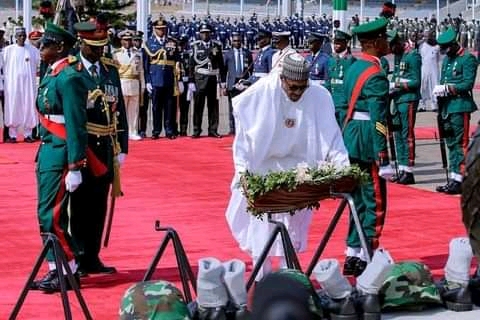
President Muhammadu Buhari led the nation alongside the Vice President, Professor Yemi Osinbajo, the President of the Senate and others in marking the Armed Forces Remembrance Day Celebration in Abuja.


The ceremony held in Abuja on Saturday is an annual event to honour and appreciate Nigeria’s living and fallen heroes.


The event involved the laying of wreaths at the National Arcade in Abuja. First to lay the wreath is usually the President, followed by the Vice President, the Senate President, Speaker, House of Representatives, Chief Justice of Nigeria and others. 


This tradition was duly observed by the President and the Vice president, and others in the usual manner.