Nigeria

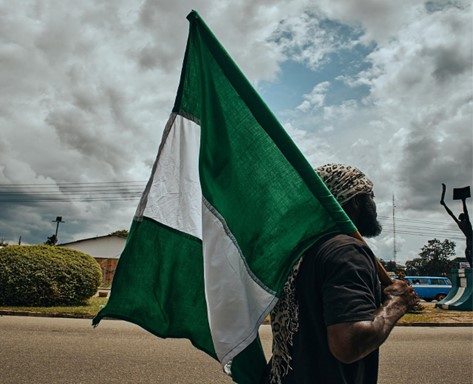
Nigeria reopens borders with Niger Republic, lifts sanctions 

By Sabiu Abdullahi 

President Bola Tinubu has taken a significant step towards enhancing regional relations by ordering the reopening of Nigeria’s land and air borders with the Republic of Niger.

Additionally, President Tinubu has instructed the lifting of various sanctions imposed on Niger, further strengthening diplomatic ties between the two nations. 

In a statement released by his Special Adviser on Media and Publicity, Ajuri Ngelale, titled ‘Nigeria opens land and air borders with Republic of Niger, lifts other sanctions,’ President Tinubu’s directive shows his government’s commitment to the course. 

Consequently, the President has directed that the following sanctions imposed on the Republic of Niger be lifted immediately: “Closure of land and air borders between Nigeria and Niger Republic, as well as ECOWAS no-fly zone on all commercial flights to and from Niger Republic. 

“Suspension of all commercial and financial transactions between Nigeria and Niger, as well as a freeze of all service transactions, including utility services and electricity to the Niger Republic. 

“Freeze of assets of the Republic of Niger in ECOWAS Central Banks and freeze of assets of the Republic of Niger, state enterprises, and parastatals in commercial banks. 

“Suspension of Niger from all financial assistance and transactions with all financial institutions, particularly EBID and BOAD. 

“Travel bans on government officials and their family members,” the statement read.

Binance’s conflict with Nigerian authorities and troubles worldwide

By Haruna Chiroma

Binance is widely regarded as the largest cryptocurrency platform globally, facilitating billions of dollars in transactions daily. As of March 3 2024, it had over 179 million registered users across 100 countries and supported over 30 languages. Despite its prominence, this emerging financial institution operates with relatively lax oversight from financial regulatory agencies, unlike traditional financial institutions. This lack of stringent policing renders the platform vulnerable to illicit transactions. 

However, Binance also plays a significant role in fostering economic growth and providing earning opportunities for both digital natives and digital immigrants. Established in 2017, Binance rapidly gained widespread acceptance, particularly among digital natives, spreading rapidly like wildfire. 

Binance has encountered significant resistance from governments worldwide, citing concerns over its lack of transparency and regulatory issues. Numerous countries have completely banned Binance from their cyberspace, prohibiting transactions within their borders. These countries include China, Malaysia, Italy, Vietnam, the Philippines, Thailand, Australia, and several others. Despite all this, Binance is boldly embracing the wave of AI to stay competitive in the cryptocurrency market. 

The company has incorporated an AI token known as “Sleepless AI” into its platform, which is available on the Binance Launchpool. A visit to the Binance website indicates a listing of the top AI crypto tokens according to market capitalisation, with a market cap of over $7 billion and over $1.3 billion in trading volumes. 

Despite being banned from Japan, in 2022, Binance made determined efforts to re-enter the Japanese crypto market by expressing interest in acquiring Sakura, a Japanese crypto company. In another development, Binance sought a crypto license in Germany to facilitate transactions within the country’s crypto market, aiming to expand its presence across Europe. 

However, the crypto giant encountered regulatory hurdles from German financial regulators. In a prompt response, in March 2023, Binance announced the withdrawal of its license application. Following sanctions imposed on Iran, sidelining the country from traditional financial systems, Iran turned to Binance as an alternative gateway to financial institutions. Blockchain data reveals that between 2018 and 2022, Binance facilitated over $8 billion worth of transactions for Iranian firms. 

Banning Binance from a country does not necessarily prevent Binance customers from finding alternative means to conduct transactions within the banned country’s crypto market. The Wall Street Journal, published on August 2, 2022, stated that Binance successfully facilitated over $90 billion in transactions in one month within China’s crypto market. 

In the current digital age, blocking access to Binance is unlikely to be effective. Users can easily bypass restrictions by installing a Virtual Private Network (VPN) with a fleet of thousands of servers across many countries, choosing a server in a country where Binance operates, and accessing the platform with minimal effort. 

In 2021, Binance encountered regulatory challenges in Thailand, with the country’s financial authorities accusing the platform of operating without a license. This led to filing a criminal complaint against Binance with the Thai police. Later, Binance was finally banned from operations in Thailand.

Binance finds itself entangled in a legal dispute with US authorities, facing accusations of violating federal money laundering laws by neglecting to report more than 100,000 transactions deemed suspicious. Prosecutors argue that Binance serves as a prime environment for ransomware transactions (a cyberattack method that denies victims access to their computers until a specified ransom is paid via payment systems) and the exchange of payments for child abuse materials. In what appears to be an effort to resolve the matter out of court, Binance has opted for a plea bargain with US authorities. 

Under the terms of that agreement, Binance agreed to pay the US authorities a substantial fine of over $4.3 billion ($1.81 billion for criminal acts and forfeiture of $2.52 billion). Additionally, Binance plead guilty to sponsoring terrorism and involvement in money laundering. As part of the agreement, Binance has committed to operating within the legal framework and implementing monitoring mechanisms, as reported by Reuters on February 24, 2024. 

On February 24, 2013, NPR reported that the US Securities and Exchange Commission and Commodity Futures Trading Commission filed a lawsuit against Binance in court. The lawsuit was based on the absence of regulatory oversight, highlighting Binance’s operation without stringent policing akin to traditional financial institutions, artificially inflating trade volumes, and diversion of customer funds. 

Currently, Binance is engaged in a contentious dispute with the Nigerian government, which has resulted in the government blocking access to the platform. The government reportedly fined Binance a substantial sum of $10 billion, though the circumstances surrounding the fine are controversial. Users can circumvent the block by utilising a VPN, as previously discussed. Therefore, legalising and regulating the platform would be more prudent rather than the Nigerian government potentially losing billions in revenue through the backdoor. 

Given that Binance handles transactions in billions of dollars, I argue that it would be unwise to discard the benefits along with the drawbacks (“throwing a baby with the bath water”). Particularly in light of the high levels of unemployment among youths and the prevailing hardships in the country, many young people have discovered opportunities in the world of Binance. Therefore, rather than outright banning Binance from Nigeria, integrating it into its legal framework may yield better outcomes. 

As a short-term solution, Binance should be permitted to continue its operations in Nigeria under stringent control mechanisms established within the country’s legal framework, with critical oversight from entities such as the Central Bank of Nigeria (CBN), Economic and Financial Crimes Commission (EFCC), and other relevant authorities. 

For a long-term strategy, the CBN and EFCC, in collaboration with the Cybersecurity Department of the Federal University of Technology, Minna, should undertake high-impact research to be sponsored by the CBN and EFCC to develop a robust framework for regulating cryptocurrency operations in Nigeria. This framework should balance Nigeria’s legal system and economic growth objectives. 

Emphasising research and development is a globally recognised best practice for addressing societal challenges instead of relying solely on inter-ministerial committees, which may lack the necessary technical expertise, resources and research skills. 

Haruna Chiroma, Ph.D. Artificial Intelligence, wrote from the University of Hafr Al Batin, Saudi Arabia, via freedonchi@yahoo.com.

Hardship: President Tinubu, please listen to Arewa Economic Forum

By Haroon Aremu

Nigeria’s current economic woes are not isolated incidents but rather the peak of years of systemic challenges and policy missteps. From the decline of industries in the 1990s to the era of military rule marked by corruption and mismanagement, the nation has weathered numerous storms on its path to progress. 

In the vibrant tapestry of Nigeria’s economic history, the 1980s stood as a golden era marked by robust growth, industrialization, and promise. However, the echoes of prosperity have gradually faded into the stark reality of economic downturns, leaving the populace grappling with unprecedented challenges.

The 1980s witnessed Nigeria’s emergence as an economic powerhouse, fueled by oil revenue and ambitious development projects. With a thriving manufacturing sector, a stable currency that cannot be competed with and strategic investments in infrastructure, the nation seemed poised for enduring prosperity. 

However, the dawn of the new millennium brought with it a stark reality check as the nation grappled with a series of economic setbacks that threatened to undo decades of progress. Mismanagement, corruption, and global market fluctuations emerged as formidable adversaries, eroding confidence in Nigeria’s economic prowess and exposing deep-seated vulnerabilities. 

While well-intentioned, the decision to remove fuel subsidies proved to be a double-edged sword, unleashing a torrent of consequences that reverberated throughout society. The subsequent free fall of the Naira sent shockwaves through the economy, triggering a cascade of hardships that tested the populace’s resilience. 

Hyperinflation ran rampant, rendering incomes inadequate and purchasing power a distant memory. Faced with dwindling resources and mounting uncertainty, Nigerians found themselves thrust into a desperate struggle for survival.

To understand the gravity of Nigeria’s economic predicament, one must delve into its root causes, which are as deep-seated as they are complex. Corruption, a scourge that has plagued the nation for decades, continues to gnaw away at its foundations, siphoning off resources meant for public good and fostering an environment of impunity.

Inefficiency and a lack of diversification further compound the problem, leaving Nigeria’s economy dangerously reliant on oil revenue—a precarious position exacerbated by volatile global markets and shifting geopolitical dynamics. 

Despite ample opportunities for growth and development in sectors such as agriculture and manufacturing, inadequate investment and strategic planning have stymied progress and perpetuated cycles of poverty.

The failure to address these systemic issues has left Nigeria vulnerable to external shocks and internal instability, undermining efforts to achieve sustainable development and improve the lives of its citizens. Without decisive action and a concerted effort to address the root causes of its economic woes, Nigeria risks being trapped in a cycle of decline, with far-reaching consequences for generations to come.

Amidst this economic quagmire, the Arewa Economic Forum (AEF) emerges as a beacon of hope, advocating for pragmatic solutions to stem the tide of despair. In a recent press briefing that took place at PRNigeria Centre Abuja, Chairman Ibrahim Shehu Dandakata delivered a compelling call to action, urging a rethink of subsidy removal policies and proactive measures to address the pressing issues at hand.

The AEF highlights the adverse effects of fuel subsidy removal on the populace, citing the widening gap between state allocations and tangible improvements in livelihoods. Calling for a reversal of the subsidy removal policy, the forum emphasizes the need for accountable governance and targeted interventions to alleviate the suffering of the masses.

In a comprehensive approach to economic revitalization, the AEF advocates for strategic investments in agriculture and artisanal mining. By harnessing the potential of these sectors, the nation can unlock opportunities for job creation and sustainable development, empowering local communities and diversifying the economy.

Recognizing the detrimental impact of forex crises on the economy, the AEF calls for decisive action to stabilize the Naira and curb illicit financial practices. Proposals include banning the use of dollars for domestic transactions and cracking down on currency hoarding, signalling a commitment to restoring confidence in the national currency.

At the heart of Nigeria’s economic resurgence lies a renewed focus on education and skills development. The AEF emphasizes the importance of equipping the youth with practical skills and knowledge that align with market demands, fostering a generation of innovators and problem-solvers poised to drive sustainable growth.

To President Tinubu, As the leader of our great nation, the burden of Nigeria’s economic hardship weighs heavily on your shoulders. In these trying times, we implore you to remain steadfast in your commitment to steering the country towards prosperity. The recent press briefing by the Arewa Economic Forum underscores the urgency of the situation and the need for decisive action.

The removal of fuel subsidies has inflicted untold suffering on the populace, exacerbating inflation and widening the gap between the rich and the poor. We urge you to heed the call for policy reversal and prioritize the welfare of the Nigerian people above all else. Your leadership in this critical moment will determine the trajectory of our nation’s future.

Solving Nigeria’s economic woes is not the sole responsibility of the government; it requires collective effort and sacrifice from all stakeholders. Citizens must hold their leaders accountable, demand transparency, and actively participate in nation-building initiatives. Only through unity and collaboration can we overcome the challenges that lie ahead. 

As Nigeria stands at a crossroads, the imperative for decisive action has never been clearer. The Arewa Economic Forum’s impassioned plea for reform resonates across the nation, igniting fervour for change and renewal. It is a call to reclaim Nigeria’s economic destiny, guided by foresight, resilience, and a shared commitment to prosperity for all.

In conclusion, let us remain prayerful and hopeful that Nigeria will emerge stronger from this economic downturn. With resilience, determination, and a shared vision for a brighter future, we can overcome adversity and build a nation where prosperity is accessible to all. God bless Nigeria.

Haroon Aremu Abiodun is a youth corps member with PRNigeria Centre, Abuja.

IPC trains journalists in combating information disorder

By Umar Namadi

International Press Centre (IPC) held a two-day capacity-building workshop on combatting information disorder in democratic governance reporting using fact-checking and FOI tools. 

The workshop is being held as part of the activities under Component 4 (Support to Media) of the European Union Support to Democratic Governance in Nigeria (EUSDGN II) project. IPC is the lead implementing partner. 

The two-day workshop held at Bafra International Hotel in Kaduna had in attendance 40 participants across nine (9) states of Northern Nigeria (Abuja, Kaduna, Kastina, Niger, Bauchi, Jigawa, Kano, Jos, Benue) who are new/mid-level journalists, community journalists, freelance journalists, etc. 

Participants were introduced to the rudiments of fact-checking using a tool and how to hold government and public institutions accountable for their activities using the FOIA (2011). 

As the program manager, Mrs Stella Nwofia, stated in her welcome address at the Sardauna Hall in the hotel, “The training program seeks to address a critical aspect highlighted in the EU-EOM final report on the 2023 general elections, which underlines that online social platforms played a significant role in both campaigning and public oversight of the electoral process. 

However, there were instances where these platforms were misused, either for campaigning lacking transparency or for creating misleading impressions of widespread support. 

Despite repeated warnings from government officials about the dangers of misinformation, various entities, including individuals associated with major political parties, disseminated false information online. 

Additionally, the report notes that major parties utilised paid advertising on online platforms. However, the full extent of this practice remained obscured due to a lack of transparency within these platforms.” 

She added that “The training program, which commenced in Ondo State as the initial phase and was followed by Port-Harcourt, is designed as a three-part series. Its primary goal is to provide journalists nationwide with essential tools, skills, and knowledge. The program aims to empower journalists to adeptly navigate the challenges of the digital era while maintaining standards of responsibility and ethical behaviour.

“Our goal is to empower journalists to uphold truth, advocate for integrity, and safeguard democracy by promoting a culture of critical thinking, fact verification, and media literacy.”

Do you have any doubts about the Hisbah’s justification?

By Salihi Adamu Takai

The northern part of Nigeria was known to be a place where religion existed prior to the advent of colonialism. The people who existed in those days embraced religion through Arab Merchants. The light of religion made the region delve into the ocean of knowledge. They were able to read and write using Ajmi for their written communication. They had knowledge of Islam.

The early spread of Islamic religion in the northern part of Nigeria also gave the region traditional rulers. The system was very similar to the democratic system, which had a separation of powers. The kingmakers functioned as members of the parliament.

Despite the powers of the colonial masters, when they introduced indirect rule in 1900 – 1906, they could not change the people’s faith in the North. They only had the power to rule the traditional rulers using their sophisticated weapons. The Northern people diligently remained with their Islamic Faith. The mission did not brainwash them.

Therefore, as time went on, in 2000, some of the Northern Governors united themselves and relied on the provision of the 1999 Constitution of the Federal Republic of Nigeria, section 38, and called for Sharia in some states of the North. The states included Zamfara, Kano, Katsina, Jigawa, and Sokoto. Sharia was instituted. This helped codify the Penal Code in the northern parts of Nigeria. It contains some laws applicable to Muslims.

Due to the adoption of Sharia in some states of the northern parts of Nigeria, Hisba came into force. Hisba was instituted to support the existence of Sharia in the areas in which it has jurisdiction.

Hisba is an Arabic word that means “an act performed for the common good, or with the intention of seeking a reward from God.”

The Hisba operation or the concept of Hisba got its justification from the Book of Almighty Allah, the Qur’an, Chapter 3: 104. Allah says, “Let there arise from you a group calling to all that is good, enjoining what is right and forbidding what is wrong.”

Also, the Prophet (SAW) says: “Whoever sees a wrong, let him change it with his hand, and he can’t be able, let him change it with his tongue, and if he can’t be able, let him change it with his heart; and that is the weakest faith.”

The 1999 Constitution of the Federal Republic of Nigeria, by virtue of section 38, protects the right to religion, and the Muslim community is also protected from practising their religion in the way they can satisfy the Order of their Lord. Section 4(5) of the Constitution of the Federal Republic of Nigeria empowers the House of Assembly of a State to make law for the respective people of that state. Thus, an organisation like Hisba is instituted and created by the State through the State House of Assembly.

Therefore, Hisba, as it’s defined, only exists within the Muslim community. It is being instituted to proclaim all that’s good, enjoin what is right, and forbid what is wrong.

Northern senators accuse Akpabio of padding N4 trillion into budget

By Sabiu Abdullahi 

Northern senators have raised alarm over alleged budget padding amounting to N4 trillion, orchestrated by Minister of Niger Delta Affairs, Mr. Akpabio, and his associates.

The senators, expressing concern over what they deem self-enrichment projects, called for transparency and accountability in budgetary processes. 

Under the leadership of Chairman Abdul Ningi (PDP, Bauchi), members of the 58-member Forum convened a meeting with Mr. Akpabio at his Guest House in the Maitama District of Abuja on Thursday to address the issue. 

In an interview with BBC Hausa Service, Senator Ningi highlighted the discovery of two separate federal budgets being implemented.

He revealed, “For the last three months, we have employed private financial auditors to extensively examine the 2024 budget. We have uncovered significant unauthorized changes and additions in the budget that would have a widespread negative impact on the nation as a whole.” 

Senator Ningi stated the need for accountability, stating, “We are supposed to meet with the senate president and show him the irregularities we saw in the budget and let him know our concerns. We will not agree and support spending money on what we are not aware of.” 

Citing discrepancies in budget figures, he questioned, “We had a budget of N28 trillion but after our thorough checks we found out that it was a budget of N25 trillion. How and where did we get the additional N3 trillion from, what are we spending it for?” 

The senator pledged to seek clarification from President Bola Tinubu, stating, “We are going to meet with the president and show him, we will ask him if he is aware of all these things that are happening. We will show him and ask him if he is aware of it, and what he intends to do to those who partake in the whole manipulations and inclusions.” 

As the controversy unfolds, Nigerians await responses from relevant authorities and demand transparency in budget implementation to uphold the integrity of governance processes.

Women’s education—a command, a right, a life, here and hereafter!

By Aisha Musa Auyo

International Women’s Day holds immense significance as a global observance dedicated to celebrating women’s achievements, promoting gender equality, and raising awareness about the challenges women face. It serves as a reminder to acknowledge and appreciate women’s contributions in various fields, while also highlighting ongoing efforts to address gender disparities. The day fosters a sense of solidarity among women worldwide, encouraging discussions and actions to advance women’s rights and opportunities.

The theme for IWD 2024 is “Invest in Women: Accelerate Progress”. It highlights the importance of women’s and girls’ empowerment and their rights to healthier lives.

I plan to write this article from a religious and social perspective because many have hidden behind the veil of religion to deny women their basic right to education and empowerment.

Without question, education for women and girls is an integral part of Islam.

In the Holy Quran, Allah orders both men and women to increase their knowledge and condemns those who are not learned. The very first revelation to Prophet Mohammed (ﷺ) starts with the word “read” and says:

“Read. Read in the name of thy Lord who created; [He] created the human being from a blood clot.

Read in the name of thy Lord who taught by the pen: [He] taught the human being what he did not know.” (Q96: 1-5)

In addition to the clear stance of the Qur’an on knowledge acquisition by every Muslim woman and man, the Prophet is also reported to have said (hadith):

“The acquisition of knowledge is the duty of every Muslim man and Muslim woman” (Rahman 1980, 397).

From the above verse and hadith, we can conclude that

1. Girls’ Education Is a Divine Command

The obligation for women and men to study is also confirmed by the hadith and the sunnah. Preventing women and girls from receiving an education is preventing them from fulfilling the divine obligation commanded by Allah and intervening with their akhirah, or afterlife.

2. Girl’s Education is a Divine Right

Education of girls is central to their faith because it increases their knowledge, teaches them how to use their intellect, furnishes them with critical reflection skills, and makes them better Muslims and better members of their communities. It allows girls and women to make use of the gifts Allah has given them.

Preventing women and girls from receiving an education is preventing them from fulfilling the divine obligation commanded by Allah and intervening with their akhirah, or afterlife.

Prophet (PBUH) Invested in the Education of Girls

Since the early years of Islam, learned women enjoyed high public standing and authority. The Prophet (ﷺ) made an effort to educate women and girls and encouraged his wives and daughters to learn and be educated. He held classes for women, and women were often present in the public assemblies that came to learn from the Prophet (ﷺ). Women in his household received education not only in Islamic sciences but in other fields such as medicine, poetry and mathematics, among others. He made arrangements for training women in the commandments, fixing one day a week to meet with them.

Aishah and Umm Salamah (ra) are among the greatest narrators of hadith. Much of what Muslims practice today in terms of their religion is transmitted via the education of these two great women. The world’s first institution of higher education, the University of Qarawiyyin in Morocco, was established by a Muslim woman, Fatima al-Fihriyya.

How the society benefits from educating women

“Education is the only way to empower them [girls], improve their status, ensure their participation in the development of their respective societies, and activate their role to be able to take responsibility for future generations.” – Dr. Yousef bin Ahmed Al-Othaimeen, secretary-general of the Organisation of Islamic Cooperation

Education is more than just the ability to read and write. It is the process of acquiring knowledge, skills, and values in various fields that enable individuals to contribute meaningfully to the social, economic, and political well-being of their families and communities. Without educating its citizens, no society can develop and prosper.

The concept of knowledge in Islam covers a broad spectrum of subjects. The Quran describes the breadth of knowledge as vast and states that learning encompasses both religious and secular subjects. Many verses of the Holy Quran invite the reader to reflect and contemplate the creation of the universe. Therefore, it is incorrect to restrict women to the study of only religious sciences and prohibit them from a broader scope of education.

Some of the benefits of educating women include the following:

Educating girls contributes to stronger economies and alleviates poverty. Economic development and poverty reduction require countries to benefit from the talents, skills, and productivity of all their citizens, both men and women. Reducing the gender gap and educating girls in science, technology, engineering, and mathematics (STEM) will help reduce the skills gap, increase the employment and productivity of women, and reduce occupational segregation.

Educating girls leads to healthier and happier families because, as mothers, educated women make better and more informed decisions for their children’s well-being, including protecting them from disease.

When women are educated, violence is reduced, and children have better psychological well-being and are happier.

Ways to invest and accelerate women progress

Investing in women for societal progress involves addressing various aspects to empower them holistically. Here are key areas for investment:

Education: Ensure access to quality education for girls and women. Support scholarship programs, mentorship initiatives, and STEM education to bridge gender gaps.

Healthcare: Invest in women’s health services, including reproductive health, maternal care, and mental health support. This contributes to healthier communities and improves overall well-being.

Economic Opportunities: Promote equal economic opportunities by supporting women entrepreneurs, providing training, and encouraging workplace diversity. This enhances financial independence and contributes to economic growth.

Legal Rights: Advocate for and invest in legal frameworks that protect women’s rights. This includes combating gender-based violence, ensuring equal pay, and promoting workplace policies that support work-life balance.

Technology and Innovation: Encourage women’s participation in technology and innovation sectors. Investing in programs that provide skills training and mentorship can bridge the gender gap in these rapidly evolving fields.

Community Engagement: Invest in community-based programs that empower women, addressing social and cultural barriers. This can involve awareness campaigns, support groups, and grassroots initiatives.

Media Representation: Support initiatives promoting positive and diverse portrayals of women in media. This contributes to changing societal perceptions and breaking stereotypes.

By investing comprehensively in these areas, societies can foster an environment where women have equal opportunities, contribute significantly to various sectors, and play vital roles in societal progress.

Let us unite in a collective call to action for the continued support of women’s empowerment. Support, sponsor, and encourage the women and girls around you. By standing together, we can accelerate progress toward a future where women’s rights are not only acknowledged but celebrated, ensuring a more equitable and prosperous world for all. The journey toward women’s education and empowerment requires each of us to play a role—let’s commit to this shared mission and create lasting change.

Happy International Women’s Day to all women and the men who have allowed, supported, sponsored, and encouraged women’s education and empowerment.

Outrage as bandits abducted over 280 pupils, teachers in Kaduna

By Sabiu Abdullahi 

There has been outrage over the abduction of over 280 pupils and teachers of Government Secondary School and LEA Primary School at Kuriga, Kaduna State, by bandits on Thursday. 

The bandits reportedly invaded the Kuriga area of the Chikun Local Government Area of Kaduna State on Thursday, shooting at their victims before taking away at least 280 of the pupils and teachers from both schools.

The secondary school had been relocated to the primary school due to insecurity in the council. 

Various organisations and authorities, including the Jama’atu Nasril Islam, Amnesty International, the Parent-Teacher Association of Nigeria, the Nigeria Union of Teachers, and the House of Representatives, have condemned the attack, calling on the government to rescue the victims immediately. 

This incident occurred barely 24 hours after insurgents abducted 200 internally displaced women in Borno State.

The women were kidnapped in Ngala, the headquarters of Gambarou Ngala in Borno State, while fetching firewood in the bush. 

Sani Abdullahi, a teacher at Government Secondary School Kuriga, narrated the attack, stating that about 280 pupils and teachers were taken by the hoodlums.

He recounted the chaos that ensued as the bandits surrounded the school premises, forcing them to flee into the bush. 

State Governor, Senator Uba Sani, led senior government officials and heads of security agencies to the scene of the attack, assuring the community that efforts were underway to rescue those abducted.

The governor stated that security operatives had swung into action to search for the kidnapped pupils. 

Efforts to identify those kidnapped are ongoing, with the head teacher of the school and some staff members among those abducted.

According to reports, a pupil identified as Ahmed, who sustained gunshot wounds during the attack, succumbed to his injuries while receiving treatment at Birnin-Gwari General Hospital.

The community is reeling from the shock of the incident, with residents describing the bandits as wielding dangerous weapons and taking their victims into the forest.

Customs seize truckloads of beans intended for illegal export amidst food shortages

By Sabiu Abdullahi

The Nigeria Customs Service, Seme Area Command, has intercepted a truckload of beans with a Duty Paid Value (DPV) of N61.4 million, intended for illegal exportation, amidst widespread food shortages across the nation. 

Customs Area Controller (CAC), Comptroller Timi Bomodi, disclosed this during a press briefing on Tuesday, 5 March 2024, marking the Command’s first press briefing for the year. 

According to Comptroller Bomodi, “In light of our present economic realities and the reported massive food shortages nationwide, and in line with the directive to prevent illegal grain export, the Command seized a truckload of beans, totaling 400 bags with a DPV of N61,450,000.00, stockpiled in a warehouse at one of the exit corridors at the border.” 

He further stated that the intercepted items have been securely stored in the Government warehouse and will be auctioned to the public. 

Highlighting the Command’s anti-smuggling efforts from January to February 2024, Comptroller Bomodi reported a series of successful interventions, including the seizure of 2,193 bags of foreign parboiled rice, 81,930 liters of PMS, 9 vehicles, 1,425 general merchandise, 265 parcels of cannabis sativa, and other narcotics, 149 packages of codeine, and 2 locally manufactured guns, with a combined DPV of N365,888,696.00. 

Thirteen suspects were apprehended during these operations, with various dispositions such as administrative bail, transfer to the NDLEA, and custody by the Nigeria Police. 

In terms of revenue generation, CAC revealed the Command’s yearly target of N7.875 billion, representing a significant increase from the previous year.

Despite challenges, the Command collected a substantial amount in January and February, reaching 88% of the expected revenue. 

Regarding exports, the Command processed 184 declarations for 43 items weighing 65,185.96 MT, with a Free on Board (FOB) value of N13.057 billion. Additionally, revenue was collected for the Nigerian Export Supervision Scheme (NESS) and export surcharges. 

Comptroller Bomodi reassured the public of the NCS’s commitment to its responsibilities, particularly amidst the current challenging times.

Impending collapse of Nollywood, Kannywood, and music industries due to the AI revolution

By Haruna Chiroma

Before the advent of the internal combustion engine, imaging two horses engaging in a conversation about the era of internal combustion engines. One of the horses envisions a transformative job landscape with new opportunities, while the other horse opposes the idea, seeing it as a potential threat to their relevance in transportation and a possible complete displacement from the realm of transportation. Horses have no position in the post internal combustion engine era. That is my prediction for the future of the movie and music industries in Nigeria.

The Nigerian movie industry is notably divided into two main sectors: Nollywood, primarily representing movies from the southern region and Kannywood, which focuses on movies from the northern region.

In the music industry, songs are typically sung in English, Hausa, Igbo, and Yoruba. Both the movie and music industries are currently confronting the looming threat of collapse due to the disruptive impact of AI innovations, inventions, and discoveries.

The process of writing movie scripts by scriptwriters is time-consuming and varies in duration depending on the complexity and proposed length of the film. It can take anywhere from two weeks to three months to complete the initial draft before further refinement. However, with the advent of AI tools like ChatGPT, scriptwriters can significantly enhance their productivity. By utilizing ChatGPT, writers can expedite the scriptwriting process, potentially reducing the time required from months to just one or two days for complex movie scripts.

The movie industry is on the verge of collapse in the near future with the emergence of generative AI tools capable of generating video from written text. In the near future, traditional methods of movie production may become obsolete. Instead of the laborious process of location shooting, hiring actors, coordinating camera movements, applying makeup, arranging logistics, etc. a movie script written by scriptwriter can simply be fed into a text-to-video tool converter. This innovative technology will then generate a movie video representation of the script, revolutionizing the way movies are created. The tool comes equipped with video editing features, enabling users to fine-tune the video to match their requirements. The process that involves many people with different expertise working from different perspective may likely require between 2 – 3 people instead of the large number of people required in the traditional process of movie production.

Recently, OpenAI unveiled Sora, a text-to-video conversion tool, garnering widespread attention from mainstream media. This development prompted a filmmaker in Hollywood, Tyler Perry to suspend his 4 years $800 million planned movie production studio expansion arguing that Sora will eventually impact every aspect of the movie industry and jobs in the entertainment industry.

In an intriguing development, yet another valuable AI tool for video translation has emerged. This tool enables users to translate their videos into different languages such as Dutch, French, Arabic, Swahili, Chinese, Malay, and more. By doing so, the movie video creators can extend their reach beyond Nigeria and cater to audiences across Africa, Europe, and Asia, thereby expanding their potential viewer base to a larger and more diverse audience.

A deepfake movie can be produced by using the faces of renowned movie stars from both Kannywood and Nollywood, eliminating the need for these actors to physically appear in any physical location. The movie developer only requires the consent of the actors to use their faces in the deepfake video, adhering strictly to ethical guidelines in the creation of deepfake content. With these permissions in place, a movie can be crafted featuring the prominent actor(s) as the central characters, offering new possibilities in cinematic storytelling.

These emerging concepts pose a significant challenge to the movie industry, making it increasingly difficult for the traditional model to sustain itself. This trend mirrors the significant decline or almost collapse witnessed in industries such as landline telephones, photo shops, and magnetic tape, suggesting that the movie industry may face a similar fate of eventual collapse to the changing landscape.

Already the adult content industry is facing tough competition from deepfake adult videos generated by AI tools. Recently, several dedicated platforms have emerged, exacerbating challenges for the traditional adult movie sector. These platforms are attracting millions of visitors, with one particularly renowned platform drawing over 17 million viewers monthly. Typically, the platform features short deepfake adult content videos as teasers, enticing viewers to access the full content elsewhere.

While the short videos span various platforms, the primary one serves primarily for advertising and provides links to other platforms where complete videos are available for purchase.

The proliferation of deepfake adult videos has led to a surprising revelation: these videos are not freely accessible but are instead sold in dollars, accepting payments via credit cards, debit cards, or cryptocurrency. This burgeoning industry has now become a multimillion-dollar enterprise. For anonymity and ethical reasons, I intentionally omitted specific platform names to prevent further traffic influx.

This discourse underscores a poignant observation: the inevitability of the movie industry’s potential decline due to the transformative impacts of AI research. In January of this year, a deepfake pornographic image featuring a celebrity, Taylor Swift surfaced on various social media platforms. The video quickly gained traction on X (formerly Twitter), spreading rapidly like wildfire and amassing over 47 million views in less than 24 hours. Despite ethical considerations, many X users shared the video extensively before it was eventually removed and searching for the image was blocked by X. I foresee the collapse of the adult content industry in the next 3 years with the deepfake videos taking over.

In the music industry, numerous AI tools for music generation are currently in various stages of development, testing, or initial release. For example, MusicLM, an AI tool developed by Google, is designed for composing music and has shown promising capabilities in generating music.

Currently, an advanced version called MusicFx is undergoing testing in Google’s test kitchen before its public release. Users can simply prompt ideas into the music tool, and it will automatically compose the music. This advancement suggests that the future of music composition may require fewer people, as one individual can prompt the tool with ideas to generate music without the need for multiple collaborators.

Another tool is Suno V3, it generates music from text easily. Therefore, the music industry is at the verge of facing stiff competition and eventual collapse of the industry from these revolutions from AI.

Haruna Chiroma, Ph.D. Artificial Intelligence University of Hafr Al Batin, Saudi Arabia, freedonchi@yahoo.com.