Nigeria

Customs board announces key appointments, promotions

By Sabiu Abdullahi

In a convention chaired by the Honourable Minister of Finance, Mr. Wale Edun, the board of the Nigeria Customs Service confirmed the appointment of two Assistant Comptrollers General (ACGs) and approved the promotion of 2209 senior officers. 

This is contained in a statement signed by the spokesperson for the service, Abdullahi Maiwadah. 

The Nigeria Customs Service Board (NCSB) convened its 58th regular meeting on Tuesday, December 19, 2023, at the Nigeria Customs Service Headquarters. 

ACG Florence Nano Ogar-Modey and ACG Queen Ogubudu were confirmed as substantive members of the NCS Management Team during the meeting.

The comprehensive promotion list includes both General Duty (GD) and Support Staff (SS) personnel who demonstrated outstanding performance in the 2023 promotion exercise.

The breakdown of promoted officers covers various ranks, from Inspector of Customs to Customs Comptroller.

Notably, special promotions were approved for fourteen officers in recognition of their exceptional performance in various assigned responsibilities. 

Among the newly promoted comptrollers are TM Daniyan, F Fajana, N Isyaku, MV Umana, AC Nwobi, F Abdulqadir, HK Ejibunu, FM Ojiofor, IN Aliyu, MD Malah, EO Oshoba, JK Oladeji, E Luka, AP Daruaku, FM Ojeifor, IN Nwokorie, EJ Harrison, and others. 

The Comptroller-General of Customs, Bashir Adewale Adeniyi, MFR, extended heartfelt congratulations to the newly appointed and promoted officers.

According to Maiwadah, the comptroller urged them to redouble their efforts in fulfilling crucial roles such as revenue generation, trade facilitation, and the suppression of smuggling.

These efforts, he emphasised, are essential for enhancing the NCS’s pivotal role in bolstering Nigeria’s socio-economic well-being.

Early marriage in Nigeria: A deep-rooted social issue in need of urgent attention

By Ladi Ibrahim

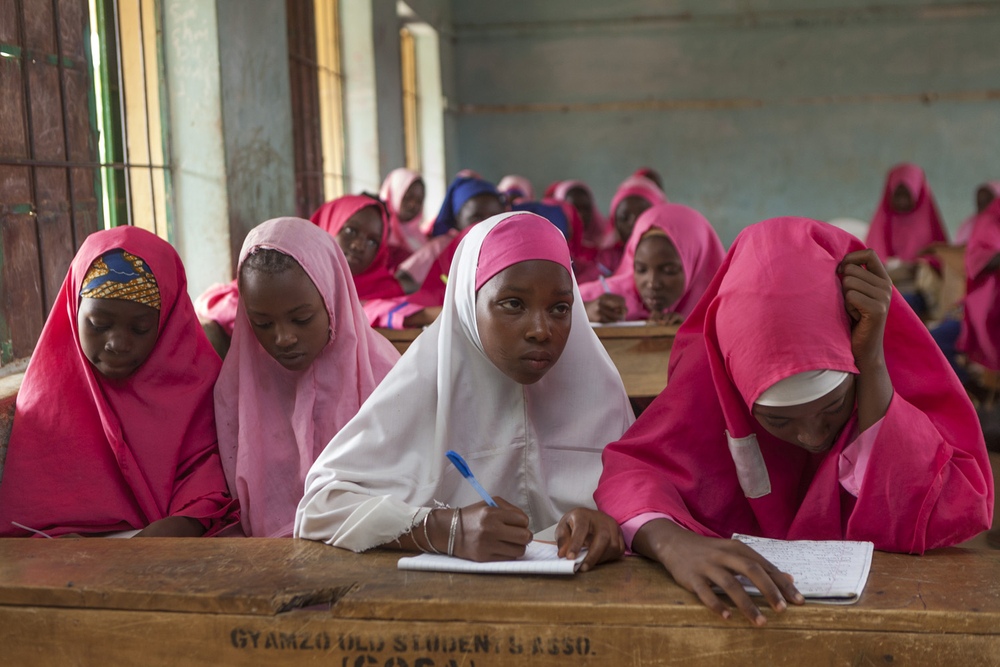
Early marriage, also known as child marriage, remains a persistent issue in Nigeria, where cultural traditions, poverty, and limited access to education contribute to this harmful practice. Despite significant progress made in addressing child marriage globally, Nigeria still grapples with high rates of early marriage, adversely affecting the lives of countless young girls. This article aims to illuminate the causes, consequences, and potential solutions to this deeply rooted societal problem.

Several factors contribute to the prevalence of early marriage in Nigeria. Cultural norms and traditions play a pivotal role, with many communities believing that marrying off their daughters at a young age protects their honour and ensures their future safety. Poverty is another critical factor, as families with limited resources may see marrying their daughters off early as an economic relief or an attempt to secure a better life for them.

Furthermore, lack of access to quality education, especially for girls, perpetuates the cycle of early marriage. Limited educational opportunities deprive young girls of the chance to develop essential skills, pursue independent livelihoods, and gain awareness about their rights. Additionally, prevailing gender inequalities and discrimination further exacerbate the problem, limiting gender equality and social progress.

Early marriage has detrimental effects on the physical, mental, and emotional well-being of young girls. Firstly, it exposes them to serious health risks, as their bodies are often not fully developed to bear children, resulting in complications during pregnancy and childbirth. Early marriage also robs girls of their right to education, denying them the chance to reach their full potential and contribute meaningfully to society.

Moreover, young brides often face economic hardships, lacking the necessary skills or education to secure stable employment. This perpetuates the cycle of poverty, subsequently affecting future generations. Early marriage is also linked to a higher incidence of domestic violence, mental health issues, and limited decision-making power for girls and women within their households.

Addressing the issue of early marriage in Nigeria requires a holistic approach that involves multiple stakeholders, including the government, civil society organisations, religious leaders, and communities. 

 Enhancing access to quality education, particularly for girls, is pivotal to breaking the cycle of early marriage. This can be achieved by providing scholarships, building schools closer to rural communities, and promoting educational campaigns focused on child rights and gender equality.

Strengthening existing laws that criminalise child marriage is essential, accompanied by strict enforcement mechanisms to hold perpetrators accountable. Providing young girls with vocational training and economic opportunities can dismantle the economic rationale behind early marriage. Such initiatives can help them gain financial independence and empower them to make informed choices.

 Collaborating with religious and community leaders to change social norms and customs that perpetuate early marriage is crucial. Obtaining their support and involvement is vital for building awareness and changing mindsets.

Expanding healthcare facilities and services in rural areas, specifically aimed at addressing the unique needs of young brides, can contribute to reducing the health risks associated with early pregnancy and childbirth.

Early marriage continues to be a significant challenge in Nigeria, depriving countless young girls of their rights and potential. By addressing the root causes of this practice through education, legal reforms, economic empowerment, community engagement, and access to healthcare, Nigeria can pave the way for a brighter future for its girls. Efforts to end early marriage require synergy, collaboration, and a relentless commitment to ensuring that every child in Nigeria has the opportunity to grow, thrive, and determine their destiny.

Ladi Ibrahim wrote from the Department of Mass Communication, University of Maiduguri.

Honorary doctorate and Isa Yuguda’s enduring legacies in education

By Mukhtar Jarmajo

Great leaders not only have vision, they also share it with others and inspire many others to create their own. Leadership is simply about understanding present problems as they affect the future and taking concrete steps to solve the problems in such a way that the future will be better and brighter. And in the annals of Nigeria, many visionary leaders, who Nigerians are still enjoying from the fruits of their visionary leadership, have come and gone. Talk about Sir Abubakar Tafawa Balewa, Nnamdi Azikwe, Ahmadu Bello, Obafemi Awolowo, Samuel Ladoke Akintola, Michael Okpara, J. S. Tarka, Sir Kashim Ibrahim and a host of their contemporaries, they are remembered for their struggle for Nigeria’s independence as well as laying the country’s foundation in its journey to nationhood.

After them, many others have followed their foot steps. In the cause of time, Nigeria has had leaders whose footprints on the sands of time are indelible. The late Gen. Murtala Ramat Mohammed and the late Umaru Musa Yaradua are, respectively, remembered for both their anti-corruption posture and drive for national unity. In the same vein, Mallam Isa Yuguda, an economic czar, Nigeria’s former minister of transport and aviation respectively, and erstwhile Bauchi state governor, is celebrated for making immense contributions in the development of Nigeria’s banking sector, transforming the nation’s transport and aviation sectors as well as raising Bauchi state to a higher threshold of development.

Last Saturday, 16th December, 2023, in its maiden combined convocation ceremony, the Sa’adu Zungur University, Gadau, Bauchi state, awarded Mallam Isa Yuguda an Honorary Doctorate Degree in Management. At the ceremony, 7,543 graduates from six academic sessions were presented for the award of graduate and postgraduate degrees. At this juncture, it’s instructive to note that the point of interest is not that Isa Yuguda received an award or that the university has thus far graduated more than seven thousand students. Rather, what is most fascinating is the fact that Mallam Isa Yuguda established the University back in 2010 when he held sway as Bauchi state governor. Thus, through his visionary leadership, the erstwhile governor established what has become a prestigious center of excellence in learning.

At the time the University was established, there was the problem of many Bauchi state indigenous students not being able to gain admission into federal universities largely because of quota system and distance, especially for female students. But education is so important that at whatever cost, it must be gained. And given that one of the primary responsibilities of government is to ensure the security, safety and well-being of the citizenry through upholding law and order as well as providing healthcare services, education etcetera, the Isa Yuguda administration thought of building the Abubakar Tafawa Balewa University Teaching Hospital, a new Specialist Hospital and the Sa’adu Zungur University.

Speaking on behalf of the awardees at the convocation ceremony, Mallam Isa Yuguda noted that the University is a beacon of hope that will not only prepare the youth for future challenges but will also cause rapid socioeconomic development in Bauchi state. This is how visionary leaders shape the future of a nation. Mallam Isa Yuguda’s visionary approach in leadership is an example to present and future leaders and his Honourary Doctorate award by the Sa’adu Zungur University is a testament to his remarkable impact on education in not only Bauchi state in particular but also the entire nation in general.

Jarmajo wrote from Wuse 2, Abuja.

Importance of health insurance to Nigerians

By Muhsin Ibrahim

I wrote about using out-of-pocket money to pay for healthcare in Nigeria a few days ago, which pushes people into poverty. Coincidentally, BBC Hausa had a report on it this morning. The Daily Reality also published an opinion article about it (I shared it earlier).

Most countries of the world have health insurance. It’s, in fact, a necessary requirement to stay in those countries. Why are we doing things differently and wrongly in Nigeria? Less than 10 per cent of Nigerians have health insurance today.

It is undeniable that sickness can strike us at any moment, irrespective of our financial standing. In such a situation, insurance comes to your rescue. Many insurances don’t cover all expenses, but often, they reduce them. So, if some good companies offer such a service, join them.

In all this, governments at all levels have to come in. They should make health insurance mandatory for everyone. Often, the monthly contributions are affordable. Even if you don’t get sick often, it’s important to remember that you are not immune to illness.

I also believe it’s halal to subscribe to the health insurance scheme. Yes, I am not a religious scholar. However, based on some rulings that I am familiar with, it’s not haram to do so.

May Allah guide and provide us with more, amin.

Muhsin Ibrahim is a Nigerian who teaches Hausa at the University of Cologne, Germany.

NHIA guideline and Pate’s move to boost population health

By Lawal Dahiru Mamman

It is not uncommon to see destitute in motor parks, religious centres, T-junctions and other places that pull crowds clutching a doctor’s prescription, soliciting public support to purchase drugs.

Others plead not to be offered money but instead be accompanied by any good samaritan to the nearest pharmaceutical outlet to purchase the medication on their behalf. This is to free them from the accusation of preying on public emotion to beg for money without any justifiable reason.

These are indications that a number of Nigerians cannot afford drugs to treat themselves owing to the fact that healthcare is predominantly financed by households, without government support. According to pundits, this, among other factors, has been instrumental in pushing many citizens into poverty.

In 2021, the World Health Organization (WHO) said, “Up to 90 per cent of all households incurring impoverishing out-of-pocket health spending are already at or below the poverty line – underscoring the need to exempt poor people from out-of-pocket health spending, backing such measures with health financing policies that enable good intentions to be realised in practice.

“Besides the prioritising of services for poor and vulnerable populations, supported through targeted public spending and policies that protect individuals from financial hardship, it will also be crucial to improve the collection, timeliness and disaggregation of data on access, service coverage, out-of-pocket health spending and total expenditure.

“Only when countries have an accurate picture of the way that their health system is performing can they effectively target action to improve the way it meets the needs of all people.”

WHO revealed during the 6th Annual Conference of the Association of Nigeria Health Journalists (ANHEJ) last year in Akwanga, Nasarawa State, that “With healthcare out-of-pocket expenditure at 70.5 per cent of the Current Health Expenditure (CHE) in 2019, general government health expenditure as a percentage of the GDP was 0.6 per cent while government expenditure per capita was $14.6 compared with WHO’s $86 benchmark for universal health coverage (UHC).”

Nigeria currently bears the highest burden of tuberculosis and paediatric HIV while accounting for 50 per cent of neglected tropical diseases (NTD) in Africa, contributing 27 per cent of global malaria cases and 24 per cent of global deaths with Non-communicable Diseases (NCDs) accounting for 29 per cent of all deaths in Nigeria with premature mortality from the four main NCDs (Hypertension, Diabetes, Cancers, Malnutrition) accounting for 22 per cent of all deaths.

On account of the high disease burden, high out-of-pocket health expenditure and low enrollment into the NHIS, now National Health Insurance Authority (NHIA), the Federal Ministry of Health and Social Welfare has unveiled operational guidelines for the NHIA to ensure financial access to quality healthcare in line with Sustainable Development Goals, (SDGs), consequently putting the country on track of attaining Universal Health Coverage (UHC).

The Ministry said, “High out-of-pocket payment for health care services is not good enough, and it is not sustainable. Only 9 per cent of Nigerians have insurance coverage, and 90 per cent don’t.

“Ill health is pushing many Nigerians into poverty. We must, therefore, change the trajectory of healthcare delivery in Nigeria.

“Many people have wondered why the President added social welfare to the Ministry of Health. The answer is health insurance. Health insurance is the key to the Renewed Hope Agenda, and it is the reason the President added social welfare to the Ministry. This is because the President is aware that we need social protection for our people.”

The guideline, which harmonised crucial provisions of the old operational guidelines with the new Act, provided a legal basis for mandatory participation by all Nigerians, the Vulnerable Group Fund (VGF) for citizens who are able to service their insurance after keying-in and empowered the NHIA to promote, regulate and integrate health insurance schemes in the country among other provisions of the Act so as to contribute to poverty reduction as well as socioeconomic development.

The review expanded the operational guidelines from four to five. The first section, Governance and Stewardship, provides, which was not part of the previous guideline, a broad overview of the roles and responsibilities of the NHIA and stakeholders within the insurance ecosystem.

The second section, schemes and programs, identified contributory, non-contributory and supplementary/complementary schemes to ensure the capturing of public and private sector employees, a vulnerable group including those not captured in the National Social Register (NSR) by pooling resources from government, private sector, philanthropist and even international organisations.

Standards and accreditation, which is the third section, will focus on bringing health workers, health facilities and equipment, and patients under one roof for the meticulous running of the NHIA.

The fourth section of the operational guidelines, data management, allows the NHIA to provide and maintain information for the integration of data health schemes in Nigeria. Such data will allow collaboration data sharing between facilities, medical audits, and research and aid seamless decision-making for the authority.

Offences, penalties and legal proceedings, which is the last of the guidelines, ensures stakeholders’ compliance with the provision of the NHIA and provide a legal instrument for the investigation of grievances and disputes between stakeholder in accordance with protocols of the NHIA.

Implementation of this effort by the Health Ministry will make Nigerians worry less about the financial consequences of seeking medical care, providing avenues for early detection and treatment of diseases, which in turn will guarantee a healthy citizenry and increase population health outcomes for national growth and sustainable development.

Lawal Dahiru Mamman writes from Abuja and can be reached via dahirulawal90@gmail.com.

N476,000 Law School fees and the fate of the indigents

By Abdul Mutallib Muktar

The journey to the bar has always been quite challenging and frustrating, especially for those students who are from financially disadvantaged homes. These students usually have to endure some terrible experiences for five years or more in order to obtain LL.B from their respective universities. It is sad that after this genuine struggle and heroism, the students get out of the race at the point of registering for the Nigerian Law School because they cannot raise the humongous school fees.

Most of the 2023/2024 applicants for the Nigerian Law School this year are students who graduated from the universities in 2023. This means they spent about seven years instead of five undergoing LL.B programme because of the perennial ASUU strikes and Covid-19 that disfigured the academic calendar. Students of public universities have a sad story to tell of the above.

What stands as a dishearteningly unclimbable mountain for most law students from public universities is the payment of the Nigerian Law School fees which rose to N476,000 for registration alone this year. Before the registration, one must apply for the law school which consumes about N45,000, including the faculty charges. A flashback of some few students who could not apply because they had no N45,000 let alone N476,000, touches the heart.

Over the years and especially after the unfortunate removal of fuel subsidy, Nigerian economy has fallen into an unprecedented quagmire which sent the masses into a regrettably more pitiable condition. A lot of parents who thought they could continue to take care of the higher education of their offspring gave up and have now lost their financial balance and are only struggling to provide food for their families. It is this reason that turns many students drop outs in the last few years.

Many of the graduates who applied for the Nigerian Law School this year are struggling to reach out to either their representatives, senators, governors or philanthropists but to no avail. The letters written to them could not reach them, so also the true state of affairs of this set of their constituents. In fact, this is what fundamentally prompted this write up–perhaps it may be a speedy channel of passing the message across to them. This is the time when these law school applicants will truly appreciate any sort of help from their leaders.

Few months ago, some governors, such as His Excellency, Abba Kabir Yusuf, refunded the school fees to those who registered for the last session of the NLS. May God reward them. Although the governors have a right reason for choosing to refund and not otherwise, it is my humble suggestion that the school fees should be better paid than refunded because the biggest challenge lies in paying it. If the governors continue on the refund policy, only the capable hands will continue to benefit. With the refund policy, the philosophy behind the support will surely be defeated.

I am using this medium to humbly invite the attention of the Honourable members of the State Houses of Assembly, the National Assembly and Their Excellencies, the governors of our various states to render assistance either in form of support or sponsorship of the Nigerian Law School applicants from their respective constituencies. It is additionally a time when philanthropists across the country can help too. Without this gesture, I am quite sure many law graduates will have to face the fate of not attending the law school. As contained in a notice signed by the Director General of the Council of Legal Education, Prof. Isa Hayatu Chiroma, SAN, lectures for the Bar Part I and Bar Part II commence on 11th December, 2023 and 15th January, 2024 respectively.

Abdul Mutallib Muktar (LL.B, B.L in view) wrote from Kano via via abdulmutallib.muktar@gmail.com.

Victor Osimhen clinches ‘CAF 2023 Men’s Player of the Year’ award 

By Sabiu Abdullahi 

The 24-year-old Nigerian striker, Victor Osimhen, has secured the coveted CAF 2023 Men’s Player of the Year award. 

Osimhen’s stellar performance in the 2022–2023 football season, particularly with Napoli in the Serie A, played a pivotal role in this triumph. 

Osimhen faced stiff competition from top-tier players like Achraf Hakimi of Morocco, Sadio Mane of Senegal, and Egypt’s Mohamed Salah. Standing tall at 1.85m, the Nigerian striker’s outstanding achievements mark the end of a 24-year wait for Nigeria since Kanu Nwankwo last received the honour in 1999. 

During the 2022–2023 football season, Osimhen’s thunderous form propelled Napoli to their third Scudetto in 33 years, following the era of legendary Diego Maradona. 

His remarkable feat of scoring 26 goals in the league not only contributed to Napoli’s success but also made him the first African to claim the top scorer award in the domestic Serie A league. 

Osimhen’s accolades continued to accumulate as he clinched the Italian league’s best striker prize and secured a spot in the Serie A Team of the Year. 

Breaking George Weah’s record as the highest-scoring African player in the Italian league, Osimhen further solidified his status by winning the AIC award, the Italian Footballers’ Association Player of the Year, in December.

 Despite Nigeria’s early exit from the 2023 Africa Cup of Nations, Osimhen showcased his prowess by netting 10 goals in the tournament, including an impressive seven against São Tomé and Principe. 

Since making his senior debut for the Super Eagles in June 2017, Osimhen has accumulated 20 goals in 27 appearances. 

The pinnacle of Osimhen’s remarkable journey came on Monday in the Moroccan city of Marrakesh, when he clinched the CAF 2023 Men’s Player of the Year award.

Growth vs. Profitability: Lessons for Startups

By Salisu Uba, PhD FCIPS

I have read some devastating news over the last couple of weeks in relation to the ecosystem in Africa, some promising startups are shutting down operations. I am sure the recent events will affect any potential investments in our startups.

I want to address some concerns around two contrasting paths that often emerge: the allure of rapid growth without immediate profitability versus the steadier route of slower growth with assured profits. Let’s explore these models and the lessons they hold for startups in attracting investment.

High Growth, No Profit: the temptation of business sprinting towards expansion, capturing attention with its rapid growth but yet to turn a profit (wework case study). These ventures entice investors seeking significant returns. They prioritize scaling up, seizing market shares, and envisioning a lucrative future, often emphasizing customer acquisition over immediate profitability.

Slow Growth, Steady Profits: the assurance one perhaps, on the other side, is progressing at a more measured pace prioritising sustainable growth and consistent profitability. While not racing ahead in growth, they maintain stability, focusing on operational efficiency, nurturing loyal customers, and ensuring profitability from the outset.

Investment Magnet: the high growth appeals to investors as it favours the high-growth model due to its potential for explosive returns. African startups are promising and bustling markets, venture capitalists are scouting for opportunities everywhere, and the allure of substantial growth can overshadow concerns about immediate profits, maybe! However, sustainable profitability forms the backbone of long-term success, offering stability even in market downturns (don’t aim for what’s not realistic).

Learning from Both Models: from experience, the winning formula for our startup founders is to glean invaluable lessons from both models. By embracing the innovation of high-growth ventures and adopting prudent financial practices from profitable businesses, a potent combination can emerge. Striving for growth with an eye on achieving profitability can attract investors while ensuring long-term viability.

Striking the balance between growth and profitability is to find the equilibrium between high growth and profitability. It involves building a robust foundation for scalability while ensuring financial viability in the long run. This hybrid approach could be the linchpin to captivate venture capitalists eyeing the burgeoning African startup landscape, offering excitement and stability in equal measure.

Perhaps as we always aim to make a positive impact and make economic progress, investment is key to a successful venture. Therefore in the quest for investment opportunities, startup founders and entrepreneurs should combine the dynamism of high growth with the solidity of profitability.

Salisu is a fellow of the Chartered Institute of Procurement and Supply (CIPS) and a member of the CIPS Education Committee in the UK. He is the founder and CEO of NarQuest Limited – a supply chain technology company based in Glasgow, UK. 

Max Air: Why always you?

By Fatima Ibrahim

I humbly write to draw the attention of Max Air Nigeria Limited to the plight of their clients regarding the delay and disappointment of their service. For a very long time, people have been lamenting the Max Air company flight delays.

To advise you, you have to always dance to the tone of your customers and make their interests your top priority. Scott D. Cook once stated, “Be dramatically willing to focus on the customer at all costs, even at the cost of obsoleting your own stuff.” Judging by this statement, you have to pay much attention to the satisfaction of your customers to wipe away the tears provoked by your unsatisfactory services.

People’s—your customers in question—lamentation over your disappointing services will make you lose them. This is because customer satisfaction is the foundation of any successful business. Therefore, by addressing this primary concern and improving service quality, you can retain your existing clients and attract new ones. By so doing, you would uphold your reputation for reliability and customer satisfaction in the competitive aviation industry.

Notwithstanding, taking prompt action to rectify issues such as flight delays will not only enhance customer loyalty but also contribute to the positive perception of Max Air. Bill Gates once said, “Your most unhappy customers are your greatest source of learning.” Embracing feedback and actively working towards improving service efficiency will undoubtedly lead to a more content and loyal customer base.

Therefore, I urge you to prioritise your customers’ satisfaction, for it is not just a business strategy but a commitment to building enduring relationships.

Fati Ibrahim wrote from the Department of Mass Communication, University of Maiduguri.

NCS boss inspires customs graduates to make impact through lifelong learning

By Sabiu Abdullahi

The Comptroller-General of Customs, Bashir Adewale Adeniyi MFR, championed the importance of continuous learning for the newly graduated officers from Senior Course 9 and Junior Course 17. 

He stated this in a motivational address at the Nigeria Customs Command and Staff College in Gwagwalada, Abuja. 

Representing Deputy Comptroller General Sa’idu Galadima of the Training and Doctrine Command (TRADOC), CGC Adeniyi stressed the significance of professionalism, integrity, and the pursuit of excellence.

He encouraged the graduates to leverage opportunities in their respective commands, take calculated risks, and be catalysts for positive change. 

ACG Kingsley Egwuh, Commandant of the Nigeria Customs Command and Staff College Gwagwalada, commended the graduates for their dedication, highlighting their 100% success rate.

Stating various training aspects, including academic standards, proficiency, and weapon handling, ACG Egwuh urged the graduates to infuse purpose into their careers while upholding the service motto, “Justice and Honesty.” 

The Commandant also unveiled ongoing projects, including the replacement of dilapidated furniture in the college hall and the installation of solar panels to enhance facilities. 

Deputy Commandant and Director of Studies, Comptroller Oluyomi Adebakin, outlined the curriculum’s focus on developing human capacity and improving customs operations.

Adebakin affirmed the commitment to enhancing officers’ skills with a strong moral foundation. 

Special Guest of Honour Senator Isah Echocho, Chairman of the Senate Committee on Customs and Excise, addressed global economic challenges and urged graduates to positively impact society.

He expressed optimism that their adeptness in technological advancements would contribute to Nigeria’s economic advancement. 

In a celebratory gesture, the college hosted a regimental dinner night honouring the graduates of Senior Course 9 and Junior Course 17.