Nigeria

Leadership potential: Master these 6 essential skills

By Yakubu Sani Wudil, PhD

1. Leading by example and upholding integrity: An effective manager walks the talk and leads by example. They are seen as a role model for the team and instil trust and confidence in their employees by being honest, transparent, and fair in their actions. By being a person of integrity, managers can gain the respect and loyalty of their team, which is essential for creating a positive and productive work environment.

2. Building a diverse and inclusive team: Managers must recognise the importance of diversity and inclusivity in the workplace. They should strive to create a team representative of the community and customers they serve. This includes selecting people for the job based on their skills and qualifications, regardless of gender, ethnicity, or other differences. A good leader can build an inclusive workforce where everyone feels valued and respected.

3. Being a positive and supportive advocate for the organisation: A manager should be a positive and enthusiastic advocate for their company. They should believe in the company’s mission and follow its direction. They should also be able to communicate this enthusiasm and support to their team, which helps to create a sense of purpose and belonging among employees.

4. Communicating effectively and setting clear goals and expectations: Clear communication is essential for a manager to get the most out of their team. They should be able to clearly communicate their goals and expectations for the team’s performance and what is expected of each employee. Setting clear goals and expectations helps to keep employees engaged and motivated to achieve them.

5. Active listening and understanding the needs of employees: Managers need to be good listeners and actively seek feedback from their employees. They should be open to new ideas and suggestions and be willing to make changes in response to the needs of their team. By listening and understanding the needs of their employees, managers can create an environment that fosters collaboration and creativity.

6. Being emotionally intelligent, taking responsibility and learning from mistakes, and effectively delegating tasks: Emotional intelligence is an essential skill for managers. They should be able to recognise and manage their own emotions and those of their team. They should also be able to take responsibility for their actions and learn from their mistakes. Effective delegation is also essential for managers, as it allows them to focus on their key responsibilities and trust their team members to handle their tasks effectively.

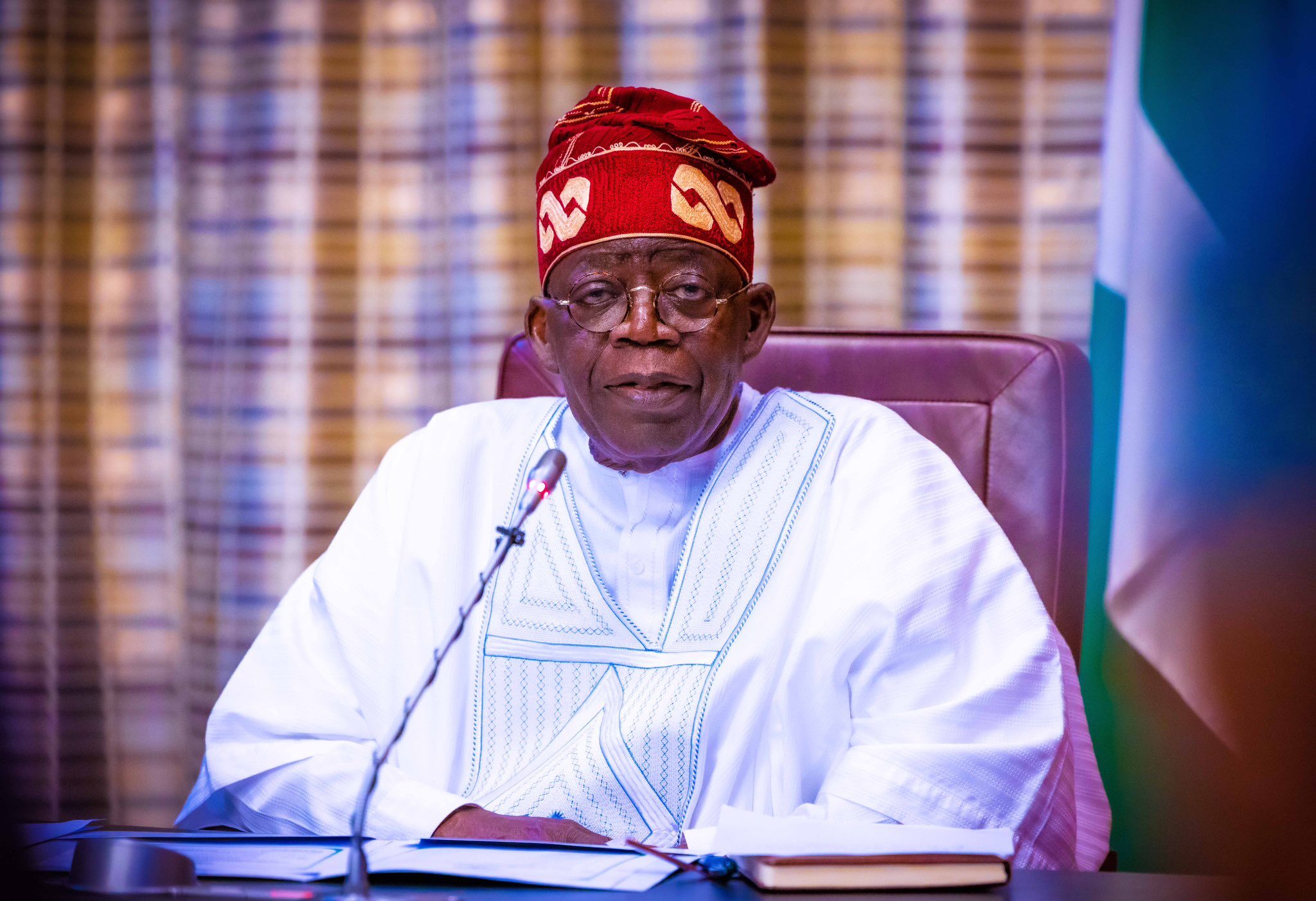
Tinubu campaign director resigns, quits partisan politics 

By Ahmad Deedat Zakari

A campaign director of the Presidential Candidate of the All Progressives Congress (APC), Bola Ahmad Tinubu, has resigned from her position.

Najatu Muhammad was the Director of the Civil Society Directorate of the APC Presidential Campaign Council (PCC) before her resignation on Thursday, January 19, 2023.  

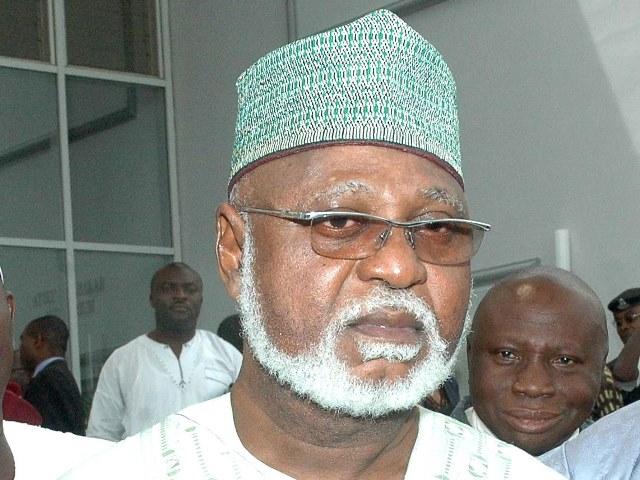
Ms Muhammad, in a letter, addressed to the National Chairman of the APC, Abdullahi Adamu, said she is resigning from partisan politics due to a lack of ideological differences amongst political parties.

The letter reads in part, “In line with article 9.5 (i) of the Constitution of the All Progressives Congress (APC), I am writing to you to intimate you of my resignation from the All Progressive Congress (APC). I am by this letter also informing you of my resignation as the Director of the Civil Society directorate of the Presidential Campaign Council of the APC.

“It has been a great honour working with you (Mr Adamu) to contribute towards the building of our dear nation. However, a number of recent developments in the country’s political and democratic space make it impossible for me to continue to participate in party politics.” 

Ms Muhammad is the third member of the PCC to officially resign from the Council. In early January, Ahmed Ibeto and Zanna Ali resigned. 

Ahmed Ibeto, The Assistant Secretary of the North-central Directorate of Mobilization, in a letter dated January 3, 2023, which was addressed to the APC Ibelu Central Ward, Magama Local Government, Niger State, said his resignation was due to lack of unity of purpose and unending litigations, among others.

Another PCC member, Zanna Ali, a member of the Directorate of Youth Mobilization, North-east, also said his resignation was based on the inability of the ruling party to present a credible presidential candidate.

RAIN and shaping Nigeria’s AI, robotics’ future 

By Aminat Akinyemi

As the year 2022 came to a close, the world was thrown into a frenzy after a US-based AI firm, OpenAI released a groundbreaking solution called “chatGPT”, which could converse, reply to text messages sent by humans and answer almost any question as accurately as if it were human itself and all-knowing. This solution even proves to have the capacity to write news articles, public speeches, academic papers, and computer codes and can go as far as discussing matters relating to your local traditional recipes. 

Today, unlike a decade ago, countries are now competing fiercely towards attaining AI supremacy.

This is not surprising as recent events have proven that AI, Robotics, Blockchain and Cybersecurity have a huge impact on national security, intelligence, healthcare and food security. With fast advances in technology, there is no doubt that the next decade presents an opportunity for countries to redefine their future and improve the quality of life, healthcare and availability of jobs through the needed up-skilling of their workforce and re-modelling of their industries.  

Deviating from an age-long Nigerian tradition of simply waiting to import and consume any latest technology in the world rather than contribute to its development, the nation is lucky to have some leaders that are keeping tabs on global developments and are guarding the coast keenly. 

For example, in 2019, a young Nigerian, Olusola Ayoola, after bagging his PhD in the area of Nuclear Robotics and working extensively with the UK government, decided to return home to establish Nigeria’s first fully functional robotics and artificial intelligence facility, Robotics & Artificial Intelligence Nigeria (RAIN) for training, research and product development. 

Since its establishment, RAIN has proven to be world-class and has even attracted international students and recognition from the Deputy Secretary General of the United Nations, Ms Amina J. Mohammed, the United Nations Development Programme (UNDP), USA and Canada missions in Nigeria, as well as First Bank of Nigeria Plc., Institute of Chartered Accountants of Nigeria (ICAN), Nigerian Society of Engineers (NSE), the National Institution of Electrical and Electronic Engineers (NIEEE), the Office of the Surveyor General of the Federation, the Federal Ministry of Youths and Sports, the National Information Technology Development Agency (NITDA) and the National Space Research and Development Agency (NASRDA).

Some of the groundbreaking research carried out at RAIN include unattended baggage detection, a mini weather station, an AI-based Traffic Light System, a ground robot vehicle and unmanned VTOL aerial vehicle (IMORP), CETHED and RAINSC75/76.

The great feat which RAIN has achieved without any support from the Government and this fact only makes one want to ask what an intervention grant will do to the growth of technology in Nigeria.

This must have been the thought of Honorable Oluyemi Adewale Taiwo, a federal lawmaker representing Ibarapa East/Ido Federal Constituency, Oyo State. In January 2022 and on the floor of the green hallow chamber, Honorable Taiwo moved a motion for the house to encourage the federal government to liaise and work with RAIN, especially during the course of tackling the insecurity. The house unanimously adopted the motion and passed a resolution in support. 

Honourable Taiwo did not stop at that. The pragmatic lawmaker followed this up with the ministry of science, technology and innovation until he successfully got the nod of the ministry to provide such an intervention grant. 

This is a confirmation of his stewardship to his constituency. However, the nation could do with more of his kind that will direct the federal government’s attention to burgeoning areas within the economy that can help return this nation to the path of greatness. No doubt, with this intervention grant being well managed by the tested and proven management of the Robotics and Artificial Intelligence Nigeria board, the nation can only expect to move upwards from this point onward. 

The Chief Executive of RAIN, Dr Ayoola, has confirmed that there are lofty plans in place including the construction of a Centre for Excellence in Drone and Unmanned Vehicles for Geospatial Intelligence, provision of training scholarships to the youths of Nigeria, particularly those from Ibarapa East/Ido Federal Constituency, and the improvement of AI Robotics product prototypes up to the required military standards.

While the efforts of Honorable Taiwo are not common in this part of the world, it is not unexpected as he was basically doing what a genuine representative of the people would do in order to preserve the indigenous technological firms in his constituency, promote their global advantage and protect the future of the youths in such communities through up-skilling.

Let it be known that when Nigeria becomes a great country, it is the sacrifices of genuinely honourable men like Hon. Taiwo of House of Rep and his supportive colleagues in the National assembly, the Honourable Minister of Science, Technology and Innovation Senator Adeleke Olorunnimbe Mamora, as well as the permanent secretary of the ministry, will be mentioned for praises. Now, let Nigeria’s global competitiveness in AI and Robotics begin.

Aminat Akinyemi writes from Ibadan and can be reached via aaebunoluwa@gmail.com.

Old currency deadline: Queues, frustration at banking halls in Kaduna

By Sumayyah Auwal Ishaq

Almost all banks are now attending to long queues in their banking halls as the deadline for the use old currency by the Central Bank of Nigeria (CBN) draws closer, investigation by The Daily Reality has revealed.

The rush by customers to deposit old currency generated much chaos in and around banks premises across the Kaduna metropolis throughout the week. The queues at banks in Yakubu Gowon Way, Station Road, Kano Road and Sabon Tasha were characterized by commotion caused by slow speed of the deposit process and impatience by customers.

Some of the customers who spoke to TDR said they were scared of losing their monies as the CBN had warned that those who failed to remit their old currencies would lose it after the deadline.

Officials of these banks had a very hectic time controlling the huge crowd in their premises, even as customers complained of slow services by the banks. Some of the customers expressed frustration queueing in the sun and the difficulty in remitting their monies, suggesting that further extension of the deadline would ease their pain.

It would be recalled that the CBN had given all Nigerians up to the end of January, 2023 to remit their old currencies as it ceases to be a legal tender after the stipulated time.

Osinbajo chairs first 2023 cabinet meeting

By Ahmad Deedat Zakari

Nigeria’s Vice President, Professor Yemi Osinbajo, chaired the first Federal Executive Council (FEC) meeting for the year 2023 on Wednesday. 

The meeting was held at the Council Chamber of the Presidential Villa, Abuja.

Osinbajo stood in for his principal, President Muhammadu Buhari, who departed the country to Nouakchott, Mauritania, to participate in the Programme of the Third Forum of the African Conference for Peace on Monday.

In attendance are the Secretary to Government of the Federation (SGF), Boss Mustapha; the Head of the Civil Service of the Federation, Dr Folasade Yemi-Esan; and the Deputy Chief of Staff to the President, Dr Adeola Ipaye.

Most of the cabinet members were also physically in attendance for the first FEC meeting of the year. 

However, the Ministers of Foreign Affairs, Geoffrey Onyeama, Defence, Maj. Gen. Bashir Magashi and the National Security Adviser, Maj. Gen. Mohammed Monguno were absent as they were on the President’s entourage in Nouakchott.

The President and his entourage are expected to return to the country on Wednesday.

4 writers in Ilorin for Imodoye residency

By Umar Yogiza

The four writers are Tares Oburumu, Ruth Chidera Echewe, Sadiq Mustafa and Taiye Ojo, they arrived in the ancient town of Ilorin, Kwara State, for the first batch of the 2023 Imodoye Writers Residency programme. A statement issued by the residency manager said the writers are expected to be there for three weeks and an optional one week.

Tares Oburumu is a Bayelsa State-born poet and essayist, based in Warri, Delta State, Nigeria. He’s the author of 6 published chapbooks. Tares Oburumu is the winner of the GAP poetry prize 2018 and his chapbook ‘origin of the syma species’ won The Sillerman First Book prize for African poets 2022, to be published by Nebraska University Press, U.S., in fall 2023. Tares had been nominated for the Pushcart prize with Woven Tales Press 2019, and Ice Floes International literary journal 2021.

Tares Oburumu is in Imodoye residency to work and expand his three chapbooks: Erasure, Chatham House and Red: the love story of Annie Ernaux. As a child, Tares heard the nerve-racking stories of how brothers took to the Atlantic Ocean, going oversee, and it broke him to pieces hearing the manner they died in their attempt to escape the bedlam their country has become. His lens’ expositions focus on emigration and the attendant trauma not told by those who suffer from it. And to shine the light on how they ended, coffined in the dream of escaping Nigeria.

Ruth Chidera Echewe, (Unbreakable) is a writer, editor, media personality and professional blogger. She publishes potpourri of themes in unbreaky.comblog, her personal blog space is called UNBREAKABLE FEATURES. She’s a graduate of English and Literary Studies from the Federal University Lafia, Nasarawa State, Nigeria. An indigene of Abia State, Nigeria, but resides in Enugu State.

Ruth, Chidera Echewe is in Imodoye to complete her work: Sisters Series, prose, dealings with humans, certain bonds that sustained our existence and given us a different definition of life. She kindly follows various studies that have proven the strongest bonds emanated from the establishment of relationships. Ruth is motivated by her passion for creativity which has gone ahead to give birth to what she intends to manifest into a publishing, writing and editing firm in the nearest future.

Abubakar Sadiq Mustapha is a poet, art curator, documentary photographer, and community developer. He studied Geology and Mining at Ibrahim Badamasi Babangida University, and currently rounding up his master’s program at the same Ibrahim Badamasi Babangida University, Lapai, Niger State. Sadiq uses books, photography, and arts in driving social change from girl-child education, and gender-based violence to youth participation in politics and believes in the power of photography and how it can be used toward mental health, is in Imodoye to complete his manuscript: Home is my Mother’s Tongue.

Abubakar is also a photo columnist with Salamander ink magazine and the curator of the Abubakar Gimba literacy campaign. He’s the project lead for The Lapai Bookclub’s mobile library and school, a project that takes reading and arts to grassroots communities in Northern Nigeria aimed at increasing the literacy rate of the region and creating awareness in governance.

Ojo Taiye is a Delta base Nigerian eco-artist and writer who uses poetry as a handy tool to hide his frustration with society. He’s the winner of the Hay Writer’s Circle poetry prize, US, 2021, Calthalbui poetry prize, Ireland 2021. In 2020 Taiye Ojo was selected to participate in Capital City Film Poetry Festival, in Michigan and Poetry Introductory Series, in Ireland. His commissioned works include Belfast Photo Festival 2021, Winnipeg Fringe Festival and Leeds Poetry Festival.

Taiye’s recent works explore neocolonialism, institutionalized violence and ecological trauma in the oil-rich, polluted Niger Delta. His themes deal with the effects of climate change,
homelessness, migration, drought and famine, as well as a range of transversal issues arising from
racism, black identity and mental health. Taiye Ojo is in Imodoye to complete his poetry collection: Scoping Map.

Established by Dr Usman Ladipo Akanbi, the Imodoye Writers Residency is a private initiative for writers and visual artists keen on completing their ongoing work in a conducive environment at no cost. And as part of giving back to the community, during their stay in the residency, the writers are expected to mentor secondary school students in Ilorin in creative art/writing.

Philips Curve and Nigeria’s economic reality: a macroeconomic analysis.

By Muhammad Sagir Bauchi

Stabilization of prices and achieving full employment are among the core goals of every economy in their macroeconomic policies. In this case, there are two main approaches to curtail inflation, recession, unemployment and other negative macro-economic phenomena. These approaches are monetary and fiscal policies. While monetary policy refers to the central bank activities which are directed towards influencing the quantity of capital (money) and credit in an economy, fiscal policy refers to the government’s decisions on taxation and spending. Both monetary and fiscal policies are used to regulate economic activities over time. They can be used to accelerate growth when an economy starts to slow or to moderate growth and activity when an economy starts to overheat. In addition, fiscal policy can be used to redistribute income and wealth.

The overall goal of these monetary and fiscal policies is channelled to the creation of a healthy economic environment that could sustain economic growth, facilitate positive employment and stable inflation rate.

In a plain language, the main aim of these two policies is to steer an economy in the sense that the economy does not experience economic boom that could be followed by high period of low or negative growth, high level of unemployment and unstable price. In this situation, people can feel safe in their consumption, savings and investment decision and government could concentrate on economic decision making. And this is where the idea of Monetarist, Classical and Keynesian Schools of Economics come to play, where they have different views in respect to the effectiveness of the two policies.

PHILIPS CURVE FROM A SHORT GLANCE:

The issue of inflation and unemployment is not a new concept in the realm of economics and it’s one of the concepts that reflect the science of economics as a true reflection of reality, since that, almost everyone is feeling the impact of either of the two.

The history of Philips Curve can be traced to the research findings of A.W Philip, an economist who analyzed the relationship between unemployment and the rate of change of money wages in the United Kingdom in the years 1861-1957. At the end of his findings, he suggested that there is an inverse or negative relationship between wages and unemployment. In simple term, he meant that whenever there’s growth in unemployment, there would be a low level of inflation. And the rationale behind the justification of his idea is that wherein there’s employment, people have more money, which leads to high demand for goods and services, and eventually pushing prices up. On the other hand, when there’s a rise in unemployment, INFLATION will go down since there will be low demand for goods and services as there’s less money in circulation.

Philips and Other Economic Perspectives: there are different opinions with regards to the application of the curve and the measures to contain the phenomena.

According to Monetarist School, the issue of unemployment is a supply side phenomena, therefore, demand side measures cannot be used in curtailing them, and even if it occurs, it can be for a temporary and will accelerate price instability at the end. While to the Keynesian school, they argue that there can only be “demand deficient unemployment” And in the time of recession, demand side measures can reduce unemployment for long-term with little of inflation.

Nigeria’s Economic Reality:

In Nigeria, since its independence, unemployment and inflation are among the major distractions in the growth and development of the nation’s economy. This is evident as we are all witnessing a scenario where too much money is chasing few goods and another case of high supply of labor with low demand of it. According to data from the National Bureau of Statistics NBS), Nigeria’s inflation rate has been consistently high, averaging around 11% in the past decade. The high inflation rate can be attributed to a number of factors such as the devaluation of the Naira, increase in the cost of imports, and a rise in fuel prices.

In an effort to curb inflation, the Central Bank of Nigeria (CBN) has introduced and implemented a number of monetary policies, such as the recent cashless driven economy module; through daily and weekly money withdrawal limit, increasing interest rates, tightening liquidity, devaluing the Naira, etc. However, all these policies have not been entirely successful in bringing inflation under control. Additionally, the Nigerian government has also implemented fiscal and monetary policies such as capping government MDAs cash withdrawals limit to minimal amount, increasing taxes and cutting government spending to curb inflation, however, the effectiveness of these policies remains uncertain and challenging. Same goes to the apex bank ongoing monetary policy, especially the weekly withdrawals limit policy, which is an unprecedented threat to urban and rural businesses due to poor mobile/internet banking mechanisms in the country. As such, the apex bank must address these concerns through shifting the effective implementation date until all the proper mechanisms required to operate a cashless economy are put in place. This can be done if the CBN reasons and constitutes a committee that includes technocrats, bankers and internet service providers, which will make sure that effective moblie/internet services are made available to cover the whole country before the policy kicks off and kicks up.

In conclusion, the relationship between inflation and unemployment as represented by the Philips curve is a complex one that is influenced by a variety of factors. The Nigerian economy is facing significant challenges in terms of cashless economy application, high inflation and unemployment rates, and finding effective solutions to these issues will require a rigorous political will and careful consideration of both monetary and fiscal policies. It is important for the government and the central bank to continue to monitor and analyze economic data and make adjustments to policies as needed, in order to create a stable economic environment that supports growth and employment.

Muhammad Sagir Bauchi, is a graduate of Economics from Sa’adu Zungur University, Gadau, Bauchi State. He can be reached via ibrahimsagir1227@gmail.com

7 PDP supporters die, 32 injured in truck accident in Plateau

By Uzair Adam Imam

No fewer than 7 Peoples Democratic Party’s (PDP) supporters died and 32 others injured in a truck accident Saturday in Plateau state.

The victims were reportedly returning from a Zonal rally at Pankshin local government area, the headquarters of Plateau Central Senatorial zone.

Our reporters gathered that the truck, which conveyed the victims, crashed at Jwak village close to the Panyam bridge in the Mangu local government area.

The Director, Directorate of Media and Publicity, Atiku-Okowa/Mutfwang-Piyo Campaign Council, Yiljap Abraham, confirmed the traumatic incident to journalists in a statement.

Abraham in a statement said, “It has been confirmed that seven people lost their lives in the road accident on Saturday evening involving supporters of the Plateau State Chapter of the Peoples Democratic Party.

“They were returning from the PDP flag-off and zonal rally held at Pankshin when their truck crashed on a slope between Pushit and the Panyam bridge in Mangu Local Government Area.

“32 of the passengers sustained varying degrees of injuries. 21 have been taken to Nissi Dominus hospital Mangu, one is at Nanret clinic Mangu and 10 are at the Jos University Teaching Hospital, JUTH.

“Two have been adjudged to be in critical condition with one undergoing emergency surgery at Nissi Dominus hospital. Meantime, the corpses have been removed from the scene and deposited at Allah Na Kowa hospital, Nissi Dominus hospital, and Mangu Cottage hospital.

“The evacuations were coordinated by the Medical Team of the Campaign Council headed by Dr. Juryit, some personal staff of the PDP Governorship Candidate, Barr Caleb Mutfwang with the aid of many sympathizers.

“In his initial reaction, Barr Mutfwang expressed shock at the tragedy. He has asked for prayers and every support to be extended to the grieving families and healing for those injured,” he added.

Old Naira Notes: January 31 deadline sacrosanct – CBN

By Sumayyah Auwal Ishaq

The Central Bank of Nigeria (CBN) has reiterated that the deadline for exchange of the old Naira notes for new ones remains January 31, 2023.

In its official Facebook handle, on Friday, the apex bank wrote, “A reminder to the general public that the old series of N200, N500 and N1,000 notes cease to be legal tender by January 31, 2023. You are once again advised to return them to your bank before the deadline”.

It may be recalled that last October, CBN announced that the old Naira notes would cease to circulate, and be legal tender from January 31, 2023 after detailing a number of reasons for the action.

The announcement sparked various reactions from the public, which in part, informed the call by the National Assembly for CBN to extend the deadline of January 31, 2023.

Cost of university education in Nigeria: Facing the reality

By Salim Ibrahim Isa

Since late last year, many public universities have released revised fees, primarily reviewed upwards in unprecedented percentages (mostly more than a 100%). Students, parents and other stakeholders have expressed shock, with many blaming the Academic Staff Union of Universities (ASUU) for being behind the increase as a response to the Union’s fallout with the Federal Government last year and members of the Union laying responsibility to the executive councils of respective universities.

Whatever the reason for the increase and whoever is behind it, the rising cost of education is a reality students and other stakeholders have to face, for it is doubtful to be reversed.

It will be useful to consider the following discussion, especially by students who would be directly affected by the fee hike.

Choice of courses

Choosing a course to study has been a longstanding issue. Many students go to university to study courses for years only to realise later that they could have made better choices regarding their aspirations. With education being more expensive, prospective students will save themselves much disappointment later in their studies or after graduating by researching courses before applying for them and making informed decisions. Nobody wants to pay massive amounts of money to study a course only to find out later that it has no job prospects or something like that.

Alternatives to degrees

It is not a divine revelation that everybody must have a degree. Colleges of education, polytechnics and other higher institutions offer various types of training and award multiple certificates, which can be as useful as a degree, depending on how the holder uses acquired knowledge. A student who cannot afford the higher costs of a university education shouldn’t lose all hope. It is still OK to seek other affordable alternatives and acquire training and certification.

Many non-degree holders have had spectacular achievements the world over. The most important thing is the training and how and to what use it is put.

Distance learning

Thanks to the internet, a significant number of universities all over the world now offer many courses online. This eliminates the burden of physical presence and its attendant financial implications, making the courses a lot cheaper while maintaining the quality of the courses. Many of these courses have flexible payment schedules, so students can pay in instalments and flexible classes, allowing students to work while studying. One may explore the availability of courses of choice both within and outside Nigeria and enrol in a good course at a good university. In addition, students may apply for discounts and fee waivers to make their studies even more affordable.

Scholarships and sponsorships

Governments, universities, foundations, companies and even individuals within Nigeria and abroad offer scholarships and financial aid to students under various schemes to subsidise education. Some scholarships involve moving to the supporting country/institution, while others support candidates locally. Sponsorships may also be complete or partial. A good way to be up-to-date on scholarship information is to subscribe to scholarship advertising websites and make a good network, especially in academia. Students need to remember, however, that all scholarships have criteria, and many of these criteria revolve around sound academic performance. Nobody wants to waste money on candidates who are not serious about studying, so all need to buckle up.

Salim Ibrahim Isa wrote via saalimibraheem@gmail.com.