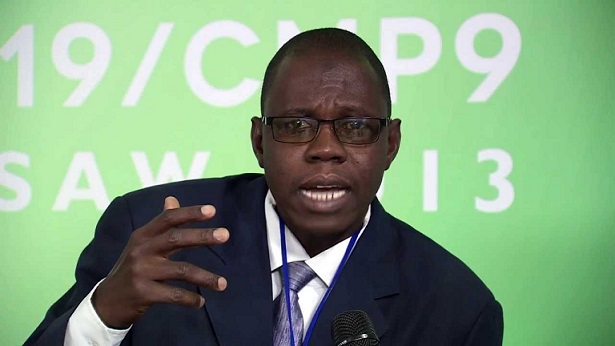
Gombe State Governor, Muhammadu Inuwa Yahaya, CON, has commended President Bola Ahmed Tinubu over the appointment of Engineer Bello Babayo Bello as Executive Director (Networks) at the Niger Delta Power Holding Company (NDPHC).
The Governor said President Tinubu has made an excellent choice in Engineer Bello, describing the new appointee as an illustrious son of Gombe and cerebral young man with extensive experience in power systems management and deep understanding of the complexities in the energy sector.
Governor Inuwa urged Engineer Bello to justify the confidence reposed in him by bringing to bear, his wealth of experience and expertise in driving forward President Tinubu’s energy initiatives and ensuring sustainable development.
“This appointment is not just an honour for you but also a source of pride for Gombe State. We are confident that you will excel in this new capacity and contribute to the advancement of the NDPHC”, the Governor remarked.
He encouraged Engineer Bello to remain steadfast in his commitment to excellence, urging him to face the challenges ahead with the same commitment and innovative thinking that have defined his career thus far.
Meanwhile, Engineer Bello had earlier today, paid a thank you visit to Governor Inuwa Yahaya at his residence in Abuja, where he appreciated the support, facilitation and encouragement of the governor as regards his new appointment.
The United States government has announced a significant humanitarian aid package for Nigeria, providing $27 million to support vulnerable populations affected by food insecurity and climate change.
This funding is part of a larger $536 million aid package for Sub-Saharan Africa, unveiled by Uzra Zeya, US Under Secretary of State for Civilian Security, Democracy, and Human Rights.
The aid will be distributed through the State Department’s Bureau of Population, Refugees, and Migration and USAID’s Bureau for Humanitarian Assistance, and brings the total US humanitarian assistance to the region in Fiscal Year 2024 to nearly $3.7 billion.
The assistance aims to address the critical needs of vulnerable individuals, including refugees, asylum seekers, and internally displaced persons, with a focus on crises in the Sahel region and support for durable solutions such as voluntary returns and refugee integration.
The US Ambassador to Nigeria, Richard Mills, highlighted the importance of this funding, stating that it demonstrates the US’ commitment to providing life-saving assistance and protection to vulnerable people and host communities.
“This aid will make a tangible difference in the lives of those most in need in Nigeria and across the continent,” Ambassador Mills said. “We stand with Nigeria in its efforts to address humanitarian challenges and build resilience against food insecurity and climate change impacts.
The protest in Nigeria has taken a tragic turn with the display of foreign flags by some Northern youths as a demonstration against the government. This action undermines Nigeria’s sovereignty and raises concerns about the changing dynamics in the world.
As the Punch editorial pointed out, the flag-waving campaign shows that Nigeria should be wary of foreign interference, as witnessed in the crises in some West African countries that led to undemocratic military takeovers. There are speculations that some protesters were sponsored to raise the Russian flag as a deliberate attempt to provoke the military into intervention.
While Nigerians can express their grievances over economic hardship, they should do so through legitimate and peaceful means. Resorting to violent demonstrations that result in loss of life and destruction of livelihoods is counterproductive.
It is concerning that underage protesters and youths were the ones mostly flaunting the Russian flags, forcing security agents to clamp down on them. The government should be compassionate in dealing with these minors, as they may be ignorant of the implications of their actions. Rather than facing harsh punishments, they should be sent to remand centres for civil education and skills training.
The media have reported the loss of lives and an estimated daily loss of N400 billion due to the protests. This raises the question of whether the demonstrations were truly worth the cost.
The government should be open to dialogue and engagement with citizens to address their challenges. The security services, too, should be vigilant and professional in handling protesters, especially the young ones.
The Nigeria Immigration Service has a crucial role to play in checking the influx of foreigners with ulterior motives, as there have been allegations of illegal immigrants participating in the protests.
Religious and community leaders should admonish their followers on the consequences of unbecoming behaviours and appeal to the government to address the citizens’ concerns.
Despite the hardship, Nigerians must remain patriotic and respect their country’s sovereignty. Raising flags of other countries and seeking their intervention in domestic affairs is a treasonable offence.
The government should realize that the majority of the citizens are against the protest, not because they are not feeling the pinch of hardship, but because they believe the issue can be resolved through other peaceful means. The government should, therefore, take appropriate actions to address the citizens’ concerns.
Nigeria will overcome this challenge, but change begins with us.
Rabi Ummi Umar wrote from the Department of Mass Communication, Al-Hikmah University, Ilorin. She can be reached via rabiumar058@gmail.com.
For so long, I abandoned writing on Nigeria and its leadership situation because doing so wastes time, energy, and resources. I avoided discussing its precarious situation because I am still very sceptical and, most of the time, extremely despondent about its progress and development.
But whenever one realizes that certain classes of people in the country, most especially the current Nigerian politicians, are clueless and ignorant about the dynamics of global change in various countries of the world, one has no choice but to waste another day clearing the bushfires or/and the politicians’ colonial hot air historical jargon.
Most of my friends have known my candid view(s) for so long about why Nigeria, and by extension, Africa, is generally not developed and almost 98% of the countries on the continent, including mine, cannot grow!
The stupefaction of colonization historical facts by the Nigerian “political class” and even its military apparatus is entirely unwholesome, very untrue, and most of the time very dangerous to our national savvy! I don’t want to call the current political crooks in Nigeria “leaders” because most of them are perturbed and pathological liars! Indeed, the legendary Bob Robert Nesta Marley had squarely defined the world’s political ruling classes, especially the political presidents and their ruling maladroitness, in one of the songs that he dubbed “Real Situation.” Marley and his honourable Wailers explained succinctly through music the political mentality of the local and international politicians.
Hear the legendary Marley and the Wailers:
“Check out the real situation. Nations war against nation. Where did it all begin? When will it end? Well, it seems like total destruction is the only solution. And there isn’t any use; no one can stop them now. Nobody can stop them now. Give them an inch; they take a yard! Give them a yard; they take a mile (ooh). Well, it seems like total destruction is the only solution. And there ain’t no use; nobody can stop them now. Check out the real situation. Check it out. Nation fights against nation… Everybody is struggling. There’s no use in you even trying. Got to say ‘bye-bye!” (Emphasis mine).
I quoted this legendary musical maestro of all time to make a case in point over Nigeria’s political class’s incomprehensible incompetence and distorted Western colonization historical accounts. They fabricated and are still fabricating lots of lies by blaming the Western world for the country’s political and military underdevelopment. They always point accusing fingers at the colonial masters, and, very recently, they are “perfecting” their scheme by throwing their “leadership” lacklustre truncheon at foreign countries’ influence!
You may accuse Bob Marley by calling him names for being an Apocynum cannabinum (Indian hemp) chain smoker. However, one thing you can never take away from him is his mastery of the English language through music. He concluded that global politicians, especially the Nigerian brand (emphasis mine), are generally “devils and corrupt.” May Allah give Marley relief for advocating the nicest words via philosophical lyrics!
According to Bob, ninety per cent of what politicians say is untrue. Therefore, one should think twice before taking them seriously.
The real Nigeria’s situation 15 to 20 years after independence
Both the Nigerian military “elites” and the political class are too economical with the truth nowadays. They shamelessly accuse Western countries such as America, Britain, and France of intervening or meddling in their leadership affairs! They blame these countries for Nigeria’s lack of economic development and prosperity because they think everybody will believe what they say.
With due respect, I beg all Nigerians, whether army or civilian, to sincerely disagree on the veracity of Nigerian politicians and even its military leaders’ blame for Western influence, interference, or blame game. Why does the Nigerian political class, including its military, resort to this unfounded ideology to ruin our people, make them highly impoverished and pauperized, and, in the end, make the entire citizenry appear inferior to the political class subjugation and their cantankerous posture? One hasn’t the vaguest idea!
Twenty years after the country’s independence, Nigeria’s situation was by far the best in Africa and, by extension, more than certain countries in Europe and the Americas (both North and South).
Many foreign nations were present in Nigeria, doing business with grandeur, style, and passion for their businesses in Nigeria. Canada and its companies were here in Nigeria in the 1980s, with their businesses thriving remarkably. Italy and Italians came to Nigeria and did serious business with FIAT Coy. They competed very seriously with Steyr Motor Company in Bauchi State, Nigeria.
Britain, our colonizer, and its companies were here in Nigeria in the 1970s and 1980s, flourishing their grand businesses in Nigeria. Indeed, Italy and its companies were here in Kano, Nigeria, in the 1970s and 1980s, doing their business generally in the country. France and its companies were here in Nigeria in the 1970s and 1980s, doing their business diligently with respect for the Nigerian people.
Let’s start with Canada! The Canadians were interested in investing in Nigeria. They came with their renowned company, Steyr, founded by its farmer, Mr. Leopold Heide. They sought a partnership with the Nigerian government. Canada convinced Nigeria of the reputation of the Steyr motor company, which was performing remarkably in Steinbach. It entered into a partnership business with Nigeria and established an assembly plant in Bauchi State. It supported the Nigerian government to employ hardworking Nigerians.
Canada trained and taught Nigerians how to assemble Steyr tractors, trucks, and buses in Bauchi. Within a year, Nigerians could produce 5,000 tractors, 2,000 trucks, and 2,000 buses inside the Steyr quarters, located just a little bit on the outskirts of Bauchi State. This Canadian company was performing remarkably. At that time, Nigeria was not purchasing trucks or tractors from China or anywhere else.
Then Nigeria produces its farming tractors and trucks! It did not matter to look anywhere else the way its current president is busy wasting his time globetrotting to Qatar and France to beg their leaders to come and invest in an atmosphere that is no longer passionate!
Steyr tractors and buses were all over Nigeria until the company met its Waterloo in the hands of Nigeria’s military government. The military privatized it and sold it to individuals. The remnant of the company is now grappling with the issues of its old workers who spent well over six years without salaries as of 2002. The rest is history! But I shall come back to this point and advise on how it could be revived and salvaged for the Nigerian farmers. So that they no longer look up to China to have agricultural success.
Fabrica Italian Automobili Torino, popularly called FIAT Company, was here in Kano State, Nigeria! They came from Turin, Italy, and established FIAT IVECO, which Giovanni Agnelli originally founded. Indeed, the actual English translation of FIAT is not roughly far-fetched from the Italian Automobiles Factory, Turin (FIAT).
Then, Kano produced amazing tractors for farmers who farmed large hectares of land and produced groundnut pyramids that were second to none globally! Kano, Nigeria, was a hub and a beehive of groundnut activities worldwide. Kano imported groundnuts to most parts of Europe and other African developing nations.
Courtesy of Torino Italiano! Where our politicians got the notion to accuse the white people of killing Nigeria, and Nigerians are just trying to tell half-truths or untruths about the reality of Nigeria’s situation.
11. The British and their companies were visibly doing great business to elevate Nigeria to the loftiest heights. And I will tell you how! I will explain in clear terms to the corrupt Nigeria’s political class that the majority of them are either not educated, half-educated, or even ignorant about what colonialism and colonial or external inference stand for, especially in this modern world.
The British came from Nottingham, England, and established their Raleigh Bicycle Company in various places in Nigeria, including Kano State. My dad bought a Raleigh for my elder brother around 1982–1983! I cannot remember the year, but I was busy stealing a show of Brother Abubakar’s mastery. Anytime he was cycling on his brand-new Raleigh, it was amazing! One day, he gave me an idea of how to ride a bicycle!
In 1984, our dad was posted to the local government of Hadejia in old Kano State. We were housed at Site Quarters along Birniwa Road! Our staff quarters were a few kilometres from a village called Gandun Sarki in Hadejia local government. Our daddy’s neighbour and a father to our two friends, Sani Bello and Abubakar Bello, bought them a Raleigh Chopper! I still remember Sani giving me a ride on his beautiful Raleigh Chopper. And lest you forget, Raleigh was initially founded by Sir Frank Bowden.
Frank discovered himself and his high penchant for cycling on Raleigh after experiencing its health benefits firsthand after he had a spell of bad health. But unlike Frank’s, Sani Bello’s Raleigh Chopper and Abubakar’s Raleigh Bicycles sincerely made our days feel like we were on top of the world! We were, of course, busy cycling and dreaming of growing up in Britain so that we could have our Raleighs!
Contrary to our terrible political leaders, who are bereft of ideas and don’t know what to do to salvage the city’s public transportation systems, they refuse to revive the Raleigh Companies or to go and beg Nottingham to come back to Kano and construct a new brand of Raleigh Company and Bicycle Roads’ network to alleviate mass transit in petrol cars and buses.
The French Michelin Company and its people were in Lagos and Port Harcourt! The Michelin Group of Companies, headquartered in Clermont Ferrand, France, felt very comfortable leaving their comfort zones to come and invest in Michelin tyres in Nigeria! Then, the Michelin Group provides excellent-quality tyres to Nigerian motorists and over 170 countries at a very cheap and affordable price!
Today, these political crooks in governance are trying to fix Nigerian roads in a very crooked way, using trillions of naira that ordinarily were supposed to have been utilized in other areas to build a world-class transportation system in Nigeria. The French also had their Peugeot assembly plant in Kaduna State, Nigeria.
Every government senior staff member in either local, state, or federal civil service was officially provided with a brand new Peugeot car and a driver! Then, Nigeria was doing excellently in terms of staff welfare and human capital development. One hasn’t the slightest idea how our modern-day and broad daylight political thieves got the notion of always pointing accusing fingers at the Western world over the current national predicament.
To be continued!
Nura Jibo, MRICS, wrote in from Marriot Marquis. Contact Nura at jibonura@yahoo.com.
A tragic incident has occurred in Karkari village, Gwarzo Local Government Area of Kano State, where a widow and her five children lost their lives after consuming a local Hausa delicacy known as Danwake.
The Kano Police Command confirmed the heartbreaking event, stating that the victims were rushed to Gwarzo General Hospital but were declared dead upon arrival.
According to the Police spokesman, SP Abdullahi Haruna, investigations have begun to determine the exact cause of the deaths.
The Daily Reality gathered that preliminary reports suggest that the widow, Alhakatu Abdulkarim, may have used expired cassava flour in preparing the meal, leading to the unfortunate outcome.
The deceased children have been identified as Bashir, Firdausi, Hafsat, Usman, and Jamilu.
The community and the authorities are now awaiting a detailed medical report from the hospital to confirm the cause of death and prevent future occurrences.
Ismail Sahabi, a lecturer at the Federal College of Education in Zaria, Kaduna State, has been released after being held captive for 31 days.
Sahabi was abducted by suspected terrorists on July 18th, along with his brother, Sidi Aliyu Sahabi, and several others, at Kasuwar Magani in Chikun Local Government Area.
The abduction resulted in the tragic death of Mohammed Bashir (Govinda), Chairman of the Tudun Wada, Zaria Butchers Association.
According to Malam Musa Sahabi, a brother to two of the victims, the attack was carried out by an informant.
The victims were finally released on Friday and are currently receiving medical attention to assess their health condition.
While a family source confirmed their release, it remains unclear whether a ransom was paid to secure their freedom.
President Bola Ahmed Tinubu congratulates Nigeria’s former Head of State, General Ibrahim Badamasi Babangida, GCFR, on his 83rd birthday today, August 17.
General Babangida, popularly called IBB, was Nigeria’s military President from 1985 to 1993.
President Tinubu salutes IBB on this special occasion, noting his endeavours towards the nation’s development, especially in infrastructure and other areas, notably the completion of the Third Mainland Bridge, which at the time was the longest bridge in Africa.
The President acknowledges General Babangida’s role in shaping modern Nigeria and commends him for his services to the nation.
President Tinubu wishes the former head of state many more years in good health.
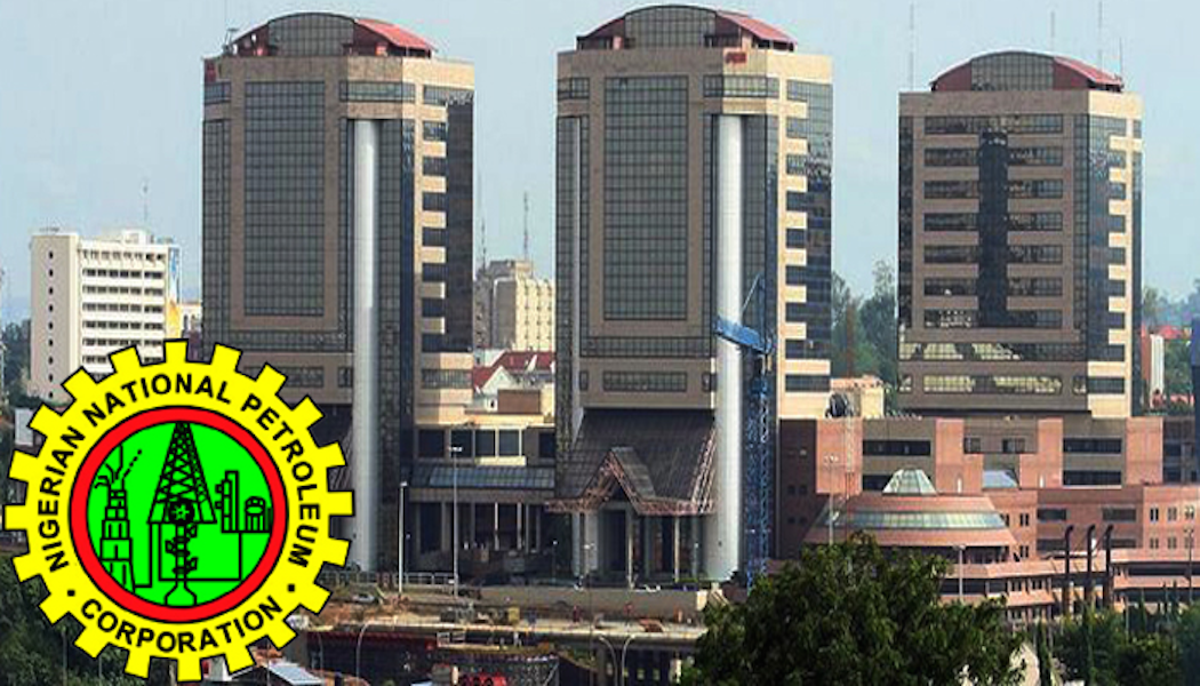
The Nigerian National Petroleum Company Ltd. (NNPC Ltd.) has called on the public, especially job seekers, to disregard rumours of employment slots for sale.
The company states that there is no iota of truth in the insinuations that it has employment slots on offer to anyone who wishes to buy, describing such antics as fraudsters who want to take advantage of unsuspecting applicants.
It cautions that as a responsible corporate entity, recruitment into the company is a straightforward process and does not involve the sale of slots or inducement of any kind.
It warns that anyone who pays money to anyone for any job in the company does so at his or her own risk.
Experts say that the newly established Dangote Refinery might address Nigeria’s energy crisis, but this legacy project is finding its footing in navigating the rigours of International Oil Companies (IOCs). Not only this, but government strategy policy greatly affects operations in the business space. The refinery is facing a fresh challenge from regulatory bodies in Nigeria, which may make or mar its success.
The $19 billion Dangote Refinery project has ignited a fierce debate between the Nigerian National Petroleum Corporation Limited (NNPC) and Aliko Dangote – Africa’s richest man. This flagship project, poised to be the largest single-train refinery in the world, has the potential to transform Nigeria’s economy and reshape the continent’s energy landscape.
Yet, the dispute between NNPC and Dangote threatens to derail this vision. Can Nigeria find a harmonious balance between private sector efficiency and public sector oversight, unlocking the full potential of this game-changing project?
Aliko Dangote’s vision for the refinery is to reduce Nigeria’s dependency on imported refined petroleum products, saving the country billions in foreign exchange. He emphasises the need for private sector management to ensure efficiency and accountability, citing historical inefficiencies in government-run enterprises. Dangote seeks assurances that his substantial investment will yield returns, expressing concerns about potential government interference that could jeopardise profitability.
On the other hand, the NNPC maintains that it must have a significant role in the refinery to safeguard national interests. The corporation argues that state involvement is crucial to ensure that the refinery’s output aligns with national energy policies and goals. NNPC also emphasises the need for regulatory oversight to prevent monopolistic practices and ensure that prices of refined products remain affordable for Nigerians.
According to Mele Kyari, NNPC’s Group Managing Director, “Our involvement in the Dangote Refinery is to ensure that the project aligns with national interests and that the country benefits maximally from the investment.” Aliko Dangote, however, believes that “private sector efficiency is key to the success of the refinery, and government interference could hinder its progress.”
Dangote might be jittery about the government’s ineffectiveness in running similar assets. His fears would be that he who failed to turn around his refinery successfully wanted a front seat and, perhaps, direction. The business mogul’s aims surpassed the government’s fight against it after the allegations of monopoly attempts by the government.
Dangote said his friend, who warned him against investing in Nigeria, now mocks him. He was ready to be bought out by the government when the regulatory body said that the refinery’s output was inferior to imported products. This statement ignited reactions from netizens.
The dispute highlights the tension between private enterprise and state control in critical sectors. Both sides present valid arguments that merit consideration. Balancing economic independence with national control, operational efficiency with public accountability, and investment security with public interest is essential to harness the benefits of both approaches.
As the saying goes, “Too many cooks can spoil the broth,” but in this case, finding a harmonious balance is key to ensuring the refinery’s success and, ultimately, Nigeria’s economic stability. Efficiency must be paired with accountability for any project to succeed, and this wisdom applies aptly to the current NNPC-Dangote situation.
Transparency and mutual respect are the pillars upon which this partnership should rest. By acknowledging the strengths and concerns of both parties, Nigeria can move towards a solution that advances the Dangote Refinery project while ensuring sustainable and inclusive growth for the nation.
In the words of Aliko Dangote, “The success of the refinery is paramount for Nigeria’s economic stability.” Mele Kyari also notes, “Our goal is to ensure that the refinery serves the national interest while also providing returns on investment.” Ultimately, the NNPC-Dangote dispute underscores the complexities of managing critical national assets. By finding a middle ground that balances private sector efficiency with public sector oversight, Nigeria can unlock the full potential of the Dangote Refinery and secure a brighter energy future for generations to come.
The path forward lies in a collaborative effort where the private and public sectors work together. If handled with care and foresight, this partnership can transform Nigeria’s energy landscape and set a benchmark for future endeavours. The Dangote Refinery has the potential to be a game-changer, and it is in the best interest of all Nigerians to see it succeed.
The Minister of Information and National Orientation, Mohammed Idris, has called on international media outlets to provide fair, accurate, and objective coverage of Nigeria.
Receiving a BBC delegation in his office on Thursday, August 15, Idris emphasized the importance of balanced reporting, highlighting both challenges and positive developments in the country.
Idris emphasized the importance of balanced and unbiased reporting and highlighted that Nigeria, like other countries, faces challenges. He also urged the international media to provide a complete and nuanced portrayal rather than focusing solely on negative aspects.
While acknowledging press freedom, Idris encouraged international media to showcase Nigeria’s progress and achievements. He commended the BBC’s expansion in Nigeria, including its Hausa Service studio relocation to Abuja, engaging 200 Nigerians.
Idris also appreciated the BBC’s capacity-building initiatives for public media journalists and requested similar support for private outlets.
BBC’s Director of Global News, Jonathan Munro, praised Nigeria’s strong reputation for the BBC, citing 30 million weekly visitors to their news services, making Nigeria their third-largest international audience.