Nigeria

Democracy Echoes: Tinubu’s anthem and the unfinished legacy of MKO Abiola

By Haroon Aremu

On a peaceful Sunday afternoon, I found myself immersed in the music of Dr. Sikiru Ayinde Barrister, a pioneer Fuji maestro known for his deep and meaningful lyrics that reflect Nigeria’s socio-political landscape. As I listened to a track titled “Adieu MKO,” which began with Nigeria’s newly adopted anthem, I was inspired to delve deeper into MKO Abiola’s legacy in relation to President Bola Ahmed Tinubu’s presidential journey and the adoption of the new anthem, as I began to wonder if all this could be a strategic message to Nigerians.

Sikiru Ayinde Barrister, a renowned Fuji musician, frequently added societal issues into his music, notably addressing the life and contributions of MKO Abiola. Barrister’s songs portrayed Abiola with admiration, acknowledging his philanthropy, political influence, and commitment to democracy. Barrister shared personal anecdotes, portraying Abiola as a humble figure despite his wealth and influence, creating a multifaceted portrayal of the Nigerian icon.

According to Historical research, Moshood Kashimawo Olawale (MKO) Abiola began his journey from humble beginnings. Born into a low-income family in Abeokuta, Ogun State, he started earning money at a young age by performing odd jobs, including singing and drumming at events. His exceptional intelligence earned him a scholarship to attend the prestigious Baptist Boys’ High School in Abeokuta. Later, he received a government scholarship to study at the University of Glasgow in Scotland, where he earned a degree in accountancy.

Beyond his political aspirations, Abiola was a successful businessman who built a vast business empire with interests in telecommunications, oil, and banking. He founded the telecommunications giant ITT Nigeria and was also involved in the publishing industry, owning newspapers like Concord Press. His philanthropy earned him the title of “Aare Ona Kakanfo of Yorubaland,” a highly esteemed traditional title.

Abiola is most famous for his presidential bid 1993, which is widely believed to have been the most free and fair election in Nigeria’s history. Despite winning, the election results were annulled by the then-military government led by General Ibrahim Babangida, leading to a significant political crisis. After declaring himself the rightful president of Nigeria, Abiola was arrested in 1994 by the military regime of General Sani Abacha. He remained in detention for four years and died under suspicious circumstances on July 7, 1998, the day he was due to be released.

Despite the controversies surrounding his death, Abiola’s legacy as a champion of democracy in Nigeria is honoured. In 2018, President Muhammadu Buhari posthumously awarded him Nigeria’s highest honour, the Grand Commander of the Federal Republic (GCFR), and declared June 12 as Democracy Day in recognition of his contribution to Nigeria’s democratic struggle.

Abiola was also a cultural figure with deep connections to the Yoruba cultural renaissance and promoted Nigerian culture globally. His influence extended beyond politics and business, impacting social and cultural spheres in Nigeria. He maintained extensive international connections in business and politics, improving Nigeria’s relations with other countries.

MKO Abiola embodied the patriotic spirit that “Nigeria, We Hail Thee” represented. As a businessman, philanthropist, and political leader, Abiola’s efforts were always aimed at uplifting Nigeria and contributing to its progress and unity.

The newly adopted anthem’s lyrics, emphasising unity and patriotism, reflect Abiola’s vision for Nigeria. He consistently advocated for a united Nigeria, free from the divisions that plagued the country. His presidential campaign in 1993 was a significant demonstration of his commitment to national unity and democracy.

Abiola’s contributions to Nigerian culture and his promotion of the Yoruba cultural renaissance align with the pride and national identity celebrated in “Nigeria, We Hail Thee.” He supported cultural initiatives to foster a sense of pride and belonging among Nigerians.

The anthem’s call to serve the nation resonates with Abiola’s extensive philanthropic activities. He invested in education, healthcare, and community development, reflecting the anthem’s spirit of dedication to the well-being of Nigeria and its people.

The period during which “Nigeria, We Hail Thee” was the national anthem corresponds with a formative time in Nigeria’s political history, including the early years of independence. Abiola’s political career, especially his role in the 1993 presidential election, continues the struggles and aspirations encapsulated in the anthem.

With some sense of factual comparison, President Bola Ahmed Tinubu’s relationship with MKO Abiola reflects a shared commitment to democracy, justice, and the advancement of Nigeria. Both leaders believed in the country’s potential and actively worked towards its progress. Tinubu and Abiola were influential figures in Nigeria’s political landscape, with Abiola’s 1993 presidential bid resonating with Tinubu’s political aspirations and being associated with the Social Democratic Party (SDP). Abiola’s leadership qualities, philanthropy, and vision for Nigeria deeply inspired Tinubu, who likely admired Abiola’s ability to connect with the masses and his unwavering dedication to democratic ideals. 

Like many other pro-democracy activists, Tinubu supported Abiola’s mandate and condemned the annulment of the June 12, 1993, presidential election, forging a bond rooted in shared democratic principles. Tinubu continued to champion democratic values, electoral reform, good governance, and the rule of law, echoing Abiola’s vision for a democratic Nigeria. 

Furthermore, both leaders have been actively involved in philanthropic activities and community development initiatives, aligning with Abiola’s legacy of social responsibility. The Fuji icon King Wasiu Ayinde Marshal has sung about Tinubu following Abiola’s legacy, highlighting their enduring connection and further reinforcing the significance of Abiola’s impact on Nigeria’s political landscape. 

Considering the recent anthem change by the president, one could perceive it as a message of togetherness and an assurance of following Abiola’s legacy, given the similarities between Abiola and Tinubu, including their association with Muslim-Muslim tickets and other shared values.

To President Bola Ahmed Tinubu, I implore all citizens to wish and pray to God to grant him insight and foresight. Imight (strength) need to realise the democratic journey that Abiola envisioned.

Haroon Aremu Abiodun is a youth Corp Member with PRNigeria centre, Abuja and wrote in via exponentumera@gmail.com.

Nigerians resort to taking loans as survival strategy amidst soaring inflation

 By Sabiu Abdullahi

A recent report by the Central Bank of Nigeria (CBN) has revealed that Nigerians are increasingly relying on loans to survive the harsh economic conditions, with consumer credit jumping by 12% to approximately ₦3.9 billion in January 2024. 

According to the CBN’s monthly economic report, the total consumer credit outstanding increased to ₦3,823 billion in January 2024, with personal loans accounting for 79% of consumer credit and retail loans accounting for 21%. 

The report noted that personal loans increased by 14.3% to ₦3,028 billion, while retail loans rose by 4% to ₦795 billion. However, consumer credit as a share of total credit from Online Data Capture Systems (ODCs) declined to 7% from 8% in the preceding month. 

The surge in demand for loans comes as the headline inflation rate hit 33.95% in May, forcing the CBN to hike the interest rate consecutively to 26.25%. 

A study by SBM Intelligence found that 27% of Nigerians across different income categories now resort to loan apps to keep up with their living expenses in the wake of record inflation. 

“The severe impact of the unyielding inflationary pressures on the daily lives of Nigerians, especially those already grappling with limited financial resources, is evident in the surge in demand for loan apps,” the report noted. 

As the cost of living continues to escalate, Nigerians are finding it increasingly difficult to make ends meet, with many resorting to loans as a survival strategy.

Waste to wealth: An introduction for students 

By Bilyamin Abdulmumin

A couple of days ago, the Lagos State government officially entered into an agreement with the Netherlands government to establish a waste-to-energy firm. 

The initiative was said to get rid of heaps of waste across the Lagos metropolitan area (about 2250 tons daily) and generate between 60 and 75 megawatts of electricity annually, providing some 40,000 homes. 

In addition, the Lagos State Governor Sanwo-Olu said the project will help cut down the country’s carbon footprint, as about 550,000 metric tons of carbon dioxide and other greenhouse gasses emitted daily from the dumpsite will be addressed. 

Singapore is one of the countries that is an embodiment of waste to energy. Singapore is said to have zero waste, thanks to its waste-to-wealth program. They completely convert their waste, partly into energy and other parts into recycling.  

Trust developed nations; they always think ahead. In Denmark, an innovative twist was added to this technology. Due to the extensive space occupied by the conversion centre, the top area of this facility would be transformed into a game reserve and tourist attraction. Who said you can’t kill two birds with one stone?

As Sanwo-Olu highlighted, the world is currently grappling with climate change, so several countries have been resorting to generating energy from biomass. This includes food crops (maize, sugarcane, cassava, etc.), lignocellulosic materials (e.g., woods), and waste (a mixture of biomass, petroleum products, and metals), the latest being the most expensive for conversion. By using waste to generate energy, countries would not only clean the environment but also cut down their carbon budget, hence mitigating the effect of the looming climate change. 

The most widely used technology for waste-to-electricity conversion is the combustion integration into steam turbines. In this process, the waste is burned in the boiler unit to generate steam, which generates steam channels to power the turbine and the movement of turbine generic electricity. But that is not all; the exhaust steam is channelled into a condenser unit, where the steam is converted back to the water, then finally the water is pumped to the boiler to complete the cycle.  

Applications of the laws of thermodynamics in each unit allow the energy usage analyses to make each step more efficient, that is, reduce energy waste in each section (boiler, turbine condenser, and pump). This technology is known as a steam turbine, one of the heat engines based on the principle of the Rankine cycle. A closely related heat engine is a locomotive rail or refrigeration and Air conditioning system based on Rankine cycles. 

 The second way to convert waste to energy is pyrolysis. In pyrolysis, waste is converted to oil instead of directly burning them. As mentioned above, these oils can then be burned in a boiler to generate steam and the cycle proceeds. Catalysts like zeolite can be used to upgrade the oil for use, such as petroleum.  The difference between pyrolysis and combustion is that in the former, oxygen is not allowed; in fact, pyrolysis means a lack of oxygen. In the former, oxygen is necessary; without oxygen, combustion will not occur, or there will be incomplete combustion if it is inadequate. 

The last category of technology for waste conversion is gasification; in this process, waste is converted to carbon monoxide and hydrogen (syngas); these gasses can be burned in a boiler to generate steam, and the process proceeds just as mentioned. Similarly, the syngas can be upgraded to synthetic fuels using metal catalysts like iron through popular technology known as Fischer-Tropsch. Depending on the quality, synthetic fuels produced may be used as petroleum, too. Gasification differs in combustion in the oxygen usage; in the former, oxygen is meticulously controlled.

Wise students will check out abundant videos on YouTube demonstrating these three categories of biomass conversion: combustion, pyrolysis, and gasification, the principles of Steam Turbines, Heat Engines, the Rankine cycle, and the Carnot Cycle, the applications of the laws of thermodynamics, and the catalysis involved in the bio-oil upgrade and the Fischer-Tropsch process.

If you are in the secondary or early years of a degree program and already aware of this information, then you are a step ahead, and you are not only fortunate than your peers but most of us at your level.

Bilyamin Abdulmumin wrote via bilal4riid13@gmail.com.

Police defy governor’s order to evict deposed Emir of Kano

By Sabiu Abdullahi

The Kano State Police Commissioner, AIG Usaini Gumel, has refused to enforce Governor Abba Yusuf’s directive to evict the deposed Emir of Kano, Aminu Ado Bayero, from the Nasarawa mini palace.

Gumel cited a pending court case filed by the state government, scheduled for June 24, 2024, as the reason for not complying with the governor’s order. 

“The police will not evict the deposed Emir because the same government has filed a case at the State High Court on the eviction order, which would come up on Monday, 24th June 2024,” Gumel explained in a telephone interview with newsmen.

“The government is jumping the gun because the same government has filed a case on the eviction order, which is coming up on the 24th of June, 2024. So, if we carry out the order, it is like we are pre-empting the court because we don’t know what will happen at the court.” 

Despite the police commissioner’s stance, security has been beefed up around the Nasarawa mini palace, with additional personnel deployed to the area.

The deposed Emir remains in the palace, receiving traditional greetings from loyal supporters.

A source close to Bayero debunked rumors of a bulldozer being stationed at the palace for demolition, calling it “social media propaganda.” 

The standoff continues, with the police refusing to act until the court has ruled on the eviction order.

The situation remains tense, with supporters of the deposed Emir and the state government awaiting the outcome of the legal battle.

Kannywood/Nollywood film review: NANJALA (the Right Choice)

Company: Jammaje Productions

Director: Ali Nuhu

Producer: Abubakar Bashir Maishadda

Language: English

Cast: Nancy Isime, Sani Muazu, Sola Sabowale, Ali Nuhu, Enyinna Nwigwe, Rabi’u Rikadawa, Segun Arinze, Abba el-Mustapha, Asabe Madaki, Abba Zaki, etc.

Release date (Nigeria): 16-6-2024

After successful screenings in Turkey and the United States, the reportedly most expensive Kannywood movie, Nanjala, has finally hit our domestic screens. The movie is a groundbreaking attempt to bridge the gap between Northern Nigeria’s Kannywood and “mainstream” Nollywood by bringing actors from both industries together in a neutral setting and on an equal footing.

The film narrates the story of Nanjala (Nancy Isime), whose father, Captain Sembene (Sani Muazu), harbors a deep-seated disdain for female children. He, therefore, neglects his three daughters, focusing his care only on his son, Dititi (Abba Zaki). Nanjala has been a voracious reader with dreams of becoming a journalist since her childhood. However, her father’s constant discouragement makes his friend, Captain Jammoh Jummoh (Rabi’u Rikadawa), adopt her to help her realize her dreams.

Years later, Captain Sembene’s family falls apart. His favorite son, Dititi, becomes a drug addict, and his daughter, Jarry, leaves home, fed up with his mistreatment. Meanwhile, Nanjala achieves her dream of becoming a journalist but encounters problems with people in authority who want her to stop exposing their corrupt government.

How does the story unfold from there? Find out for yourself at Platinum Cinema.

The film addresses themes of women’s empowerment, the endurance of the human spirit, corruption, and moral decadence. It debunks the chauvinistic belief that female children are mere burdens to their parents and incapable of achieving greatness. We see how Nanjala suffers, initially at the hands of her chauvinistic father and later as a journalist hunted by a corrupt government. Despite these challenges, she overcomes her fears and insecurities to eventually emerge triumphant.

Nanjala is indeed a compelling film that has enough to hold viewers’ attention throughout its runtime. However, while it may lack attention-grabbing twists and turns, the wonderfully constructed screenplay and perfect use of flashbacks make it an enjoyable experience that you wish would never end. The cinematography is also spectacular, fully doing justice to the film’s scale. I haven’t enjoyed any Kannywood movie as much as this one recently. One must applaud the makers for their courage and financial strength in bringing such a big project to life.

The eponymous character seems to be inspired by Kenyan political analyst and activist Nanjala Nyabola. She also shares similarities with a character played by actress Miriam Osimbo in the Kenyan comedy series Hullaballoo Estate. Therefore, the film is likely to resonate with a broad African audience for that reason, and for its setting (a fictitious East African country), casting, character names, and universally relevant thematic preoccupations.

The film also deserves distinction marks for its English dialogue. The diction and flow of words are exceptional. What is even more interesting is how the Kannywood actors deliver their lines as flawlessly as their Nollywood counterparts in the cast. Thanks to Mallam Kabiru Musa Jammaje, the executive producer who pioneered the trend of “Kannywood films in English.”

In terms of performances, Nancy Isime fully immerses herself in the character of Nanjala and plays it exceptionally well. Sani Mu’azu is excellent as her chauvinistic father, delivering his dialogue with expressions that prove his acting skills. Rabi’u Rikadawa will win your heart as Nanjala’s foster father, who stands by her through thick and thin.

Asabe Madaki (Majuma), the character of Jarry, and Abba Zaki (Dititi) are first-rate as Nanjala’s siblings, but their mother, played by Sola Sobowale, does not live up to expectations. However, Enyinna Nwigwe is admirable as an accomplished author who later becomes Nanjala’s love interest. Segun Arinze, Ali Nuhu, and Abba el-Mustapha all shine in their brief roles. But it’s Hajara Haidar (Falmata) who will impress you with her adorable looks and fluent English, giving her small role a huge impact.

In conclusion, Nanjala has opened a new page in Nigerian cinema. It is a “Pan-Nigerian” film that will resonate across the country and beyond. I strongly recommend this insightful and inspiring film to every parent, young ladies, and, of course, anyone who enjoys seeing Africans speaking English on screen.

Habibu Maaruf

Kano, Nigeria abduhabibumaaruf11@gmail.com.

How Carlcare Nigeria almost cheated me

By Ishaka Mohammed

Carlcare Nigeria is the official customer care support for Infinix, TECNO, itel, and Oraimo users in Nigeria, offering after-sales service (repair, technical support, etc.).

I have known the company for a long time but only had a reason to seek its service on Saturday, June 8, 2024, when I realised that my Infinix SMART 5 phone lacks a particular feature: OTG. 

The USB On-The-Go (OTG) makes it easy to connect your smartphone with devices like flash drives, game pads, digital cameras, microphones, etc. Since my phone doesn’t support OTG, I couldn’t connect it with a wireless microphone.

Consequently, I made a reservation to visit a Carlcare service centre in Kaduna. While filling the online form, I wrote this: “My phone doesn’t support OTG, so I want to find out how I can still use it with a wireless microphone.” I screenshotted the reservation page, proceeded to the service centre and explained everything to a receptionist, who consulted an inner room and made me pay N4,700. 

After making the payment, I waited for over an hour before retrieving my phone. I tried to connect the microphone again, but nothing changed.

When I complained to the receptionist, she told me that the phone doesn’t support OTG. Then I asked her to explain why I had to pay to be told what I already knew, but she instead claimed I paid for “sub-board”.

As far as I was concerned, I didn’t know any sub-board. All I needed to know was the possibility of using my phone with a wireless microphone.

We kept exchanging words until it became clear that I wouldn’t get a refund, so I snapped the payment details and left.

I thereafter expressed my grievance to the company via Facebook, phone calls, email and X (formerly Twitter), but the responses were unfavourable. In fact, despite my explanation and supporting documents, I was told via X that I paid for the sub-board.

I thought of leaving the matter, but I couldn’t do that because the company could cheat me or another person in a similar manner in future.

I mentioned the issue to a patriotic Nigerian on X. He gave me his phone number, listened to me on the phone and warned Carlcare Nigeria in an X post to do the needful or be ready for action.

Within 20 hours after the post, I received calls from four different agents (of Carlcare). They all apologised, and the last one sent me my money.

You see, I made fruitless efforts for about six days (June 8 to 13), but Barrister Uthman Isa Tochukwu used a single X post to solve the problem within a day.

Although he clearly mentioned that legal consultation is not free, he helped me recover my money pro bono (without asking for payment).

I’m glad to have recovered my money but even thrilled that this encounter could deter the company from attempting to cheat other prospective customers.

VP Shettima, Kadafur, Shehu lead Muslim faithful in eid prayer

By Abdullahi Khairallah

Vice President of Nigeria, Sen. Kashim Shettima; Borno State Acting Governor, Hon. Umar Usman Kadafur; and the Shehu of Borno, HRH Dr. Abubakar Ibn Umar Garbai Elkanemi, led thousands of Muslim faithful to observe Eid prayers in Maiduguri.

The two raka’at prayers were led by the Chief Imam of Borno, Imam Shettima Saleh, at Ramat Square, Borno’s central Eid ground.

Other dignitaries include Senator representing Borno North, Sen. MT Monguno; Speaker of the Borno State House of Assembly, Rt. Hon. Abdulkareem Lawan; Minister of Agriculture and Food Security, Sen. Abubakar Kyari; former Deputy Governor, Hon. Usman Mamman Durkwa; Members of the State House of Assembly; Hon. Commissioners and Members of the State Executive Council; Special Advisers; Senior Special Assistants; and Special Assistants.

Delivering his Eid sermon, Imam Shettima reiterated the importance of peaceful coexistence and prayed for a bountiful harvest as the cropping season begins.

Shortly after the prayer, the Acting Governor thanked Almighty Allah for making it possible to witness yet another Eidul Adha while congratulating the Muslim Ummah for the successful Eid prayer.

“Secondly, we want to wish all those who traveled to Saudi Arabia a successful and rewarding Hajj exercise. May Allah accept all their prayers,” Kadafur said.

He further urged Muslims to be law-abiding, peace-loving, and enjoined them to use this occasion for sober reflection and prayer for lasting peace in the state.

Prayers were offered for the restoration of total peace in Borno, the northeast, and the entire country.

I’m happy you’ve gone back to farm—Buhari tells Nigerians

By Uzair Adam Imam

Former President Muhammadu Buhari has expressed concern about Nigeria’s uncontrolled population growth, stating that it may lead to problems for future generations.

He made this known while speaking to journalists after observing the Eid prayer in Daura.

Despite his concern, he expressed pleasure that many Nigerians have taken to farming, which has led to an increase in food production and a decrease in prices.

He encouraged citizens to prioritize education and health and to continue supporting local food production.

Buhari also urged the youth to learn about the country’s founding fathers and to play an active role in nation-building efforts.

He praised the National Youth Service Corps (NYSC) scheme, describing it as one of the greatest achievements of General Yakubu Gowon’s administration.

The former President wished all Nigerians a happy Sallah and encouraged them to help one another and be their brother’s keepers, especially in the spirit of the Sallah celebrations.

Governor Yusuf accuses CP of disobeying orders

By Uzair Adam Imam

Kano State Governor, Abba Kabir Yusuf, has accused the State Police Commissioner of disobeying his directives, particularly regarding the banning of Eid-el-Kabir festivities.

The Commissioner’s actions have been described as “disheartening and dangerous to peaceful coexistence” by the State Attorney General and Commissioner for Justice, Haruna Isa Dederi.

The government explained that the Commissioner’s decision to ban the festivities was unilateral, without consulting the Governor or the State Security Council.

This has raised concerns, as the Governor is the Chief Security Officer of the State.

The government also addressed the recent judgment by the Federal High Court No. 3 in Kano, which claimed that the former emir’s fundamental rights were infringed upon, including allegations of house arrest.

The government disputed this, stating that the former emir was not forced into Gidan Nassarawa, a government property, and was accompanied by security guards.

The government reiterated the Governor’s constitutional duty to ensure the protection of lives and properties.

They urged the people of Kano to continue their legitimate activities peacefully and promised to keep them informed as events unfold.

The government called on well-meaning Nigerians and international friends to intervene and allow the people of Kano to live in peace, stating that any attempt to undo the peace is an assault on democracy.

National Anthem: Is Nigeria losing its patriotic spirit?

By Haroon Aremu

For nearly 50 years, we have sung “Arise, O Compatriots, Nigeria’s call obey……,” pledging our loyalty to one nation bound in freedom, peace, and unity. But now, we are directed to change our national anthem. Could it be a strategic way of following the popular saying  Changing Narrative to Change Society or does this mean as compatriots we are now handicapped and cannot listen and obey Nigeria’s call anymore? Does it mean there is no more strength, love, and faith to serve our fatherland? Does it mean the labor of our heroes past has been in vain? Are we no longer able to serve with heart and might?

These are the questions lingering in masses mind as the national anthem has been changed. Many Nigeria citizens are clamoring: of all the changes that needed to be made, why the national anthem, especially during such times of hardship? Has the message of the anthem adopted in 1978, created by the five members of the Nigerian Police Band, lost its relevance?

Some citizens have given up hope that Nigeria can ever be better. But should this be our attitude? Instead of succumbing to pessimism, we should strive to refurbish our nation with optimism and prayer. When Americans wake up, they say “God bless America.” When we wake up, we often curse our leaders and condemn our country, forgetting that such negativity can have repercussions bouncing back to us.

The compatriots who built this country are not here to witness its destabilization. If we do not want their labor to be in vain, we must practice the values preached by our new anthem. Nigeria’s growth concerns not only the government but all its citizens.

The legislature has said that the newly launched national anthem serves as a beacon of hope and reassurance, starting with “Nigeria, we hail thee.” Are we hailing our dear native land for enduring economic hardship and remaining patient as we face daily challenges?

Change begins with us, at the individual level. Why are we not standing in brotherhood, despite our different tribes and tongues? Are we truly proud to serve our sovereign motherland?

As a member of the NYSC, one of the core aims we are exposed to is to promote national peace, togetherness, rehabilitation, reconstruction, and reconciliation of a torn-up country. Part of the bedrock of good governance is for the citizens to be involved in governance and also promote it. 

The National Youth Service Corps has been a supportive system for good governance from inception till date and it will always be.  The NYSC stands as a strong pillar that advocate for  good government policy.  Despite the economic hardship and the challenges we face, the NYSC continues to instill a sense of optimism and duty among the youth. 

The NYSC’s role in promoting government policies, such as the change of the national anthem, is crucial since the youth are a very important tool for the promotion of government policy, and through the NYSC, people learn to practice the values of unity, peace, and justice, which are embedded in the anthem and are essential for national development.  

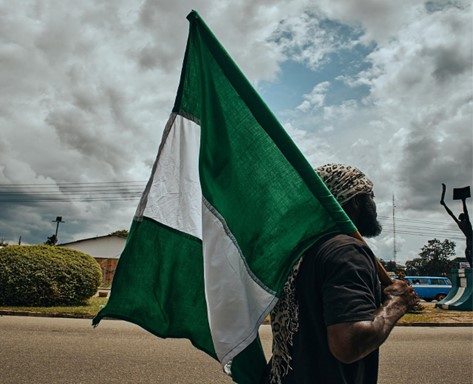
Recently, I watched an interview asking people in the diaspora about the laziest African flags, and some chose Nigeria, does our tendency to take our nation’s issues with a grain of salt and not take them seriously as a people have any thing to do with their choice? Should that be the case? They forgot that our flag’s colors represent something meaningful: the two green stripes symbolize natural wealth, and the white symbolizes peace and unity. We should be proud of our flag because it is our symbol that truth and justice reign. Let us strive to improve on truth and justice for our nation’s growth so that we can hand over a banner without stain to the next generation.

There is a saying that a river that forgets its source will dry up. Let us be hopeful that going back to our source anthem will be a turning point for Nigeria. We should continue to pray with this saying: “Oh God of creation, grant this our request, by helping us to build a nation where no man is oppressed, and so with peace and plenty, Nigeria may be blessed.”

Let us hope that in this era of renewed hope, we are on the path to greatness and prosperity in our dear country. Promoting togetherness, avoiding tribalism and religious nepotism, and coming together as one nation are essential. There is a glimpse of hope that Nigeria will be great again, but it starts with each of us doing our part, not by condemning others. The NYSC scheme fosters this spirit of togetherness and national pride, reinforcing that change begins with us at the individual level. 

Nigeria’s journey to greatness begins with every citizen committing to unity, peace, and justice. By working together and supporting each other, we can ensure that the labor of our heroes past was not in vain and build a prosperous future for generations to come. May Nigeria be blessed!!

Haroon Aremu Abiodun is a youth corp member with PRNigeria center, Abuja and wrote in via exponentumera@gmail.com.