Nigeria

Nigerians to pay extra as government imposes 7.5% VAT on banking charges

By Sabiu Abdullahi

Nigerian bank and fintech users are bracing for a sudden increase in everyday banking costs as the government mandates a 7.5% Value Added Tax (VAT) on certain financial services starting Monday, 19 January 2026.

In a notice to its customers, Moniepoint, one of the country’s leading fintech platforms, revealed that the tax will apply to services such as POS transactions, mobile banking transfers, USSD fees, card issuance, loan processing fees, and Moniebook subscriptions.

The company reassured customers that the change is not a price hike by Moniepoint, but a government requirement to remit VAT to the Nigerian Revenue Service (NRS), formerly known as the Federal Inland Revenue Service.

“The NRS has communicated a deadline of 19th January for all financial institutions – including commercial banks, microfinance banks, and electronic money operators – to start collecting and remitting VAT,” Moniepoint said in its announcement.

Services such as interest on loans and deposits, however, will remain exempt from the tax.

For the average Nigerian, this seemingly small tax could add up. A ₦50 transfer fee, for example, will now attract an additional ₦3.75, which will go straight to the government rather than the bank.

Analysts say the VAT could stir public frustration as Nigerians grapple with rising costs, especially for digital financial services which have become a lifeline for many in the country.

Financial experts warn that the new rule is just the beginning, urging citizens to review all banking charges carefully to avoid being caught off guard by the added government levy.

Barota: It’s still not too late

I watched with dismay a video circulating on social media in which an officer in uniform—possibly a cadet working with the Bauchi-Road Traffic-Agency (BAROTA)—was being chased by some youths at the Bakaro/Karofi/Shagari Roundabout. They were stoning him as he unconsciously ran across the road for his dear life.

The scenario is both frightening and disturbing. How can an officer on official duty be chased, possibly by a mob, simply for trying to discharge his responsibility of enforcing safety regulations? Unfortunately, some people now consider this a crime. For this reason, I am appealing to His Excellency Governor Bala Abdulkadir Mohammed to issue a marching order to address this unruly behaviour.

I have often written about BAROTA, particularly its operations and engagement. On many occasions, as a spectator and observer, I have suggested ways they can improve their work to enhance the safety of motorists and other road users. This is a pledge I made with honesty and sincerity of purpose, and I will continue until the desired objectives are achieved. I am glad to see other concerned individuals involved in this advocacy. Let us maintain the tempo, please.

In his speech during the inauguration of the officers, His Excellency Governor Bala Abdulkadir Mohammed (Kauran Bauchi) made it clear that the agency was established, among other things, to address widespread road traffic violations and enhance road safety across the state.

Other responsibilities of the agency include removing and impounding vehicles obstructing highways, arresting road traffic violators, ensuring smooth traffic flow in urban centres and major towns, and promoting road safety awareness among residents. He urged the cadets to work closely with conventional security agencies to maintain order and safety on the roads.

Given the purpose of their work, these officers should be supported in discharging their duties to save lives and property, ensure safer roads, and instil discipline among motorists and other road users.

What went wrong?

Since its inception, the agency’s officers have faced numerous public challenges during official assignments. Passersby who are supposed to support them in carrying out their duties often end up creating hostile and chaotic situations.

This will not be unconnected to the poor perception and limited understanding of the essence of their work in securing people’s lives and property, perhaps resulting from their engagement and operational practices.

Way Forward. 

Therefore, it is incumbent upon the Agency to introduce workshops for its personnel on the rules of engagement in accordance with best practices, and to embark on rigorous awareness and sensitisation campaigns through stakeholder engagements with relevant groups, including NURTW, Achaba, and Keke Napep riders’ unions, as well as other road users.

There is a need for town hall meetings, street rallies, and sustained radio programmes, including phone-in segments, dramas, and jingles, to promote buy-in and public acceptance. The Agency should also involve religious and traditional institutions and encourage them to use their platforms for these campaigns. These and many more initiatives will help in addressing the growing resentment.

The leadership of NURTW and Achaba should educate their members on the importance of complying with all rules and regulations and ensure they possess all necessary documents to operate legally. The general public, on the other hand, should understand that these officers are legally engaged and work in strict adherence to the law establishing the Agency. Any attempt to obstruct or prevent them from performing their lawful duties will be treated as sabotage and will attract the full wrath of the law.

These and other similar initiatives will help bring sanity to road operations while creating an enabling environment for peaceful coexistence and harmonious relationships between the Agency and road users.

Isyaka Laminu Badamasi is at No. 555, Ajiya Adamu Road, Bauchi. He can be reached at makwalla82@gmail.com.

Troops, terrorists exchange gunfire In Obajana, Kogi

By Sabiu Abdullahi

Nigerian troops and suspected terrorists were involved in a gun duel in Obajana town, Kogi State, where the Dangote Cement plant, reputed as Africa’s largest cement factory with a capacity of 16.25 million metric tonnes per annum, is located.

The incident was said to have occurred on Saturday night.Security analyst Zagazola Makama disclosed the development on Sunday through his X handle.

He stated that the exchange of fire followed an attempt by suspected terrorists to gain access into the community.

“There was an exchange of gunfire between Nigerian troops and suspected terrorists in Obajana town, Kogi State, on Saturday night, as security forces sustained ongoing clearance operations in the area.

“Troops are engaging the terrorists who were reportedly attempting to infiltrate the community,” he wrote on X.

As at the time of filing this report, the Defence Headquarters had yet to issue an official statement on the incident.

It will be recalled that scores of terrorists were recently neutralised during a joint operation carried out by the Nigeria Police and the military in Kogi forests.

SERAP drags INEC to court over alleged diversion of N55.9bn election funds

By Uzair Adam

The Socio-Economic Rights and Accountability Project (SERAP) has instituted a lawsuit against the Independent National Electoral Commission (INEC) over its alleged failure to account for N55.9 billion earmarked for election materials used in the 2019 general elections.

The suit follows damning revelations contained in the latest annual report of the Auditor-General of the Federation, published on September 9, 2025, which raised concerns that the funds may have been missing or diverted.

In the case marked FHC/ABJ/CS/38/2026 and filed last Friday at the Federal High Court in Abuja, SERAP is asking the court to issue an order of mandamus compelling INEC to provide a full account of how the N55.9 billion was spent.

The money was reportedly meant for the procurement of smart card readers, ballot papers, result sheets and other sensitive election materials.

SERAP is also urging the court to direct INEC to disclose the identities of all contractors paid from the funds, including details of their directors and shareholders.

According to the organisation, transparency and accountability are essential if INEC is to regain public trust and effectively discharge its constitutional duty of conducting free and fair elections.

SERAP argued that unresolved allegations of corruption would undermine the commission’s ability to administer future elections impartially.

The group further stated that failure to address the issues, prosecute those allegedly involved and recover the funds would amount to a breach of Nigerians’ right to participate in credible elections, adding that the allegations point to abuse of public office and a disregard for the rule of law.

The suit, filed on SERAP’s behalf by its lawyers Kolawole Oluwadare, Kehinde Oyewumi and Andrew Nwankwo, described the findings of the Auditor-General as a serious violation of public trust, the 1999 Constitution and international anti-corruption standards.

SERAP cited portions of the Auditor-General’s report which alleged that INEC irregularly paid over N5.3 billion to a contractor for the supply of smart card readers without approvals from the Bureau of Public Procurement (BPP) or the Federal Executive Council, and without evidence that the items were supplied.

Although INEC reportedly claimed the procurement was exempted on national security grounds, the Auditor-General dismissed the explanation as inconsistent with the Procurement Act.

The report also raised concerns over payments of more than N4.5 billion to six contractors for ballot papers and result sheets without documentation, as well as other alleged infractions involving stamp duties, unretired cash advances, questionable contract awards and inflated vehicle purchases.

In several instances, the Auditor-General reportedly expressed concern that public funds “may have been diverted” and recommended their recovery and remittance to the treasury.

No hearing date has been fixed for the suit.

Abdul Samad Rabiu pledges massive cash for Super Eagles after Algeria victory

By Muhammad Sulaiman

Nigerian businessman and philanthropist Abdul Samad Rabiu has announced substantial financial incentives for the Super Eagles following their impressive victory over Algeria, a win that has lifted national morale and secured Nigeria a place in the semi-finals.

In a congratulatory message released on Friday, Rabiu praised the team for making the nation proud and pledged USD $500,000 to the players should they win the semi-final, with an additional USD $50,000 for every goal scored in that match.

He further stated that if the Super Eagles go on to win the final, he would reward the team with USD $1,000,000, alongside a bonus of USD $100,000 per goal scored in the final.

Rabiu described the players as symbols of national pride and unity, expressing confidence in their ability to carry Nigeria forward in the tournament.

He ended his message with a call for continued excellence, reaffirming his pride in the team and the country.

The announcement has been widely welcomed by fans, adding extra motivation as the Super Eagles prepare for the decisive stages of the competition.

JOHESU orders indefinite strike over Tinubu’s ‘No Work, No Pay’ policy

By Sabiu Abdullahi

The Joint Health Sector Unions (JOHESU) has instructed its members across federal health institutions to commence an indefinite withdrawal of services following a new directive from the Federal Ministry of Health that enforces a “No Work, No Pay” policy.

Reports on Saturday indicated that the directive prompted the union’s latest decision, which affects workers in federal hospitals and other government-owned medical facilities nationwide.

In a statement circulated to members, a JOHESU leader, Comrade Abubakar Sani Aminu, said the policy was introduced without prior consultation with the union. He described the action as a unilateral step that violates workers’ rights and undermines the principles of collective bargaining.

According to the statement, Chief Medical Directors and Medical Directors of federal health institutions have received instructions to enforce the policy. JOHESU said the move represents an attempt to weaken the union while industrial action continues.

“This decision was made without prior consultation or dialogue with the union, showing a disregard for the collective voice of health workers,” Aminu said.

He cautioned members to remain calm and firm, noting that the policy was designed to weaken the unity of the union. He described the directive as “the final weapon” that the government intends to use to undermine JOHESU’s resolve.

Following the development, the union directed all members to vacate their duty posts with immediate effect. It ruled out the provision of skeleton services or any form of compromise.

“There should be no skeleton services, no attempt to help out, or compromise in any way,” the statement read. “Our collective action is the key to securing our rights.

”The leadership of the union said unity among members remains critical. It warned that allowing the policy to stand would create what it described as a dangerous precedent for future labour disputes in the health sector.

“This is the time for us to stand together, strong and united, until our demands are met,” Aminu said. He added that solidarity among members would shape the outcome of the ongoing dispute.

JOHESU restated its commitment to a campaign for fair treatment of health workers and urged members across the country to remain resolute while discussions with the federal government continue.

As of the time of filing this report, the Federal Ministry of Health had not released an official response to the union’s directive.

The possible effect of the strike on public health services remains uncertain. Past JOHESU actions have led to major disruptions in federal hospitals across the country.

Trump backtracks, acknowledges Muslims among victims of Nigeria killings

By Uzair Adam

Former United States President Donald Trump has acknowledged for the first time that Muslims are also victims of ongoing killings in Nigeria, marking a shift from his earlier narrative that focused almost exclusively on Christians.

Trump, who has repeatedly claimed that Christians are being targeted in attacks across the country, made the admission during an interview with The New York Times.

Despite this, he maintained that Christians remain the primary victims of the violence.“I think that Muslims are being killed also in Nigeria. But it’s mostly Christians,” Trump was quoted as saying.

Speaking on a Christmas Day attack on what he described as terror targets in Nigeria, Trump warned that the United States could carry out additional military strikes if the violence continues.

“I’d love to make it a one-time strike … But if they continue to kill Christians, it will be a many-time strike,” he said.

When reminded that his own Africa adviser had previously stated that groups such as Islamic State and Boko Haram have killed more Muslims than Christians, Trump repeated his position, insisting that while Muslims are affected, Christians suffer the most.

In late October, Trump began warning that Christianity was facing what he described as an “existential threat” in Nigeria, accusing the government of failing to protect Christian communities.

He subsequently redesignated Nigeria as a Country of Particular Concern and criticised authorities for what he called a weak response to insecurity.

The Nigerian government later dispatched a high-powered delegation to the United States to brief officials on the country’s security challenges.

Following the visit, senior American officials also travelled to Nigeria to assess the situation firsthand.

WAEC CBT Exams: A laudable initiative, but wait…

By Lawal Dahiru Mamman,

While the nation, parents, and income earners are still debating the legitimacy of the Tax Laws rolled out by the Federal Government due to “alterations” in some sections and their broader implications, final-year senior secondary school students have other things to worry about. A case of different strokes for different folks.

A student called and, after exchanging pleasantries, he said, “Is it true we’re going to write WAEC exams with computers? We have a computer lab at our school, but it can accommodate only about 30 students at a time, and not everyone offers computer studies. Some people I know don’t even have any in their schools.” He is familiar with how computers work, but was looking out for others, and his concerns are legitimate.

The Senior Secondary School Certificate exam, conducted by the West African Examinations Council (WAEC), is held in Ghana, Sierra Leone, Liberia, The Gambia, and Nigeria. WAEC announced plans to shift from traditional paper-and-pencil tests to Computer-Based Testing (CBT) for Nigeria’s 2026 West African Senior School Certificate Examination (WASSCE), affecting about 2 million students across 23,554 schools.

The rollout begins with this year’s edition, tentatively scheduled from 24 April to 20 June 2026, with the aim of improving integrity, reducing malpractice and ensuring results are released 45 days after the exam, with digital certificates available within 90 days. 

WAEC’s Head in Nigeria, Amos Dangut, revealed that 1,973,253 students (979,228 males and 994,025 females) will participate, covering 74 subjects and 196 papers. According to him, the digital exams will feature unique question papers for each of the 1,973,253 students as part of efforts to uphold academic integrity.

To support students, the examination body says it has introduced digital learning tools, such as the WAEC E-Study Portal, the E-Learning Portal, and WAEC Konnect. These platforms offer past questions, marking schemes, and performance analysis. 

Despite these promising statements, the young student’s apprehension is not an isolated case. It is the silent and loud cry of thousands of students across Nigeria. While the shift toward digitalisation is a progressive move intended to curb examination malpractice and speed up the release of results, the infrastructure on the ground tells a different story. 

In many suburban and rural schools, the “digital revolution” feels like an ancient myth. It was only last year that Nigeria crossed the 50% broadband penetration mark, according to data from the Nigerian Communications Commission (NCC) under the National Broadband Plan (NBP) 2020–2025.

We can also recall that, in May 2025, some students in Asaba, Delta State, took some of their exams using torchlights. The Minister of Education promised to “investigate” the situation, and Nigerians are still waiting for the outcome. But the substance of the matter is, can schools that lack the ability to purchase electric bulbs to light classrooms build rooms and stock them with computers before this year’s test commences?

Students in urban centres may not be affected; both at home and in school, they’re exposed to computers and the Internet. But introducing a computer-based exam to a student who has never used a mouse or sat in front of a steady power source creates an unfair playing field.

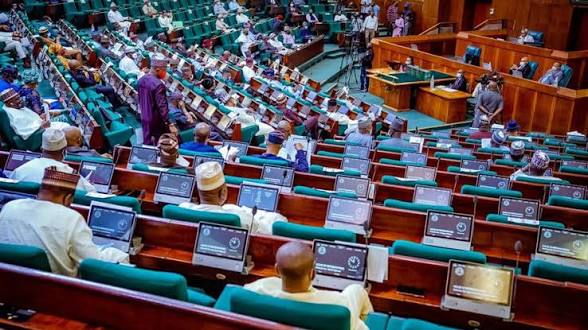
The House of Representatives learned of this development in early November and asked WAEC to halt it, citing concerns that it could lead to widespread failure and disadvantage students in rural areas with limited access to computers and the internet. Lawmakers suggest deferring it for at least three years to allow sufficient time for proper infrastructure and capacity building.

Interestingly, WAEC, through the Nigeria National Office Head, confirmed in the last week of the same month that “its plan to introduce a fully Computer-Based Test (CBT) system for the 2026 WASSCE for school candidates is firmly on track”, assuring the public that a key concern regarding travel has been addressed: “No candidate will have to travel more than 2km from their location to take the exam. This assurance is based on a new school mapping strategy.”

The transition to digital examinations cannot succeed through pronouncements alone. If the examination body insists, there must be clear communication to students through their schools and other stakeholders on a step-by-step strategy for this rollout, because students have registered and the examinations are underway.

Issues such as the delivery model must be addressed. Will the exam be fully digital across all subjects, or will it follow a hybrid model, with practical and essay-based subjects remaining on paper for now? Is it going to be JAMB-style? If essays are not retained, this well-intentioned effort could end up being a disaster for all parties involved.

What is the plan to equip public schools at 2km intervals with functional computer laboratories and consistent power solutions, such as solar energy? This must be considered carefully, as our reality shows that students across Nigeria study on bare floors and in other dilapidated conditions.

There must be a nationwide programme for “Mock CBT” exams to familiarise students in underserved areas with the software interface before the actual harvest of grades begins. In this case, even teachers in such areas must be trained to ensure adequate supervision.

In today’s world of artificial intelligence, big data, and other emerging technologies, digitalisation is inevitable, but it must be inclusive. If the goal is to improve the integrity of education, no student should be penalised for their geographical location or economic status.

Without adequate information, one may not be able to speak for The Gambia, Liberia, Sierra Leone, and Ghana, but here in Nigeria, WAEC and the Federal Government must speak clearly on how they want this to happen, because if the questions raised above cannot be answered with clarity, we should as well heed the advice of the lawmakers in the green chamber.

Lawal Dahiru Mamman writes from Abuja and can be reached at dahirulawal90@gmail.com.

AFCON 2025: Super Eagles decline Marrakech trip over unpaid bonuses

By Sabiu Abdullahi

Members of the Super Eagles, alongside their technical crew, have declined to proceed to Marrakech following unresolved issues concerning unpaid bonuses.

The development was disclosed by BBC Africa journalist, Oluwashina Okeleji, who is currently in Morocco.Nigeria are scheduled to face Algeria in the quarter-final fixture of the 2025 Africa Cup of Nations on Saturday evening.

However, reliable information indicates that the team is yet to receive their entitlements for the four matches they have contested so far in the competition.

The Super Eagles secured victories over Tanzania, Tunisia and Uganda during the group stage. The team also recorded a 4–0 win against Mozambique in the Round of 16.

Following the situation, the players and their coaches have resolved to suspend all travel and training activities until the matter of the unpaid bonuses is addressed.

The decision has now cast uncertainty over Nigeria’s preparations ahead of the crucial encounter against Algeria.

30 feared dead as canoe overturns with passengers on board in Jigawa

By Anwar Usman

No fewer than thirty people are feared dead as a canoe capsized in Guri Local Government Area of Jigawa State.

An eye witness revealed that the incident happened Saturday evening when the canoe conveying passengers from Garbi village, Nguru local government of Yobe state to Adiyani village of Guri Local Government of Jigawa State mishaped He said sixteen people died, fourteen still missing while people were able to rescue ten.

When contacted, SP. Lawan Shiisu Adam, the police public relations officer in the state confirmed the incident saying, “On Saturday evening around 7pm there was a report of a capsized Canoe at Adiyani village of Guri Local. The incident happened when the canoe carrying about forty passengers capsized.

“Sixteen people were reported dead, ten rescued, while fourteen are still missing after a canoe capsized in Adiyani village, Guri LGA.”

He said that personel on rescue mission are still going on to find the missing bodies while investigating is ongoing on the cause of the incident.