Niger Republic

Nigeria’s border checkpoints plagued by extortion, not security — Witness

By Muhammad Sulaiman

Security experts have long warned that Nigeria’s porous borders are a major threat to national stability. This concern was echoed again when Dr Bulama Bukarti, a security researcher, lamented how almost anything can be smuggled into the country due to ineffective border control.

In reaction to Bukarti’s remarks, Dr Aliyu Yakubu Yusuf of Bayero University, Kano, shared a firsthand account that underscores the depth of the problem.

Dr Yusuf narrated that on a trip from Damagaran in the Niger Republic to Kano earlier this week, he sat in the front seat of a commercial bus and witnessed what he described as “a chain of extortion masquerading as security.”

According to him, as the bus approached the Babban Mutum border on the way to Ɓaɓura, he observed “so many annoying checkpoints,” sometimes only a few meters apart. Police officers, soldiers, immigration officials, road safety personnel, and customs operatives were all stationed along the route. Yet, none conducted any meaningful inspection.

“Each time we reached a checkpoint, the driver would simply pull out a one-thousand-naira note and hand it to an officer, then we would move on,” he said. Some officers even addressed the driver by name, apparently familiar with him as a regular traveller.

Dr Yusuf said the driver disclosed that there are 35 checkpoints between Damagaran and Kano, and at each one, he must part with between ₦500 and ₦2000, depending on the officials present. He estimated that drivers spend at least ₦30,000 during a single trip.

“Throughout the four-hour journey, not a single officer asked the driver to open his boot,” he added, expressing disbelief that such laxity exists despite Nigeria’s ongoing fight against insecurity.

His account reinforces concerns that many checkpoints serve as avenues for bribe collection rather than effective security screening—leaving the country vulnerable while motorists bear the financial burden.

“We are jokers, wallahi,” Dr. Yusuf concluded.

ECOWAS holds meeting in Ghana amid Niger, Mali and Burkina Faso withdrawal

By Anwar Usman

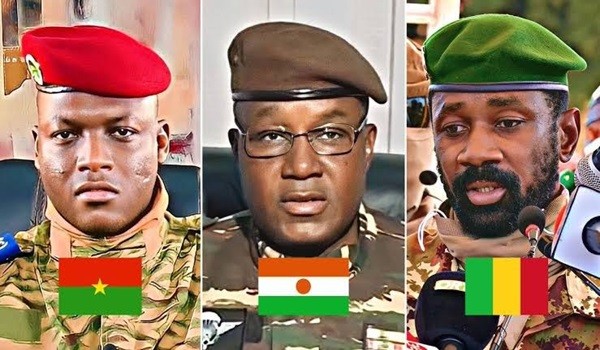
The Economic Community of West African States (ECOWAS) member states will meet in Ghana on Tuesday to discuss the withdrawal of Niger, Mali, and Burkina Faso.

The meeting will take two days, Tuesday and Wednesday.

In a statement released on Tuesday, the bloc said member states will discuss the modalities of the countries’ withdrawal and its implications for ECOWAS agencies in the countries.

The bloc also said it would “set up a structure to facilitate discussions on these modalities with each of the three countries.”

Furthermore, the ECOWAS member state will discuss its relationship with the three countries in Accra today.

“The session is being held to deliberate on the reasons for the withdrawal of Burkina Faso, Mali, and Niger from the regional bloc.

The statement further revealed that “Key items on the agenda include the modalities of the withdrawal process and the implications for ECOWAS Institutions and Agencies operating in the three countries. The session will also address other related matters of regional importance”.

Three weeks ago, the junta-led states, under the Alliance of Sahel States, imposed a 0.5 per cent import duty on goods from ECOWAS.

The levy applies to all goods from ECOWAS countries entering any of the three nations, except for humanitarian aid.

The policy countered ECOWAS’s intention of ensuring free movement of goods between its members and the AES countries despite their official exit from the bloc in January.

Niger junta proposes five-year military rule

By Abdullahi Mukhtar Algasgaini

Niger’s military junta has proposed a five-year transition period of military rule before returning power to civilians.

The announcement was made during a recent summit, where Salha Haladou, head of the Economic and Sustainable Development Committee, presented the plan.

The proposal includes aligning Niger’s economy with the Sahel region’s AES economic policies, reducing the government workforce to cut costs, rejecting LGBT+ initiatives, and tightening control over media and social platforms.

Additionally, the junta has approved mandatory military service for all young citizens who complete their education.

The plan has sparked mixed reactions. Some citizens and regional allies support the reforms, citing the need for stability and economic integration.

However, critics, including human rights groups and Western nations, worry about the impact on democratic freedoms and the extended timeline for military rule.

Niger faces ongoing challenges, including security threats from extremist groups and economic difficulties.

The junta’s ability to implement these reforms while maintaining public trust will be closely watched in the coming months.

Video of Nigerian, French troops unloading supplies debunked as old footage

By Uzair Adam 

A video depicting Nigerian and French troops unloading supplies in a coordinated manner has garnered significant attention on social media.

The Daily Reality reports that the footage has sparked controversies surrounding France’s alleged intentions in Nigeria.  

The controversy intensified after Mohammed Idris, Nigeria’s Minister of Information and National Orientation, dismissed claims that the country had ceded any part of its territory to France. 

Idris issued a statement on Thursday addressing allegations that Nigeria was conspiring with France to destabilize the Niger Republic through terrorism.  

Mahdi Shehu, a public affairs commentator, had previously alleged plans to establish a French military base in northeastern Nigeria. 

He claimed the plans gained traction after Femi Oluyede, Chief of Army Staff (COAS), reportedly hosted French soldiers.  

In a video accompanying Shehu’s since-deleted social media post, Nigerian troops were seen offloading supplies, including bags of rice, from trucks while French soldiers unloaded a cargo plane. 

The scene included vehicles, personnel in uniform, and a bus displaying a French flag. In the video, a Nigerian soldier stated that the troops had recently left a counterterrorism training centre.  

However, investigations by TheCable revealed that the video has been online since January 2013. 

According to a report by the Associated Press (AP), the footage shows ECOWAS troops, including 156 Nigerians, arriving at Senou International Airport in Bamako, Mali. 

The mission was part of a regional peacekeeping effort to stabilize Mali during a crisis.  

Reacting to Idris’ statement, Shehu urged the government to halt its denials. 

Meanwhile, Nigeria’s defence headquarters dismissed the allegations as “baseless.”  

The resurfaced video highlights the challenges of misinformation in public discourse, underscoring the need for careful verification before making conclusions or spreading claims.

Niger accuses Nigerian diplomat of plotting to destabilize the country

By Abdullahi Mukhtar Algasgaini

Niger’s foreign minister has called in the Nigerian charge d’affaires, accusing Nigeria of using its territory as a base to destabilize Niger. The allegations come amid ongoing tensions between the two nations since Niger’s military coup in 2023. 

Niger’s government claims that Nigeria has been complicit with foreign powers and officials of the ousted regime, continuing to fuel instability despite efforts to normalize relations. Although security cooperation between the two countries resumed in August, the recent accusations have led to renewed diplomatic friction. 

Niger has also reaffirmed its commitment to participating in the Multinational Joint Task Force (MNJT) to combat jihadist groups along the borders.

Troops block 174 men en route to border communities in Niger 

By Uzair Adam  

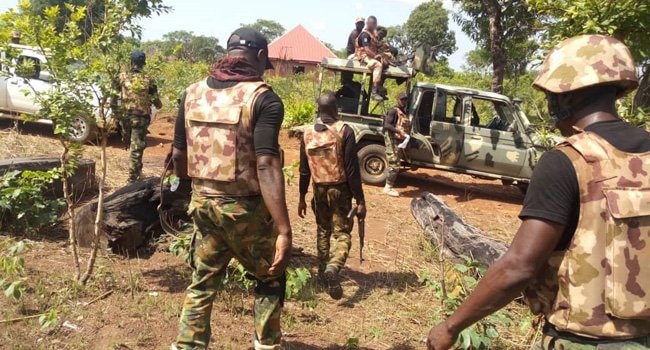
Troops of the Multinational Joint Task Force (MNJTF) under Sector 4 in Diffa, Republic of Niger, intercepted 174 Nigerian men attempting to cross into border communities in Niger.  

The suspects, stopped at Gueskeru, a strategic border town linking Yobe State to Niger, claimed they were travelling to the Lake Chad region for fishing activities.  

However, concerns were raised about the porous nature of the borders, often exploited by terrorist groups such as Lakurawa, notorious for attacks on border communities.  

In a statement, MNJTF spokesperson Lt. Col. Olaniyi Osoba noted that allowing such a large group of able-bodied men to access terrorist-prone areas could threaten regional security.  

The suspects are currently undergoing profiling and questioning to determine their motives and ensure they do not pose a security risk.  

The MNJTF noted its commitment to counterterrorism, civilian protection, and regional stability.  

It called for enhanced border vigilance and greater collaboration among troop-contributing countries to tackle cross-border terrorism effectively.

Rabi’u Kwankwaso Bilingual College, Niamey, PTA requests Governor Yusuf to return their children to school

By Abdullahi Sulaiman

The Parents Teachers Association of Rabiu Musa Kwankwaso Bilingual College, Niamey, Niger Republic, has appealed to His Excellency, Governor Abba Kabir Yusuf, to honour the promise made by the former Governor of Kano, Dr Rabiu Musa Kwankwaso to return their children to their school in Niger Republic. 

The students have not been in school for over a year now, while their peers in the Niger Republic have already resumed classes in the new session five weeks ago.

Dr. Ibrahim Habu, Chairman of the PTA, commends Governor Yusuf for prioritising education with substantial budget allocations. However, he urges him to address the unresolved issues of Bilingual College students in Kano from the last academic session. He calls for immediate action to ensure no child from the college is left idle at home.

The PTA Chairman urges all stakeholders to work collaboratively to fulfil Rabiu Musa Kwankwaso’s vision of establishing a Bilingual college, emphasising the importance of equipping students with bilingual skills in French and English to enhance self-reliance and global competitiveness among Kano’s next generation of citizens.

The Chairman also calls on the people of Kano State to continue supporting Governor Yusuf’s educational initiatives. These initiatives will ensure sustainable development in the education sector and contribute to the overall development of Kano State.

The decision of Burkina Faso, Mali, and Niger on opting out of ECOWAS

By Tijani Abiola

Burkina Faso is a landlocked country located in West Africa. It shares boundaries with six countries: Mali to the north, Niger to the east, Benin to the southeast, Togo and Ghana to the south, and Côte d’Ivoire to the southwest. As of the last knowledge update in January 2022, the total population of Burkina Faso was 21 million people. The country’s official language is French, which is spoken alongside different indigenous languages.

Economically, Burkina Faso is mainly an agricultural country, though there is also a very strong presence of gold mining. However, this country is troubled by poverty, drought, and political instability.

Mali, on the other hand, also in West Africa, shares borders with Algeria to the north, Niger to the east, Burkina Faso and Ivory Coast to the south, Guinea to the southwest and Senegal and Mauritania to the west, with a population of about 20 million people. The official language is French, and Bambara is also widely spoken.

Political instability, ethnic tension, and conflicts with extremist groups positioned mostly in the northern parts of the country have also challenged Mali in the years past. It lies in the region bordered by Libya to the northeast, Chad to the east, Nigeria and Benin to the south, Burkina Faso and Mali to the west, and Algeria to the northwest. It has a population of about 24 million people. 

The official language is French, and many indigenous languages are spoken. Niger is largely an agrarian society, with subsistence farming forming a very critical part of the economy. Uranium mining is also a very important industry. The country faces challenges such as poverty, desertification, and food insecurity.

All three have diverse cultures and histories, and all have unique challenges. The Sahel region, including the northern parts of Burkina Faso, Mali, and Niger, has seen a particular outbreak of security issues, including conflicts with jihadist groups and ethnic tensions.

Meanwhile, in the years 2020, 2021 and 2023 in Mali, Burkina Faso and Niger, respectively, there were successful military coups which still reign to date.  The Economic Community of West African States (ECOWAS) turned an eye to their decision and style of new leadership of the bloc’s member-states. Efforts towards national reconciliation have been in vain. 

The Economic Community of West African States is a regional political and economic union comprising fifteen countries located in West Africa, of which the above-mentioned Countries are members.

Burkina Faso, Mali, and the Niger Republic have all in recent times expressed intention to part ways with ECOWAS bloc bodies. That decision has been a climax and a very big bottleneck for ECOWAS, as the trio of these countries are some of the most resourceful countries which shoulder a huge part of the yearly ECOWAS budget and yet one of the poorest countries on the African continent. After their decision to leave the West African regional bloc of ECOWAS, what effect will this have on ECOWAS?

This country represents almost 20% of the ECOWAS population – that is 66 million out of 420 million people. As mentioned above, cotton, gold, and uranium ore are precious resources for Burkina Faso, Mali, and Niger, respectively.

Is ECOWAS blind to these facts?

I will say no, but will they have intensified negotiations before now? Yes. Their belief may be that they will soon get tired and comply or call for help after being deprived of some amenities benefited from nearby ECOWAS countries. Yet, they still remain adamant about their decision. For such countries to make such decisions looks like a threat to other ECOWAS countries.

ECOWAS should know this is no joke. The pumping question is: what if they excel in their decisions and their leaders are able to change their countries and become the best in years to come? What will happen to other ECOWAS countries whose corruption still influences their development?

Is dumping ECOWAS best for Burkina Faso, Mali, and the Niger Republic?

This decision will not only restrict their access to large international markets for foreign exchange and development provided by ECOWAS but also international partnerships that help in country development. Also, the free visa for all ECOWAS states is another big opportunity they might be deprived of from ECOWAS countries.

Though their decision has not been formally in writing to ECOWAS, they may be nursing second thoughts in the decision or calling for attention to negotiation stylishly. The poking questions are;

Is this the best idea for these three countries?

Will they stand without ECOWAS?

Won’t they be a threat to other ECOWAS countries if their decision is granted?

Does ECOWAS need to let them be?

Africa is a blessed continent with all its natural resources, but a continent with the highest rate of poverty and a corrupt leadership style needs to be resolved.

Tijani Abiola wrote via abiolatijani001@gmail.com.
Nigeria reopens borders with Niger Republic, lifts sanctions 

By Sabiu Abdullahi 

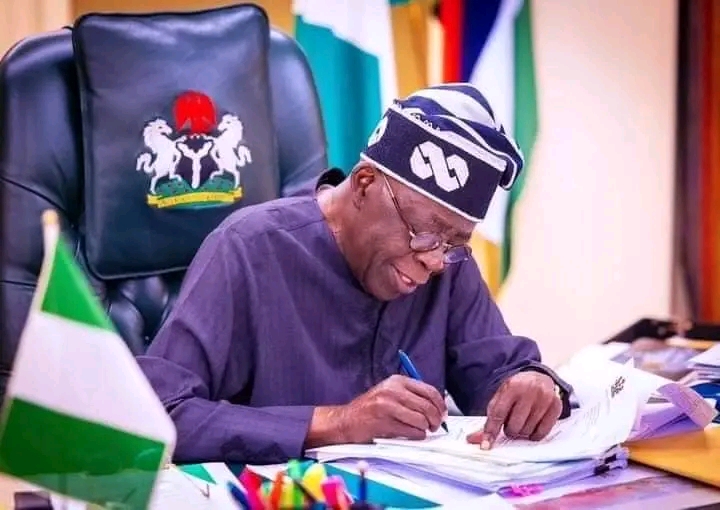
President Bola Tinubu has taken a significant step towards enhancing regional relations by ordering the reopening of Nigeria’s land and air borders with the Republic of Niger.

Additionally, President Tinubu has instructed the lifting of various sanctions imposed on Niger, further strengthening diplomatic ties between the two nations. 

In a statement released by his Special Adviser on Media and Publicity, Ajuri Ngelale, titled ‘Nigeria opens land and air borders with Republic of Niger, lifts other sanctions,’ President Tinubu’s directive shows his government’s commitment to the course. 

Consequently, the President has directed that the following sanctions imposed on the Republic of Niger be lifted immediately: “Closure of land and air borders between Nigeria and Niger Republic, as well as ECOWAS no-fly zone on all commercial flights to and from Niger Republic. 

“Suspension of all commercial and financial transactions between Nigeria and Niger, as well as a freeze of all service transactions, including utility services and electricity to the Niger Republic. 

“Freeze of assets of the Republic of Niger in ECOWAS Central Banks and freeze of assets of the Republic of Niger, state enterprises, and parastatals in commercial banks. 

“Suspension of Niger from all financial assistance and transactions with all financial institutions, particularly EBID and BOAD. 

“Travel bans on government officials and their family members,” the statement read.

Free Niger, free Bazoum

By Dr. Aliyu U. Tilde

The stalemate between ECOWAS and Niger Republic needs to be broken urgently for humanitarian and strategic reasons. The decision should be taken tomorrow at the meeting of the Heads of State of the regional body to shorten the unnecessary suffering of 26 million ECOWAS citizens in Niger.

Humanity

The world is appalled by the ongoing starvation in Gaza, and it is rightly calling for its end. In a similar way, the humanity in us should trigger our conscience to open Niger’s borders and restore its electricity. There is just no reason why we should superintend over the death of African lives and the destruction of the economy of a member state in the name of democracy. It is no longer about Mohamed Bazoum or General Tchiani or the neo-colonial interest of France. It is about the people of Niger.

Democracy is not as important to Africans as it is to their lives and livelihoods. In a year or two, Niger can return to democracy, and heavens will not fall before then. However, the longer we strangulate Nigeriens now, the longer our guilt for the collective punishment we meted on them last later. On their part, the Nigeriens will retain—and recall—for generations the long memory of ECOWAS’ suffocating sanctions, and they will bring it to bear on every future association with Nigerians in particular.

A Shot in the Foot

Apart from the imperatives of history, DNA, culture and contiguity, the Niger Republic will, through River Niger and our future Europe-bound gas pipeline, continue to play a crucial role in our economy, not to mention the daily cross-border trade relations worth billions of Naira.

Our weaponization of electricity to Niger will seriously undermine future strategic cooperation with the Republic regarding River Niger. Nothing will stop it from damming the River in a big way to ensure its national electricity and food security, letting us get sufficient water in Kainji and Jebba Dams only when there is an overflow. We will be forced to rely solely on gas for power generation.

Our national security will also be at great risk when Niger inevitably develops cold feet, as a payback, on our strategic partnership against Boko Haram and Bandit terrorism. Niger is just a neighbour too important for Nigeria to call off. I am not sure if we haven’t shot ourselves in the foot already.

Forward

The July coup is now a standing reality. I suggest, as a way out, that ECOWAS demands two assurances from Niger, with a third party, say America, serving as a guarantor to the agreement: The release of Bazoum and a short timetable for a return to civilian rule in exchange for immediate removal of sanctions. This ‘Niger free, Bazoum free’ formula will immediately relieve the population of the horrendous difficulties it is undergoing and save the lives of the sick, including women and children, who are dying in Nigerien hospitals due to the blackout. It will also save the investments of hundreds of Nigerians whose loaded vehicles have been stranded at the borders for months now.

Bazoum’s government is spilt milk which cannot be recovered. ECOWAS should let this go and prepare for the future. It can consider establishing a standing force to immediately intervene in future incidents if necessary without procrastination. But how democracy is proving to be a conveyor of poverty and bad governance in Africa makes it a creed not worthy of such a financially heavy enterprise.

Instead, ECOWAS should develop mechanisms to promote good governance as the only assurance of stability and prosperity and a panacea against future coups. No matter the situation, in the future, measures that will bring hardship to citizens and ruin the economies of member states should be avoided as much as possible by ECOWAS. We cannot be Americans in Iraq. Otherwise, we will only be surrogates of colonial masters. So far in Niger, we have cut our nose to spite our face. Tomorrow, December 10th, is the date to start stitching it.

Dr. Aliyu U. Tilde can be reached on Twitter: @Dr_AliyuTilde.