Niger coup

Niger accuses Nigerian diplomat of plotting to destabilize the country

By Abdullahi Mukhtar Algasgaini

Niger’s foreign minister has called in the Nigerian charge d’affaires, accusing Nigeria of using its territory as a base to destabilize Niger. The allegations come amid ongoing tensions between the two nations since Niger’s military coup in 2023. 

Niger’s government claims that Nigeria has been complicit with foreign powers and officials of the ousted regime, continuing to fuel instability despite efforts to normalize relations. Although security cooperation between the two countries resumed in August, the recent accusations have led to renewed diplomatic friction. 

Niger has also reaffirmed its commitment to participating in the Multinational Joint Task Force (MNJT) to combat jihadist groups along the borders.

Niger Coup d’État: The gale of change and the balance of global power 

By Bilyamin Abdulmumin

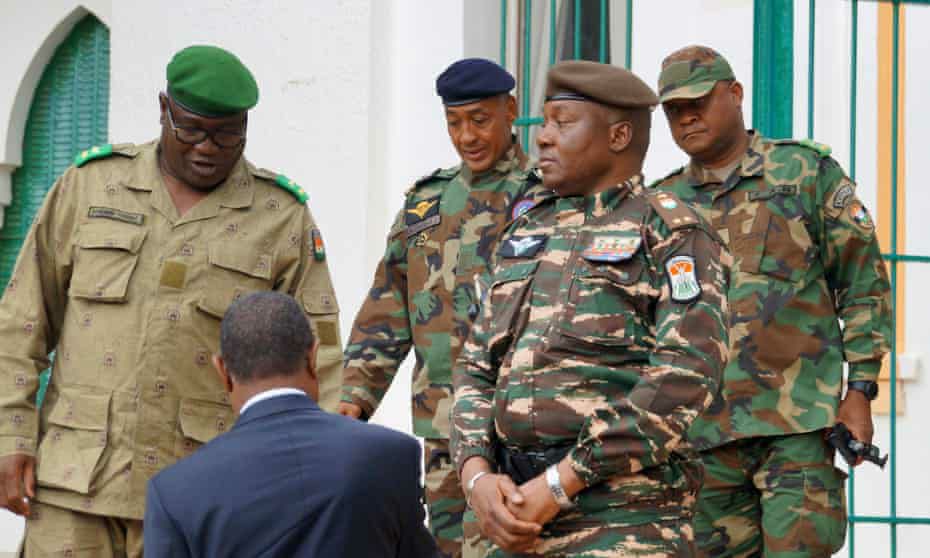
What initially appeared as rumours of a coup attempt in the Niger Republic gradually and eventually proved true. Even when the leader of the coup d’état, Presidential Guard Commander General Abdourahamane Tchiani, announced the overthrow and proclaimed himself the leader of a new military junta, there remained a doubt in the air due to the exclusion (or so it seemed) of the Nigerien Chief of Army Staff. However, all traces of doubt cleared when the military declared their support for the coup. They cited loyalty to avoid casualties from internal military clashes. Since then, news and developments have dominated the public discourse hourly. Small and major national and international media outlets pinched their tenths on this event. 

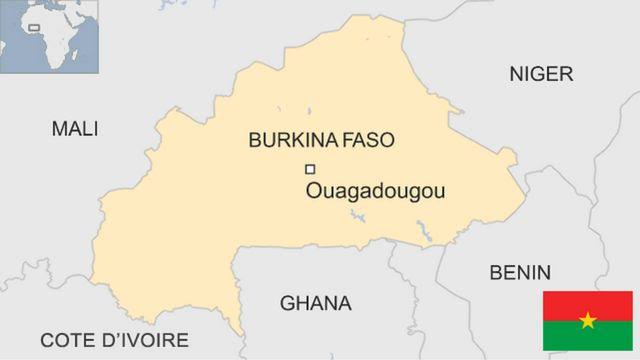
The Nigerien coup has drawn significant attention compared to other recent similar operations. For instance, in Conakry, Chief of Army Mamady Doumbouya ousted his authoritarian leader Alpha Condé. In Mali, the junta overthrew its transitional president a few months after their appointment. In Niger’s neighbouring Burkina Faso, the junta toppled another transitional government they had installed months earlier. 

The reasons for the global condemnation of the Nigerien coup differ among various blocs. France and its allies might be concerned about the potential loss of influence over their former colonies. The U.S. stance is partly rooted in their role as self-appointed global police guardians of democracy. It is also due to their military base housing thousands of soldiers within the country. Russia, on the other hand, seems to be benefiting from the situation. However, for organisations like the African Union (AU) and the Economic Community of West African States (ECOWAS), the coup posed a direct threat to democratic leadership, reaching an alarming level. So the ECOWAS bigwig Nigeria, which not only shares proximity with Niger but also has its president as ECOWAS leader, tends to overreact. Bola Ahmed Tinubu was fighting from a dual role. 

The Nigerian coup came as a surprising shock, sudden and unexpected. Unlike many similar military strikes, this coup lacked potential factors pointing to its occurrence. Such factors often include internal crises, insecurity, tension, hardship, prolonged presidential tenure, crackdowns on the opposition, and suppression of dissent. The renowned Ghanaian coup leader Jerry Rawlings once noted that the success of his coups was owed to the ripe situation in his country. He likened the atmosphere for coup success to a saturated atmosphere filled with gas, waiting for ignition to burst into flames. However, in the case of Niger, none of those factors seem to be in play. 

One plausible theory regarding the reason behind the Niger coup has been put forward by a friend who also serves as an elder brother figure. This theory revolves around the wave of change sweeping through Francophone Africa. The leadership of France appears to be faltering due to its neo-colonial approach toward its former colonies. This approach doesn’t align with the interests of the affected countries, leading to increasing unrest. Both civilians and the military are discontented with this interference, creating an environment conducive to a coup. This theory gains weight considering the surge of support that followed the coup. The military cut all ties with France to bolster this perspective and sought to shift their allegiance towards Russia. But wait! President Basoum’s public statements aligned with this shift. His videos, circulating on social media, included threats to sever remaining ties with France gave rise to the conspiracy theory as the reason behind the coup. But with the current unfolding, the question arises: Is Basoum genuinely committed to this path, or is he merely putting on a facade? 

Russia appears threatened by Western encroachment, mainly through proxy conflicts in its neighbouring countries. The most recent instance of this is the situation in Ukraine. However, suddenly, Russia found a windfall at the doorstep: developments in Africa. Aggrieved African countries with the West swiftly shifted their allegiances towards Russia as a rival to Western powers. This scenario offers an alternative to the dominant Western influence—a sort of counterbalance. The concept of the BRICS (Brazil, Russia, India, China, and South Africa), akin to NATO or perhaps a stronger G7, also garners mass interest in joining. Six countries, namely Iran, Saudi Arabia, the United Arab Emirates, Argentina, Egypt and Ethiopia, joined this movement in January 2024. Such a development holds promise for rebalancing global power dynamics. It provides other developing countries with an alternative.

Those who previously leaked atomic technology to Russia would be very happy with this development. After the United States successfully developed and detonated nuclear bombs on Hiroshima and Nagasaki, effectively ending Second World War II, some of the bomb’s developers had worries: the disruption of the global power balance. As a result, according to reports, they leaked the technology to their arch-rival, the USSR.

Bilyamin Abdulmumin is a Doctoral candidate in Chemical Engineering at ABU Zaria. He is also a social and political affairs commentator and science writer.

Can Tinubu do like Abacha?

By Malam MB

On May 25th, 1997, the democratically elected of Sierra Leon, President Ahmad Tejan Kabbah, was toppled by Major Johnny Paul Koroma. The development in Sierra Leone disrupted the plans of the Economic Community of West African States (ECOWAS) under the leadership of Nigerian Head of State, General Sani Abacha.

ECOWAS pleaded with the Koroma junta to step down but it didn’t budge. General Abacha didn’t shilly-shally, he directed the Nigerian troops under the Economic Community of West African States’ Ceasefire Monitoring Group (ECOMOG) to station themselves in and around Freetown (the Sierra Leone’s capital).

Major Johnny Koroma instantly became scared and sought dialogue which gave birth to Conakry Peace Accord on October 23rd, 1997. This Accord called for reinstatement of the legitimate government of President Tejan Kabbah within a period of 6 months.

Major Koroma who expressed his commitment to the Conakry Peace Accord dilly-dallied and that prompted General Abacha to oust him on February 6th, 1998 and reinstate President Tejan Kabbah.

When General Sani Abacha ousted Major Koroma, Nigeria didn’t experience collateral damage or negative implication because it doesn’t share any border with Sierra Leone and it didn’t have Boko Haram and Banditry then.

Today, Nigeria shares border with Niger Republic and our Nigeria that grapples with Boko Haram, Banditry and so much corruption, wants to militarily oust the Nigerien Dictator Abdurramane Omar Tchiani and reinstate the democratically elected President Mohammed Bazoum. Yes! Nigeria has the military strength to defeat Niger, Mali and Burkina Faso but how can President Tinubu contend with collateral damages and proliferation of Boko Haram and Bandits’ activities? I advise that Niger Republic should be sanctioned until the Nigerien people ask Dictator Tchiani to step down. Ah! I ought to ask again, can Tinubu do it like Abacha did?

Malam MB is a Senior Advocate of the Commoners (SAC) and can be reached via: malammb16@gmail.com

Fear of war vanished, hope for peace rekindled as Nigerian Islamic scholars met with Niger coupists

By Aisar Fagge

There were growing anger and threat between the Niger Republic and the Economic Community of West African States (ECOWAS) since the military coup in July that ousted the democratically elected government of Muhammed Bazoum. The ECOWAS, under the chairmanship of President Bola Ahmed Tinubu, demanded that the military junta should handover power Bazoum or else face its wrath.

Several media reports indicated that all attempts by the ECOWAS to peacefully restore power to Bazoum had failed, a development that exacerbated the already worse situation. On Saturday, the leaders of the Islamic groups from Nigeria met with the coupists in Niger. In this interview, Professor Salish Shehu, one of the Ulamas, detailed The Daily Reality about the purpose of their visit, how fruitful it was and what they have achieved.

TDR: Prof., can you please detail The Daily Reality about the purpose of your visit to the Niger coupists?

Prof. Salisu Shehu: The purpose of our visit to Niger is very clear. The purpose is for reopening, so to say, the windows of dialogue on AMFAS between ECOWAS, on one hand, and the military junta in Niger. There is an apparent breakdown of communication since the refusal by the junta to receive the former head of state, General Abdussalam Abubakar and his eminence, the Sultan of Sokoto. You know people generally across the two countries are becoming increasingly anxious and are becoming increasingly afraid that violence may breakdown – there is palpable fear, actually. A collection of some Ulama felt that we need to meet the president of Nigeria and discuss this matter with him. And, when we met him, we emphasised the fact that dialogue should be the only thing and dialogue should prevail in this matter and he accepted. We asked him that he should give the chance to the Ulama to play their own role, to contribute to ensuring that dialogue prevails and to ensuring that the crisis is resolved amicably through peaceful means. And, therefore, it was for the purpose of contributing to the promotion of dialogue, contributing towards broadening consultations and engagement, that was actually the reason why we went to Niger and to meet the new military administrators in Niger with the view to engendering a sort of reconciliation process between the two purpose.

TDR: Sir, you said the visit was constituted by the group of some Ulama. Can you please tell us about the members of your entourage?

Prof. Salisu Shehu: The entourage constituted of scholars from different Islamic groups and Islamic sects. That why you can see that all the Islamic groups and organisations were represented in the composition. Beginning from the group of scholars that met with the president, foremost was Sheikh Dahiru Usman Bauchi, represented by his eldest son, Ustaz Ibrahim Sheikh Dahiru Usman Bauchi, Sheikh Abdullahi Bala Lau of the Izala group, Sheikh Qarbibullah, the leader of Qadiriyya in the whole of Africa; and then there academics like us and other da’awa wokers, like Professor Mansur Malumfashi, Prof. Mansur Ibrahim Sokoto, Imam Abdurrahman Ahmad; the Chief of Ansaruddin, Sheikh Jalo Jalingo, Sheikh Muhammad Haruna Gombe, Sheikh Yakubu Musa among others. These were also some few government officials that accompanied us.

Sheikh Bala Lau was the one that led us to Niger and he was the leader of team and he was the one that introduced us to the  military leaders. We met the military leaders together with the scholars of the same kind of categories we went in Nigeria. So all the the leaders of the groups – the Tijjaniyya, the Qadiriyya, the Izala groups, we all met in Niger. It was such a successful paternal visit.

TDR: Sir, what have you discussed and was your visit any meaningful?

Prof. Salisu Shehu: I can only tell you about the general discussion we had. But, it is not possible to broadcast the nitty-gritty details of our discussion, especially some of the very very specific issues we discussed with them. But, what we actually generally discussed was about the fact that we came as a group of scholars from Nigeria, having been permitted and approved to come by the president. Therefore, we were in Niger with the consent of the President, Asiwaju Bola Ahmed Tinubu, who is also the Chairman of the ECOWAS, that we could come and discuss with them as a demonstration of acceptance of dialogue and reopening of communication between them. So we emphasised the need for dialogue. We drew their attention to the fact that as long as we don’t reopen the door of dialogue, the animosity will keep increasing. And, hence, it is not going to be good for us. So, we made it very clear to him that we went there in order to avert violence, to avert military intervention and to promote peaceful and amicable resolution to the problem, actually. And, we also emphasised the need for the give and and take in the matter. That it will do no good for both of them and the entire West African sub-regions, that if both of them were not ready to give something and take something, if both of them maintain extremist positions, then it is not going to be good. And, they actually accepted. They were already told to make some concessions on the matters.

TDR: What have you have achieved in your meeting with the coupists?

Prof. Salisu Shehu: The most important achievement in this regard is the fact that that option of dialogue have so much sufficiently be promoted. And it is hopeful that this our visit has led the foundation for peaceful engagement between the two. So, I think this is an achievement. Another tremendous achievement is the fact that across the two countries, the palpable fear, that was so preponderant, has been allied and the people’s hope regarding the fact they will continue to live in peace, they will continue to leave as brothers and sisters, they will continue to live as neighbours, that spirit has really been rekindled even if it was about to die. People have so much been at rest and at ease now because of this visit. People have become more assured that there won’t be violence. And, I believe this is the most important achievement as far as this visit is concerned. Like I said, there is no reason actually to keep on avoiding meeting and discussion. So, we have to intervene in this way. And because we are not supposed to give specific details, there is no any discussion about the terms of agreement we had with them.

Niger Coup: Border closure costs northern traders 13 billion naira

By Muhammadu Sabiu 

According to the Arewa Economic Forum (AED), the weekly financial loss brought on by the closing of the Nigerian border with Niger is 13 billion naira. 

In a press conference on Sunday in Abuja, the forum bemoaned the over 2000 trucks of perishable commodities that Northern Nigerian merchants have stranded as a result of the closure that followed the coup in the Niger Republic. 

Ibrahim Shehu Dandakata, the forum’s chairman, spoke to journalists about the decisions that have been made thus far and their economic ramifications. 

According to 2022 statistics, formal trade between the two countries accounts for $234 million (N171 billion), while informal trade is roughly estimated to be at $683 million (N515 billion), mostly in perishable commodities. 

“With the closure of the border, the average weekly loss is about N13bn in value of trade.” Mr. Dandakata also noted that: “The Nigerien population is about 25m. About 70% of the people live in towns with proximity to Nigeria. 

“Nigeriens depend on Nigeria for most of the essential commodities they consume. Nigerian businesses also rely on transit points for importation from Niger Republic.” 

In light of the humanitarian crisis it would bring about for both Nigeria and the Niger Republic, he asked President Bola Ahmed Tinubu and other subregional leaders to refrain from using the military option. 

The AEF chairman also suggested that all ECOWAS sanctions be directed at the conspirators of the coup that ousted President Mohamed Bazoum of the Niger Republic and said that the penalties shouldn’t be used to harm law-abiding Nigeriens. 

He specifically urged President Tinubu to act quickly to address the restricted borders, which are endangering the livelihoods of many northerners. 

“Since the closure is on major borders between Niger and Nigeria i.e Jibia in Katsina, Illela in Sokoto and Maigatari in Jigawa, we strongly recommend the immediate reopening of Maje/Illo border station in Kebbi state which Nigerian traders use to access Benin Republic and Niger Republic,” he noted.

Burkina Faso jams popular radio station for airing “insulting content” against Niger junta

By Muhammadu Sabiu

One of Burkina Faso’s popular radio stations has been suspended by the junta-run administration for airing an interview that was deemed “insulting” to the new military rulers in Niger.

Thursday saw an instant suspension of Radio Omega “until further notice,” according to a statement from Communications Minister Rimtalba Jean Emmanuel Ouedraogo.

The action, according to him, was “in the higher interests of the nation.”

After the statement was released late on Thursday, the station, which is a part of the Omega media group and is owned by journalist and former foreign minister Alpha Barry, stopped transmitting.

The channel aired an interview with Ousmane Abdoul Moumouni, the spokesperson for a recently formed Nigerien organisation pushing for the reinstatement of President Mohamed Bazoum.

Recall that on July 26, the Presidential Guard deposed the nation’s elected president.

War is not an option – MURIC cautions Tinubu on Niger coup

By Abdurrahman Muhammad

The Muslim human rights advocacy group, the Muslim Rights Concern (MURIC), has sounded a note of caution to the Economic Community of West African States (ECOWAS), a regional bloc under the leadership of President Bola Ahmed Tinubu, to shelve the idea of invading Niger Republic to reinstate the former President Muhammad Bazoum, who was unceremoniously ousted and detained by the military junta on 26th July 2023.

The Muslim rights organisation was reacting to a letter written and sent to the Senate and read on the floor of the red chamber by the President of the Senate, Godswill Akpabio, Friday, 4th August 2023.

In the letter, President Tinubu listed several measures already taken to pressurise the soldiers behind the coup to release and reinstate President Bazoum. 

Some of the measures in place included cutting off the electricity supply to the Niger Republic, mobilising international support for the implementation of the provisions of the ECOWAS communique, closure and monitoring all land borders with the Niger Republic and reactivating the border drilling exercise, as well as military build-up and deployment of personnel for military intervention to enforce compliance should the military junta remain recalcitrant.

While strongly condemning the unconstitutional change of government in the Niger Republic, MURIC believes the handling of the situation by the ECOWAS is harsh, unpragmatic and may be counterproductive.

MURIC’s position was contained in a statement released on Saturday, 5th August 2023, by the Chairman of its Kano State Chapter, Malam Hassan Sani Indabawa.

The statement further states:

“Military action should never be an option in solving the problem of change of government in the Niger Republic due to the current and historical relationship between Niger and Nigeria, two brotherly neighbours in West Africa. Relations between the two countries are based on a long shared border and common cultural and historical interactions.

“Citizens of Nigeria and people living in Niger are predominantly Muslims and share a solid socio-cultural and religious affinity. Nigeria also shares about 1,500 kilometres of land border with Niger.

“The Nigeria-Niger border is artificial. It was drawn in the colonial period by London and Paris, a process driven in part by the desire to check German expansion in West Africa rather than recognition of ethnicities or other indigenous factors. 

“Border crossings are also practically impossible to control. In many ways, Niger and northern Nigeria have much in common culturally, and the local language of both regions is Hausa.

“Significantly, Nigeria should maintain its age-long foreign policy of non-interference in the internal affairs, especially of a friendly neighbour.

“Before Niger, there were some unconstitutional changes of government in at least three Sahel countries, sharing the same historical and common border with the Niger Republic. Non of the countries were attacked, even though some of the countries are home to military bases of some European and US forces.

“Since 1990 till date, there have been 44 coups and 41 failed attempts in Africa. The fewest attempts, 13, came in the period between 2000 and 2009, compared with 36 attempts between 2010 and 2019 and then ten attempts since 2020 till date. The latest is that of the Niger Republic, carried out on 26th July 2023.

“The Nigerien transitional military government has already warned against any external intervention. On Wednesday, 2nd August 2023, its counterparts in Mali and Burkina Faso warned that they would treat any attempt to restore Bazoum to power militarily as a “declaration of war” against them, and it would split ECOWAS.

At the home front, the internal convulsions will escalate as the Oduduwa Republic, Arewa Republic, Biafra secessionists, Niger-Delta separatists, and other sundry anarchists may have a field day with the opening of another avoidable conflict theatre.

“Already, European countries have started the evacuation of their nationals in Niger, as Mali, Burkina Faso, and Guinea expressed support for the coup.

“Military interventions could certainly be unpopular in Nigeria and possibly lead to violent and widespread protests. This could only aggravate the worsening security situation in Nigeria.

“The situation in Niger Republic, like the rest of Africa, is an African problem that requires African solutions; going to war should never be one of those solutions. 

“It is more to do with the oppression and domination of France, the former colonial power that refused to allow her former colonies their rights to true independence.

“In the end, we call on President Tinubu, as a listening leader, to immediately withdraw the letter he sent to the Senate and toe the path of dialogue and diplomacy. 

“We also call on the Senate to flatly reject Mr President’s ill-advised request for its counterproductive and far-reaching, negative consequences that may only worsen Nigeria’s economic and socioeconomic conditions.

“We further call on Muslim faithful and other faith-based groups to intensify prayers for Allah the Most High to avert any disaster that may spell doom for Nigeria and Africa.”

Senate rejects Tinubu’s request for military intervention in Niger Republic

By Ahmad Deedat Zakari

The Nigerian Senate has turned down the request of President Bola Ahmad Tinubu, to send Nigerian troops to Niger Republic.

President Tinubu, who also doubled as the Chairman of the Economic Community of West African State (ECOWAS), had sought the approval of the Nigerian Senate for military intervention in Niger Republic.

The Senate condemned the coup d’etat in Niger, but advised the President and ECOWAS to explore other options in bringing peace to the country.

The Senate while condemning the Niger coup in totality, commended President Bola Tinubu and other Heads of State of the other States of ECOWAS for their prompt response and the positions taken on the unfortunate development in Niger Republic.

While turning down the request of the president after the meeting, the President of the Senate, Godswill Akpabio, said that.

“The Senate recognises that President Tinubu via his correspondence has not asked for the approval of the parliament of this Senate to go to war as erroneously suggested in some quarters.

“Rather Mr President has expressed a wish to respectfully solicit the support of the National Assembly in the successful implementation of the resolutions of the ECOWAS as outlined in the said communication.


The Senate calls on the president of the Federal Republic of Nigeria as the chairman of ECOWAS to further encourage other leaders of ECOWAS to strengthen political and diplomatic options and other means intending to resolve the political compass in Niger Republic.”

Nigerian Islamic scholars ‘strongly’ oppose use of force in resolving Niger unrest 

By Muhammad Sabiu

In response to the recent political developments in the Republic of Niger, the National Council of Ulama, comprising Islamic scholars from Nigeria, has issued a crucial statement calling for peace and diplomacy in the region.
 
In a communiqué signed by Aminu Inuwa Muhammad and Engr. Basheer Adamu Aliyu, the council expressed deep concern over the coup d’état in Niger and its potential implications for regional stability.
 
The Ulama emphasised the importance of denouncing such actions and protecting democracy and peace in the Sahel region.
 
They asserted that the restoration of democracy in Niger is the right of its people, and any external interference undermines this democratic process.
 
Furthermore, the Council voiced opposition to the use of military force by ECOWAS in resolving the crisis, fearing that armed conflict could exacerbate existing security challenges and lead to devastating consequences for the people of both nations.
 
They called for a peaceful and civilised approach, urging the Nigerian government and ECOWAS to support Niger in returning to the path of democracy through diplomatic means.
 
The Ulama also called on religious groups to promote peace and respect between Nigeria and Niger, emphasising the importance of maintaining strong neighbourly relations.
 
They urged the Muslim community to seek divine intervention through prayer, seeking guidance for the leaders to heed wise counsel and avoid falling into enemy traps.
 
The Council also applauded diplomatic measures and called for continued dialogue with the military leaders in Niger to find a peaceful solution.