NERDC

College of education in Niger State honours NERDC

By The Daily Reality

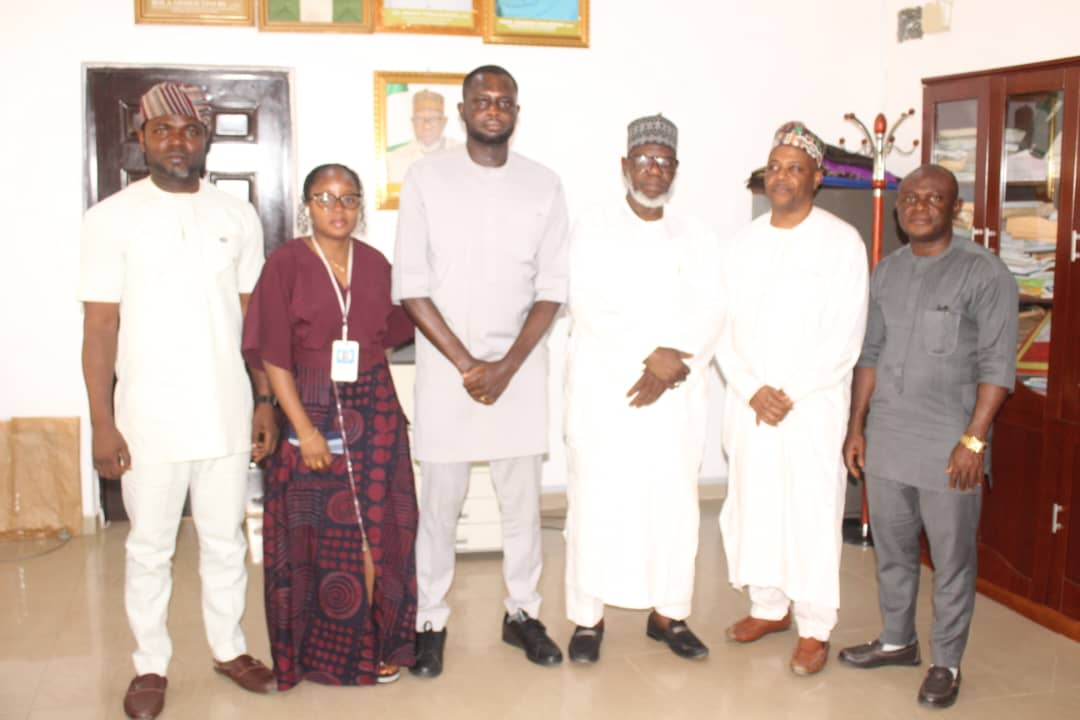
Dr. Umaru Sanda Ahmadu College of Education (USACOE), Minna, Niger State, has honoured the Nigerian Educational Research and Development Council (NERDC) in recognition of its immense contributions to the development of education in Nigeria.

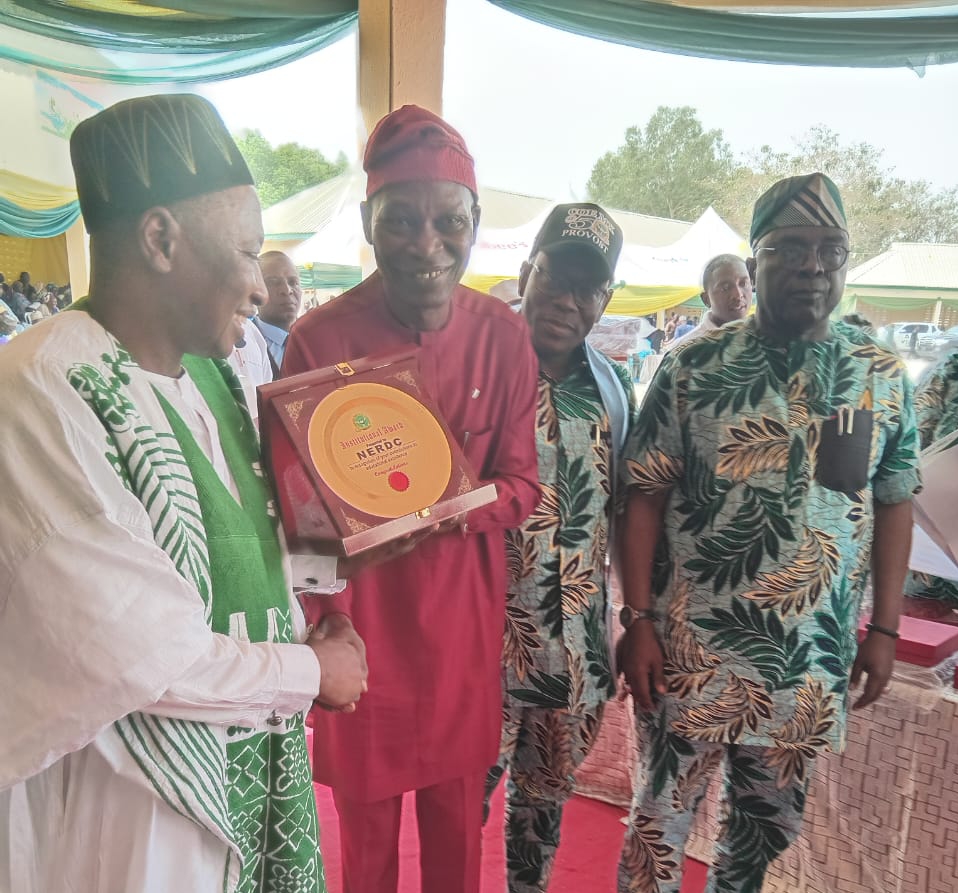
The College, founded in 1975, presented an Institutional Award of Recognition to NERDC for “Regulatory Oversight, Guidance and Support” during its Golden Jubilee celebration held on 31st January, 2026. The anniversary programme, which marked fifty years of the institution’s existence, took place from 30th January to 1st February, 2026.

The Institutional award was presented to the Executive Secretary of NERDC, Professor Salisu Shehu, who was represented at the event by the Director, Library and Informatics Centre (LIC), Dr. Mandela Asebiomo. While presenting the award, the Chairman of the Code of Conduct Bureau (CCB) and Guest Speaker at the occasion, Justice (Dr.) Abdullahi Usman Bello, commended NERDC for its effective discharge of regulatory oversight, guidance, and support functions within the Nigerian education system.

Dr. Umaru Sanda Ahmadu College of Education, named after its pioneer Provost, Umaru Sanda Ahmadu, was initially established as a Teachers’ Training College. Over the years, the institution has undergone significant transformation and has since evolved into a degree-awarding institution offering programmes in various education-related disciplines.

The Golden Jubilee celebration, organised by the College Alumni Association in collaboration with the Management and Staff Unions, attracted the presence of representatives of the Niger State Government, heads of government agencies, members of the academia, traditional rulers, religious leaders, and other distinguished guests.

BUK hosts NERDC executive secretary, scholars on curriculum, prospects of history’s return to schools

By Uzair Adam

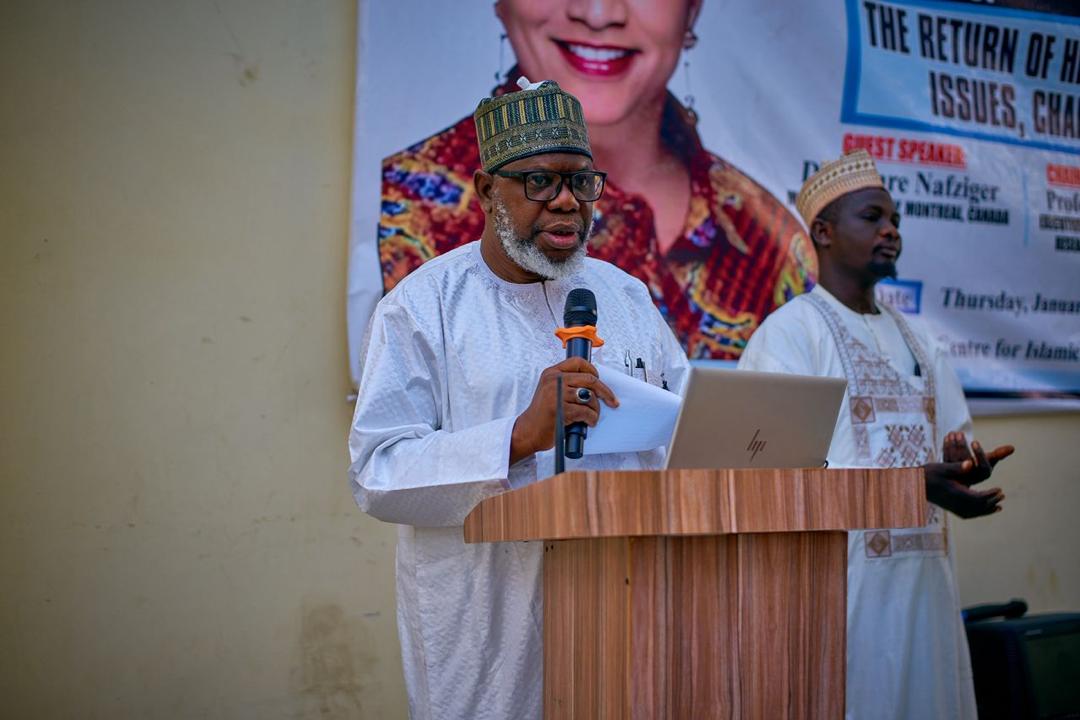
Bayero University, Kano (BUK), on Thursday hosted a public lecture on the reintroduction of History into Nigerian schools, highlighting the issues, challenges and prospects associated with the subject’s return to the national curriculum.

The Daily Reality reports that the Executive Secretary of the Nigerian Educational Research and Development Council (NERDC), Professor Salisu Shehu, served as Chairman of the Occasion.

The lecture, titled “The Return of History in Nigerian Schools: Issues, Challenges and Prospects,” was organised by the Department of History under the Faculty of History and Development Studies.

Dr. Nanre Nafziger, an Assistant Professor of Black and African Studies at McGill University, Canada, delivered the lecture, offering a conceptual explanation of History and its relevance to human and societal development.

In her presentation, Nafziger said History extends beyond common assumptions that limit it to the narration of events, wars or prominent individuals, stressing that it examines how the past shapes the present and how the present influences the future.

She explained that historical knowledge is grounded in patterns and processes that emerge from human and societal evolution, adding that History addresses causation, time, space, consequences and the impact of both human and natural phenomena.

According to her, the discipline also encompasses peoples, communities, societies, geopolitical territories, empires, states and nationhood, as well as norms, values, cultures, traditions and civilizations.

Nafziger noted that History is closely connected to institutions such as politics, the economy, education and technological development, arguing that this interconnectedness makes it a fundamental component of educational content at designated levels.

She said the renewed emphasis on History in Nigerian schools was informed by these considerations, alongside the need to transform and update educational curricula.

Under the revised curriculum, Nafziger explained, History will be taught as a stand-alone subject at the primary level from Primary One to Six, as well as at Junior Secondary School levels One to Three.

At the senior secondary level, she added, History will be infused into compulsory subjects, including Citizenship and Heritage Studies.

She further stated that the new History curricula were developed using new approaches and feature elements that are development-focused, context-sensitive, competency- and outcome-based, thematic and spiral in structure, as well as aligned with 21st-century educational standards.

The public lecture attracted academics, students and other stakeholders, and formed part of ongoing discussions within the academic community on the role of History in national education and development.

NERDC debunks claims of religious exclusion in revised school curriculum

By Uzair Adam

The Nigerian Educational Research and Development Council (NERDC) has dismissed claims circulating on social media that the newly revised Basic and Senior Secondary Education Curriculum excludes religious subjects, describing the information as false and misleading.

In a statement signed by its Executive Secretary, Professor Salisu Shehu, the Council said it was responding to allegations by “some people” who claimed that the new curriculum made provision for Christian Religious Studies (CRS) alone, with no space for Islamic Studies (IS), while others alleged the reverse.

According to NERDC, both claims amount to disinformation and do not reflect the approved curriculum.

The Council clarified that the revised curriculum, developed under the Federal Ministry of Education’s National Education Sector Initiatives (NESRI), clearly provides for both CRS and Islamic Studies at all relevant levels of basic and senior secondary education.

It explained that the subjects are offered on the basis of pupils’ religious affiliation, with CRS designated for Christian pupils and Islamic Studies for Muslim pupils.

Contrary to previous practice where religious studies were largely optional, NERDC said the revised curriculum accords greater importance to religious education by making it a consistent component of learning from Primary One through Senior Secondary School Three.

“The claim that either CRS or Islamic Studies has been removed from the curriculum is completely false,” the Council said, noting that the approved subject offerings comprehensively accommodate both religions in line with Nigeria’s plural society.

According to the Council, the curriculum review was designed to streamline content, reduce overload and improve learning outcomes, while still ensuring balance across sciences, humanities, vocational studies and religious education.

It added that the Federal Ministry of Education has officially released the list of approved subjects for all levels, and that any other versions in circulation are unauthentic.

NERDC explained that at the basic education level, pupils are required to study a broad mix of core subjects alongside either CRS or Islamic Studies, while at the senior secondary level, both subjects are clearly listed among the humanities offerings.

However, science, technology and commercial students that are interested in offering CRS and IRS can pick them as elective.

This, it said, demonstrates that the curriculum council adopted an inclusive and comprehensive approach rather than favouring one religious subject over another.

Professor Shehu urged parents, teachers and other stakeholders to ignore “fake and unauthorised” subject lists circulating online, warning that such misinformation could cause unnecessary confusion and tension.

He said the Council is already planning nationwide sensitisation and teacher capacity-building programmes to support smooth implementation of the revised curriculum.

He further explained that implementation will begin at the start of each three-year education cycle—Primary One, Primary Four, JSS One and SS One—whenever the revised curriculum is introduced.

NERDC assured the public that the revised curriculum reflects national values, respects religious diversity and remains focused on improving the quality and relevance of education across the country.

Mindbrood Initiative seeks NERDC’s partnership on AI-powered edtch

The Mindbrood Initiative has sought a strategic partnership with the Nigerian Educational Research and Development Council (NERDC) to introduce an Artificial Intelligence (AI)–powered educational technology platform, aimed at enhancing learning through innovation and technology.

The proposal was presented during a courtesy visit of Mindbrood Initiative to the Council on Tuesday, 20th January, 2025.

Speaking at the meeting, the Founder of the Mindbrood Initiative – Mr. Godspower Omolere, explained that the organisation is currently developing the Sociometrics Framework and other educational tools designed to help young people understand societal fundamentals and grow into responsible, empowered citizens.

Mr. Omolere stated that the platform, which has been in development for over 10 years, leverages AI to assess students’ skills, generate personalised profiles, and provide insights through student assessment, data analysis and performance tracking.

He added that the initiative is keen on partnering with NERDC to benefit from its expertise in curriculum development.

According to him, “Given NERDC’s national mandate in curriculum development and educational standards, we believe this collaboration will ensure strong alignment with Nigeria’s educational goals, while providing students with modern framework for civic and socio-economic understanding.”

He further noted that the Mindbrood Initiative, which began 13 years ago as a book-focused project, has evolved into a technology-driven organisation developing innovative software solutions for individual profiling and educational development.

Responding, the Executive Secretary – Prof. Salisu Shehu, expressed appreciation to the Mindbrood team for the visit, noting that the initiative aligns with the Council’s research-focus in education.

While welcoming the proposal, he stated that the Council would study the project in detail, deliberate with management and determine possible pathways for integrating the platform into Nigeria’s education sector.

In his vote of thanks, the Head of Finance and Accounts – Mr. Charles Itodo commended the Mindbrood team for sharing their innovation and for enlightening the Council on the proposed educational application.

Members of the Mindbrood Initiative present at the meeting included the Chairman, Board of Trustees, Otumba James Udoma; Legal Adviser, Barr. Onyebuchi Ndiokwere; Adviser, Mr. Yemi Opesade; and a member, Mrs. Simar Linus.

NERDC officials in attendance were the Assistant Director of Finance and Head of the Consultancy Unit – Sir Justin Nwokedi; Head of the Policy and Programmes Unit (PPU) – Dr. Famade Oladiran; and the Legal Officer, Barr. Segun Daniels.

[OPINION]: 12 months in office: How Prof. Salisu Shehu is steering NERDC forward

By Anas Abbas

When Professor Salisu Shehu assumed office as Secretary-General of the Nigerian Educational Research and Development Council (NERDC) twelve months ago, expectations were naturally high. His background spanning academia, public service, and university administration suggested a leader well-versed in both theory and practice. One year on, those expectations are steadily taking shape in policy actions and institutional reforms.

Born in Tafawa Balewa, Bauchi State, Professor Shehu’s career journey reflects a deep and consistent engagement with education. From advising former Bauchi State Governor Isa Yuguda on education matters to serving as Vice Chancellor of Al-Istiqama University, Sumaila, his professional life has been shaped by classrooms, policy chambers, and research institutions. That experience would soon inform his approach at NERDC.

Upon assuming office, one of his first priorities was the internal part. Professor Shehu believed that effective national reform could not emerge from a divided institution. He therefore placed strong emphasis on building harmony and mutual understanding among staff members. In his view, a research and development council can only thrive when its workforce operates as a cohesive unit, driven by shared purpose rather than fragmented interests.

Yet, beyond institutional culture, curriculum reform remains the centerpiece of his leadership. For years, the national Teacher’s Guide had been limited to junior secondary schools, leaving a noticeable gap at the senior secondary level. Under Professor Shehu’s stewardship, the guide underwent a comprehensive review by subject experts and was subsequently expanded to cover senior secondary education a landmark achievement for the Council. With the support of the Minister of Education, the updated Teacher’s Guide has now been implemented nationwide, marking one of NERDC’s most significant interventions in recent times.

Professor Shehu’s vision, however, extends beyond a single reform. He argues that education systems must evolve in step with a rapidly changing world. To this end, he has proposed a quarterly review and update of Nigeria’s national curriculum an ambitious but strategic move aimed at ensuring Nigerian students remain competitive with their counterparts in developed economies.

In the same forward-looking spirit, the Secretary-General has drawn attention to the growing influence of artificial intelligence in global education. As AI increasingly shapes teaching methods, learning content, and assessment models, he maintains that Nigeria cannot afford to lag behind. NERDC, he says, has begun exploring ways to integrate artificial intelligence into curriculum planning and design, signaling a decisive shift toward future-ready education.

Another critical area under his watch is the long-standing debate on mother-tongue instruction in early education. While Professor Shehu supports the policy in principle, he is equally clear about the need for caution. According to him, successful implementation requires proper groundwork, particularly through structured “train-the-trainer” programmes to equip teachers with the necessary skills before nationwide rollout.

Despite the technical demands of policy reform and institutional leadership, Professor Shehu consistently returns to a simple but powerful message especially for young Nigerians. Education, he believes, remains the most reliable pathway to personal growth and national development. His call to the youth is direct and unwavering: embrace learning, build capacity, and prepare for a future shaped by knowledge and innovation.

As he enters his second year at the helm of NERDC, the direction of his leadership is becoming increasingly clear. Reform the tools, update the knowledge base, embrace emerging technologies, and equip the next generation for a world already in motion. For Professor Salisu Shehu, the task of shaping Nigeria’s educational future has only just begun.

Anas Abbas is a final year student of mass communication, Bayero University, Kano.

ES inspects newly revitalised NERDC Press

By Sabiu Abdullahi

The Executive Secretary of the Nigerian Educational Research and Development Council (NERDC), Prof. Salisu Shehu, has inspected the fully refurbished NERDC Press located at the Council’s South West Zonal Office in Jibowu, Lagos.

The press had been inactive for several years. Prof. Shehu visited the zonal office on 10 May 2025 and pledged to restore the non-functional printing facility to improve its productivity. In early September 2025, the Council began the refurbishment work in fulfilment of that promise.

At the start of the repairs, the Press Manager, Mrs Precious Iweha, praised the Executive Secretary for approving the intervention, explaining that “we have commenced work on the generator set and are currently servicing the Sord Z machine, Polar cutter machine, and one of the Gestener machines”.

She added that “we are grateful for ES’s approval of the repairs and servicing of the Printing Press. This initiative will ensure that the Council’s investments in plants, machinery, and infrastructure will yield optimal results”.

Upon completion of the project, the Executive Secretary visited the facility on Thursday, 4 December 2025, to assess the work completed.

He expressed satisfaction with the progress recorded in his first year in office and gave an assurance that the revitalised press would be put to full use in line with its intended purpose.

The Head of the South West Zonal Office, Mr. Babatope Oloruntoba, and Mrs. Iweha commended the Executive Secretary for the achievement.

They described the successful revamp of the press as a significant milestone for both the NERDC Press and the Council as a whole.

NERDC ES visits Northwest University Kano, VC awarded

The Executive Secretary of the National Educational Research and Development Council (NERDC), Professor Salisu Shehu, has paid a courtesy visit to Northwest University Kano on Thursday, 2 October 2025, where discussions were held on strengthening collaboration between the two institutions.

The visit, which took place at the office of the Vice Chancellor, Professor Mukhtar Atiku Kurawa, saw Professor Shehu—former Vice Chancellor of Istiqamah University Sumaila—reaffirming the Council’s commitment to advancing educational development nationwide.

Speaking during the engagement, Professor Shehu explained that NERDC, established in 1988, has 10 directorates with specific functions, with its primary mandate focused on curriculum development for both foundational and secondary school levels.

He emphasized the regulatory role of the Council in ensuring quality teaching materials, stating: “Every book written in Nigeria must be submitted to the NERDC for review before it can go through further necessary processes. This is crucial in safeguarding quality and uniformity in our education system.”

Professor Shehu appreciated the Vice Chancellor for creating the platform for the visit, adding that the synergy between NERDC and Northwest University Kano would be of immense benefit to both institutions.

In his welcome remarks, Vice Chancellor Professor Mukhtar Atiku Kurawa congratulated Professor Shehu on his appointment as Executive Secretary of NERDC, describing it as a proof to his distinguished service in the education sector.

While pledging the University’s readiness to collaborate, he highlighted recent reforms introduced by the institution. “We have amended our system to allow students to be part of entrepreneurship programs, where they will acquire practical skills during holidays. This is in line with global best practices in higher education,” he said.

Professor Kurawa, whose tenure as Vice Chancellor is nearing completion, assured the NERDC delegation that the incoming administration would sustain the partnership. “Though my time as Vice Chancellor is coming to an end, I will ensure that my successor continues with this collaboration,” he added.

The meeting was attended by the principal officers of the University, who joined the Vice Chancellor in receiving the NERDC team.On the same day, past and present staff of the Vice Chancellor’s office presented an award of excellence and gifts to Professor Kurawa in recognition of his leadership.

The event, held in his office, was filled with emotion as staff members expressed appreciation for his dedication and prayed for greater success in his future endeavors.

Responding to the gesture, Professor Kurawa said: “I am deeply touched by this show of love. Working with such a committed team has been one of the highlights of my tenure. I remain grateful for your support and prayers.”

In another development, on 30th September 2025, the Bursary Department of the University, under the leadership of the Bursar, Malam Salmanu Muhammad Kibiya, organized a send-forth ceremony in honor of Hajiya Amina Shehu Maimota, who retired after decades of meritorious service.

The event featured emotional speeches and presentation of gifts from colleagues and friends both within and outside the department.

The Bursar described her as a committed staff whose contributions greatly enriched the University’s financial administration.Speakers praised her professionalism, dedication, and commitment in service, while wishing her a peaceful and fulfilling retirement.

NERDC dismisses false claims, clarifies new basic, secondary curricula

By Uzair Adam

The Nigerian Educational Research and Development Council (NERDC) has clarified details of the newly revised Basic Education Curriculum (BEC) and Senior Secondary Education Curriculum (SSEC), dismissing claims circulating on social media as “false, distorted, and misleading.”

In a statement signed by its Executive Secretary, Prof. Salisu Shehu, and made available to The Daily Reality, the Council explained that the reforms were approved by the Federal Ministry of Education (FME) and provide a clear framework for subject offerings and strategies for effective implementation.

Prof. Shehu noted that the revision was part of the National Education Sector Renewal Initiatives (NESRI) and in line with global best practices.

He stressed that the reforms were designed to meet Nigeria’s peculiar educational needs while reflecting evidence-based approaches.

“Curriculum is fundamental to the delivery of learning, acquisition of knowledge and competencies, and the attainment of national development,” he said.

He added that the new curricula were the outcome of extensive consultations with critical stakeholders and underwent rigorous technical processes.

According to him, the revised content incorporates 21st-century skills such as digital literacy, robotics, and artificial intelligence, alongside citizenship and sports education.

He explained that these additions were aimed at preparing students for future challenges while ensuring the production of a competent and productive workforce.

On concerns raised about religion and civic education, NERDC clarified that there was no derogatory or divisive content in the new curricula.

Prof. Shehu explained that learners at the senior secondary level would continue to study either Christian Religious Studies (CRS) or Islamic Studies (IS) in line with their faith.

He stated, “There is no composite subject called Religion and National Values (RNV). That curriculum was disarticulated over a decade ago.”

He further pointed out that subject offerings at all levels had been streamlined to avoid curriculum overload and to ensure learner-centred teaching.

For instance, pupils in Primary 1–3 will take between nine and ten subjects, while senior secondary students will be required to study five compulsory core subjects along with electives in science, humanities, or business.

The Council also introduced trade subjects such as solar photovoltaic installation, livestock farming, fashion design, and computer hardware repairs to improve employability and strengthen the link between education and industry.

In addition, Prof. Shehu revealed that provisions were made for inclusivity, particularly for learners with special needs.

He said subjects such as Braille reading and writing, independent living skills, and orientation and mobility had been developed for visually impaired learners to complement adapted mainstream subjects.

The Executive Secretary confirmed that implementation of the new curricula had already commenced at the beginning of each three-year learning cycle, including Primary 1, Primary 4, JSS 1 and SSS 1.

He added that the full curriculum could be accessed on the Council’s website, http://www.nerdc.gov.ng, while further nationwide sensitisation, teacher training, and engagements with publishers were underway.

Prof. Shehu concluded by appealing to Nigerians to disregard unverified lists of subjects or purported schemes of work being circulated online.

“We profoundly appreciate stakeholders for their responsiveness and positive disposition toward correct information,” he said.

He also urged Nigerians to “ignore any sensational or unauthentic claims regarding the revised curricula” and instead rely on official sources for accurate details.

NERDC boss calls for urgent measures to address deterioration of Council’s library

By Sabiu Abdullahi

The Executive Secretary of the Nigerian Educational Research and Development Council (NERDC), Prof. Salisu Shehu, has raised concerns over the deteriorating state of the Council’s library, describing it as “decaying and shameful.”

Prof. Shehu stated this during the opening ceremony of the Writing Workshop for Research and Development Database (RDD) & Library Management Information System (LMIS) Documentation and User Manual Development.

The event was held at Freshland Hotels, Mararaba, Nasarawa State, from March 17 to 20, 2025.

Voicing his disappointment over the library’s condition, Prof. Shehu questioned why Research Officers, Academic Staff, and Administrative Officers had not prioritized its improvement.

He further urged all employees, regardless of their departments, to take action in addressing the issue.

He described the library as the think tank of Nigerian education but lamented its current state.

According to him, this neglect is a collective failure that requires immediate attention. He stressed that he expected real change after the workshop.

Since assuming office, Prof. Shehu said he had visited the library multiple times and observed minor improvements. However, he maintained that these efforts were not enough.

He called for comprehensive reforms to transform the library into a modern center for knowledge and research.

Speaking on the purpose of the workshop, he explained that its primary aim was to develop system documentation and a user manual for the R&D Database and LMIS.

He noted that once these systems are fully implemented, they will enhance access to educational research by serving as a repository for completed studies, improve library management to ensure efficiency, and facilitate collaboration between the Council’s library and other research institutions.

He added that it’s of utmost importance to have a well-structured Library Management System and a robust Research and Development Database.

He also urged the Library and Informatics Centre and the Book Development Centre to ensure that all assessed books, whether recommended or not, are properly documented and easily accessible.

Earlier, Dr. Mandela Asebiomo, Director of the Library and Informatics Centre, explained that the workshop was to develop a dual-purpose software application for the Research and Development Database and the Library Management Information System.

He stated that digitizing research records and reports would support policy formulation and academic collaboration. He further noted that integrating the library with online access capabilities would enhance research interconnectivity and information sharing.

The workshop brought together experts from NERDC and other key stakeholders to develop practical solutions for modernizing the Council’s library and research database systems.

NERDC seeks police help to combat insecurity and theft

By Abdullahi Mukhtar Algasgaini

The Executive Secretary of the Nigerian Educational Research and Development Council (NERDC), Prof. Salisu Shehu, has called for the assistance of the Nigeria Police Force (NPF) in addressing rising crime and insecurity, particularly the recurring theft incidents threatening the safety of the Council’s office.

During a visit to the Commissioner of Police (CP) of the FCT Command, Prof. Shehu emphasized the vital role the police play in ensuring the safety of NERDC’s operations, especially since the office is located on the outskirts of Abuja, making it more vulnerable to criminal activities. He appealed for enhanced security to protect lives and property at the NERDC headquarters.

“We need special attention and support to feel secure in our location,” Prof. Shehu stated, expressing concern over the vulnerability of the staff and office to security risks.

The Executive Secretary also brought up the recent case of stolen solar inverters, which is under investigation by the police. He urged that the case be thoroughly investigated and that the perpetrators be brought to justice, noting that past thefts within the Council remain unresolved. He expressed NERDC’s readiness to fully support the investigation to ensure accountability.

In response, the Deputy Commissioner of Police (DCP), Criminal Investigation Department, DCP Aliyu Abubakar, welcomed the NERDC management team on behalf of CP Olatunji Disu, who was unavailable due to national duties.

He reiterated the importance of collaboration between educational institutions and the police in ensuring the security of lives and properties, and assured that the police would continue to work professionally to resolve the case and bring the culprits to justice.