NDLEA

NDLEA foils attempt to smuggle 72 parcels of heroin into Nigeria, arrests Indian woman

By Anwar Usman

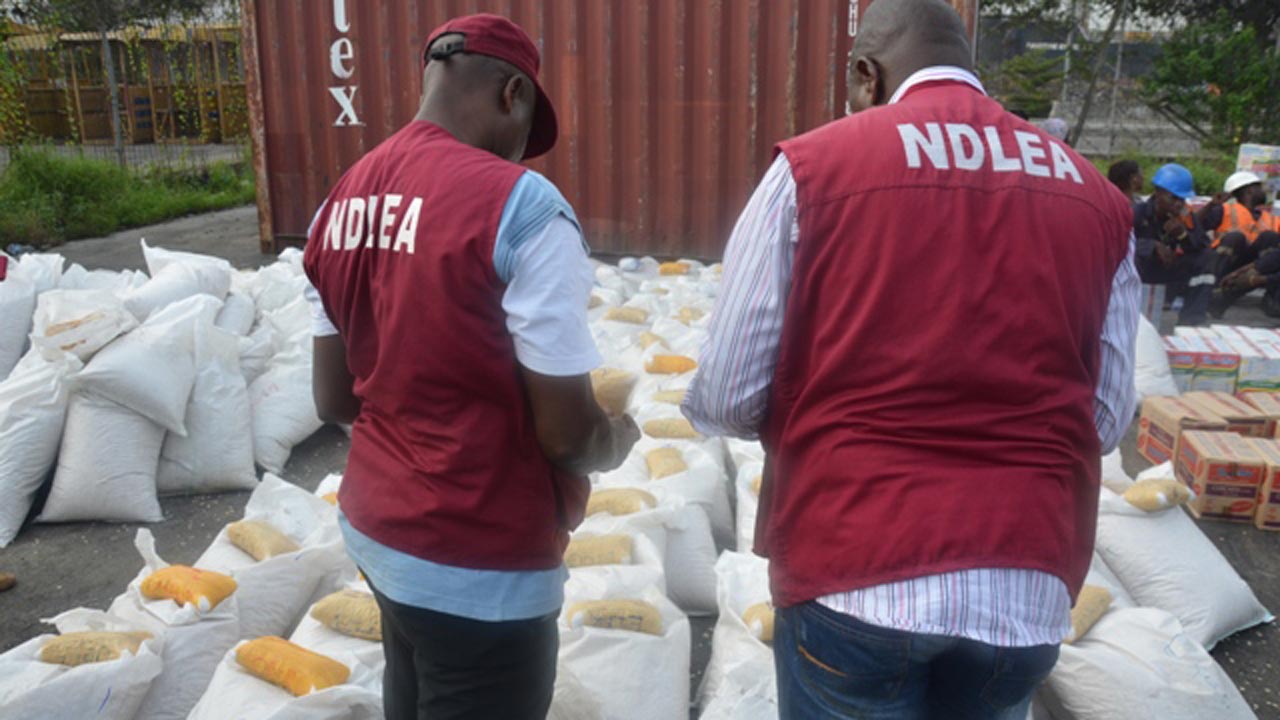
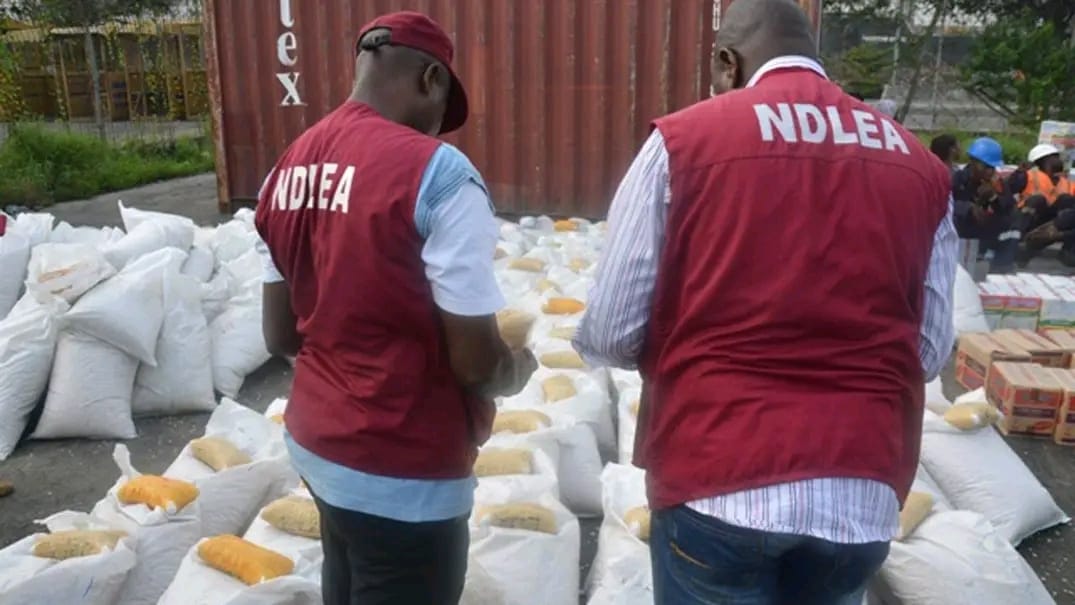
The National Drug Law Enforcement Agency says it has apprehended a 42 year old Indian woman, Ms. Neetu Neetu, at the Mallam Aminu Kano International Airport, Kano, with 72 parcels of heroin wraped and packaged as chocolates.

This was revealed disclosed via a statement issued by the Director of Media and Advocacy of the agency, Femi Babafemi, on Sunday, the shipment with 11kg weight was seized from Neetu’s luggage after a search at the arrival hall of the airport.

Based on credible intelligence, the operation took place during the inward clearance of Qatar Airways flight QR1431 from Bangkok, Thailand, via Vietnam and Doha, on March 14, 2025.

On his part, the NDLEA Chairman/Chief Executive Officer, Brig Gen. Mohamed Buba Marwa (retd.) while reacting about the arrest, highlighted a disturbing trend of drug cartels hiring foreign nationals, including white women, to traffic illicit substances through Nigerian borders.

He further stated that, “This growing tactic by drug trafficking organisations has consistently been frustrated by our vigilant officers with the aid of modern technological tools and proactive intelligence”.

Marwa commended the NDLEA officers in MAKIA, Lagos, and Kano Commands for their relentless efforts.

He noted the agency’s dual focus on drug supply and demand reduction.

“Our operatives must not relent in ensuring a balanced and sustained fight against drug abuse and trafficking nationwide,” Marwa urged.

Crushing Drugs: NDLEA’s success stories under WADA

By As-sayyidul Arafat Abdulrazaq 

The War Against Drug Abuse (WADA) in Nigeria, led by the National Drug Law Enforcement Agency (NDLEA), is a vigorous effort to combat a problem that has been undermining the country’s social fabric. Launched on June 26, 2021, under the Buhari administration, it focuses not only on apprehending drug dealers—although there is a significant emphasis on that—but also on a comprehensive strategy to reduce both the supply and demand for illicit drugs through enforcement, education, and community action.

Nigeria’s drug problem is severe. Cannabis, codeine, tramadol, and methamphetamine (locally known as “ice” or “mkpuru mmiri”) are widespread, particularly among young people. According to the United Nations Office on Drugs and Crime (UNODC), cannabis leads the list, followed by opioids and cough syrups containing codeine. This is not merely a health crisis; it also fuels crime, cultism, and insurgency, as groups like Boko Haram are reportedly financing their operations through drug trafficking.

WADA’s strategy divides into two lanes. On the supply side, the NDLEA’s Offensive Action, which began in January 2021, has been relentless. Under Brig. Gen. Buba Marwa’s leadership, the agency has achieved significant victories: over 57,792 arrests, 10,572 convictions, and more than 10 million kilograms of drugs seized since he took charge. 

The demand side is where WADA’s heart is on the demand side: prevention through awareness. They’ve rolled out sensitization campaigns in schools, mosques, churches, markets, and workplaces nationwide and given lectures at places like Maku Grammar School in Oyo or Jama’atu Islamiyya in Kogi State.

How did they do it? Through grassroots hustle and smart partnerships. NDLEA’s 36 state commands collaborated with local leaders, traditional rulers, youth groups, and the Association of Local Governments of Nigeria (ALGON) to host talks and rallies. The “Save Our Families” campaign in 2024 distributed drug test kits to parents to prevent the drug abuse crisis from affecting homes.

The results are clear. By mid-2024, over 13,000 people will have received counseling or rehab, a significant increase from just 599 in 2020, with 8,129 individuals receiving assistance last year alone, according to LEADERSHIP on February 25. This reflects individuals choosing change because they’ve heard the message. In Imo State, after a talk in 2024 at Owerri-Aba Primary, teachers began to look for warning signs. 

In Kaduna State, a February 24 event prompted residents to pledge for drug-free neighborhoods, resulting in a significant increase in calls to NDLEA’s helpline by early 2025. In Kano, where Brig. Gen. Buba Marwa highlighted 1.07 millionusers during the launch of a sensitization campaign against drug abuse, domestic violence, and the illicit drug trade organized by the National Orientation Agency (NOA) in Kaduna, Marwa discussed Almajiri children, aiming to reduce the number of young people that dealers can target, which could decrease crimes such as gang fights and theft.

This year, WADA’s sensitization efforts are making a significant impact in schools and communities. Lectures were held at the Federal Cooperative College in Ibadan on February 20, warning students about the dangers of drugs. Additionally, there is an ongoing initiative in the FCT with new area commands in Kwali and Kuje aimed at spreading the message further. They are maintaining the momentum from 2024, during which they reached over 1.8 million people alone.

But it is not all solved. Drugs still flow, and poverty keeps some trapped. However, with over 10 million kilos seized,including 25 tons destroyed in Kogi this week, the NDLEA combines this effort with outreach to make a difference. WADA’s success lies not only in the drugs they intercept; it’s also in the minds they influence. This fight demonstrates that Nigeria can push back step by step, with a plan that is working.

Looking ahead, the NDLEA could strengthen its capabilities by adopting modern technology. Currently, the NDLEA relies significantly on human intelligence and physical operations. Their officers, including the elite Strike Force established in 2021, carry out raids, patrols, and manual inspections at airports, seaports, borders, and highways. However, these efforts, while effective, are basic compared to what will be available in 2025. 

Traffickers are adapting by hiding drugs in compressors, duvets, and even soap bars, as seen in recent busts. Drones, for instance, are not widely mentioned in their operations, yet they could scour remote cannabis farms or stash points along the border. Digital tracking, AI, and data analytics to map online drug deals or shipping patterns seem to be underutilized.

As-Sayyidul Arafat Abdulrazaq is Corp member at the Center for Crisis Communication and can be reached at as.sayyid21@gmail.com.

NDLEA nabs wanted drug baron in Lagos after 17-year manhunt

By Abdullahi Mukhtar Algasgaini

The National Drug Law Enforcement Agency (NDLEA) has arrested a notorious 59-year-old drug baron, Ogbonnaya Kevin Jeff, at his hideout in Lagos after 17 years on the run.

The arrest followed an Interpol red notice and intelligence from South Korea’s National Intelligence Service.

NDLEA Chairman Brig. Gen. Mohamed Buba Marwa (Retd) disclosed that Jeff, a key figure in an international drug trafficking syndicate, had been smuggling illicit drugs worth billions of naira into South Korea.

His arrest on February 12, 2025, led to the recovery of multiple passports, Korean visas, and illicit substances at his residence.

Jeff, who previously served a one-year prison term in South Korea in 2007, continued his operations remotely, recruiting couriers and laundering drug proceeds through electronics imports.

He is wanted in South Korea for multiple drug trafficking offences, with two arrest warrants issued by the Seoul Central District Court in 2024.

Marwa reaffirmed NDLEA’s commitment to dismantling drug networks and ensuring Nigeria is not a haven for drug cartels.

NDLEA intercepts cocaine, tramadol hidden in shoes

By Sabiu Abdullahi

The National Drug Law Enforcement Agency (NDLEA) has made two significant seizures, uncovering cocaine hidden in shoe soles and tramadol pills concealed in custard containers. 

The agency’s Director of Media and Advocacy, Femi Babafemi, revealed the discoveries in a statement, warning travelers to exercise caution when accepting luggage or items from others to deliver. 

According to Babafemi, the cocaine was discovered in the soles of shoes bound for Europe, while the tramadol pills were found hidden in custard containers.

He reiterated the importance of vigilance, stating, “This is another reason why you must be careful with any bag given to you to deliver.” 

The seizures unearthed the creative methods used by drug traffickers to conceal illegal substances and the NDLEA’s commitment to intercepting them.

NDLEA declares couple wanted over cocaine deal

By Uzair Adam Imam

The National Drug Law Enforcement Agency (NDLEA) has made a significant breakthrough in its fight against drug trafficking, arresting four members of a cocaine cartel and declaring a couple wanted in connection with the crime.

According to NDLEA spokesman Femi Babafemi, the agency arrested Imran Taofeek Olalekan and Ishola Isiaka Olalekan on April 3, 2024, at the Murtala Muhammed International Airport (MMIA) in Lagos, as they attempted to export 3.40kg of cocaine to Oman.

Investigations revealed that the duo was allegedly working for a cartel headed by Alhaji Kazeem Omogoriola Owoalade, aka Abdul Qassim Adisa Balogun, an Indian resident who has been declared wanted alongside his wife, Rashidat Ayinke Owoalade, aka Bolarinwa Rashidat Ayinke.

NDLEA operatives also arrested Hamed Abimbola Saheed, a member of the syndicate, on May 14, 2024, in the Abule Egba area of Lagos, and recovered 900 grams of phenacetine, a cutting agent for cocaine, from his residence.

A follow-up operation at the Owoalade couple’s residence in Ogudu Orioke, Lagos, led to the arrest of another suspect and the recovery of a new Toyota RAV4 SUV, 400 grams of cocaine, and other drug paraphernalia.

In related operations, NDLEA officers intercepted cocaine and amphetamine concealed in steel bolts and shea butter at a courier firm in Lagos, and thwarted attempts to export cannabis and opioids to Dubai, China, and the UK.

The agency also arrested several suspects and recovered large quantities of drugs in various operations across the country, including 840kg of cannabis in Lagos, 75,000 pills of opioids in Benue, and 2kg of cannabis and diazepam in Borno.

NDLEA Chairman/Chief Executive Brig. Gen. Mohamed Buba Marwa (Retd) commended the officers involved in the operations and reiterated the agency’s commitment to fighting drug abuse and trafficking.

NDLEA nabs drug supplier to insurgents in Borno State

By Uzair Adam Imam 

The Nigeria Drug Law Enforcement Agency (NDLEA) announced the arrest of Ahmad Mohammed, aged 42, for allegedly supplying drugs to insurgents in Borno State, as part of a recent crackdown on drug traffickers and dealers. 

According to Femi Babafemi, the agency’s Director of Media and Advocacy, Mohammed was apprehended along with 23 other suspected traffickers and dealers. 

He was found to be supplying illicit drugs to insurgents in the border region of Banki, between Nigeria and Cameroon. 

Mohammed’s arrest took place on Friday, February 9th, at a checkpoint in Borno State. Upon inspection of his luggage, NDLEA operatives discovered 20,000 capsules of tramadol, intended for delivery to the border town. 

In a separate incident, NDLEA operatives intercepted a truck with registration number Lagos JJJ 64 YC on Sunday, February 4th.

The truck was transporting 367 jumbo bags of cannabis sativa, weighing 4,037 kilogrammes, from Akure, Ondo State, to the Shabu area in Lafia, the capital of Nasarawa State. 

Three suspects, identified as Shuaibu Yahaya Liman (35), Monday Audu (33), and Linus Samuel (42), were arrested in connection with the seizure.

NDLEA seizes drugs, cash valued at N450 billion in 22 months

By Muhammadu Sabiu

The National Drug Law Enforcement Agency (NDLEA) states that it has seized 100 million pills of the prescription painkiller Tramadol in just 22 months.

The agency estimated the combined value of the cash and illegal narcotics to be about N450 billion. In addition, the agency detained 29 drug lords, while detaining 23,907 drug traffickers.

Brig. Gen. Mohamed Buba Marwa (Retd), Chairman of the NDLEA, said this in a statement released on Tuesday through the Director of Media and Advocacy, Femi Babafemi.

Marwa said the confiscated Tramadol may have had a negative influence on the youth population and the nation’s productivity.

He said this during the Commands’ Awards/Commendations and Decoration of newly promoted officers at the Agency’s National Headquarters, Abuja.

Marwa said, “Within the period under review, the Agency arrested 23, 907 drug traffickers including 29 barons.

“Our seizure was over 5,500 tons or 5.5 million kilograms of assorted illicit drugs, which together with cash seized are worth over N450 billion.

“In the same period, we have taken the fight to the doorsteps of cannabis growers by destroying 772. 5 hectares of cannabis farms. In these 22 months, we have record convictions of 3, 434 offenders. We have equally made good strides in our drug demand reduction efforts where the number of those counselled and rehabilitated is 16, 114.

“The figures are mere statistics until you view them through the lens of human impact and the good or harm that could have come to society, the impact on public health, security as well as law and order if those dangerous drugs had gone to the street. Take, for instance, the one hundred million pills of tramadol seized in the past 22 months.

“If those pills had gone into circulation and ended up in the hands of young people, it would take a heavy toll on lives, families, productivity and, ultimately, the GDP of the country because it will affect these young people who are the engine room of productivity.

“We usually calculate our performance as monthly, quarterly or yearly appraisals. But drug law enforcement is generally a continuum, hence, I am wont to always appraise our efforts from January 2021, when we began far-reaching reforms, reviewed our strategies and rejigged the existing systems to accommodate innovations.

“From then till now, we have been on an upward trajectory. And indeed, what we have done in the last 22 months, from January 2021 to October 2022, based on the available statistics, is cause for celebration.”

Is Potiskum turning into a drug jungle?

By Kasim Isa Muhammad

It is socially impertinent how the vulnerable youths in the Potiskum LGA, Yobe State, have succumbed to excessive drug abuse and addiction without realizing how dangerous it could be for their lives, mental health, and what they uphold shortly.

The increase in drug abuse has become a subject that needs actual consideration and drastic action to combat its rapid growth among youths. Potiskum is the epicentre of carrying out various business and educational matters. It has been the giant pillar of Yobe State regarding population and contributions to con-constant revenue generation and youth engagement towards persuading education for the future. 

But on the other hand, the locality is enveloped with thousands of dumped youths who have chosen drug abuse and are helplessly living around some areas of the town. They hardly work for themselves, and even if they did, the credit is artfully exhausted on hard drugs, thereby keeping them unconscious and capable of being involved in any act of immorality.

However, I noticed that some of them have unintentionally become addicted to sedative drugs due to unemployment. I’ve been seeing them in a place where they hide out and observe this deadly menace. I had an informative interview with one of them, who told me about the main ingredient that drove him to such activity.

Nonetheless, the most significant point here is to draw the attention of the government and public agencies with the responsibility of fighting against any felonious acts that can socially affect society. Both parties should immediately intervene to curb the growth of drug consumption and find a lasting solution.

The government should provide job opportunities for the youths, support them with funds to raise a small business scale, and educate them. Providing efficient job opportunities can securely remove the most vulnerable youths from illegal acts. It will also keep them from sabotaging government and public properties, thereby decreasing the crime rates in the town or the state at large. 

Nevertheless, those drug abuse victims urgently need government or private agencies’ support with funds or facilities to grow a local business or enrol them in schools. The majority of them dropped out of school due to insufficient funding and parental support. 

Furthermore, the Federal Agencies in charge of controlling drug abuse and illegal consumption should stand firm in their determination to conduct secret general patrols, seize any hard drugs, and send any guilty person to a correctional facility.

Regardless, it is very harmful to society and the government to spare those victims without any necessary security intervention. If such illegal drug consumption continues to grow among the population, the children will believe that nothing is wrong with dealing with hard drugs. Moreover, the government may find controlling the kids’ law-breaking mentality challenging.

Kasim Isa Muhammad wrote from Potiskum, Yobe state via kasimimuhd1999@gmail.com.

Alleged cocaine deal: Court rejects Abba Kyari’s bail application

By Ahmad Deedat Zakari

A Federal High Court sitting at Abuja on Monday, February 21, refused a bail application brought by counsel to the embattled Deputy Commissioner of Police, Abba Kyari.

Kyari’s Lawyer, Cynthia Ikenna, brought the ex parte application on health grounds. 

Mr Kyari has been held by the National Drug Law Enforcement Agency (NDLEA) on allegations that border on aiding and abetting drug pushing and running his own drug cartel since February 14. 

While ruling on the application, the trial judge, Inyang Ekwo, ordered the defence counsel to put the NDLEA on notice to that effect. He also adjourned the suit till February 24 for a hearing. 

Shortly after court proceedings, Ms Ikenna reportedly told journalists that her client is diabetic and hypertensive.

The allegation by the NDLEA came some months after Kyari was indicted in an internet fraud case involving him and the popular Instagram sensation Ramon Abbas alias Hushpuppi by a U.S. court. The U.S. government had been interested in Kyari’s extradition since then.

Chances of imprisoning Kyari are high, says legal expert

By Muhammad Sabiu

Abba Kyari, the former chief of the Police Intelligence Response Team, is in a new quagmire after officials from the Nigerian Drug Law Enforcement Agency (NDLEA) indicted him in a sting operation.

Mr Kyari, who is awaiting extradition to the United States on charges of cyber fraud, faces life in jail if convicted of distributing cocaine by a competent court.

After the NDLEA declared Kyari wanted and posted a video of him peddling cocaine, the police apprehended him on Monday.

Kyari was charged with official corruption, tampering with narcotic exhibits, and other unprofessional behaviour, according to the police statement.

As a result, Kyari has been handed over to the cops for further investigation and prosecution under the NDLEA.

Henry Kelechukwu, a legal expert, claimed that Kyari’s prospects of receiving a prison sentence were high.

He added that every case contains gaps to be exploited, but this one is particularly close-knit. The reason for this is that the offences for which he is being charged have an appearance of strict liability, which means that you don’t even have to establish intent; of course, this relies on the charge that the prosecuting agency wishes to bring against him.

In relation to this, an NDLEA act has it that “(a) Any person, who without lawful authority imports, manufactures, plants, or grows the drugs popularly known as cocaine, LSD, heroin, and other similar drugs shall be guilty of an offence and is liable on conviction to imprisonment for life.

“(b)export, transport, or otherwise traffic in the drug popularly known as cocaine, LSD heroine or any other similar drugs shall be guilty of an offence and liable upon conviction to be sentenced to life imprisonment.

“(c) sells, buys, exposes or offers for sales or otherwise deals in or with the drug popularly known as cocaine, LSD heroine or any other similar drugs shall be guilty of an offence and liable on conviction to be sentenced to imprisonment for life.”