NCC

FG scraps 5% telecom tax on calls, data

By Muhammad Abubakar

The Federal Government has removed the 5% excise duty on telecommunications services in Nigeria.

The tax, introduced under the administration of former President Muhammadu Buhari, was to be applied on both voice and data services. It drew strong opposition from telecom operators and consumer groups.

Executive Vice Chairman of the Nigerian Communications Commission (NCC), Aminu Maida, said President Bola Ahmed Tinubu ordered its removal during discussions on the recently passed Finance Act.

The decision is expected to provide relief to over 171 million active telecom subscribers, who have also faced a 50 per cent tariff increase earlier this year.

President Tinubu scraps 5% telecom tax, says NCC boss

By Abdullahi Mukhtar Algasgaini

The Executive Vice Chairman of the Nigerian Communications Commission (NCC), Dr. Aminu Maida, announced on Tuesday that the previously suspended 5% excise duty on telecommunications services has been completely scrapped by President Bola Tinubu.

Speaking at an interactive session with journalists in Abuja, Maida revealed he was present when the issue was raised with the President, who firmly rejected the tax.

“He said, ‘No, no, no, we cannot put this on Nigerians’,” Maida recounted. “I was very pleased when the bills came out and we saw his words were followed through.”

The contentious duty, part of a broader tax reform bill, had faced strong public opposition since its introduction in 2022, leading to its suspension by President Tinubu in July 2023.

Its full removal is now expected to ease financial pressure on subscribers and support wider growth in the crucial sector.

NCC directs banks to shift USSD charges to customers’ airtime

By Anas Abbas

Nigerian Communications Commission (NCC) has mandated that deposit money banks (DMBs) cease the direct deduction of charges from customers’ accounts.

Instead, these fees will now be deducted from users’ mobile airtime.This change, effective June 3, 2025, was communicated to customers via an email from the United Bank for Africa (UBA) on Tuesday.

The bank outlined that, in compliance with the NCC’s directive, charges for USSD banking services will no longer be taken from bank accounts but will instead be billed directly to mobile airtime.

According to the UBA’s statement, each USSD session will incur a fee of ₦6.98 for every 120 seconds, a charge that will be processed by the user’s mobile network operator.

Customers will receive a consent prompt at the beginning of each session, and airtime will only be deducted after they confirm their willingness to proceed, provided the bank is available to complete the transaction.

For those who prefer not to use USSD banking under this new billing structure, UBA has indicated that customers can opt out of this service.

Additionally, they can continue to utilize other digital banking options and internet banking platforms for their transactions.

This latest directive appears to be a strategic effort by the NCC to address the long-standing conflict surrounding USSD payments between commercial banks and mobile network operators (MNOs).

In December 2024, the Central Bank of Nigeria (CBN) and NCC had instructed MNOs and DMBs to settle an outstanding USSD debt estimated at ₦250 billion.

The situation escalated in January when telecommunications companies threatened to withdraw USSD services due to unpaid debts owed by banks.

In response, the NCC warned it would suspend USSD services and publish a list of banks that were still in arrears.

On January 15, the regulator ordered telcos to disconnect USSD codes assigned to nine banks by January 27 due to these outstanding debts.

On February 28, MTN Nigeria reported receiving ₦32 billion of the ₦72 billion owed by banks as part of the resolution of this USSD debt issue.

This recent directive marks a pivotal shift in how USSD banking services will operate in Nigeria, potentially benefiting both consumers and service providers in the long run.

The silent conspiracy: How Nigerian telecom giants exploit people 

By Abdullahi Adamu

Whenever the Nigerian Electricity Regulatory Commission (NERC) announces an electricity tariff increase, Nigerians brace for even worse power supply. Due to incessant national grid collapses and inadequate transmission by the Transmission Company of Nigeria (TCN), poor generation continues to plague the sector, yet tariffs keep rising.

Now, the Nigerian Communications Commission (NCC) is following the same path, approving telecom companies’ hikes in call and data service prices. Meanwhile, Nigerians suffer from poor network quality and unreliable internet services.

It seems these regulatory agencies have forgotten that their primary mandate is to protect consumers and ensure efficient service delivery, not just to rubber-stamp tariff increases for the companies they regulate. When will they start holding these service providers accountable instead of burdening citizens with higher costs for declining service quality?

The recent price hike by telecom companies in Nigeria has affected subscribers’ wallets and seems to have impacted the quality of network services.

It’s frustrating when you pay more for a service, but the quality doesn’t meet expectations. Poor network provision and services can affect productivity, communication, and daily life.

Despite the widespread complaints from Nigerians, it’s disappointing that the services provided by telecom companies have not significantly improved.

The regulators’ lack of response, such as the Nigerian Communications Commission (NCC), is also concerning. It’s their responsibility to ensure that telecom companies provide quality services and protect consumers’ interests.

It’s time for Nigerians to continue to speak out and demand better services. 

Remember, collective action can lead to positive change.

Abdullahi Adamu wrote via nasabooyoyo@gmail.com.

Nigeria’s porn ban: A distraction from real issues

By Abdulhamid Abdullahi Aliyu

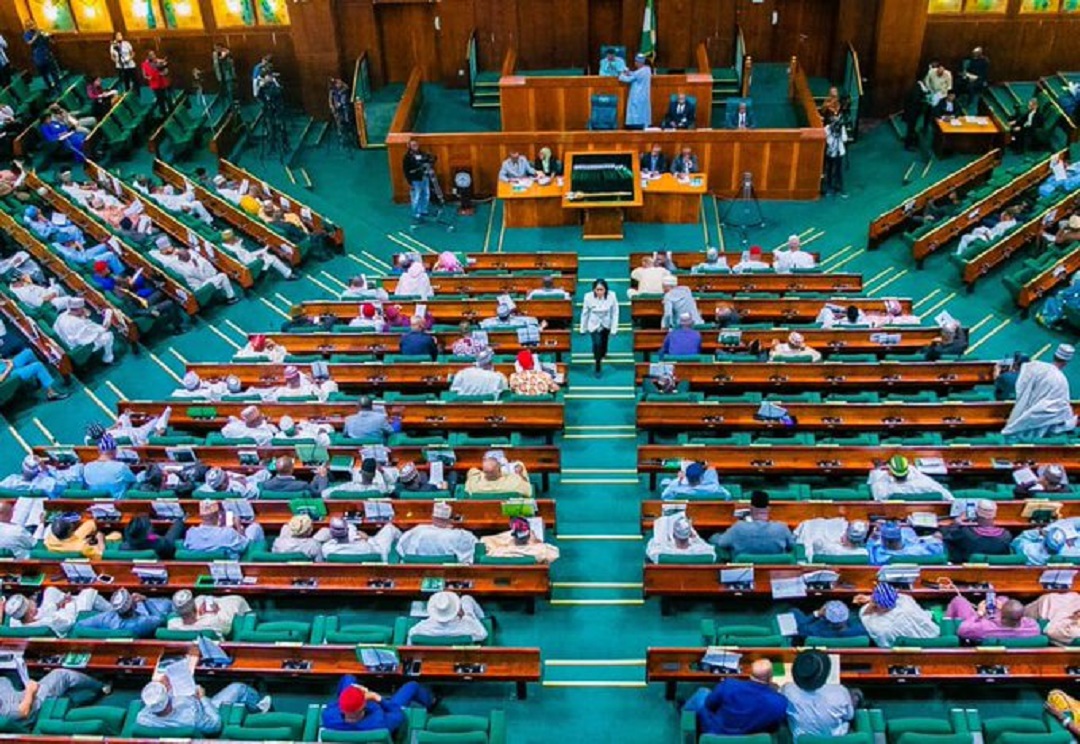
The Nigerian House of Representatives has directed the Nigerian Communications Commission (NCC) to block all pornography websites, arguing that adult content is fueling moral decay in the country.

Lawmakers behind the move claim it is necessary to protect societal values, but many Nigerians are asking: With all the pressing challenges facing the nation, is this the priority?

At a time when the cost of living is unbearable, insecurity is rampant, and unemployment continues to frustrate millions, banning pornography feels like a classic case of misplaced focus.

There is no doubt that pornography is a controversial topic, especially in a country as religious and conservative as Nigeria. Many believe it is a moral threat, linking it to addiction, broken homes, and declining values among the youth. But is an outright ban the solution?

If the government is genuinely concerned about morality, should it not focus on improving education, strengthening family values, and addressing the root causes of social vices? What about the rising cases of drug abuse, internet fraud, and sexual exploitation—issues that demand urgent action?

It is often easier for politicians to push symbolic laws than to tackle society’s deeper problems. But morality cannot be legislated; it is shaped by economic stability, good governance, and proper education.

Even if we assume the government is serious about this ban, another question arises: Can it actually be enforced? Countries like India, Indonesia, and China have attempted similar restrictions, only for people to bypass them with VPNs and other simple workarounds.

Nigeria, with its millions of tech-savvy youths, will be no different. At best, this ban will be a temporary roadblock; at worst, it will push the industry underground, making regulation even more difficult.

What is most concerning is the potential for this move to set a dangerous precedent for internet censorship in Nigeria. Today, it is pornography. Tomorrow, it could be news websites, social media platforms, or even political activism.

If the government can dictate what people access online, what stops it from controlling other forms of content? Where does it end?

Beyond the moral and censorship debates, an outright ban could also have unintended economic consequences. Nigeria’s creative and tech industries thrive on the internet’s openness.

Restrictions like this could discourage investment in the digital space. Besides, history has shown that banning something does not eliminate demand—it simply drives it underground.

This move may just create a bigger mess instead of solving anything. If the real concern is protecting children and upholding values, there are smarter ways to achieve this.

Many developed countries regulate adult content through strict age verification, parental control mechanisms, and public awareness campaigns. A more effective approach would involve educating young people about digital responsibility, empowering parents with monitoring tools, and addressing the economic and social conditions that contribute to moral decline.

With the economy in crisis, insecurity worsening, and corruption still unchecked, is banning pornography really what Nigerians need right now?

This is not to suggest that pornography is beneficial or free of consequences. However, governance revolves around priorities. A country that is struggling to feed its people should not waste energy on internet policing.

Nigeria’s progress will not depend on what it bans but rather on how effectively it addresses the fundamental issues that hold it back.

And unfortunately, a porn ban does nothing to fix them.

Abdulhamid Abdullahi Aliyu, an NYSC serving corps member, writes from the Center for Crisis Communication (CCC) in Abuja. 

NCC completes NIN-SIM linkage for all phone numbers

By Uzair Adam

The Nigerian Communications Commission (NCC) has announced the successful completion of the federal government’s policy linking all phone numbers in the country to a National Identification Number (NIN).

The NCC’s Executive Vice-Chairman, Aminu Maida, disclosed this during the 2024 annual corporate governance conference held in Lagos on Thursday.

Maida acknowledged the difficulties Nigerians encountered during the process but emphasized the benefits of the initiative.

“We have now fully implemented the government’s 2020 policy of linking phone numbers to NINs.

“Though the process was challenging for many, it is important to recognize the value it brings,” Maida said.

He further stated that every phone number in Nigeria is now associated with a verified NIN, enhancing security and accountability in telecommunications.

NCC retracts statement on Starlink’s subscription price increase

By Uzair Adam

The Nigerian Communications Commission (NCC) has issued a public clarification regarding its earlier statement on Starlink’s subscription price hike, stating that it was released in error.

Initially, the NCC expressed surprise at Starlink’s announcement of new subscription rates in Nigeria, asserting that the company had not obtained regulatory approval for the price increase.

The Commission acknowledged that while Starlink had submitted a request for a price review, a decision had not yet been made.

The original statement also alluded to potential regulatory infractions under the Nigerian Communications Act (NCA) 2003.

However, the NCC now clarifies that the previous statement was premature and has urged all media outlets to retract any related publications.

Reuben Muoka, the Director of Public Affairs at the NCC, stated, “We request that all media platforms kindly withdraw the previously issued statement on Starlink’s price hike, as it was issued in error.”

He further asked those who published the statement to remove it from their platforms.

The NCC remains dedicated to ensuring regulatory stability and creating a favorable environment for investment in the telecommunications sector, especially as stakeholders continue to call for a review of tariffs to encourage further investment.

The Commission appreciates the cooperation of the media and apologizes for any confusion or inconvenience caused by the earlier release.

NIMC confirms seamless NIN-SIM linkage process ahead of deadline

By Uzair Adam

The National Identity Management Commission (NIMC) has assured Nigerians that the enrolment, verification, authentication, and modification of National Identification Number (NIN) data are progressing smoothly, in preparation for the NIN-SIM linkage deadline set for September 14, 2024.

Kayode Adegoke, the Head of Corporate Communications at NIMC, stated that more than 10,000 enrolment centers across Nigeria and the diaspora remain operational to cater to the needs of the public.

He urged Nigerians and legal residents to visit these centers for NIN enrolment and reassured them that the process is free from extortion and unethical practices.

Adegoke also informed the public that those wishing to modify their NIN data can do so via the NIMC Self-Service portal.

The NIMC reaffirmed its dedication to providing top-quality identity management services while maintaining a zero-tolerance policy towards extortion and unethical conduct.

For further enquiries, the commission directed users to its official website.

StarLink and Nigeria’s telcos competition

By Ibrahym El-Caleel

StarLink is a distant competitor to our telcos. The product price edges it out of immediate competition with MTN, Airtel and co. However, it is good that it is already here. In fact it will definitely gain a fair share from some businesses who have been looking for an alternative to the existing telcos.

Setting up StarLink costs more than N400,000. Personally I think it will be a better buy for businesses who spend about 60-75% of this amount for internet access. They will be bidding farewell to the periodic disappointments we experience from the contemporary telcos.

Market is dynamic. As StarLink takes some time in Nigeria, it will be ambitious about increasing its market share. It will be innovative about coming up with something that will be relatively affordable for the teeming internet subscribers. This is when the true competition will begin. For now, the penetration will be low because at the moment a lot of Nigerians are quite very rich. The consumer conversion will be minimal.

MTN began in Nigeria with N1,500 airtime card only. And it expires in 7 days. If you don’t use the airtime after 7 days, you have to buy another one. This was the case c.2001. Fast forward to 2021, you can have a N100 airtime and keep it for one year if you so wish. StarLink might have to develop something cheaper to get more subscribers onboard. If your things are expensive, you can sell it and make money in Nigeria. If they are affordable to many, you make quicker turnover, bigger sales, (arguably) more profit. This is Nigerian market.

Telecommunications: FG orders service providers to reverse tariff hike

By Muhammadu Sabiu

The Nigerian Communications Commission (NCC) has directed that all providers of telecommunications services roll back the increased pricing adjustments for a select number of voice and data services.

This was revealed in a statement released on Wednesday by Reuben Muoka, head of public affairs at NCC.

The commission instructed the involved Mobile Network Operators (MNOs) to reverse the increased price adjustment in a letter dated October 12, 2022, adding that the service providers’ networks’ unilateral 10 per cent upward price increases for some phone and data services had been approved and put into effect.

It noted that the order was issued in order to allow for further consultation for the good of both the service providers and consumers.

“The consideration for 10 per cent approval for tariff adjustments for different voice and data packages was in line with the mandates of the commission as provided by the Nigerian Communications Act, 2003, and other extant Regulations and Guidelines, as this was within the provisions of the existing price floor and price cap as determined for the industry,” the commission said.

“The decision was also taken after a critical and realistic review and analysis of the operational environment and the current business climate in Nigeria, as it affects all sectors of the economy.

“Furthermore, even though the tariff adjustment was proposed and provisionally approved by the management, pending the final approval of the board of the commission, in the end, it did not have the approval of the board of the commission. As a result, it is reversed.

“The honourable minister of communications and digital economy, Isa Ali Ibrahim Pantami, has maintained that his priority is to protect the citizens and ensure justice to all stakeholders involved. As such, anything that will bring more hardship at this critical time will not be accepted.  

“This was also why he obtained the approval of President Muhammadu Buhari for the suspension of the proposed 5 per cent excise duty in order to maintain a conducive enabling environment for the telecom operators. Much as there is an increase in the cost of production, the provision of telecom services is still very profitable, and the subscribers mustn’t be subjected to a hike in charges.”