National Assembly

Institute proposes law to ban consumption of ‘ganda’

By Uzair Adam Imam

The Nigerian Institute of Leather and Science Technology (NILEST) Zaria has proposed to legislators to provide a law that will ban the consumption of animal skin, locally known as ‘ganda’ or ‘kpomo’ in the country.

The Director-General of the Institute, Prof. Muhammad Yakubu, disclosed this to journalists in Abuja Sunday, September 17, 2022.

Yakubu stated that the law was to help revive the comatose leather industry in the country. Meanwhile, the eating of animal skin should be banned.

He added that “the habit of eating animals skin, which has no nutritional value, should be stopped in order to save the industry and boost the nation’s economy.

“To the best of my knowledge, Nigerians are the only people in the world that overvalue skin as food. After all, ‘Kpomo’ has no nutritional value.

“At a point, there was a motion before the two chambers of the National Assembly, it was debated, but I don`t know how the matter was thrown away,” he said.

N/Assembly urges China to help Nigeria rescue abducted train passengers

By Uzair Adam Imam 

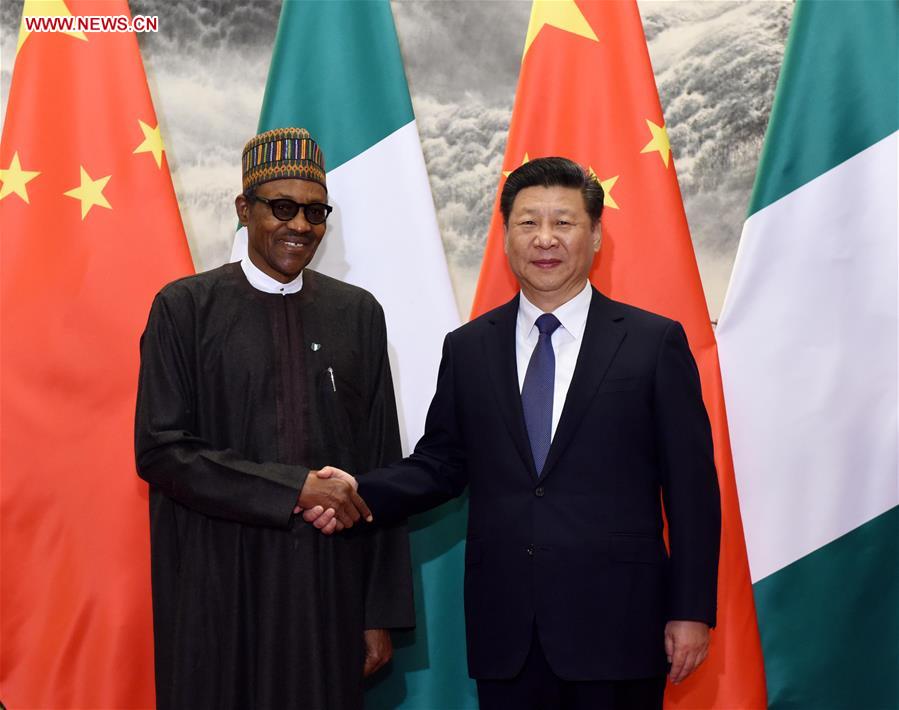
The National Assembly urged the Chinese government to help Nigeria rescue the Abuja-Kaduna abducted train passengers.

Today marks exactly 45 days since the 62 passengers were attacked and abducted while in transition on March 28, 2022.

The Daily Reality reported how bandits stormed the Abuja-Kaduna train, gunned down eight people and abducted over sixty people in March. 

The Chairman Senate Committee on Land Transportation, Senator Abdulfatai Buhari, expressed sadness over the failure to rescue the victims 45 days after.

Also, the people concerned have shown great sadness over the government’s failure to rescue their loved ones and threatened that the train service must not resume until those abducted have regained freedom. 

The lawmaker representing Oyo North in the National Assembly decried that the attack had created fear in the minds of Nigerians who had started embracing the railway.

He said, “The Chinese government makes money from the many rail projects that are being handled by CCECC in Nigeria, so asking them to help us is not out of place.

“Nigerians are no longer ready to listen to the number of passengers that have been carried by the trains since they were commissioned. Nigerians are not interested in what has been put in the various stations by the CCECC. What we want to hear now is the effort being put into rescuing those people in captivity.

“If a Chinese national was among those people abducted, we know that the Chinese government would have come to rescue him.

“I remember when an American was kidnapped, the Americans came and took him away from where he was held captive. We know that with the level of technology that the Chinese have, even without leaving Beijing, they can help us track where these people are, or even give us enough intelligence that would aid their rescue,” he added. 

X-raying Hon. Usman Bello’s representation in Akko

By Kabiru Danladi Lawanti

In a liberal democracy, political representation is a straightforward concept. In Nigeria, every four years, there are elections where citizens pause and turn back to see what their political representatives did to them during their four-year tenure. In a defined geographic area or constituencies, the citizens choose from a range of candidates—themselves citizens living in (or near) that same area—and elect a few to sit in the national assembly as representatives of the people of these constituencies. Yet both theoretically and in practice, it is far more complicated.

While representative democracy is often poetically described as government ‘of the people, by the people, for the people,’ it is not only the people who are represented: political parties, ideologies (in this sense religious and ethnic), business, urban and rural people — to name but a few—are also represented. Furthermore, even the very notion of ‘the people’ is amorphous as a representative cannot possibly represent the full diversity of ‘the people’ and all their divergent and conflicting interests.

Since the return of democracy in Nigeria in 1999, many representatives have been sent to Abuja to represent their constituency at the national level. These constituencies comprise a group of local government areas in a particular state. In some states, the constituencies are formed of a single local government area. For example, in Gombe State, there are six federal constituencies: Akko, which covers the Akko LGA, Balanga/Billiri that covers Balanga and Billiri LGAs, Dukku/Nafada that comprises Dukku and Nafada LGAs. Others are Gombe/Kwami/Funakaye, which contains Gombe, Kwami and Funakaye LGAs; Kaltungo/Shongom, which covers Kaltungo and Shongom LGAs and lastly, the Yamaltu/Deba federal constituency that covers Yamaltu/Deba LGA. These constituencies have sent representatives since 1999. Of particular interest to me is the Akko Federal Constituency, where I came from.

Politics, they said, is a network of no permanent foes but only connected interests. In the last 22 years, the constituency has had six representatives. Of this six, two remained the longest-serving representatives – Bello Suleiman and Usman Bello Kumo. Bello Mohammed spent only one tenure in the National Assembly, from 199-2003. In contrast, Umaru Barambu and Samaila Mu’azu Kashere spent two years each in the hallowed chamber after a court sacked Umaru Barambu in 2017.

To be fair to the reps mentioned above, each tried to develop the area in his way. However, a careful analysis of what came to the constituency in the last three and a half years cannot be compared to any in the previous 22 years. The level of human and capital development witnessed is unprecedented in the entire northeast. The only representative that can match the level of human and capital development brought to the constituency by Usman Bello Kumo (UBK) is Mukhtar Betara. This is obvious, knowing that Betara is Chairman House Committee on Appropriation.

A consummate and highly experienced politician, Usman Bello Kumo has a deep commitment and unrivalled passion for grassroots development. For instance, in his second coming alone, 2019 to date in the National Assembly, he has attracted infrastructural development in many areas of human development like education, health, water, roads, electricity, youth and women empowerment all over the constituency for the betterment of their economy and improved standard of living.

As Chairman, House Committee on Police, Hon UBK was able to also send more than 100 youth into the Nigeria Police Force. One thing is clear, UBK has always stood out among other politicians of his calibre. He has never allowed the trappings and grandeur of office to stand between him and his avowed goals of lifting his people from the shackles of poverty, hunger, disease, homelessness and mass unemployment.

As 2023 approaches, we shall soon be inundated with a mix of the serious, the incredible and sprinkles of the comical as political parties jostle to promote candidates of varying capabilities. These include those who appear to have genuine intentions for service to the people and aspirants who seem pretty content with no more than having their faces splashed around on party banners. Already, we have seen some campaigns of calumny against his person when some rabble-rousers, fighting for recognition, working under the instruction of politicians are sponsoring political jobbers to say many things against the man. This, they do discredit him in the eyes of his teeming supporters. One thing is clear; it seems UBK is not even distracted with these political mudslingers.

Holding onto his mission – an intense zeal for total political, economic and social liberation of his people, Hon UBK has always seen his primary vocation in the political arena as being one of service, duty, benevolence and charity towards his constituents. In this regard, he has abided by his campaign promises of using elective office to improve a lot of his people. This is the direct opposite of what his detractors are doing. His opponent definition of representation is that of trying to use political office to feather their nest, irrespective of the economic fortunes of the electorate that voted for them in the first place.

Notwithstanding these outstanding credentials and track record of success, we must remind Hon UBK, as stakeholders and indigenes of this area, that rural areas need his attention. Most of us in the rural regions of Akko, especially villages like Lawanti, Malam Jamo, Gamadadi, Akko and surrounding towns, are currently facing an acute shortage of water never seen in more than thirty years. My last visit in December 2021 to my home town made me pity the dwellers of these areas. Most have to travel many kilometres to get drinking water. Others use water from streams, competing with their animals. It is a pitiful scenario.

There are also allegations that his empowerment programmes are not all-inclusive. Recently, some communities in Gona District have a cause to go to press to complain that his empowerment programmes were only targeted at Kumo, his hometown. 

As a political maestro, who can be taken literally for his words, Hon UBK needs to pause and turn his attention to these people and listen to their complaints, even if they come from a minority voice. We have no doubt, considering the excellent job he did to his constituency in his first coming 2011-2015 and now, his words, as the proverbial saying goes, can be taken to the bank.

As we approach 2023, politicians, including Hon UBK, understand the importance of an alliance. There is no better time to do this than now. And I am sure he needs the rural areas to launch his return to the National Assembly.

Kabiru Danladi Lawanti wrote from the Department of Mass Communication, Ahmadu Bello University, Zaria, via kblondon2003@yahoo.com.

If your children cannot study here, don’t take gov’t appointments – ASUU President

By Uzair Adam Imam

ASUU President, Prof Emmanuel Osodeke, urged the National Assembly to formulate a law that will ban government officials from taking their children to study abroad. He added that if one knows his children cannot study here, one should not take government appointments.

Osodeke made the disclosure in Abuja at the reconvene meeting with the federal government, chaired by the Minister of Labour and Employment, Dr Chris Ngige.

Daily Trust reported that ASSU also called on the National Assembly to formulate a law that makes it compulsory for the public office holders to send their children to public schools in the country, saying such a step would let the officials know the decay in the public universities.

Speaking, Osodeke stated that, “We hope that the government will make it mandatory that if you accept a government appointment, your children must attend universities in the country.

“The National Assembly must formulate a law that if you take an appointment, your children must study here. If you know that your children cannot be here, don’t take government appointments.

“When you hear those in the government who send their children to schools abroad say that ASUU goes on strike, they should know that strike is not the problem. The problem is the issues afflicting the universities; nobody is interested in tackling them.

“Look at the budget we have seen recently, it is exactly the same thing we have been seeing. Nothing has changed. And this country is paying the high price for neglecting education – the banditry you see, the kidnapping and what have you, is because people are not being taken care of.

“That is why ASUU has been struggling so that Nigerian universities will be revamped so that as our children go outside for learning, other children from other countries will come here too and pay to this country in hard currency.”

The Electoral Act: Where is APC’s Progressivism?

I wonder why the APC senators mostly stood against the clause that sought to operationalize the electronic transmission of election results.

I thought APC as a party was supposed to embody the ideals of political progressivism and was not created and sold to the people as a mere alternative political party with almost the same modus operandi as the others. I thought it was supposed to be a positive paradigm shifter and a status quo disrupter. But they have proven us wrong. 


Debates over this issue took a very heated dimension on the floors of both chambers of the National Assembly, and I wonder why. I understand there are certain concerns around issues like the devices to be used in the transmission of the results; how the results would be authenticated digitally before transmission; how the relevant stakeholders(e.g. party agents, observers) would be able to access the original results as transmitted; how accountability and transparency will be entrenched especially regarding public access to results and of course the issue of internet connectivity and inadequate digital infrastructure.


But if we are really determined, are there no answers and solutions to all these questions and concerns? Where is the APC’s commitment to innovation and “change”? 


This is how I visualize the entire process in the simplest terms:

 
Firstly, on registration of party agents (and independent observers, both local and international) for each polling unit by INEC. The commission would take all necessary details, including biometrics and create a profile for each of them on the INEC system. As such, all agents and observers would have access to their profiles on an app developed specifically for the elections. Of course, rigorous training of agents would be done to this effect. All political parties would also have accounts on the platform(perhaps to be operated by the Chairmen of the Parties). 


Secondly, after the elections, the transmission of results can only be done after validation and authentication by all party agents registered(and official observers) in the polling units. This can be done in many ways. One way is by barcode scanning. This way, the agents’(and observers’) mobile application would allow the scanning of the barcodes of the digital results as compiled so that immediately the barcode is scanned, the agents would be sent the result sheet on their mobile app as tabulated for verification(just as we use our XENDER app). On verification, the agents would accept or decline(in cases that warrant such). If accepted, the agents would still, after accepting their devices, go further to verify their acceptance with a biometric scan(thumbprint) on the device of INEC. Only then will the result be transmitted. 


Thirdly, immediately after transmission, INEC will send originally certified and legally admissible copies of the verified and authenticated result to the accounts(profiles) of the party agents and the central party account(profile). The result will also be immediately published on the elections website and projected at the polling unit for public consumption. 


On connectivity, INEC might choose to use the networks of the local service providers operating in Nigeria or partner with reputable international service providers. I prefer the latter because of the argument that almost 50% of the polling units we have do not have internet coverage. The government might partner with companies like SpaceX that provide satellite internet services with the capacity of delivering 150mbps internet speed to any place on the planet via satellite. All that is needed is a small kit at every polling station. There are also many other companies the country can partner with to optimize the device with satellite internet functionality that will guarantee internet connectivity almost anywhere in the world with appreciable speed, for example, companies like Thuraya, Iridium, Inmarsat etc. Of course, under the supervision and protection of the nation’s digital firewall. In this case, all polling units would have the digital infrastructure necessary for this purpose. 


Are these things possible, or they are just too fictional and unrealistic? 


If they are possible, then what is all this noise around e-transmission of election results? Or are we just not yet ready for such a revolutionary change towards more transparency and accountability in our election processes? 


Why is APC hell-bent on amplifying a limitation that they have done nothing to improve as justification for their scepticism towards e-transmission of the election result? Why are they not talking solutions and alternative routes towards achieving e-transmission just as they did vehemently when the PDP postponed elections in 2015 because of the insecurity in the North East? I wonder how they would have reacted if they were still in the opposition, but given their reaction to the issue of card readers while they were, I strongly believe they would have supported e-transmission. 


Some of them argue that even the United States, by virtue of the Protecting American Votes and Elections Act of 2019, use conventional ballot papers for voting. And I ask, is electronic voting the same thing as the electronic transmission of results? Have they ever wondered how they get live election result updates on channels like CBN, ABC, FOX etc.? Don’t they know of the National Election Pool in the US and Edison Research which provide real-time election results? 


Some are sceptical because such a network is susceptible to cyber intrusion. And I ask why the pessimism? Can we not trust the same cybersecurity infrastructure that protects our national security data(in DIA, NIA, DSS etc.) to offer befitting protection to a network that will be used just for electronic transmission of election results? 


So many questions for the APC! 


And here is the subtlety, the initial clause in section 52(3), as presented, already had the practicability condition; “The Commission may transmit results of elections by electronic means where and when practicable.” So this was the original clause. 


Then it was amended to this by both chambers of NASS; “The commission may consider electronic transmission provided the national network coverage is adjudged to be adequate and secure by the Nigerian Communications Commission and approved by the National Assembly.” 


In the amendment, the National Assembly subtly gave itself the exclusive power for approval subject to the NCC assessment and network coverage report. This is in absolute contravention with section 78 and Third Schedule Part 1, F, S.15 of the Constitution of the Federal Republic of Nigeria as amended. Per these extant provisions, the constitution has given exclusive rights and powers to INEC in the matters of the conduct, supervision, undertaking and organization of elections in Nigeria. Hence, the unconstitutionality of subjecting INEC’s powers to the approval of the NCC and the NASS. 


We are ashamed by the actions of the APC towards this issue because we believed that any initiative that holds the potential of improving transparency in election proceedings in this country ought to be unconditionally supported, especially by the APC. But, sadly, that is not the case. 


Abdulhaleem Ishaq Ringim is a political and public affairs analyst. He writes from Zaria and can be reached through haleemabdul1999@gmail.com.