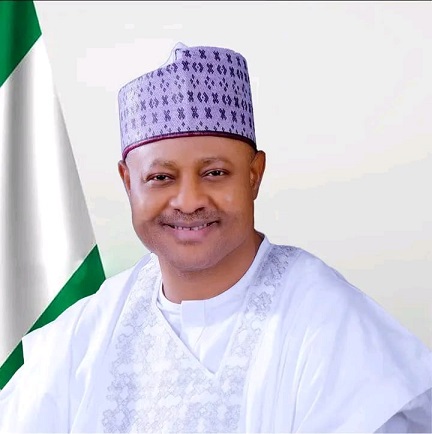
Nasiru El-Rufa'i

The fractured compass: El-Rufai, Ribadu, and the quest for Nigeria’s “North Star”

By Ibraheem A. Waziri

I am a son of Northern Nigeria, born into the 5th generational cohort—those of us ushered into life between 1968 and 1983, as the civil war’s echoes faded. From here, I’ve watched two giants of the 4th cohort, Nasir El-Rufai and Nuhu Ribadu, shape my homeland’s fate. They’ve lifted it at times, fractured it at others. To me, they’re more than names—they’re lodestars. Their brilliance has guided my hopes and, too often, left them drifting. 

El-Rufai has fueled my writing since 2013; his ideas have been a steady muse. Ribadu entered my life that same year, stepping into my Zaria home during my wedding week celebration, his vision setting my spirit ablaze. Now, in February 2025, their legacies show a compass split—its needle quivering between rival trails. For the North, for Nigeria, their reunion isn’t a wish. It’s a lifeline.

My tie to El-Rufai is ink, not intimacy. We met once, briefly, after he claimed Kaduna’s governorship in 2015—a moment too quick for him to recall. His ideas, though, I’ve known deeply. His 2015 election plans for Kaduna stunned me—clear, ambitious, a reformer’s blueprint. I dissected them as a commentator, later mapping his neoconservative path in my 2019 reflections. 

El-Rufa’i’s nine-page manifesto promised education, security, and infrastructure. He mostly delivered. I saw justice in his 2015 demolition of illegally grabbed lands at Alhudahuda College—even as friends grieved homes I’d known, now dust. El-Rufai is the architect and the systems man. A neoconservative who bets order can revive a stumbling North.

Ribadu came with a handshake and a dream. In my wedding week, through Abdulaziz Abdulaziz and Gimba Kakanda, he arrived at my Zaria doorstep, joining the celebration and seeking my support. Over tea and warmth, he sketched a Nigeria free of corruption’s grip. With my friend Dr. Waziri Garba Dahiru (now a professor), we told him how Dr. Aliyu Tilde’s pre-2011 presidential elections essay about him won us—and many Northerners—to his side over Muhammadu Buhari, the people’s hero then. His EFCC days had already made him a legend—a crusader chasing the mighty with a fire that echoed the North’s heart. He left my home with admiration, hoping that his progressive flame could guide us.

As a commentator, I’ve watched him and El-Rufai since—two men who once moved in harmony under President Olusegun Obasanjo. El-Rufai restored Abuja’s master plan with a surveyor’s eye. Ribadu hunted corrupt titans. Together, they danced a tandem of renewal. Both of the 4th cohort, born amid the civil war’s shadow, inherited a Nigeria of strife and potential. But ambition and ideals broke them apart. By 2011, Ribadu’s Action Congress of Nigeria presidential run clashed with El-Rufai’s loyalty to Buhari’s Congress for Progressive Change. The North’s compass cracked—progressive zeal versus conservative steel. 

El-Rufai’s rise in Kaduna cemented his neoconservative crown. Ribadu’s drift to the PDP and 2015 Adamawa loss dimmed his star. Yet his 2023 ascent as Tinubu’s National Security Adviser reignited it—tackling banditry and Boko Haram with a seasoned hand, though not without stumbles. Now, I see their rift clearly. 

El-Rufai’s Kaduna triumphs in 2015 earned my praise then. Ribadu’s path has shifted over time. Their jabs—subtle or stark—echo a generational clash I explored in my 2023 piece on the 4th cohort overtaking the fading 3rd. El-Rufai’s 2023 attack on Buhari’s inner circle, claiming they sabotaged Tinubu, and Ribadu’s quiet rise in Abuja hint at distance—yet also hope they might align again.

Why does this split haunt me? Northern Nigeria, my home, is a paradox—brimming with promise, torn by poverty, insecurity, and neglect. Bandits mar its forests. Boko Haram stalks its northeast. Education lags despite a proud past. 

As I wrote in 2019, the North’s fate is Nigeria’s pulse; its 19 states beat with the nation’s life. El-Rufai and Ribadu, with their tested mettle, stand among its best shots—but only together. El-Rufai’s Kaduna model—retooling institutions, lifting schools—maps a revival. Ribadu’s anti-corruption past and NSA role could strangle chaos at its source. Alone, they falter. Ribadu’s moral blade needs El-Rufai’s structural frame.

Reconciliation demands humility—something both have shown in fleeting glimpses. Why now? Nigeria’s security bleeds worse in 2025—bandits bolder, insurgents entrenched—while Tinubu’s early presidency offers a window for bold moves. Their Obasanjo-era alliance proves they can align. Back then, they were reform’s twin engines under his steady hand. Obasanjo could call them to the table again, his voice a bridge. 

Tinubu, as Ribadu’s boss and one whom El-Rufai respects, could push them too, melding Ribadu’s security clout with El-Rufai’s administrative spine. Friends like Abdulaziz or Dr. Tilde might spark it, but these giants could seal it. A Northern summit could fuse their strengths: Ribadu choking chaos at its roots, El-Rufai rebuilding what’s left. Nationally, their pact could drive devolution—state police, fiscal federalism—easing the North’s woes and binding Nigeria’s seams.

I’m no bystander. El-Rufai’s policies reshaped the Kaduna streets I walk. Ribadu’s 2013 visit lingers in my home’s walls. Their rift cuts me because I’ve staked my words—hundreds since 2013—on their promise. The compass lies broken but not lost. El-Rufai, the builder; Ribadu, the purifier—two halves of a whole I’ve followed for a decade. Their reunion could heal the North’s scars, pointing it toward hope. 

For Nigeria, it’s a shot at a shared destiny. As a 5th cohort voice, I plead in 2025: Mend the rift, reforge the compass, and let El-Rufai and Ribadu rise as our North Star. The stakes are mine. The hour is now. Our future demands it.

Buhari, El-Rufai, Amaechi absent at APC NEC meeting

By Abdullahi Mukhtar Algasgaini

The ruling All Progressives Congress (APC) leaders gathered at the party’s headquarters in Abuja for the National Executive Committee (NEC) meeting.

Armed security officers, including soldiers, in collaboration with other security agencies, barricaded all roads leading to the venue on Blantyre Street. Vehicle and pedestrian movement around the area was restricted, and journalists were denied access to the venue. 

However, APC spokesperson Felix Morka released a list of accredited journalists for the event on Wednesday morning.

Among those who arrived early for the meeting were members of the National Working Committee (NWC), state party leaders, former Zamfara State Governor Abdulaziz Yari, Minister of Budget and National Planning Atiku Bagudu, and Deputy Speaker of the House of Representatives Benjamin Kalu.

Governors from Edo, Benue, Ondo, Ekiti, Kaduna, Jigawa, Nasarawa, Yobe, Niger, Lagos, Kogi, Ogun, Imo, Deputy Governor of Ebonyi, and former governors of Kogi, Kebbi, Niger, Zamfara, and Plateau also attended.

Notable absentees at the NEC meeting included former President Muhammadu Buhari, former Kaduna State Governor Nasir El-Rufai, and former Rivers State Governor and ex-Minister of Transport Rotimi Amaechi.

Party leader, President Bola Tinubu, Vice President Kashim Shettima, Senate President Godswill Akpabio, and Speaker of the House of Representatives Tajudeen Abbas arrived at the meeting around 12 PM. The party’s national chairman, Abdullahi Ganduje, presided over the meeting.

This was the first NEC meeting since Tinubu assumed office as president in May 2023, following a party high-level meeting held at the Presidential Villa in Abuja.

Some party stalwarts, including El-Rufai and former Deputy National Chairman of the APC Salihu Lukman, have expressed concerns about the ruling party’s lack of internal democracy.

El-Rufai’s feud with Uba Sani and the lessons learned

By Ukasha Sani Idris

Recently, strange “activism “ by former governor of Kaduna State, Malam Nasiru El-Rufai on his social media platformshas reaffirmed the rumor that he’s no longer on good terms with his successor, the current governor of Kaduna State.

On X (formerly Twitter), El-Rufai responded to a follower’s claim that he would be arrested if he returned to Nigeria.

Malam responded by saying, “ …Your post below refers. I have been hearing these same rumors of arrest, detention and torture in some dungeon in the NSA’s office (where Emefiele was allegedly tortured to resign as CBN governor), since July 2024 when the so-called report of the Kaduna Assembly began circulating…”

El-Rufai VS His benefactors

This development has sparked renewed interest in El-Rufai’s history of betraying his benefactors. Farooq Kperogi’s August 2023 column highlighted El-Rufai’s “serial betrayals,” noting that he turned against former Vice President Atiku Abubakar, who brought him into the national spotlight, and later betrayed former President Obasanjo. In it, he mentioned:

“Of course, El-Rufai later betrayed Obasanjo—and everybody else that has propelled his career or extended favors to him.”

“El-Rufai seems congenitally incapable of being loyal to people who feather his aspirations. “

“What’s happening to El-Rufai now actually pales in comparison to the depth of his serial betrayals of his benefactors. It’s a case of live by the sword, die by the sword.”

Who is the biggest casualty?

When Madina Maishanu questioned Bello El-Rufai on BBC Hausa about the current feud between his father and former boss, the worry lines suddenly appeared on his face. Still, he tried to maintain a neutral stance and replied, “It’s not most desirable, but it’s part of life. Couples divorce. Friends fall out…”

When pressed on whether he would mediate a reconciliation between them, he stated that it is not his responsibility to mediate between his father and Governor Uba Sani; his responsibility is Kaduna North.

He also reaffirmed that Uba Sani is still his boss after reemphasising his strong bond with his father.

Where is Dadiyata?

In another response to the same diehard fan, Malam wrote:

“Be careful, Imran @IU_Wakilii……the Kaduna Kidnapping Team (I will reveal this next week, in sha Allah) will either try implementing the Danbilki Commander (abduct, whip and then offer money) or the Bashir Saidu (abduct and imprison) treatment on you. Please keep away from Kaduna and stay safe wherever you are.”

MALAM shouldn’t only reveal the “Kidnapping Team” without telling us when and how it started and the architect behind this torture, perhaps his information would take us back to Dadiyata’s abduction that occurred when he was the sitting governor of the state where Dadiyata was abducted.

Life Lesson:

“Do unto others as you would have them do unto you.”

  1. El-Rufai’s recent social media outbursts seem to be a reflection of his own bitter experiences. Many are suggesting that he’s facing the consequences of his own actions.
  2. If the biological son of MALAM can maintain a neutral stance, at least in our view regarding this matter, why are the sons and daughters of “Nobody” so eagerly rushing to inherit other people’s feud?

I cherish the virtues of honour, respect, and integrity; however, I am in no way justifying betrayal and distrust. I also pray I never find joy in someone’s downfall.

Ukasha Kofarnassarawa wrote via ukasha_sani@yahoo.com.

Presidency accuses El-Rufai of conspiring to overthrow Tinubu’s government

By Abdullahi Mukhtar Algasgaini

The Nigerian Presidency has criticized former Kaduna State Governor Nasir El-Rufai for his comments about democracy in the country.

The Daily Reality reported that El-Rufai, speaking at a national conference in Abuja on Monday to strengthen democracy in Nigeria, stated that the ruling All Progressives Congress (APC) party has failed to fulfill its promises to the people.

He said, “I no longer see the APC as a party. There has been no meeting of any party organs for two years—no meetings of the party leadership, no NEC, nothing. We don’t even know if it’s a one-man party or if there’s no structure at all.”

The former governor added that there was a significant gap between the party and the people, noting that the APC had deviated from its founding purpose and could no longer deliver on its promises to the public.

He further stated that the country’s problems result from the leadership of incompetent, lackadaisical individuals who hold power.

In response, Daniel Bwala, former Federal Capital Territory Minister and Special Adviser to President Bola Tinubu on Communications, accused El-Rufai of plotting to destabilize the government he helped establish.

On his X platform, Bwala queried whether El-Rufai would make such remarks if he were part of the current government and seated in the cabinet.

“Brother, if you were in the government and the cabinet, could you take this position and express such views? History has shown such behaviour in the past. Now you want to overthrow the government you helped establish,” Bwala said.

Adara elders drag former Governor El-Rufai to court over alleged illegal detention of their members

By Abdullahi Mukhtar Algasgaini

Nine Adara Elders, who were arbitrarily imprisoned and later released in 2019, have dragged the former Governor of Kaduna State, Mallam Nasiru el-Rufai, to court over alleged violations of their Fundamental Human Rights.

The claimants, led by the former Chairman of the Adara Development Association, Mr. Dio Maisamari, are demanding N2.3 billion in damages for arbitrary arrest, general and exemplary damages, and special damages due to the violation of their rights.

The case, which was heard at the Federal High Court in Kaduna, was adjourned by Justice Hauwa’u to allow for proper service to the respondents, in line with Order 5, Rule 7 of the Fundamental Human Rights Act.

Speaking to newsmen after the adjournment, counsel to the plaintiffs, Barrister Gloria Ballason, explained that her clients were unjustly imprisoned by the immediate past administration of the state for more than three months in 2019, only to be released after nothing was found against them.

“We are here on behalf of the Adara Elders, who were unjustly imprisoned in 2019. They have come to court seeking the enforcement of their fundamental rights,” she stated.

She further explained that their Chief, Raphael Maiwada Galadima, was killed under suspicious circumstances around the same time as the arrest, during the administration of Mallam Nasiru el-Rufai.

“My client, Mr. Dio Maisamari, along with eight others, was arrested when he attended a meeting to inquire about the situation. After spending over three months in detention, the court found no evidence against them, and the case was dismissed,” Barrister Ballason explained.

According to Ballason, Mallam Nasiru el-Rufai had personally directed the arrest of Mr. Maisamari, without any investigation or reasonable suspicion of a crime.

“The Nasiru el-Rufai administration was notorious for a series of rights violations, ranging from unlawful killings to wrongful imprisonments and attacks,” she said.

The claimants are seeking damages, including N900 million for arbitrary arrest, N100 million for general and exemplary damages, N500 million for additional damages, and N800 million for special damages due to the extent of the rights violations,” Ballason added.

Governor Uba Sani on a scale: The other side of the celebrated 365 days in office

By Mubarak Usman

“The sign of a good Friday can be determined by a promising Wednesday.” – Hausa adage

It has been over one year since Senator Uba Sani was sworn in as the governor of Kaduna State. The honeymoon days are over, and it is time to start interrogating Governor Uba Sani’s policies, decisions, actions or inactions.

Spin doctors, sycophants, party members, and admirers are all at work trying to outdo one another in celebrating Governor Sani, which is the best thing to have happened to Kaduna state since the invention of sliced bread. Strategic locations within the Kaduna metropolis are not left behind, with erected billboards showcasing real and ‘audio’ projects or achievements.

In his acceptance speech after being declared as the winner of the 2023 gubernatorial election of Kaduna state, Senator Uba Sani thanked the people of Kaduna for voting him into power and promised to “get straight to work on sustaining and strengthening the development path that our beloved leader Malam Nasir El-Rufai has so brilliantly opened for Kaduna State. I thank Malam Nasir El-Rufai and his executive team for their collective efforts since 2015 to build the foundations for a new Kaduna State. Power is sweet, but it comes with responsibilities!

When people expect Governor Uba Sani to hit the ground running, his lacklustre approach to governance begins to manifest. He is just absent. He could not just sit to spearhead the State Executive Council meetings regularly. In his defence, his spin doctors claimed that the government does not revolve around him alone. Bello Galadanchi, the skit creator, made a witty skit about this absentism.

The governor called for a stakeholders’ engagement meeting to explain the state of affairs. He complained about the debt profile left behind by the previous administration and how it has been hindering his progress or performance. This is a ruse!

Governor Uba Sani did not explain how he contributed to the state’s massive debt profile. Politicians like him would think the populace is suffering from amnesia, so the collective intelligence of the good people of Kaduna state can be insulted.

First, the former governor of Kaduna state, Nasir el-Rufai, sought foreign loans to finance projects in the state. The loan was denied courtesy of the three (3) senators from Kaduna state during the 8th National Assembly. El-Rufai deployed all his arsenals to ensure none of the three senators returned to the 9th Assembly. And only Senator Danjuma Laah survived El-Rufai’s political onslaught.

Senator Uba Sani was drafted into the 9th Assembly to secure the now problematic loan. Responding to questions thrown at him during an interview, he said: “I am extremely happy and proud of the role some of us played in securing this loan for Kaduna State.” He did not stop there!

He said, “I, Senator Uba Sani, be held liable if the Governor [El-Rufai] fails or disappoints.” Will he now claim he did not know who El-Rufai was when entrusted with public funds? What is his share of the blame in the quagmire Kaduna? When Governors were praising the floating of the Naira by President Tinubu, did Governor Sani realise the implications of such a policy on the loans he helped secure? It is a classic case of shooting oneself on foot, double standards and hypocrisy characterised by politicians.

Secondly, a government complaining about a huge debt profile should not be seen engaging in non-priority projects like building a banquet hall in Sir Kashim Ibrahim House. The Government House has a council chamber for its functions, and so does the deputy governor’s office. Where the chamber isn’t enough for a state function due to population, the Umaru Musa Yar’adua Hall in Murtala Mohammed Square can serve the purpose in whatever capacity. This is not to mention the hall domiciled in General Hassan Usman Katsina House.

This new banquet hall is being built while many abandoned road projects in Zaria and Kaduna metropolis yearn for serious attention. These roads have caused untoward discomfort, accidents, and health hazards to commuters. Keen observers are still in the dark regarding the bidding or procurement processes leading to the award of such a misplaced project. Where is the transparency and accountability? Are we now experiencing the birth of another version of the now scandalous Ronchess and CCECC?

Despite the many mistakes of the previous administration, the Kaduna State Geographical Information Services (KADGIS) was more effective and efficient in handling customers’ queries or problems. Receiving certificates of occupancy (CofO) wasn’t a difficult task. Under the current administration in one year, people are becoming hopeless as hushed and loud voices or conversations within and without the agency have it that the governor is globetrotting and doesn’t have enough time to append his signature on certificates. One shudder to think how a government crying about debt profiles will take the affairs of such a revenue-generating agency lightly. There is more.

When appointing the head of the agency, KADGIS, the governor bucked the KADGIS Law and employed someone who did not meet the requirements as provided by the Law. This cluelessness was also exhibited in the appointment of other agencies. One would wonder where the state House of Assembly members are in all these. Are they the typical rubber stamp legislators? Your guess is as good as mine.

Loans upon loans. The Kaduna state government targets loans of about N150 billion in the 2024 state budget. I hope the State House of Assembly will diligently carry out its oversight functions as the governor moves to the rural areas. We have been witnessing groundbreaking ceremonies here and there, but the procurement processes, from advertisement to contract awarding, are unclear. The State House of Assembly should save the state, the next legislature, and the Kaduna people the stress of probing this current administration some years from now by carrying out their oversight functions. Can they? Time will tell.

Furthermore, running tap water is still a luxury in the state. Many in the metropolis now roam the streets searching for water to drink or bath, not to mention more people living outside the metropolis. Clairvoyant analysts suggest that some of these monies expended in the name of palliative should have been channelled to Kaduna State Water Corporation to make tap water available in people’s homes. Therefore, the House of Assembly should also shed light on these issues and the N11.4 billion disbursed in the name of palliative interventions. Who were the beneficiaries? What are the expected outcomes? How many people were lifted out of poverty caused by inflation and the APC-led government policies?

Again, Kaduna state has the lowest-paid medical doctors and health practitioners and a difficult and depressing working environment. These conditions have made these professionals quit their jobs for better offers in neighbouring states. Junketing out of the state at the slightest opportunity and under the guise of wooing foreign and local investors will not change these stark realities. This media show should end with the governor’s predecessor and now estranged boss.

The problems highlighted above are just a dot in the circle of nagging issues disturbing the good people of Kaduna state. Obviously, the governor only gets to meet praise singers, so he is not popular beyond sycophants, his appointees, and hungry rented crowds. There are more reasons why discerning citizens should write more articles about Kaduna state to remind them of the public perception of his government.

Finally, Governor Sani has the opportunity to sit up, evaluate his current team, and make adjustments before he and his team find themselves in a web of scandals after his administration. The good people of Kaduna need responsible and purpose-driven leadership, not excuses and the hazy governance that has characterised his 365 days in office.

Mubarak Usman writes from Unguwar Muazu, Kaduna.
The crisis of godfatherism 

By Bilyamin Abdulmumin

Since 2007, when the two-term tenure of Fourth Republic governors ended, one godfather crisis or another has occurred. The outgoing clung on to the anointing for several reasons: influence in godson administration, protection from their misgovernance, or, last and least for many godfathers, continuity (although it is the most important factor for good governance). 

The surprising succession crisis brewing recently involved Uba Sani and Nasir El-Rufai. It was unexpected because El-Rufai did not appear to be interfering with the Kaduna government. Unlike Wike, El-Rufai, known for reading and writing books, might have learned the lesson from previous cases, but Sani took the fight to his door. 

Uba Sani shook the table when, in a town hall meeting (apparently held to burst the bubble), he lamented the burden of loans he inherited and decried the lack of money not only for infrastructure development but also for threatening the state’s ability to meet its current expenditures.

That outburst was followed by mixed reactions. Some commentators point to hindsight, stating that it was their prophecy that came to pass. But for some, it was a big trouble for Uba Sani because, according to this category, he was given the green light to become a senator for one thing: to pave the way for getting the loan. So, this category sees Uba Sani as an accomplice rather than a victim. They unearthed his videos eulogising El-Rufai, which trended. 

The double trouble for Sani was that the effect of the loss was visible in Kaduna state, so wowing the public became an uphill task. However, the current dollar-to-naira exchange rate compared to when the loan was secured is rather unfortunate.

 One primary beneficiary of this situation is Shehu Sani. The former senator of Kaduna Central used the situation to settle scores. He took the case on social media, profiling himself vindicated. 

On the contrary, a Nigerian figure who will be taken aback by the looming political crisis in Kaduna state is his eminent Sanusi Lamido Sanusi. During the KADINVEST 7.0, SLM extols marvellous achievements in Lagos state thanks to the continuity. 

Bola Ahmed Tinubu laid the foundation for the modern Lagos state, which Fashola built upon. When Ambode came continued, but when he wanted to digress, it cost him his second term ticket (this can happen in Lagos, where a serving governor failed a primary election); the fruit of continuity is just bearing fruit in Lagos state under Babajide Sonwo-Olu. 

Uba Sani was shown nodding his head in belief during the SLS lecture. I told myself that Kaduna is lucky because if Uba Sani could only service the debt and continue with some uncompleted buildings, Kaduna would be great. 

El-Rufai remained quiet in the saga, unlike his disquieted son Bashir El-Rufai, who was a junior to Bello El-Rufai. Several commentators confuse Bashir with Bello- the current serving house Rep. The latter was cut between the devil and the deep blue sea, he recently gave an interview in which he eulogised Uba Sani as his mentor, mentioning how Sani paved the way for him, not his father. He even mentioned something philosophical: if anyone wants to go far, he can’t dare join issues with his master; someone aware of this philosophy must be tied down between supporting his father or his boss.

A theory explaining Sani’s outburst with El-Rufai was that the former was being cajoled by the presidency. With no love lost between El-Rufai and the presidency, he must part ways with his boss.  

Apart from the godfather himself, loyalties are a major factor fanning the flames of discord. The outgoing lieutenant’s influence will be hanging in the balance while the new government loyalties stampede to establish their loyalty to the new government. It becomes a struggle for survival. 

In the reactionary salvo that Kaduna state women leaders fire on Uba Sani, reading in-between the line, one could easily figure out self-serving because she decried how Sani has not been responding to her requests.

 The leaders involved in such a situation are in a delicate balance. They need deliberate effort to piece together the puzzle (provided that it is not too late); otherwise, the matter will blow out of proportion.

Bilyamin Abdulmumin wrote via bilal4riid13@gmail.com.

Nasir El-Rufai: The accidental public servant of many hues

By Lawan Bukar Maigana 

The sagacious former Governor of Kaduna State, Malam Nasir El-Rufai, is once again in the news with his usual controversial stance on government policies and decisions. 

Last week, after granting journalists an interview about his presentation at a capacity-building training for Borno’s top government officials in Maiduguri, he became the hot story on every national daily, both online and offline. 

According to him, the Nigerian government has reconsidered returning fuel subsidies, mentioning that President Tinubu’s administration secretly pays billions of Naira for fuel subsidies.

As a journalist specialising in fact-checking, I needed to investigate his claim because there were no credibility elements in his statements. I quickly ran a keyword search, and the result revealed that the Minister of State for Petroleum Resources (Oil), Heineken Lokpobiri, has refuted the claim and described it as ‘wrong.’

The trouble with El-Rufai started when the Senate withheld his confirmation over security checks during the ministerial screening in August 2023, even though he is a seasoned politician who used to be a minister. 

Since then, he left Nigeria to go abroad, failing to attend his son’s wedding ceremony, Bello Nasir El-Rufai. After his return from abroad, he was seen visiting strong politicians from the opposition party, which was said to be a political plot against the 2027 presidential elections. 

This was justified by his son, Bello El-Rufai, in a podcast interview with Seun of Channels Television, where he mentioned that his father and the President have never been on good terms, citing exchanges of unfriendly remarks in the past.

It is human nature to leave when discomforted or offended; therefore, Malam has the right to not only leave the All Progressive Congress (APC) but also form a new party, let alone merge with cult-like parties like the Labour Party (LP). 

El-Rufai is an outspoken politician whose relevance has passed because he couldn’t deliver his state to the APC, indicating he is now politically weak. It’s clear that politics transcends outspokenness. 

Another trouble facing El-Rufai now is with his successor, Governor Uba Sani. At a town hall meeting, he said that he inherited a huge debt burden of $587m, N85bn, and 115 contractual liabilities from the immediate past administration of Nasir El-Rufai, complaining that the huge debt has eaten deep into the state’s federal allocation. 

This has necessitated the formation of a committee by the Kaduna State House Assembly to probe El-Rufai’s administration, even though he has always proudly challenged the people of Kaduna to uncover any financial wrongdoing by him.

Allegedly, Bello El-Rufai, who proudly identifies himself as a replica and a clone copy of his father in politics, has thrown the public into scepticism regarding his father’s integrity. He was said to have sent insulting words and threats to the Speaker of Kaduna State Assembly, Hon. Yusuf Liman, since the establishment of the committee to probe his father’s administration that drowned Kaduna in debts, amounting to billions of Naira.

If I were El-Rufai’s son, Bello, I would appreciate the Kaduna State Government’s efforts to uphold justice and accountability in the state. I would privately intervene respectfully, if necessary, without being jittery about the outcome of the investigation.

Lawan Bukar Maigana writes from Maiduguri and can be reached via lawanbukarmaigana@gmail.com.

El-Rufai gears up for legal, political battle against Tinubu

By Uzair Adam Imam

The former governor of Kaduna State, Mallam Nasir El-Rufai, is bracing himself for a multifaceted showdown with President Bola Tinubu, poised to unfold in both courtrooms and the court of public opinion.

El-Rufai’s legal offensive is aimed at vindicating himself from allegations of being a security risk, which have tarnished his reputation and dashed his ministerial aspirations.

Despite his instrumental support in Tinubu’s rise to power, El-Rufai was abruptly dropped during Senate ministerial screenings, citing purported security clearance failures.

This stunning turn of events has spurred El-Rufai to action, with plans underway to challenge the accusations in court. Sources close to him have affirmed his resolve to clear his name and restore his integrity, leveraging his extensive international connections and legal resources.

Simultaneously, El-Rufai is mobilizing politically to challenge Tinubu’s influence in the court of public opinion, setting the stage for a potentially contentious lead-up to the 2027 elections.

While his exact role in the upcoming political landscape remains uncertain, El-Rufai’s strategic maneuvering against Tinubu underscores a rift that has emerged despite their past collaboration.

El-Rufai’s journey from a key ally to a formidable opponent of Tinubu reflects a complex dynamic within Nigerian politics, where alliances can shift rapidly, driven by personal ambitions and ideological differences.

As the battle lines are drawn, the nation watches with bated breath to see how this clash of titans will reshape the political landscape in the years to come.

Kaduna strangulated by debt burden of El-Rufai’s administration – Shehu Sani

By Uzair Adam Imam

Shehu Sani, the former Senator representing Kaduna Central, has raised the alarm over the suffocating debt burden gripping Kaduna State under the administration of former Governor Nasir El-Rufai.

Sani expressed regret that his warnings against El-Rufai’s aggressive borrowing were ignored, leading the state into a financial crisis of significant proportions.

Speaking to reporters, Sani highlighted the dire consequences of the debt accumulation, emphasizing that if his advice had been heeded, the state would not be grappling with the current predicament.

He recalled facing criticism for opposing a $350 million World Bank loan sought by the El-Rufai administration, foreseeing the looming challenges now faced by the state.

Governor Uba Sani, in a recent town hall meeting, disclosed that the state inherited a staggering debt of $587 million, ₦85 billion, and ₦115 billion in contractual liabilities from the previous administration.

This heavy financial burden has severely hampered the state’s ability to meet its financial obligations, including salary payments.

The current administration disclosed that a substantial portion of the state’s federal allocation is being diverted toward servicing the debt, leaving insufficient funds for essential expenditures such as salary payments.

With the sharp increase in exchange rates, the amount being repaid has almost tripled, exacerbating the financial strain on the state.

Out of the N10 billion received as federal allocation in March, N7 billion was deducted to service the state’s debt, leaving only N3 billion available.

However, this amount falls short of covering the state’s monthly salary bill of N5.2 billion, further exacerbating the financial crisis.

Sani cautioned that the repercussions of the state’s debt burden are now being felt acutely, underscoring the urgent need for concerted efforts to address the financial challenges facing Kaduna State.