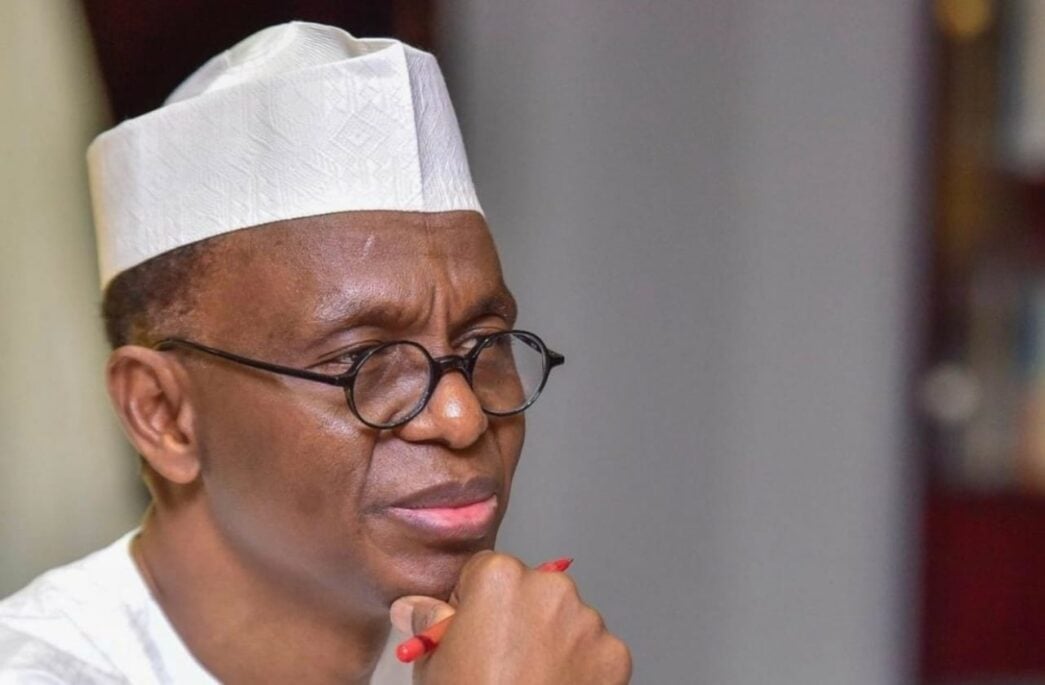
Nasiru El-Rufa'i

El-Rufai petitions police commission, accuses Kaduna CP of misconduct

By Abdullahi Mukhtar Algasgaini

A formal complaint has been lodged with the Police Service Commission (PSC) against the Commissioner of Police and other officers of the Kaduna State Command, alleging widespread unprofessional conduct and abuse of office.

The petition, authored by the former Governor of Kaduna State, Malam Nasir El-Rufai, calls for an “immediate, impartial, and exhaustive investigation” into the officers’ activities. It alleges serial violations of the Nigeria Police Act 2020 and its regulations.

In the letter addressed to the Chairman of the PSC, El-Rufai stated he was motivated by a sense of duty as a citizen and former public servant. He highlighted his eight-year tenure as governor and expressed concern for the integrity of the Nigeria Police Force.

The former governor urged the Commission to exercise its constitutional and statutory powers to enforce discipline and promote ethical conduct within the force. The specific details of the alleged misconduct were not immediately disclosed in the petition’s introductory section.

The petition is expected to trigger a formal inquiry by the PSC into the operations of the Kaduna State Police Command under its current leadership.

Still on El-Rufa’i and Yar’Adua

By Saifullahi Attahir

In his article, titled “Yar’adua: Great Expectation, Disappointing Outcome,” Mallam Nasir El-Rufa’i wrote that the late Umaru Musa Yar’adua graduated from ABU in 1975 and did his youth service (NYSC) at Holy Child College in Lagos as a chemistry teacher.

After the service year, Yar’adua took a government job at the College of Arts, Science and Technology (CAST), Zaria, as a chemistry lecturer. He later obtained his MSc in 1978, while continuing his teaching career at the same CAST until 1983, when he joined his brother’s business after the latter resigned from the National Service as second-in-command to General Olusegun Obasanjo during the handover to civilian rule in 1979.

The above narrative can attest to the clear moral right Yar’adua has over Mallam Nasir, despite the latter’s constant attacks. I’m sure that in the years between 1976 and 1983, the late Umaru could have accessed all the privileges a graduate could have as a brother to a senior military officer and son of the establishment. His service year in the grammar school and his continued lecturing job at CAST Zaria can testify to a great deal about the individual Yar’adua, his brother Shehu, and the regime.

As a young and well-connected chemistry graduate, Umaru Yar’adua could have access to serve in the newly established NNPC, top agricultural firms, top Lagos banks, or even become a legislative aide in the green or red chamber.

Securing a job through connections is a common and sometimes effective method. Networking, which involves leveraging personal and professional relationships, can significantly increase your chances of finding a job. Indeed, many talented and industrious individuals can be harnessed through this process, although it may be perceived as nepotistic. Hadiza Bala Usman got her start at BPE by El Rufa’i through a similar path.

Of course, time has changed; it’s now normal that specific places, such as CBN, FIRS, NPA, BPE, top private firms, and Federal MDAs, are not accessible to ordinary corps members. We can still recall a time when a brother of Nigeria’s second-in-command opted to attend a grammar school and later took a teaching job at a college in Zaria. But still, that doesn’t prevent him from becoming Nigeria’s president.

While the 5th May remembrance has been immortalised in the hearts of Nigerians despite Yar’adua’s short stint as president, Mallam El-Rufa’i was still battling and settling past scores and fights.

Saifullahi Attahir wrote from Federal University Dutse via saifullahiattahir93@gmail.com 

Inclusive leadership, not religious dominance, will save Nigeria

By Malam Aminu Wase

A presidential Muslim-Muslim ticket is not merely a political strategy. It is a catalyst for national instability. In a country like Nigeria, which is still grappling with deep-seated mutual distrust, such a move sends the wrong signal. 

For Nigeria to truly progress, its leadership must reflect the nation’s rich diversity. Only through inclusive governance can we assure every citizen, regardless of faith, ethnicity, or region, that they have a rightful place in the nation’s power structure.

Malam Nasir Ahmed El-Rufai played a pivotal role in promoting the idea of a Muslim-Muslim presidential ticket. While this strategy may have been politically calculated, it encouraged religious and ethnic groups to compete for power, rather than unite under a shared national vision that addresses the hardships facing all Nigerians.

Ironically, many of the architects of the Muslim-Muslim ticket are not reaping the benefits of their efforts. The lofty expectations they once championed of inclusion and representation have been dashed. Some have even defected to other political parties, disillusioned by the very system they helped establish.

Nigerians must open their eyes. The struggle among the political elite is not about improving the lives of the masses; it is a scramble for personal gain, to secure privileges for their children, families, and close associates. We must rise above the politics of religion and region and demand leadership representing all Nigerians.

I urge fellow citizens to reject the idea of a Muslim-Muslim ticket in the upcoming election. Let us vote for candidates committed to unifying Nigeria, easing economic hardship, and introducing policies that genuinely impact the lives of ordinary people.

Malam Aminu Wase, Write from Kaduna State. He can be reached via aminusaniusman3@gmail.com.

Kaduna revenue agency refutes El-Rufai’s claim, reports growth in IGR under Uba Sani

By Abdullahi Mukhtar Algasgaini

The Kaduna State Internal Revenue Service (KADIRS) has dismissed claims by former Governor Nasir El-Rufai that the state’s monthly internally generated revenue (IGR) has declined, while also refuting allegations of an illegal N100 million diversion from state funds.  

Speaking at a press conference, KADIRS Executive Chairman Jerry Adams stated that under the current administration of Governor Uba Sani, the state has recorded significant revenue growth, surpassing figures achieved during El-Rufai’s tenure.  

“It is necessary to clarify certain statements made by former Governor Nasir El-Rufai. Whether due to incomplete information or a deliberate attempt to mislead, it is important to set the record straight,” Adams said.  

El-Rufai had claimed that Kaduna’s monthly revenue dropped from N7 billion to N2 billion under Governor Uba Sani. However, Adams refuted this, stating that the highest annual IGR recorded under El-Rufai was N59 billion in 2022, translating to a monthly average of N4.9 billion.  

He further explained that a significant portion of the revenue between 2019 and 2022 came from one-off sources, including debt recoveries and government asset sales, which amounted to N45 billion.  

“If these irregular revenues are excluded, the actual monthly IGR at that time was far lower than what is being claimed,” Adams noted.  

Regarding the alleged illegal transfer of N100 million, Adams dismissed it as “completely false,” explaining that Kaduna’s revenue collection system operates entirely through PAYKADUNA, with all payments going directly into the state’s Treasury Single Account (TSA).  

He emphasized that under Governor Uba Sani, Kaduna’s IGR has seen consistent improvement.  

“In 2023 alone, Kaduna State generated N62.48 billion in IGR, which increased to N71 billion in 2024—averaging N5.2 billion and N6 billion monthly, respectively.”  

“In just January and February 2025, the state has already collected N7.46 billion and N6.68 billion, totaling N14.16 billion in two months—without any debt recoveries or one-off revenues.”  

“This demonstrates the commitment and diligence of this administration in driving economic growth and ensuring sustainable development,” Adams stated.

El-Rufai’s defection and APC’s growing fractures

By Abdulhamid Abdullahi Aliyu

In a move that has sent shockwaves through Nigeria’s political landscape, former Kaduna State Governor Nasir El-Rufai has officially parted ways with the All Progressives Congress (APC) and pitched his tent with the Social Democratic Party (SDP).

While party defections are common in Nigerian politics, El-Rufai’s departure from the ruling party carries significant political implications that could alter the dynamics leading up to the 2027 elections.

For a man instrumental in the formation of the APC and a staunch ally of former President Muhammadu Buhari, El-Rufai’s departure raises critical questions. Is this a strategic move to remain politically relevant? A protest against President Bola Tinubu’s leadership? Or does it signal widening cracks within the APC that could deepen in the coming years?

El-Rufai’s political journey within the APC has been marked by loyalty, controversy, and influence. As a key figure in the party’s 2015 victory over the PDP, he was regarded as one of the strongest voices in Buhari’s inner circle.

His tenure as Kaduna governor further solidified his image as a reformist, albeit one who often courted controversy. From restructuring Kaduna’s civil service to his hardline stance on security issues, El-Rufai commanded attention. Under Buhari, he wielded significant influence, not just within Kaduna but on the national stage.

Many expected him to secure a prominent role in Tinubu’s government. However, cracks began to show when he was dropped from the ministerial list, allegedly over security concerns flagged by the National Security Adviser.

El-Rufai’s departure from the APC is not a hasty decision; it represents the culmination of increasing frustration. His rejection as a minister was perceived by many as a calculated marginalization, signaling the start of his estrangement from the ruling party’s core decision-making processes. 

Reports suggest he became increasingly disillusioned with Tinubu’s governance style, particularly in handling economic and security challenges. The former governor is known for his bluntness, and sources indicate that his inability to influence policies within the APC played a significant role in his decision.

While his supporters argue that his move to the SDP is based on principle, critics suggest it is driven by personal ambition—positioning himself for a possible political comeback in 2027.

El-Rufai’s choice of the SDP, rather than the PDP or a new political movement, is intriguing. The SDP remains a relatively small force compared to the APC and PDP, raising questions about whether he genuinely believes in the party’s ideology or sees it as a convenient platform to negotiate his future.

Some analysts believe El-Rufai is playing the long game—joining a smaller party now to avoid confrontations with APC heavyweights while testing the waters for potential alliances with other opposition figures ahead of 2027. Others argue that he has limited options, given his strained relationship with Tinubu’s camp and his unlikelihood of returning to the PDP, a party he once fiercely opposed.

Expectedly, the APC has brushed off El-Rufai’s departure, with the Presidency dismissing it as driven by “inordinate ambition.” Kaduna’s APC leadership has also claimed they are unbothered, arguing that his influence has waned significantly since leaving office. 

However, political observers note that El-Rufai’s defection could have ripple effects. While he may not command a nationwide political structure, his ability to shape narratives, especially in northern politics, should not be underestimated. Some opposition figures, including former Senator Shehu Sani, have downplayed his move, arguing that El-Rufai’s political relevance has diminished.

El-Rufai’s defection is not just about one man leaving a party—it reflects deeper tensions within the APC. Since taking power in 2023, Tinubu has had to balance competing interests within the ruling party, from former Buhari loyalists to his own political allies. The cracks within the party are becoming more visible, and if not managed properly, they could deepen before 2027.

For El-Rufai, the road ahead is uncertain. Aligning with the SDP may be a strategic step, but it remains to be seen whether it will translate into real political leverage. Is this the beginning of a broader coalition to challenge APC dominance, or will it end up as another failed defection story in Nigeria’s political history?

One thing is clear—El-Rufai’s move has reignited conversations about Nigeria’s shifting political landscape. Whether it leads to a major realignment or fizzles out as an individual protest remains to be seen.

Abdulhamid Abdullahi Aliyu, an NYSC serving corps member, writes from the Center for Crisis Communication (CCC) in Abuja.

Lamido rejects El-Rufai’s call to join SDP, defends loyalty to PDP

By Uzair Adam 

Former Jigawa State Governor, Sule Lamido, has dismissed an invitation from former Kaduna State Governor, Nasir El-Rufai, urging opposition politicians to join the Social Democratic Party (SDP).  

El-Rufai, who recently defected from the ruling All Progressives Congress (APC) to the SDP, made the appeal in an interview with BBC Hausa, inviting prominent figures such as Atiku Abubakar, Peter Obi, Rotimi Amaechi, and Rauf Aregbesola to join him in the party.  

Responding in a separate BBC Hausa interview on Sunday, March 16, 2025, Lamido described El-Rufai’s call as an insult, emphasizing that the People’s Democratic Party (PDP) was instrumental in shaping the former Kaduna governor’s political career.  

“The party we built, the PDP, is what gave birth to El-Rufai. He is not in a position to make us abandon it,” Lamido said.  

He also criticized El-Rufai’s leadership approach, questioning his sudden shift to the SDP after years in the APC.  

“Leadership requires patience, vision, and commitment to the peace and stability of the country. It should not be driven by anger or personal interests,” he added.  

Reaffirming his allegiance to the PDP, Lamido stated that he had no reason to leave the party, saying, “If I wanted to leave, I would have done so in 2014 when the APC was formed.”  

He advised El-Rufai to prioritize national interest over political grievances, stressing that the PDP remains focused on rebuilding its strength after losing the 2015 presidential election.

‘Nasir El-Rufai’ game has commenced

By Zayyad I. Muhammad

The 2027 game will not only be interesting but will also mark a significant turning point in Nigeria’s political landscape. The voting patterns and intricate scheming that shaped the 2023 elections will not be replicated in their exact form, yet their influence will still be felt. While the key political figures who played major roles in 2023 will remain central to the unfolding drama, they will adopt new strategies, shift alliances, and engage in different forms of political maneuvering.

The battle for power will be defined by strong political platforms, influential players, a formidable war chest, scientifically crafted strategies, and carefully calculated negotiations. The presidential race, in particular, will be a high-stakes contest, shaped by a mix of ambition, ideological shifts, and pragmatic political decisions.

An incumbent seeking a second term will be a bulldozer—with an enormous war chest, a solid structure, and the full weight of state power behind them. President Bola Ahmed Tinubu will fight tooth and nail to secure reelection, as mostly, any first term president will do so. However, the APC stronghold – the North, is gradually slipping from the party’s grasp. In fact, 75% of President Tinubu’s second-term resources and energy will be expended in the North—making it a crucial battleground for his team. If the Tinubus have played their card very well, the North would have been firmly in the arms.

The North will be the main battleground, while the Southwest will find itself in a dilemma—torn between supporting their own and upholding their deep-rooted tradition of rewarding excellence. The Southeast will watch from the sidelines with arms akimbo but will ultimately follow their hearts, while the South-South may take a more indifferent stance, adopting a “let’s just move” attitude.

The recent resignation of Nasir El-Rufai from the All Progressives Congress (APC) and his defection to the Social Democratic Party (SDP) is just one of many major developments that will reshape the political terrain in the coming months and 2027 approaches. El-Rufa’i’s early defection serves as a catalyst for the unfolding political drama. The Tinubu team is fortunate to have this early warning, giving them ample time to strategize. Meanwhile, the opposition will be on the offensive, while the APC will be forced into a defensive position.

For the opposition, the biggest challenge will be balancing the interests of four key groups: the Atiku camp, the Kwankwaso camp, the Peter Obi camp, and the El-Rufai/Buhari former ministers’ camp. They must navigate these competing interests carefully if they hope to strike the winning formula.

As political camps solidify and realign, new alliances will emerge, while old ones will fracture under the weight of conflicting interests. The electorate, too, will evolve—demanding more from their leaders and scrutinizing candidates beyond party affiliations.

Ultimately, the 2027 game will be a masterclass in political strategy and power dynamics—one that students of politics, analysts, and observers alike will find fascinating to study for years to come.

Zayyad I. Muhammad writes from Abuja, zaymohd@yahoo.com, 08036070980

Nasir El-Rufai dumps APC, joins SDP

By Anas Abbas

Nasir Ahmad El-Rufai, the former governor of Kaduna State, has officially announced his resignation from the All Progressives Congress (APC) and his decision to join the Social Democratic Party (SDP).

In a resignation letter submitted to his local ward in Kaduna State on Monday, El-Rufai cited irreconcilable differences with the ruling party’s leadership and expressed disappointment with the APC’s recent direction.

“I have served the APC diligently and have contributed significantly to its viability as a political platform,” he stated. “However, recent developments have revealed a concerning disregard for democratic principles and progressive values that I hold dear.

”As a founding member of the APC, El-Rufai played a pivotal role in securing electoral victories for the party in 2015, 2019, and 2023.

Reflecting on his tenure as governor, he emphasized his administration’s commitment to human development, education, healthcare, infrastructure, job creation, and investment.

He explained that his departure from the APC was motivated by growing concerns regarding governance and internal party dynamics.

“At this juncture in my political journey, I must seek a different political platform that aligns with the progressive values I cherish,” he remarked.

Upon joining the SDP, El-Rufai expressed his gratitude to mentors, colleagues, and supporters, reaffirming his dedication to advancing democratic principles.

“As a member of the SDP, I am committed to building a unified democratic front to challenge the APC in the upcoming elections,” he concluded.

Nuhu Ribadu for President 2031?

By Zayyad I. Muhammad

The Nigerian political landscape is never short of intrigue, speculation, and high-stakes maneuvering. The latest storm centers around Mallam Nuhu Ribadu, Nigeria’s National Security Adviser (NSA), and allegations made by his ‘former’ ally and friend, Mallam Nasir El-Rufai, the former governor of Kaduna State.

El-Rufai has accused Ribadu of secretly positioning himself for a presidential bid in 2031, alleging that he is working to eliminate key northern politicians before the elections. In an Arise TV interview, El-Rufai said:

“Somebody wants to destroy my reputation. Why? Nuhu Ribadu wants to be president in 2031. He has to eliminate every northerner that he thinks is on the radar.”

These allegations have sparked intense debate, given Ribadu’s current position as the NSA, one of the most powerful offices in the country. The role demands absolute loyalty to the sitting president, and any sign of personal political ambition would be politically dangerous.

However, Ribadu has vehemently denied the claims, dismissing any suggestion that he is planning a presidential run in 2031. In his response, he stated:

“For the avoidance of doubt, I want to put it on record that I have never discussed running for president in 2031 with anybody.”

Currently, President Bola Ahmed Tinubu is in the second year of his first term and is widely anticipated to run for reelection in 2027. If he wins, his administration would extend until 2031. Considering this timeline, it seems premature for anyone in Tinubu’s inner circle—particularly someone in such a sensitive position as the NSA—to be planning a presidential bid so early.

To be fair to Ribadu, every seasoned political observer knows he is too intelligent and experienced to make such a politically reckless move. Launching a presidential campaign while still serving in a crucial role would create unnecessary distractions, fuel rivalries, and generate deep animosities within the government. It would also call his loyalty to Tinubu into question.

So why is Ribadu being linked to 2031?

First, his close relationship with President Tinubu has earned him the title of Tinubu’s golden boy (Dan Fulani). His reputation as a disciplined, intelligent,  experienced, and competent leader makes him a natural contender in any discussion about potential successors. Any rising political figure will inevitably attract speculation in a political climate where future ambitions are often carefully managed behind closed doors but widely discussed publicly by everyday people.

Second, the political class understands that succession planning is always at play, even when not publicly acknowledged. While Ribadu may not currently campaign for the presidency, political opportunities can arise unexpectedly. Nigerian politicians are known for their ability to seize the moment when the circumstances align, even if it was not originally in their plans.

Politics is unpredictable, and today’s denials can quickly become tomorrow’s declarations. Whether or not Nuhu Ribadu harbors presidential ambitions, the reality is that he possesses the qualities of a strong contender—experience, credibility, and proximity to power. If the opportunity presented itself, would he take it?

Only time will tell. But one thing is sure: The road to 2031 has already begun, and the political maneuvering will only intensify in the coming years.

Zayyad I. Muhammad writes from Abuja via zaymohd@yahoo.com.

A letter to Mallam El-Rufai

I would like to start by expressing my profound admiration for your work. I must admit that I have always been a great fan of yours, appreciating your leadership skills and vision more than any politician in Kaduna State.

Your impressive work ethic, policy foresight, demonstrated competence, and ability to resist criticism and implement what you consider the right thing earned you a place in my heart.

(Un)fortunately, I’m not the kind of fan who always praises his favourites and considers any criticism an attempt to discredit his master.

Sir, your recent actions, remarks, and holier-than-thou attitude have led some to speculate that you are suffering from Out-of-Office syndrome. However, I prefer not to believe them.

In your recent interview with Arise TV,  you said things that, had I not watched the interview, I would have dismissed as typical political propaganda.

Firstly, you defined “friendship” as  “someone that has the fidelity to some ethical and moral standards, and will be there for you when you need him, not when it’s time to party or enjoy.”

Of course, I agree with you to some extent. However, in this context, are you suggesting that you prioritise loyalty over accountability, even if it means ignoring the concerns of those who elected you?

I believe that, by your definition of “friendship,” Uba Sani should prioritise being a “friend “ to the people of Kaduna who are struggling to get a meal due to these “economic reforms “ (which you said you supported and are the right orthodox policies…) rather than showing loyalty to his predecessor.

In your interview with Charles, you mentioned that the Late Yar’adua invited you to join his cabinet, an offer you declined. This remark reminded me of another instance in which you used his death as a mocking tool to brag about your resilience.

Your allegations against Nuhu Ribadu and his subsequent response reveal a lot about your dynamics with him. They raise questions about who has maintained the values of true friendship and who has not. I won’t elaborate further.

Sir, as you are probably approaching the last decade of your active political career, I would advise you to focus on nurturing your private life (considering your frequent references to prioritising it) rather than investing time and energy in making new (or perceived) enemies.

Do not dwell too much on criticism and allegations; do what Kwankwaso did: allow your track record to speak for you.

Lastly, may your famous political slogan — “MURUS” — not be used against you.

Best regards,

Ukasha Sani Idris

Facebook: Ukasha a Kofarnassarawa.