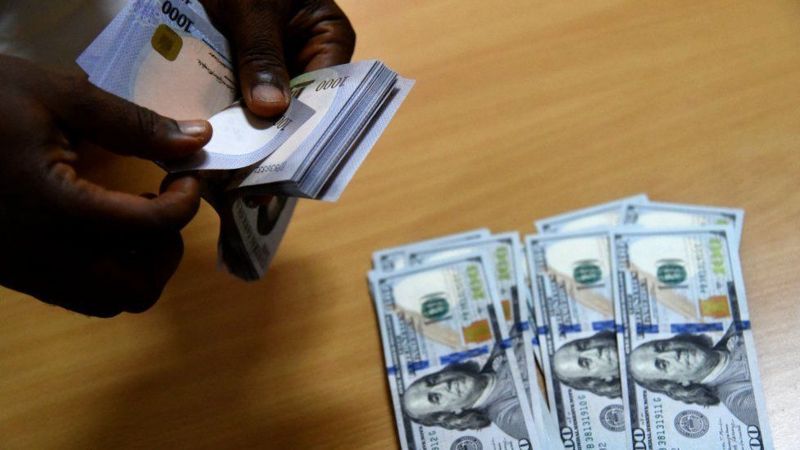
Naira

Is this inflation a global problem?

By Salisu Yusuf

I was discussing with a friend who’s an auto broker and an arbitrage specialising in buying and selling goods from Benin Republic, Niger Republic and Nigeria. Our topic of discourse was the so-called global inflation put forward recently by the pro-government campaigners to defend our economic limbo.

From around 2000 to date, he argued cogently, the prices of goods and services were stable and fixed in Niger, Benin and Saudi Arabia – the economic reference points and benchmarks of our so-called economic analysts. They depend blindly on the economic malfeasance that befalls our country. The only change, he argued, is the exchange rate of our Naira to any foreign monetary denominator as our Naira plunges daily in value due mainly to our poor economic managers.

For example, around 2000, the tokunbo golf car was sold at 800,000 CFA Francs. Each 1000 CFA francs was exchanged then at ₦600. So, around that time, you could buy the car brand at around ₦768,000. Today, the same car is sold at the same 800,000 CFA francs. What only changes is the rate of exchange due to the Naira depreciation. Each 1000 CFA francs is exchanged at ₦960 instead of ₦600. So, the same car sold at ₦768,000 is now sold at ₦1.7m in the Benin Republic. 

Moreover, a bag of rice that could be purchased at 18,000 CFA francs, equivalent to ₦10, 800, for the CFA francs, was sold at a lower rate. Today, the same bag of rice is sold at the same price of 18 CFA francs as two years ago, but at a high price of around ₦22,080 because of the Naira devaluation.

Some people measure this so-called global inflation theory with the price of a meal in  Saudi Arabia. A friend once told me that a meal in a Saudi Arabian restaurant could cost you ₦5000, whereas ₦1000 could buy you a meal in Nigeria. I laughed at his low-level economic analysis. The ₦5000 Saudi meal is only realised if you exchange it for our depreciated Naira. If you calculate the number of Saudi Riyals exchanged for the ₦5000 is a low amount for a  person living in Saudi Arabia. In other words, the Saudi Riyal is only valuable if, and only if it’s changed to Naira! This is the same economic scenario I explained earlier in the CFA francs/naira ratio. 

The rate of exchange between Naira and Riyal, CFA Francs/ Naira, explains the economic limbo being faced by our country. This further illustrates the Federal Government’s resolve to increase the Hajj value-added tax from 5 per cent to 15 per cent. Moreover, it also hints at the government’s Hajj subsidy removal – hence, the exponential rise in 2022 Hajj fares to nearly ₦2.5m for the participating Nigerian pilgrims.

In the Niger Republic, prices of commodities are stable and fixed, as they do not fluctuate like in Nigeria. This is because President Bazoum manages the economy well; the government implements a protectionist economic policy, where Nigeriene goods are protected against their Nigerian counterparts through restrictions against export or putting high tariffs and handicaps placed through import quotas. Though many Nigerienes export petroleum in massive quantity from Nigeria, President Bazoum has restricted exporting of gas to Nigeria and restricts its consumption internally. Defaulters are taxed. Sometimes the products and their means of transportation are confiscated by gendarmes. 

Meanwhile, the high inflation rate has affected the price of our internal commodities. For instance, the gas imported from Niger is much cheaper than ours in Nigeria. Daily, hundreds of motorcycle riders import the Nigeriene gas on a large scale without paying any import tariff. Antithetically, Nigerian petroleum products are being exported into Niger without paying for excision to the Federal Government because of the border closure. 

Therefore, smugglers from, especially Niger, play their trump cards as they usually export our products freely, sell them in CFA francs at an exponential price in Niger, come back to our border and exchange the CFA into Naira, rebuy our commodities and go back to sell at a bargain price.

While we expect Mr President to cap up his swansong with a socio-economic legacy, we are daily disappointed that the man will finally end his tenure as a colossal failure, a disappointment to a poor talaka that stood blood, toil, tears and sweat to vote for this man.

Salisu Yusuf wrote from Katsina via salisuyusuf111@gmail.com.
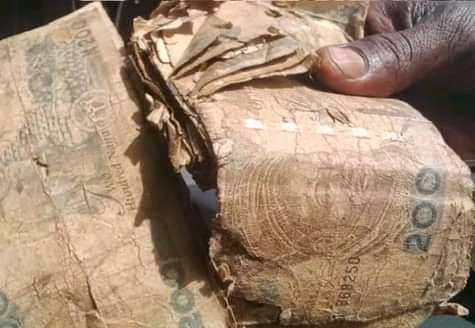
CBN vows to punish banks over deposit of mutilated naira notes

By Ahmad Deedat Zakari

The Central Bank of Nigeria, CBN, has announced a plan to punish banks for depositing mutilated naira notes. 

This was made known to the public in Abuja through a circular signed by CBN’s Director of Currency Operations, Mr Ahmed Umar, over the weekend.

According to Mr Umar, the warning to the banks to stop depositing mutilated and composed banknotes will take effect from Friday, April 1, 2022.

“The management of the CBN observed with concern the increase in the number of composed banknotes deposited by DMBs and request for replacement of such banknotes by members of the public.

“The existence of composed banknotes in the economy falsifies the true value of currency in circulation, and can also be avenue for fraudulent activities.

Consequently, any composed banknote discovered in the deposit of DMBs shall attract penalty of 400 per cent of the value,” The circular reads.

Composed banknotes or mutilated Naira notes usually comprise several parts of different banknotes of the same denomination.

Beyond the lines of “Devaluation”

By Mohammed Baba Goro

The issue of foreign exchange has been on the front burner in Nigeria’s media space for a while now. Unfortunately, the debate has been so over-flogged that one could hardly know who to cue behind for economic sense and/or who to blame about the helpless fall of Nigerian naira.  Recently, the vice president of Nigeria, Professor Yemi  Osibanjo, who by every sense could be categorised amongst personalities with intellectual power, also frankly spoke that the Central Bank should devalue the country’s currency, naira. But, that is not the only strongest weapon that could kill the werewolf.

As an economic policy, Devaluation is simply referred to as the official reduction in the value of a country’s currency in relation to another or other countries’ currencies: say, Nigeria’s “Naira” with the United States “dollar”. Assuming the current exchange rate is thus:  N410 against  $1 and the CBN decides to devalue the naira by, say, 25 per cent, the naira value will decline, and the new rate will be around N512 to 513 against $1 and against the initial rate of N410. This would make the export of goods and services cheaper and importation dearer. As easy as it sounds, it is easy, but CBN will have high inflation to grapple with.

Ordinarily, that should be a path to take, but the question on the lips of every rational Nigerian is that what massive goods do Nigeria produce? This is a million-dollar question on the lips of every Nigerian for a country that, 60 years after her political independence, still struggles for her economic Independence – Nigeria still imports everything it needs, including essential food items like maise, rice beans and unfortunately, recently, even egg.

Nigeria had to lift a ban last year to import maize for poultry farmers. According to a statistic, the national average for Nigeria’s maize need is about 15million metric tonnes but can only produce 10million, going about with a huge deficit that could have been an opportunity for a source of forex. Even though rice production has increased, the country can still not satisfy its teeming and growing population of over 200 million. This is on the one hand. On the other hand, about 30 per cent of the country’s foreign exchange earnings go to the importation of petroleum products.

The National Bureau of Statistics (NBS) released another mind-boggling stats that the importation of agricultural products has increased by over 140 per cent year-on-year. Devaluation is primarily an “Expenditure-switching policy” that basically switches spending from imported goods to domestically produced goods and for exports.

But judging from the above facts and figures, one would deduce that local production that should drive export and reduce pressure on meagre forex is practically not there. So, “Beyond the lines of Devaluation” is productivity! Productivity!! And productivity!!!

Significantly, production of not only primary products but adding value to raw products so as to create more jobs, generate more revenues, build the needed infrastructures and consequently transform the economy. Brazil in 2011 devalued its currency to spur export without tackling the underlined structural problems and ended up worse off.

So let’s go back to the theory, and the economic argument should be, what determines the exchange rate?

Gustav Cassel, in the ’20s, propounded the purchasing power parity theory, which explains that the determination of two inconvertible paper currencies is determined by the equality of their purchasing power. What this means is that the exchange rate between two countries is determined by the level of their relative prices of goods and services.

A look at Nigeria’s inflation rate, coming from above 18 per cent, would tell you why we are at an exchange rate crisis and why we need to look inwardly and produce more locally. Though the Mint-gold parity theory is no longer in tune with the modern economic practices, but even the Balance of payment parity theory has its link with a country’s productivity level. Therefore, the government should deal with the fundamental and structural rigidities in productivity, trade, security, and infrastructure. Watch naira take her good position and fair value and stop forcing the monetary authority to over-stretch its instruments.

Mohammed Baba Goro can be contacted via babs9770@gmail.com.