Muslims

On exploitations at marriages

By Alkasim Harisu Alkasim

The challenges of marriage are common knowledge within and outside Nigeria. To sensible people, marriage is a keystone of luxury life. Yet, although marriage sometimes falls short of happiness and peace, personal uprightness and esteem still accompany and embellish those in the industry.

The marriage industry is chaotic. It is now commonplace to see overaged women competing for the love of a single male person alongside younger ladies. This explains how choked the industry is. Marriage, as an institution, demands a lot from us. To excel in this business, one has to school himself in patience, courage and determination. Otherwise, one will do a lousy job, and things will go south. 

In today’s materialistic world, what we call true love is lacking. Money buys love. A person can date a highborn woman even if he is lowborn. What allows him to do so is bucks. In cultures such as Indian, there is what they call a “caste system” that stratifies the society whereby one marries from within one’s caste. Interclass marriage is an abomination and, thus, a bad omen. Excessive expenses usher marriage.

In northern Nigeria today, to marry means a lot. One has to break the bank to afford marriage and multitask to afford to run a family. The trousseau he will gather robs him of too much money. If not loaded, one will feel like breathing his last while readying himself for this Sisyphean task.

Many a great family pressure prospective male spouses a lot to the extent they feel compelled to compensate their colossal expenditure by undertreating the girls they wed. The sight of the girls bores them; as a result, they start to mistreat them. This also purges them of the hate they hold for these exploitative families.

Poverty is raging, and the employment industry is becoming more competitive. Degree holders swarm places looking for well-paying jobs. As a result, some graduates are now resorting to low jobs that discredit scholarship and the status they are beginning to build. Some, willy nilly, accept works that break the back and pay low, thanks to the devastating nature of Nigeria’s economy.

Telling a greedy girlfriend that your wages or salary is not handsome implies losing her.  It once happened to my friend whose name I won’t mention here, for I feel that should be private. This happened when his family went to the girlfriend’s place. His father honestly told them about the level of income of his son. This bitter truth opened for my friend Pandora’s box. The relationship had since then staggered. In short, the two lovebirds have parted ways.

What hardens the issue of marriage in the North is our belittling the effort of even the hardworking people. We neither accept what our sons-in-law present nor study the situation on the ground. We need to wise up on this. But, unfortunately, some circumstances press people to do only those things that top their priorities.

It is worrisome that many families capitalise on their children’s beauty to milk boys of all their money. Such homes allow their daughters to tryst (zance) with more than a person at a time. In some houses, queues are made every day for a single girl. Boys take turns. Sometimes, some inpatient boyfriends cut in on the conversations of their co-suitors. What a world! The girl is seen as a moneymaking machine. Likely, after cashing in on her suitors, the girl will go out of fashion. Her beauty and charisma will decrease. As she puts on age, her boyfriends vanish, and the likelihood to marry a dream husband reduces. Now it is her younger sisters’ time. When it salaams at their home, the sendee will mention the name of her younger sisters instead. It will take time before she gets dated by somebody. Indeed life is a roller coaster. 

The social commerce between a girl and a boy worsens when the girl’s family pressure the boy for money. As he feels absolutely tired of lifting the girl’s responsibilities, he looks for a way to benefit from the dealing. The social intercourse between a girl and a boy does not stop at the former’s house as the duo rendezvous at their chosen spots. Now, the love glue between them starts to grow stronger. He will undeniably feel the urge to do the unlawful with her to the level he begins bedding her.

The groom has to pay dowry that a time costs him much. There is an amount which, if he pays below, he will have his money returned or hotly debated right at the place where the thing of the knot is occurring. In some instances, such disagreement plants in the groom’s family some disregard for the bride’s home. A bride needs to be lodged and fed. And if the groom doesn’t have his own house, he will have to find a place to sleep with his wife. Today’s brides come with vast furniture; the groom has to look for a house that sleeps like five people to contain his wife’s belongings. 

Believe it or not, the complexion of our societies has changed; we are not aiming at uprightness. We are after money and money-related things. If you are monied, you are everything. You can marry who you want. One can be immoral and still have a choice wife. That is why the deep-pocketed hire people to fake it as their parents/relatives. A bastard, in the world of today, betters a son borne in wedlock. Therefore, to be virtuous is to be well-endowed.

Allah Ka gyara ma na. Amin.

Alkasim Harisu Alkasim wrote from Kano. He can be reached via alkasabba10@gmail.com.

Sultan calls on Muslims to look out for Jumada al-Thani moon

By Hussaina Sufyan Ahmed

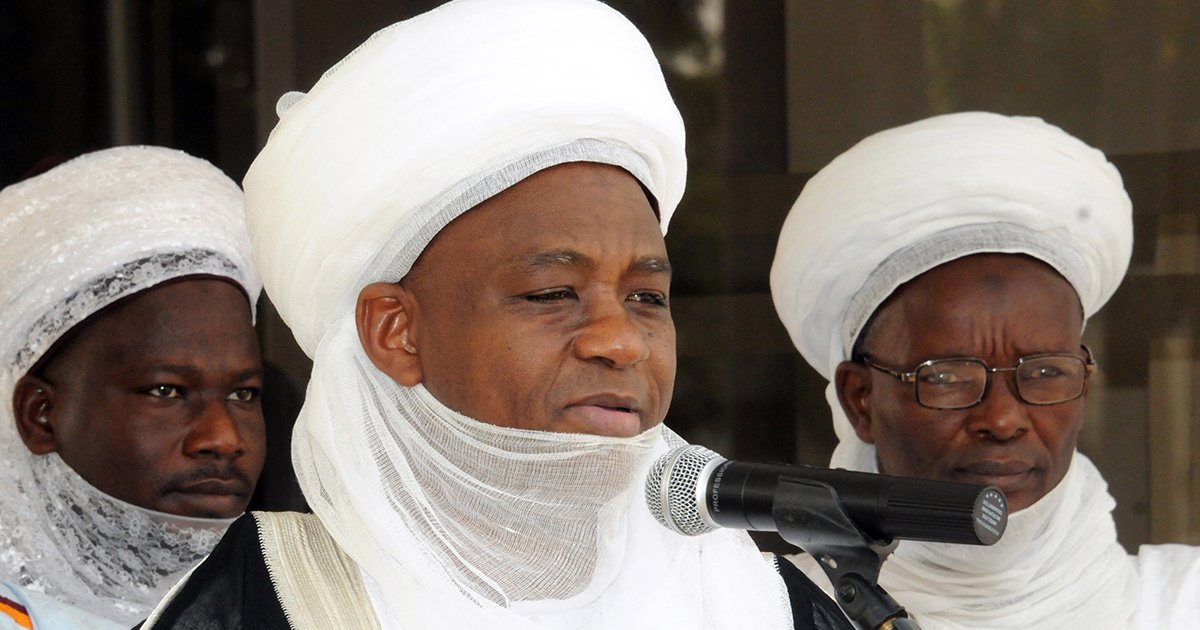
The President-General of the Nigeria Supreme Council for Islamic Affairs (NSCIA), Sultan of Sokoto, Sheikh Sa’ad Abubakar III, has called on Muslims all over Nigeria to watch out for the new moon of Jumada al-Thani 1443 AH on Sunday, January 02 2022.


He said in the press release:
“This is to inform the Muslim Ummah that Monday, January 03, 2022, which is equivalent to the 29th day of Jumada al-Awwal 1443AH, shall be the day to look out for the new moon of Jumada al-Thani 1443AH.


“Muslims are, therefore, requested to start looking for the new moon on Monday and report its sighting to the nearest district or village head for onward communication to the Sultan.” 


This statement was signed by Sambo Junaidu, Chairman, Advisory Committee on Religious Affairs, Sultanate Council, Sokoto State.

Possible reasons for Hisbah’s declining public image

By Ahmad Deedat Zakari

Hisbah, particularly that of Kano State, has become a constant subject of controversies. All thanks to social media, which provide platforms for the proliferation of information channels, expression of dissents, scrutiny and analyses of actions of agencies of government and organizations. Sadly, Hisbah is at the receiving end of online trolls, and the relative goodwill it enjoys is plummeting downward. The irony of Hisbah’s dilemma is her complicity in her woes. 

Generally, Hisbah is saddled with upholding community morals based on Qur’anic injunctions. However, in the case of Kano, it is a creation of the “Hisbah Board Law of 2003”. This became a child of necessity owing to the reluctance of the police to enforce the Sharia Penal Code.

In countries around the world where moral policing with the resemblance of what is obtainable in Hisbah is practised, like Pakistan and some Islamic countries, human rights violations are always prevalent. So, it is not surprising that people express their dismay when liquor bottles conveyed in trucks are confiscated. People believe their rights and the rights of others to do liquor business are being trampled on. For example, it’s alleged that the Kano State Hisbah Board recently invited Shatu Garko’s parents because she participated in the contest that led to her emergence as Miss Nigeria. Although Hisbah denied it, it did not sit well with liberal Muslims who argued that Miss Garko’s apparel aligns with Islamic teachings.

Another possible reason people are probably tired of Hisbah is how the organization dwells on trivialities amidst the many challenges that beleaguer today’s North and the country in general. This, no doubt, has reduced Hisbah to a comical sensation in some quarters. It is laughable that in a society where many of her youths are abusing drugs and coteries of substances, an organization for upholding moral values would focus its energy on the nudity of mannequins. In today’s North, many moral concerns of overwhelming importance are left unchecked.

A Hisbah’s top commander was reported to have been found under suspicious circumstances with a married woman in a hotel room. This was no doubt a clear case of a hunter being hunted. The organization did the needful by relieving him of his job. But the incident had doubtlessly left a dent on their image. I am not saying Hisbah members are angels that cannot violate the same ideas they seemingly defend and hold others accountable for. Still, just like how police in Nigeria are often viewed with suspicion, Hisbah would not be far from such if it keeps having corps with untamed libidinal desires.

Moreover, Hisbah has been selective in her moral crusade. The powerful and their children do not always answer for what Hisbah will term morally wrong if the ordinary man did it with no power. Not everyone can be summoned; the commoner with no voice is always the victim.

A Hisbah director recently tried to explain discrimination on who is invited for questioning and counselling. He opined that in Islam, leaders are not publicly chastised for their wrong actions. He is correct, however, does this rule extends to their children? With my modest understanding of Islam, it is not. It was rather a ridiculous excuse for what they can not do for obvious reasons. Although many see his excuse as hypocrisy, I do not see any difference either. Hisbah should not operate on the parlance of some animal farms where some animals are more equal than others. That way, it loses its credibility, goodwill and legitimacy.

Ahmad Deedat Zakari is an undergraduate at the Faculty of Law, Ahmadu Bello University, Zaria. He can be reached via ahmadzakari111@gmail.com.

Person of the year? Definitely more than that

By Abdulrazak Iliyasu Sansani

I begin this piece with what may strike the readers as a puzzling title. Perhaps it is. But I write this is in respect of the festive period and a matter closely associated with it. It is that time of the year where organisations, newspapers, magazines, groups, and even individuals sit to award, eulogise their heroes and heroines, or write about their persons of the year. A tradition that commenced in 1927 in the United States, Time magazine. 

According to a Wikipedia entry, ‘The tradition of selecting a “Man of the Year” began in 1927, with Time editors contemplating the newsmakers of the year. The idea was also an attempt to remedy the editorial embarrassment earlier that year of not having aviator Charles Lindbergh on its cover following his historic trans-Atlantic flight. By the end of the year, it was decided that a cover story featuring Lindbergh as the Man of the Year would serve both purposes.

Since then, this has continued with different labels, such as Man of the Year, Woman of the year, until the current and apt denomination: Person of the Year. I write today in the euphoria of the moment. But not so engrossed with it, as I had never subscribed nor joined those who partake in awarding their persons of the year, which has become prominent on social media recently by this time of the year. I relish seeing people excel in life. Although, I had never felt the urge to engage in the voguish celebration by an avalanche of people who issue this award chiefly on social media. 

But experts say to every rule; there is an exception. Although, I am not joining the trendy giving of awards or rather announcement of one’s person of the year. I have to acknowledge one of the most disciplined, rational, affable, and respectful Nigerians I have ever met. At this distressing hour of our history as a nation, I believe it is only fitting that patriotic people who have exhibited unique understanding in a multi-ethnic, multi-religious, sharply divided country like ours are honoured, encouraged, or at least merely mentioned as a mark of appreciation for their selfless contributions to our nation. Through the prism they behold our country, this country stands any chance of overcoming its insurmountable challenges. I am in awe of whoever has proven beyond any iota of doubt to be of a commendable grasp of the intricacies of our diverse society. Hence, I am writing this to recognise a man who has served this country meritoriously and honourably retired. 

While I applaud all these, it is in the basics that hold our communities today that this distinguished Nigerian has been more actively involved and has magnetised me to him. The simplest things build our society. They hold the fibre of our communities closely knit. Even though this is lost on many, I comprehend the importance of nation-building, starting from the communities. 

Nigeria as a whole has been sitting on a powder keg. This makes it extremely easy for disgruntled elements or even criminals to make capital out of it. So, whoever stops those from exploiting this deserves every reverence they can get. However, my person of the year, a man of impeccable character, has mastered the art of living in peace with others in a diverse country like Nigeria, especially the state he comes from: I am glad to hail from the same state as him. Yes, he comes from my state. He is Baba Augustine, commonly called Baban Ella in our neighbourhood, while we both refer to each other as Kawu, Baban Ella being a Jenjo man. 

I will, for this reason, address him as we usually call each other. Kawu lives in our Sabon Gari neighbourhood in Jalingo. More people don’t profess the same faith with him in our street. Muslims mainly own houses. Kawu is a Christian. It is now a time Muslims and Christians find themselves jostling to relocate to neighbourhoods predominantly occupied by those who worship God the way they do in fulfilment of the polarised realities of our country majorly resided by adherents of the two faiths. But as I was reliably informed, Kawu has resisted countless times the pleas to transpose by those who have accepted the new order of doing things. They believe it is safer to live in places inhabited only by members of their faiths. However, there is only a semblance of security in some instances, even in these types of neighbourhoods. 

The nitty-gritty of the matter is not that he has flagrantly refused to move into another place. But he has continued to relate with people from all social strata with unmatchable grace, sincerity, dignity, and esteem. Moreover, the way he attends to society’s problems is refreshing, laudable, and gratifying. Wedding ceremonies, naming ceremonies, burial ceremonies, community meetings; name them, he is there and participates fully with the families of those involved in any of these regardless of their faith.

While I don’t necessarily fancy awards, I get excited seeing worthy awardees being awarded or even merely celebrating people who have distinguished themselves by living exemplary lives irrespective of their pockets, which draws many awards to personalities rather than refined manners that help nation-building. 

Nigerians must celebrate worthy people like Kawu. But, Nigerians should not only stop at that. They should go further to borrow a leaf from them and apply it in the arduous task of nation-building, which must begin with one being a better person before influencing the next person, the family, the next-door neighbour, friends, colleagues, and the country as a whole. 

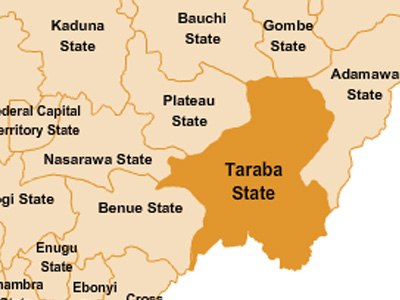
Abdulrazak Iliyasu Sansani wrote from Turaki B, Jalingo, Taraba State. He can be reached via abdulrazaksansani93@gmail.com.

From Proliferating Worship Places to Empowering Worshippers: A Reflection on Philanthropic Reprioritization in Nigeria (II)

By Abdullahi Abubakar Lamido

A person who sponsors and takes good care of a single orphan is assured of a mansion in the choicest quarters of Firdaus at the centre of the Prophet’s Estate, enjoying their eternal life as a neighbour to the Infallible Master (sallalahu alaihi wa sallam). In the Hadith of Bukhari, the Prophet says, “The caretaker of the orphan and I will enter paradise like this, raising (by way of illustration) his forefinger and middle finger jointly, leaving no space in-between.”

A community flooded with orphans and vulnerable children with no access to food, clothing, shelter, education, and medicare; orphans whose neglect aggravate their vulnerability to all sorts of socio-economic dangers; should prioritise taking care of them. If competing in building mosques even where there is less need is to get paradise, why not also invest in this sure way to Heaven?

And, why not consider endowments for fighting hunger also? When a person asked the Prophet, what is the best act in Islam, the Prophet mentioned two actions: “To feed (others) and to greet those whom you know and those whom you do not know” (Bukhari). And the Prophet also counted “feeding others” among the surest ways to paradise, alongside spreading salam, strengthening kinship ties and night prayers. Why not, then also emphasise in our society, making endowments for feeding the needy and the millions of the malnourished and unnourished children as a guaranteed path to paradise? 

My honest opinion is that rather than rebuilding or redecorating some mosques, we need to invest more in empowering our imams and their followers. We can all see how the “imamdom” is gradually being saturated with incapable scholars leading ignorant followers in prayers within well-decorated mosques. As if we have forgotten that giving quality education and “beneficial knowledge” to people is itself a sustainable afterlife investment, one that may even often have more multiplier effects and trickle-down effects in terms of fetching rewards perpetually and building the Muslim community progressively.

If one sponsors a young man to become an Islamic scholar and imam, anytime this trained scholar preaches and teaches, the sponsor has a reward commission. And when the students of the imam teach or use the knowledge, the sponsor is assured of a commission. It continues in that way till “the end of history”! So, if the search for reward is what makes us race in building worship places, then so should building qualitative worshipers. We should, in fact, see the creation of generations of qualitative Muslims as a “blue ocean”; a virgin and highly underexplored otherworldly investment opportunity.  

Some may remind us that the Prophet’s first thing after hijra was to build a mosque. True. But that was first because there was none. And secondly, this mosque, as a primary symbol of Islam, was built for companions who were well educated in Makkah before migration, plus the Medinan community that was also educated by no other scholar than the great Mus’ab bin ‘Umayr.

In any case, the Prophet built the mosque because it was a priority by all standards; there was a need. And so immediately after that, he also paid attention to other developmental matters, including socio-economic priorities like establishing the Medinan Market (Suq al-Madinah). He also immediately began calling companions to “purchase” homes in Jannah through addressing human needs. That was how Uthman got an edifice in Jannah by purchasing the well of Ruma and dedicating it as waqf. That was how Abu Talha got Paradise by committing a waqf of his garden to benefit the needy and his poor relatives.

In fact, as recorded, most rich companions got their direct entry admission to Jannah through spending on human needs; Uthman bought and did waqf of the Ruma well, Umar dedicated the Thamqh garden for the poor, wayfarers and the rest, and the list goes. Little did we remember that in addition to doing a waqf of his mosque, virtually all the other waqfs of the Prophet were for welfare and socio-economic empowerment. 

We need to discuss whether building the Muslims and making them self-sufficient should continue to receive our philanthropic priorities or building mansions in the name of mosques – even where there is less need – which would mostly be populated by undedicated, hungry, dirty and largely ill worshippers. Building worship places is undoubtedly required, guaranteed key to paradise, ceteris paribus. It is, however, one of many means to getting admission to paradise. Why, then, should we not start to amplify other keys to paradise, especially those in some contexts such as ours that may appear weightier on the scale of Muslim priorities?

It is not in the interest of Islam to have dirty looking Muslims attending multimillion naira mosques. Islam wants educated, neat, tranquil, self-sufficient, qualitative Muslims whose worship is knowledge-based. So, when some philanthropists focus on building worship places, others need to invest in other equally rewarding endeavours. Wherever we have no worship place, it is a collective duty upon the community members to initiate one. However, where we already have one, we must prioritise other joint obligations; taking care of the orphans, the poor and widows being one of them. We can do it through building revenue-generating waqfs that can perpetually help the poor and everlasting generate rewards to the donor.

Abdullahi Abubakar Lamido is the Chairman Zakah and Waqf Foundation Gombe, Nigeria. He can be reached via lamidomabudi@gmail.com.

From Proliferating Worship Places to Empowering Worshippers: A Reflection on Philanthropic Reprioritization in Nigeria (I)

By Abdullahi Abubakar Lamido

Alhaji Halilu is a popular, wealthy businessman. Famous for his continuous investment in constructing mosques, people in his town, surrounding villages and neighbouring states came to know him as Alhaji Mai-Masallatai (roughly, the Mosques Builder). His main motivation is the authentic hadith that promises a house in paradise for anyone who builds a mosque for Allah.

Thus, whenever Mai-Masallatai is approached with a request for mosque construction, he gives an automatic positive response. Alhaji dedicated all his philanthropic budget to building mosques, with virtually zero allocation to any other act of charity. He never says no to a mosque request. Within some time, he had constructed mosques for almost all the communities within his town and neighbouring villages. His ultimate goal is to own wonderful castles in heaven, and, Alhamdulillah, he has got a guarantee for that in constructing mosques from an infallible mouth. 

Now, three things happened. One, as there are not many communities lacking mosques, people started requesting him to repair the mosques he built for them last five, ten or seven years; to rebuild their mosque, repair it, or buy them new sound system, new carpet for the mosque, electricity generator, or “solar” and so on. Mai-Masallatai gradually transformed into Mai gyaran Masallatai, from building mosques to redecorating and making existing mosques “befitting” and ultramodern.

The second trend then followed. Since Mai-Masallatai is not the only aspirant for paradise, other wealthy persons joined the mosque construction endeavour. As a result, the number of mosques increases – two or more mosques in an unnecessarily close distance. A  community that needs one mosque would request a second one for flimsy reasons; we have Sheikh XYZ, who should be an imam and has no mosque; why not get one for him so the society would benefit from his imamship! And any rich man who builds a new house would ensure that a mosque is embedded from the inception of the architectural design. So, each neighbourhood or street, and almost each “big” house, has a mosque attachment built by a person who wants paradise. Soon the third issue began to arise; imams scarcity.

It is noteworthy that Mai-Masallatai and all his emulators live and do business within a Muslim community that has thousands of orphans who live in hunger, disease, illness and squalor. They coexist with hundreds of widows who survive in shabbiness, battling the spiritual ills, psychological traumas and socio-economic vulnerabilities associated with poverty, ignorance and starvation. They reside in neighbourhoods bedevilled with noise, air and dirt population, with zero consciousness of environmental challenges; where people often urinate and defecate in the open, at public passages and places as crucial as mosques and marketplaces and stadia. They live in communities that use firewood as an energy source but with near-zero interest in planting trees.

Mai-Masallatai builds mosques for communities where well above 80% of the people cannot correctly recite the Fatiha and are mostly ignorant of the basics of purification, ablution and prayer. The worship places are beautiful, “befitting”, and “ultra-modern”. But the worshippers are ultra-ignorant, extra-hungry and super-poor. While the mosques are decorated, the mosque attendants are neglected.

The community severely lacks qualified imams and doesn’t have a plan to train religious scholars or imams. Nearly all are accidental scholars and imams. Most imams are less qualified, semi-qualified, or simply unqualified. Those with minimum requirements have no access to any “on the job training” and retraining. They have no grounding in jurisprudence nor appreciation of the complexities of their time and place. They might know a little of actually elementary Islamic texts, but not of their context. They continue to recycle their khutbas, reading for their congregation – often with a lot of mistakes – imported sermons presented for the 20th-century audience in Egypt or Morocco or Saudi Arabia or Algeria (depending upon the inclination of the imams), which are compiled in a collection of sermons or al-khutab al-minbariyya. The sermons are in Arabic, reread for an audience dominated by over 90% of people who do not understand Arabic except, perhaps, “Allahu Akbar”!  

Dear reader, to what extent is your community better than Mai-Masallatai’s? Should building worship places take priority over building the worshippers? Should we continue to construct “befitting”, “ultramodern”, and “world-class” mosques for largely poor, ignorant and confused Muslim communities? Should we, while, of course, building mosques where they are truly needed, not also prioritize producing a Muslim population that is religiously educated, morally upright, intellectually sound, socio-economic dignified and religiously conscious. What better serves the essence of the mosque as an Islamic institution: a beautiful building or an educated congregation? Should building mosques be the only priority in a village where there is not even a single person learned in the Qur’an and the jurisprudence of purification, ablution, prayer, fasting, and other rituals?

More questions are begging for answers. For example, what will be more critical between saving people’s faith through addressing their basic needs of life, thereby shielding them from the onslaughts of evangelism and other anti-Islamic missions on the one hand, and mere building a mosque where there are no qualified imams and scholars to teach them creed and worship on the other? Should we continue to have “comfortable places” for ignorant and hungry worshippers rather than building conscious and educated worshippers? 

Given the current religious and socio-economic realities of Muslims in Nigeria, what should be the focus and priority areas of intervention in terms of philanthropy? Please don’t mistake my position. No Muslims will disagree regarding the centrality of mosques as Islamic symbol numero uno. Where there is no mosque, it is a collective responsibility upon the Muslims to build one to the best of their ability. What, however, may need reflection is the question of when, where and why building a mosque should take primacy vis-à-vis other Muslim priorities and when not. Is it not imperative, for instance, for us to begin to remind ourselves that much as we can get a shortcut to paradise through building mosques, there are other philanthropic acts that not only guarantee paradise but even assure of a choice area and unmatchable edifice in Jannah?

Abdullahi Abubakar Lamido is the Chairman Zakah and Waqf Foundation Gombe, Nigeria. He can be reached lamidomabudi@gmail.com.

Viral video shows how IPOB insurgents decapitate 2 Muslims

By Muhammad Sabiu

A viral video clip shows how some suspected terrorists working for the Indigenous People of Biafra (IPOB) beheaded two Northern Nigerian Muslims.

Daily Nigerian, an online newspaper, reports that the terrorists could be seen displaying the heads near an open fire, as they were jubilating “their feat and identifying the nose and forehead of one of the victims as “Hausa”.

As they were chanting different inciting words, juggling one of the two heads, one of the perpetrators said in the Igbo language, “This is a Hausa man now”, while another argued that the head was of a Fulani man.

Recall that IPOB terrorists maimed one driver of the Ɗangote trailer and some of his assistants in the past weeks.

IPOB has been notorious for killings and setting government and other detention facilities on fire.

The group leader, Nnamdi Kanu, was some months ago apprehended abroad and repatriated, and he is currently standing trial for treason, jumping bail and illegal possession of arms.

No Maulud procession in Plateau this year—Troops

By Muhammad Sabiu


The troops saddled with the responsibility of maintaining peace and order due to the fragile peace in Plateau State have declared that there would be no Maulud procession across the state this year.

The Troops, also codenamed as Operation Safe Heaven, have in a statement signed by their spokesperson, Major Ishaku Takwa, said they had been directed “to ensure that no group organises any form of procession during the period of the Maulud.”

According to the statement, “Operation Safe Haven has noted the arrangement by some Muslim Youths on the Plateau to hold a procession to commemorate the birth of Prophet Muhammad SAW (PBUH) on Tuesday, 19 October 2021.

“Information received also indicated that the procession is organised without the knowledge of Jamaatul Nasir Islam (JNI), security agencies and the Plateau state government.

Nevertheless, the troops indicated that “While felicitating with the entire Muslim ummah on the birth of Prophet Muhammad SAW (PBUH) and recognising the right to such processions under different circumstances, it is, however, expedient to state that the fragile peace on the Plateau does not present a conducive atmosphere for any form of procession at the moment.

“Further to this, Operation Safe Haven, therefore, wishes to draw the attention of the youths and members of the public on the ban of any kind of protest and procession in force in the state.

“The Military task force encourages Muslim faithfuls to observe the Maulud without any form of procession.

“The Commander, Operation Safe Haven, Major General Ibrahim Ali has directed troops to ensure that no group organises any form of procession during the period of the Maulud.”

Recall that there were in recent months a series of ethno-religious violent attacks and reprisals that led to the death of many and many others sustained injuries.

Maulud: Tuesday is public holiday—FG

By Muhammad Sabiu

Tuesday, October 19, has been declared by the Federal Government of Nigeria as a public holiday in commemoration of the Maulud celebration.

According to a statement signed by the Permanent Secretary, Ministry of Interior, Shuaib Belgore, on Friday, the Minister of Interior, Rauf Aregbesola, congratulated all Nigerian Muslims on the occasion of Eid-ul-Maulud.

Mr Aregbesola was quoted as saying, “As the indisputable leader of our race, we (Nigerians) must show responsible leadership in Africa.

“Irrespective of faith, ideology, social class and ethnicity, I urge you to cooperate with President Muhammadu Buhari’s administration in its effort to build a progressive and enviable nation that all citizens would be proud of.”

Making Waqf a serious business in Nigeria

By Abdullahi Abubakar Lamido


Waqf, translated as Islamic endowment, simply means a perpetual charity. As a strategic Islamic socio-economic institution, it entails dedicating a benefit-creating or revenue-generating asset for the sustainable provision of free public services to the society – especially for the less privileged. It can be created by an individual, a group of individuals, a corporate body or even a governmental institution. Waqfable asset is that which is legally owned by the endower and is cable of perpetually creating benefit or generating revenues which would be channelled to defined religious or charitable purposes.

From the dawn of Islam passing through the periods of the companions, Umayyads, Abbasids, Ayyubis and the Ottomans, waqf was maximally utilized as a unique instrument for addressing virtually all aspects of societal religious, economic, educational, healthcare and environmental development needs. In fact, what “substantial historical evidence” suggests, as established by Islamic economic historians like Murat Cizakca and before him, Marshall G.S. Hodgson, is that, “waqf, not zakah was the most important institution for redistribution of wealth” in Muslim history.

Historically, waqf has sufficiently financed virtually all aspects of public welfare and developmental needs, especially education and healthcare. To wit, in the area of education, it was used for building schools, libraries, laboratories, student hostels and lodgings for teachers, scholars and researchers. It also funded scholarships, payment of teachers’ salaries and the provision of food, clothing, learning and instruction materials as well as creating conducive teaching-learning atmospheres. Great Muslim Universities were built as waqfs and have continued to be substantially financed from waqf proceeds. It grew so ubiquitous that “A person can be born in a house belonging to a waqf, sleep in a cradle provided by that waqf, be educated in the school of the waqf and read the books provided by it, become a teacher in the waqf school, earn a waqf-financed salary and at his death be placed in a waqf-provided coffin for burial in a waqf cemetery”.

Relating to health, waqf has been used to build hospitals, clinics and medical laboratories which provide a wide range of free medical services, including surgery. It is documented that it was due to the advancement in service provision through waqf that the need was not even felt for governmental ministries or departments for education and health, as these were fully financed by waqfs.

Education and health were not the only areas of waqf interventions. Waqfs sustainably financed all forms of social, economic and community development services including transportation, environmental protection and beautification among others. At some historical epochs, various Muslim nations relied on waqf sources for a substantial portion of their national income.  Waqfs were used to finance the building and maintenance of mosques, traveller’s lodgings, orphanages, bridges, water-wells, public conveniences, soup kitchens, roads, street lights and gardens.  In fact, in many Muslim communities, waqfs were created for the sustainable provision of all conceivable public welfare services. Until the colonization of Muslim societies, waqf remained a significant contributor to socio-economic development in many Muslim countries. It was colonialism that changed the subject of the formula.

Having realized how waqf provided social, cultural and economic independence to especially Muslim scholars and intellectuals, who incidentally were usually the most resilient class against selfish imperial policies; the colonial “monsters”, implemented well-orchestrated policies that saw to the hibernation of the waqf sector. They syphoned many waqf assets, weakened many, deliberately rendered many irrelevant, and calculatingly destroyed the functioning and autonomy of waqfs by subjecting them to government control. They created governmental ministries that coordinate waqfs, with all the negative consequences of that.

Worth stressing is the fact that western imperialists destroyed the waqf system in Muslim lands only after they had already copied the concept from the Muslim Middle East through the crusaders, and then developed it as an instrument for financing developmental services. In her celebrated 1988 study titled “The Influence of the Islamic Law of Waqf on the Development of the Trust in England: The Case of Merton College”, Monica Gaudiosi established that it was actually the waqf institution that gave birth to the concept of Trusts and Foundations in the West.  Modified and enhanced waqf was used to establish great western institutions such as the Merton College which still shares clear similarities with the waqf institution. And except for a few changes in the English law of Trust, most features of waqf have remained unchanged in the western practice of Trusts till date.

Interestingly, for more than two decades now there has been a growing global waqf reawakening. From the Middle East to Africa, and from the West to the East, waqf consciousness has continued to balloon. Despite the big blow that colonialism did to the waqf sector, making it reduced to merely an atomized institution concerned with financing some aspects of the spiritualties, the global Muslim communities have now rejuvenated their commitment to reposition waqf as a dynamic Islamic, third sector socio-economic institution. Waqf is seen and promoted as an engine of poverty reduction, wealth creation and distribution, employment generation and socio-economic development. In 2016, the World Bank noted that if properly harnessed “even if partly”, waqf, alongside zakah, can eradicate poverty in Africa, the Middle East and Southeast Asia. For a long time, combine global assets are estimated to be close to USD 1 trillion and growing.

Conversely, the story of waqf in Nigeria is largely different from other Muslim communities like Turkey, Morocco, Egypt, Saudi Arabia, and even others like Malaysia, Indonesia and Singapore. Yes, waqf knowledge and practice have existed in Nigeria for well over a millennium. But for several reasons, including historical, it was not comprehensively institutionalized in Nigeria’s pre-colonial history as a holistic, comprehensive socio-economic institution that provides a wide range of public welfare and developmental services. Its knowledge and practice have largely been reduced to the religious waqf, mostly mosques, cemeteries and religious schools. Even these waqfs, hardly had other revenue-generating waqfs for their sustainable funding as obtained in other climes.

But why should waqf be of great significance to Nigerian Muslims? It is of course factual that poverty is largely a Muslim phenomenon in Nigeria. All official statistics show that the states with the highest poverty rate are the Muslim dominated states. The majority of the Muslim population live in sorry conditions of socio-economic deprivations; poverty, hunger, squalor, illiteracy and poor healthcare. Muslims account for the highest number of out of formal schools and vulnerable children. These – combined with other factors – have resulted in rising insecurity and underdevelopment. For long, the solution to this has been largely viewed by many as the sole responsibility of the government. Only a few have realized that while governments have a great responsibility, Muslims can only alleviate their sufferings if they explore, among other things, Islamic socio-economic institutions in addition to agitating for good governance.

One important instrument that can significantly reduce the poverty and socio-economic backwardness of the Nigerian Muslims is no doubt the waqf institution. The flexibility and dynamism of the waqf institution provide for the mobilization of diverse resources in the forms of cash, landed properties, real estate, and other resources, which would be developed and invested, such that their revenues and fruits would be channelled to developmental services.

Nigerian Muslims already have the potentials for this. The long history of Islamic belief and practice, the enthusiasm of the population towards anything connected to Islam, the high spirit of giving that exist within the rich, middle class and even the masses, the availability of Islamic intuitions such as mosques, Islamic schools and media channels, the prevalence of governmental and non-governmental zakah and waqf institutions, among others, all provide a handy infrastructure that can be explored and utilized in the campaign for a new holistic waqf regime in Nigeria.

Particularly, the growing atmosphere of waqf consciousness among the elites and Islamic scholars, as exemplified in the increased awareness creation and establishment of Islamic charitable foundations in especially the last five to seven years, all point to existing opportunities for making waqf a veritable instrument for socio-economic empowerment. All this can also be added to the vast arable land an array of professionals and intellectuals that the Muslim community is blessed with.  It is our opinion that with these and several other potentials, if philanthropic waqf were to be well studied, promoted, institutionalized and maximally harnessed and utilized, poverty would be largely reduced and socio-economic empowerment would be greatly triggered in Nigeria.

In this regard, there is the need to utilize several platforms for waqf discourse such that its potentials would be unearthed, its dimensions analyzed, its impediments examined; goals defined, priorities set and methods of actualizing the dream well spelt out. These platforms should bring together the Islamic scholars, business persons, professionals, community leaders and all important stakeholders to common thinking tables. In the light of this, the AZAWON Newsletter presents itself as a primary platform for debating, dialoguing and analyzing waqf matters (alongside other Islamic social finance instruments).

Scholars, intellectuals, professionals and other concerned citizens are therefore invited to continue contributing articles, reports (written, pictorial or otherwise), opinions, comments and all valuable information that can enrich and smoothen the journey to making waqf a serious business in Nigeria.

Malam Abdullahi Lamido is the Chairman, Zakah and Waqf Foundation, Gombe, Nigeria. He can be reached via lamidomabudi@gmail.com.