Muslims

What’s the fate of the Almajiri?

By Abdulsalam Alkali

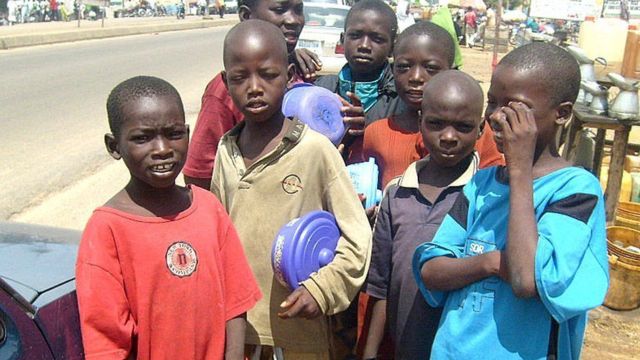
Almajiranci is an informal educational system that is predominantly practised in Northern Nigeria. Almajirai are teenagers ages 4-17 who are sent away from their dwelling by their respective parents to seek Islamic knowledge, a source for sustenance and clothe themselves by begging for alms from people.

The Almajiri system has produced prime leading Islamic intellectuals in Northern Nigeria. Still, along the cord, the system has been altered with the rise in population, making it a system that makes children of tender age susceptible to danger.

It’s awful how Almajirai are abandoned to cater for themselves even though parents should be responsible for their children’s needs and provide them with education. Sadly, parents choose to neglect their responsibility towards their children and abandon them at the early phase of their lives. This is unfair and should be tackled; else, it will erode our societal values.

Numerous discussions and symposia have been held on the predicaments of the Almajirai and how to reform the system. But it is all an exercise in futility because there has been practically no action to stem the tide.

The government, civil society organisations and traditional leaders have a role to play. First, the government should enact legislation prohibiting parents from taking their children to the Almajiri school. In addition, the government should make primary and secondary school free and compulsory so that poor and vulnerable parents can send their children to both formal and informal schools for our society’s good.

Abdulsalam Alkali writes in Maiduguri, Borno State, via abdulsalamyusufalkali71@gmail.com.

Pantami and the bitter taste of politics (I)

By Aminu Nuru

Isa Ali Ibrahim Pantami’s odyssey into public service, and mainstream politics in Nigeria by extension, is so far filled with notable controversies that muddy the stream of his public image despite being received and welcomed with a reservoir of goodwill and optimistic anticipations by many Nigerians.

Although some people may argue that, before Pantami’s appointment to public office, there were members of the Federal Executive Council (FEC) equally knowledgeable in the matters of Islam and could be regarded as scholars in their own rights. Still, the fact is that both Mallam Aminu Kano and Senator Bello Maitama Yusuf made a name for themselves in politics and public service before Islamic scholarship and preaching. Or, to say it better, the duos are more widely known for their political engagements than anything else. Thus, they were seen as full-time politicians in the public eye. While Pantami, on the other hand, got his fame strictly from Islamic teachings and discourses.

Therefore, Pantami is a trailblazer who pioneered a cause in Nigerian polity – a revolution of Islamic clerics from Northern Nigeria joining national politics and public service. This position naturally accords him the status of a role model for subsequent clerics from the North that are willing to join public service in the future.

Though preaching and propagation of Islam would have played a role in Pantami’s rise to prominence and subsequent appointment into Nigerian public service, the controversial minister, to be fair, has demonstrated some degree of competency and seems to be averagely prepared, to say the least,  to the job he has been offered as the Director-General of NITDA  and later Minister of Communication and Digital Economy. In the same vein, he has also recorded some achievements so far. Unfortunately, however, a series of controversies are beginning to overshadow these achievements, which are at the same time complicating his polity. Still, some of these complications may not be disconnected from his past. On the contrary, they could be best appreciated if one revisits and analyses the context and content of his previous preaching vis-à-vis the atmospheric politics of the time.

Efforts to corroborate the exact date Pantami made his debut into the realm of Islamic preaching in his first preaching base – Bauchi – proved abortive. But what is certain was the unique style he adopted in delivering lectures, Tafseer sessions and Friday sermons, which promptly endeared him in the hearts of the local audience.

In the early 2000s, most Western-styled educated Muslims were looking for a fresh voice in Islamic preaching and seemed to be tired of the “oldies” and their archaic modus. They wanted something different and were eager to access the new approach that analyses and interprets contemporary issues from Islam’s perspectives. They were looking for an Islamic preacher to address and speak to them in the manner and tongues they would align and reason with. A preacher that could, for example, scrutinize the EU’s foreign policies and the US invasion of the Middle East and validate his points with the verses of the Holy Qur’an.

In Pantami, they saw the exponent of those ideals. This was due to his ability to demonstrate basic knowledge of global politics, international relations, and science and technology through the lenses of the Quran and Hadith. In addition, he commanded a very good English Language (a rare talent among Islamic clerics at the time). He exhibited a charming oratory skill sauced with puritanical diction – a personal endowment and enchantment that he consciously or subconsciously deployed to arrest, startle, and move his audience. The eloquence with which Pantami delivered his sessions was what stood him out among his contemporaries. Consequently, Pantami became the darling of Muslim populations in Bauchi and beyond for this and other intellectual traits. The Western-styled educated populations saw a 21st-century Islamic cleric of their dream in his shape.

As an influential preacher with access to grass-root populations, his pulpit echoed a dissenting voice against the government of the day. He was explicitly critical of PDP’s government at both the state and national levels and openly promoted the presidential ambition of General Muhammadu Buhari (GMB). It is on record that Pantami was not the only cleric to uphold the candidature of GMB via his pulpit; other clerics had also promoted him with equal conviction. However, Pantami’s open romanticism and penchant for the General were so extreme that when his old “friend” – Governor Isa Yuguda – fell out with Buhari’s ANPP and decamped to PDP, Pantami was not reluctant to denounce this move. Therefore, he launched out series of attacks and criticisms of the Yuguda administration in his Friday sermons (despite being a back-door “friend” of the Yuguda administration).

In an article titled “Nigerian Politicians and Hypocrisy”, Pantami wrote: “I do not know a profession anywhere in the world that is full of professionals who fulfil all the characteristics and signs of hypocrites aptly described by our infallible Prophet like Nigerian politicians in the corridors of power, particularly the companions of the largest, and probably the most dangerous party in Africa (PDP)” (Premium Times, 2012).

Nobody felt Pantami was not doing the right thing among the population. He was even celebrated and eulogized for his vilification of the PDP’s government and support for GMB. His effort was appreciated as a selfless service to the poor masses. He was practically dancing to the bits of the society. Naturally, this created a public image for Pantami – an image of an honest Islamic cleric who told the truth to power (PDP’s government?). 

Considering this background, it is not entirely out of sight if some groups work to step back on Pantami’s toes now that he has been appointed a Minister of the Federal Republic of Nigeria. They would not also relent to feed him the same bitter pills of politics through (de)constructive criticism, malice and deliberately cooked scandals. Therefore, it is not a surprise if, for example, some pundits dug into his past utterances to make the polity difficult for him now. Or it is not least expected if some of his critics alleged that he used the garment of Islamic preaching to reach where he is now – an allegation echoed loudly by his fellow preacher and former neighbour in Bauchi. This particular preacher believes that Pantami is not worthy of being considered an Islamic cleric simply because he did not attend any Islamic school.

This allegation could be dismissed as sheer envy, especially as it comes from a fellow Salafi cleric who does not hide his aspersion of the minister. Reputable Islamic scholars have, time without number attested to Pantami’s intellectual prowess and competence in Islamic scholarship. Besides, altogether, he has tackled those accusations cleverly by not quitting the teaching of Islam even after being appointed a Minister.

The accusation that may have firmly stood is how Pantami’s pulpit swiftly changed from being a pro-people voice to one with less interest in the matters of governance and the governed. There’s no more dissent voice against the government. Even the choice of his texts for his ta’alims at Annur Mosque were deliberately strategic in the sense that their content analysis and commentary of moral truth and calls for proper conduct may not be extended explicitly to subjects within the present government. From their titles, both Kindness to Parents and Kindness to Relatives and Loved Ones would surely give a soft landing for anybody willing to avoid activism in his preaching.

His defenders may argue that Pantami now has unlimited access to the government. Therefore, he can channel his grievances privately, but the atrocities for which he vilified the previous government have also been committed, doubled and tripled by the present administration. Morality demands that he does more than voice his anger privately, considering his earlier vituperation.

One would think he will not hesitate to relinquish anything that has to do with this administration to demonstrate his unreserved solidarity for the masses. But, unfortunately, Pantami – an erstwhile vibrant advocate of good governance – is not the man to surrender power for posterity. Therefore, while it may not be the wisest decision to leave the government to demonstrate his pro-masses stand, Pantami should do better in making patriotic moves decisions no matter whose ox is gored. He could do that while avoiding avoidable controversies and political tussles that may tarnish his image and the institution he represents.

Aminu Nuru wrote from Bauchi. He can be contacted via aminuahmednuru@gmail.com.

Sacred Sound Emission: Untangling human corruption from divine injunction

By Binyamin Lawal

Researchers often point to the dominance of virtual culture and modes of visual perception that organise everyday life. However, in a place like Nigeria, “public sound is a far greater presence and comes to constitute the ambient environment” (Larkin 2014: 992). Out of these multiple sounds, those disbursed with a glaring presence are those emanating from the sacred spaces. As a focal space for the generation of piety, one wonders whether such disbursement of sounds ‘piety’ is indeed achieved. This is one of the questions we should reflect on as we step into the month of Ramadan.   

Ramadan is the ninth month of the Islamic calendar in which fasting (Arabic: saum) is prescribed for Muslims so as to attain the status of Al-Muttaqūn (the pious: those who fear Allah and abstain from sins and evil deeds) (see Q 2: 183). Due to the special position of the month, Muslims live a substantial part of the year attached to it. They either pray to witness the month or pray that Allah accepts their acts of worship during the month. 

Now, as the month of Ramadan begins, we need not only to reflect on improving our piety but cultivating attitudes of not inflicting harm to people as well. In other words, while we encourage people to come closer to Allah through good conduct, we should refrain from other actions capable of eating up our good deeds. 

While Ramadan is the season where Muslims come closer to Allah and increase their piety – as stated above, activities that cause inconvenience to others must be avoided since avoiding the infliction of harm to humans is in itself an act of worship (Ibadah). Against this backdrop, the usage of loudspeakers, especially at night, needs to be regulated during the month and particularly the last ten days. In this regard, I would like to recount – from my memory – what I heard from a Kano-based Islamic scholar who responded to a question on the emission of sounds far beyond the sacred space.

In his response, he pointed out that doing that causes a lot of inconvenience to people around. As such, it is ‘unlawful’. He explained that some might want to pray in their houses, and the sound of the recitation dominating the public space will not allow them to have the needed silent atmosphere. Others may just want to sleep. Both are denied the silence and decorum they genuinely deserve.

In this regard, we should also be mindful of those willing to engage in prayers the whole night but cannot due to the kind of work/business they do during the day. After all, in their case, doing the work during the day to keep up their responsibilities is wajib (compulsory), while the prayers are recommended.

The night, as we know, is a special time to seek closeness to Allah, at the same time, a period of rest; “And We have made your sleep as a thing for rest, and We have made the night as a covering (through its darkness)” (Q 78: 9-10). Sleep, which is meant to be a rest, as stated in verse 9, is complemented by the covering provided by the darkness of the night to give us respite from the exertions of the day. That must be respected as we engage in our Qiyāmul-lail.

Furthermore, the Sheikh emphasised that our public spaces are shared between Muslims and Christians who don’t partake in Ramadan activities, so why incommodes them? In addition, one could also think of the sick persons whose sleep may be interrupted. Observing the act closely, one fears the salient intent of presence-making or show-off, an act that is seriously frowned at. “Say: “Will you inform Allah of your religion while Allah knows all that is in the heavens and all that is in the earth, and Allah is All-Knowing of everything” (Q 49:16).

Binyamin Lawan is a PhD student in Islamic Studies and wrote via abinyaminlawal@gmail.com.

Breaking: Ramadan crescent sighted in Saudi Arabia

By Muhammadu Sabiu

The crescent, which signifies the beginning of the month of Ramadan, has been sighted in Saudi Arabia, Haramain Sharifain confirmed in a statement on its verified Facebook page today.

“Crescent was SEEN in Saudi Arabia today. Subsequently, the month of Sha’ban completes 29 days today and tomorrow, i.e. Saturday, 2nd April 2022, will be the first day of Ramadan 1443,” the statement read.

This marks the beginning of the Muslims’ act of fasting for 29 or 30 days, not only in Saudi Arabia but across the world.

It can be recalled that even in Nigeria, the Sultan of Sokoto, Alhaji Abubakar Sa’ad III, has urged the Muslim faithful to come out today in search of the Ramadan crescent.

Is prayer genuinely worthless? 

By Usama Abdullahi

I came across a post from a supposedly intelligent person in which he foolishly stated that prayer is worthless and doesn’t count. What surprises me more is that he’s a practising Sufi Muslim. It’s hard to believe that Sufism teaches people to utter things or act contrary to the teachings of Islam. Even though I’m neither a pro-Sufism nor share similar ideologies with any of them, I still don’t think Sufism teaches people to behave and write irrationally as that self-deluded person. 

He believes that being realistic or pragmatic is the only solution to the everyday security challenges troubling this country. While I agree with him that being practical is one of the surest ways that could help bring such age-long challenges into a state of discontinuity, yet, on the other hand, I disagree with him that our prayers are usually obsolete and worthless. Perhaps unknown to him, prayer is but a spiritual tool that fends, heals and grants the guided people some peace of mind.

Prayer is a beautiful and easiest way of expressing our deeply felt gratitude to God for his mercies upon our dear lives. It describes how thankful, devoted and religious we are towards our creator. The problem with that person is that he’s shifted his focus on God and thinks that his so-called realistic mind provides him with the answers to all the lingering security threats we are experiencing in this country. Well, that’s the biggest blunder one could ever make. 

When we stray or rather deviate from the right course, our minds often tell us things differently. Our minds would make us feel liberal and lure us into acting in the wrong way. Sometimes it makes us view things narrowly, which is not how they seem in reality. It simply corrupts and deceives us. The manner we reason speaks volumes about how we often tend to foresee the future.

As humans, we are capable of being wrong at any time. But it is funnily unrealistic to believe that your ideology is always appropriate and should be followed. Over the years, I have come to terms with the belief that one with higher academic qualifications doesn’t mean they are the most knowledgeable among people. I respect people’s opinions, but only when they appear rational. Abusive and persuasive views are sure to be avoided because they can instigate hostile disagreement among people like this.

I don’t see prayer as a worthless thing. Even if I feel it doesn’t count, I will keep on praying. Indeed, I believe in the miracle of prayers. I know God answers prayer. He has told us in the Holy book that we should supplicate and call on him whenever we get into trouble or need something. My or your prayers might be delayed but not rejected. When this happens, the Holy book always reminds us to be patient because patience pays. 

And prayer is also an act of worship. Moreover, it shows the level of one’s faith in God. I know we cannot pray all of our problems away without being pragmatic in confronting and dealing with them. Yet that shouldn’t give us the green light to decidedly underestimate the power of prayer, for it’s a natural remedy on its own. 

Prayer saved Prophet Isa (Jesus) from the brink of crucifixion. Prayer protected  Prophet Muhammad (S.A.W) and his companions against their ruthless foes. Prayer saved Prophet Abraham when thrown into the fire by his people and prayer attracted God’s sympathy and mercy over Prophet Yunusa (Jonah) when he got drown and swallowed by a whale. Despite going through hell, Yunusa still prayed to God and was happily rescued afterwards. So, how would you expect me to buy into your notion that prayer is worthless?

Usama Abdullahi wrote from Abuja, Nigeria. He can be reached via usamagayyi@gmail.com.

Waqf would have saved the situation!  

By Abdullahi Abubakar Lamido

Alhaji Abdullahi (not a real name) is a rich man from Northern Nigeria, famous for his multidimensional philanthropy. He was, at a time, among the three richest men in his town. He came from a polygamous family and was the 14th child of his dad. He was the only rich man. Being polygamous himself, he has close to 20 children from three wives. As the only well-to-do in his extended family, his house is like a local government secretariat, always jam-packed with visitors from among family members. This is in addition to dozens of his “sons and daughters” born by his brothers and sisters, who reside in his house, under his total care. But Alhaji takes care of them all; feeding, clothing, education, healthcare, Sallah clothes, etc. He does that with all pleasure. After all, he has the means, and of course, the heart, as a wealthy businessman.

Here is a religious, wealthy man and an influential politician cum Islamic scholar. He has built several schools and mosques, sponsored the education of many orphans, given capital to many people, sponsored the marriages of many poor girls, and sponsored dozens of people to hajj. He is one of the best philanthropists you can think of. After all, that is what is expected of an affluent Islamic scholar. His school was once among the best two primary and secondary schools in the town. When he singlehandedly built it about two decades ago (he had built others much earlier), he would pay teachers’ salaries, buy uniforms for the students, and give them other learning materials. He loves the Qur’an, being also a hafidh himself. And he would provide copies of the Qur’an to all the hundreds of his pupils. This is in addition to dozens of people who rely on him for their livelihood.  

As time went by, the “law of diminishing returns” began to affect his fortunes. Gradually, he began to withdraw the subsidies from the school due to continually decreasing income and ever-expanding family financial pressure. But he wanted to maintain the good deeds. Now the school needed expansion while his pocket had experienced contraction. He gave his big land close to the school for the purpose. But no funds to build it. So, he sold another land and built it. Note that the school fees could, at best, pay salaries and take care of the running cost. Every student pays. But it is a middle-class school, so the charges cannot be high. So, he went and sold another asset, built the classes. He sold another one again and again until virtually all the sellable assets became exhausted.

One day, while sitting at home, he saw his children returning before the school closing hours. “What is going on”? He asked them. They were sent home because they did not pay school fees. This happened when he was battling with how to feed his family and settle many other bills. Alhaji never envisaged a day when his fortune would dwindle to that level. Therefore, he did not save nor invest for that rainy day. He thought he would continue to secure contracts and earn considerable resources to fund his schools and even establish more. He, in short, did not benefit from the advice of a waqf expert who could have shown him the simple way of establishing an investment waqf, using a portion of his assets, that would perpetually generate a flow of revenues. The revenues could sustainably fund his schools and other charitable interventions. 

Waqf offers a variety of ways for planning the future of your family and supporting other charitable projects sustainably. For instance, the idea of an investment/productive waqf would have perfectly saved Alhaji Abdullahi from selling and reselling his properties to expand his school. As it is, there are two forms of waqf; direct and invest waqfs.

A direct waqf is one created to provide direct welfare and societal development services. Examples are mosques, boreholes, and tuition-free schools that offer direct benefits to designated beneficiaries. An investment waqf is a money generating waqf whose revenues are dedicated to financing defined welfare and socio-economic development projects. An investment waqf can be made to fund and maintain a direct waqf.

For instance, a well-managed orchard can be dedicated as waqf such that the revenues generated from the sale of its fruits will be used to finance a tuition-free school. So, when Alhaji Abdullahi built his school, which he wanted to be a subsidized one, he could have established an investment waqf that would mature and, within some time, continue to finance the school from its proceeds. His other assets would have been saved for other equally important purposes. He could as well have saved himself from the embarrassment of the failure to pay children’s school fees later in his life when the recession hit him.

For instance, nothing stops this rich man from building rentable shops or apartments and dedicating them as waqf, such that what they generate would be divided into two; half reinvented and the other half injected into supplementing what is generated as school fees. He could as well have purchased shares of a halal company and dedicated the investment as a waqf for funding the school waqf. This way, the waqf corpus would continue to expand, and its revenues would grow sustainably. What started as a small waqf can grow into a megaproject that benefits society on a larger scale. Not only subsidies, the investment, if properly managed by trustworthy investment experts, would have funded the construction of more and more schools and the provision of scholarships, among others.

 So, if he provided subsidies at the beginning of the school, part of such funds would have been invested, and gradually he could withdraw the subsidies as the returns from investment take over the funding of the school. This way, his children could have become permanent beneficiaries of the scholarship provided by the waqf of their formerly wealthy father. Better still, he could have simply established a family waqf (a topic for another day) specifically for his children. Waqf, in short, could have saved the situation

Abdullahi Abubakar Lamido is the Chairman, Zakah and Waqf Foundation, Gombe. He can be reached via lamidomabudi@gmail.com.

How parenting changes a person

By Aisha Musa Auyo

Parenting is one of the most challenging jobs globally, a job that starts with pregnancy but never ends. It’s a lifetime commitment with many challenges, rewards, and experiences that change us, teach us and humble us. In fact, one doesn’t fully know himself till he starts bearing and raising kids. This commitment tests our patience, compassion, selflessness, strength, weakness, etc.

When I was in my teens, I didn’t have that natural love for kids, as I saw them as nuisance and disturbance, but ironically, kids love me and often extend their hands to pick them up. Usually, I didn’t bother to respond to their advances. I would look at them with a pretentious smile and move on. Later, a friend who loves babies explained that kids are attracted to me due to the constant eyeglasses in my face. That was relieving. My coursemates could not believe their eyes when they saw me on a TV program dishing out tips on parenting, child psychology, and upbringing.

A few years later, I became a mom, a fierce one for that matter, and this new responsibility has changed my entire outlook on life. It made me appreciate Allah more; the fact that a whole human being is produced in a womb from a drop of sperm, and the entire foetus transformation within nine months never cease to amaze me. The fact that milk begins to pop out from the breast after childbirth is still super.

Perhaps the most baffling is how tuwo, shawarma, rice, veggies, and whatever breastfeeding mother eats get transformed into breastmilk within minutes is brain blasting. Sometimes, I wish I could see how my body organs function to deliver this seamless production. Allah is indeed the Greatest. Tabarakallah Ahsanul khaaliqeen!

There’s a popular cliché that says if you want to change the world, change it while you are single, without a spouse, or a kid, as that is when you have freedom and might to do whatever you want because these two groups of people take your freedom and will power away. This is true in some ways. But if we look at it in another way, one can change the world when he becomes a parent by being a better version of oneself and upbringing pious, honest and loving generation.

Please permit me to list a few ways in which motherhood changes me. Perhaps others can learn, relate, realign, and prepare themselves for the unending task:

Motherhood made me more grateful to my Creator, more thankful to my parents, appreciate other parents, and made me understand to some certain extent the pain of not having kids, delayed fertility and parenting kids with special needs.

Motherhood humbled me, as all the things I never imagined myself doing are now my daily routine. From changing diapers to feeding kids, toilet training, wiping phlegm and saliva, and many activities I considered gross. I’m now cool with all of these. There was a day my husband took me to greet his friend’s family, as one of his kids had broken his ankle from the compound. I could hear the mom screaming at the kids. I was like, aww, this woman was loud, ta cika masifa.

At the time, she had five boys, and they were seriously misbehaving. Even the one who broke his ankle tried to touch a moving fan with his other hand. The others were all doing bad stuff, some using chairs as a ladder to touch the ceiling. Even so, I thought she unnecessarily shouted. As God will have it, I have only three boys. Trust me, I find myself shouting all day. It took a lot of practice, willpower and patience to REDUCE the shouting. This experience humbled me a lot. I stop judging.

There are times when you will feel relaxed, thinking that you are doing this parenting right. Then, suddenly, one of the kids will do something unpredictable, unimaginable that you will doubt yourself and all the efforts you’ve put in making and building them. That’s a reset and a humbling one, for that matter.

My selflessness and sacrifices increase: Although I intentionally always put others before me, I put my kids first without thinking, without weighing. It comes so naturally without an effort. As a mother, one finds herself the last option, the last one to be taken care of. At a point, I had to drop some of my dreams and aspirations to take good care of my kids.

Constant worry and wild imagination: I don’t know if it’s just me or all mothers do this. I don’t know if it’s the insecurity situation or the unhealthy vices of our time. I know I’m constantly worried about my kids, how they are faring in my absence, how they’ll turn out, their health, well-being, demeanour, interests, aspirations, etc. I cry a lot when they’re sick and in pain. I don’t even blink when they have a fever. I check them at least three times before daybreak. I’m always overwhelmed and have panic attacks here and there.

I start loving kids altogether, whether mine or not. If they are kids, they become my favourite persons. I love them. Nowadays, I prefer staying with kids than with adults. I enjoy their presence. This may be due to a course I studied (i.e. developmental psychology), which explains the entire human nature from pregnancy to old age. It made me understand a lot about kids and why they exhibit certain behaviours. It makes whatever kids do make sense to me. As a result, I became more empathetic and patient.

Kids make us become better versions of ourselves. Parenthood comes with the challenge that kids always look up to their parents on whatever they do. Kids look at us more than they listen to us. So, we parents know that we have to model the behaviour we want them to have. We have to show more than we tell. We have to always be conscious of our words and actions and be intentional about what we do. For example, there was a time I was reciting the Quran, not my usual tilawa time, as I’ve missed my schedule. Then my first son asked, “Mama, dama kina tilawa?” (Mama, do you recite Qur’an?) I was so baffled by the question. I answered yes, every day. He replied that he had never seen me do that, only me helping and commanding him to do his. In my little mind, I’ve chosen a time when the kids are asleep or at school so that I will not be disturbed. It never occurred to me that the kids thought I don’t do tilawa. So, we need to be intentional and specific on what we want them to see and model.

Steadfastness and patience. These creatures test your energy, patience, commitment and endurance. There’s no room for laziness or minor sickness. Your sleeping hours reduce to the minimum. They must be attended to every second of the day. Even in their absence, preparations are made for things they will need when they return. They consume your budget, plans, relationship with your Creator and creations, health, looks, well-being, and even wardrobe. If care is not taken, one loses himself in this parenting and only notice when it’s almost late. One has to be tough to survive this.

And mind you, this is coming from a mother who does not pay the bills. All expenses are taken care of. This is coming from a mother whose kids are all healthy, and none of them needs special care. The mother’s combining their motherly responsibilities with financial support, special nursing abilities, or both, I doff my hat for you. May Allah reciprocate your efforts in reward and fulfilment.

Finally, this parenting stuff is rewarding, both here and hereafter. If one is blessed with pious kids, there’s no greater joy. Even as babies, their innocent smiles instantly lighten up one’s mood. One often finds himself speaking sweet nonsense, singing non-existence lyrics, to see a baby laugh. Their love is raw, undiluted and genuine.

On a lighter note, I would like to advise myself and other mothers to take it easy; it’s okay to take care of oneself. It’s even highly recommended. Go out and have some adult interactions, discuss with other moms, watch movies, spoil yourself, and rejuvenate your mental health. You need it. Forgive yourself when you are wrong; parenting is learning in the process. You are human. Do your best, pray for God’s guidance and protection, leave the rest to the Almighty.

Aisha Musa Auyo is a doctorate researcher in educational psychology. A mother of three, parenting and relationship coach.

Sultana Tafadar, appointed as first muslim hijaab-wearing Queen’s Counsel in Britain

By Ahmad Deedat Zakari.

Sultana Tafadar, a hijaab-wearing Muslim barrister, has been appointed the Queen’s Counsel in the United Kingdom.

Radio News Hub reported this on their verified Facebook page on Monday, March 21, 2022.

“Sultana Tafadar received her letters Patent – the document denoting the award for excellence in advocacy – at the Palace of Westminster on Monday,” the news platform reported.

The rank of the Queen’s Counsel (QC) is the equivalent of the status of Senior Advocate of Nigeria (SAN). The QC and SAN titles are awarded to barristers who distinguish themselves in character and excel in advocacy.

Sultana Tafadar is of Bangladesh origin. Her elevation to the rank is a great inspiration to many hijab-wearing Muslim women across the globe.

When a father dies!

By Kharajnah Muhammed

Imagine a big mango tree with many branches, leaves and sweet fruits feasted upon by her children while also enjoying her cool shade that comes with a soft breeze, covering their heads from the scorching sun.

All of a sudden, someone cuts her off from her root. She fells down weeping, wondering how her children would survive without her, while they drink their tears day and night, searching for food and shelter, with little or no one to help them.

This is what happens when a father dies, leaving behind his family. At first, so many people will come and commiserate with them, with sugar-coated promises. His family will have hope that at least someone will be there for them even when the head of the family is no more. But what happens afterwards?

The widow(s) and her/their children are left to wander in the streets, searching for food, shelter, job to sustain their lives. Only a few are lucky enough to find help from his relatives or friends in one way or the other. It’s scary how fathers keep dying daily, leaving their families behind. Most people nowadays only do things for someone alive, someone they know they can gain something from. As soon as he is no more, they forget everything about him or his family.

As parents, I want to advise us to build a future in our children because we don’t know what tomorrow holds. Help them discover their talents and work on building them. As a husband, invest in your wife or wives, for they will never abandon your children. And she might be the only person to take care of them when you are no more.

And now, Ramadan is just a few days away. Have you ever wondered what most orphans are going through? Most of them have little or nothing to put in their breadbaskets, but they can’t ask anyone for it because they were brought up so that they can keep their family’s secret so that people will not look down on them. So, even if they ask some people, they might not help them out and probably go about telling other people or using the children’s helplessness to their advantage, especially the girl child.

I want to urge us to please help the orphans with food, clothes, and other items we can give out this Ramadan in order to gain manifolds of reward from the Almighty. You don’t have to go far. Look around your neighbourhood and start from there. Some people would rather cook plenty of food and throw it away in the morning than give someone.

Though things are hard these days, there is no harm in giving out the little you can afford. You never know what it will mean to them.

May the Almighty ease things for us, amen.

Harajnah Umar Ragada can be reached via kharajnah@gmail.com.

Probe JUTH over anti-Hausa-Fulani activities – MURIC

News Desk

An influential newspaper, the Daily Trust, yesterday published a damning report on discrimination against Hausa-Fulani Muslims resident in Jos, Plateau State, who are being forced by record officers at the Jos University Teaching Hospital (JUTH) to change their states of origin and local government areas before they can register to see a doctor.

Meanwhile, an Islamic human rights organisation, the Muslim Rights Concern (MURIC), has waded into the matter. The organisation described the forceful change of states of origin as ethnic cleansing and unlawful de-indigenisation. MURIC demanded a probe into the allegation.

This was contained in a press statement issued on Sunday, March 20, 2022, by the director of MURIC, Professor Ishaq Akintola.

The statement reads:

“An influential newspaper, the Daily Trust, yesterday published a damning report on discrimination against Hausa-Fulani Muslims resident in Jos, Plateau State, who are being forced by record officers at the General Out-Patient Department (GOPD) of Jos University Teaching Hospital (JUTH) to change their states of origin and local government areas before they can register to see a doctor.

“This, indubitably, is ethnic cleansing and unlawful de-indigenisation. It is horrendous, detestable and despicable. It is the most odious and insidious marginalization and encroachment on Allah-given fundamental human rights of any tribe that ever happened on Nigerian soil. It is unlawful, illegal, illegitimate and unconstitutional. We, therefore, demand full investigation which should start with immediate effect.

“It is highly appalling. We cannot imagine such inhuman practice happening to Nigerian citizens in a Nigerian state. Such audacity is criminal. There must be consequences for such temerity for the culprits, their sponsors and those who are encouraging them.

“The probe should unearth the identities of all the victims from the time the evil practice started with a view to reversing the wicked acts and restoring the states of origin and local governments of the victims.

“We are shocked that such a discriminatory practice is being allowed in a federally funded hospital where people’s state of origin should not matter at all, particularly for health care delivery. It points to the likelihood of more egregious and horrifying things happening in hospitals belonging to the Plateau state government.

“There is no doubt that the state government is complicit and should be held responsible. It is impossible that this highly reprehensible practice is happening without the knowledge and tacit approval of the state government. It is a big shame that this kind of illegality is being promoted by a state governor who swore to uphold the constitution and to provide welfare services to people of the state. Conscienceless power is subjugating powerless conscience.”