Muslims

Award-winning essayist Maimuna Abubakar graduated with a first-class from ABU Zaria

By Idris Hassan

A student of Ahmadu Bello University (ABU) Zaria, Maimuna Abubakar, who beat other contestants across the world last time to emerge 3rd in an International Essay Competition organised in the United States of America, has graduated with a first-class degree in Sociology (the third person in the department’s history to graduate with a first-class), after Muminah Musa Agaka, who first broke the 38-year record. 

Maimuna Abubakar is someone I have been mentoring since my time at ABU, Zaria. She’s from Niger State and has always been eager to listen and learn. She lost her mother a few years ago, which was a difficult period for her. 

I recall the last time she asked me if there was anything she could work on, as she often does. I mentioned an essay competition in the US that I wanted her to apply for. She responded, “Sir, that’s for people like you. I don’t think I am a good fit since I know so little.” I laughed and encouraged her to submit her entry. We discussed her ideas critically, and she wrote something she sent me for proofreading. After reviewing it, she submitted her essay and won third place.

Maimuna is a writer, poet, and much more. She graduated as the best student at her level in the Department. Maimuna is also a trained teacher with over five years of experience. During school breaks, she makes dresses, loves writing, and especially enjoys reading. 

She was Amira of the Muslim Students Society of Nigeria (MSSN) ABU, Chairperson of the NSASA Academic Committee, and Secretary of the NSASA Editorial Committee in Zaria. Maimuna aspires to be a Public Health Professional or a Social Psychologist. Given her dedication and achievements, I believe the Niger State government needs to acknowledge and reward her efforts.

Applied Worldwide is a project founded by Stephanie Wilson and Luke Hanna in the United States. It believes in a dynamic sociology in which sociological knowledge is produced and applied to enact positive changes in communities worldwide. 

Applied Worldwide organises an international essay writing competition to inspire students in the field and help foster change through a sociological lens that Applied Worldwide aims to bring. You can also try your luck.

Fueling social media firestorm: How a national tragedy turns into national hate

By Kabir Fagge Ali

As the country mourns the unfortunate and catastrophic tanker explosion that claimed over a hundred lives in Majia town, Taura local government, Jigawa State. The circumstances leading to this devastating event, and its unfolding discourse on digital space leave a bitter taste.

If past events of such nature didn’t serve as a pointer, one would have been forced to argue that the deleterious economic hardship Nigerians are currently undergoing played a significant factor in the circumstance warranting people to desperately attempt to scoop up fuel from a fallen tanker that is highly flammable. However, one cannot, in all honesty, overlook the impact of economic hardship instigated by the “so-called reform” of this administration.

While the explosion was a profound tragedy, what followed on social media turned a devastating accident into a platform for spreading hate. Netizens took to various platforms to condole, analyze, obfuscate, sympathize, and attack the dead in a typical Nigerian fashion of ethnicizing, religionizing, politicizing and regionalizing events. What should have been a space for empathy, turned into a hub for anger, with users blaming specific ethnic groups for what they called “ignorance” and “greed.” 

The horrific event became weaponized by those seeking to stoke division and deepen the fractures within Nigerian society. One @AdemolaSola38048 on X wrote, “E no go better for their dead body”, another, @Peterojueromi posted “Well, I no pity them sha, na their stupidity kill dem”.  How does a tragedy of this magnitude turn into an avenue for deriding others?

Instead of offering sympathy or proposing solutions, many used the incident as an opportunity to fuel long-standing ethnic, regional, and religious tensions. Blame was cast on entire communities for the reckless actions of a few, with harsh, derogatory terms being used to describe those who were simply trying to survive in an environment where economic opportunities are scarce.

Speaking on this incident, the former Head of the Department of Mass Communication at Skyline University, Nigeria, and an expert on hate speech and digital media, Mr. Abdulhameed Olaitan Ridwanullah noted that “social media is like a two-edged sword. It can draw the attention of relevant rescue teams and government agencies to the event and at the same time serves as an accelerant for the societal divide”.    

He warns:

“From the Nigerian experience, one shouldn’t be surprised that even in tragedy, some Nigerians cannot conceal the hate in their hearts. With social media in the hands of some of the worst among us, and the anonymity and herd mentality that comes with it, it is not surprising to read comments on social media space that shouldn’t have made it out of the thought process of whoever posted them.”

Mr. Ridwanullah added that “in the wake of national disasters like this, it is not surprising that some elements of division will weaponize such a tragedy”. He emphasized that it is important for Nigeria to look into legislation on digital media that will not only guarantee freedoms provided by digital platforms but ensure the sanity of the digital space.

“At this critical time in our digital journey, scholars should start looking beyond the usability of these platforms but understanding how their affordance reflects on our society. This kind of event and the rhetoric we saw on X underscores the importance of my research on nexus between online hate speech and offline hate crime” he surmised.

It is time for social media platforms to step up and recognize their role in monitoring and curbing the spread of hate speech. At the same time, it is also up to users to approach these platforms with responsibility and empathy. While frustrations with governance, inequality, and resource scarcity are real, targeting those who suffer the most with hateful rhetoric is not the solution.

The Jigawa tanker explosion should serve as a reminder of the fragility of life and the dangers of living in a world where safety nets are often nonexistent. But more importantly, it should remind us that in moments of tragedy, we should seek to uplift each other rather than tear each other down.

As Nigeria continues to navigate complex social, ethnic, and economic challenges, we must remember that unity, empathy, and constructive dialogue are far more powerful than any message of hate.

Kabir Fagge Ali, is a Writer with PRNigeria center and write via faggekabir29@gmail.com.

Almajiri system of education needs reform

By Dahiru Kasimu Adamu

The word “almajiri” emanated from the Arabic word used earlier to refer to the companion of the prophet Muhammad (peace be upon him), who migrated on his instruction for the sake of Islam from Mecca to Madina.

Later, “almuhajirun” refers to knowledge seekers who move from one place to another in search of religious knowledge, predominantly the holy Qur’an.

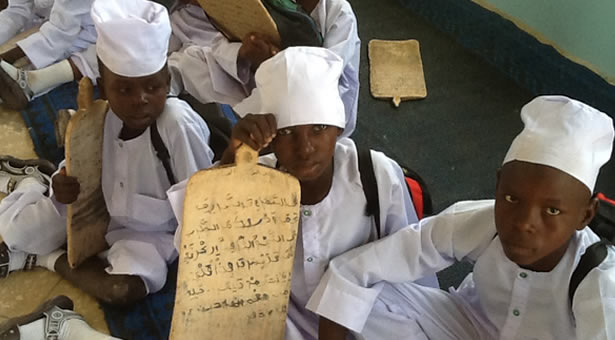
Therefore, the word “Almajiranci” refers to the traditional method of acquiring and memorising the glorious Qur’an, where boys at a tender age are sent by their parents or guardians to other villages, towns, or cities to acquire Qur’anic education under a knowledgeable Islam scholar called “Malam.”

The Almajiri system of education involves somebody who migrated for learning or for the sake of advocating Islamic knowledge.

This migration is tied to a system in which people in a particular community gather male children of school age and hand them to a teacher yearly. The purpose is for Malam to teach those young children the basics of Islam through Qur’anic schools, popularly known as “Tsanagaya or Makarantun allo”.

The pupils are taught how to read the Qur’an and write the Arabic alphabet. They also learn strict discipline and aspects of living.

Due to environmental distractions, the malam may relocate his pupil to a distant area, such as a town or city and camp them there. Almajirai (plural of Almajiri) learn self-reliance and discipline in the camp.

History shows that the population provides free accommodation and leftover food for the pupil and their teacher; even though the food may not be enough, Malam sends his students into the neighbourhood to solicit food. One reason compelling Almajiri to beg is to let them experience and appreciate the hardship and necessity they will face in life.

According to the record, after the efforts of various communities and later Native authorities around the twentieth century, a modernised version of Makarantun allo-cum-Islamiyya schools emerged. This gave birth to at least four types of Islamic schools: Quranic Schools (Makarantun allo, Tsanagaya), Islamiyya Schools, Public and private model Quranic schools, and government Arabic and Islamic institutions.

The information indicates that begging was not involved during pre-colonial times, and Almajirai were doing menial jobs. They have not been abused before they could get a job. Their noticeable hygiene and good manners can simply identify them.

Islamically, it is responsible or necessary for a parent to provide moral education to their children. But the kind of Almajiri system being practised today is an entirely bastardised system compared to the one practised in the past, as mentioned above.

Now, children are seen wandering, begging for food; Almajirai are seen and identified by their unwanted hygiene, unkempt, tattered clothes, and disease-afflicted and ulcerated skins.

Many Almajirai spend most of their time on the street, which can lead some of them to intermingle with different people, including criminals. Several reports indicate how some of them engage in theft, drug abuse and other crimes. Also, lack of food has made them vulnerable to some diseases.

In summary, as the Qur’an mentions, Islam has identified several rights granted to children. These include the right to a stable family, proper development, showing love towards children, being mindful of education and spiritual growth, and having the right to the good life (chapter 19:98).

But nowadays, due to some factors, including economic hardship and extreme poverty,  most parents are running away from their economic responsibilities enshrined in Islam, sending their children at a very tender age to mallams in towns and cities. This led to behavioural changes among all age groups.

The research found that other factors include some parents who obtained only the knowledge of the glorious Qur’an without understanding its inner meaning, always supporting the Almajiri system, and some seeing Malams benefit from the size of the Almajiri studying under him because school size increased the Malam’s life.

Due to the street begging among Almajirai and other activities, hunger and lack of moral upbringing, many Almajirai are not observing proper Islamic values in their daily life. Some take it just as traditional because if it’s education, everyone can study in his locality.

To address these issues, all hands must be on deck. Leaders must be committed to fighting against extreme poverty, illiteracy and unemployment.

Come out with a new master plan towards a new method of the Almajiri system. This includes verification of all teachers to participate in teaching Almajirai because some are not even qualified to teach, allocating the number of children every mallam should teach, and he should not allowed to exceed the number assigned to him.

Parents and mallams should at least create a new way of accommodating and feeding the pupils. There should be the right place where pupils or Almajirai could get food instead of begging on the street. This includes the total elimination of street begging.

The authorities, Malams, and stakeholders should be sensitised about the importance of this educational sector, and they should provide shelters, health care services, clothes, and other essential things that will end street begging.

This can also be achieved by empowering pupils with vocational skills to sustain themselves and improve socioeconomic standards. There should be a good record of the numbers of Almajiri in each locality, state and country at large. In addition, the fundamental human rights of Almajirai and Malam should be promoted.

Good teaching and learning materials and a conducive atmosphere for learning should be provided for both Malams and Almajirai. Seminars, workshops, lectures, campaigns, and other mobilisation activities should be carried out to counsel Almajirai, other stakeholders, and the general public on career development. Almajirai should be included in acquiring Western education and skills.

By working on all the items mentioned above and more activities, the Almajiri system would be reformed and improved. All Almajiri,malam, and society’s socioeconomic standards will improve out of illegal nature and other sundry.

Dahiru Kasimu Adamu, Argungu, Kebbi State, is a young journalist and Mass Communication student at UDUS. He can be reached at dahirukasimuadamuargungu@gmail.com.

Hajj fare rises to ₦10 million as NAHCON withdraws subsidy

By Uzair Adam

The National Hajj Commission of Nigeria (NAHCON) has announced that the federal government will no longer provide subsidies for Hajj pilgrims starting in 2025.

In previous years, pilgrims benefited from a concessionary exchange rate offered by the Central Bank of Nigeria (CBN), allowing them to purchase dollars at a lower rate.

With the naira currently at N1,650 to the dollar, pilgrims are expected to pay nearly N10 million for the Hajj fare, given that the minimum cost is around $6,000.

Although the official fare for the 2025 pilgrimage is yet to be confirmed, some State Pilgrims Welfare Boards have already started asking for an initial deposit of N8.5 million from intending pilgrims.

NAHCON also announced a refund of 64,682 Nigerian pilgrims (equivalent to 150 Saudi Riyals) who participated in the 2023 Hajj.

This was disclosed during a virtual meeting between NAHCON officials and Private Tour Operators (PTOs) on October 7, 2024.

The meeting also highlighted a reduction in the number of approved PTOs for the 2025 Hajj, with Saudi Arabia cutting the figure from 20 to 10, and each operator required to register at least 2,000 pilgrims for visa approval.

NAHCON also addressed a refund of over SR62,000 (N26.9 million) owed to PTOs for substandard feeding arrangements during the 2022 pilgrimage, while clarifying that it received N2.75 billion from 110 PTOs for the 2024 Hajj and still holds a balance of N750 million from undecided operators.

Operators who initially paid a cash deposit of N40 million as a cautionary measure for the 2025 Hajj now have the option to submit a bank guarantee instead.

Dear Nigerians: Do not let this great nation die!

Dear Nigerians,  

1. May God have mercy on you! Your country’s name evokes the abundance of the River Niger, symbolising the endless resources and talents you possess. This nation is blessed with natural wealth and human potential that garners admiration and envy worldwide. 

2. Yet, tears fall when we consider the mismanagement, waste, and looting of this vibrant nation. It’s disheartening to see Nigerian youths unaware of the treasures surrounding them. Who will inherit this great wealth? Where are the competent young leaders to take over when the current generation finally acknowledges its fatigue?

3.  An effective national curriculum should focus on the aspirations and values of the youth. Nigerian youths should be more than seekers of white-collar jobs; they should harness the nation’s real wealth. Ignorance of one’s resources is a grave form of slavery. The curriculum must evolve to cultivate dignity and progress, preparing future nation-builders.

4. Imagine if Nigerians refrained from destructive desires, top to bottom. These desires only ruin their possessors and the entire nation, destabilising not just Nigeria but the region. What would be lost if corruption ceased? Crimes harm the country and ultimately lead to personal ruin.

5. Despite challenges, Nigeria still holds immense potential if its people unite in nation-building. Respect and kindness across ethnic lines won’t harm anyone. Being good neighbours to one another will ensure that no one suffers amid abundance.

6. It’s not easy to forget historical hurts, but healing is necessary to dream big. I dream of a Nigeria that sheds its negative image and becomes a beacon of resilience, talent, and beauty. We can achieve this dream with patience, optimism, and the will to be good.

7. Let the brave ones from every region come forward. Whether in rags or adorned in gold, it’s the mind that matters. Your willingness to embrace reform reflects the people’s hope. Learn about your nation, not just from social media but from its history and potential.

8. There is hope for Nigeria. Nations with more severe problems have risen. Remember, you hold the most powerful office: the Office of the Citizen. Decorate it with action, not despair. If Nigeria isn’t working, it’s because we aren’t working.

9. Weak minds say, “There is no hope.” Strong minds respond, “We have work to do.” Nigeria is the office of every Nigerian. If progress is absent, it’s because we aren’t active. Be inspired and make progress in Nigeria, which is your first concern.

10. Nigeria has served as a beacon of hope for other nations and has the potential to do so again. I have witnessed the kindness, wisdom, and vision of many Nigerians. Goodness is locked within the nation—are you the one to awaken it?

11. If you are, be patient. Don’t let anger or frustration lead to violence. Dedicate yourself to the dream of reform, and one day, you will wipe away the tears of your people.

12. Praise God for making you a Nigerian. Reform begins with you. Even if you only change one person, the impact will be immeasurable. Don’t give up if you find people obsessed with crime and corruption.

13. Your good deeds, endurance, and sacrifices inspire those around you. Continue to educate, alleviate pain, and instil hope. The people are not as bad as they seem; many are ignorant or traumatised.

14. Mass education, not violence or migration, is the answer. Enlightenment will help people learn from the tragedies of war-torn regions.

15.No matter how far you run, home will always call you back. The time to act is now!

Amara Sesay wrote via amarasesay.amir@gmail.com.

The Fulani Identity: Tradition, misconception, and the truth

By Hassan Abdulkadir

The Fulani are traditionally a nomadic, pastoralist trading people across the dry hinterlands of their domain. They are the largest nomadic ethnic group in the world, inhabiting several territories over an area larger than the continental United States.

The Fulani follow a code of behaviour known as “PULAAKU,” which encompasses patience, self-control, discipline, prudence, modesty, respect for others (including foes), wisdom, foresight, personal responsibility, hospitality, courage, and hard work.

It wouldn’t be fair to judge an entire faith, religion, or tribe by the actions of a few aberrant individuals. It is more just to evaluate them based on the scriptures and teachings of the faith or the traditions and conventions of the tribe. 

History has shown that some of the greatest massacres committed on this planet were by individuals like Adolf Hitler, a European Jewish Christian. However, his actions were never equated with his religion or tribe. 

Similarly, Benito Mussolini and Menachem Begin, who were responsible for numerous atrocities, were not judged by their faith or tribe. Yet, when a single Fulani or Muslim individual commits an act of terrorism, the entire religion (Islam) or tribe (Fulani) is unjustly blamed.

Moreover, the most infuriating aspect of this situation is that many of these individuals are brainwashed and used by heartless people who are not Fulani. For example, videos circulating online vividly demonstrate this is true. In one instance, an arrested Fulani man explains how much the masterminds paid him after abducting someone. 

The amount given to the Fulani men is not even a quarter of the ransom collected, yet they are still blamed. It’s important to note that some of them are forced into this due to intimidation and life threats by the gangsters. These masterminds exploit the Fulani and Bedouins because they know the bush well. 

For God’s sake, as educated, wise, and prudent individuals, how can anyone believe that the people they consider inept could successfully carry out such complex operations without being caught? They can’t even perfectly operate phones. This is unfair. Such acts require logic, strategies, and prudence. However, due to biased perspectives, Nigerians are generalising the entire tribe instead of targeting the deceived and manipulated individuals among them.

Candidly, the truth must be trumpeted. When our southern brothers say “Hausa-Fulani,” they’re not referring to the tribe but to a Muslim or Northerner, whom they consider terrorists, bandits, and so on. Meanwhile, in some parts of the southern region of this country, there are places where humans are slaughtered like animals. Generalising the Fulani as bandits and terrorists is truly unfair and unjust.

All the calamities this country, especially the North, has been facing—such as insecurity, insurgency, banditry, terrorism, and critical hardship—are not due to the Fulani people but are the result of politics, business, and the selfishness of our unpatriotic and tyrannical politicians.

I urge the youth to be patriotic, equip themselves with adequate and pure knowledge, and engage in politics. The rich also have a crucial role to play by sponsoring these energetic youths in politics for the betterment of our country and for the coming generations to flourish.

May Nigeria prosper and thrive, amin.

Hassan Abdulkadir wrote via hassanabdulqadeerabubakar@gmail.com.

Tribute to Malam Ahmad Garba Amin Kofar Naisa

By Dr. Aliyu Dahiru Muhammad

The late Malam Ahmad Garba Amin (1962-2024) was a remarkable individual I first met in the 1990s as my secondary school Islamic Studies teacher. Subsequently, he rose to the post of Vice Principal before being transferred to the Kano State Welfare Pilgrims Board as a Director of Operations, a position he held for almost a decade. He later moved to the Kano State Sharia Commission, where he finally retired. 

I became close to Malam Ahmad during school and after graduation. He used to ask about my progress in Quranic education even years after my bachelor’s degree. I introduced him to my parents, and we became a family. Gratefully, he made a significant impact on my life to the extent that he was behind some of my achievements – Alhamdulillah. 

When the news of his death broke out to me on Thursday, 5th September 2024 (2nd Rabiul Awal, 1446), I reacted by saying, “Innalillahi wa inna Ilaihi Rajiun” as it is the only action that can relieve me of that material time. After confirmation, I shared it on my platforms, where I received many condolence messages and prayers. What also consoled me was the kind of lovely comments I have received from many who knew him and those who did not know him. Alhamdulillah. 

Imams Al-Bukhari and Muslim reported, on the authority of Anas ibn Malik, that a group of the Prophet (SAW)’s companions were sitting with him when some people came and passed by them carrying a corpse. Some of the people sitting around the Prophet (SAW) made nice comments about the dead person, and the Prophet (SAW) promptly reacted, saying, “Confirmed” (wajib). A similar scenario happened, but on the contrary, the comments were nasty, and the Prophet (SAW) reacted by saying, “Confirmed” (wajib). Wondering why the Prophet said so, the companions asked him for an explanation. 

In the case of the first corpse, the Prophet said what it meant was that their comments about him thus confirmed his entry to Paradise (al-Jannah). The same thing applied to the second person for whom Hellfire was confirmed similarly. The Prophet further explained to them the significance/implications of the comments that people usually make about the dead by either extolling their virtues or otherwise saying bad things about them. He said, “You are the witnesses of Allah on earth (against His servants).”

Allahu Akbar! Whoever knew Mal. Ahmad could testify that he was deeply involved in promoting social welfare and peace in the community. This earned him respect among the youths, women, and elderly, as I noticed every time I visited him, especially during his daily teaching of Islamic books (taalim) outside their family house. 

He was the former Chairman of Safinatul Khair Foundation, which, to my knowledge, is one of the few community-based organisations that have contributed to the socio-economic development of his community. The foundation has a special scheme for education for children through scholarships, extramural classes for candidates who intend to sit for WAEC and NECO examinations, and job opportunities for youths, among others. In the aspects of social development, especially for widows and orphans, the Foundation, at a time, conducted a census of all widows in the area it covered and supported them. During my PhD studies, I interviewed him about their achievement, and I was so excited about it. 

On the aspect of health, the Foundation and Late Mal. Ahmad, in particular, was instrumental in setting up a clinic serving the people, especially the needy patients of Kofar Naisa and beyond. The clinic named after the foundation is the Safinatul Khair Foundation (Kofar Naisa PHC). Thanks to Dr Hassan Sulaiman Kofar Naisa, a resident of the area who worked under the office of the then Senior Special Assistant to former President Muhammad Buhari on Sustainable Development Goals (SDGs), brought this project. 

According to my close associate Mal. Usman Muhammad (Dr. Shehu), the clinic is grade-A in primary health care. It is well equipped with an ambulance, solar system, and water system that serves patients 24/7 uninterruptedly. They invite medical personnel from neighbouring general and specialised hospitals like Aminu Kano Teaching Hospital for weekly medical outreach and to settle the bills for the less privileged patients. 

As we mourn the loss of Mal. Ahmad, we pray that Allah accepts his legacies, forgives his shortcomings, and grants him entry into paradise. “Indeed, we belong to Allah and to Him we shall return. Indeed, only Allah is the place of return. O Allah, record (the deceased) among the righteous, and place the record in the highest place. Replace the goodness for the family left behind. Do not make the reward forbidden, and do not test us after their departure.”

Dr. Aliyu Dahiru Muhammad is an associate professor in the Department of Economics at Bayero University Kano and a Visiting Scholar at the National University of Malaysia (UKM). He can be reached via alitahir797@gmail.com.

Hunger Protest: Memo to religious leaders, youths and the Nigerian government

By Ismail Hashim Abubakar

The coming of the current President, Bola Ahmad Tinubu, on May 29, 2023, was not the beginning of the ongoing hardship that Nigerians have been grappling with. His predecessor, Muhammadu Buhari, elected with high hopes, introduced severe and draconian policies such as the closure of northern borders, which Nigerians consistently condoned due to their optimistic sentiments towards the exceedingly and unanimously celebrated integrity of the former army general. 

The masses and different sections of civil society, including religious leaders and respected elites, rejected slight censure of his policies. There were genuine reports of people being corporally attacked and penalised by mobs for openly criticising Buhari, who spent almost two-thirds of his eight-year regime being excused, exculpated and defended until people finally got convinced that the man was no better than other politicians.

Bola Ahmed Tinubu had a tough time becoming President owing to his many dark records and the stigma with which especially northerners viewed him. His eight-year rule as the governor of Lagos state (1999-2007) was a period that witnessed a series of massacres of northerners in Lagos and neighbouring towns within the same Southwestern geopolitical zone. These senseless mayhems were primarily engineered and perpetrated by the OPC militias, who were said to be connected to his alleged political brigandism. This significantly made Tinubu almost infamously unsellable to northern electorates when he showed his ambition to become Nigeria’s president in 2023. 

Perhaps Tinubu was fully aware of this or was at least made to know by his northern political allies and loyalists. That was probably why, as part of image-deodorizing strategies, Tinubu paid serial visits to Ulama, especially those who might have been earlier wary, sceptical and apprehensive of his patriotism, nationalism, vision for unity, morality and religious uprightness. 

How I wish one of the religious leaders present when Tinubu paid homage to respected Shaykhs in Kano soliciting for support and courting for votes had politely but point-blank told him that due to the experiences of northerners in the crises that erupted in Lagos and Southwest, our people would never accept him until he accepted to do some conciliatory moves which might assuage the age-old void and the stigma our people viewed him. One of them was to advise him to institute a committee that would investigate the OPC massacre of northerners in October 2000, present an estimation of the lives and properties lost and pay for their compensation. He should also charge the committee to offer recommendations to forestall future occurrences and forge unity and cohesion among diverse non-Yoruba ethno-religious groups and their host community living in the Southwest. I do not doubt that although this would sound politically awkward, it would have reminded Tinubu that these religious leaders were concerned with the plight of their people. He would eventually accept any other request for nation-building that northern leaders would have tabled before him as a condition and prerequisite for his election. 

Tinubu was able to successfully navigate these hurdles when the Ulama finally accepted him and joined his campaign train, partly due to the apparent reason for promoting a Muslim-Muslim presidency. In one short video clip uploaded on Facebook, one religious leader claimed that it was the Ulama who had insisted that Tinubu must relentlessly contest for presidential post in the 2023 elections, even after he was determined to withdraw from the race (the clip is available herehttps://www.facebook.com/reel/1198771691128341/?mibextid=pX794QQbNUXe42Mf.). All of this combined to prove that the Ulama were instrumental in catapulting Tinubu to the highest political office in the country and would expectedly have weighty words in his government. 

The removal of subsidy on the very day Tinubu was sworn in, followed by similar other thoughtless and capitalist policies, had quadrupled the hardship of the masses, drastically shelving the middle class in Nigerian society and forcing people to live in perpetual agony and unprecedented misery. People now eat leaves and grasses that would otherwise only be suitable for animals. Conversely, people in government were busy allotting themselves hefty allowances and big remunerations to ascertain their luxurious lives at the behest of citizens. The president procured a multibillion Naira jet and stupendously expensive yacht from the country’s treasury, besides other juicy and crazy packages, hastily designed and approved within a year of assuming office.

 All this while, several efforts have been made by various constituencies to admonish leaders, including the Ulama, who, in their pulpits and other public platforms, called on Tinubu’s government to soften its harsh policies and make life bearable for the poor. As this went on deaf ears, about a month or so ago, winds of mass protest started blowing all over the spaces and skies of the country, signifying that Nigerians have been pushed to the extreme of the wall where they could no longer withstand the increasing stroke of hunger. 

Although with barely-known leadership and organisers, the protesters’ demands are obvious and revolve around the reinstatement of fuel subsidy, ending insecurity in all its manifestations, fighting corruption, increasing minimum wage, etc. As soon as plans to hold the protest were laid bare, the northern Nigerian cyberspace became inundated with jurisprudential deliberations on the legality of protest in Islam, with the most popular faces among the Ulama, including those who allegedly endorsed and supported the candidature of Tinubu condemning the move, declaring protest as haram and forewarning the public of its costly consequences. Only a few known clerics have issued statements that support the protest, and their views seem to have been vetoed by their counterparts in the other camp. 

This worsened the situation as youths anxious to demonstrate their grievances through the protest interpreted the anti-protest fatwa as an attempt to thwart the masses from checking on and holding leaders accountable. Fingers of blame were brandished by youths against particularly scholars who openly campaigned for Tinubu and others who are known to have partisan loyalty to the ruling party, All Progressive Congress (APC) or have even served in any capacity under the APC-led state or federal government. The youths kept calling on the Ulama to form a united front, meet the president, and advise him to restore the fuel subsidy. 

In the psychology of most of the youths, since it was the Ulama who insisted that Tinubu must run, despite his alleged plan to recant the decision, but he finally bowed to the pressure of clerics, the latter have the power to force the president to make a U-turn on the removal of fuel subsidy. In the same vein, since the clerical establishment has been wielding enormous clout and their words “are” (or ought to be) highly respected in the Muslim north, the Ulama did not hesitate to voice their opinions on the planned protest, with little or no recourse to the psychology of the youths or an in-depth consideration of the precise reality of the majority of the youths. Some youths, in fact, never believe that most Ulama are passing through similar situations or do not have a full sense of their difficulty. And because the youth sometimes see some Ulama dining and rubbing shoulders with politicians, they concluded in the protest that they were helpless, with no one among elders to stand with or speak for them. Thus, they had no option but to come out en masse to protest. 

In addition, while the youths could recall a leading voice among the Ulama participating in prior protests without any condemnation similar to what was ringing in their ears, they considered the fatwa a clandestine cover given to President Tinubu. This was even conflated when the utterances of some Shaykhs sounded to be encouraging and emboldening the planned crackdown of the protest by Nigeria’s law enforcement agents, without in most cases, warning the security to protect human rights and be cautious of the sanctity of life. The protest has turned chaotic, with dozens of lives and properties worth millions of Naira lost. Still, the articulations of some Ulama reveal a disconnect with the plight of the masses. 

In my opinion, instead of the blanket condemnation of the protest, which was planned to be peaceful, albeit operationally difficult, the Ulama should have, in the first place, infiltrated the youths and hijacked the movement and, even if momentarily, emphasised to the government that they recognised peaceful protest as a constitutionally-sanctioned right and means of channelling grievances to authority. Had the youths seen religious leaders in this picture showering their blessings on the movement, they would have behaved more orderly, regained their confidence in the clerics and listened to any order that the Ulama might have issued to them, including possibly postponing the protest for some reasons. 

Scholars would have cashed in on the exuberance of the youths as a weapon to force the government to do the needful instead of appearing to have disowned the youths and cursed their movement. Since the reverse is true, the youths still feel that the federal government might have already felt encouraged and correspondingly justified not to listen to them but to also even embark on a mission to stop the protest with excessive force since the youths would be operating under an anathematised umbrella which lacked the blessings of men of God. To restore immediate sanity and stability in the strained relationship between the Ulama and the youths, the latter forming the large chunk of their following and being the backbone of any society, I below offer a few recommendations:

  • The Ulama, particularly those whose anti-protest fatwas are circulating, should convene an emergency public lecture to, in vehement and uncompromising language, condemn the crackdown of protesters, warn security agencies to desist from the ongoing brutality against protesters and innocent citizens, remind them of the right of the protesters to demonstrate, call on the government to institute an investigative panel and pay compensation for families of the people killed by Nigerian security, including both among the protesters and the innocent people shot ruthlessly inside their homes.
  • The Ulama should advise the government to recant its position and work towards simplifying life for Nigerians. It should immediately start by restoring fuel subsidy and reversing all financial policies that raise the price of the US dollar against the Naira. They should warn the government of possible degeneration that may escalate to anarchy if the government remains dogged and recalcitrant in responding to this request.
  • The Ulama should avoid making public comments that may sound like they are absolving politicians of their commissions and omissions while discharging their duties. In line with this, the Ulama should be meticulous and extra-cautious in their dealings with politicians and political leaders. As the latter have gone far in dislodging the influence of traditional leaders, they may go to any length to destroy the career of a cleric who is not careful and gives in to their devilish desires and selfish political interests.
  • The Ulama should further take the lead or accordingly guide the next measures, steps, and remedy processes that the youths are planning to resort to in place of the protest, which is fizzling out. These include the organisation of mass prayers, orientation on the need to resort to recall lawmakers and sensitising the public to strategise the public for future elections.
  • Youths and protesters should avoid issuing generalised, unverifiable allegations against the Ulama and desist from making scathing comments about their persons. They should wholeheartedly accept their views or honourably reject them in favour of contrary opinions. All this should be done in good faith.
  • The protesters should be careful not to allow mischievous elements within and outside the country to hijack the protest to promote perpetual conspiratorial ambitions in the land. In line with this, they should outright stop calling for a military coup and desist from waving the flag of any country.
  • Muslim scholars and intellectuals need to create a forum to deliberate Nigeria’s political climate vis-à-vis Islamic leadership provisions and formulate a political vision and working formula that will take into account Islamic political values and the existing realities of Nigeria’s political setting.
  • Last but not least, the federal government headed by Bola Tinubu should be cautious of its move to use force to quell dissent and remember that it is a democratically elected institution and not a military junta. Therefore, it must listen to its citizens and work towards ameliorating their conditions. It should focus on discharging its mandate and avoid meddling in the affairs of the state in a way that jeopardises its security. It should allow state governors to manage their affairs and intervene positively without the littlest detrimental political motives.

Ismail Hashim Abubakar wrote from Nouakchott, Mauritania and could be reached via ismailiiit18@gmail.com.    

Open letter to President Bola Tinubu

Your Excellency Sir,

Northern Nigeria has been enmeshed in two major crises for about a decade and a half. The first was Boko Haram, born and bred in the North East. From their confrontation with the police to the execution of their leader, Boko Haram grew to become a terror group unprecedented in Nigeria’s history. The most unfortunate thing is that Boko Haram associated themselves with Islam even though most of their heinous attacks were targeted at Muslims.

The failure of Goodluck Jonathan’s government to end the Boko Haram insurgency led to a consensus among Nigerians to disallow him from getting a second shot at the presidency. He lost the 2015 election to your friend and party member, General Muhammadu Buhari. 

Throughout his campaign for the presidency, Buhari promised to end the scourge of Boko Haram and return normalcy to the North East. What he ignored, but he was not supposed to ignore, given his security background, was another crisis rearing its ugly head in the North West. 

Non-Fulani Nigerians were setting up cattle farms in city suburbs and gradually establishing themselves in the cattle farming business, which the Fulani were known for. This did not go down well with some Fulani, who began to form groups to attack such farms and rustle the cows. Anyone who resisted was killed. Since such non-Fulani cattle farmers were relatively small in number, it was soon over with them, and cattle rustling was extended to fellow Fulani, most of whom were law-abiding.

In no time, cattle rustling turned into banditry and kidnapping. Armed chair analysts with little knowledge of what was on the ground began to create conspiracy theories. Some blamed it on Niger Delta militants. Others said it was foreigners from sister West African countries. 

As of 2015, when President Buhari assumed office, the crisis could easily be nipped in the bud. A handful of cattle rustlers/bandits could easily be identified, arrested and punished. Unfortunately, Buhari did not do it either because he was not being correctly briefed or because he was out of sympathy for his kinsmen, who were the culprits.

In October 2016, some governors, notably of Zamfara and Katsina, invited the bandits’ leaders for a peace agreement. That was after they had killed countless numbers of innocent citizens. The villagers in the two states were told to accept the criminals as their brothers or face the wrath of the state. They had no choice.

The peace accord did not last long before the bandits resumed their crimes, which worsened by the day. Banditry continued to thrive under the Buhari administration, and in 2019, he directed the Governors of the affected states to dialogue with the bandits. The governor of my state of Katsina, looking vividly frustrated, told the bandits before press cameras that he was meeting them at the directive of Mr. President. 

A few months after the 2019 accord, Masari told the world that the bandits had reneged on the peace pact. According to him, they were not people to be trusted.

A point of note in the peace accords of 2016 and 2019 was that none of the bandit leaders were citizens of any foreign country. They were all Nigerians, and all of them were Fulani. This invalidates the false belief that the bandits are foreigners or were from another tribe in the south. Most of those hardened criminal lords are still moving about unscathed in villages and forests of Katsina, Zamfara, Kaduna, Sokoto and Niger states. They have been granting press interviews and meeting people like Sheikh Ahmad Gummi, which proves that the government is very aware of their locations and identities. 

I cannot speak for other Nigerians. But for me as a person, I voted for you in the 2023 elections for two reasons. One. You are a Muslim. A Muslim is just as a leader and nice as a companion. If all Muslim leaders were to rule according to the teachings of Islam, even their enemies would beg Muslims to stand for elections, so they vote them to power. Two. Neither you nor your running mate are Fulani. With this, some of us believe Buhari’s sympathy for his kinsmen would not be there.

You are entering your second year, and banditry is only worsening. What struck me most about your approach to banditry are the latest revelations by a young Islamic scholar, Sheikh Munir Adam Koza. According to Sheikh Koza, he was among the many young influential Islamic scholars invited for a meeting by some defence officials of your government. With financial reward, they were requested to propagate the following in their preachings.

1. That banditry by Fulani groups is justified because Fulani people have been subjected to neglect and injustice over a long period.

2. Call on the government to dialogue with bandits and give them political appointments.

3. That the current Governors of Zamfara and Katsina are wrong to have set up security outfits to confront bandits.

Sheikh Koza, who expressed his disagreement at the first meeting, was not invited to subsequent meetings.

The fact that Islamic scholars are actively preaching the above items testifies to the veracity of Sheikh Koza’s statements.

The first question I raised when I saw the video clip was whether you are aware of this action taken by your appointees. It would be a monumental mistake to say since the insecurity is taking place in the North, you have now appointed Northerners to solve “their” own problem.  Nigerians voted for you, not Ribadu, Badaru, Matawalle or any of those. You are thus accountable to Nigerians, and before God for any action your government takes.

With all the due respect of a loyal citizen, I would like to call on your Excellency to come clean about this action allegedly taken by officials of your government. Taking appropriate action against the said Government officials would go a long way toward consolidating the confidence ordinary citizens like me have in your government. 

Most importantly, we want an end to banditry. It can be ended, Mr. President.

Prof. Abdussamad Umar Jibia wrote via aujibia@gmail.com.

Winner to get 500k, laptop as Da’wah Institute launches online quiz

By Ishaka Mohammed

The Da’wah Institute (DIN) has launched an online quiz for Nigerian Muslims to deepen their understanding of Islam and win cash prizes and laptops.

According to the Institute’s director of digital media, Teslim Adeyemo, 20 winners will emerge, with the least prizewinner receiving N50,000. Part of the statement details the prizes as follows:

“Awards await the top 20 performers as follows: 1st place (laptop + N500,000), 2nd place (laptop + N350,000), 3rd place (laptop + N150,000), 4th – 10th places (N100,000 each), and 11th – 20th places (N50,000 each).”

The top ten winners will be invited in person to the prize-giving at the Islamic Education Trust (IET) headquarters in Minna, the Niger State capital, while the rest of the winners will join virtually.

The maiden “Know Your Deen Online Quiz” is scheduled for August 25, 2024 and will be based on a book titled “Authenticity of the Qur’an: A concise analysis of arguments regarding the divine authorship and authenticity of the Muslim sacred scripture.”

Interested Muslim residents in Nigeria can register for free at https://dawahinstitute.org/online-quiz-registration/ before August 15 and download the electronic (PDF) version of the book, which has fewer than 100 pages.

The Da’wah Institute (DIN) is the research and public enlightenment department of the Islamic Education Trust (IET), a non-governmental organisation established in Nigeria in 1969.